“Why does the universe exist” and why I prefer living life to philosophizing about it

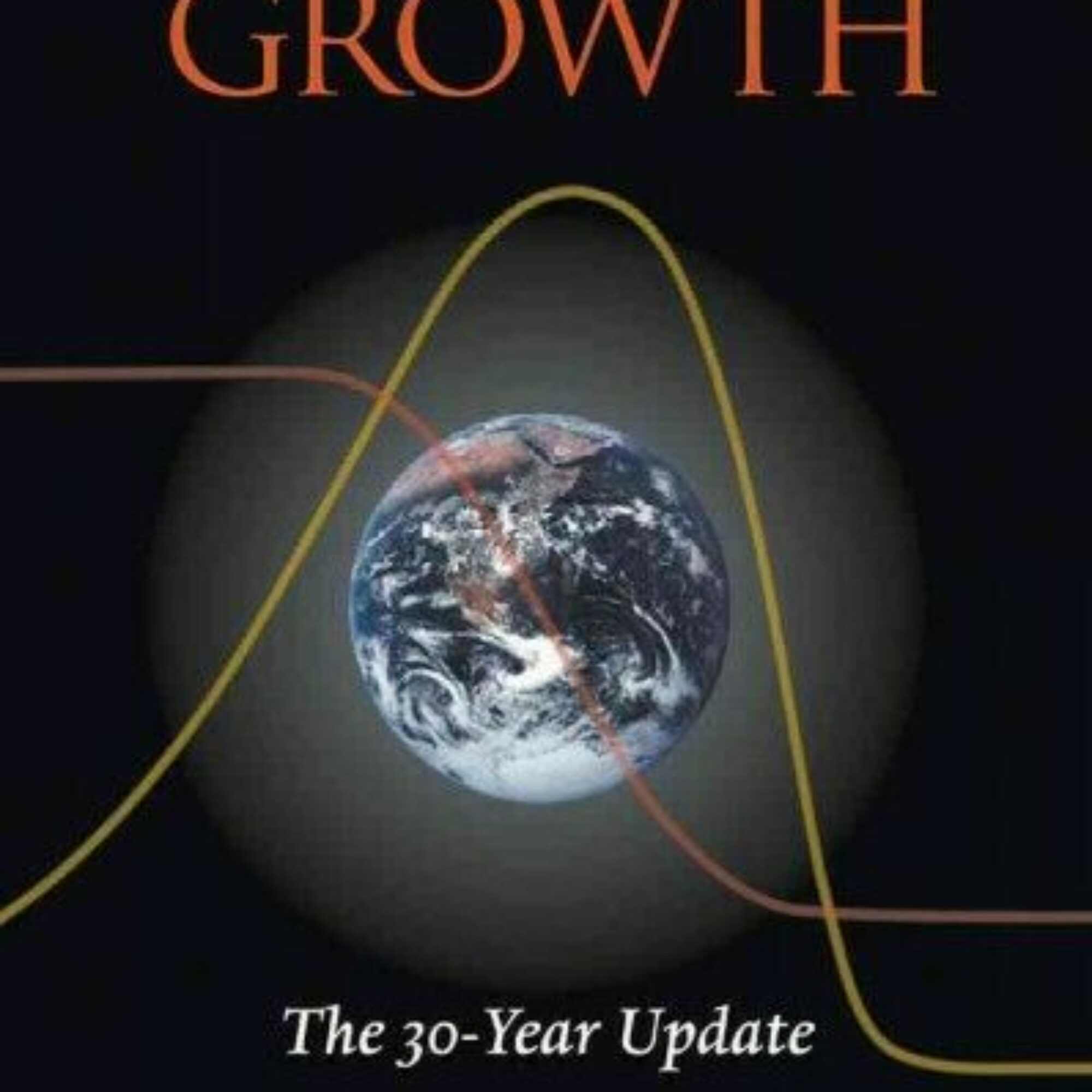
A reader contacted me and suggested I read the book "Why Does the World Exist?: An Existential Detective Story," by Jim Holt. The author writes for the New Yorker among other things, which implies I'll enjoy his writing. The book promised to explore the question why the universe exists as opposed to not existing. Why being and not nothingness. I borrowed the book from the library. I hadn't considered its main question much before, so it got me thinking about why the universe exists. It's an interesting question that twists your mind just to think about it. Once you posit that the universe exists with the laws of physics we know, I can see how the Sun, Earth, life on Earth, and humans followed from…

2 Comments
Convenience at what cost?
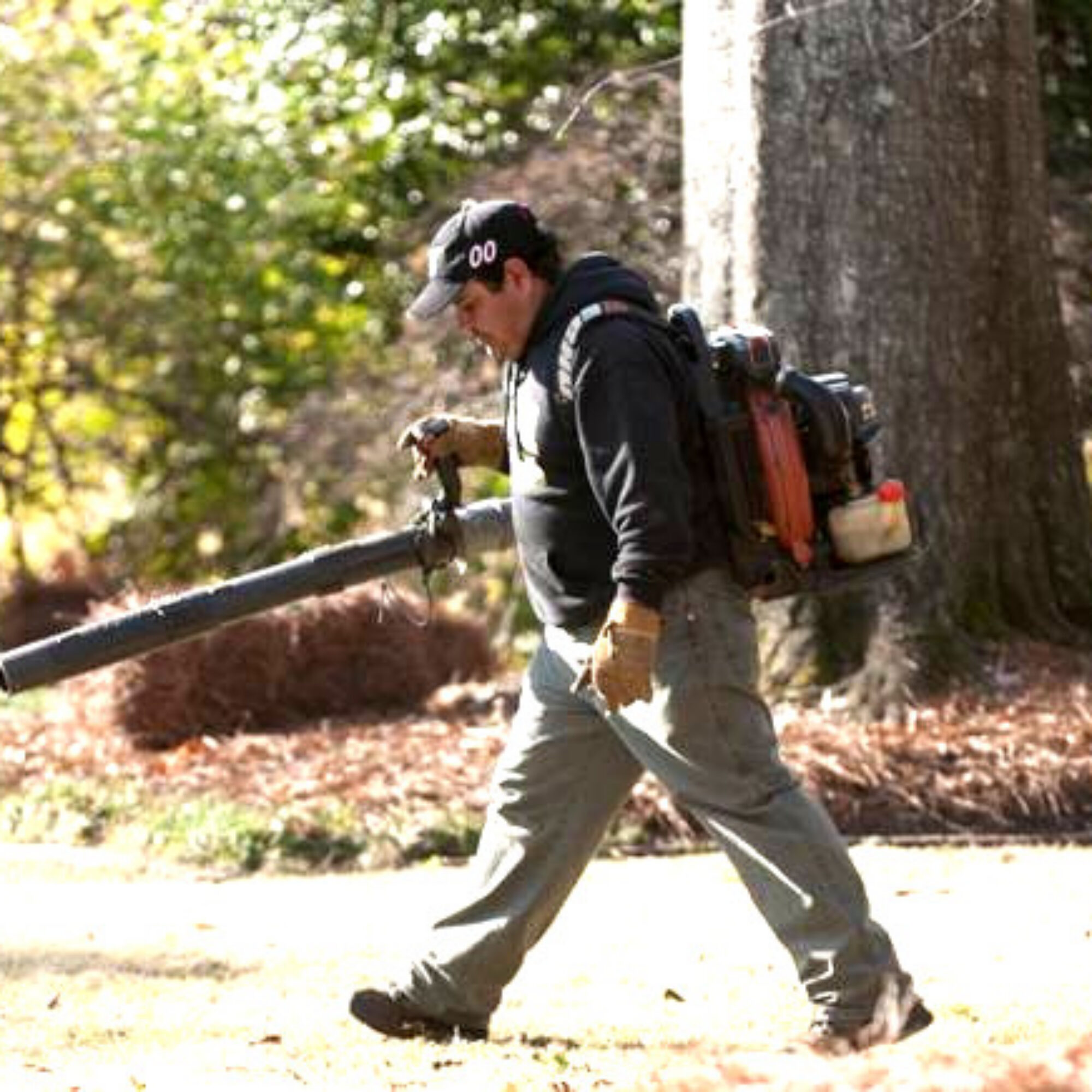
Not the guy I saw or in the park I saw, but similar.

Convenience at what cost?

The other day I passed a guy blowing leaves with a gasoline-powered leaf blower on a paved area in a park by City Hall. This post isn't about him. It's about us, including you. What is wrong with us? We buy oil from countries we have adversarial relations with, pollute the environment, create loud, unpleasant noise, so a fat person can work less, and cart away what would create topsoil, to fill a land-fill. What we could do instead What if we did this instead? Rake the leaves making little extra noise buying no oil from adversarial countries causing no pollution composting the leaves or using them for mulch filling no land-fills giving the guy exercise? Raking leaves on pavement isn't hard. Values What happened…

0 Comments

Choosing idealism in the face of contrary evidence of what works is a recipe for disaster

I posted the following in response to a bunch of articles I've read about a report co-authored by over a dozen science-related organizations describing how reducing funding for science has led to research and the benefits it brings to society leaving the U.S. --- The writing on the wall became apparent to me with the 1993 cancellation of the Superconducting Super Collider, when I was getting my PhD in physics. I didn't know the numbers for a cost-benefit analysis, but I couldn't then nor can I now see cancellation as helpful to the U.S. The U.S. would have stayed way ahead of the rest of the world in particle physics and all the accompanying jobs, discoveries, and innovation. Instead we look to the rest of…

0 Comments

Silent Spring

I finished a book the other day I'd been meaning to read for at least a decade -- Silent Spring, by Rachel Carson, released in 1962. I posted a summary below. I also understood it influenced thought a lot. I had to speak to a few people who were adults when it came out to understand its impact at the time, which they assured me was colossal -- a common-sense bolt out of the blue from a humble woman who simply researched and compiled information anyone else could have. It seems, like Vietnam, one of the major turning points about which the American people began to question their government and find it didn't consistently act in their interests. In fact, it seemed often to work…

0 Comments

I never take responsibility for someone else’s emotions.

I try to understand people. I think doing so improves my relationships with them and my understanding of myself. I find feeling compassion for others helps me improve my relationships with them too. Same with empathy. I find taking responsibility for my emotions helps me improve my life and keeps me from blaming others. I see taking that responsibility as improving my life as much as anything. Taking responsibility for someone else's emotions, on the other hand, I see helping no one. Did I just contradict myself? Why do I value compassion, empathy, and responsibility for my emotions but not responsibility for someone else's? "Josh," you ask, "aren't you undermining your compassion and empathy? Are you saying that if you saw a child lost and…

0 Comments

Start with emotions if you want to motivate yourself … or anyone else

I find Americans try to get precise and scientific about food and exercise, in contrast to how incredibly unfit the country is. I write "try to" because I don't think they succeed in being precise or scientific. The term carbohydrate, for example, used to have a specific scientific meaning. I think it still does, but I think in standard American usage it means "bad" or "evil," like the term fat used to. But I don't think people know what carbohydrate means, but it sounds technical. Same with Omega whatever fatty acids, free radicals, and so on. Same with exercise. People throw around terms like anaerobic, cardiovascular, and VO2 max like candy, rarely knowing what they mean. Jargon devoid of meaning. More than devoid of meaning,…

0 Comments

How would you improve the world if you had supernatural powers?

Here's an exercise to see your values from a new perspective. I used to do it all the time until I learned my lesson from it, which I'll write at the bottom. Answer the question "how would you improve the world if you could have a magical wish come true?" and follow through to see if the change would, in fact, improve your life. To clarify, I mean a supernatural change outside of what you normally do to improve your life and world. I submit that it's not as easy as you think. Say you had whatever magical powers to change the world however you wanted. Could you improve the world beyond what you could do without the magical powers? Quick answers people jump to…

1 Comment

Healthy food mostly replaced my unhealthy food. Here’s how.

How can you expect to lead others if you can't lead yourself? This post, like most of mine, is about leadership. If you can't lead yourself, how can you expect to lead others? If you don't understand your emotions and motivations and how to create the ones you want in yourself, how do you expect to do so with others? Alternatively, the better you can lead yourself, the better you can lead others and, for that matter, yourself the next time. Since most of us want to eat differently than we do and others are constantly trying to motivate us to eat like they want us to, eating is a great place to learn leadership skills. Who do you want leading your eating habits, you…

5 Comments

A systems perspective on population growth

I keep reading about how some technology has or will save billions of lives from starvation or disease. A perfect example comes from the opening paragraph of Wikipedia's page on the "Green Revolution." Green Revolution refers to a series of research, development, and technology transfer initiatives, occurring between the 1940s and the late 1970s, that increased agriculture production worldwide, particularly in the developing world, beginning most markedly in the late 1960s. The initiatives, led by Norman Borlaug, the "Father of the Green Revolution" credited with saving over a billion people from starvation, involved the development of high-yielding varieties of cereal grains, expansion of irrigation infrastructure, modernization of management techniques, distribution of hybridized seeds, synthetic fertilizers, and pesticides to farmers. I disagree with this perspective. I…

0 Comments

Experience guides us more than philosophy.

Have you noticed that people who behave wildly differently can still base their behavior on the same underlying philosophies? Or that people who behave similarly can also base their behavior on different philosophies? Pick a way people behave and you'll find people saying that behavior comes from any source. For example, among the most peaceful people some base their behavior on being religious, some on being atheist, some on not caring about religion or atheism at all. Some of the most belligerent people base their behavior on religion. Some not. People on the left call Hitler right-wing. People on the right call him left-wing. People who exercise say they do it to relax and feel good about their bodies. People who don't exercise say they…

4 Comments

A mental model on disease and dying

We might as well figure out ways to think about dying because it's going to happen to all of us and people in our lives. Sorry if I broke the news to you and brought you down, but I figured you knew already. I've written before my main thoughts on mourning, mainly based on a Taoist passage, quoted in my post, "Thoughts on mourning." Like you and everyone else, as I get older I face more people recognizing their mortality. More people we know get sick. More people we know die. Some people fear disease and dying. Some repress thoughts on the matter. Some people use the change to live life to its fullest in every moment. I've worked out a model that works for…

0 Comments

Once you start composting, you can’t go back

Once you start putting your food scraps in a separate container from your trash, you can't go back to filling landfills with what could create topsoil and healthier food. Once you start composting, the amount you throw away decreases yet more -- after you presumably started recycling, after you presumably reduced your consumption. You become more aware of food packaging you can't compost. I've noticed that the less healthy a "food product" is the more packaging it seems to have. What is composting? Composting is using old scraps like banana peels and corn cobs for fertilizer by letting them decompose. Since plants tend to be made of materials good for other plants to make themselves out of, compost is useful for growing healthier plants. It…

0 Comments

You probably blow smoke in kids’ faces without realizing. You can stop.

New York City is having the most mild summer I can remember. We've barely hit ninety degrees and that was at least a month ago. Since then we've had cool, spring-like weather most of the summer. The other evening walking with friends, I noticed how loud the sounds of window air conditioners were in the small streets of the West Village. The temperature and humidity outside couldn't have been more comfortable. I could only think the following thoughts about their unnecessarily using their air conditioners: Air conditioners use energy. That energy comes mainly from fossil fuels. Fossil fuels pollute. Pollution makes us unhealthy. Me: With weather this perfect, the air conditioners aren't improving the air for these people. They might as well light up a…

0 Comments

Do you decide rationally or emotionally?

One of this blog's central focuses is self-awareness because I think to improve your life and relationships the best starting point is to know where you are. Know thyself, in other words. Today I want to give you a way to learn deeply about how your mind works. I didn't come up with the idea, but it intrigues me and I'd love to learn other people's thoughts. I think people generally believe they have a voluntary, rational part of their brain that, among its roles, makes decisions. If you're choosing what to order off a restaurant menu, for example, you probably do something like this: You read your options, eliminate those you don't want, consider the ones you do, work through some core decision-making process,…

0 Comments

Today’s Harvard student versus 176 years ago

Let's look at two former Harvard students from now and nearly two centuries ago. 176 years ago Henry Thoreau finished Harvard in 1837, one of its best-known students of his age. Let's look at him before looking at this generation's most prominent Harvard student. Thoreau wrote Walden, his treatise on living simply, escaping petty human affairs and gossip, appreciating nature, self-reliance, and such. He lived for two years mostly on his own, growing his food, building his shelter, figuring out how to spend his time, and so on. The book opens When I wrote the following pages, or rather the bulk of them, I lived alone, in the woods, a mile from any neighbor, in a house which I had built myself, on the shore…

2 Comments

“Sin” is a made-up concept.

I grew up in an environment that took the concept of sins for granted. People called certain behaviors wrong by labeling them as "sins." As a kid I never considered the sources of the classification or even if they corresponded to anything other than opinion. As a result, accepting someone calling a behavior as a sin seemed as natural as them saying something was green or wet or upside-down. As an adult I came to question the concept. It hit me that the concept of sin was just something that people made up. No objective way to determine something's sinfulness exists. As best I can tell, people created the concept to control other people with fear and shame, and possibly to make themselves feel better.…

2 Comments

Some things you have to do yourself

At an outdoor concert July 4 I noticed something that, when I said it, sounded like a meaningful life lesson worth sharing here. The VIP section for some reason had fewer port-a-pods per person than the rest of the venue so they kept having long lines. Also, my friends and I were mostly staying in the tent area with the bar to stay out of the hot sun and walking to the port-a-pods meant going out in the sun. I remember saying "No matter how rich you get, no matter how much you can pay for others to do things for you, no one can go to the bathroom for you." That may sound silly or obvious, but I think it has some meaning. Like…

0 Comments

A giant rainbow over Greenwich Village

I walked outside my building and saw one of the most complete and beautiful rainbows I've ever seen, over the Jefferson Market clock tower. The camera in my phone didn't capture its full beauty, but I hope you can tell some of it. It was too big for my camera to capture it all at once. You can see it fading in the few minutes I watched it so I didn't have time to get a better camera. I was on the way to Brooklyn, where I caught a couple shots of the same storm over Manhattan's skyline from a train platform. I tend to cover leadership and personal development, but if we don't stop and appreciate the beauty of nature, what are we working…

0 Comments

Managing difficult teammates, managers, employees, and people

We've all had to deal with difficult team members. Those who have led have had to deal with difficult people reporting to us. Most of us have had to deal with difficult managers and bosses. We've also had to deal with difficult people in general. When someone makes our jobs and lives difficult we want to influence them to stop challenging us and start helping us, or at least getting out of the way (and sometimes to be open to them influencing us, accepting that sometimes we are the difficult ones). When the difficult person is our manager or boss, many of us feel powerless to do anything to influence them. You can influence anyone. I'm writing today's post to increase your ability to influence.…

0 Comments

Morality and the development of language

I write a lot here about how counterproductive judging others or imposing your values on them is for leadership or influencing them. (Here are five posts on it, for example: Instead of calling something right, wrong, good, or bad, consider the consequences of your actions, What is morality?, On the counterproductivity of motivating people with guilt and blame — aka moralizing, Talking about "truth" or "reality" always confuses things, How willing are you not to judge?) Thinking about the development of language gave me a new perspective that, I think, helps undermine people's attachment to calling things right, wrong, good, bad, or evil. This post may sound philosophical or esoteric, but I didn't write it that way. My goal, as with the posts I linked…

0 Comments

A beautiful spring day

New York City is enjoying some beautiful weather today. My building has a nice rooftop and had some friends over to enjoy the weather and view yesterday. I think people come here for the leadership thoughts... sometimes you just have to stop and enjoy the day. A few related thoughts I've posted before I clicked on to look at myself. A Beautiful Spring Day in My Neighborhood (with slide show!) A Model that Will Bring You Happiness Three Little Birds Is it not important to enjoy and explore the world around you? Now I'm off for a run along the river.

0 Comments

How do you know the Earth is round?

One of the most important skills to have about beliefs and models is being flexible. Flexibility is one of the hardest skills for my clients to develop... until they get it. Then they realize the value of the skill and get good at it quickly. Today I want to share a way I've found useful to undermine people's rigidity in their beliefs -- to point out how an incredibly strong belief can be based more on just agreeing with everyone else without questioning them than direct observation. One of the most basic facts we all know about our world is that the Earth is round. To say otherwise puts you in a category of kook or loon. Someone who believes the Earth is flat will…

4 Comments

A model for a great lifestyle

[This post is part of a series on "Mental models and beliefs: an exercise to identify yours." If you don't see a Table of Contents to the left, click here to view the series, where you'll get more value than reading just this post.] You want to do well in life. What areas are most important for you? Do you want fame? Fortune? Power? Family? My explorations into meaning, value, importance, and purpose (MVIP) led me to consider what I wanted. Since I've found MVIP are grounded in emotions, I found I could refine my understanding of what brought me MVIP by refining my understanding of my emotional system and my emotions. I found that emotions stood at the foundation of all of MVIP. Not…

0 Comments

A model to help you get more out of traveling and to save money traveling at the same time

[This post is part of a series on "Mental models and beliefs: an exercise to identify yours." If you don't see a Table of Contents to the left, click here to view the series, where you'll get more value than reading just this post.] Most people I share today's belief with seem surprised or even shocked when I express it. Probably because the way I say it -- that I don't like traveling -- seems contrary to something nearly everyone values. Also, I travel a lot and talk about how much I get out of it. If I have to travel, I'll find ways to make it amazing, but if I don't travel I can make staying home just as amazing. The best way I…

0 Comments

A model to keep from being scammed

[This post is part of a series on "Mental models and beliefs: an exercise to identify yours." If you don't see a Table of Contents to the left, click here to view the series, where you'll get more value than reading just this post.] Have you ever been scammed into buying something that didn't work? Has anyone ever tried to sell you something too good to be true? Have you lost money gambling you wish you hadn't? Do you not like that happening? A model to keep from being scammed: The laws of physics, science, math, and logic. Some scams are cons based on abusing trust, but a lot of them are based on things that aren't possible -- perpetual motion devices, fake controversy about the…

0 Comments

End of content

No more pages to load