
This week I finished:
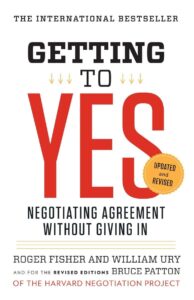
Getting to Yes: Negotiating Agreement Without Giving In, by Roger Fisher, William Ury, and Bruce Patton: I’m sure I’ve written about this book before. I first read it when I was CEO of Submedia, so over twenty years ago. I’ve given away more copies of this book than any other that I didn’t write. I reread it now because it’s the choice for the book club of the alumni community of my workshop.
I credit this book for transforming the concept of business in my mind from something mechanical where the goal is to win and if results like the Exxon Valdez happen then so be it to a relationship-based project that when done skillfully mutually benefits all.
I took classes in negotiation in business school. This book is the book on negotiation, in my opinion. I know many people like podcast guest Chris Voss‘s Never Split the Difference. The main difference as I see it is that Getting to Yes promotes theory, as it was written by professors, and Never Split the Difference promotes practice, as a hostage negotiator wrote it. I recommend both, but this one made the bigger difference in my life, though maybe only because I read it first, when I knew nothing about negotiation.
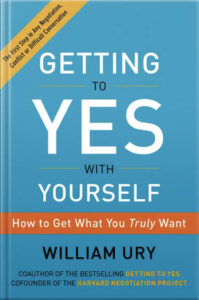
Getting to Yes with Yourself: How to Get What You Truly Want, by William Ury: I finished this book waiting for Getting to Yes at the library. It’s shorter and broader. While still about negotiation, it’s closer to personal development of professional development.
It focuses more inward. I’m glad to have finished it, but at 54, I think I learned a lot of it already. I value relearning some and learning anew things I didn’t know before, but I think people earlier in their careers would get more value. Then again, I’m single and maybe if I ever marry, have kids, or both, I’ll find I knew less than I thought in important areas. Or maybe I’ll run for office.
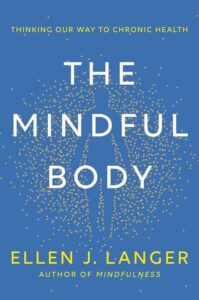
The Mindful Body: Thinking Our Way to Chronic Health, by Ellen Langer: I heard a conversation with Ellen Langer with podcast guest Peter Singer on his podcast Lives Well Lived. I had heard of many of her studies but hadn’t read anything from her directly. Her results intrigued me enough to dive into her latest book.
Her best-known result, at least to me, was the Counterclockwise study, where she put elderly men in a context made in every way like twenty years before. They wore clothes, played music, showed TV shows, and so on from when the were younger. The men showed improvements in hearing, vision, and other outcomes that many would probably have considered impossible before the experiment.
At NYU She studied under Philip Zimbardo, about whom I’ve read and written recently. His work on how situations lead people to do things against their values shows up in my next book. I anticipate putting her work on how situations can lead people to follow their values and outperform expectations too.
I don’t know if I’m unduly flattering myself, but I believe I’ve implemented a lot of what her findings promote. Maybe they filtered their way into society and then me, but I think a lot of them rediscover longstanding knowledge from other cultures that I may have found independently. A criticism: she often wrote about how things are a certain way but someone or people made them that way. We don’t have to accept them. She doesn’t distinguish between human constructions or social conventions versus say laws of physics. Her wording at times would suggest that mindfulness would enable walking off the roof, gravity being a construct. I’m sure if she read these words she’d say something about how you can do something comparable, like dream of it, but she could also clarify the wording. I also found her almost bragging about how contrarian and avant garde she found herself.