
This week I finished:
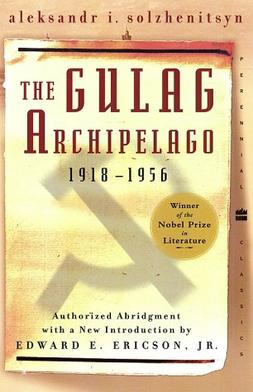
The Gulag Archipelago, volume 3 by Aleksandr Solzhenitsyn: This book changed me—the full three volumes. I grew up learning about Hitler and Nazis. I knew something about Stalin and the USSR, but not how much they would put the Nazis in perspective as less deadly.
I recommend this book to anyone and everyone. It’s long and the subject horrific, but necessary if you want to know what humanity is capable of, tragically.
TIME Magazine called it “the best nonfiction book of the twentieth century.” Solzhenitsyn won the Nobel prize before this book, especially for One Day in the Life of Ivan Denisovich, but he considered Gulag Archipelago his greatest work.
I finished it because my upcoming book covers what happens when we don’t enforce the requirements of a democratic hierarchy, then use technology and regulation to make up for not enforcing a constitution. We in the US are not enforcing these requirements. It could happen here.
It could happen anywhere, more so now than ever because of our technology, which enables fewer people to run a dominance hierarchy. Solzhenitsyn doesn’t pursue what could make people behave so cruelly. Philip Zimbardo did and showed that nearly anyone could, including you and me, in a situation that would cause it. This book combines with Eric Williams quote that “Slavery was not born of racism: rather, racism was the consequence of slavery.”
Solzhenitsyn wrote, “I am proud to belong to this mighty race! We were not a race, but they made us one! They forged bonds between us, which we, in our timid and uncertain twilight, where every man is afraid of every other, could never have forged for ourselves.”
That conclusion is what makes this book so important. You, I, and everyone can be induced to violate our values—that is, corrupted—which tends to lead us to convince ourselves that what we are actually doing is good, right, and normal.
The audiobook is available on YouTube. It’s 66 videos, and over 75 hours of audio, but the narrator “was one of the first inductees into the ‘Golden Voice’ hall of fame started by the trade publication AudioFile” and Solzhenitsyn’s writing is lively and witty, sardonically so. You won’t be bored, though it takes a while to finish.

All the Vermeers in New York, directed by Jon Jost: I saw this movie a long time ago, maybe around when it came out, in 1990, but not sure. I think about it every now and then because it celebrated a part of New York City that I still resonate with: the overlap of an art scene with business, mostly finance.
It’s an artsy movie, so not mainstream or exciting, but thoughtful and compelling. It won the Caligari Film Award in the 1991 Berlin International Film Festival and the Best Experimental Film in the Los Angeles Film Critics Association Awards. It’s also free on YouTube.

Fetishized: A Reckoning with Yellow Fever, Feminism, and Beauty, by Kaila Yu: I don’t remember how I stumbled on this book. You have to read it to the end to see how Yu resolves her accusations of racism and sexism all around her with her benefiting from that culture.
She suffered and lived in a society that took advantage of her. Nobody should have to experience what she did being recorded in video pornography and the resulting trauma.
Still, when she talks about her limited opportunities, it’s hard not to want to remind her that she could have taken a route to getting a professional degree.
She shows little empathy for white men who find Asian woman attractive. I forget if in the book, podcasts I also listened to of her, or both, but she asks things like if they have a fetish or yellow fever, which sound like diseases, or a preference, or choice.
I thought American culture had passed that stage of asking if someone’s sexuality is a choice. Are we passed asking if gays or lesbians chose their sexuality? If straight people chose their sexuality? Why does she not judge Asian men who find Asian woman attractive or men who find men attractive?
I could go on about this lack of empathy and where it leads, but Yu wrote more to talk about culture, how it kept her down for her being female and Asian, as well as her growth through it. Still, it falls into the growing category of books that don’t understand race, which my upcoming book covers.
This Post Has 0 Comments