
This week I finished:
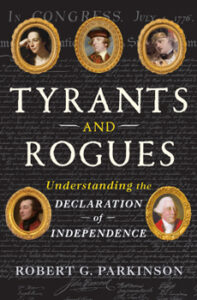 Tyrants and Rogues: Understanding the Declaration of Independence, by soon-to-be podcast guest Robert G. Parkinson: Wow, I’ve been learning a lot about the revolution, but didn’t realize how much challenge the colonists faced, nor did I learn about the people on the British side.
I knew about the big events and interactions that make the history books like the Stamp Tax, Coercive Acts, Boston Massacre, Lexington and Concord, and the ones you know about. I didn’t know about events like the Gaspée affair, the burning of Falmouth, Gwynn’s Island, and all the British aristocracy and military acting. I had only learned about people like Hutchinson, Gage, Dartmouth, and so on as caricatures, not real people. I didn’t know what motivated them.
Parkinson points out that as much as we value the timeless words of the start and end of the Declaration of Independence, the rebels and patriots acted on the 27 grievances. I’ve read them before and could pick up some of the meaning behind them, but knew little to no detail. This book recounts what all the colonists knew intimately.
Before this book, I had wondered why farmers risked their lives for independence. Sure, they didn’t want to be taxed without representation or imperial soldiers quartered in their homes, but were those things worth dying for? From what I knew before this book, the offenses seemed problematic but something seemed missing. I learned there were far more incidents, many more deadly, and more people involved than I knew of before, yet they drove independence and the revolution.
His writing ties many pieces together, so I kept finding names and places affecting each other and being affected by each other. The book read like a tapestry with a rhythm throughout the book. The head of King George from the statue on Bowling Green starts the book and reappears at the end. The boats and people using them going to and from Gwynn’s Island had me going forward and backward like I was reading a mystery novel or a Christopher Nolan movie. The numbers 42, 45, 88, and 92 recur (two refer to years of British revolutions, 1642 and 1688; one is the edition of a publication, 45; and the other is the number of votes supporting a Circular Letter in support of union, 92).
Finally, each incident tied back to Jefferson, Franklin, the three other editors, and the congress learning about them, figuring out what to make of them, writing them, editing them, and sending the Declaration to the colonies.