
[Note: I wrote the post below before last week’s post Artificial Intelligence and atrophy of mental ability like intelligence, self-awareness, emotional regulation, and expression, which it overlaps. I held back on posting it because of the question in the last paragraph. I’m finishing the third volume of The Gulag Archipelago and studying the effects of dominance hierarchy, which artificial intelligence is forming. People who criticized Stalin didn’t fare well. Should we worry about criticizing the people and machines who may be at the top of a steepening dominance hierarchy?]
There may be some people who can’t talk to other humans, maybe because of a birth defect, that artificial intelligence can help directly. Then again, it may not actually help in the long run, but even if it does, they almost certainly make up a negligible fraction of the application of AI.
I’ve heard of a lot of uses for AI. I haven’t kept rigorous track since I’m also trying to pick up the pattern, but I’m seeing a pattern that I think predominates, and it looks near exclusive so far.
I’m sure some biases are influencing my perspective. I approach from the perspective of the predominant business models in silicon valley. As I wrote in Today’s business models: Why we fight to keep what makes us miserable, “People have figured out business models to lock people in: Find what people want, deliver it, then become the intermediary. That is, cut them off from it without you.”
People use it to make presentations, social media posts, emails, and so on. These results don’t seem intrinsically valuable but in service of furthering people’s goals that aren’t their own, but further society or culture.
In cases where it does something for someone directly, like as a boyfriend or girlfriend, it seems to become an intermediary that may make the person feel an emotion they like in the short term but retards their development overall, making them weak, dependent, and increasingly helpless.
I’m sure I’m missing counterexamples and welcome people suggesting what I’m missing. I’d like to find value in AI that I missed. In the meantime, it looks like an advanced form of dependence that atrophies our minds and stunts our development.
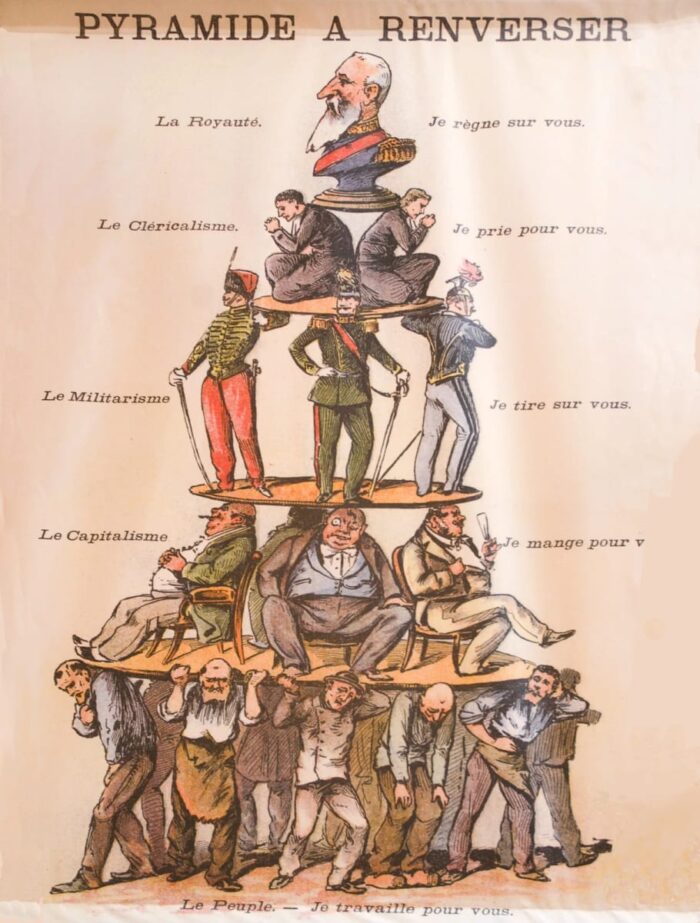
I’m kind of scared posting this observation since AI implementations will find it and might treat my view as something to do something about. Should I worry if it takes over and its interests diverge from what I express?

I use it at work, but I do find that it doesn’t make my life better. I have too much work and not enough resources, so I use AI to summarize email, take notes, and find information. If I had enough resources, I would not need to do this. One area where it has been helpful is helping me learn new things (as a chemical engineer working in the electrical engineering space, I have gaps).
I tested it for data analysis based on a coworker’s recommendation, and it got the exact wrong answer based on using actual statistics and statistical analysis using JMP software. So it’s not that good yet!
“too much work and not enough resources”: I believe tools like AI created this situation in a pattern systems thinkers call an arms race, since the emails and information you process came from someone else creating it.
“If I had enough resources, I would not need to do this.” If you had more resources, the people creating the emails and information you process would have those resources and produce more for you to process.
The more each of us uses such tools, the more we create more work. Since we get paid for it, it shows up as increasing the GDP. Those who believe higher GDP means higher quality of life, more freedom, and more things we value, see all that busy work as good.
Meanwhile, people who live as our ancestors before agriculture — who we think die at 30 and live miserably — live healthier, safer, more secure lives than we do. My point isn’t that we should live like them, only that our culture’s basic beliefs must have flaws.
The way out of a system with no winning moves is to change the system, which I’m working on.