
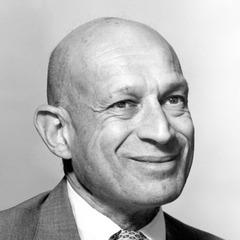
It’s been a while since I wrote about how economist Julian Simon’s theories don’t work. I last wrote about him in Some thoughts and responses to Julian Simon about six months ago. I heard him mentioned in a video, which prompted me to share a thought I had on my list of blog post ideas.
Consider homelessness, a perpetual problem, as far as I know, in every society.
One of Simon’s big ideas is
Adding more people causes problems. But people are also the means to solve these problems. The main fuel to speed the world’s progress is our stock of knowledge; the brakes are our lack of imagination and unsound social regulations of these activities. The ultimate resource is people—especially skilled, spirited, and hopeful young people endowed with liberty—who will exert their wills and imaginations for their own benefits, and so inevitably they will benefit the rest of us as well.
Another:
more people and more wealth has correlated with more (rather than less) resources and a cleaner environment—just the opposite of what Malthusian theory leads one to believe. The task before us is to make sense of these mind-boggling happy trends.
The current gloom-and-doom about a ‘crisis’ of our environment is all wrong on the scientific facts. Even the U. S. Environmental Protection Agency acknowledges that U.S. air and our water have been getting cleaner rather than dirtier in the past few decades. Every agricultural economist knows that the world’s population has been eating ever-better since World War II. Every resource economist knows that all natural resources have been getting more available rather than more scarce, as shown by their falling prices over the decades and centuries. And every demographer knows that the death rate has been falling all over the world—life expectancy almost tripling in the rich countries in the past two centuries, and almost doubling in the poor countries in just the past four decades.
If you support this view, why not solve the homelessness problem by housing all the homeless in your home?
At first you might say you don’t have enough space, but “Every resource economist knows that all natural resources have been getting more available rather than more scarce.” The more people you house in your home, the more space it should create.
You might say it would cause you problems, but “people are also the means to solve these problems.”
The more people you put in your home, the more space their presence will create and the more they will solve your problems. If your home is 2,000 square feet (about 200 square meters) on a one acre plot, you may only be able to house a few people at first, but soon you’ll have 4,000 square feet as those people solve problems for you, enabling you to accommodate more people. Then you’ll have 10,000 square feet and so on until you can house all the world’s homeless.
I presume Simon’s theories wouldn’t cause you to impinge on others’ property, so your growing floor space won’t expand past your property’s boundaries. Somehow your millions of square feet will be contained within your acre of land. I guess that means it will grow upward, though if the local laws prohibit growing too high, maybe all those no-longer-homeless people, now problem solvers will find extra dimensions.
Did I miss something?
The above argument may sound ridiculous or satirical, but I’m not sure what part of Simon’s theories it violates. If someone can show me, I’d appreciate the clarification.
I read once that Simon suffered from depression, and I have wondered since then whether that influenced his thinking. Perhaps thinking of all people as having value helped him to believe that he had value when his depression told him that he was worthless.
I don’t know much about his personal life, though what you write makes me curious to learn more. Still, I think his ideas should stand or fall independent of his situation when thinking of and writing them. As best I can tell, they don’t withstand scrutiny, though they hold great appeal to many people today. Either I misunderstand them, or they’re using flawed reasoning and reaching flawed conclusions.