Models


Should I fear posting concerns about artificial intelligence?

I'm posting more about artificial intelligence, maybe enough to make a category for it. I posted that I hesitated to post my last one with this explanation: "I held back on posting it because of the question in the last paragraph. I’m finishing the third volume of The Gulag Archipelago and studying the effects of dominance hierarchy, which artificial intelligence is forming. People who criticized Stalin didn’t fare well. Should we worry about criticizing the people and machines who may be at the top of a steepening dominance hierarchy?" I doubt I have to worry, but reflecting on something thoughtfully and calmly isn't worrying. Besides AI, I also post a lot about dominance hierarchies. They form when there is a necessary resource that can be…

0 Comments

More Julian Simon confusion, considering homelessness

It's been a while since I wrote about how economist Julian Simon's theories don't work. I last wrote about him in Some thoughts and responses to Julian Simon about six months ago. I heard him mentioned in a video, which prompted me to share a thought I had on my list of blog post ideas. Consider homelessness, a perpetual problem, as far as I know, in every society. One of Simon's big ideas is Adding more people causes problems. But people are also the means to solve these problems. The main fuel to speed the world’s progress is our stock of knowledge; the brakes are our lack of imagination and unsound social regulations of these activities. The ultimate resource is people—especially skilled, spirited, and hopeful…

2 Comments

Do people talking about AI understand exponential growth?

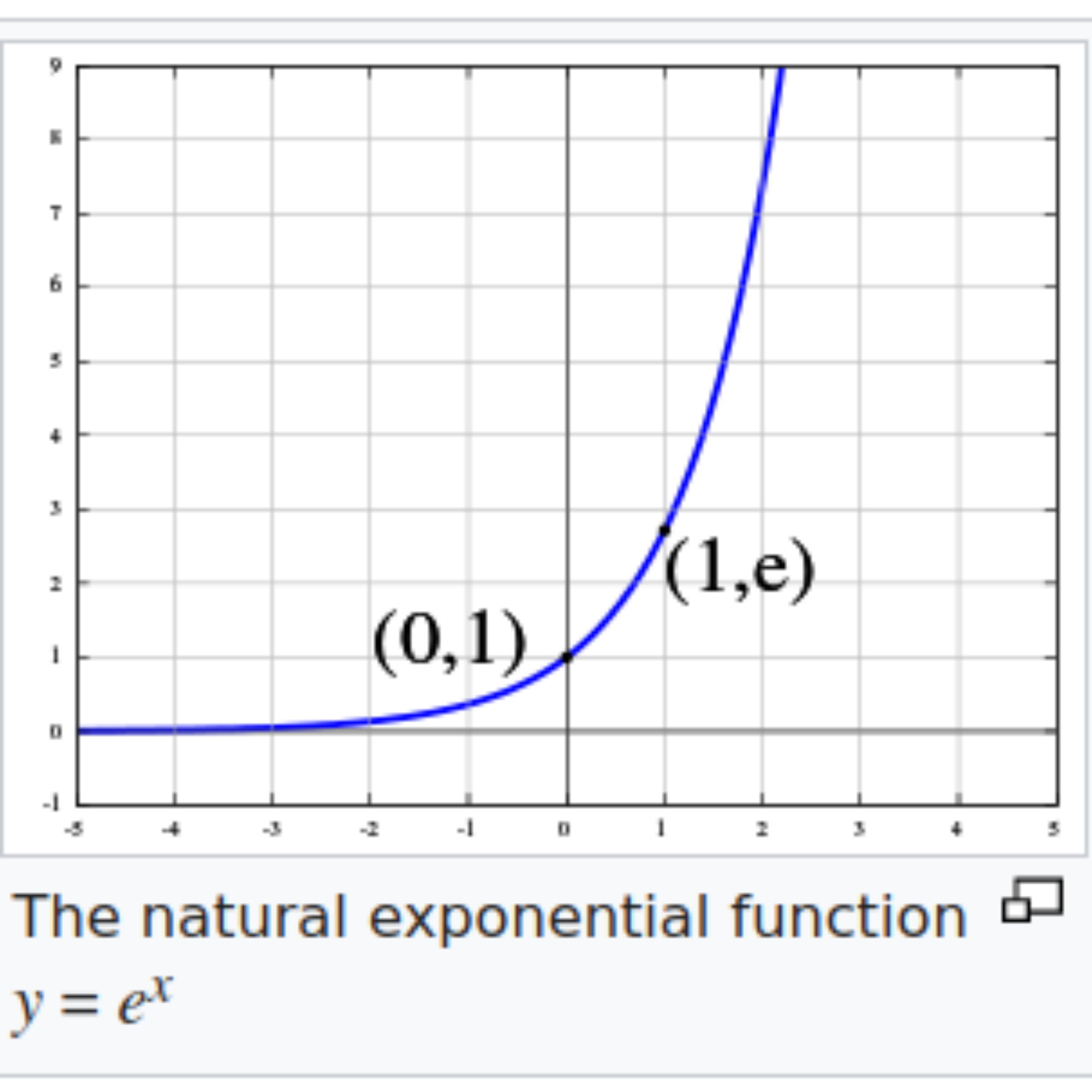
Most speculation I see about what might happen with artificial intelligence anticipates some stable situation where humans and AI reach an equilibrium. Do people not understand exponential growth? Do they not understand that AI drives the development of AI? Even if you don't know differential equations or calculus, which predicts exponential growth, you have to see that that situation means that the faster AI develops, the faster AI develops more AI. In other words, any equilibrium will last less time than the one before. By the time AI creates a robot with human intelligence and physical ability, ten minutes later it will be able to create one with double each. If not exactly ten minutes later, well short of any time for us to adjust.…

0 Comments

This week’s selected media, May 3, 2026: Changing views of extinction in history

This week I finished: A Man at Arms, by podcast guest Steven Pressfield: I hear Steven has two groups of fans -- those of his The War of Art-type books and those of his historical fiction -- and they don't overlap much. I was in the first group. His latest book, The Acadian, comes out soon. We're scheduled to record our second podcast episode on it this week. It stands on its own, but follows A Man at Arms, so I started with it. I'm also watching his Warrior Archetype series. It's also my first novel in a while. The basics are great, but it works as a complete whole where each part builds to a conclusion that feels greater than the sum of its…

0 Comments
Every group claims Washington, Jefferson, Lincoln, and Douglass. Every group says the other produced Calhoun and eugenics.
The United States Constitution

Every group claims Washington, Jefferson, Lincoln, and Douglass. Every group says the other produced Calhoun and eugenics.

The more I learn from different traditions, the more I find each group claims that their intellectual and cultural forebears are the people everyone likes and says the others descend from the ones everyone dislikes. I grew up in liberal, progressive households and schools. I learned that people who worked for liberty and freedom, and who fought against slavery and tyranny were the ones our traditions descended from. I learned that conservatives and libertarians just wanted profit. They would sacrifice the things we valued, like liberty and freedom, in favor of helping themselves. Hence, they were responsible for slavery and laissez-faire practices that caused hunger and poverty. I didn't learn to see the world from their perspectives. When I started to, in recent decades, I…

0 Comments

Does every group think they’re the best?

I've meant to start compiling this list for a while. People often equate racism with white supremacy. Even if they say they aren't the same, many people consider all white people as privileged, whether they want to be or not, and all people of color as being oppressed, at least to some degree. They consider that white people may face challenges, but not because of their skin color, whereas people with skin that isn't white face headwinds and start behind the starting line. My book explores how these beliefs and the practices that prompted them, as well as the conditions that prompted the practices in more depth. In particular, I explore beyond what historians and anthropologists who just look at the past few centuries or…

0 Comments

Can you help me understand how liberals and progressives view leadership?

I grew up in liberal, progressive households and I don't remember everything of how I viewed leadership, but I'm pretty sure I viewed it skeptically. Well, when Martin Luther King or Gandhi did it, it seemed inspirational, but when I considered doing it, I shied away. I'm trying to remember how I viewed it because I work with a lot of people who are liberal and progressive and they shy away from leading people. More than shy away, they seem to sabotage themselves from improving at it. They seem to shun it as something unseemly. I think they view it as coercive, like "If I do something that leads someone to do something they wouldn't have otherwise, I must be coercing them without their consent."…

0 Comments

What Makes Things Meaningful in Life

Do you like for experiences in life to have meaning? What makes an event or experience meaningful? It's tempting to say it's difficult to define. The dictionary defines meaningful as "Having meaning, function, or purpose" and meaning as "significant quality, especially: implication of a hidden or special significance." Those definitions seem vague to me. They just substitute the word quality for meaning. They don't suggest how to make something more meaningful. I've been using a definition that works for me since I wrote Leadership Step by Step based on the model of emotions in it. The model says that emotions have qualities like intensity and pleasure. If I haven't seen a girlfriend in months, the emotion of missing her may be intense. If I haven't…

0 Comments

Have you thought about sanitation systems? They violate ideals of the left and right. They are socialist *and* imperialist.

Americans are divided over health care. Since everyone knows about the controversy there, I'll share some properties about it, then connect to sanitation. For comparison: health care People on the left want socialized health care. Everyone gets sick, no one wants to, so to them it makes politically, morally, and economically to provide health care to all. It spreads out the costs no one wants to pay but everyone has to. People on the right want a free, competitive market. Health care is a service. It benefits from people developing new technologies, drugs, ways to provide service, and other things that free markets develop best. People on the left fear that a free market with lead to monopolies, price gouging, oversupply of health care to…

0 Comments

An important perspective to understand the Israel-Gaza conflict

Everyone seems to pick sides. Everyone who expresses an opinion seems to support one or the other but not both. I probably missed something or offended someone in what I write below. If so, I don't mind being told my mistakes so I can learn. There are plenty of ways to look at the situation, and you may have heard more than I have, but I hear people describing the two sides as two cultures with different values and goals that are clashing violently. It seems to me that both sides show different faces of the same culture, which we are in too: a global culture of living unsustainably that drives each community to exhaust its resources and require it to seek those resources elsewhere.…

0 Comments

Stop saying the playbook for doubt and deception comes from “big tobacco.” What to say instead.

When people talk about industries sowing doubt to avoid being scrutinized or regulated, people often say that those industries are using the tactics of big tobacco. It happens a lot with businesses the pollute and deplete a lot. I think they're mostly relying on the book Merchants of Doubt, which wrote about how the tobacco industry created uncertainty and other tactics, not to defend themselves so much as to deflect accountability and interest. I agree with the sentiment, but tobacco companies didn't start the practices. It's been a while since I read the book Industrial-Strength Denial: Eight Stories of Corporations Defending the Indefensible, from the Slave Trade to Climate Change, by Barbara Freese, so I might misremember, but it traced them to the slave trade.…

0 Comments

What does it mean “to own” something?

What does it mean to own something physical, like a book or a plot of land? I grew up knowing people owned things. I owned my shoes. My parents owned their houses. Nobody owned the sky. I had a vague sense that Native Americans found colonists weird for claiming to own land. Other cultures didn't share the sense of ownership my culture did. People seemed to think their system was probably better, but too naive since it lost out. I heard that communists said "private property is theft," which sounded interesting but it didn't suggest what to do about it. What about my shoes? Did owning them imply they were stolen? After I wore them enough, who else would want them? What owning something doesn't…

1 Comment

What is a right?

When we say someone has a right to something like life, liberty, property, free speech, the pursuit of happiness, and so on, what does "having a right" mean? I grew up thinking the phrase implied something about the person or reality. On the contrary, as best I can tell, it says something about government. I can talk without the "right" to speak. Having the right means that if someone tries to stop me, agents from the government will prevent them from stopping me. Well, it depends where you are and how the place defines free speech. I guess in the US having the right means that agents of the government will not prevent you, and if they do try to prevent you, other agents from…

1 Comment

Do you think BP tricked us? Here’s a way to respond.

Environmentalists constantly point out BP promoting personal carbon footprints and bizarrely use it as an excuse not to act. It would seem counterproductive except when you remember that people are less rational than rationalizing. Whatever their words, if they pollute and deplete without meaningful attempt to change, their deeds oppose their words. Environmentalists rarely have hands-on practical experience trying to live sustainably. Do you know any who are trying to live sustainably beyond a few little changes? Since they haven't experienced that living more sustainably improves their lives, they generally still think it makes their lives and cultures worse. Ignorant and sad, but how things are. They prattle on about people "in communities" who can't afford to buy expensive things, not realizing actually acting as…

0 Comments

More on “How the liberation of living more sustainably feels”

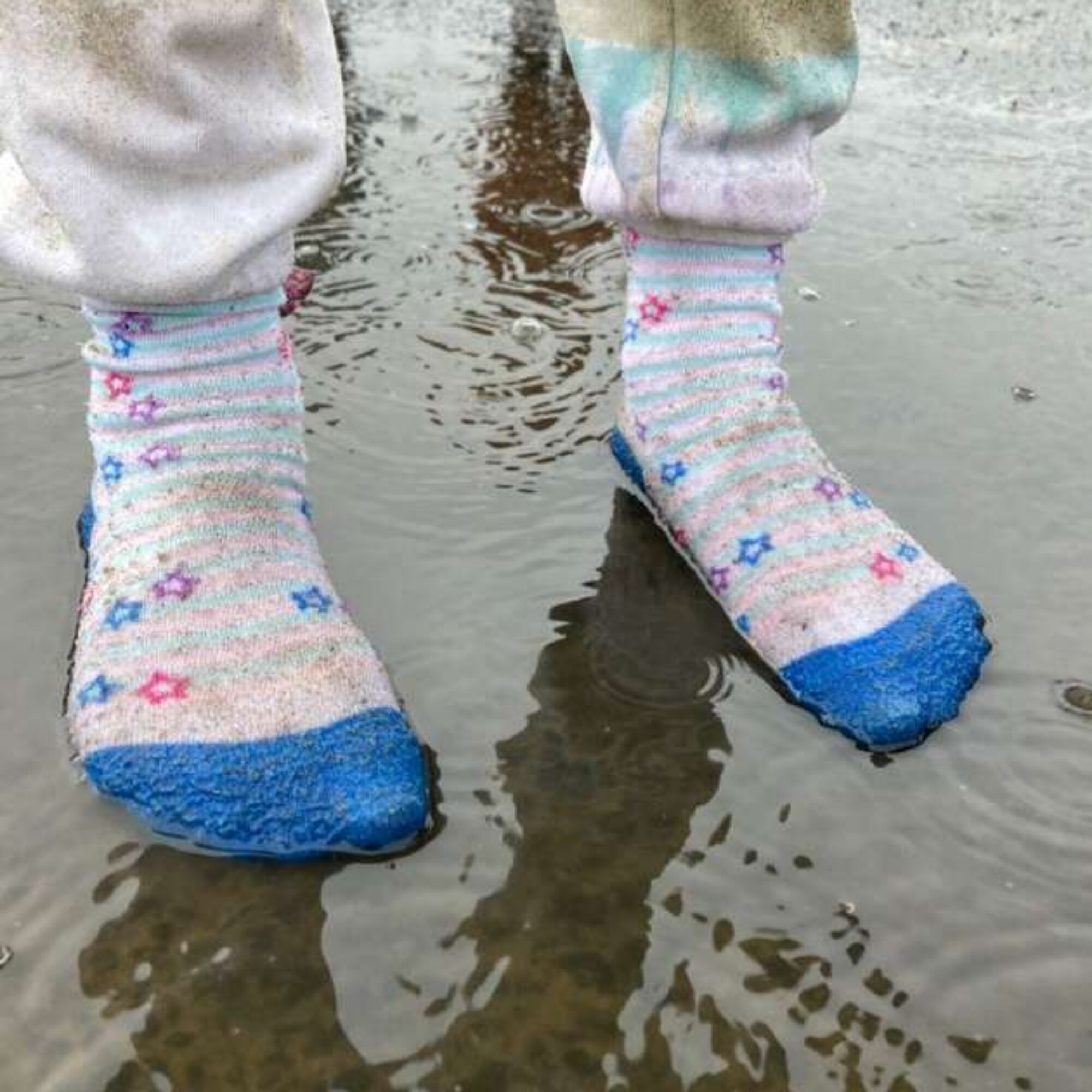
I have to add to what I wrote last month on How the liberation of living more sustainably feels. In that post, I wrote To describe what living more sustainably feels like, imagine one morning you walk out from your home and step into a puddle, drenching your feet. Imagine further that you’re in such a hurry that you don’t have time to change so you end up wearing wet socks the entire day. Living more sustainably is like taking off wet socks that have been making you miserable all day, the awareness of which you tried to repress but you never did. It’s like that but many times stronger. It feels like freedom and liberation. I left out scope and scale I left out…

0 Comments

I increasingly feel like I’m in Monticello listening to Thomas Jefferson

I feel increasingly like an abolitionist or anti-slavery politician around 1800 living in Monticello. Mainstream culture looks and sounds like Thomas Jefferson: He said some of the most important words in history on liberty and freedom. He knew how wrong slavery was. He knew owning people corrupted him. He knew he was violating his own values. Likewise, we all say we don't want to drive a system that hurts and kills people (in orders-of-magnitude greater numbers than slavery did in the US). We know we're violating our values. We know paying for gas, plastic, and services based on them cause death and suffering, which corrupts us. We know we're violating our values. Yet, like Jefferson not freeing his slaves, we don't stop driving today's system…

0 Comments
You’re lying to yourself if you believe we can ramp up wind and solar to replace fossil fuels and stop using them
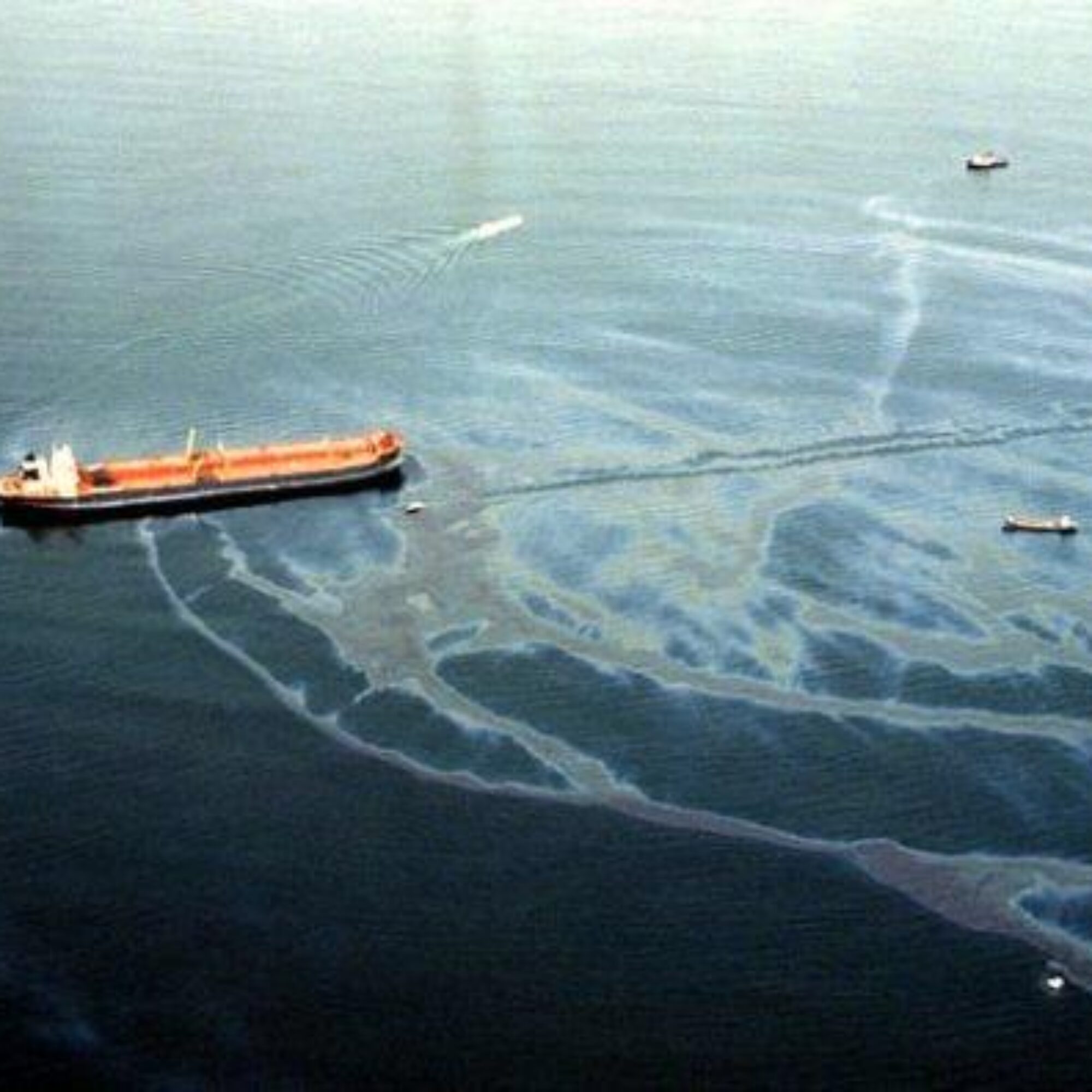
Exxon Valdez oil spill

You’re lying to yourself if you believe we can ramp up wind and solar to replace fossil fuels and stop using them

We have never decreased using any fuels. When we find new energy sources, we use the old one and the new one. Our plans to increase solar and wind have nothing to do with lowering fossil fuel use. This ordering doesn't work: First: Figure out how to create energy without fossil fuels or destroying life, liberty, and property Then: Stop using fossil fuels, nuclear, and destroying life, liberty and property The only ordering which can work: First: Stop using fossil fuels, nuclear, and destroying life, liberty and property Then: Figure out how to create energy without fossil fuels or destroying life, liberty, and property (Though, according to Adam Smith and the US founders, we don't need to create new energy sources to create the most…

0 Comments
Polluting and depleting are not examples of the Tragedy of the Commons
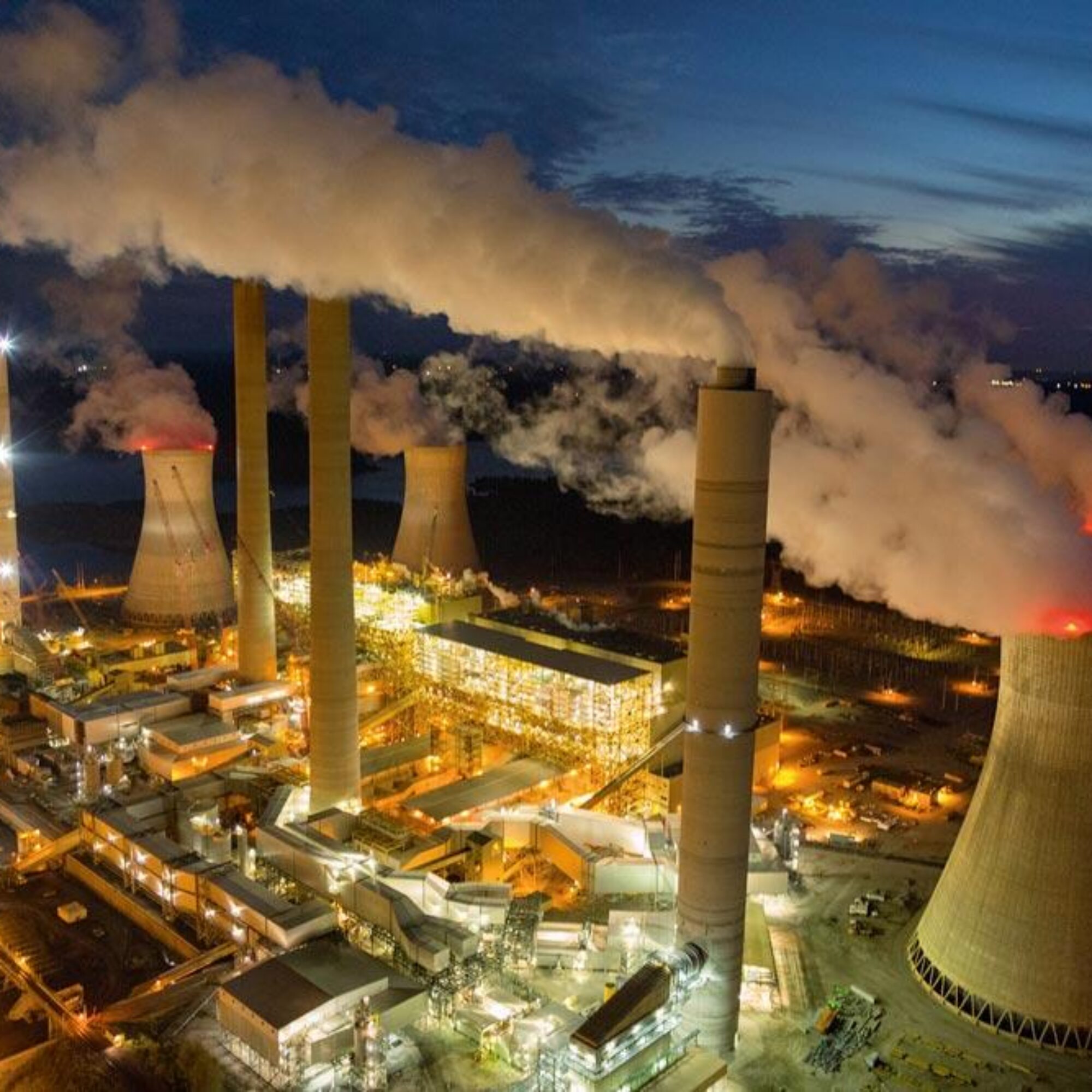
Oil refinery

Polluting and depleting are not examples of the Tragedy of the Commons

You probably know about the effect called the tragedy of the commons. The classic case is shepherds and a common grassy area. If each lets their sheep graze so they consume grass as fast as it grows, then each has the incentive to graze more, privatizing the extra profit while everyone else loses a smaller amount, but if all do it, everyone loses. Here is Wikipedia's definition: The tragedy of the commons is the concept that, if many people enjoy unfettered access to a finite, valuable resource, such as a pasture, they will tend to overuse it and may end up destroying its value altogether. Even if some users exercised voluntary restraint, the other users would merely replace them, the predictable result being a "tragedy"…

0 Comments

Is Artificial Intelligence More a Weapon Than a Tool?

There's a pattern in systems called an arms race, where two or more parties get stuck, each compelled to advance its military. When one does, all the others have to follow or risk being attacked or taken over. The pattern happens in other areas, but arms and the military is the prototypical example. We're all familiar with how this systemic pattern played out in the cold war, for example contributing to enough nuclear weapons to destroy all human life many times over, in the process diverting great amounts of wealth from helping people. One can argue if that wealth hadn't been diverted and war began because one nation knew it could defeat the one arming itself less, but that argument doesn't change that humans chose…

0 Comments

How the liberation of living more sustainably feels

Want to know what living more sustainably feels like? Our culture is so dependent and addicted to things like takeout, cars, and flying that pollution and depletion enable, we forget that using them destroys life, liberty, and property. We don't notice that our government benefits and grows in money and power from licensing and promoting one of its few core responsibilities nearly everyone agrees on. We don't notice that they have corrupted us from our deepest values, such as the Golden Rule, as far as I know found in every culture we've looked at. Living more sustainably brings mental freedom from the internal contradictions of living contrary to our values. Corruption doesn't feel good. I know from experience. I lived in accordance with mainstream culture…

0 Comments

Nearly everyone missed the biggest problem with nuclear and fusion, but it’s huge.

I wrote this letter to the editor of the New Yorker. It’s been long enough that I doubt they’ll print it, but I wanted to share my thoughts. Using nuclear and, if it ever works, fusion today is like someone in the 1950s throwing a plastic plate into the ocean, figuring, "The ocean is so big and the plate is so small, what difference could it make even if everyone threw plastic away?" People don't understand exponentials, even people who work with them, but an economy that grows by even a small percent annually grows exponentially. So will its waste, including the heat from generating power. To the editor, Elizabeth Kolbert's piece on environmentalists rethinking nuclear doesn't ask why the Japanese, who know the pain…

0 Comments

Would you ask a plantation owner in 1855 for advice how to abolish slavery? Why ask polluters today how to stop pollution?

Would you expect a plantation owner to have any idea how to abolish slavery? They would be the last people to ask to make a strategy for ending the practice providing their livelihoods and wealth. To ask a plantation owner to end slavery is to ask them how to give up everything they feel they own. They'd risk vengeance from the people they freed. They'd have to acknowledge their actions that hurt others and violated their own values, then lied to themselves and others about it. I'll copy the above two paragraphs, changing the domain from slavery to polluting and depleting. See if the perspective illuminates not to listen to polluters about how to stop polluting. It may be tempting to avoid comparing something to…

0 Comments
A definition of sustainability I’m testing
The United States Constitution

A definition of sustainability I’m testing

People sometimes ask me my definition of sustainability. Usually I say something about maintaining earth's ability to sustain life. Because we humans depend on other life, maintaining earth's ability to sustain life means its ability to sustain human life too. I like lots of life, but I like human life especially. I'm testing a new definition of sustainability: To be able to live without taking or harming others' life, liberty, or property and when taking something from nature, you leave at least where there is enough, and as good, left in common for others. You can probably tell I'm drawing on established enlightendigenous values. The first part comes from the US Constitution, the second from John Locke's Second Treatise on Government. It seems like this…

0 Comments

Democrats and Republicans are dancing together on sustainability for their mutual benefit, avoiding action, rallying their bases

A brief political history of sustainability [If you've watched my Short Course on Sustainability Leadership, you'll recognize the following from my session on the political opportunities. I'm putting only the main points here. I'll develop it more in a future post. I wanted to start writing. If you haven't watched the course, I think you'll find it one of the most important resources on our culture, the environment, sustainability, and leadership.] Scientists discovered our environmental problems/symptoms. They proposed solutions. Since academia skewed liberal, so did their proposals, even if they didn't intend to advance their politics. They just proposed what made sense to them. Conservatives saw their proposals as advancing liberal causes, all the more since they weren't practicing their proposals, so reacted against the…

0 Comments

“Ecotourism”: What a scam. Why not “solve” other problems by calling them “ecolittering,” “ecopolluting,” and “ecoextinction”?

I was listening to a podcast ostensibly about sustainability and nature. The particular podcast isn't important because this pattern happens in many places. One of the guests was talking about tourism that seemed no different from any other tourism, but she called it eco-tourism. The only difference I could tell from any other tourism was the name. People were destroying cultures and ecosystems as much as any other tourism. The people she described seemed to think of themselves as good guys, but as far as I could tell, based not on their behavior or impact on others, but only on how they thought of themselves. Putting the prefix eco- before tourism seemed to justify their categorization in their own minds, as far as I could…

0 Comments

End of content

No more pages to load