
This week I finished:
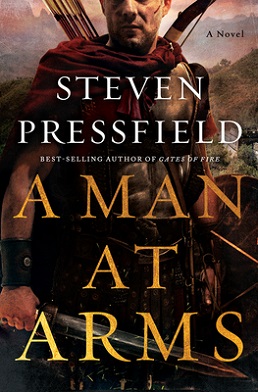
A Man at Arms, by podcast guest Steven Pressfield: I hear Steven has two groups of fans — those of his The War of Art-type books and those of his historical fiction — and they don’t overlap much.
I was in the first group. His latest book, The Acadian, comes out soon. We’re scheduled to record our second podcast episode on it this week. It stands on its own, but follows A Man at Arms, so I started with it. I’m also watching his Warrior Archetype series. It’s also my first novel in a while.
The basics are great, but it works as a complete whole where each part builds to a conclusion that feels greater than the sum of its parts.
By basics, I mean that the book is engaging. The characters and context are full of details that bring me into the moment and make me want to keep reading and learn more about the time and place beyond just reading the book. The time and place are the eastern Mediterranean in 55 CE, Roman occupied Judea, Egypt, and Greece. The people are struggling with changing religions, government structure, freedom, and empire, among other things.
The characters are fictional, but relate to people we know of, including the recently deceased Jesus, the active recently converted Saul-now-Paul, and people struggling to decide what faiths to follow. They are also men, women, and children with their own histories, struggles, and identities.
What makes the book meaningful beyond just an engaging story is that their characters and struggles resonate remarkably with those of people, including ourselves, and cultures, including our own, today.
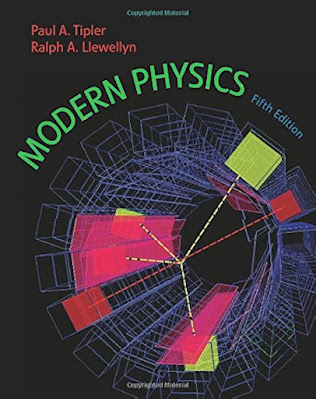
Modern Physics, by Paul Tipler and Ralph Llewellyn: A few years ago, I found this book in a pile of stuff a neighbor was throwing away. I had sold all my physics books in the process I described in one of my oldest posts, Less, please, from 2009, and still one of my most important.
This book is a textbook for advanced undergraduates. I have a PhD in physics, but hadn’t read serious science in the subject in a long time, though I count podcast guest Tom Murphy’s book Energy and Human Ambitions on a Finite Planet, which I call The Science Book of the Decade (also a free download).
Even for me, physics textbooks aren’t casual reading. They aren’t made for linear reading, like a novel. Nonetheless, they contain some of the pinnacles of human understanding and pursuit in one of the most beautiful things in existence: nature. I think most people would see it as a bunch of equations about technical stuff.
I see the beauty in the equations that I suspect a musician sees in sheet music even without hearing it. The equation describing how light refracts in water contains all the beauty of a rainbow. As with the musician, it takes practice and hands-on practical experience to see it, but it’s there. I have that experience from doing the reps, though I’ve forgotten a lot.
I loved reading this book. I read each chapter in order, not in the depth or as actively as when I was studying physics, but with an increasingly beginner’s mind. Things I had learned before I learned in new ways, especially the basics of relativity and quantum mechanics. Before I learned mainly to know how to solve problems I might see on tests. This time I tried to see human perspectives I hadn’t considered as much before:
- The mindsets of people facing a discovery that didn’t make sense before the discoveries that explained them. For example: before special relativity, how did it look that Maxwell’s equations predicted a constant speed of light or Michelson and Morley’s experiment not finding the speed of the aether?
- The mindsets of people pursuing new ideas whose consequences undermined our understanding of reality. For example: that some processes are random and keep turning out to be after all experiments or that the universe was larger and more dynamic than anyone expected.
In some ways I thanked my lucky stars, if you don’t mind the cliche, that I could understand these things as much as I could. Ask many people to name a few geniuses and I bet that while a few will offer Shakespeare and Mozart, Einstein will top the list with Newton and Galileo nearby.
I’m glad that people write books on nature for the public, but they don’t compare with books with problems to solve. In the case of physics, the language of its patterns is mathematics and our understanding of it comes from observation and experiment.
I didn’t get out pen and paper and solve the problems. I also skipped a lot, for example applications I wasn’t that interested in, like lasers. I could keep reading it for years. It took me years to get this far, but I’m focused on other things. I only started reading it because I stumbled on it. I mostly read it when there wasn’t much sun and my batteries were dead. I’ll pick up with more physics the next time another similar book falls into my lap, or something like that. I’ll post this one on Craigslist free.
Changing views of extinction in history, by Bill Kovarik: This piece is an article in on online journal I find fascinating, Environmental history: Timeline and historical insights. I confess I haven’t read every word, but it presents a history of the conception of extinction. It
I found it while researching the idea of the Great Chain of Being for my upcoming book, which, as I understand followed from a concept called scala naturae, or scale of nature, based in Aristotle and Plato. The piece presents early thoughts on extinction:
The idea that a species could become extinct was inconceivable a few hundred years ago, contradicting the long-standing biblical and Aristotelian world view of a static and permanent order of creation known as the “Great Chain of Being” (Glacken, 1976, p. 481). For example, when future US President Thomas Jefferson argued with leading French naturalist Comte de Buffon in 1787 over fossils and the alleged “degeneracy” of North American mammals, they disagreed about the size and soundness of their respective great mammals, but they were in perfect agreement about their roles in the Great Chain of Being. “Such is the economy of nature,” wrote Jefferson, “that no instance can be produced of her having permitted any one race of her animals to become extinct” (p. 366).
Jefferson and most others of his era resisted the concept of extinction despite mounting evidence being compiled by another French naturalist, Georges Cuvier (Rosenberg, 2009).
These views clarify how people could treat the killing of huge numbers of animals like bison and passenger pigeons lightly. If a species couldn’t go extinct, why worry about killing them. What with spontaneous generation, its members will always grow back.
Sadly, the response to extinction seems mainly focused on helping the species becoming extinct, not on our behavior causing the extinctions …
or, more deeply, our cultural elements driving the behavior—that is, our stories, images, beliefs, role models, etc …
or, yet more deeply, the material conditions driving the development of that culture, by enabling dominance hierarchy, competition over finite resources, and pollution. My upcoming book covers these things.
I recommend this piece for its trace of our views of extinction with many quotations from people at the time.