
This week I finished:
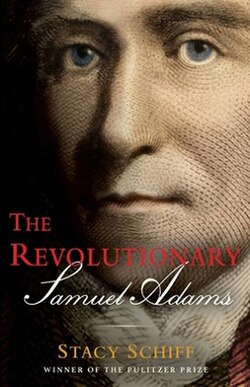
The Revolutionary: Samuel Adams, by Stacy Schiff: After biographies and documentaries of Washington, Franklin, Douglass, Lincoln, Calhoun, Jefferson, and I’m sure I’m forgetting others a biography of Samuel Adams by a Pulitzer Prize winner made sense.
I didn’t know how important he was before Washington and even before Franklin. I learned back stories to the colonists’ responses to the Stamp Tax, the Townsend Acts, and more. Of course the Tea Party. The purpose of Paul Revere’s midnight ride. How much the Tories controlled commerce and gave government positions to their families. How much Samuel Adams led Americans to rebel. How quotable he is.
A well-written book that tells the story before the revolution in Boston, then Lexington and Concord, as well as Philadelphia. Other prominent names in the book beside Samuel Adams include Otis, Hancock, John Adams, Paul Revere, and on the loyalist side Hutchinson, Gage, Bernard, and King George III.
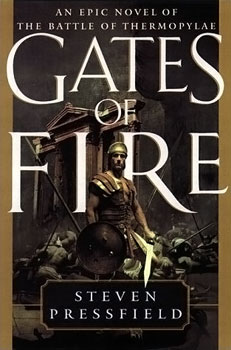
Gates of Fire, by podcast guest Steven Pressfield: Yes, I read this book only a couple weeks ago. I learned from a college professor always on finishing a book to reread the first few sentences or paragraphs. She pointed out that authors can’t resist stating in those sentences what the book is about.
I learned that lesson in 1988 or 89 and still practice it to today. In the case of Gates of Fire, I couldn’t stop myself from finishing the whole book again. I skipped a few parts after the main character arrives in Sparta until the first battle.
I didn’t regret going through the book a second time so soon. I looked up on the net about its level of historical accuracy. Apparently a lot of the details are made up. Sparta wasn’t that rigid.
I couldn’t help notice one character says “Look at him. If his face gets any redder, he’ll burst like a tomato.” I suspected and looked up to make sure: humans found the tomato in the new world. It arrived in Europe after 1492, so couldn’t have been referenced in ancient Greece.
I’ll see if I can bring Steven back for another podcast episode.
 Together Together, directed by podcast guest Nikole Beckwith: How did I wait so long to watch this movie directed by a podcast guest?
It tells a story of a woman who signs up to be a surrogate mother for a single guy, using another woman’s egg. Both characters communicate poorly. The guy is repressed and suffers from being liberal at the same time as he is straight, white, and male, so acts like a dog trying to show it is not a threat by putting its head down.
Here are some images of submissive dogs that show the guy’s behavior. I couldn’t resist looking them up because the guy was so annoying.
Anyway, the movie was otherwise well-made. I enjoyed seeing the name of someone I met in person and recorded a conversation with in her home show up at the end of the movie.




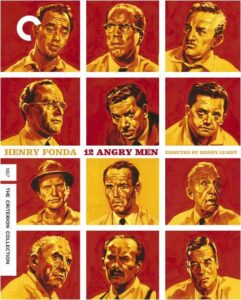 12 Angry Men, directed by Sydney Lumet starring Henry Fonda and Lee Cobb:
I was considering how it felt to face having violated your values and thought of the eleven jurors who switched from voting to condemn a man to death to voting not guilty, especially Cobb’s character. Then when I borrowed Together Together from the library, there was this dvd (actually pair of dvds, since it included some documentaries), so I borrowed it too.
I remember him tearing up the picture of his son, but forgot that he talked about his son, showed that picture earlier, and shared the conflict that led to not hearing from his son in two years. The other jurors asked him why he treated this case so personally. He seems to have wanted to kill an innocent boy out of rage at his son, borne of intense, suppressed emotion toward himself, maybe disappointment, inadequacy, pity, or something like those emotions.
Each jurist except one has to face that he was going to send a likely innocent young man to his death. Even Fonda’s character was ready to.
How many of us will face that we are acting against our values, in ways that cause death?