Education


New SIDCHA series post

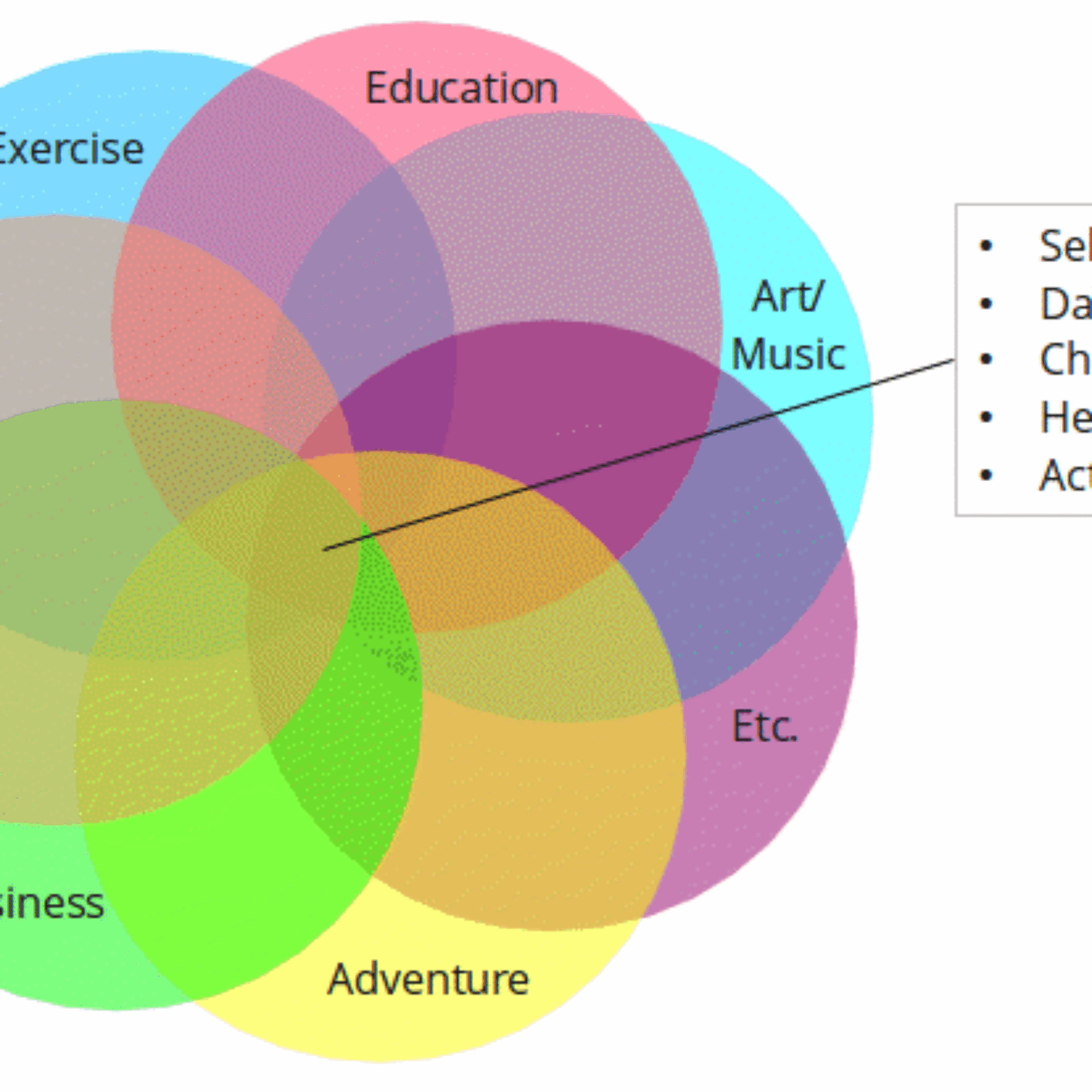
[I wrote a new introduction to my SIDCHA series. I'm happy enough with it to share it as a regular post.] Most people seem to want improve themselves, personally or professionally. Reading, watching, and listening to people tell you how you can develop yourself professionally or personally doesn't change anything beyond give you a bit of information. People don't succeed because they have more information. They succeed because they act. Even if you know you should do something, how do you know what? Marketers are trying to tell you what to do. They promote diets, exercise, how to start businesses, learning business skills, learning to become rich, learning languages, learning programming languages, religions, networking, and so on. It's bewildering. Each category has innumerable sub-categories. I…

0 Comments

Why I am inspired to learn leadership

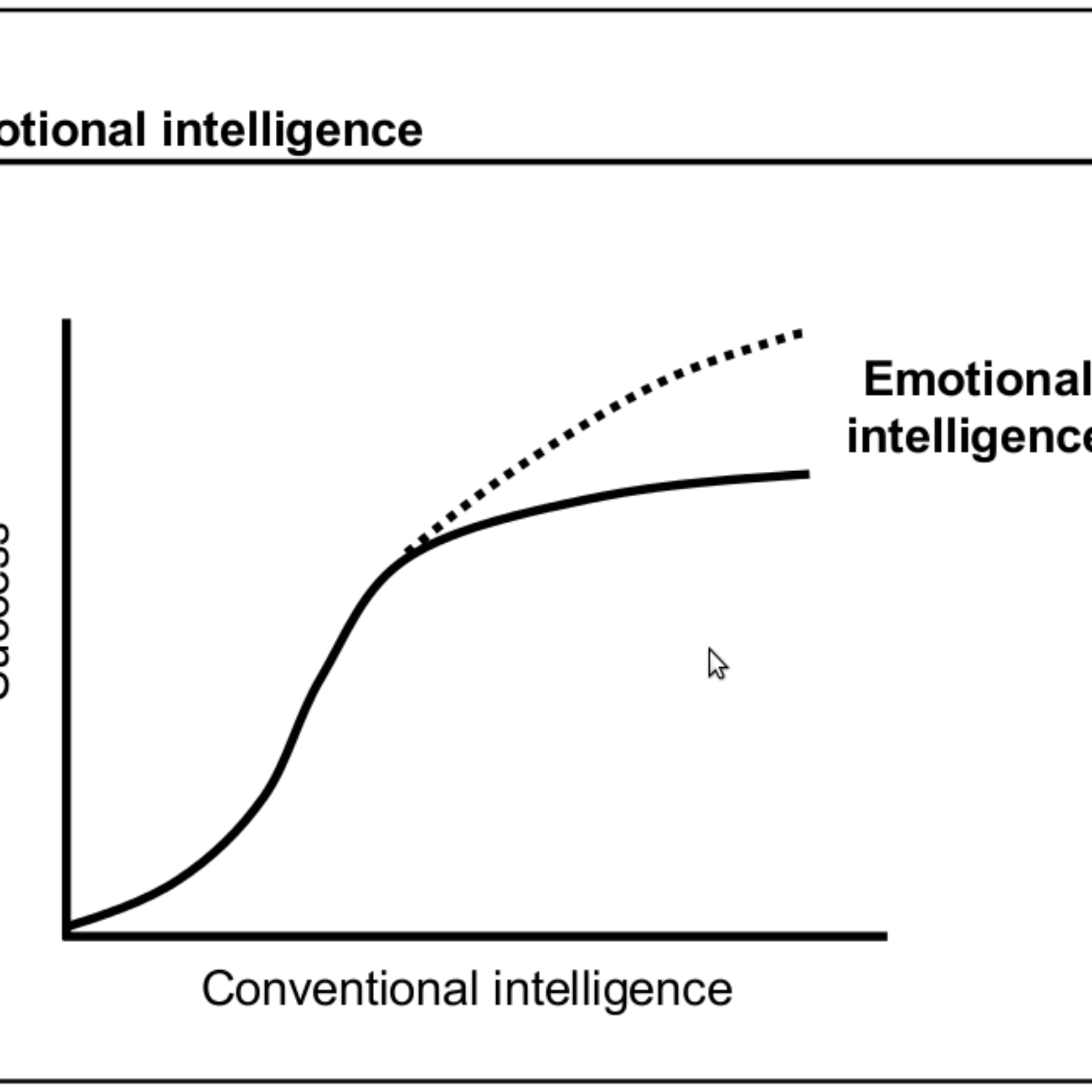
To business people I say I was very analytical, which is how they describe themselves. In casual conversation I say I was a geek or nerd. When I was young, those terms were still insults, before everyone got computers and became geeks and nerds too. To business people someone being analytical usually means they have poor people skills, which to them means low emotional intelligence, which means limited ability to rise in a corporation or make deals. That's about as big a problem you can have in business. By the time I was in business school, I knew I wanted to keep starting businesses, so I valued success in business. Here is the main slide covering these concepts my core leadership class used, showing that…

0 Comments

See Joshua Spodek on leadership at General Assembly, Sunday October 19

Attendees keep giving me great ratings, so General Assembly keeps inviting me back. If you like entrepreneurship and you don't know General Assembly, you should. They teach great courses and have built a great community around teaching relevant skills. On Sunday, October 19, 10am-5pm, I'll lead a seminar with General Assembly on leadership in New York City. Register here, you'll be glad you did. Here is the announcement (they use short descriptions, for a fuller description, see this announcement from an earlier event): Lead the Way: Effective Leadership Techniques Joshua Spodek Adjunct Professor at NYU-Poly About This Workshop You've ascended to a position of leadership, but how can you ensure that the people you are in charge of will be responsive to your leadership style?…

0 Comments

If we taught piano like we teach leadership

If we taught piano like we teach leadership, here are a few options of how we'd do it. Method 1 Put twenty or more people who wanted to learn piano in a room Lecture about music theory for a few lessons Talk about the lives of historical famous piano players Point them to a piano on a stage with an audience full of people who will evaluate them and tell them to play Tell them it's okay to make mistakes, everybody does Wish them luck and have them play Method 2 Put them in a room with other piano players who learned from other piano players who learned from piano players etc, but no one learned from someone who learned to teach piano Hope they…

0 Comments

Reminder: International Entrepreneurship Panel, October 6 at NYU

I found a problem last year teaching entrepreneurship at NYU. Most students I worked with were born outside the U.S. and many wanted to become entrepreneurs. As much as they wanted to start businesses, many of our conversations had this phrase in them: … but I have to get a job with a big company to sponsor my visa. Following on the last year's successful Women in Entrepreneurship panel, I suggested to a couple people the idea of a panel on non-citizens who wanted to start companies here. People liked the idea and it took off. The panel has Three non-U.S.-citizens who found ways to start companies here and stay One immigration lawyer who knows the rules One Director of NYU's Entrepreneurship Institute, well-connected in…

0 Comments

International Entrepreneurship Panel, October 6 at NYU

I found a problem that I think helps no one last year teaching entrepreneurship at NYU, also as a mentor. Nearly all the students I worked with were born outside the U.S. They picked my course, "Entrepreneurial Marketing and Sales" or picked me as a mentor largely because they liked entrepreneurship. Many wanted to become entrepreneurs. As much as they wanted to start businesses, many of our conversations had this phrase in them: ... but I have to get a job with a big company to sponsor my visa. Non-citizens who wanted to start companies either had to leave the country to start one or work at a big company to stay. Following on the success of the Women in Entrepreneurship panel I helped organize…

0 Comments

Video: How to make selling fun and effective

In motivation, influence, and persuasion, sales and leadership overlap a lot. Sales is also the most common route to CEO, I've heard, so if you want to lead, you benefit from learning sales. Below is a video interviewing a guy who is incredible at sales. He sold an apple for five dollars, with the buyer believing she got a discount! My retelling the story about it led to a friend offering him a job. And the guy is still an undergraduate at NYU. This video tells the story of his acting on my assignment to sell an apple for as much as possible. I didn't even assign it to him. I just told him about the assignment I gave to my Entrepreneurial Marketing and Sales…

0 Comments

See Joshua Spodek on leadership at General Assembly, Sunday September 28

If you like entrepreneurship and you don't know General Assembly, you should. They teach great courses and have built a great community around teaching relevant skills. On Sunday, September 28, 10am-5pm, I'll lead a seminar with General Assembly on leadership in New York City. Register here, you'll be glad you did. Here is the announcement (they use short descriptions, for a fuller description, see this announcement from an earlier event): Lead the Way: Effective Leadership Techniques Joshua Spodek Adjunct Professor at NYU-Poly About This Workshop You've ascended to a position of leadership, but how can you ensure that the people you are in charge of will be responsive to your leadership style? In this class, you'll learn effective ways to motivate people in the context…

0 Comments

Why I don’t think much of TED talks

Do you watch TED talks? Many people seem to love them. Here's why I don't think much of them: When I ask people if they find TED talks inspirational, most people who watch them say yes. When I ask people to point out specific changes to their lives---that is, to describe what the talks inspired them to do---almost nobody can name action they've taken. Most changes people have taken have seemed minor to negligible. I'm sure many people have acted on their feelings of inspiration, I just suspect a small fraction of the number who watch. I've concluded TED talks give the feeling of inspiration without actually inspiring. I don't fault the talks or the speakers. I find many of them impressive. The format is…

0 Comments

See Joshua Spodek at Cole Haan, Flavorpill, and General Assembly’s Inspiration Workshop, September 6

Post-event update: see a write-up and video of the event here -- http://flavorwire.com/477424/history-begins-here-starting-a-legacy-in-nyc. Everybody who attended it seemed to love it. My event had a packed room with enthusiastic participants. I made several great connections at my event and the others I attended. I hope to see you next time. See me next weekend The event is free and there's lots more than just me presenting on leadership. My part is next Saturday, September 6, 12:30pm-2:30pm. I'll talk on leadership and lead attendees through some exercises to develop leadership skills. People describe more workshops as inspiring and I teach others to inspire (though you have to practice). Click on the image to RSVP and for all the logistics.  

0 Comments

How to handle leadership issues when you don’t have authority

What do you do when you see ineffective or counterproductive leadership of a group you're in and you're not one of the leaders? Do you just let it happen? Do you act? Do you talk to the leader? Usually I don't step in if I'm not in a position of authority and no one asked me to act. Rarely I step in. In 2008, I spoke up on a mailing list for Columbia Business School's alumni club when things seemed polarized, divisive, and moving toward desperate actions, which I posted here. The administration emailed me to thank me for that email. Recently I saw something similar happening with another online community I'm a part of and I spoke up again. I got many emails thanking…

0 Comments

Learn more leadership, motivation, and influence Saturday!

This Saturday, August 23, 10am-5pm, I'll lead a seminar with General Assembly on leadership in New York City. Register here, you'll be glad you did. This is the seminar that led to this testimonial: Josh, you may be interested to know I took out an Associate who will be working on my team and used your technique. She teared up, saying, no one ever asked her these questions and she is so grateful that I am taking an approach to her work based on what she likes and wants to do. It also revealed some of her deep fears and it was quite profound. Invaluable, thank you. I felt terrific afterward—in that she felt great and also that I felt I could get more out…

0 Comments

My plan to solve executive pay

Executive pay in the U.S. is out of hand and everybody knows it. Wikipedia put it well Executive compensation in the United States differs from other employee compensation in the forms it takes, laws and regulation it is subject to, its dramatic rise over the past three decades and wide ranging criticism leveled against it. In the past three decades in America executive compensation or pay has risen dramatically beyond what can be explained by changes in firm size, performance, and industry classification. It is the highest in the world in both absolute terms and relative to median salary in the US. It has been criticized not only as excessive, but also for "rewarding failure"—including massive drops in stock price, and much of the national…

0 Comments

Why I chose to study science

One of the main reasons I started thinking about physics was a college course I took called something like "Philosophy and Physics" by a Professor I liked a lot, David Albert. He's still teaching courses on the philosophy of science. The course covered the challenges of understanding the results of quantum mechanics experiments which look nothing like regular life---double slit experiments and things like that. I loved the course. I had taken only basic physics courses by then. It was purely philosophical, with no math or experiment. I liked the course enough to consider majoring in philosophy of science. Then it hit me: I don't want to interpret other people's discoveries. I want to discover things myself and let other people interpret them. That meant…

0 Comments

Problems with learning leadership skills only on the job

How many of the people in leadership positions over you do you think led well? Think of all the teachers, professors, coaches, Presidents, Congress-members, and so on. I'd bet no more than a few stand out as excellent. If your way to improve your leadership skills---presumably one of your best ways to get promoted, more responsibility, more pay, and so on---is to try to act like leaders you know, you don't have many role models. Learning leadership skills from watching people around you is like learning a sport from neighborhood pick-up games instead of finding an effective coach with a winning team. I think a lot of people learn the leadership equivalent of sandlot ball, never realizing their potential. People with skill, experience, and motivation…

0 Comments

A problem with teaching high-level principles

Most leadership books teach high-level principles and so-called "laws." I've read books that tell the reader to create purpose or meaning for their followers, or to engage them, without describing how to do those things. Leadership is experiential. We gain high-level principles from experience, not the other way around. High-level instruction like that doesn't help people learn to lead. It helps the people who need it most least. It's like telling a beginner pianist to play with feeling or to express themselves through the music when they probably haven't learned to play basic scales. Since few people have had explicit and effective leadership training, the equivalent of giving them scales would help more. If you tell someone to pick something up or to fill out…

0 Comments

Lessons in freedom and self-expression from a high school student in a project-based learning school

Kids often say things more clearly than adults. Actually, I think I should credit the insight below as much to inquiry-driven project-based learning as to the innocence of youth. Context: When I visited Science Leadership Academy last winter, a student led a tour of the school. A question came up about school uniforms, which the school didn't have. During the discussion on the topic, someone asked if any problems ever came up from students causing trouble by pushing limits on how they dressed. Our guide said no. Someone asked, "Really, why not?" She said, "We know that we can do it, so we don't have to." That perspective, to me, is a major piece of awareness, self-expression, and freedom: knowing you can do something but…

0 Comments

Common traits among leaders and successful people across industries, fields, and disciplines

A reader asked me to write about common traits of leaders and successful people across different industries and fields. Of course there's a famous business book that covers seven of their habits. I'll look at it from a couple different perspectives. Functional skills hold you back at higher levels Functional skills are ones to do a specific type of work, like sales, programming, engineering, marketing, and so on. Most people get hired for functional skills. They look good on your resume when you start. A typical job progression for someone who succeeds at each level starts with a functional role and keeps getting promoted: a salesperson gets promoted to sales manager, who manages other salespeople. From sales manager they get promoted to a higher level…

1 Comment

See Joshua Spodek on leadership at General Assembly, August 23

If you like entrepreneurship and you don't know General Assembly, you should. They teach great courses and have built a great community around teaching relevant skills. On Saturday, August 23, 10am-5pm, I'll lead a seminar with General Assembly on leadership in New York City. Register here, you'll be glad you did. Here is the announcement (they use short descriptions, for a fuller description, see this announcement from an earlier event): Lead the Way: Effective Leadership Techniques Joshua Spodek Adjunct Professor at NYU-Poly About This Workshop You've ascended to a position of leadership, but how can you ensure that the people you are in charge of will be responsive to your leadership style? In this class, you'll learn effective ways to motivate people in the context…

0 Comments

There’s no point in trying to figure *everything* out

Do you get hung up trying to figure everything out or worry you can't succeed if you don't learn enough? A lot of people seem to, to the point it debilitates them. I like information, but I don't get hung up trying to figure everything out like I used to. Another way of looking at everything I find the following perspective helps. Our minds didn't evolve to understand everything. They evolved to help our ancestors live and pass on their genes. If my life is in danger, I focus on solving the problem. As long as my life isn't in danger, I use my mind to enjoy life and experience emotions I want---in other words, living the life I want. The universe stretches on for…

0 Comments

Student-driven inquiry-driven project-based learning rocks!

The KQED blog in San Francisco that covered my using inquiry-driven project-based learning teaching entrepreneurship at NYU recently covered something more remarkable: a student-created program in a high-school where the students create and do their projects on their schedule. The article, "This Is What a Student-Designed School Looks Like," speaks for itself, describing how a Massachusetts high school student saw engagement and mastery lacking in his classmates at his high school and proposed a program to use project-based learning to evoke it. I recommend reading it if you are interested in leadership, motivation, education, and how to improve any of them. The article alluded to but didn't spell out a major enduring benefit of that style of learning that I want to point out. It…

0 Comments

Logic and convincing don’t motivate: an example

If you want to motivate someone, using logic to convince them of what to do often seems like it should work. It rarely does. If the person is already inclined to follow, you don't need it. If they aren't you'll just as likely provoke them to argue back as to follow. Here's a story to illustrate. Context: In college sports (ultimate frisbee), at weekend tournaments we'd play three or four games, leaving us tired, sweaty, dirty, and hungry at the end of the day. After the last game, we'd usually collapse on the sideline of the field where we just played. The problem: We wanted to shower, change, and eat, and the sooner the better. But we rarely did. That would take driving to the…

2 Comments

More value of low-level instruction for leadership: Margaret Thatcher

The more I teach and coach leadership, the more value I see in low-level instruction. Possibly because people think of leaders having high-level positions in organizations, I find the expect high-level instruction for leadership. I find beginning with the opposite---low-level instruction---more effective. Like piano lessons begin with scales, dance begins footwork, and many sports begin with basic cardiovascular and strength training. Sadly, most of what I learned about leadership in school was high-level and abstract, including Columbia Business School's leadership classes. For someone with little leadership awareness, the classes were invaluable, but looking back, I could have used more basic instruction. Schools seem to leave the low-level stuff for learning on the job, but jobs and managers don't take a personal interest in you like…

0 Comments

Op/ed Fridays: “Free speech zones” undermine free speech

Monday's opinion piece, "Turning College Into a No-Thought Zone,"described how a semi-public college in California created what it called "free-speech zones" where students could speak freely, disallowing some forms of speech everywhere else. The article contained this statement (sadly, to me, from someone else with a physics background): "The creation of the free-speech zones, and the enforcement of sound-level ordinances, was not to prevent free speech, but give religious or political speech a time, place, and manner that would allow speakers to address their messages to audiences on campuses without disrupting the other fundamental functions of the institutions," wrote a retired physics professor commenting on a Chronicle of Higher Education report. That was the purpose of the Constitution, to make the entire country a free-speech…

0 Comments

“Slow and steady wins the race” is garbage

As long as I can remember, I've considered the phrase "slow and steady wins the race" garbage. I don't understand why they teach it to kids instead of useful lessons. We all know the fable by Aesop about the tortoise and the hare from which it comes. The hare makes fun of the slower tortoise. They race. With a big lead, the hare takes a nap then wakes up to find the tortoise, crawling slowly but steadily, about to win. The hare tries to catch up but doesn't. Then the tortoise or the storyteller says "Slow and steady wins the race." The animals' speeds or variations of them isn't the issue! The issue is the hare went to sleep in the middle of a footrace.…

0 Comments

End of content

No more pages to load