Education


The Art of What Works

One of Columbia Business School's most popular courses in recent years has been in strategy, called Napoleon's Glance, named after a book by the instructor, Bill Duggan. Former students I've talked to rave about it. I was fortunate to do an independent study with him before his course exploded in popularity. Now it's so successful I doubt he could devote that kind of attention to a single student. Despite the course's immense popularity at one of the world's great business schools, I was more influenced by his book The Art of What Works. This excerpt from the back cover gets the gist of the book well for me, especially Jack Welch's quote: While every business situation you confront is unique, it is invariably made of…

0 Comments

A leadership dream

Since posting on lessons leaders can learn from method acting, I've been thinking about parallels between acting and leadership -- in particular how acting changed when Constantine Stanislovski led changing the art to expressive and internal from impressive and external. "Impressive and external" means the actor tried to impress the audience with outward showiness. "Expressive and internal" means the actor tries to find emotions inside and express them. You know what acting before looked like. Jon Lovitz and John Lithgow mocked that style on Saturday Night Live in its Master Thespian sketches in the late 80s (this transcript of a sketch made me laugh after all these years). I haven't studied the history of acting, but I think the comedy sketch gets some of the…

0 Comments

My comedy sketch script

I've meant to post this script for a long time. In business school I wrote a script that ended up in Follies, Columbia Business School's student-run sketch comedy and musical production at the end of each semester. In my time there, Follies produced some of the best sketch comedy and musicals, including Every Breath Bernanke Takes, which got us press and a letter from the White House. [youtube]http://www.youtube.com/watch?v=ipJTqCbETog[/youtube] The sketch I wrote ended up a very funny piece. Getting to be on stage for a piece I wrote, including a line or two that got the 500 people in the audience to laugh on cue, with the type of laugh -- I don't know of anything that made me feel better than those moments and…

0 Comments

Business people should understand our effect on the environment better than anyone, part 2

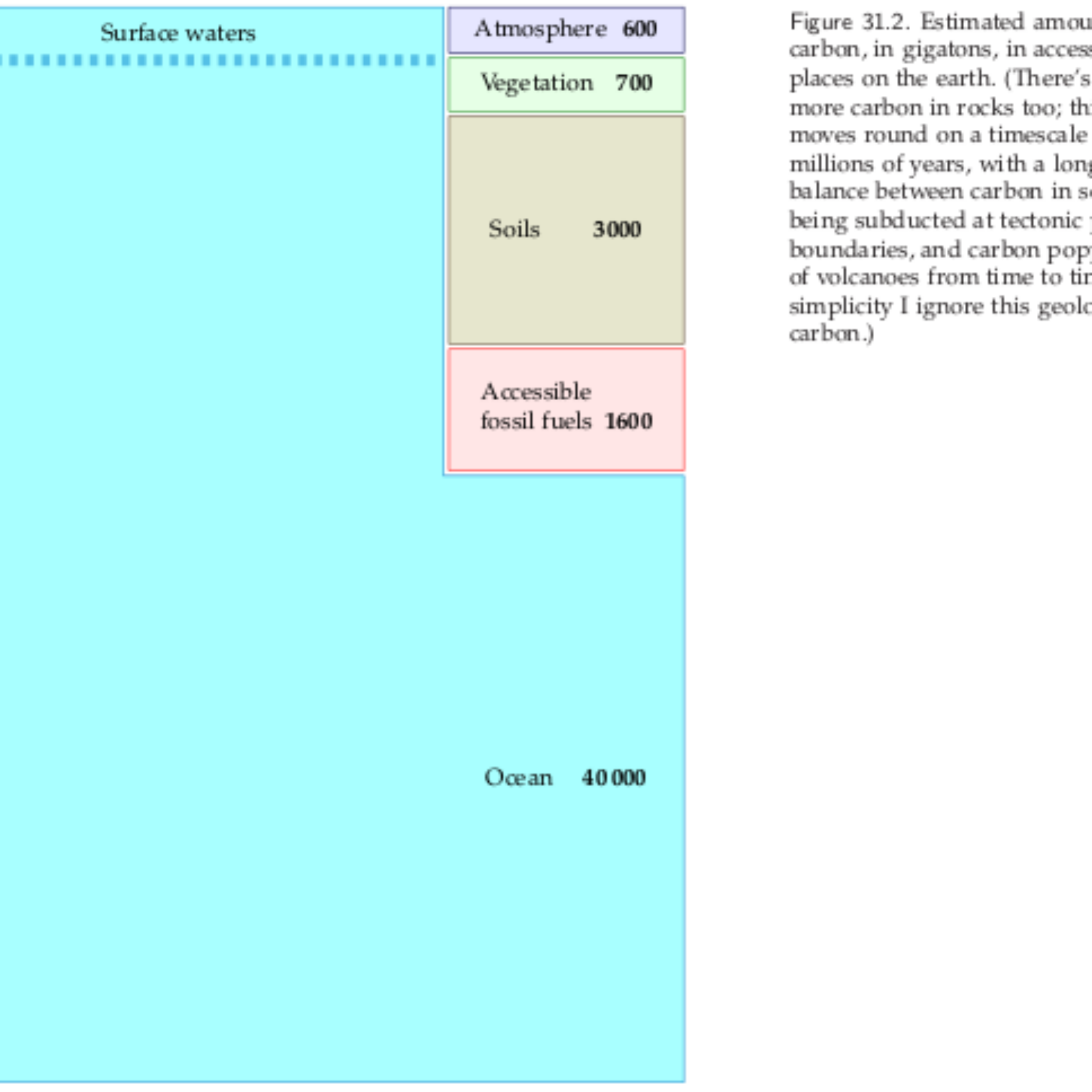
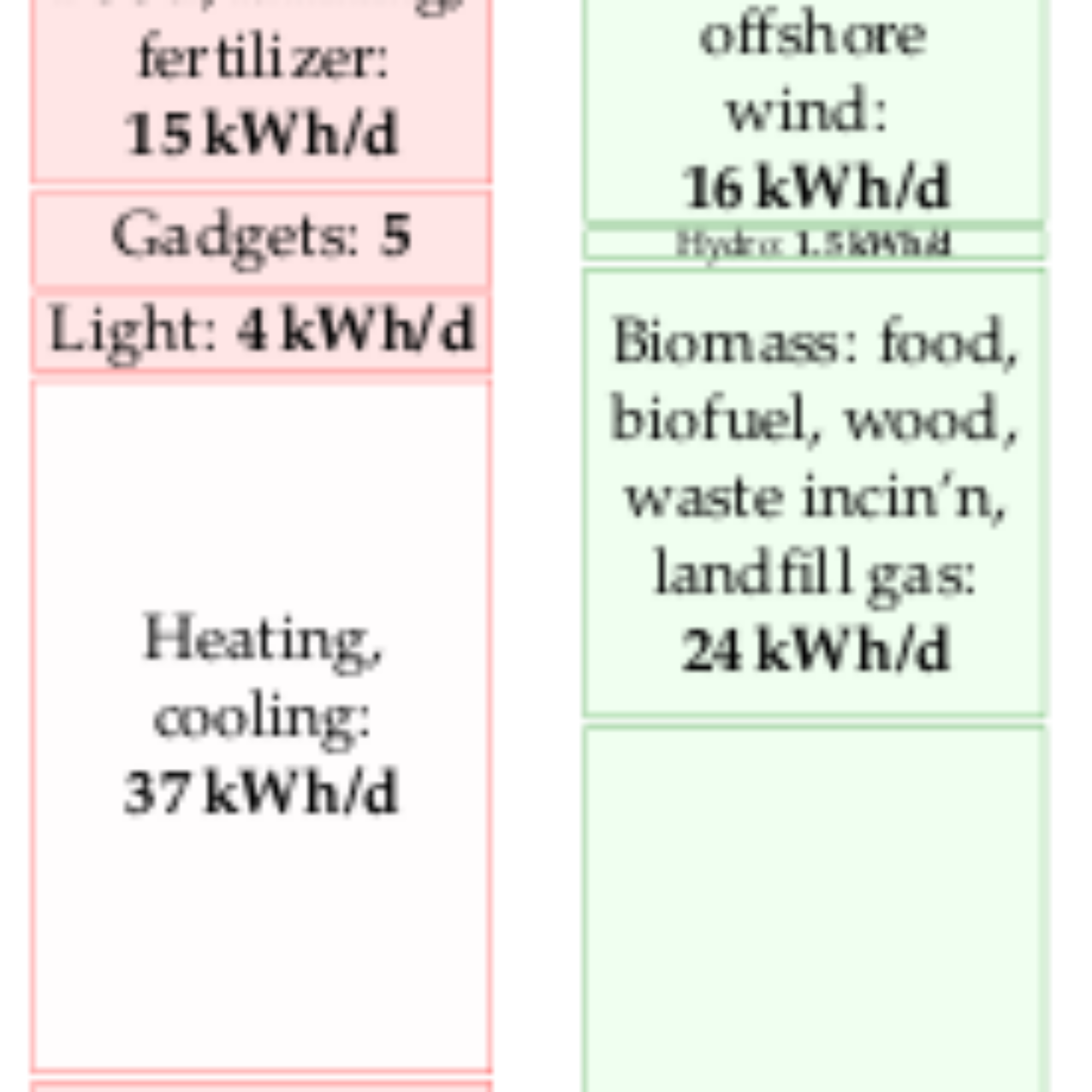
Following up yesterday's post on balance sheets and charts for using and producing energy and reporting our numbers to see if we can make them balance, let's look at carbon flows. People who don't know about carbon emissions, flows, and balance confuse simple ideas with each other. For example, some talk about how volcanoes and cows digestive systems produce tons of carbon and wonder why we should bother changing our practice. When you understand amounts and flows, you don't confuse unimportant effects for important ones, like business people who learn not to be penny wise and pound foolish. Below is a representation of where carbon is on the Earth. It's not exactly a balance sheet, though over time the total numbers have to add up.…

0 Comments

Business people should understand our effect on the environment better than anyone, part 1

People don't realize it, but business people have some of the best the skills to understand our effect on the environment. We should learn those skills from them. I didn't have much (any?) business experience when I co-founded my first company. I couldn't read a balance sheet or know accounting. My science background taught me to understand general and broad patterns, which don't suffice for running a company. Either the check clears or it doesn't. Business school taught me how to manage cash -- accounting, keeping and reading balance sheets, profits and losses, cash flows, and so on. Many people understand how we affect our environment worse than I understood how to understand a business. In other words, they just know information but not how…

0 Comments

One of the best books I’ve read on the environment, our impact on it, and what we can do about it

Imagine living your whole life nearsighted and one day you wear glasses for the first time -- everything going from fuzzy blobs to clear. Or you know after you get out of the pool and your ears have water in them? Imagine you heard like that for your whole life and suddenly they cleared and you could hear properly. Or you've been wearing gloves and for the first time you take them off and feel something directly. That feeling of experiencing something clearly instead of vaguely and indirectly is what reading the book Sustainable Energy -- Without the Hot Air is like. Like the Do The Math blog I've been enjoying and praising, a Cal Tech educated physicist wrote it. This author, David MacKay, has…

0 Comments

Fantastic video on economic and energy growth and limits

I've written about the Do The Math blog, which looks at the numbers underlying how our economy works, particularly the energy part, which is to say, what drives it. If you think something else drives it, do the math! I think you'll see otherwise. Incidentally, analysis like his is one of the reasons I studied physics (if you didn't know, I got a PhD in the subject) -- to understand nature. Many people think of physics as something that happens in a lab or happened a long time ago with Galileo and Newton, but fundamentally physics studies our natural world. And we are part of nature. Anyone who thinks otherwise -- well, I don't know what to say to them. Anyway, Tom Murphy, the guy…

0 Comments

Why don’t they teach emotional intelligence and self awareness in school? (part 1, K-12)

I write a lot about leadership skills and how to improve your life through understanding how emotions work in general, how yours work in particular, and becoming aware of your emotions as well as everyone else's. As a result of focusing on leadership, my community has become full of people with similar interests (you, perhaps?). They all tell me learning and practicing it improves their lives. We prefer having each other in our lives to people who complain all the time or complacently never improve things they could. People complain they don't like their jobs, relationships, identities, hobbies, and so on, but don't know they can change them so they dwell in misery. I haven't found this stuff too hard to learn, though you have…

2 Comments

Yet more perspective on the economy, environment, and ecology

Following yesterday's post on a the blog -- Do the Math -- that covers the economy, environment, and ecology the best I know, along with Limits to Growth, I found another blog that covers a perspective on economics I haven't seen, but consider important. We rely on an economics system based on growth but we live on a finite planet. We will one day reach an equilibrium with our environment. Well, we hope to -- we could enter a perpetual cycle of booms and busts. In equilibrium instead of growth, how do we distribute resources? Mainstream economic theory falls apart, yet it seems obvious to me it can be done. Enter the Center for the Advancement of the Steady State Economy, which promotes understanding economics…

0 Comments

Finally, more great perspective on the economy, environment, and ecology

I've written before on the poor dialog I've seen on the environment, ecology, and economy. Almost everyone seems to promote an agenda or not know what they're talking about. Today I found a blog called Do the Math that compares with the book Limits to Growth in treating those topics thoroughly and intelligently. It covers the issues as I would, but in much more depth than I could, clearly explaining its points and assumptions. Instead of hand-waving, acting on hopes or assumptions, or promoting an agenda, it creates plausible models, varies its inputs, and examines the results. Very refreshing. A physics professor at UC San Diego who got his PhD at Caltech writes it. He calls it Do the Math because he quantifies and calculates…

0 Comments

The slides from my North Korea talk at Columbia Business School

Saturday's talk on North Korea at Columbia Business School went great -- a full room, an attentive audience, and great questions at the end. I didn't leave as much time for questions as I wish I had, but the organizer told me people told her they liked the talk a lot. Several people asked for copies of the slides so I'm posting them here instead of sending multiple emails.

0 Comments

See Joshua Spodek on understanding North Korea from a business strategy perspective at Columbia Business School

Columbia Global Initiative for Human Rights Proudly Presents North Korea: Demystifying the Business Strategy of the World's Most Misunderstood Country * * * * * Lecture Description: Kim Jong Il's death this December has reignited popular intrigue about North Korea and justifiably so. Few understand this isolated and authoritarian country despite its paramount global importance. How can we understand this mysterious country, its leaders and its economy? Professors Bruce Greenwald and Judd Kahn's book, "Competition Demystified", provides a framework for understanding the strategic situation in North Korea. Despite the sensationalism, mystery, and widespread confusion in the media and popular perception, North Korea is simple to understand at the strategic level. Its simplicity makes it an excellent case study in understanding business strategy. Speaker: Joshua Spodek…

1 Comment

Psychologists on self-awareness

This quote on self-awareness, from the book Willpower, describes some psychologists' perspectives on self-awareness. I like its perspective. It asks how self-awareness could have evolved and notes the importance of the behavior the mental ability motivates By the way, I recommend the book for its content and engaging writing style, although I prefer the advice and perspective in my willpower series. Read both. (Edit: and my Empathy Gap series. Read all three.) In the 1970s, social psychologists studying subjects in self-conscious situations began to understand why self-awareness developed in humans... When people were placed in front of a mirror, or told that their actions were being filmed, they consistently changed their behavior. These self-conscious people worked harder at laboratory tasks. They gave more valid answers…

0 Comments

A solution to all ethics problems

During orientation I learned one of business school's most valuable lessons. I learned the first step in resolving all ethics problems. Orientation included a case study on ethics. The case involved a guy who witnessed someone else breaking a rule at a company. If he told on the employee he would escalate the problem, possibly identifying himself as not a team player, no matter how justified his actions. Remaining silent would make him complicit, and who knew how many other rules the person he observed might be breaking? The details were relevant to the case, but keeping things at a high level reveals what I call the classic ethics problem: The Classic Ethics Problem: You have to choose between something you agree with that will hurt…

0 Comments

How not to fail

Today I'll cover one of my most liberating allegories. I don't remember where I heard it. Some karate students asked their teacher how he always kept his balance no matter what happened. He said, "On the contrary, I'm always losing my balance. But I'm always regaining it too." Since I learned that lesson, I stopped trying to avoid making mistakes. I say and do what I feel is right or best. If it turns out I messed up, I recover. The result is greater freedom. People see me not falling, so they think I never lost my balance and I don't correct them.

0 Comments

Amazing representation of the size the universe and everything in it

I love this representation of the size of things in the universe so much I have to link to it, even though I prefer to post things that I created more of. Please check it out and play with it. (EDIT: alternative link) It's an updated, interactive, unnarrated version of the great educational 1968 short film, the Powers of Ten. I think the movie and interactive representation show some of the greatest parts of the beauty we can find of nature. We can find that beauty everywhere we look. [youtube]http://www.youtube.com/watch?v=0fKBhvDjuy0[/youtube] Here is a simpler version of the representation of distance scales. EDIT: Another representation

2 Comments

Understanding Kim Jong Il from a systems perspective, and what to do now

Reading the spate of articles on Kim Jong Il and North Korea, I've seen what look from my perspective misinterpretations. Reporters repeatedly succumb to ascribing to the leader what I consider properties of the system. I think they adopt a great-man model that says if something is working, someone must be making it happen. With only Kim Jong Il or Kim Il Sung around, it must be them. Misallocating causes to events leads to ineffective or counterproductive strategies to act on them. I'll illustrate with two New Yorker articles, not because they misallocate most, but because they do least. In an otherwise excellent article, Evan Osnos wrote, commenting on Vaclav Havel's observation that totalitarian lies must be universal, Nobody has engineered the apparatus of universal…

0 Comments

Communications skills exercises, part IX: statements instead of questions

[This post is part of a series on Communication Skills Exercises for Business and Life. If you don't see a Table of Contents to the left, click here to view the series, where you'll get more value than reading just this post.] The principles People like people who improve their lives and make conversations interesting. When you first meet someone you tell each other about yourselves in how and about what you talk. Sometimes when you take an interest in someone's life or activities, you improve their lives. If people compliment you on your conversation skills, you probably do improve their lives by asking questions. Or if they are prompting you to ask questions, like talking about their kids or some other passion. In my…

3 Comments

Audio interview: why leadership? what’s so great about leading?

In today's interview, my business partner, Christina Black, asked me about differences in leadership between in a business environment and outside of business, in particular how my seminar relates to them. Note that the ability to lead differs from leading. I list a few reasons having the awareness and skills to lead others and yourself benefit anyone. You don't have to lead or take a leadership position to get those benefits. Small interface: [audio:https://joshuaspodek.com/wp-content/uploads/2011/11/why_leadership.mp3] Large interface:[videofile]https://joshuaspodek.com/wp-content/uploads/2011/11/why_leadership.mp3[/videofile]

0 Comments

How to bring happiness and emotional reward to your life by analogy with pleasure, part 3

[This post is part of a series on creating happiness and reward by understanding pleasure. If you don't see a Table of Contents to the left, click here to view the series, where you'll get more value than reading just this post.] Two days ago and yesterday I described how seeing how easily you can create physical pleasure in your life shows how easily you can create emotional pleasure -- as much as you want. Today I'll go a step further -- how to create as much reward as you want. Remember, emotional reward is the feeling that everything in the relevant cycle syncs with everything else. It encompasses emotional and physical pleasure and more. Though in most cases emotional reward feels better and more…

0 Comments

How to bring happiness and emotional reward to your life by analogy with pleasure, part 2

[This post is part of a series on creating happiness and reward by understanding pleasure. If you don't see a Table of Contents to the left, click here to view the series, where you'll get more value than reading just this post.] Yesterday I wrote about how to bring about emotional pleasure in your life. Today I'll clarify and explore the analogy physical pleasure : emotional pleasure :: physical environment  : social environment In particular, you can bring about emotional pleasure the same way you bring about physical pleasure, just with healthy social situations instead of healthy physical situations. By emotional pleasure I mean all emotions you like to experience, like happiness, joy, satisfaction, and so on. If you've thought about it, you've probably realized…

0 Comments

How to bring happiness and emotional reward to your life by analogy with pleasure, part 1

[This post is part of a series on creating happiness and reward by understanding pleasure. If you don't see a Table of Contents to the left, click here to view the series, where you'll get more value than reading just this post.] You may have heard the phrase that we aren't designed to be happy. I agree with the concept. More than that, since in the Model we consider not only happiness but emotional reward, other pleasurable emotions, and physical pleasure too, I would further say we aren't designed to feel physical or emotional pleasure either. By emotional pleasure I mean emotions you like to feel -- like happiness, joy, satisfaction, etc. When some people understand these points they give up on improving their lives.…

0 Comments

See Professor Srikumar Rao at the New School December 13, 6:30pm

Anybody who knows my material knows the debt I own Srikumar Rao for how much of it derives from his work, his class Creativity and Personal Mastery, and his books Are You Ready To Succeed? and Happiness At Work. I can't recommend his material enough. Here is your chance to see him in person. I am privileged to help organize his next talk with the Columbia Business School Alumni Club (all are welcome), which will be at the New School's Kellen Auditorium, December 13 at 6:30pm. Click here to register and for more information. From the alumni club web page: Srikumar Rao: Achieve a quantum improvement in managerial and leadership ability Dr. Rao became famous for his ground breaking course in personal transformation - Creativity…

0 Comments

End of content

No more pages to load