Entrepreneurship


Facebook’s woes and what it could have done instead

If you know me, you'd expect Facebook's woes to mean the problems Facebook inflicts on its users who haven't left it yet. After all, leaving Facebook is easy and fun. Yes, they're reaching a billion users, but I'm no longer one of them and once you leave the site seems weird, like why would you do business with such a creepy company. From the New York Times, Facebook Shares Plummet in an Earnings Letdown: "Unhappy with Facebook's first financial report as a public company Thursday, investors fled the stock in droves..." Most of you probably expect the drop resulted from my calling the company creepy and you may be right, but I think the greater problems come from inside Facebook, and decisions they made based…

2 Comments

Another genius business idea: real-life fairy tales

Today's post in the series of genius business ideas may not be a sustainable business model, but it covers a product I think today's children would benefit from as adults. Market demand Parents want the best for their kids. They don't want them needlessly hurt, especially by going down paths they know will create unnecessary pain and hardship. A friend suggested to me that many people have problems in relationships because of overly rosy expectations. They envision that calling each other boyfriend, girlfriend, husband, or wife, will lead to them living happily ever after or riding off into the sunset. You can say people know life isn't that simple, but everyone I've talked to about it believes it to some degree despite themselves. Or at…

2 Comments

What works in X web page mind map

Following up a comment on my post on the What Works in X web page genius idea, I created a mind map as a rough outline for the site to illustrate it better. It's only a rough outline, but I think a good start. Copying from my response to the reader's comment I envision people at What Works in X sharing anecdotes of things they've done at a higher level, like how they got hired by doing something different or got into North Korea or things like that... available in any area. Of course, I put the idea up for others to do with it what they want. I'm as happy to inspire someone else's slightly different vision as for them to implement mine. Also,…

0 Comments

Another genius business idea: the “What Works in X” web page

Following up on yesterdays' genius business idea for a book series of successful solved problems in many fields, today let's look at a web page doing something similar. Instead of making it just like a book, let's take advantage of the web's interactivity and let users create content. It's based on the principles of the Art of What Works (the book I mentioned the other day) The product A web site of user-written anecdotes of successful things they did, categorized by field -- eventually, the global repository of solved problems in every field, free for anyone to access or contribute to. Once populated with content, the main use of the site would be for anyone with a problem to solve. They would log in, search…

2 Comments

Another genius business idea: the “What Works in X” book series

For the first genius business idea (the series I mentioned a couple days ago) I propose a book series based on the principles of the Art of What Works (the book I mentioned yesterday). The product A series of books like the "for dummies" and "for complete idiot" series, all with the same dimensions, cover design and color scheme, tone, writing style, etc called "What works inX", like "What Works in Selling Your House", "What Works in Nursing", "What Works in Teaching High School", or "What Works in Starting Your Own Restaurant." Each book contains anecdotes of people achieving success in the field that you can learn from -- a series of solved problems you can use to solve your problems. The fundamental principle is…

0 Comments

The Art of What Works

One of Columbia Business School's most popular courses in recent years has been in strategy, called Napoleon's Glance, named after a book by the instructor, Bill Duggan. Former students I've talked to rave about it. I was fortunate to do an independent study with him before his course exploded in popularity. Now it's so successful I doubt he could devote that kind of attention to a single student. Despite the course's immense popularity at one of the world's great business schools, I was more influenced by his book The Art of What Works. This excerpt from the back cover gets the gist of the book well for me, especially Jack Welch's quote: While every business situation you confront is unique, it is invariably made of…

0 Comments

Another genius business idea: the series

Many people who dream of starting businesses tell me their greatest obstacle is having a great idea to start with. I call this belief my number one entrepreneurship myth and wrote about it and productive beliefs that can help more than the myth. Besides the productive alternative belief that a good idea plus listening to your market succeeds more than trying to make an idea perfect, another counter to this myth is that great ideas come easily when you know how. As a business school professor at Columbia said The idea of a lifetime comes once a month. I completely agree. What makes an idea "an idea of a lifetime" isn't its profitability or popularity but how much of your time you devote to it.…

0 Comments

Ten Years of Submedia’s New York City display!

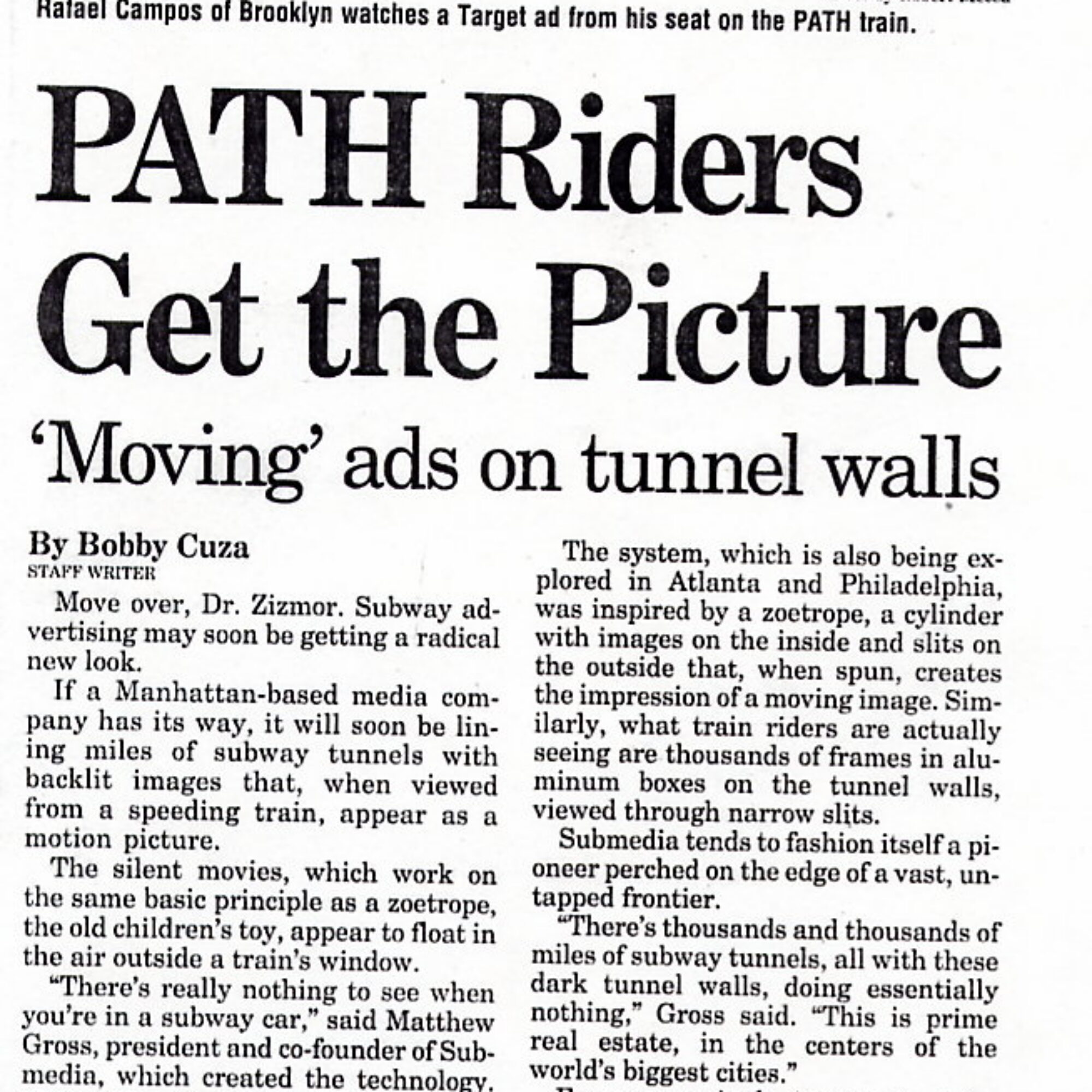
I wrote the other day about my six-month anniversary of burpees. A couple days before was a bigger anniversary -- the tenth anniversary of Submedia's Manhattan display in the PATH system. We launched June 18, 2002. I don't write that much about Submedia here, the company I co-founded in the late 90s, but it still pays my bills and I still work on developing the technology, relationship, and other things there. Pursuing that project got me out of academia and kindled my still-strong passion for entrepreneurship. The press covered it extensively. When I get back out behind China's government's repressive blocking of YouTube, I'll include some of the videos from the launch. I remember hearing some of the investors saw news about the launch in Asia…

0 Comments

The U.S. has a “dysfunctional patent system”

The U.S. has "a dysfunctional patent system." Those aren't my words. They aren't the words of an ignorant person either. They are the words of U.S. Circuit Judge Richard Posner, one of the nation's most esteemed judges and faculty at University of Chicago. A patent dispute between Apple and Motorola prompted that description. Here's an article from a couple weeks ago -- Famous judge spikes Apple-Google case, calls patent system "dysfunctional" -- describing the case. Here's a recent article -- In bid for patent sanity, judge throws out entire Apple/Motorola case -- reporting that he threw out the case with prejudice. My thoughts I could write volumes on the problems with patents and copyright. The ideas have some merit and they probably once served widespread useful…

0 Comments

Difficult lessons in leadership

You learn leadership through experience. I've had occasion to recall some of the most challenging and educational experiences of my development. I'm not proud of them. I wish they had never happened. But they formed me as much as anything. The painful experiences I co-founded Submedia in the late 90s. By the early 2000s we had nearly run out of money and were having trouble paying our debts. My PhD in physics, however useful for some things, hadn't prepared me for running a business. Neither did a childhood with little business training. Loneliness I don't know how my best attempts at leadership looked to others, but looking back, I think the best way I imagined to solve the problems was to work harder. I didn't…

0 Comments

Entrepreneurs saving heating costs and polluting less

After my recent posts on the environment, the Do The Math blog, and the Sustainable Energy book I liked, a friend and Columbia engineer, Marshall Cox, is succeeding in a business plan competition to help reduce waste with a company called Radiator Labs. They have a simple idea that could cheaply reduce a lot of waste and make people's buildings more comfortable. A why-didn't-someone-think-of-that-a-long-time-ago idea you can't imagine someone not implementing. Here's the video. If you think it would help, click to the Energy.gov site and click "like" (not a creepy Facebook like) to help them in the National Clean Energy Business Plan Competition. [youtube]http://www.youtube.com/watch?v=njApaHK2FA4[/youtube] Or maybe you could think of and implement an idea to help reduce waste and pollution too. Marshall and I…

0 Comments

Human history, on a flash drive

A couple friends created the eVr1 Codex -- part accessory, part memory drive -- that stores a huge canon of literature so you can keep it with you at all times. I know both friends from business school classes. You can also see the California outdoor love of nature they share. Here's one of their products. Our Vision eVr1's vision is to connect modern man with the long, global human story.  We achieve market leadership in sustainable goods that connect humankind to the web of life, while inspiring wonder & purpose in our employees & customers. Their outdoors-y love of nature is different than my physicist love of nature, but I'm pleased to say I'm on their Academic Board, so I'm helping choose the science…

0 Comments

Entrepreneurs: think twice before taking advice from venture capitalists

I wrote the following after reading this article from a venture capitalist giving advice to people thinking about starting companies. A lot of advice VCs give entrepreneurs seems to me versions of "make my job easier," like how to write a great business plan, how to pitch, etc. In this case, I see him asking entrepreneurs to improve the signal-to-noise ratio so he can have an easier time funding companies. Nothing wrong with trying to make your life easier, but he makes the article look like he's helping the entrepreneur, when he's writing it to help himself, discouraging some would-be entrepreneurs who might love starting a company even if it didn't make a VC money. For an entrepreneur who makes their business their life, leading…

0 Comments

Business people should understand our effect on the environment better than anyone, part 2

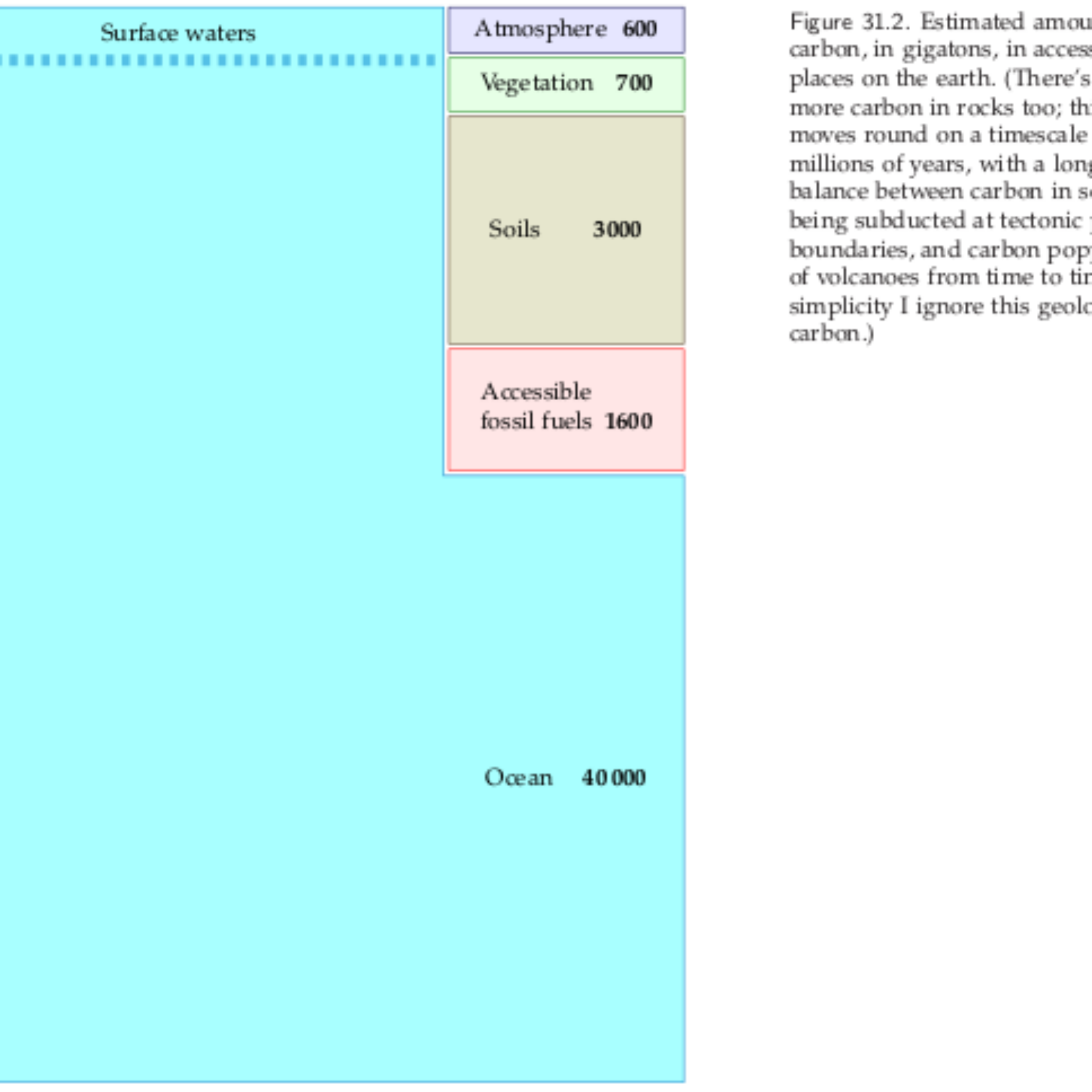
Following up yesterday's post on balance sheets and charts for using and producing energy and reporting our numbers to see if we can make them balance, let's look at carbon flows. People who don't know about carbon emissions, flows, and balance confuse simple ideas with each other. For example, some talk about how volcanoes and cows digestive systems produce tons of carbon and wonder why we should bother changing our practice. When you understand amounts and flows, you don't confuse unimportant effects for important ones, like business people who learn not to be penny wise and pound foolish. Below is a representation of where carbon is on the Earth. It's not exactly a balance sheet, though over time the total numbers have to add up.…

0 Comments

Business people should understand our effect on the environment better than anyone, part 1

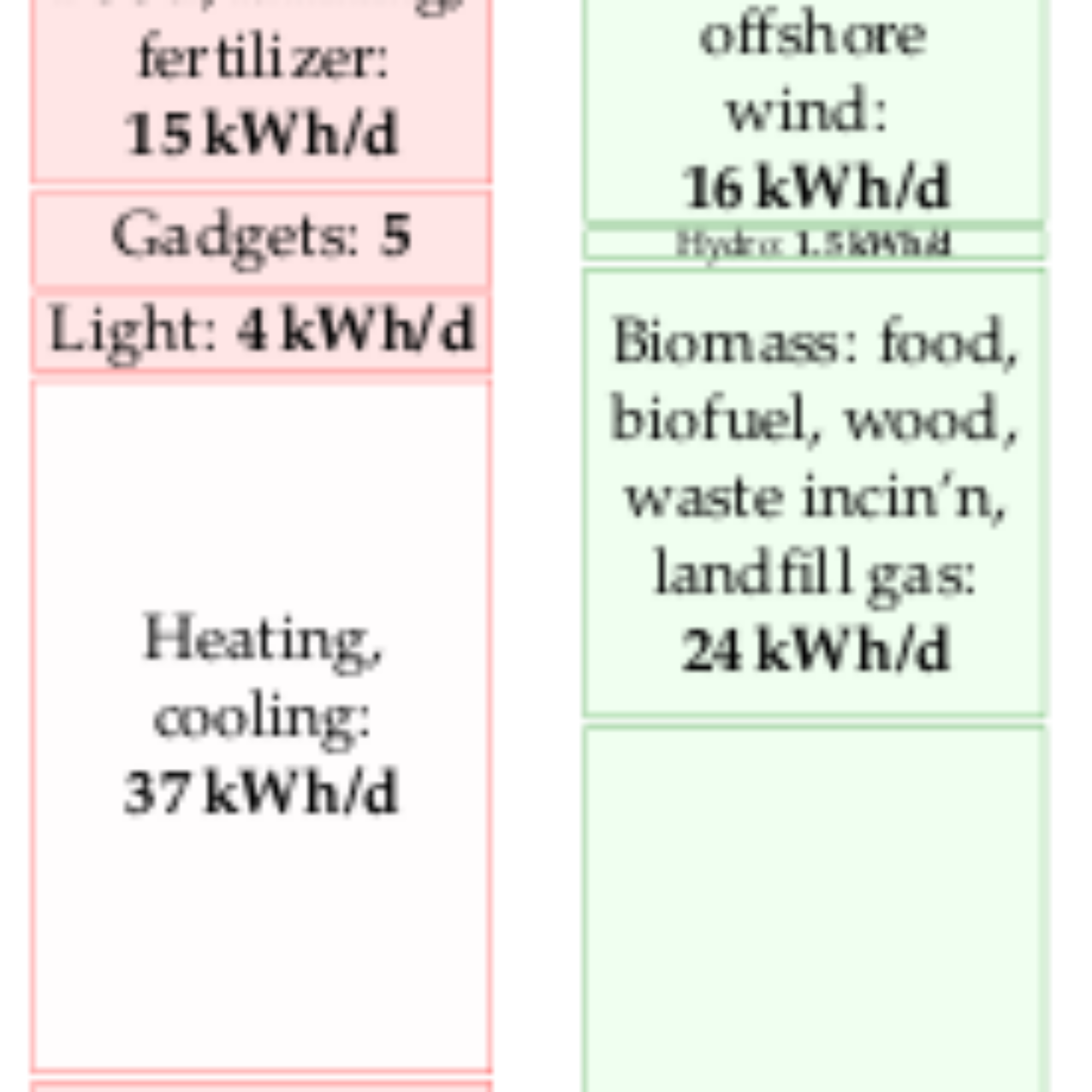
People don't realize it, but business people have some of the best the skills to understand our effect on the environment. We should learn those skills from them. I didn't have much (any?) business experience when I co-founded my first company. I couldn't read a balance sheet or know accounting. My science background taught me to understand general and broad patterns, which don't suffice for running a company. Either the check clears or it doesn't. Business school taught me how to manage cash -- accounting, keeping and reading balance sheets, profits and losses, cash flows, and so on. Many people understand how we affect our environment worse than I understood how to understand a business. In other words, they just know information but not how…

0 Comments

Hopeless or worth it? When should you give up on a project going nowhere?

Discretion is the better part of valor yet quitters always lose. When do you give up on a project you love that's going nowhere and when do you give more to make it work? Both ideas make sense in different situations. I learned an answer that has worked well for me every time. Entrepreneurs face such questions all the time. Small companies often walk the line between abject failure and outstanding success. How long do you walk the line before giving up? The question arises everywhere. Do I stay in this relationship in the hopes it improves or give up? Do I keep working for this terrible boss who might get better or leave? The list goes on. You leave when you realize you can…

0 Comments

A kink in the armor: The Wall Street Journal on luxuries entering North Korea

In my series on North Korean strategy I wrote that I saw small-scale trade as one source of effective change. If trade comes from people in the country, as opposed to institutions or government, North Korean decision-makers will have a hard time stopping it. If it comes with information about the outside world, it can change ordinary North Koreans; perspective of it. The Wall Street Journal today reported on large increases in imports of luxury goods into North Korea, mainly from China. The North Korean leadership's appetite for imported luxuries, highlighted by three Lincoln limousines at Kim Jong Il's funeral, has spread to growing numbers of the country's elite, despite U.N. sanctions designed to force Pyongyang to abandon its nuclear-weapons program. An examination of U.N.…

0 Comments

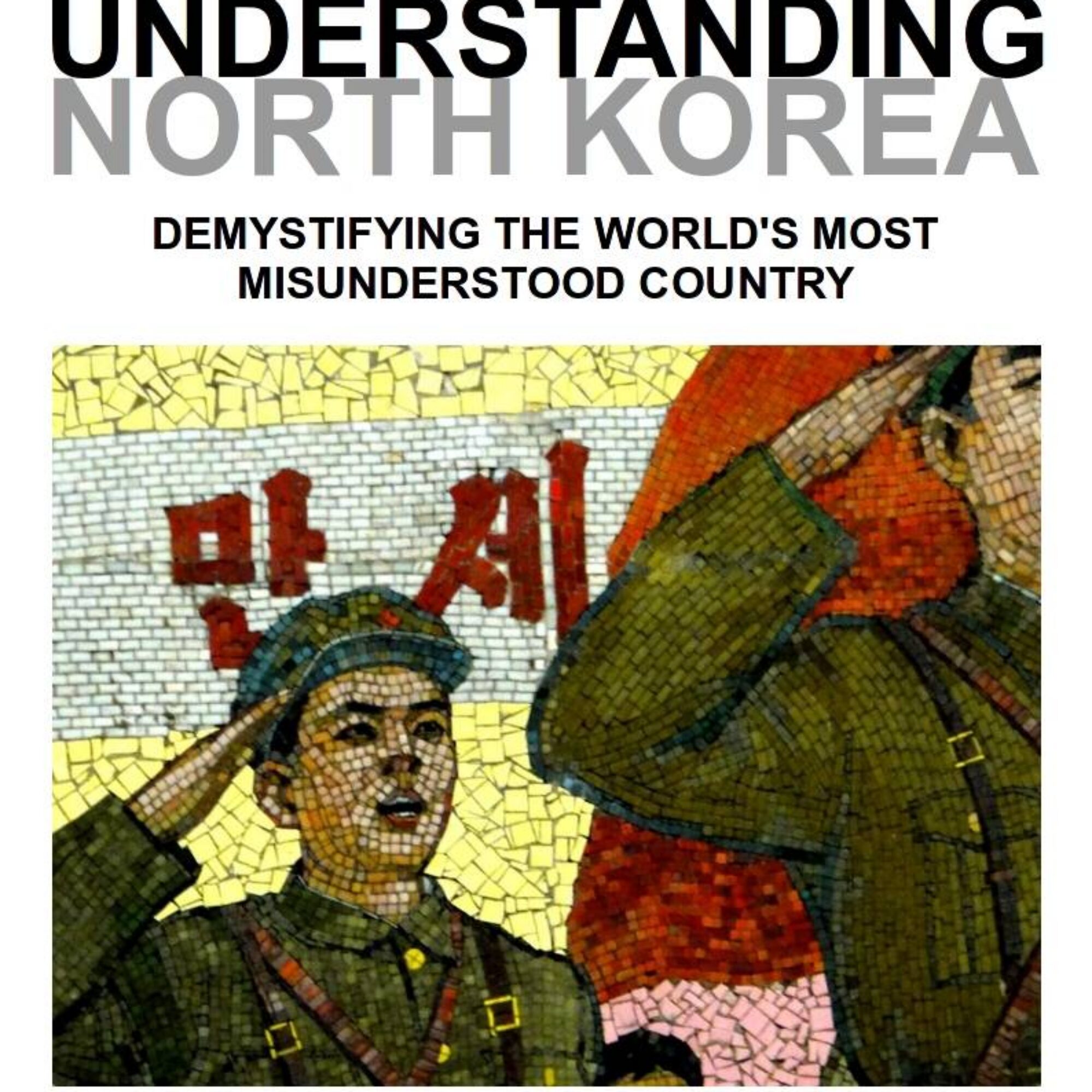
A brief history of Understanding North Korea: Demystifying the World’s Most Misunderstood Country

I wrote the following on Hacker News and thought it fit here. Last week I self-published my first book. My visit to North Korea last year amazed me at how much we base our impressions of North Korea on pre-conceived notions. I already blogged daily, but the experience affected me so much I started posting twice daily, one post on North Korea. Then Kim Jong Il died and tons of articles came out on North Korea, many or most had the same pre-conceived notions or assigned credit to the leaders that I thought were properties of the system, making understanding or achieving change difficult. Reading all those articles, I felt compelled to put my perspective out there. My posts on HN got high karma. I…

0 Comments

Understanding Kim Jong Il from a systems perspective, and what to do now

Reading the spate of articles on Kim Jong Il and North Korea, I've seen what look from my perspective misinterpretations. Reporters repeatedly succumb to ascribing to the leader what I consider properties of the system. I think they adopt a great-man model that says if something is working, someone must be making it happen. With only Kim Jong Il or Kim Il Sung around, it must be them. Misallocating causes to events leads to ineffective or counterproductive strategies to act on them. I'll illustrate with two New Yorker articles, not because they misallocate most, but because they do least. In an otherwise excellent article, Evan Osnos wrote, commenting on Vaclav Havel's observation that totalitarian lies must be universal, Nobody has engineered the apparatus of universal…

0 Comments

Audio interview: my first sale, with Coca-Cola

Following up last week's interview on sales lessons from a great failure, this week's interview covers the result of sticking with it after that failure: Submedia's first sale, which came with Coca-Cola signing as Submedia's début advertiser, as documented in the New York Times, for example, and elsewhere. I doubt Submedia could have achieved such a great success without first having gone through a spectacular failure at first. Small interface:[audio:https://joshuaspodek.com/wp-content/uploads/2011/09/life_lesson_first_sale.mp3] Big interface:[videofile]https://joshuaspodek.com/wp-content/uploads/2011/09/life_lesson_first_sale.mp3[/videofile]

0 Comments

Audio interview: sales lessons from a great failure

Spectacular failures teach us our most valuable lessons. In this interview, I talk about my first, and most painful, sales failure growth experience. I wanted to crawl under a rock and die, but the meeting crept on. Afterward I didn't want to continue in business, let alone do any sales. The word I was looking for at 2:38 was condescension, by the way. My business partner's perspective -- that you win some and you lose some; we didn't win this one but the next would be better -- changed my life for the better as one of the major steps forward into business and entrepreneurship for me. So this anecdote marked the beginning of something very rewarding in my life. Since that meeting, especially with…

1 Comment

Leaders take responsibility

One last behavioral trend to round out a few recent posts on behaviors that correlate with importance. The others were on leaders having the least stuff, being the least hurried, and the most common route to becoming CEO. People know this one, though they don't always act consistently with it. Look throughout an organization. The higher you move in the organization chart, the more responsibility people have. Having responsibility because of your position isn't the same as choosing to take responsibility. But people who choose to take responsibility become more important in their communities. Likewise, people who shirk responsibility lose importance. There are wide exceptions, of course. By the way, accountability and responsibility go hand in hand, so people who choose to make themselves accountable…

0 Comments

The most common route to CEO

"What is the best route to become CEO of a corporation?" For people driven to reach the top it's a common question. A classmate asked it of Ralph Biggadike, professor of Top Management Processes, which, when I was at Columbia Business School, was the class in highest demand. Ralph is an excellent teacher, as knowledgeable about top management as you'd expect one of the top professors at one of the top business schools to be. I expect most of the students in the class were driven to reach the tops of their planned professions. As I recall, most of the class listened intently to the answer. It may be worth thinking about yourself, even if you aren't driven to reach the top. What functional role…

1 Comment

The CEO carries the least

Important people do things differently than unimportant people -- that is, behavior correlates with importance. If you want people to consider you more important -- to trust and defer to you -- you should pick up on how behavior correlates with importance. And with unimportance if you want to avoid being lumped in with unimportant people. The more important you are, the less you carry. The following corporate examples are simplified to communicate easily, but see how they resonate with your experience. An engineer who is easily replaced often carries tons of stuff -- a big bag, sometimes so full he or she rolls it on wheels, pockets full, multiple cell phones sticking of the belt, etc. Everything is functional. A manager may have a…

0 Comments

End of content

No more pages to load