Leadership


Power in playing the victim

As soon as I saw this scene in the movie Boyhood, I knew I had to post about it. Any man who grew up with a sister experienced the frustration you learn to live with of society (represented by parents in the context of a family) considering you guilty first and responsible for problems. https://www.youtube.com/watch?v=1J5sDgYpROg His sister taunts him. When the mother enters, his sister fakes tears and victimhood and their mother tells him to stop. The movie dramatizes the scene to evoke emotions more strongly, so interactions aren't so blatant, but even taking that into account, this scene hit me on a couple levels. First, having grown up with sisters, I remember the frustration at knowing my parents would take their sides by default…

0 Comments

Op/Ed Friday: Acting against equality, part 2 of “Almost nobody is acting for equality, which is why we aren’t getting it”

A couple weeks ago I wrote about how almost nobody is acting for equality in "Op/Ed Friday: Almost nobody is acting for equality, which is why we aren't getting it." Many people talk about wanting equality. Many believe they are acting for it. That post describes how not many are, despite their belief. Since I write about leadership, I'm looking at the leadership results of people talking about one thing and doing another. Here is an example of a prominent figure, a former Member of Parliament of Norway, promoting inequality: "No to female conscription." In response to Norway involuntarily drafting women, she argues that women should not be drafted. She doesn't argue no one should be drafted, only women. Her reasoning follows what I described…

0 Comments

Why people like Donald Trump

One of the exercises my leadership students like most is the Authentic Voice exercise. I've written about it at least four times here, including examples from great masters of speaking in their authentic voice, like Muhammad Ali and Robin Williams. Communications skills exercises, part 10: Your Authentic Voice Your authentic voice The great masters of speaking with authentic voices Communications skills exercises, part 10b: another example of voicing your self-talk Most students in my full course are scared of the exercise before doing it but emerge transformed after a week of practicing it. They find it easier and more natural than they expect once they get it and love it. They find themselves able to say things they never could before, with an authenticity they…

0 Comments

A coaching client started her firm and rang the opening bell of the New York Stock Exchange

Who doesn't like good news on a holiday? A few months ago a long-term coaching client (and friend), Tina Powell, left her job to act on her dream to start her own company, based on my favorite reason to start a company: an underserved market niche. She is a financial advisor and is starting SheCapital, an automated investment platform for women. Yet more to her credit, she's starting it without just leaving her old firm. She's working with them to everyone's mutual benefit. Not long after she started her firm, to coverage in the Wall Street Journal and more, she rang the opening bell of the New York Stock Exchange. What surer sign of respect from the finance community can a young company get? She…

0 Comments

Op/Ed Friday: Almost nobody is acting for equality, which is why we aren’t getting it

If you don't act for equality, it doesn't matter how much you want it, you aren't going to get it. Almost nobody is acting for equality so we aren't getting it. Many people think they are acting to create equality, but their behavior is counterproductive to equality, despite their intent. Why do I say people aren't acting for equality? What are people doing if they aren't acting for equality? Many people belong to groups that they feel are disadvantaged. They feel they don't have the same opportunities. Or that social structures are holding them back. I should say we because everyone everywhere has claim to some way they are held back. The most common ways are by sex, skin color, belief, income, etc. Many people…

2 Comments

Learn and practice Marshall Goldsmith’s Feedforward, December 1 in Manhattan

Want to learn and practice one of the most effective leadership techniques? Then join me for a workshop, Tuesday, December 1st at 6:30pm in midtown, and get a copy of the #1 bestselling leadership book included! This is an encore workshop from attendee enthusiasm at the last one. From the announcement from the Columbia Business School Alumni Club (everyone is welcome): The Workshop Committee of the Columbia Business School Alumni Club invites you to a workshop on Marshall Goldsmith's FEEDFORWARD hosted by Joshua Spodek, PhD MBA '06 including a copy of his #1 New York Times and Wall Street Journal bestseller TRIGGERS with admission Click here to buy tickets. The Economist named Marshall "World's #1 Leadership Speaker" and Harvard Business Review named him "World's #1…

0 Comments

Failure is how you feel about your results

I simplify complex or mysterious terms to make them easy to understand and act on. The professional and personal development fields seem to prefer click-bait titles---what sells over what works. Talk about failure and success is filled with clichés ("It's the journey, not the destination," "everything happens for a reason") and grandstanding ("fail early and often," "I failed many times before succeeding") that I haven't found helpful for someone facing a challenge and fearing failing. Successful people tend to say they failed on the way to success and now welcome failure, or even look forward to it, but what they mean by "failure" isn't what beginners think of it. Most people---especially successful ones and especially gurus and instructors---switch meanings of the word "failure," sometimes mid-sentence.…

0 Comments

Why leadership and entrepreneurship training can learn from acting training

Longtime readers know a big inspiration for how I teach leadership and entrepreneurship is how we teach acting, based on the self-awareness, emotional expression, mutual support, and ability to perform I see in great actors. Leaders and entrepreneurs can use many of the same skills, and much of my teaching practice involves using what works in teaching acting for teaching leadership and entrepreneurship, with appropriate changes. To learn the training in more depth, I trained in one style of acting, called Meisner Technique after its originator, Sandy Meisner, and was rereading a book by the guy who founded the school where I trained, who studied and worked with Sandy for decades, Bill Esper. The following passage illuminates a lot about learning leadership and entrepreneurship, though…

0 Comments

Abraham Lincoln and the unintended side-effects of leading through authority

Using authority to lead may achieve your goal but it creates unintended side-effects, nearly always counter to your goals. To you personally too. This scene in Lincoln illustrates how the side-effects can last centuries. I long wondered why people resist accepting the Civil War. Why wouldn't they celebrate ending slavery? When you motivate someone through authority, you are making them do something they don't want to do. You're threatening a worse outcome if they don't do it---firing, a bad grade, a spanking, jail, garnishing wages, etc---implying that being with you can be even worse. What are you presenting about yourself? Leading through authority motivates people to undermine your authority and resent you. This scene dramatizes Lincoln's strategy of passing a constitutional amendment to institutionalize his…

0 Comments

Confidence and pride in your body feels better than chocolate tastes

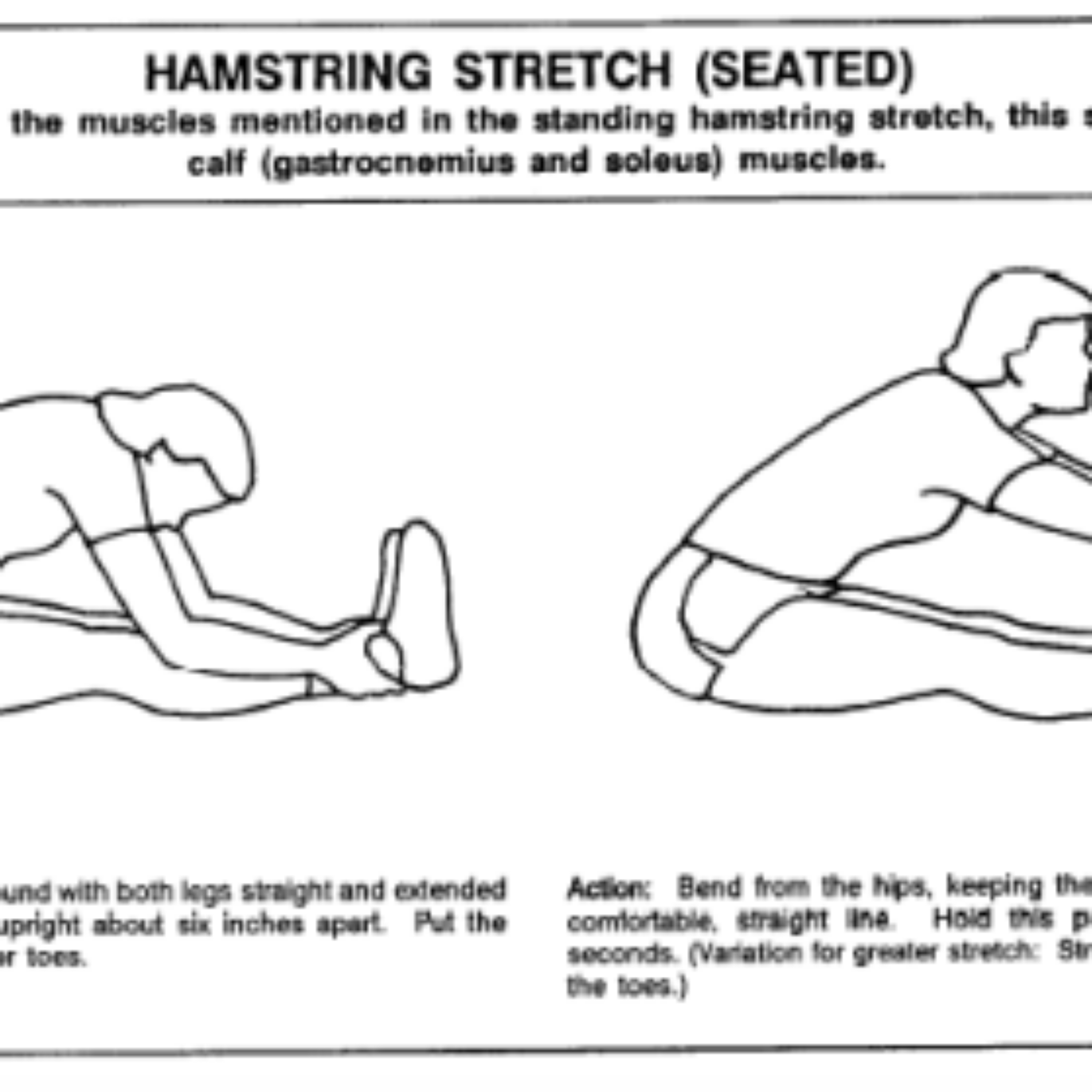
Leading others begins with leading yourself. Part of my daily workouts is to stretch my hamstrings by sitting with my legs straight in front of me, like this: How do you feel about your abdomen when you crunch forward like this? Does it show fat that you prefer people not see? Do you look flabby? Do you avoid such positions for that reason? I noticed that my entire life I've felt ashamed of my abdomen, its lack of muscle tone, and the layer of fat that stood out when crunched forward, like in that position. Like many people, I hid my abdomen so people wouldn't see it, including myself. Even when running marathons and going to Nationals playing ultimate, I never understood diet. I had…

0 Comments

Two thousand posts!

You are reading my two-thousandth blog post. Here's the list of all of them. I've posted daily since January 2011, plus twice daily around my North Korea trips since that content seemed different. Why? I write for two main reasons, one related to content, the other to process. The content reason is that writing helps me develop thoughts and ideas. When I started I thought I'd run out of ideas. Soon after, I found myself coming up with new ideas faster than I could write them. Many readers tell me they find things here they don't find anywhere else. I try to avoid writing what's already widespread while delivering valuable, especially actionable, material that helps people grow and learn about themselves and others. That helps…

2 Comments

Are U.S. universities today like U.S. automakers in the 70s and 80s?

The more I work in American universities, the more I see their decision-making and leadership behind the scenes. The more I learn about student-focused project-based learning connecting students' lives to what the schools are trying to teach and move away from more abstract academic approaches, the more I see alternatives to the education I got that I think serve students' and society's interests more. I care about students in schools like I care about customers in businesses: I view their needs and interests as paramount for guiding the organizations' direction. Faculty matter, as do employees, the community, and others, but I expect the organizations that focus on the people they serve will succeed most. Universities' leadership lies with its tenured faculty, often untrained in managing…

2 Comments

Seeing my inspiration, Inside The Actors Studio, live

If you've talked to me in the past few years, you've heard how watching Inside The Actors Studio inspired me to learn how actors came to excel so much at skills leaders in other areas of life work hard to achieve but rarely do. On top of that, many great actors on the show dropped out, were kicked out, or otherwise didn't finish much school. Meanwhile, graduates of Ivy League business schools who studied leadership at the pinnacle of our educational system didn't measure up. The schools didn't even teach whatever the actors learned. My curiosity led me to discover about acting training, including its roots as far back as Constantin Stanislavsky, through the American Laboratory Theater, the Group Theater, the Actors Studio, and more.…

0 Comments

The problem with “We need more women leaders / in tech / in STEM fields / etc”

Teams with members with diverse experience and skills outperform teams without diversity, as I understand research shows. My experience is consistent with that view. I am a huge fan of diversity, and, for that matter, equality. Many people promote having more women in areas where there are fewer---in leadership, in science, technology, engineering, and math (STEM), in college, and so on. Searching on the topic on the web shows plenty of results. The internet's preference for promoting women in leadership becomes more stark when you search on needing more men leaders, where the top seven links promote women, not men, nor diversity. The same happens for women in STEM. Searching on women gives plenty of results promoting women in STEM. Searching for men shows the…

0 Comments

If you want your car to run better, learn about engines and brake systems, not car noises. If you want to lead, learn about emotions and motivations, not how people annoy you

Nearly everyone I coach wants help handling someone difficult, usually a boss, someone who reports to them, or spouse. When I ask my client why the difficult person behaves how they do, they answer how everyone does: they tell me how the person annoys them. But describing their behavior doesn't say why they do it. What they do is the result of their motivation. It's like describing the noise a car that needs repair makes. If you have a problem with someone, you want to change something---their behavior, your reaction, or both, but always emotions. If you want to influence emotions, focus on emotions. Influence and motivation mean changing emotions. Ignoring someone's emotions cripples your ability to influence them. Talking about behavior when someone asks…

0 Comments

Everyone is positive (from their perspective)

I heard yet another person saying "I don't have time for negative people. I'm a positive person. I can't let them bring me down." Oh, how perfect they sound! High and mighty! He blithely and ironically didn't notice the negative start to what he said, "I don't have time for..." Sometimes they'll outright say so-and-so is a negative person. People who talk about others being negative are judging others by their values---the opposite of compassion, empathy, and understanding. To make themselves look better at others' expense, no less. People may disagree with you and negate your beliefs, but that doesn't make them negative any more than it makes you negative for the same reason. Nobody is negative. What would that mean? They just negate people…

0 Comments

What about Tiger Woods? Why was he pilloried?

After writing about bad boys, success, and discipline yesterday, you might ask, "What about Tiger Woods? Why was he pilloried? He is full of discipline. Why didn't society accept of him something many successful athletes do?" I'm no expert on public relations, but I see two main issues. First, the lesser issue. He doesn't have a bad boy reputation. His is clean cut and respectful, or looks that way to me. Charles Barkley throwing a guy through a bar window fits within his image as a physical player. By the time he did it, he had already done many similar things. He plays basketball physically and hard. James Dean driving dangerously risks innocent people's lives, but he raced cars already. Second is the bigger issue.…

0 Comments

Leaders and tools

A friend wanted to develop expertise in a field by getting more degrees in school. As I wrote in "Programmers work with computers and leaders work with people," people with functional skills can solve problems in that functional area: carpenters can solve problems with wood, plumbers can solve problems with pipes, and so on. Leaders can solve problems with people. Expertise is nice, but if you have leadership skills, you can hire experts in fields you need problems solved in. If you don't have leadership skills, you may end up the tool of someone who does, helping them achieve their goal. Do you want to be someone else's tool?

1 Comment

Learn and practice one of the most effective leadership techniques in person — September 30 in Manhattan

Want to learn and practice one of the most effective leadership techniques? Then join me for a workshop, Wednesday, September 30th at 6:30pm in midtown, and get a copy of the #1 bestselling leadership book included! From the announcement from the Columbia Business School Alumni Club (everyone is welcome): The Workshop Committee of the Columbia Business School Alumni Club invites you to a workshop on Marshall Goldsmith's FEEDFORWARD hosted by Joshua Spodek, PhD MBA '06 including a copy of his #1 New York Times and Wall Street Journal bestseller TRIGGERS with admission Click here to purchase tickets. The Economist named Marshall "World's #1 Leadership Speaker" and Harvard Business Review named him "World's #1 Leadership Thinker," among many other accolades. Feedforward is a major reason. It…

0 Comments

What can you recover from?

Anyone can plan something. It's harder to do it. If things went by plan they'd be easier. If you expected things to go by plan, you'd try more things. The problem is the unforeseen things and recovering from them. The more you can recover from unforeseen things, the more you'll try. The more you try the more you'll do. What can you recover from? How much can you recover from?

0 Comments

Op/ed Fridays: Academics studying leadership versus leadership

A reader sent me an article in the New York Times called "Rethinking Work." It began, "HOW satisfied are we with our jobs?" and continued about polls about job satisfaction and various people's views on work, implying we should think about work differently---we like work less for money and more for intrinsic reward. The author is a psychology professor. Articles like this come out all the time. I'm glad academics think about these points, but he doesn't suggest anything to do. He just writes. I suppose the writing isn't boring, but what's the point of suggesting things could be better without at least trying to act? I used to hold academics in high regard, I guess because in my field of physics, academics did most…

0 Comments

Leadership lessons from Frances Hesselbein, part 5/5

"What do I say to a 99-year-old woman?" "What do I say to a famous person?" "What do I say to someone who could help my career without seeming selfish?" All I could think to ask was what it's like to be 99, which seemed irrelevant and the same question people have asked her for a decade. I don't like when people find out I don't eat meat and ask me where I get my protein. Again? How unimaginative and boring. Do they not realize how many people ask the same question? I'm sure people ask you similar annoying questions. I don't want her thinking that of me. How do you prepare to talk to someone important that you hardly know? Who hasn't frozen at…

0 Comments

Leadership lessons from Frances Hesselbein, part 4

What do say about yourself when you've hung out with half a dozen Presidents of the United States, won a Presidential Medal of Freedom, learned from Peter Drucker, been called the best leader in the world by CEOs of Fortune 100 companies, befriended four-star Generals, and things like that? Do you keep it to yourself, as modesty would suggest? How do you mention those things without bragging, or sounding like you are? Frances talked about them throughout the conversation. She didn't go out of her way to, nor did she sound like she was bragging, but she did. I noticed only one other person I could think of did that, Marshall Goldsmith. He grew up in Kentucky, so I thought his motivation was like a…

0 Comments

Non-judgmental Ethics Sunday: Handling a Racist Remark in the Workplace

Continuing my series of alternative responses to the New York Times column, The Ethicists, looking at the consequences of one's actions instead of imposing values on others, here is my take on today's post, "Handling a Racist Remark in the Workplace." I represent a real-estate developer in Florida. Recently an employee of one of the developer's commercial tenants confided to me that he overheard an administrator at his company tell another employee that she had just read a book called ''The Protocols of the Elders of Zion'' and thought it contained excellent points. The person with whom she was speaking, a department manager, responded that it was a great book and that it must be legitimate because it was endorsed by Henry Ford. I'm uncomfortable that…

0 Comments

Leadership lessons from Frances Hesselbein, part 3

Over lunch Frances described to me her background. I had wondered how she got started, why when the CEO of Ford, Alan Mulaly, gave her a car, she picked it up near Pittsburgh. She told me about growing up near there and going to the University of Pittsburgh. If I remember right, she didn't finish. It struck me because she is yet another prominent leader who didn't graduate college. She's surrounded by the best and brightest---leading them, responding to their requests for advice---and didn't get there through traditional education. One of my main inspirations for teaching and coaching leadership end entrepreneurship experientially and actively was seeing the high emotional awareness and skills of the guests on the TV show Inside the Actors Studio, then hearing…

0 Comments

End of content

No more pages to load