
Leadership


My scientific and engineering view of coaching and teaching leadership

Science is the study of nature, looking for patterns, to predict results. For the moment I'm not approaching leadership with the institutional view of science with researchers applying for grants from the National Science Foundation to do double-blind controlled experiments for peer-reviewed publication, though I've had a few graduate students approach me to do research like that. Here's a simpler view: science turns observations about nature into models and predictions about the future. It's simplified, but I think captures an important part of science. Thousands of years ago people noticed that what went up came back down. That's an observation about nature that worked for most purposes. Science turned that observation into Newton's laws of gravity, which was a specific model of nature. The process…
0 Comments

What happens when you develop empathy and compassion skills

Each exercise in my seminars teaches a fundamental, useful leadership skill. Collectively, when you practice them more than a few times, they teach empathy and compassion, two critically important skills if you want people to want you to lead them. With my one-on-one coaching clients I can see their empathy and compassion skills develop over weeks and months. I've noticed patterns. At first people feel odd asking about emotions and passions, especially at work. "Can I use the word passion?," they ask. "Is it appropriate at work? It will feel funny." They ask if using someone's emotions to motivate them is manipulation. They worry about using the other person. After doing the exercises once or twice, they realize how effectively motivating someone through emotions and…

0 Comments

Join Joshua Spodek’s leadership workshop, Saturday December 6 in Soho

I've been invited to lead a leadership workshop at a great location in Manhattan Saturday, December 6. If you like my material, want to lead better, and like the testimonials of recent attendees, come to the seminar. Below is from their announcement. Click here to register! "How to lead people so they want you to lead them again" by Joshua Spodek Saturday, December 6, 2014 10am to 5pm Soho - NYC Previous University Presentations Columbia, Harvard, MIT, NYU-Stern, INSEAD, New School, New York Academy of Sciences   Previous Coaching Clients Include Start-up Founders as well as Employees of  McKinsey, Bain, BCG, Deloitte, Ernst & Young, A.T. Kearney, UBS, Bear Stearns, JP Morgan Chase, Morgan Stanley, Deutsche Bank, Citigroup, American Express, Google, U.S. Army, U.S. Navy Lead…

0 Comments

A reader shares a genius business idea in action

A reader responded to "Another genius business idea: Communities refurbishing their subway platforms" to describe the idea already in action in San Francisco: Hello Joshua, I want to share with you the concept of property and business improvement districts and how one in San Francisco beautified the plaza around the Castro Street subway station. I'm sharing this as a real-world example you might find interesting. The gist is that a group of commercial properties (or even residential ones) vote to form a district, levy an assessment on themselves, and form a board of directors to manage it. The district concept is interesting because it's not a one-off project, but a governing body with a yearly budget that manages and implements any number of projects and…

0 Comments

Asking “Are leaders born or made?” doesn’t help you develop as a leader

Talk about leadership and someone will ask if leaders are born or made. If you're just idly chatting, it's a fine pointless question to pass the time with. If you want to develop as a leader, I suggest the question will waste your time. No great leader started leading in a vacuum, nor as a child. They all developed somehow. Even if they had a greater potential than you do, you can improve. What works in developing leaders I suggest more relevant questions for people trying to improve their leadership skills include What techniques work to develop leaders? How can I use those techniques? Can we improve those techniques? If so, how much? Am I using techniques that work? If not, how can I start…

0 Comments

The problem determines the solution

"Which is more important as a leader, to work alone or to work in groups?" I heard that question asked of a panel of business leaders last week. The panelists all answered something like "in this day and age you have to be able to work in groups. That's where you get everything done" with some acknowledgment that you had to be able to work solo too sometimes. As soon as the moderator asked the question I thought, "You're asking about solutions in the abstract. The problem determines the solution." You can best solve problems that take solo work to solve solo and problems that take group work to solve by group. We've all seen solutions that were designed by committee that show input from…

0 Comments

Non-judgmental Ethics Sunday: Why Can’t I Clean My Boyfriend’s House for Pay?

Continuing my series on responses to the New York Times column, The Ethicist, looking at the consequences of one's actions instead of imposing values on them, here is a take on an earlier post,"Why Can't I Clean My Boyfriend's House for Pay?" About a year ago, I moved into my boyfriend's house in a new city. I'm renting out my old house for income as I look for work. I pay my partner $100 each month to cover my utility expenses. He pays his cleaning person $160 a month to clean the house twice a month. I am not convinced that the house gets cleaned well, and I have plenty of free time anyway. I offered to clean the house in lieu of the money…

0 Comments

A successful testimonial on leading someone so she wanted to be led again

An attendee of one of my seminars on How To Lead People So They Want You To Lead Them Again wrote to her seminar-mates and me the results of her putting what she learned into practice. She had mentioned during the seminar an employee she had written off as unmanageable, who consistently disregarded her agreed-on priorities in favor of less important tasks and showed uninspired morale. Maybe you've worked with such people or felt like being that way yourself when your leaders didn't inspire you. The attendee also got an MBA at Columbia, which is how she found me. She works at a start-up, though got hired by a major firm where she will start soon, which motivated her to practice some leadership training, which…

0 Comments

Why I am inspired to learn leadership

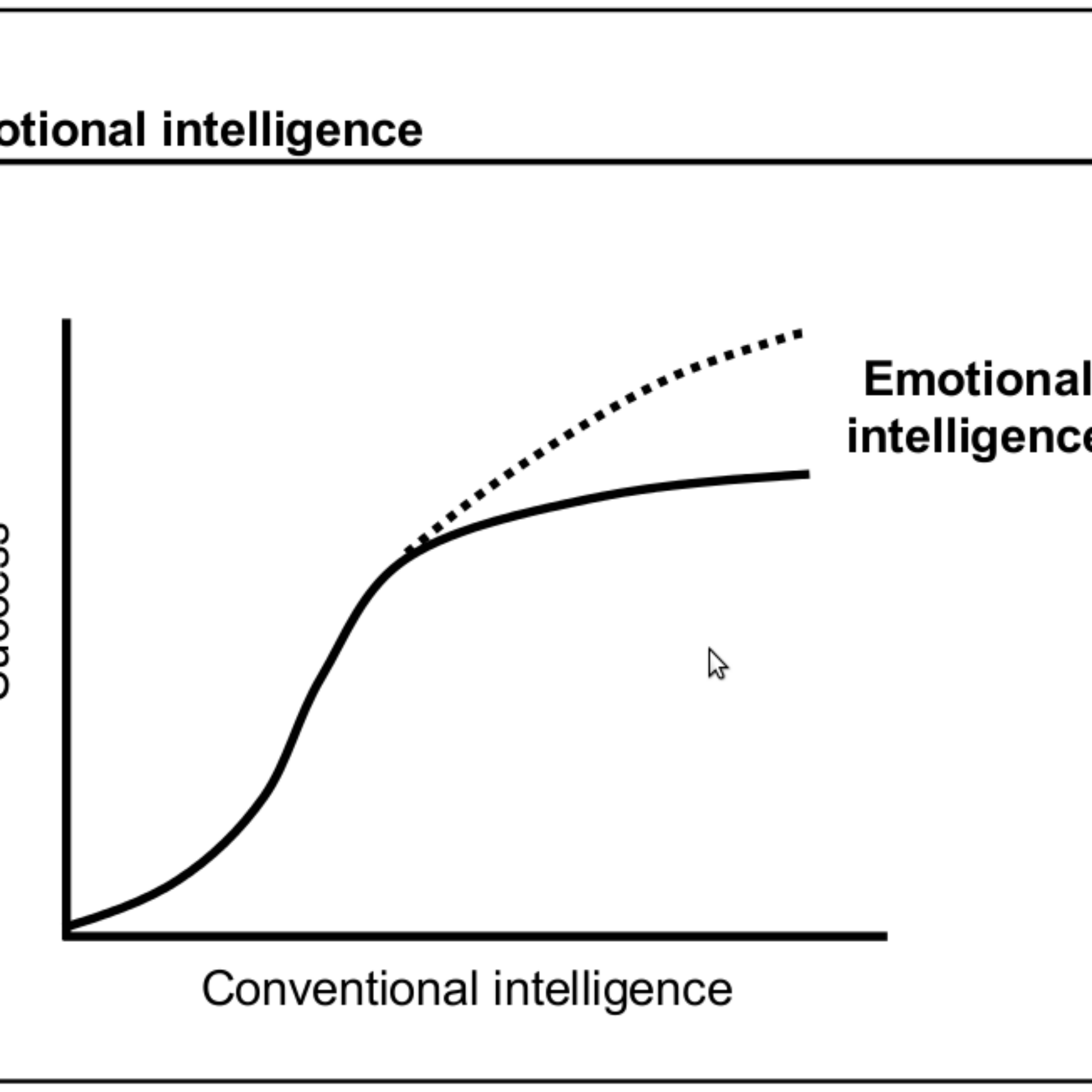
To business people I say I was very analytical, which is how they describe themselves. In casual conversation I say I was a geek or nerd. When I was young, those terms were still insults, before everyone got computers and became geeks and nerds too. To business people someone being analytical usually means they have poor people skills, which to them means low emotional intelligence, which means limited ability to rise in a corporation or make deals. That's about as big a problem you can have in business. By the time I was in business school, I knew I wanted to keep starting businesses, so I valued success in business. Here is the main slide covering these concepts my core leadership class used, showing that…

0 Comments

Another genius business idea: Communities refurbishing their subway platforms

Here's another post in my Genius Business Idea series. My goal in this series is to show how entrepreneurial opportunities are everywhere, contrary to the common myth people who say they want to start a venture but don't: that they haven't found a great idea yet. This project is challenging, more for bureaucratic reasons than technical, but there is ample precedent of people overcoming similar challenges in New York. Read below for a list of examples. If you don't live here, I expect you'd have an easier time than we would. This one came from talking to a city employee tasked with improving neighborhoods in New York. While bureaucratic approval would be difficult, there is plenty of precedent for beautifying many shared public spaces, especially…

0 Comments

Two readers ask about confirming and anchoring in relationships

Two readers asked similar questions about yesterday's post, "Risks in relationships, rock-climbing, and ratcheting," on confirming the status of a relationship and how that's like anchoring yourself while rock climbing. One reader wrote: I like the analogy. Could you give an example of checking in with people and dynamic relationship? Dynamic meaning continuous interaction and keeping in touch? Asking someone how they feel about something is checking in, yes? Another wrote: Especially love this article as it applies to many different kinds of relationships. Interesting how communication and constantly working on "the relationship" is vital for all of them. My only question would be the "how" for the anchoring. As in, what passes for helping the dynamic between the two. But I'm sure it's relative to…

1 Comment

Risks in relationships, rock-climbing, and ratcheting

Imagine rock climbing a vertical cliff. You don't want to get hurt so you use a rope to catch you if you fall. You regularly loop the rope through something attached to the face. I think they call it anchoring, so I'll call it anchoring too. How you anchor affects how you climb. If you just anchored yourself, your rope would effectively be attached right there, so if you let go or lost your grip you wouldn't fall. You're safe, assuming you used effective safety equipment. If you climbed two feet up from that anchor, your rope would be attached two feet below you, so if you let go or lost your grip you'd fall four feet. You're relatively less safe than when you just…

0 Comments

The rewards, pleasures, and life lessons of running fast

A friend and former teammate introduced me to running long distances about twenty years ago. A few years ago I commented about running a lap of Central Park in about forty-five minutes. He remarked how running that speed at that age was impressive. In the years since, I've meant to run a lap in forty-five minutes. Between China and just running long distances for past marathons, I haven't gotten around to it. I didn't prioritize it. I just kept it in mind. A week or two ago I noticed an opportunity. Last weekend I ran my last half-marathon. Next weekend---the weekend before the marathon---I won't run much. That left today open as a time when I've trained to run distances to try. Tomorrow I'm running…

0 Comments

Why Are Americans So Fascinated With Extreme Fitness?

I decided to answer the question of this New York Times article "Why Are Americans So Fascinated With Extreme Fitness?". That article describes some fitness, but doesn't answer the question, which deals with motivation and overcoming big challenges, which connect it to leadership. To answer why people would push to get so fit, you have to explain the emotion and motivation behind it. Simply saying it's healthy or makes you strong only extends the question. Partly they do it because of the emotional reward from exhaustion, progressing overcoming challenges, feeling stronger or more capable, approaching an ideal appearance, comparing themselves to others, and maybe a couple others. I believe all of those things make people feel good and want to continue. But you also have…

0 Comments

Non-judgmental Ethics Sunday: Tourist Retractions

Continuing my series on responses to the New York Times column, The Ethicist, looking at the consequences of one's actions instead of imposing values on them, here is a take on an earlier post,"Tourist Retractions." I recently spent several days at a relatively expensive hotel. The place was deplorable and unsanitary, with an unresponsive front desk. I gave it a poor write-up on TripAdvisor.com, the travel website, titling my review "An Overpriced Dung Heap." The following day, the owner contacted me through the site with an offer to refund almost half the cost of my stay if I would retract my review. I accepted the handsome offer and deleted my post. Who was the most unethical: me (for accepting the bribe), the owner (for offering…

0 Comments

See Joshua Spodek on leadership at General Assembly, Sunday October 19

Attendees keep giving me great ratings, so General Assembly keeps inviting me back. If you like entrepreneurship and you don't know General Assembly, you should. They teach great courses and have built a great community around teaching relevant skills. On Sunday, October 19, 10am-5pm, I'll lead a seminar with General Assembly on leadership in New York City. Register here, you'll be glad you did. Here is the announcement (they use short descriptions, for a fuller description, see this announcement from an earlier event): Lead the Way: Effective Leadership Techniques Joshua Spodek Adjunct Professor at NYU-Poly About This Workshop You've ascended to a position of leadership, but how can you ensure that the people you are in charge of will be responsive to your leadership style?…

0 Comments

If we taught piano like we teach leadership

If we taught piano like we teach leadership, here are a few options of how we'd do it. Method 1 Put twenty or more people who wanted to learn piano in a room Lecture about music theory for a few lessons Talk about the lives of historical famous piano players Point them to a piano on a stage with an audience full of people who will evaluate them and tell them to play Tell them it's okay to make mistakes, everybody does Wish them luck and have them play Method 2 Put them in a room with other piano players who learned from other piano players who learned from piano players etc, but no one learned from someone who learned to teach piano Hope they…

0 Comments

Eisenhower on deciding, resolving conflict, and uniting a divided team

People often ask me about resolving conflicts and how to handle them as a leader. This clip shows Eisenhower, played by Tom Selleck, handling a conflict two days before D-Day. It's dramatized, but not so much that we can't learn from it. Context Eisenhower and his team have been planning the Normandy invasion for months. They want to launch in the next couple days, but two major unknowns split to leaders on one aspect. The unknowns are the weather and the German army's preparations. The decision is whether to drop the elite paratroopers and gliders behind enemy lines the night before the amphibious invasion. Hundreds of thousands of lives hang in the balance. There is no way to decrease the uncertainty. The Conflict Using these…

0 Comments

Dustin Hoffman on feeling understood about a passion and how it helps a leader

This clip wonderfully shows the effects of feeling understood about a passion---that is, a powerful emotion. You see how cathartic it feels for the person sharing the passion and how important it is for someone leading the person. Context: In a long interview, Dustin Hoffman is talking about the challenges of growing up under a stern father and how he escaped through movies, which evolved into acting. He starts to talk about how his exploring and understanding his relationship with his father and unexpectedly realizes he is revealing something deeply personal about his preparation for that role. What to look for: When he realizes the depth of what he's revealed, try to gauge his emotion. Would you say he more likes or dislikes the feeling?…

0 Comments

How to start to lead

The more I teach and coach leadership and entrepreneurship, the more I see them as sets of behavioral skills anyone can learn. Behaving in certain ways results in people choosing to follow you. Behave otherwise and they won't. There's no magic to it. The question isn't if you can behave like effective leaders do. The question is if you choose to learn and if you find effective learning technique. Your behavior is backed up by beliefs, experience, skills, and so on, but ultimately you transmit all those other things through your behavior. Other people can't sense your thoughts or see your past. They only see your behavior, including what you communicate, the same as any other set of behavioral skills. Many other sets of behavioral…

0 Comments

Phil Jackson on Michael Jordan, Kobe Bryant, and Shaquille O’Neal

You should know Phil Jackson if you don't. One of the great basketball coaches of all time, he gets the best out of his players to motivate them to work as a team. He coached Michael Jordan, Kobe Bryant, and Shaquille O'Neal, among other greats to eleven championships, plus he won two as a player before coaching. When you see names like Jordan, Kobe, and Shaq in a leadership context, don't think "great players," think "headstrong prima donnas that resist authority." And I suggest not thinking "From him I can learn to coach others," think "I'm the prima donna I need to learn to coach." Don't waste time thinking about how to attract or hire a team to follow you if you don't already have…

0 Comments

Olympians, Nobel Laureates, Oscar winners, and others I’ve met

Over beers a colleague raised my eyebrows by beginning a sentence with, "So I walked in the Oval Office..." like walking in the Oval Office was just a casual thing everyone does at some point. It turns out he acted as a science advisor for two Presidents. And not just a meeting with a cabinet member here or there, but regular meetings lasting more than an hour. I decided to think of some of the brushes with serious greatness I've had. I don't know if the following list is bragging or not, since I didn't do any of those things. To the extent we are the average of the people we know, it says something about me. One guy I know met regularly with two…

0 Comments

Hustlers and clowns

Hustlers and clowns are two types of business people I've found. Actually, they're everywhere, not just business, but I'll talk about them in a business context. Hustlers Hustlers do what it takes to do the job by learning and meeting people's needs. I love working with hustlers, at least the type I mean. The student who sold an apple as a challenge for five dollars and made the buyer feel she was getting a discount in my post "How to make selling fun and effective" is a hustler. My friend offered him a job because when he told me what he was looking for in his start-up---to figure out how to sell the product, to learn about the market, to help develop the product, to prepare…

0 Comments

How do you motivate someone who claims to have no motivation?

An attendee from a recent seminar asked a common question I get about learning other people's passions: How do you motivate someone who claims to have no motivation? He did the exercise in this post, "How to make someone feel understood: the Confirmation Cycle," where you ask the other person their passion. He wrote: How do you deal with the "I don't know" when you ask people what they enjoy or what they're passionate about? I found this in trying out this exercise with several family members, I believe it's related to the idea that as a leader, it's your job to find out what other people's motivations are but it can still be hard to get around. I also wonder how to frame this question…

2 Comments

Video: How to make selling fun and effective

In motivation, influence, and persuasion, sales and leadership overlap a lot. Sales is also the most common route to CEO, I've heard, so if you want to lead, you benefit from learning sales. Below is a video interviewing a guy who is incredible at sales. He sold an apple for five dollars, with the buyer believing she got a discount! My retelling the story about it led to a friend offering him a job. And the guy is still an undergraduate at NYU. This video tells the story of his acting on my assignment to sell an apple for as much as possible. I didn't even assign it to him. I just told him about the assignment I gave to my Entrepreneurial Marketing and Sales…

0 Comments

End of content

No more pages to load