Nature


Environment, racism, hierarchy, and dominance

Many people point out how suffering from environmental problems like pollution and sea level rise correlate with skin color and ascribe the cause to racism. You don't have to look hard to see who lives in America's Cancer Alley and Sacrifice Zones and compare their skin colors against the largest shareholders and board members of the companies profiting from creating those areas, or the people displaced from their land to extract resources or dump garbage compared with the people who pay for the plane tickets and SUVs the resources power or buy the cell phones and disposable diapers dumped there. It seems plausible, but I agree with Eric Williams and Ibram Kendi that slavery caused racism, not that racism caused slavery. Hierarchies that allow one…

0 Comments

Abraham Lincoln, sustainability, and the “King’s Solution”: the Thirteenth Amendment

I've been learning more about abolition in the United States. In 1776, thirteen slave states, likely no one could imagine a world or nation without slavery. Yet in 1865, the Thirteenth Amendment made us one free nation comprising thirty-six free states. Today no one would seriously propose repealing the Thirteenth Amendment, what Lincoln called the "king's solution." No law, judicial interpretation, or executive order could achieve what it did. On the contrary, relying on them delayed uniting the U.S. in outlawing what a majority of Americans wanted to outlaw. I am going to propose to you something as bizarre of someone in 1787 proposing a constitutional amendment banning slavery: an amendment banning pollution. To many today, the Thirteenth Amendment sounds so inevitable, we can't imagine…

0 Comments

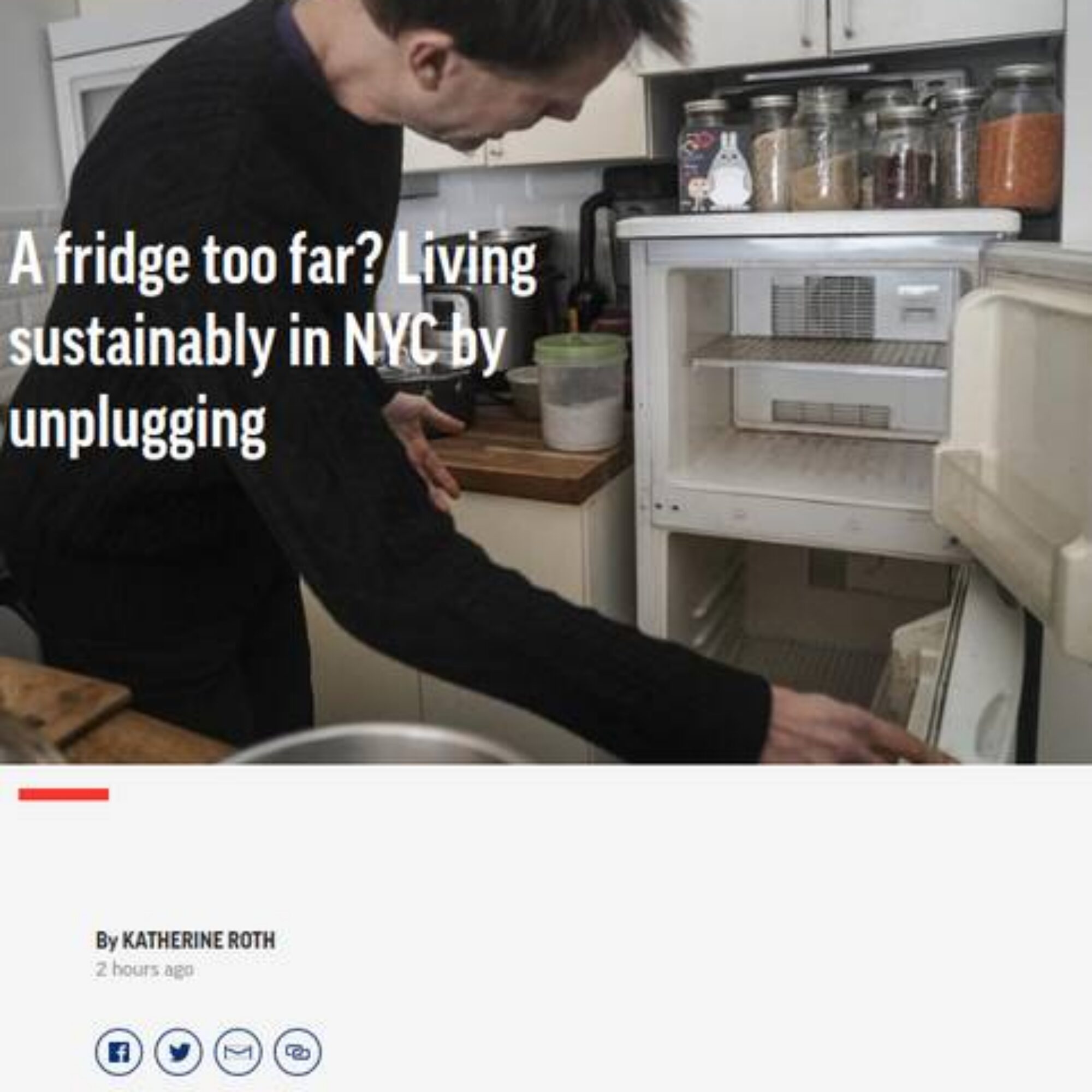
Read the photo-story on me: “A fridge too far? Living sustainably in NYC by unplugging” from the Associated Press

Katherine Roth interviewed me about unplugging my fridge and apartment from the electric grid and Bebeto Matthews photographed me cooking and putting my solar panels on my roof. Read the story and see the pictures at A fridge too far? Living sustainably in NYC by unplugging. I hope it helps achieve one of my main goals for this experiment: for a few people to say "You can do that!? I want to try!" The goal is not for them to copy my results but to apply my process of mindset shift followed by continual improvement to improve their lives for themselves in their lives in their way as I did in mine. If I could change anything about the article, I'd change two things. First,…

0 Comments

The opposite of flying is not less family or business opportunity. It’s more of each and nature too.

People think if they can't fly, they won't be able to see their family. They think, "if I'm here and my parents or children are flying distance away, if I don't fly, I won't be able to see them." They also think, "if my business can't compete there, I'll lose revenue and go bankrupt." Then they conclude, "I may not want to pollute, but family is more important and I'm no good to anyone if I can't afford to eat or pay rent, so I have to fly." I used to think people wanted to be close to their families all the time. It turns out people like to be far enough from their parents they can't drop in any time, but close enough they…

0 Comments

Do you value family over sustainability?

Over and over people tell me they care about the environment but family comes first. Their parent is sick and they've chosen to live flying distance away, they married a spouse from another country and feel they have to fly there twice a year, and things like that. Okay, say family is important enough to disregard hurting other people. Imagine someone else wanted to see their parent, suddenly hospitalized, but for them to do so, your home would be demolished, you would be put in a refugee camp, and your water sources would be polluted. If they wanted a cell phone to keep track of their child, your child would be put to hard labor, maybe given a birth defect like the child below, from…

0 Comments

Two unbroken streaks: 8 months off-grid and 12 years daily blogging. Which is more challenging?

Yesterday began month 9 with my apartment disconnect from the electric grid. Today begins year 13 posting daily to my blog. Which seems more challenging? Which has taught me more about myself, humanity, and nature? Tough call. They seem even. I'm continuing both so I'll keep learning from both. The off-grid in Manhattan seems more rare, a bigger disconnect from my ambient culture. Earth also passed a month after the north's winter solstice and I can tell the added sunshine time, though January has been mostly overcast in New York. People ask the questions I would have, like how long a charge lasts, but I'm learning that view starts from what I want. When you rely on fossil fuels and uranium, you can dominate nature.…

0 Comments

Do you want to leave the world better than you found it, really?

If you want to leave the world better than you found it, which will help you leave your legacy better: To inhale deeply on a cigarette and blow the smoke in a baby's face or To fly somewhere on vacation? Blowing smoke in a baby's face seems worse, doesn't it? I bet none of you would do it. But flying hurts more babies more grievously. It pollutes billions times more. It displaces people (and wildlife) from their land. Funding it will fund more extraction. Flying homogenizes once-diverse world cultures. It separates families and tears communities apart in the name of bringing people together. The list goes on. I picked flying, but I could have said buy an SUV, set the temperature above around 68F (20C)…

0 Comments

In the wild: the Spodek Method practiced by someone else to heartwarming success

Regular listeners heard me on the Carbon Sessions podcast, by the community created by podcast guest Seth Godin that created the bestselling book The Carbon Almanac. You can tell that one host of the Carbon Sessions, Brian, had listened to This Sustainable Life. We kept in touch after recording. He was interested in the Spodek Method. We practiced it and recorded the three videos below of me teaching it, conceiving of using them as a test to create an online course. Neither of us could have predicted that he'd have the chance to practice it in a later Carbon Sessions recording, impromptu. Here is that episode. In a conversation with another host on new year's resolution, he walks her through the Spodek Method. To my…

0 Comments
The Psychology at the Root of Pollution
Ars Technica Josh Spodek Disconnected In Manhattan

The Psychology at the Root of Pollution

Have you read many of the responses to my Ars Technica article, I disconnected from the electric grid for 8 months—in Manhattan? Many push back about what I shared and I'm learning from them. Not that they differ from many online forums, but I noticed a few trends. Many of the responses object to things I didn't say, even putting in quotation marks things I didn't say. Many assign me intent I didn't imply and don't have. Some said things I did were easier for me so they couldn't do them while others said things I did were hard so they couldn't do them. Nearly no one picked up on my goal to be a role model, ideally to prompt some people to say "You…

0 Comments
Read my piece in Ars Technica: “I disconnected from the electric grid for 8 months—in Manhattan”
Ars Technica Josh Spodek Disconnected In Manhattan

Read my piece in Ars Technica: “I disconnected from the electric grid for 8 months—in Manhattan”

Ars Technica published a piece I wrote on my experiment disconnecting my apartment from the grid, I disconnected from the electric grid for 8 months—in Manhattan. It goes into more depth than my TIME piece I've Been Living Off-Grid In Manhattan for Half-a-Year. It's in my voice, unlike the New Yorker's Off the Grid in the Big City. One of my main points was seeing the experiment like the Wright brothers at Kitty Hawk. Normally when I talk about flying, I'm talking about pollution, displacing people from their land for fuel, and problems like that, but tabling the sustainability perspective, looking at it on the Wright brothers' terms, before anyone could have imagined the problems flying would create in sustainability, tearing communities apart, emptying small…

2 Comments

Another month, another zero kilowatt-hour electric bill

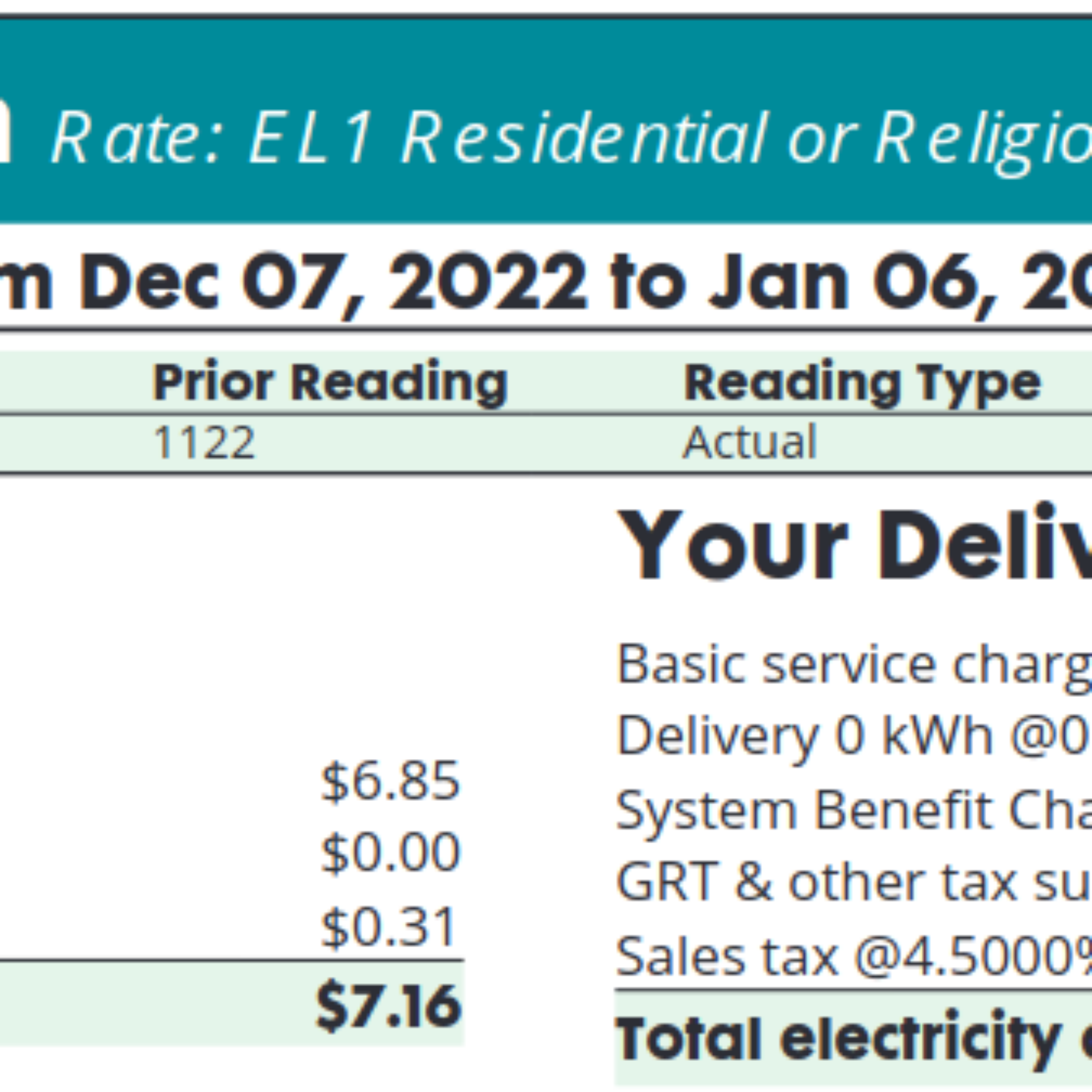
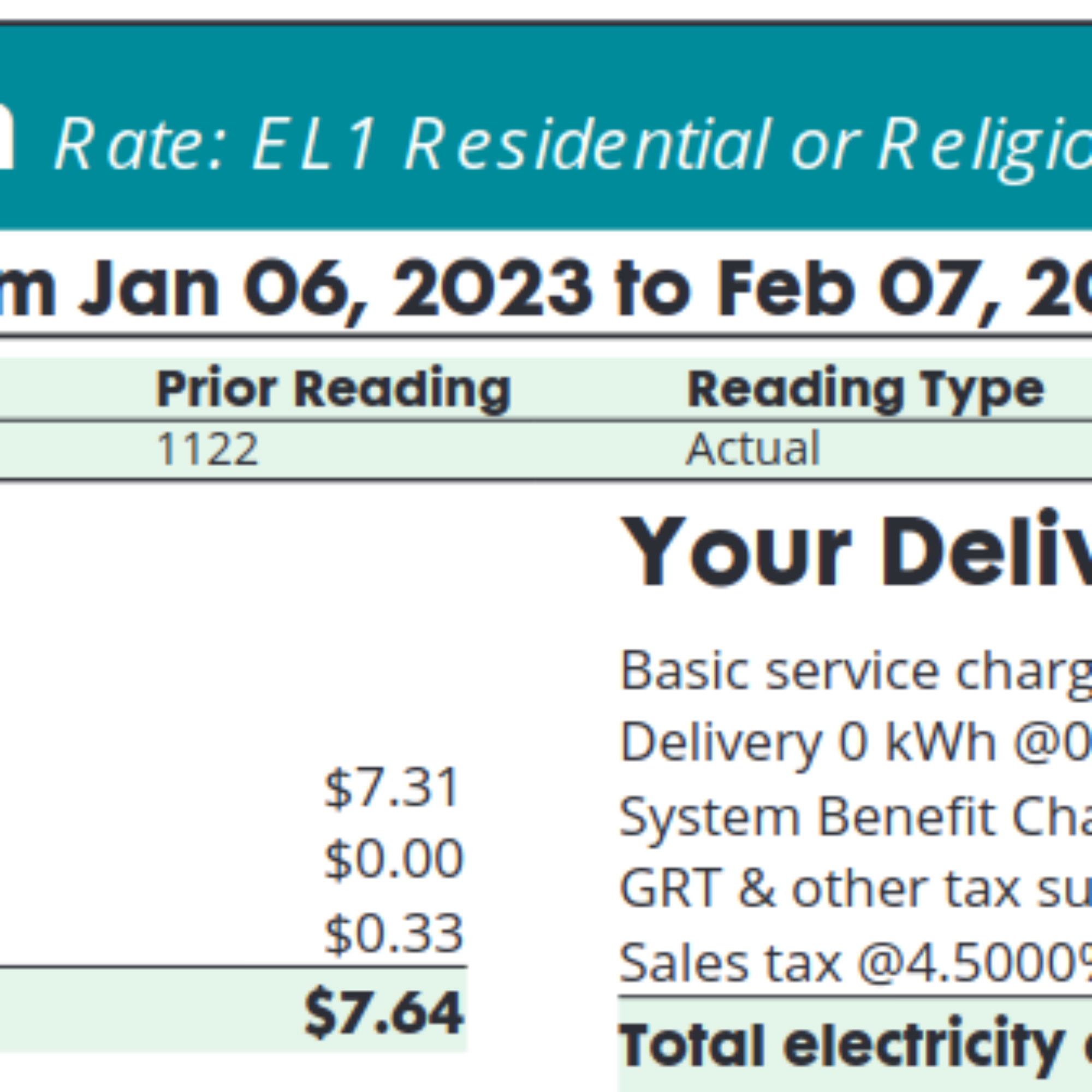
I posted scans of all my 2022 electric bills, showing zero kilowatt-hours since May. Here's my first zero bill for 2023: I talked to a guy last year who told me he regularly paid $1,000 for monthly bills. What do you pay? What would you like to pay? If you'd like to pay and pollute less, thereby hurting other people less, what's holding you back? They also share this annual graph. They probably mean to help you see trends over time or by season. In my case it seems to show my usage is off the chart:

0 Comments

The New Yorker profiled my living off the grid

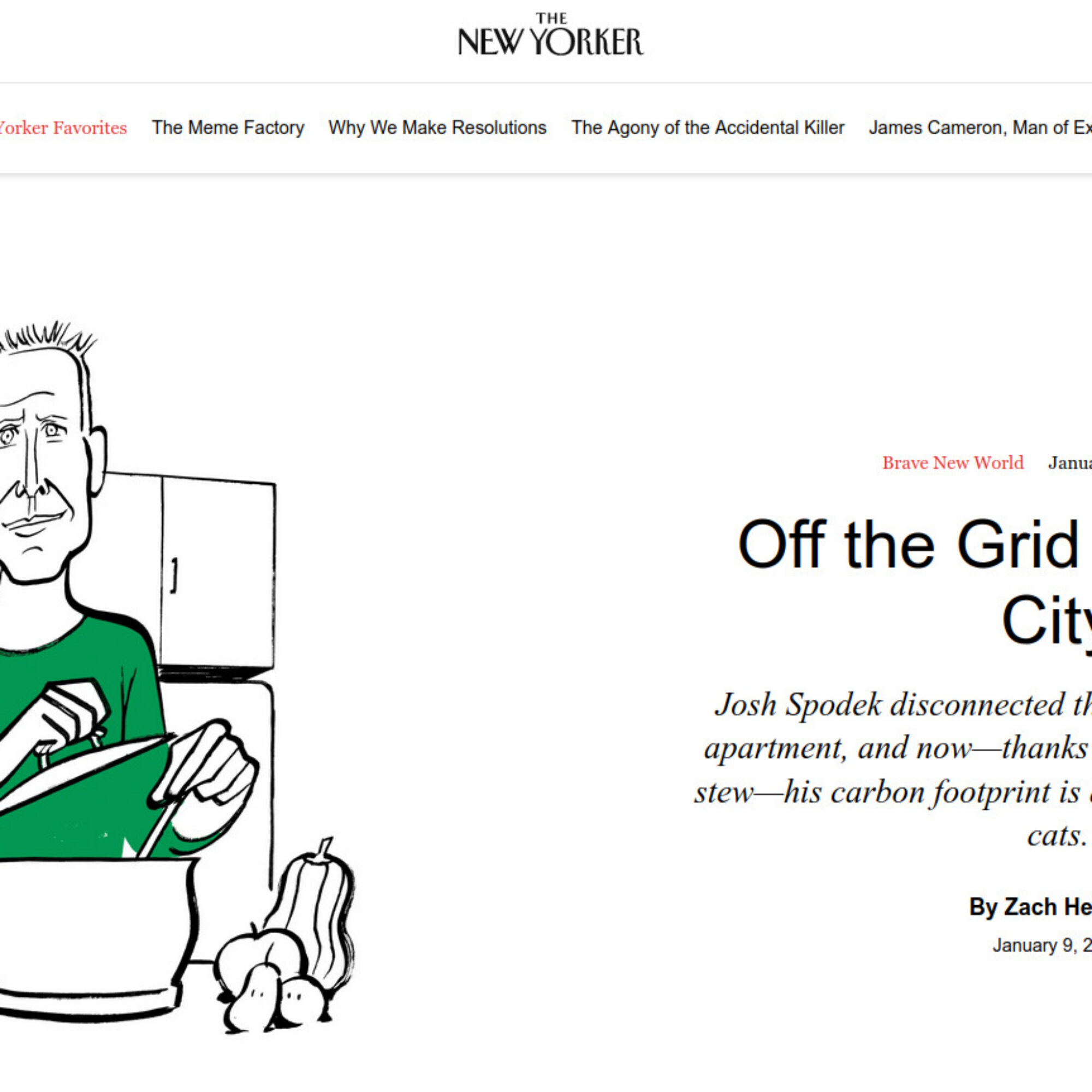
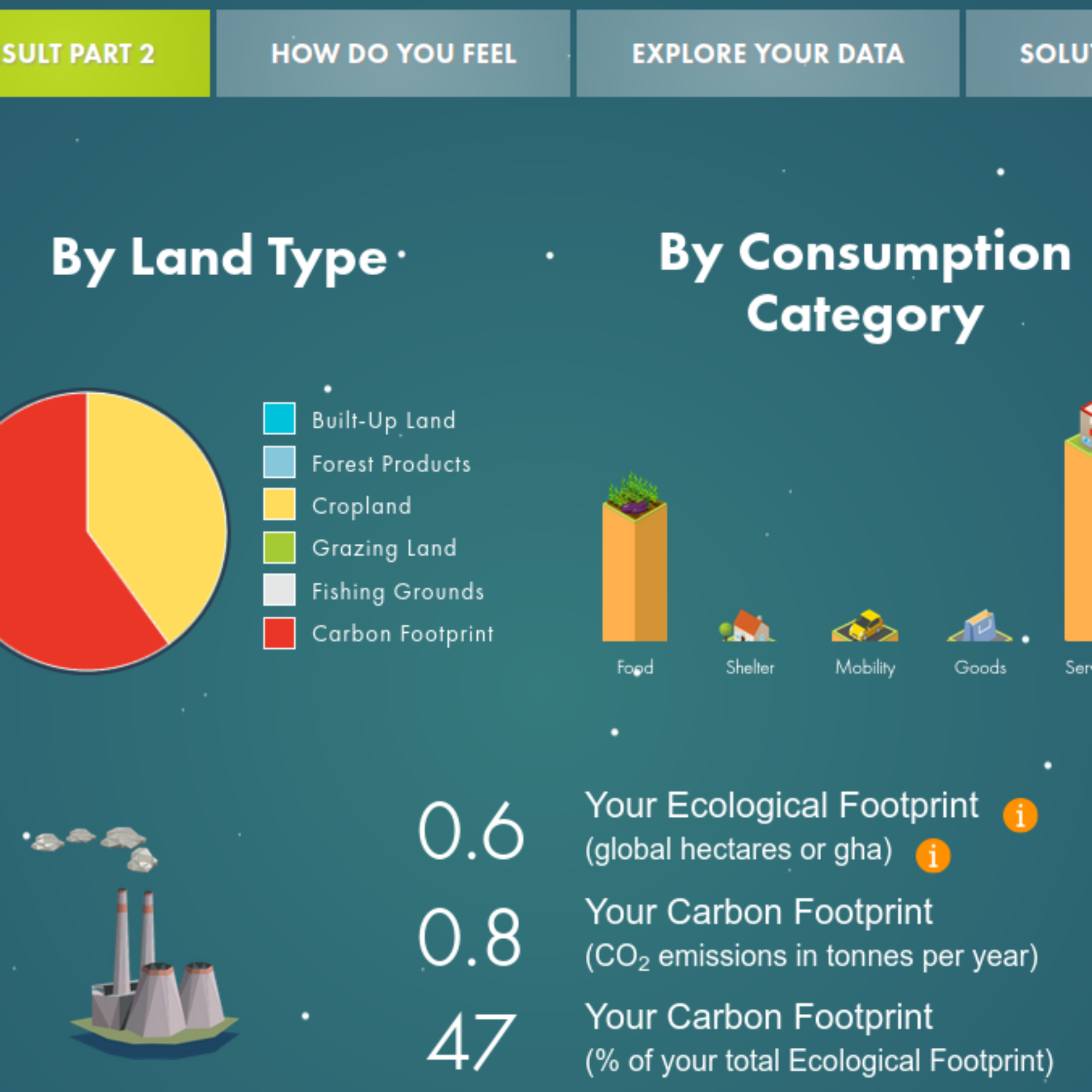
My letter to the New Yorker's editor in September led to a reporter, Zach Helfand, visiting and writing a story on me. They published it today (including spotlighting it, see below): Off the Grid in the Big City: It begins, "Josh Spodek disconnected the circuit breaker in his apartment, and now—thanks to solar-powered vegan stew—his carbon footprint is about that of three house cats." Along with the New Yorker piece, I recommend the pieces I wrote with more detail: In TIME: I've Been Living Off-Grid In Manhattan for Half-a-Year In Ars Technica: I disconnected from the electric grid for 8 months—in Manhattan Zach spent an afternoon and we covered a lot, including his talking to three executives, two from major fossil fuel companies (one ExxonMobil,…

2 Comments

Getting back at BP by buying their products? Way to teach them a lesson.

Talk about acting sustainably enough and some smarty-pants will tell you that individual action doesn't matter, that BP duped you by creating the personal footprint calculator to distract you from them. If you haven't heard, here are a few articles and posts for reference, but I wouldn't read them: BP popularised “carbon footprint” to greenwash and guilt-trip. Here’s how. Big oil coined ‘carbon footprints’ to blame us for their greed. Keep them on the hook Demystifying the concept of personal carbon footprint Those articles talk about how the companies are the problem. They should change. We're not the problem. They say we need big changes, not little ones one person at a time. People like this then avoid reducing their pollution. Way to teach BP…

0 Comments

The Root of Our Environmental Problems: Individuals Refusing to Change Themselves

We were all born into a culture with certain values. When I was a child, flying was an unalloyed good. It meant spreading culture, learning new cultures and cuisine, and so on. In principle we knew something about jet exhaust and that extraction caused people to be displaced from the lands and occasionally spilled. Cars meant freedom. The solution to pollution is dilution. But the world changed and our understanding of it did too. Diluting pollution didn’t solve it. It spread concentrations out, but some didn’t go away. It grew until it passed thresholds to lower Earth’s ability to sustain life. We could put our heads in the sand for a few decades, but by now the changes make it clear what we thought improved…

0 Comments

Flying to a sustainability conference is like hitting a piano with a sledgehammer to learn to play music

The title says it all. Hit a piano with a sledgehammer and you'll get some noise. You can call it music if you want, but I prefer to play scales. I start with a mindset shift then follow with a lifelong process of continual improvement, the Spodek Method. We overestimate what we can do in a day and underestimate what we can in a year. That's how you reach Carnegie Hall and it's how we could, as a culture, reach sustainability. I was invited to another conference on sustainability. People were flying from all over the world to attend. Why should anyone listen to you suggest we pollute less if you don't listen to yourself? If you think life is that much worse living sustainably,…

0 Comments

Doing What It Takes

When I spoke to Tom Szaky, founder of Terracycle, on the podcast, he shared an origin story. He had bought a used industrial composting machine and arranged with Princeton's food services team to take a few barrels of their food scraps. it was summer, the composting machine arrived late, and the barrels of scraps were mostly sealed. When they opened the barrels, the stench was revolting, the maggots everywhere, and at least one person vomited, as I remember. But the company started. I saw him tell that story to an audience at a conference at NYU. Afterward, another attendee remarked on the story: who does that? I responded, "that's why he was on stage and we were in the audience." That story came to mind…

0 Comments

Post-Christmas Christmas Tree Update

As Christmas passed and my neighbors will litter our streets with trees cut down to be used for a couple weeks in a clearly repurposed pagan holiday, we can reflect on traditions and changing them with the times. Traditions don't last forever. They start not as traditions. No one celebrated Jesus's birth with fir trees and north pole imagery before Christianity reached northern Europe. No one has to keep celebrating it in that style. I would think returning to something more middle eastern would get closer to his actual birth. Why not adjust to a time when trees help sustain life more still growing, not chopped down, when extracting resources like fossil fuels or cobalt to drive them around and mulch them poisons life and…

0 Comments

OMG this butternut squash was amazing! . . . Why connecting to nature connects to people and motivates saving both

I wish I could put into words how delicious this squash is. Most people seem to think of squash as something you have to cook, but they taste sweet and delicious raw. As you can see, I dice them to put on cereal like any other fruit. One thing making this one so special is that it was given to me from the crew who grew it at Drew Gardens in the Bronx. Everyone tells me people who don't live where I do or look like I do can't do exactly what they're doing. Luckily nobody told them they're powerless. It seems mostly rich, polluting people tell me that nonsense. I don't think even they believe themselves. They just want to sleep better, claiming others…

0 Comments

Beginning month 8 off the grid and *coincidence* year 12 of daily burpees.

Today begins month 8 of my apartment disconnected from the electric grid. I'd wondered what I'd do as the weather got colder and days shortened. Now I passed the winter solstice so days will lengthen. The weather will still cool for another few weeks, but I may have passed the hardest part. It occurred to me I might just have to keep going for the year. We'll see. It can get cold up there. I'm still relying on my cheat of plugging my computer and phone at NYU, where I am now, but I'm also working on installing the panels permanently and finding other long-term solutions to avoid climbing thirty flights several times a week. America can lead if everyone else stops making excuses and…

0 Comments

Reader question: Why do I say solar and wind aren’t clean, green, or renewable?

A reader wrote: You said that wind and solar " are not clean, green or sustainable". I am surprised, they seem to be better than the alternatives. What is the reason they are not sustainable? The short answer: The mining required will destroy and pollute ecosystems (and displace people from their homes, plus we can't seem to mine without sending children in them, which I consider inhumane) Solar and wind require fossil fuels to manufacture, transport, install, and decommission They need to be replaced every 20 years, so their problems persist Their end-of-life materials pollute The long answer is in articles like these: The Dark Side of Congo’s Cobalt Rush The Hard Math of Minerals by podcast guest Mark Mills. Why mining to make renewables…

0 Comments

Teaching children sustainability

I hear people talking about teaching children. I've been researching resources on teaching kids sustainability. I can't find any that look like people who learned to live sustainably created them. I don't hear as much about teaching adults, in this case, their teachers. Want to teach children sustainability? If their teachers don't practice living sustainably themselves, it will be like people who don't know piano trying to teach how to play piano: lots of advice that may sound good, but if it doesn't lead the teacher to act, it likely won't teach the children. Lead teachers to live and act sustainably if you want children to live and act sustainably. If you don't live and act sustainably, how do you expect to lead teachers to?…

0 Comments

More Polluting Less: Another Zero Kilowatt-hour Bill

I'd say I was getting bored of posting about zero kilowatt-hour electric bill except that pollution kills and we can all pollute less. I'm not polluting less for fun, though it improves my life, but to help people like you see it's possible so you can try. Are you trying? If so, email me and tell me. I'd love to support you or just hear about it. For others, if you believe you can't do something similar or that polluting less will make your life worse, you're lying to yourself, making your life worse, like an addict. I'm not saying this to make you feel bad. I'm saying it to empower you to overcome false, limiting beliefs. I wouldn't care about what you do with…

0 Comments

End of content

No more pages to load