Tips


Non-judgmental Ethics Sunday: Why Can’t I Clean My Boyfriend’s House for Pay?

Continuing my series on responses to the New York Times column, The Ethicist, looking at the consequences of one's actions instead of imposing values on them, here is a take on an earlier post,"Why Can't I Clean My Boyfriend's House for Pay?" About a year ago, I moved into my boyfriend's house in a new city. I'm renting out my old house for income as I look for work. I pay my partner $100 each month to cover my utility expenses. He pays his cleaning person $160 a month to clean the house twice a month. I am not convinced that the house gets cleaned well, and I have plenty of free time anyway. I offered to clean the house in lieu of the money…

0 Comments

Non-judgmental Ethics Sunday: Is It Wrong to Divulge a Secret to Protect Someone’s Honor?

Continuing my series on responses to the New York Times column, The Ethicist, looking at the consequences of one's actions instead of imposing values on them, here is a take on an earlier post,"Is It Wrong to Divulge a Secret to Protect Someone's Honor?" I'm an expat living in a country where H.I.V./AIDS is a severe taboo. My friend, also an expat, was diagnosed with H.I.V. while living here. She received almost no support or therapy of any form. Her attitude and behavior changed as she became ill, and she alienated and frustrated mutual friends. While I knew the truth, I was entrusted with her secret and stayed silent when I heard people bad-mouth her. Now that she has returned home, I feel compelled to…

0 Comments

New SIDCHA series post

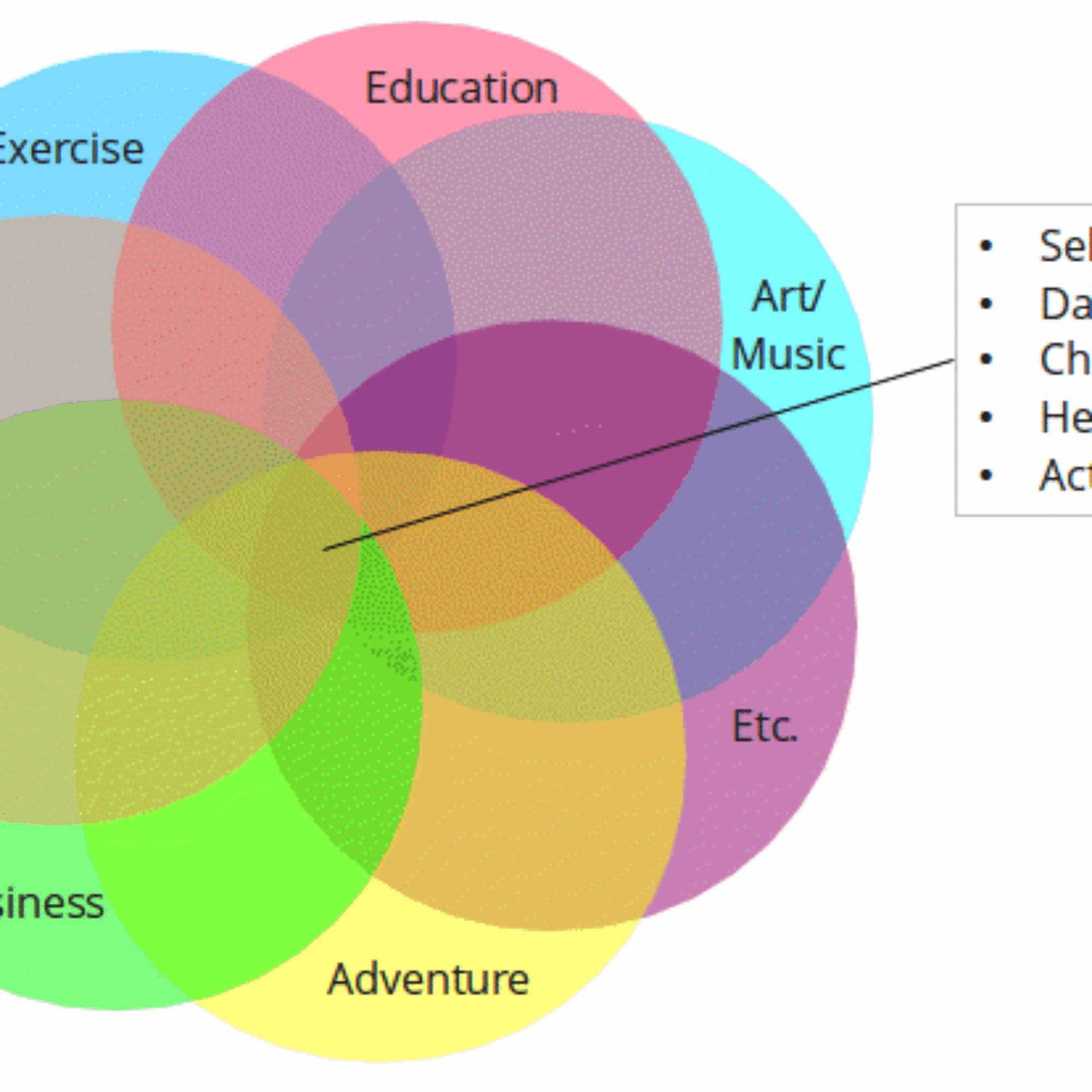
[I wrote a new introduction to my SIDCHA series. I'm happy enough with it to share it as a regular post.] Most people seem to want improve themselves, personally or professionally. Reading, watching, and listening to people tell you how you can develop yourself professionally or personally doesn't change anything beyond give you a bit of information. People don't succeed because they have more information. They succeed because they act. Even if you know you should do something, how do you know what? Marketers are trying to tell you what to do. They promote diets, exercise, how to start businesses, learning business skills, learning to become rich, learning languages, learning programming languages, religions, networking, and so on. It's bewildering. Each category has innumerable sub-categories. I…

0 Comments

Sunday Nonjudgmental ethics: Is It Cheating to Compete Against Younger Runners?

Continuing my series on responses to the New York Times column, The Ethicist, looking at the consequences of one's actions instead of imposing values on them, here is my take on today's post, "Is It Cheating to Compete Against Younger Runners?" I am a 60-year-old competitive distance runner who likes to win. Typically, races group runners by age and sex to balance competition. But senior runners often outperform younger runners. This is not as strange as it sounds: Seniors generally have more time to train than younger runners. Because I often stand a better chance of beating younger athletes, I am tempted to enter myself in a younger age group. I figure the natural competitive advantage bestowed by youth compensates for any misrepresentation on my…

0 Comments

Successful behavior comes from little tricks more than lofty ideals

There is a one-hundred percent chance I will work out this morning. It's raining. I'm cold. I'm hungry. I have a lot of work to do. I have emails to catch up on. So many distractions. How do I know I'm going to exercise? Because I put on the lycra shorts I wear when I row on the rowing machine and every time I wear them I row. They aren't that comfortable for anything else, so there's no point in putting them on except to row. And switching to wearing something else feels like defeat, so once I put them on, it's easier to row than not. The decision to put on the shorts takes no effort. I just do it. In the back of…

2 Comments

Motivation = expectation of success compared to now, research shows

It's Friday night. You planned to meet some friends for a night out. You haven't seen them in a long time and looked forward to it. But this week at work was exhausting. Most weeks like this you'd just want to sit on the couch, relax, and take it easy. You feel like you have no energy. Do you go out? Some people feel like hanging out with friends will relieve the exhaustion and improve their lives. Others feel like the work it takes to go out isn't worth it. The activity doesn't have to be going out with friends. It can be going to the gym, doing your laundry, cooking dinner, doing your taxes, whatever. Wouldn't it be interesting to learn that we can…

0 Comments

Two readers ask about confirming and anchoring in relationships

Two readers asked similar questions about yesterday's post, "Risks in relationships, rock-climbing, and ratcheting," on confirming the status of a relationship and how that's like anchoring yourself while rock climbing. One reader wrote: I like the analogy. Could you give an example of checking in with people and dynamic relationship? Dynamic meaning continuous interaction and keeping in touch? Asking someone how they feel about something is checking in, yes? Another wrote: Especially love this article as it applies to many different kinds of relationships. Interesting how communication and constantly working on "the relationship" is vital for all of them. My only question would be the "how" for the anchoring. As in, what passes for helping the dynamic between the two. But I'm sure it's relative to…

1 Comment

Non-judgmental Ethics Sunday: Tourist Retractions

Continuing my series on responses to the New York Times column, The Ethicist, looking at the consequences of one's actions instead of imposing values on them, here is a take on an earlier post,"Tourist Retractions." I recently spent several days at a relatively expensive hotel. The place was deplorable and unsanitary, with an unresponsive front desk. I gave it a poor write-up on TripAdvisor.com, the travel website, titling my review "An Overpriced Dung Heap." The following day, the owner contacted me through the site with an offer to refund almost half the cost of my stay if I would retract my review. I accepted the handsome offer and deleted my post. Who was the most unethical: me (for accepting the bribe), the owner (for offering…

0 Comments

Nonjudgmental ethics: Is It Wrong to Watch Football?

Continuing my series on responses to the New York Times column, The Ethicist, looking at the consequences of one's actions instead of imposing values on them, here is my take on today's post, "Is It Wrong to Watch Football?" I've recently begun to question my support for the N.F.L. I suspect that the recent discoveries about concussions and the prevalence of early-onset dementia among players are just the tip of the iceberg. Is it unethical to support a league that seems to know it is detrimental to the health of its participants? And if so, what should my response be? Don't go to games? Don't buy merchandise? Don't watch on television? Start actively opposing the N.F.L.? Write letters? DARREN WILLIAMS, DALLAS My Answer: If you…

0 Comments

See Joshua Spodek on leadership at General Assembly, Sunday October 19

Attendees keep giving me great ratings, so General Assembly keeps inviting me back. If you like entrepreneurship and you don't know General Assembly, you should. They teach great courses and have built a great community around teaching relevant skills. On Sunday, October 19, 10am-5pm, I'll lead a seminar with General Assembly on leadership in New York City. Register here, you'll be glad you did. Here is the announcement (they use short descriptions, for a fuller description, see this announcement from an earlier event): Lead the Way: Effective Leadership Techniques Joshua Spodek Adjunct Professor at NYU-Poly About This Workshop You've ascended to a position of leadership, but how can you ensure that the people you are in charge of will be responsive to your leadership style?…

0 Comments

Sunday non-judgment: Coffee for young mormons?

Continuing my series on responses to the New York Times column, The Ethicist, looking at the consequences of one's actions instead of imposing values on them, here is my take on today's post, "Should a Camp Counselor Stop a Student From Trying Coffee?" I work at a summer camp for high-school students. This year, a Mormon camper decided to drink coffee. Some staff members felt that we should try to stop him, to honor his parents' wishes (they listed tea and coffee as a dietary restriction). I disagreed; coffee is not dangerous, and I think high-school students are capable of deciding which religious strictures to follow. The camp is legally responsible for students, and we strive to create a safe environment in their families' stead.…

0 Comments

How to start to lead

The more I teach and coach leadership and entrepreneurship, the more I see them as sets of behavioral skills anyone can learn. Behaving in certain ways results in people choosing to follow you. Behave otherwise and they won't. There's no magic to it. The question isn't if you can behave like effective leaders do. The question is if you choose to learn and if you find effective learning technique. Your behavior is backed up by beliefs, experience, skills, and so on, but ultimately you transmit all those other things through your behavior. Other people can't sense your thoughts or see your past. They only see your behavior, including what you communicate, the same as any other set of behavioral skills. Many other sets of behavioral…

0 Comments

Not the ethicist, part 4

Continuing my series on responses to the New York Times column, The Ethicist, looking at the consequences of one's actions instead of imposing values on them, here is a take on an earlier post, "Campus Police: Precrime Division". I study computer science at a midsize university, and my school has cameras that cover almost every part of campus. The development of video-processing algorithms that can discern race, height and approximate age is ongoing in the field. Already, some modern video systems can alert owners of loitering, abnormal behavior and other common precursors to crime. Would it be ethical to hone the university security system to calculate and publicize the real-time probability of impending crime based on live video processing and existing statistics on criminal demographics?…

0 Comments

Not the ethicist 3

Continuing my series on responses to the New York Times column, The Ethicist, looking at the consequences of one's actions instead of imposing values on them, here is a take on an earlier post, "Sketched Out on the Subway". I was sitting next to someone on the subway who was surreptitiously sketching portraits of fellow commuters. I once spotted someone opposite me doing this, and actually changed cars when I suspected he was eyeing me as a subject. Being present in a public space does not seem akin to offering permission to record your likeness without consent, despite the intended (lack of) audience or purpose of the final piece. Unlike being captured in a tourist's random photograph, this act seems to involve a level of…

0 Comments

Not the ethicist 2

Continuing my series on responses to the New York Times column, The Ethicist, looking at the consequences of one's actions instead of imposing values on them, here is a take on an earlier post, "But I Didn't Know Filming Fights Was Wrong!". At my high school, two students were expelled for getting into a fight wherein a teacher was injured. In addition, two students who filmed the fight — and later circulated the video among students — were also threatened with expulsion. Expelling students for filming fights is unheard-of in my district. The school said it had grounds to expel the two who took the video, as outlined by the handbook given to all students: "Students may be disciplined for any other misconduct which is…

0 Comments

Not the ethicist

Continuing yesterday's series on responses to the New York Times column, The Ethicist, looking at the consequences of one's actions instead of imposing values on them, here is a take on an earlier post, "Accounting Principles". My spouse and I earn too much to contribute to a Roth I.R.A. Recently, we learned that it is legal to contribute to a traditional I.R.A. and then convert it into a Roth. My understanding of the Roth is that people who make over a certain income shouldn't benefit from its advantages. My spouse says that because it is legal to roll a traditional I.R.A. into a Roth, there is nothing unethical about doing so. Is this a case in which the law and the ethical standard conflict? S.R.,…

0 Comments

New series: Non-authoritarian non-ethics

The New York Times has a column called The Ethicist, where people write to ask for judgment and advice. Though I find the writing generally fun and light, I find the premise---that someone else has more access than you to values, implied to be absolute---undermines people considering their options, considering their values, developing their social skills, developing their empathy and compassion skills, and so on. I see that perspective as authoritarian so I call my approach non-authoritarian. Going by Wikipedia's description of ethics as "systematizing, defending and recommending concepts of right and wrong conduct, often addressing disputes of moral diversity," I'm not talking about ethics either, so I call my series non-authoritarian non-ethics. I'm sure I'll come up with a title I like more. The…

0 Comments

How to promote yourself without bragging or leaving information out

How do you promote yourself for a promotion? When you want a role on a project, how do you suggest you'd be great for the role? Promote too much and you risk sounding insecure, presumptuous, inauthentic, or like you're bragging. Promote too little and you risk not getting the role. Talking with one of my clients yesterday, when I described how I successfully promoted myself to a recent project, she made me stop and repeat myself so she could take down the words for future use. As I wrote in "The value of low-level instruction," I consider low-level instruction most valuable for learning leadership, so first I'll post the words she liked so much, then describe them. The words I said to her were I…

0 Comments

Cold Showers — The Series

I compiled most of my posts on cold showers into a series so you can easily read them at once. Click here to read it. If you think they're crazy, try them. At least start by reading the series. I couldn't imagine them being helpful before trying them, but I think they're incredible now.

0 Comments

If you have to force something you think others will like, rethink it. You can probably do it easier.

Sometimes I find myself having to push hard on a project that seems like it would benefit everyone, but it doesn't happen. My hard work goes nowhere. I've learned that if I have to push hard on something I think people would like, I'm probably looking at it ineffectively. Usually, I realize I'm trying to get people to see things my way when there are other ways of looking at it. Like I'm pitching myself or my project instead of understanding their interests, needs, or concerns and letting what I'm pitching emerge as a possible solution. When I see that pattern, I've learned to step back, pause, and think about it differently. The pause may be a few seconds, a day, or longer, depending on…

0 Comments

An exercise to help make you more aware of yourself when you need it most

Today's exercise builds on the one in my post, "An exercise in knowing your beliefs; so you can change them," so please do that one first. It's easier for most people, more general, and develops skills that you can use for this post's exercise. Still, you can do this on its own if you want. It also looks similar to, but is subtly different from, the recent exercise, "An exercise to help you understand others, reduce arguments, and become more aware of yourself." As similar as it looks, it's as different as two stretches or weight-lifting exercises that work different parts of the body. It's still similar in its simplicity It only takes a few minutes a day It costs nothing You don't have to…

3 Comments

An exercise to help you understand your world and become more aware of yourself

Today's exercise builds on the one in my post, "An exercise in knowing your beliefs; so you can change them," so please do that one first. It's easier for most people, more general, and develops skills that you can use for this post's exercise. Still, you can do this on its own if you want. It also looks similar to, but is subtly different from, yesterday's exercise, "An exercise to help you understand others, reduce arguments, and become more aware of yourself." As similar as it looks, it's as different as two stretches or weight-lifting exercises that work different parts of the body. It's still similar in its simplicity It only takes a few minutes a day It costs nothing You don't have to tell…

0 Comments

An exercise to help you understand others, reduce arguments, and become more aware of yourself

Today's exercise builds on the one in my post, "An exercise in knowing your beliefs; so you can change them," so please do that one first. It's easier for most people, more general, and develops skills that you can use for this post's exercise. Still, you can do this on its own if you want. It's similar: It only takes a few minutes a day It costs nothing You don't have to tell people you're doing it It reveals a lot of how you view the world It helps you become less attached to things and ideas you don't like The exercise 1. Carry a notebook or some paper with you every day for a week. 2. When you to notice a belief that another…

0 Comments

Want to change something big and complex? Start simple and long term.

All my habit and SIDCHA talk leads to talking to a lot of people about starting and keeping habits. I've seen that nearly everyone who keeps a solo habit long-term started the habit with something simple that they can keep going without trying too hard. People who bike to work keep up their biking habit longer than people who bike separately because they have to go to work anyway. People who exercise at home keep up their exercise habit longer than people who have to go to gyms because you have to be at home anyway. Non-solo habits also benefit from simplicity, but can benefit from other motivations, like working with an effective instructor at a gym course or joining a team, but they introduce…

0 Comments

Want to start a habit? Here’s the best instruction to start — SIDCHA style

I visited a site designed to help people start new habits called lift.do. You would choose one of the many habits from their list and they'd support you with instruction, pairing you with other people starting the same habit, sending you graphs of your progress, and things like that. A lot of hand-holding. I get their intention, but I find it counterproductive. I think it's effective at getting people to temporarily try habits without their taking root. The main fault I find with the site is that supporting someone externally diminishes the activity's intrinsic value. You could say the support is like training wheels that, once the habit takes root, you can let go of. I suppose, but I suspect people don't use them that…

0 Comments

End of content

No more pages to load