

Tips


More basics with Michael Jordan, Ray Allen, and Kobe Bryant: more simple and valuable than you think

Following up yesterday's post, "The basics: more simple and valuable than you think" about how the masters tend to focus on basics, I found a series of videos made by a great basketball player, Michael Jordan. He's made few instructional videos. He could do things no one else could and made them look easy. He can teach anything he wants. So what does he teach? Simple basics. Things like getting rest, eating well, exercising, footwork, how to hold the basketball, listening to music before the game to focus on the game, where you look, and things like that. https://www.youtube.com/watch?v=1_Mri8XE078 https://www.youtube.com/watch?v=H5V70KaRHek https://www.youtube.com/watch?v=WtwP1wK0Vjk https://www.youtube.com/watch?v=cA93VUiVSpQ That's a few videos of a series. Click here for a list of with more of these videos. Here's another video by another…
2 Comments

Know your geese!

A friend and colleague visited a couple weeks ago. He invited me to breakfast with another friend of his who happened to be an incredibly successful founder and CEO of a business related to a project of mine. You don't expect to make such valuable connections. We made a great connection and may find ways to collaborate. I met the visiting friend in the first place through another guy I didn't know well, but who suggested we meet. He also put me in touch with my book agent. Agents are notoriously hard to find and create relationships with, especially at the early stage I was at when I met her. That's three great connections from one guy. He's a goose who lays golden eggs. He's…

0 Comments

Emotions and sharp knives

Yesterday I compared emotions to fire and pain---things we don't enjoy feeling but we can use to improve our lives if we know how to use them. Calling them negative leads us to suppress and deny them---the opposite of self-awareness---which takes away our ability to improve our lives. I call that counterproductive. I think sharp knives might make a more helpful analogy. I might call sharp knives negative if I handled them clumsily and threw them around carelessly. You don't let children handle sharp knives because they don't have the dexterity to use them without hurting themselves. Chefs train to use them effectively. The more you train, the sharper you want your knives. No skilled cook wants a dull knife. Calling a dull knife bad…

0 Comments

Involving people attracts and engages them. Pitching makes them evaluate.

[This post is part of a series on principles to create ideas people want to help you with and creating a helpful, supportive community around you. If you don't see a Table of Contents to the left, click here to view that series, where you'll get more value than reading just this post.] You wouldn't believe how much access you have to people, both the number of people and how much each one will listen to and help you. This principle surprises and helps people more than the other three. They're used to asking people for their opinions on their ideas, followed by getting a judgment, followed by the end of a conversation, followed by them having to guess at what to do about it…

0 Comments

Why do people always associate empathy with feeling down?

Yet again, another paper on empathy only associates it with emotions we don't like---sadness, loss, etc. Almost never laughter, joy, fun, and feelings we like. I wrote about this before and how catastrophically it impedes people from developing what is otherwise an important tool for relationships, leadership, your own health, and more. I'm not even going to mention the paper because it's so counterproductive. Wikipedia describes empathy like: discerning what another person is thinking or feeling; and making less distinct the differences between the self and the other. It also is the ability to feel and share another person's emotions. Some believe that empathy involves the ability to match another's emotions... Nothing in there suggests you can only empathize about gloom and doom. Yet look…

0 Comments

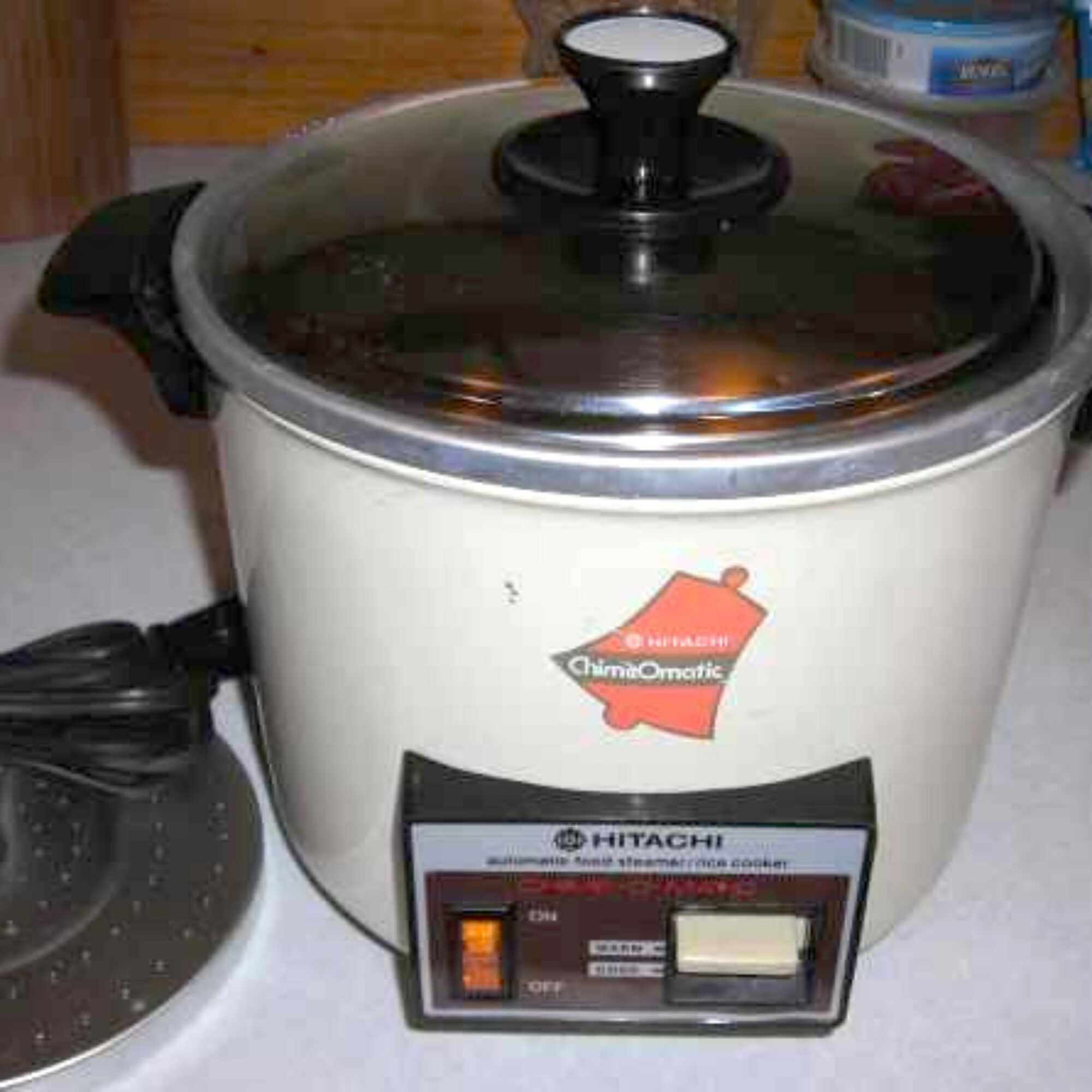
My rice cooker / vegetable steamer / miracle appliance

I don't claim to be a great cook. I don't like unnecessary gadgets. I avoid promoting businesses for no reason. But, man, do I like my Hitachi Chime-o-matic rice cooker / vegetable steamer / miracle appliance. I call it a miracle appliance for fun because I can't figure out how it knows when to turn off, but it does, every time. I like the kitschy name Chime-o-matic. Mostly I love that it cooks food amazing with almost no work. I don't even cook rice in it, or at least I haven't in years. It steams vegetables perfectly almost every time. Legumes too. The last few things I cooked in it are An eggplant Kidney beans (from dry) Garbanzo beans (from dry) Split peas (from dry)…

8 Comments

Don’t look for blame but take responsibility for improving things to the extent you can

Blaming other people is effective at solving problems if you can change other people and you can go back in time to change the past. For the rest of us, blame is effective at polarizing others against you and undermining relationships. If that's your goal, I recommend it. It's also effective at making you feel self-righteous and superior, until the polarization kicks in and you feel alienated or like you have to blame more. If that's your goal, I recommend it. You can tell people you have to understand the problem to solve it and that's why you're doing it, but they'll just see you fooling yourself. Spending that time on understanding the solution will get you farther. For everyone else, I find that focusing…

0 Comments

Habitualize it

My friend, visiting from overseas, described the difficulty we all feel away from home when we can't do the morning routine we like. Nearly everyone has a morning routine that starts their day right for them. I see a higher-level strategy: if something happens regularly, habitualize it. I love discovering things, but I don't see any benefit in trying to discover a new ordering between showering, eating breakfast, brushing my teeth, and the things I do every morning, or wondering if I should add new elements. I may vary it somewhat based on season, if I'm in a hurry, etc, and I'm open to hearing about things I never knew about, but basically I know what I'm doing. How much mental energy and attention do…

0 Comments

Mental models and beliefs: an exercise to identify yours

[EDIT February 2020: I gathered, edited, and compiled all the posts I listed below into my book ReModel, which I recommend if you prefer a more curated experience with less clicking. Either way, I recommend doing the exercise. It gives a new way of seeing the world that costs nothing and takes little time.] This series covers my doing my Write Your Beliefs exercise, which I've found one of the more valuable self-awareness exercises that my clients, my students, and I have done. It builds on the Inner Monologue exercise, which I also call "The most effective self-awareness exercise I know." The first entry motivates the value of this exercise, the second describes the exercise, the third and fourth describe my experience doing the exercise,…

0 Comments

Passions, you create

I wrote the following to someone and couldn't help sharing it here. There's a common belief that passions are something you find. Like if you just turn over enough rocks you'll find yours. It's a nice fantasy and excuse for people who haven't achieved much to explain why they haven't and others have: "Well, I could do as much as so-and-so if I had found my passion. When I do I will. In the meantime, I just have to wait to find it." I disagree with that belief with every ounce of my being. I've found you can find interests and things you like. Passions, you create. You get out of your activities what you put into them. Usually to create a passion you have…

0 Comments

To start a habit, focus on emotions

Different people suggest starting habits different ways. Some say to start with behavior, like setting a New Year's resolution or doing it every day for a month. Others suggest starting by changing your environment, like by putting a note on your computer monitor or daily schedule, wearing a device that measures your exercise, or joining a web page that tracks and reminds you. That's all low-level tactics. Tactics, no matter how effective, don't work if the high-level strategy doesn't work. Effective strategy comes from knowing how the new habit will affect your life. What is its meaning, value, importance, and purpose (MVIP)? MVIP is based in emotion. That means what emotions do you expect the new habit to create. If you expect the change to…

0 Comments

This pattern improves your life

Notice this pattern and you'll know how to improve it. It applies to an activity. I'm thinking of exercise when I write it, but many activities fit it. The pattern When you're not about to do it, you think of it as something you generally want to do. When you're about to do it, you feel anxious, maybe to the point of fear. You have to overcome that anxiety and fear to start it. Starting is hard. After you start, it's hard and unpleasant, but you feel emotional reward for doing it. As hard as it is, since you're doing it, you want to keep doing it and push your limits. As much as you want to keep doing it, you can't keep it up.…

0 Comments

Non-judgmental Ethics Sunday: A Boy Named Dana

Continuing my series of alternative responses to the New York Times column, The Ethicist, looking at the consequences of one's actions instead of imposing values on others, here is a take on today's post,"A Boy Named Dana." I have applied over email for internships with several high-tech companies in the Bay Area, and I suspect I have benefited from my potential employers' incorrectly assuming that I am a woman. Many of these companies actively seek female applicants to balance out the field's male dominance. Nowhere on my résumé do I state my gender, as that's not typically done. Do I have an ethical obligation to mention my gender in the email? By refraining from doing so, am I taking advantage of a policy designed to…

0 Comments

Non-judgmental Ethics Sunday: The Perks of Being a Layabout

Continuing my series of alternative responses to the New York Times column, The Ethicist, looking at the consequences of one's actions instead of imposing values on others, here is a take on today's post,"The Perks of Being a Layabout." My 28-year-old son has decided to become a novelist. He recently took a part-time job at a grocery store, working just 15 hours a week to pay his bills, leaving him enough time to write. His low income qualifies him for Medicaid. He could work more if he chose to. Considering this, do taxpayers have a responsibility to provide health coverage for him? Does it matter if this is a short- or long-term strategy? NAME WITHHELD My Answer: Maybe my reading between the lines is off,…

0 Comments

I don’t know what to call it but I can’t call it food

EDIT: since writing this post I came up with the term doof, which I describe in this podcast episode: I recommend never calling doof food or food doof. Here's the original post: Did you know antifreeze tastes sweet? It will also kill you if you drink it. Laws require putting something in it to taste bitter because its sweetness leads kids, dogs, cats, and other pets to drink it. Like all poisons, the dosage determines its effects. According to Wikipedia, "The dose makes the poison" is common adage first expressed by Paracelsus intended to indicate a basic principle of toxicology. It means that a substance can produce the harmful effect associated with its toxic properties only if it reaches a susceptible biological system within the…

0 Comments

You need to read this post

"Need" is a powerful word. People use it wrong a lot. If you do, you're probably hurting your credibility and ability to influence. It implies sloppy communication and probably sloppy thinking. People often say things like: "You need to calm down," when they want you calm, "You need to be quiet," when they want you quiet, "You need to listen more," when they want you to understand them, and so on. I associate such phrases with people with authority trying to get others to comply. Videos online of cops subduing people often show them "You need to get down on the ground!" Since neediness is so unattractive, I think most people are sensitive to someone telling them they need something. I am. So when you…

0 Comments

Non-judgmental Ethics Sunday: A Survey Course in Campus Ethics

Continuing my series of alternative responses to the New York Times column, The Ethicist, looking at the consequences of one's actions instead of imposing values on others, here is a take on today's post, "A Survey Course in Campus Ethics." I teach part time at a well-respected regional college. For the past few years, the college has accepted several students from China who do not, in my opinion, have the language skills to actively participate in my class. After two Chinese students failed the midterm exam, I approached representatives of the college and recommended that they provide these students with special assistance. The university didn't act, and those students failed my class. What obligation does a college have to foreign students? Is the college pulling…

0 Comments

Questions for job interviews

Following up yesterday's post, "Value people who refer and recommend you!", on my friend's job that didn't work out, I forgot to add an important part of the conversation: questions to ask during interviews. Everyone prepares for interviews thinking of how to answer questions asked of them. They kind of know it helps to ask questions, but they tend to ask questions to show they know about the company or the field, trying to demonstrate their value. Everyone who understands the phrase "People join good projects and leave bad management" knows that the people they work with determine their working environment more than the project or nearly anything else. They'll benefit a lot more in interview from learning about their working environment, especially the people…

0 Comments

Value people who refer and recommend you!

A friend started a job and found after a week that she couldn't stand it. She asked me for advice on leaving, wondering if after one week was too soon and how to tell the person she was working for. The first thing I asked her? "Did anyone refer or recommend you to this job?" She said yes, two people recommended her. I said "Since you asked me for advice I'll give it. Before you talk to the person at the job, talk to the people who recommended you. They put their names on the line for you. How do you think it affects their reputation if you leave right away? Even if you don't think of them, think about yourself: do you think you'll…

0 Comments

Non-judgmental Ethics Sunday: Should Free Office Food Be Taken Home?

Continuing my series of alternative responses to the New York Times column, The Ethicist, looking at the consequences of one's actions instead of imposing values on others, here is a take on today's post,"Should Free Office Food Be Taken Home?" My company offers certain food items free in our office pantry. Every morning, my co-worker Brandon eats a serving of Cheerios from the pantry while getting settled for the day. Would it be acceptable for him to take the cereal home the night before and eat it before going to the office? Brandon swears that he's more productive after he eats, and taking the cereal home would allow him to eat on his time (instead of after arriving at the office). Since the food is…

0 Comments

You don’t need six months to prepare. You need an hour.

I've almost finished recording the audio for an online course in many of the exercises I've posted here. I expect many people will find doing it a life-changing experience (like they will with my next seminar, this Saturday in Soho). I had been planning to make the course for a long time, thinking of how to write the perfect text and organize it all. I wasn't creating anything. Then a friend said what I always knew, but forgot: "Josh, let's just record this." Also, NYU asked me to teach an in-person version of the course and needed a syllabus. Two deadlines and a partner started me working---writing text for meeting with someone to record and to distribute to NYU students so they could figure out…

0 Comments

Exercise in minimizing

Since my posts, "The smallest effective difference" and "Minimum effective behavior," I've meant to write an exercise in using less. The day after Thanksgiving,when people tend to consume more than they want, seems timely. As usual, the point of an exercise is partly for the immediate outcome, but mainly to develop new skills. New skills change your behavior and beliefs in the long term. So while the exercise may seem minor, its long-term effects on how you behave and interact with your world can be much greater. If it seems minor, you might as well experiment with it anyway since what's the big deal? Actually, I'm moving in this direction with my coaching and teaching, and appreciating it when teachers and coaches do it with…

0 Comments

More effective than willpower

As much as I advise people not to do it, I catch myself relying on willpower when it won't work all the time. Willpower is when you do something counter to what your emotional system motivates you to do. If you put a chocolate bar in front of someone who loves chocolate, their motivational system makes them want to eat it. If they are trying to avoid sugar, it takes willpower not to eat it. Or when you're running a marathon, your emotional system makes you want to stop and rest. It takes willpower to keep going. Willpower runs out, so it works for limited time. Put that chocolate bar in front of the chocolate lover long enough and they will eat it. People who…

0 Comments

Non-judgmental Ethics Sunday: Sorry, No One’s Sitting There

Continuing my series of alternative responses to the New York Times column, The Ethicist, looking at the consequences of one's actions instead of imposing values on others, here is a take on today's post,"Sorry, No One's Sitting There." When my wife and I go to the movies, I typically buy a third reserved seat so I can keep the seat next to me empty. I prefer — but by no means need, either physically or psychologically — the extra space. My wife finds this new habit of mine rather absurd and extravagant. I agree. But is it unethical? WILL, AUSTIN, TEX. My Answer: This isn't an abstract issue. Your behavior affects other people. Instead of asking for an abstract judgment from outside parties like a…

2 Comments

Non-judgmental Ethics Sunday: What if an Athlete Wants to Bet on Himself?

Continuing my series on responses to the New York Times column, The Ethicist, looking at the consequences of one's actions instead of imposing values on them, here is a take on today's post,"What if an Athlete Wants to Bet on Himself?" An athlete who bets against his team — or himself — clearly has a conflict of interest in the outcome of the game. It's not obvious to me, however, why an athlete betting in favor of his team (or himself) would be doing anything unethical whatsoever. What am I missing? GRAHAM SINGER, CHICAGO My Answer: There is a sport called Calvinball, illustrated below, with almost no rules and what rules it has change arbitrarily. It's funny to read in a comic strip, but no…

0 Comments

End of content

No more pages to load