“Why does the universe exist” and why I prefer living life to philosophizing about it

A reader contacted me and suggested I read the book "Why Does the World Exist?: An Existential Detective Story," by Jim Holt. The author writes for the New Yorker among other things, which implies I'll enjoy his writing. The book promised to explore the question why the universe exists as opposed to not existing. Why being and not nothingness. I borrowed the book from the library. I hadn't considered its main question much before, so it got me thinking about why the universe exists. It's an interesting question that twists your mind just to think about it. Once you posit that the universe exists with the laws of physics we know, I can see how the Sun, Earth, life on Earth, and humans followed from…

2 Comments

The shells we put around ourselves

As children we start defenseless. I don't mean physically, though we start physically defenseless too. I mean kids don't protect themselves from being emotionally hurt or having their identities challenged. Kids say things we adults recognize we would catch in mental filters before speaking. What mental filters? Everybody knows what I mean. As we get older we learn to protect our vulnerabilities. We learn protocol and manners. We learn how to behave in certain situations to meet social expectations. Doing so rewards us with getting the results we wanted. With a cost, though. Some examples: When we meet a girl or guy we like we play it cool and don't let on. We don't tell a friend about a shortcoming. We don't tell anyone we…

1 Comment

The problem determines the solution, not what you’re good at, not what you want to do, not what you can do.

I wanted to follow up on a recent post, "You tell me what you do best. I’ll tell you what you do worst." When you have a problem to solve, only one thing determines the solution: the problem itself. If you're good at doing one thing, but another thing solves the problem, it doesn't matter how well you do the other thing. Your skill may help solve the problem, but if it needs something else, you'll need to do the other thing too. Same with what you like. If you like doing something but the problem requires something else, it doesn't matter how much you want to do what you want to do if you want to solve the problem. If you want to get…

0 Comments

You tell me what you do best. I’ll tell you what you do worst.

Today I'll cover an exercise I do in my seminar and when I address a group of professionals. You can do it while reading this post. It teaches you about Yourself Self-awareness Teamwork, especially team building I can cover it in a few minutes or can use it to discuss teamwork, self-awareness, and my experience for thirty-minutes or more. Introduction I start by telling the group "I'm going to ask you to tell me what you do best. Then I will tell you what you do worst." I say it provocatively to get a response and set expectations high. A few people respond incredulously. I point out that someone did the exercise with me. I was equally surprised -- how could someone tell a room…

0 Comments

A reader responds: A Question to Help You Intuitively Prioritize and Stop Procrastinating

I reader emailed me a model he uses along the lines of the models and beliefs I put in my series on beliefs and now my book on the same topic. I'm honored and flattered that he used my format. I recommend looking at your beliefs and understanding them. In his email he described how his belief evolved as he wrote it -- an effect I found too. Just writing them raises your self-awareness, editing all the more. I understood it as soon as I read his name for his model/question, which I expect to adopt and use myself. I suspect it will resonate with others as it did with me. I hope to hear from other readers about their beliefs. Here is his belief:…

0 Comments

Why don’t we ask people we care about how we can be better with them?

Another leadership coach, Marshall Goldsmith, asked a question during a presentation: At your jobs you ask your clients and managers how you can do better. Do you ask your spouse, family members, or other people you care about if you can be a better spouse/mother/father/etc.? If not, why not? Marshall has no problem connecting your professional and personal lives. I hope you don't. This topic is as much about professional relationships as personal. As, for that matter, it is about your relationship with yourself. Before looking at the attendees' responses, consider yours. Do you want to be a better spouse/mother/father/daughter/son/etc for the people you care about? Do you ask them how you could? If not, how do you expect to? Also if not, do you…

0 Comments

ReModel: Create mental models to improve your life and lead simply and effectively

I posted my second ebook on Amazon the other day. Longtime readers will recognize I based it on this spring's extended series on beliefs that became one of my more popular series. You can save the cost of the book by reading that series, but I edited the book to make it worth the cost. It's more polished, with tables and reordering for better continuity. I would only post it if I believed the book would rank among the most useful and effective books you could read to improve your life. I believe it is. I believe reading it will help you learn about one of the most fundamental and important parts of your life, something you experience every moment yet few people notice. The…

0 Comments

Silent Spring

I finished a book the other day I'd been meaning to read for at least a decade -- Silent Spring, by Rachel Carson, released in 1962. I posted a summary below. I also understood it influenced thought a lot. I had to speak to a few people who were adults when it came out to understand its impact at the time, which they assured me was colossal -- a common-sense bolt out of the blue from a humble woman who simply researched and compiled information anyone else could have. It seems, like Vietnam, one of the major turning points about which the American people began to question their government and find it didn't consistently act in their interests. In fact, it seemed often to work…

0 Comments

We all feel emotions all the time

When someone gets animated others often describe them as emotional: "John is acting so emotional" "Jane got so emotional when Ryan said ..." and things like that. I'd like to suggest an alternative perspective I think you'll find more precise and useful: Everybody feels emotions all the time. What's the difference? When someone sits quietly reading, they aren't acting or feeling unemotional. I suggest the are feeling and acting on emotions as much as anyone. They may feel calmness, relaxation, satisfaction, or something like that, but those are emotions. They aren't feeling no emotion. Emotions motivate you. If you got out of bed this morning, something motivated you and you felt some emotion. No emotion means lying in your bed until you die. An animated…

2 Comments

Goenka and 10-day meditation retreats

Two days ago a guy named Satya Narayan Goenka died. Who was Goenka and why should I care? First, I'll mention how I found out about him. I had no experience with meditation when a longtime friend I hadn't seen in a while suggested I try it. The idea made no sense to me because meditation made no sense to me. I didn't know or care about it to that point in my life -- somewhere around 2006. But my friend knew me a long time and I valued her perspective. I decided to try a ten-day meditation retreat, I guess like jumping in the deep end -- these retreats allow no talking, reading, writing, etc for the first nine days. You can leave if…

0 Comments

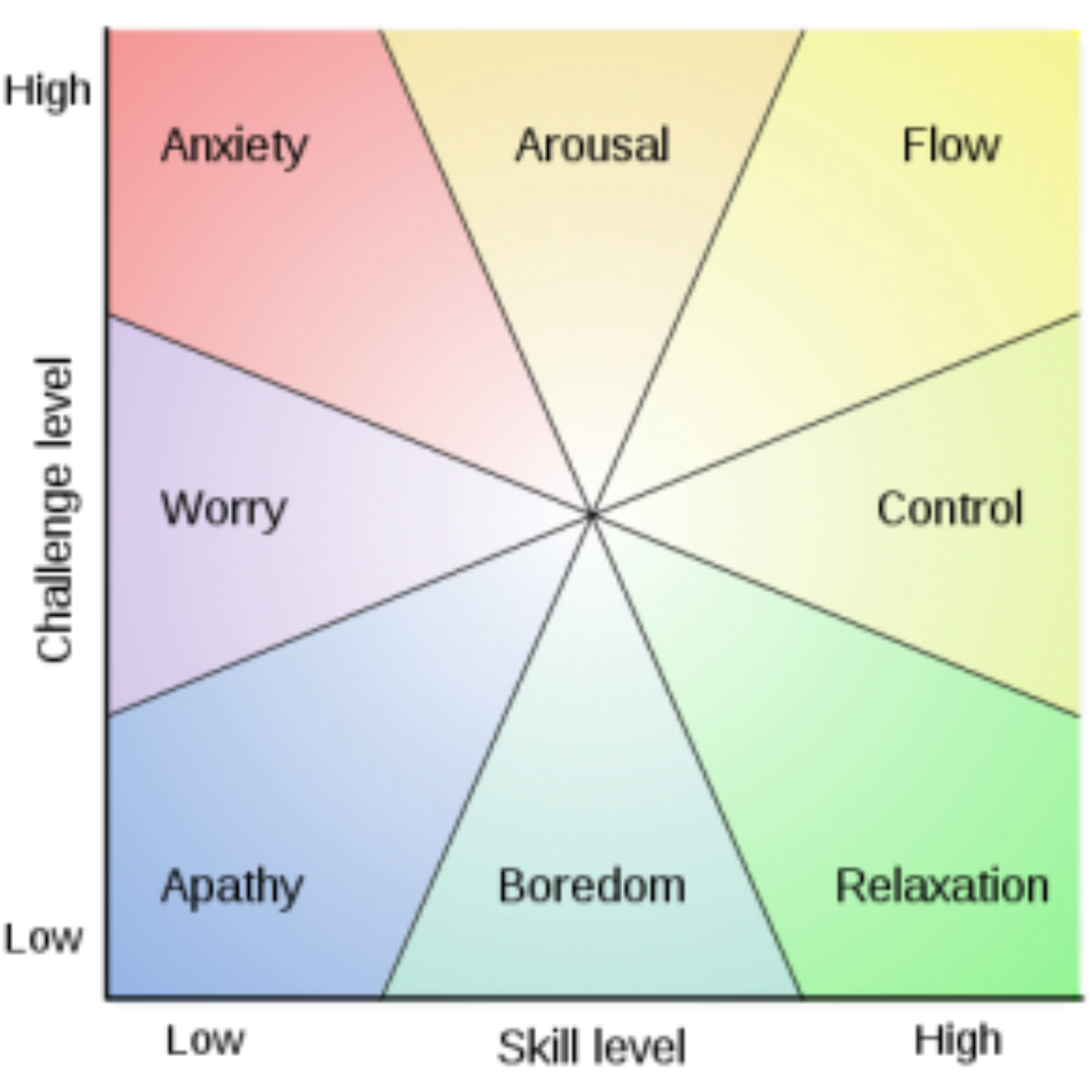
A doubly improved representation of Flow-related emotional states

A couple years ago I wrote two posts on the emotional state where you get so lost in an activity you lose track of time, focused with all your attention. Hours pass without your noticing while minutes may seem like hours as you focus intently. We like this state. A researcher named Mihaly Csikszentmihalyi studied it and named the state "flow." He wrote a book on it that improved my life so I recommend it. We all want more flow in our lives and his book helps create it. The first post a couple years ago very briefly summarized it and includes links to relevant Wikipedia pages and TED talks. The second describes a couple improvements on how to present flow. I improved my improvement…

0 Comments

My start with emotional intelligence and self-awareness

You don't have emotional intelligence, you were born with it, or you developed it. If you developed it you started sometime, like I did. If you don't have it, you can start too. Here's my start. I don't pretend I'm the world master of emotional intelligence, but I've come a long way and I know anyone else can. I hope sharing the story motivates others. Context Before business school I had barely heard of the concept of emotional intelligence. Since I contrasted emotions with rationality, I considered them irrational and weird, not something to learn about or focus on. Since I connected emotions to feelings, music, art, and romantic comedies, I didn't connect them to behavior. Nor for that matter did I connect behavior to…

0 Comments

How would you improve the world if you had supernatural powers?

Here's an exercise to see your values from a new perspective. I used to do it all the time until I learned my lesson from it, which I'll write at the bottom. Answer the question "how would you improve the world if you could have a magical wish come true?" and follow through to see if the change would, in fact, improve your life. To clarify, I mean a supernatural change outside of what you normally do to improve your life and world. I submit that it's not as easy as you think. Say you had whatever magical powers to change the world however you wanted. Could you improve the world beyond what you could do without the magical powers? Quick answers people jump to…

1 Comment

One of the most important lessons I learned in business school didn’t come from a teacher and it applies everywhere in life

I wrote before about "Business school’s first major lesson: how to resolve ethical dilemmas." Today I'll talk about another important lesson I learned in business school, also within the first couple weeks, also applying in many places in life I would not have expected from a vocational school. Context First I have to note my mindset before starting business school. I considered the most relevant parts of my life that I'd co-founded a company and I knew more math than probably anyone in the school. I thought business school would be a fun experience filling in a few gaps of how to make spreadsheets and learning some networking skills. What happened One of the major cores of business school is knowing how a business runs…

0 Comments

Nobody likes a know-it-all

I want to compile a list of things that when you talk about them people feel compelled to tell you all about them, like they're experts. I'll also note that most such people talk about things they read that couldn't possibly cover the topic thoroughly. More importantly, they rarely experiment and find out on their own. I don't know how many people have told me not eating meat is bad for my health without trying. They just read something somewhere and regurgitate. Or how many people tell me running is bad for human knees, who somehow disregard that tens of thousands of people who run a marathon in just one day in New York City, or how many people run all around the world and…

0 Comments

A mental model on disease and dying

We might as well figure out ways to think about dying because it's going to happen to all of us and people in our lives. Sorry if I broke the news to you and brought you down, but I figured you knew already. I've written before my main thoughts on mourning, mainly based on a Taoist passage, quoted in my post, "Thoughts on mourning." Like you and everyone else, as I get older I face more people recognizing their mortality. More people we know get sick. More people we know die. Some people fear disease and dying. Some repress thoughts on the matter. Some people use the change to live life to its fullest in every moment. I've worked out a model that works for…

0 Comments

You call exercise torture? I call it glory.

[This post is part of a series on my daily exercise and starting and keeping challenging habits. If you don't see a Table of Contents to the left, click here to view the series, where you'll get more value than reading just this post.] Emotionally, I don't want to do burpees nearly every single time I do them. As you probably know, I do twenty twice-daily. Starting is never easy. Never. If you think you have a harder time starting to exercise than others, I think you're wrong. I don't think anybody has it easy. Just some people developed skills to overcome the emotional challenges we all feel. Rationally, I want to do them, but my emotions oppose my rational thoughts. I use willpower to…

2 Comments

Insults describe the person giving them more than the person receiving. How you can learn from yourself when you insult.

I overheard some people talking about another group as "douchebags" with "popped collars" who called everyone "bro" or "brah." Okay, I get that some people can find others annoying, but to call them douchebags is just mean. You've insulted others for other reasons. People call others losers, sluts, assholes, and so on. More importantly to you, if you've ever insulted someone or thought about it, which covers everyone on the planet, is that the insult says something about you: When you insult someone you evaluate them by your values, which you impose on them. You judge them. You think "I'm better than them" or "I'm right and they're wrong." If they judged you by their values you'd look terrible too. If you considered your thoughts…

0 Comments

You probably blow smoke in kids’ faces without realizing. You can stop.

New York City is having the most mild summer I can remember. We've barely hit ninety degrees and that was at least a month ago. Since then we've had cool, spring-like weather most of the summer. The other evening walking with friends, I noticed how loud the sounds of window air conditioners were in the small streets of the West Village. The temperature and humidity outside couldn't have been more comfortable. I could only think the following thoughts about their unnecessarily using their air conditioners: Air conditioners use energy. That energy comes mainly from fossil fuels. Fossil fuels pollute. Pollution makes us unhealthy. Me: With weather this perfect, the air conditioners aren't improving the air for these people. They might as well light up a…

0 Comments

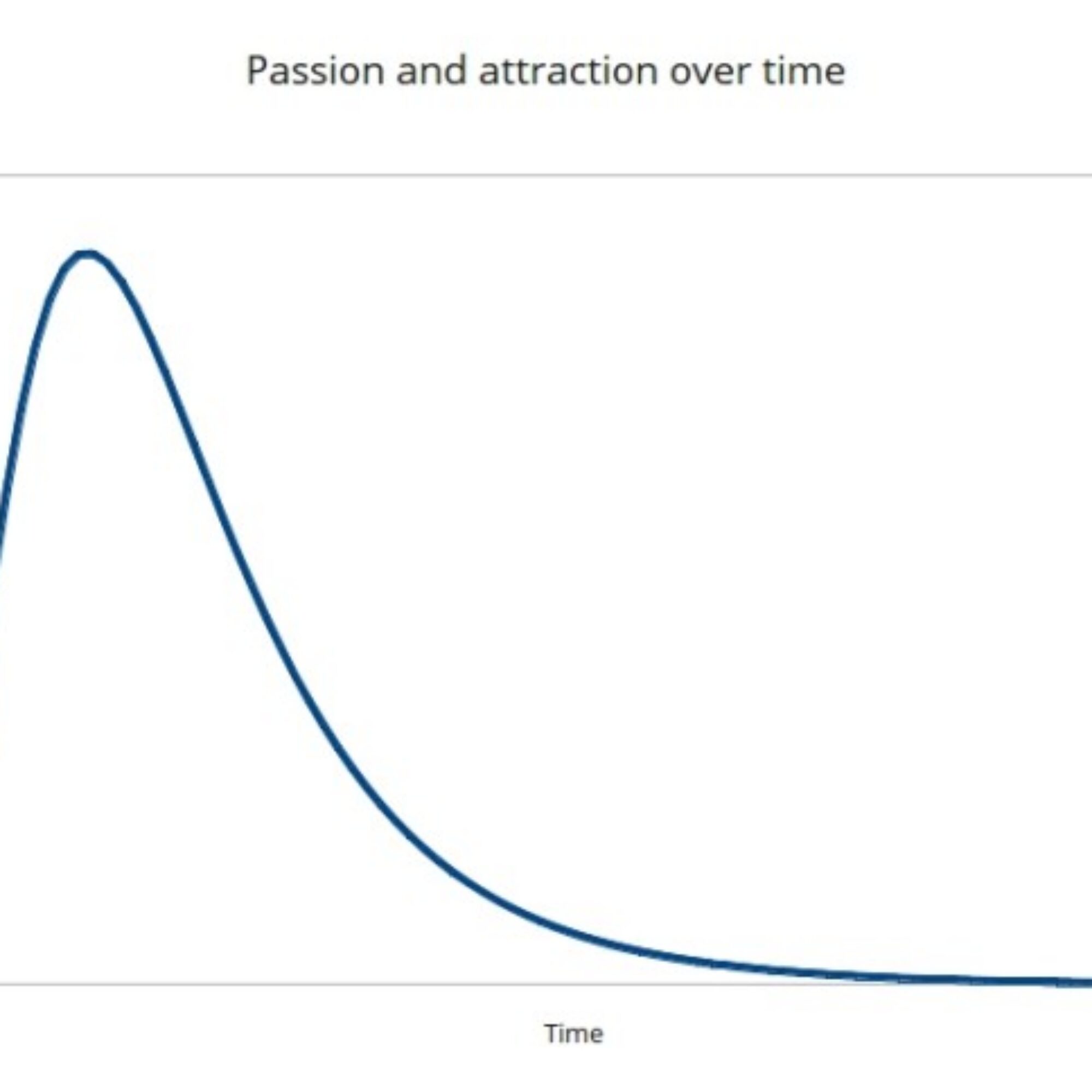
A visual model to understand passion and attraction: The Passion-Attraction Model

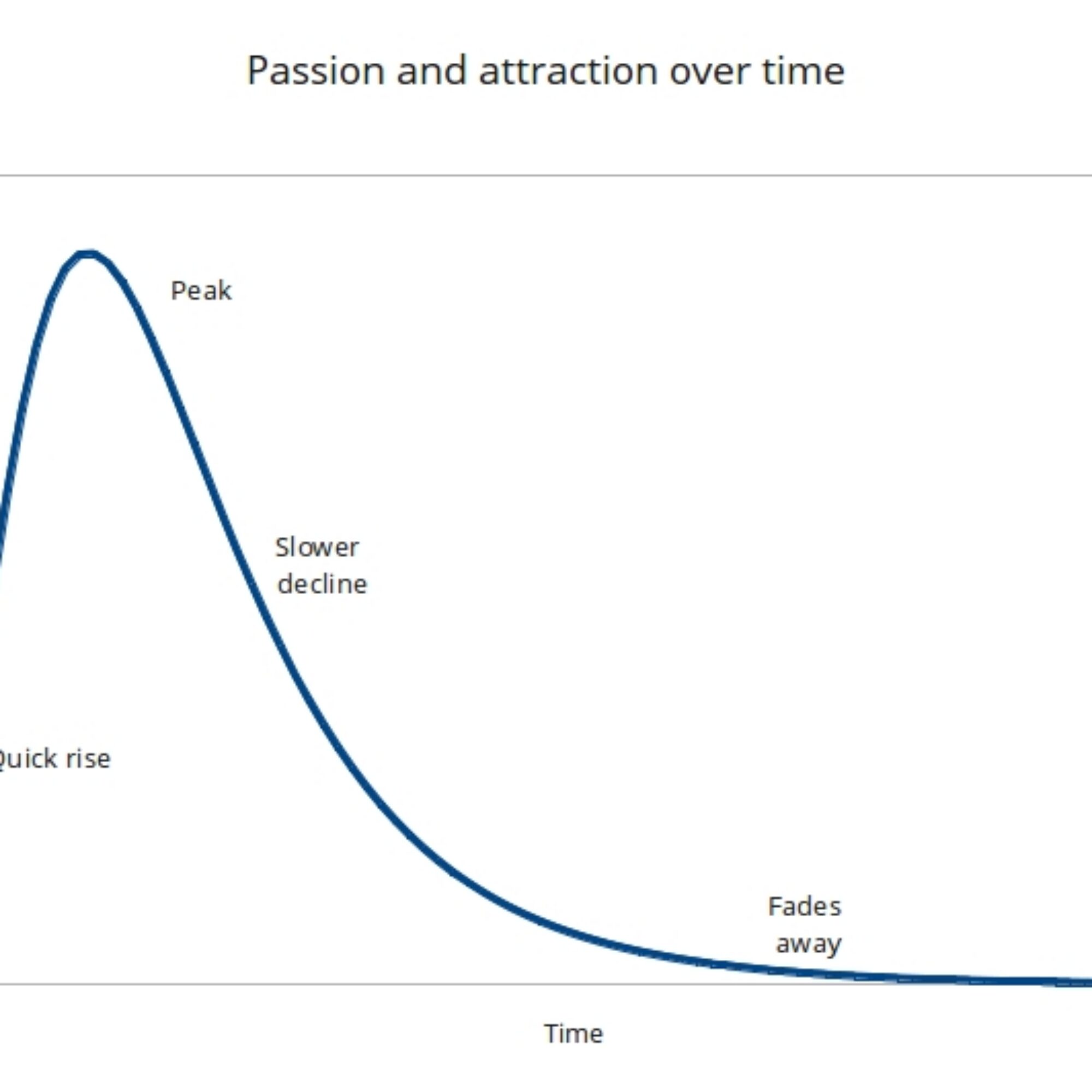
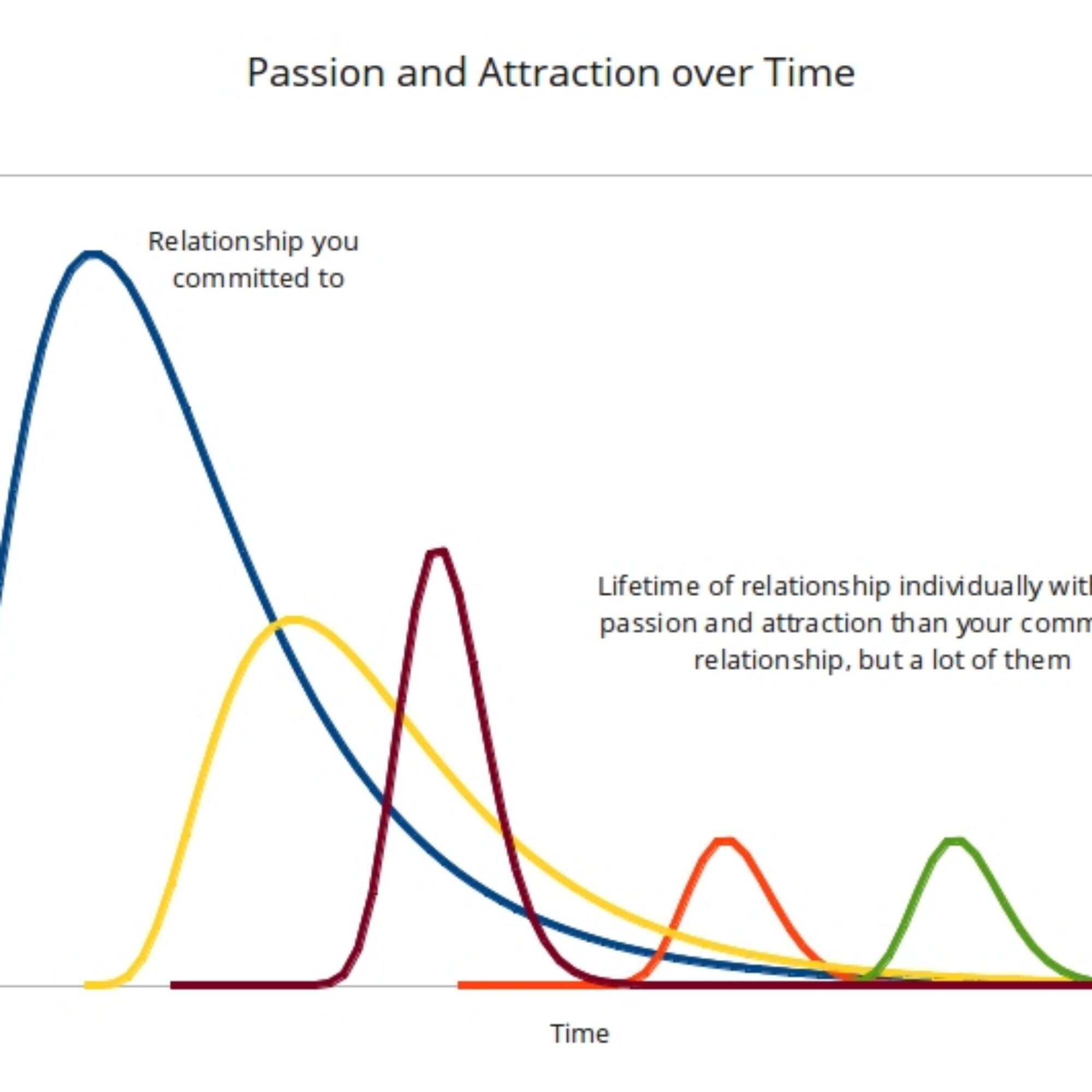
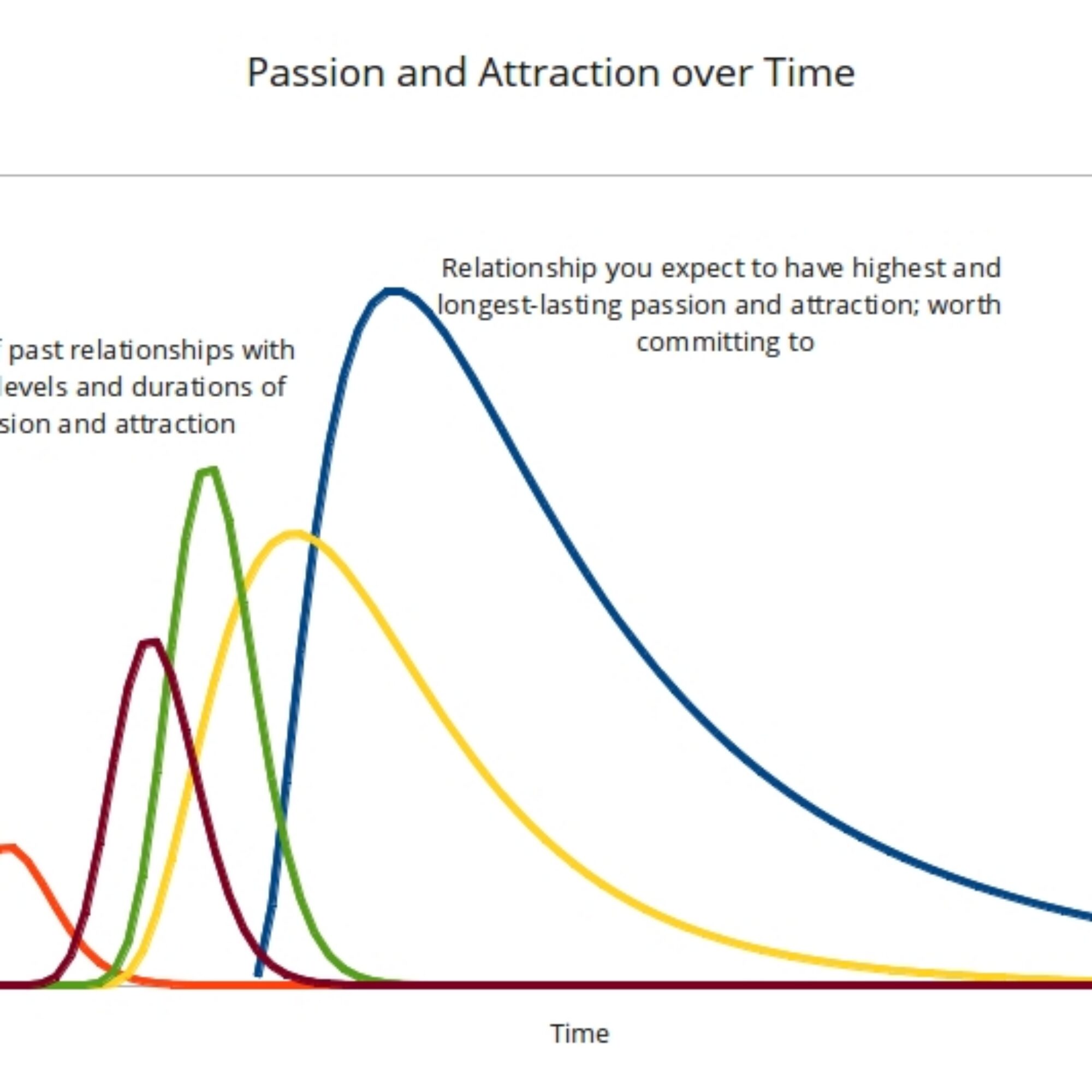
[Last week I posted a five-part series on a mental model I have for how our passion and attraction grows and wanes over time and the consequences of that pattern, according to the model. Today I'm posting them all in one post.] Day 1: Introducing a new model: Passion and Attraction I’m starting a new series today on a new model, this time on passion and attraction. Everyone I showed it to told me it gave them useful insights, so I expect you’ll find value in it too. I’ll apply the model mainly to intimate relationships, but you can also apply it to anything that evokes passion, attraction, or both, like hobbies, jobs, sports, and so on. So what does a science-trained, leadership-minded, self-awareness and…

0 Comments

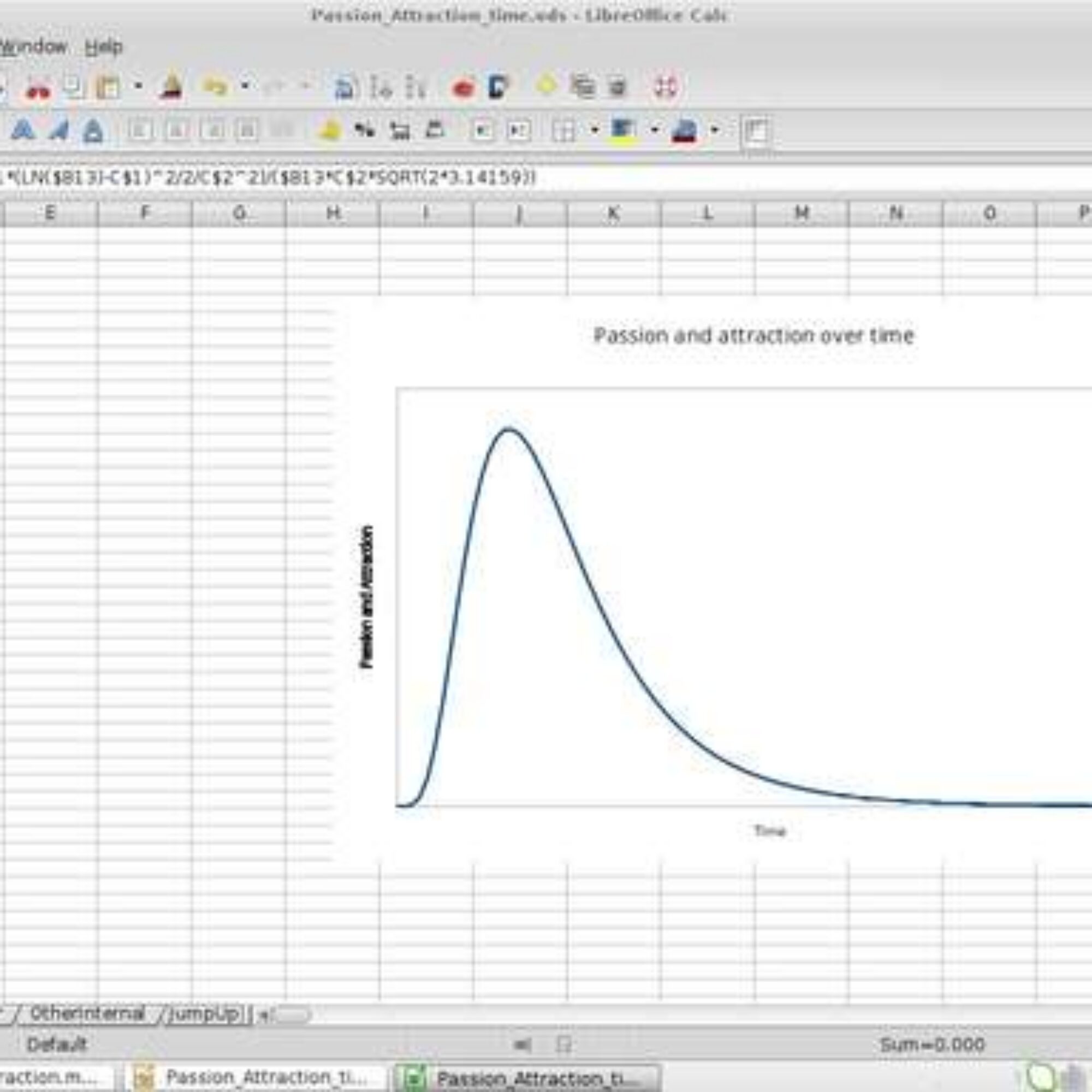
How and why I made the Passion-Attraction Model graphs

Time I put a lot more time into making the graphs and writing the posts of the past week than usual -- at least a couple full days just graphing before writing a word. Why Why did I put so much time in? Not because I didn't have lots to do. Because people who saw early versions of the graphs told me it helped them better understand Their intimate relationships Their partners, and Themselves. They also enjoyed reading the graphs -- like their eyes opened wide and they looked like kids with new toys, like who would have expected something so science-and-math-like could help them understand their intimate relationships ... and work!?! My main reason for writing here is to increase self-awareness in ways that…

0 Comments

Review and conclusions from the Passion-Attraction Model

What can we learn from the Passion-Attraction Model? While the model can apply to everyone, we each have different values and circumstances, so we each have to choose for ourselves how to live our lives and act in relationships. Understanding the Passion-Attraction Model and its consequences can help you understand yourself and your partners, on your own and in relationships if you feel it describes you well. (If you don't, it may not help you, though it may help you understand your partners if they feel it describes them.) It can help you navigate your emotions and relationships and choose your behavior and partners. You don't have to adopt it verbatim. Like all models, it has flaws and oversimplifications, but so does any other model…

0 Comments

Relationship risks in the Passion-Attraction Model, part 2

Yesterday's post considered a single alternative to a committed partner. If you plan to commit to someone for ten, twenty, thirty, or more years, you can expect you and your partner will meet people who, in the moment, attract you and excite passion more than each other. Review and discussion about One Alternative Recall, the Passion-Attraction Model doesn't tell you how to behave, though if you feel it represents your experience it may help you respond. Nor am I evaluating possible responses. I'm only using the model to understand how people will feel in relationships. The last section, "One Alternative," for example, predicted that people late in long-term relationships are susceptible to a third person exciting more passion and attraction than the long-term committed partner.…

0 Comments

Relationship risks in the Passion-Attraction Model, part 1

Yesterday's post ended by describing a typical goal -- what you hope to get if you want to commit to a relationship, at least concerning passion and attraction: an enduring relationship with lots of passion and attraction, smooth edges, and never fading away. When you and a partner both reach that goal, many people choose to commit to each other. In my experience, choosing to commit doesn't mean living happily ever after with no more relationship work. It means the beginning of a new type of work -- potentially deeply rewarding work, but work nonetheless. After all, you don’t find passion, you create it with your behavior and beliefs. Committing to someone like the blue curve above means you get the high levels of emotional rewards…

0 Comments

The Passion-Attraction Model as you gain experience

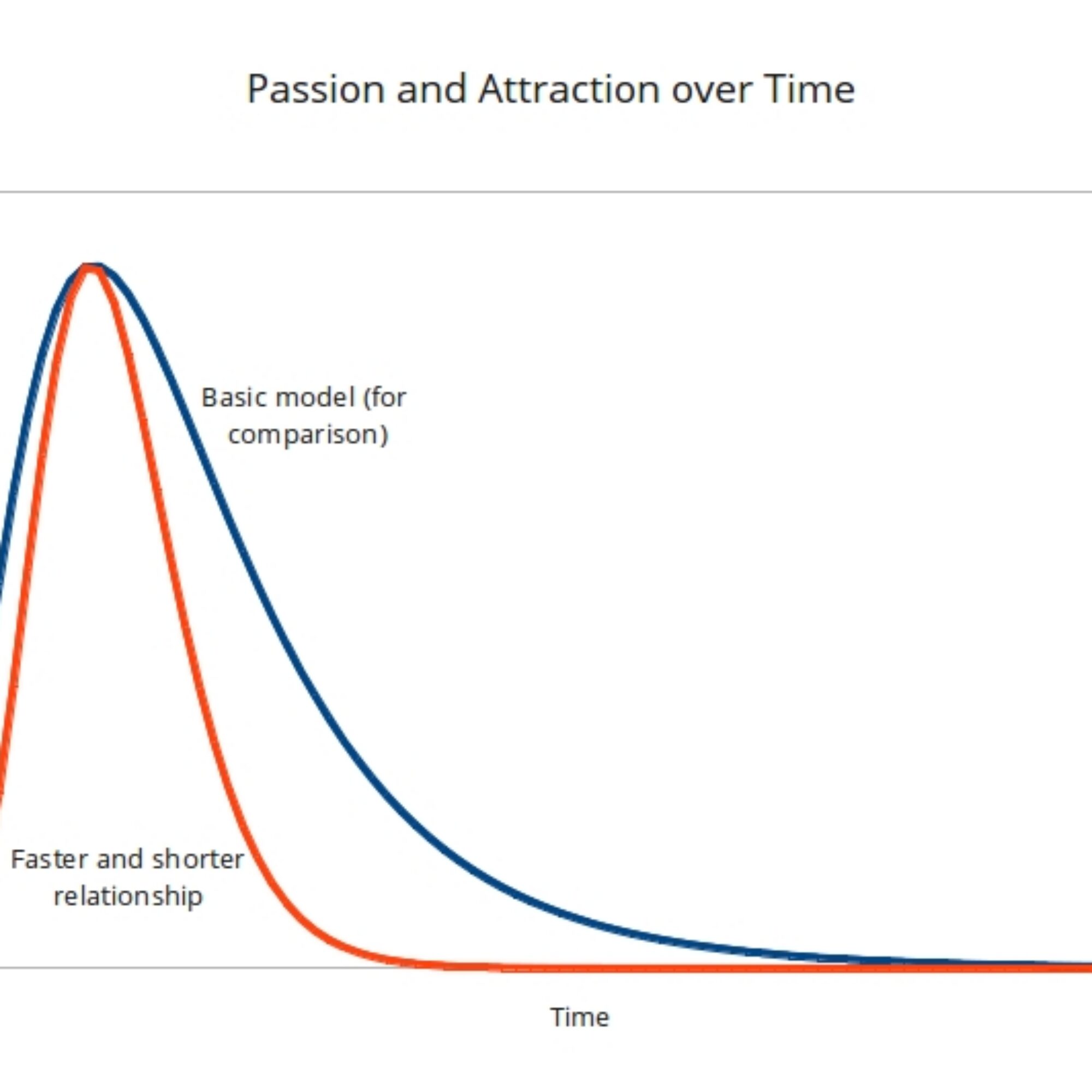
Yesterday covered how the Passion-Attraction Model described passion and attraction in a relationship. Today we'll look at how you might grow as a person and parter. We'll end today with a typical goal you might work toward (before moving on to challenges and risks tomorrow). Despite the nice clean curves in the graphs, you don't know what curve you're on. If you feel like you're at the peak of a relationship, you don't know how long your feelings will last -- that is, you don't know if you're on the red or blue curve below, or a different curve entirely. Is your relationship about to end or will it endure? Or maybe what feels like a long-term peak is just noise that will soon fade.…

0 Comments

End of content

No more pages to load