
My next big beautiful public art piece! (please contribute!)

My next big beautiful public art piece will be with my Parsons class in Union Square. You can help make New York more beautiful, give people something to enjoy in their busy days, help students learn and build experience. Visit the project's Kickstarter page and donate! https://www.kickstarter.com/projects/492851406/big-beautiful-public-art-by-parsons-class-in-union About this project: We are 18 young talented art students and 2 professors in a class together at Parsons The New School of Design's Art, Media, and Technology (AMT) program. We are raising money to build a big beautiful interactive public art installation in New York City's Union Square. Our goal is to create a dramatic new interactive digital motion-picture display unlike any the world has seen, entertaining and engaging to all New Yorkers for free, in the…
0 Comments

A master speaks on creative expression

Martha Graham, one of the great artists of the twentieth century -- Picasso-level stature and influence in her field -- entered my life late, in my 30s, when recording Julliard dancers for my art at Lincoln Center. They were perfect people to learn from, dancers actively learning her, describing a "Martha Graham revolution" I'd never heard of before. I'd feel bad about learning about her so late, but since then I've met plenty of people who haven't heard of her either. I understand she allowed few recordings of herself and her work. Her voice-over in the only one I've seen captures some elusive yet essential points about creativity, expression, discipline, repetition, and freedom. When I heard these quotes the first time they resonated like only…

0 Comments

Creativity talk mindmap

I've written about mindmaps recently and my upcoming creativity talk on April 10. I thought I'd share the draft mindmap I've prepared so far for the talk. Freemind lets me export to a flash-based mindmap that you can navigate. You can't edit it or see how I edit it to see how fun, useful, and effective it is, but you can see the output. It's an incomplete draft — too long for a twenty minute talk, but at least illustrates mindmaps. To navigate use arrow keys or click white space and drag to move the map click the '+' or '-' icon at the top to resize the map click the "fit" icon at the top (to the right of the '-') to fit the…

0 Comments

My April creativity talk at Fred in Brooklyn

I'm speaking on creativity at the next Fred Talk, April 10. Please come! A longtime friend emailed me after she went to the last one (I was out of town) telling me my talk was announced. Fred talks are do-it-yourself Ted talks with the slogan "Your friends' ideas worth spreading." Who says you need some huge conference for thousands of people that costs lots of money? You probably learned more from your grandmother than most of your teachers, let alone famous people you don't know. Let's do it ourselves! Sharing locally can do things pristine, beautifully-produced things can't. Who isn't a fan of do-it-yourself community building? A big part of why I'm doing it is that the people behind it give me the feeling they…

0 Comments

Awesome software to help you think

Mindmaps and mindmapping software are awesome! I rarely like using computers for what I can use paper and pencil, but mindmaps and mindmapping software help organize complex ideas better. They're simple, effective, and, best of all, fun. I can only speak for the software I use, Freemind. Besides basic mindmapping functionality, it has some bells and whistles but I haven't used them yet. It's also free software that runs on Linux, Mac, and Windows. Before working on a paper or presentation I used to start by 1) collecting and writing a few notes to be sure not to forget, then 2) I'd order them in an outline, and 3) edit. Erasing and reordering was important, so I'd use a blackboard or whiteboard if I could,…

0 Comments

My New York Academy of Sciences Seminar

April 5 and 7, 6-10pm at the New York Academy of Sciences I will be giving my seminar on Leadership and Personal Success -- the best seminar you'll ever attend. It's similar to the leadership seminar at Columbia Business School in December, but more science-y and less business-y. Here's the background from the NYAS web page (where you can register): Leadership and personal success through self-awareness and emotional intelligence are popular pursuits outside the scientific community—for example, in business, sports, politics, etc. But why not in science? In part because their literature has shaky and often non- or even anti-scientific foundations. If the practices work, though, they are repeatable and amenable to study. Shouldn't we scientists should be able to understand and apply the material…

0 Comments

Systematic creativity resources

[This post is part of a series on creativity. If you don't see a Table of Contents to the left, click here to view the series, where you'll get more value than reading just this post.] I haven't gone into any detail about Altshuller's 40 principles. The main reason is I found that others already have and did a great job, so I'll just link to them. The other reason is that his principles are hard to get through. Some aren't that useful outside of engineering. A few will get you far and, more importantly, with practice will get you into the mindset of looking to apply known solutions to new problems instead of trying to solve them from scratch. As I've said, you'll solve…

0 Comments

Innovative technique

[This post is part of a series on creativity. If you don't see a Table of Contents to the left, click here to view the series, where you'll get more value than reading just this post.] Here are some basics to TRIZ. After the basics, I'll interpret them. After examining all those patents, Altshuller and his team found that about 1,500 generalized solutions described all the specific solutions. Even simpler, they created 40 techniques, or "inventive principles," that would lead to those solutions. Using these techniques would allow you to use an existing solution to your problem. In your regular life you encounter specific problems, not general problems. Often the specifics of your problem are irrelevant to the solution and get in the way of…

0 Comments

More history of innovative technique

[This post is part of a series on creativity. If you don't see a Table of Contents to the left, click here to view the series, where you'll get more value than reading just this post.] Altshuller called his ideas the Theory of Inventive Problem Solving, or that's what the Russian gets translated to, which is generally called TRIZ. People pronounce it to rhyme with ease or is. As best I can tell, the ideas have been taken up in technical and scientific circles more than any place else. He came from technical realms and his analytical style lent itself to their style of thinking and problem solving. I learned the techniques in business school, and they worked great applied to product development and devising…

0 Comments

Initial creativity research I

[This post is part of a series on creativity. If you don't see a Table of Contents to the left, click here to view the series, where you'll get more value than reading just this post.] I knew about Jacob's research and what he consulted. Now I'm reading about the research that led to his -- that of Genrich Altshuller, who researched creativity in post-war Russia until he was imprisoned in a purge by Stalin... then followed by significant interest in his work afterward. It seems the interest in Russia was significant. Outside, I'm not sure. I knew Jacob followed Altshuller's work, simplified it, and made it more accessible to westerners and business people. I also knew there was something in Russia and someone was…

0 Comments

Teaching is awesome and inspiring

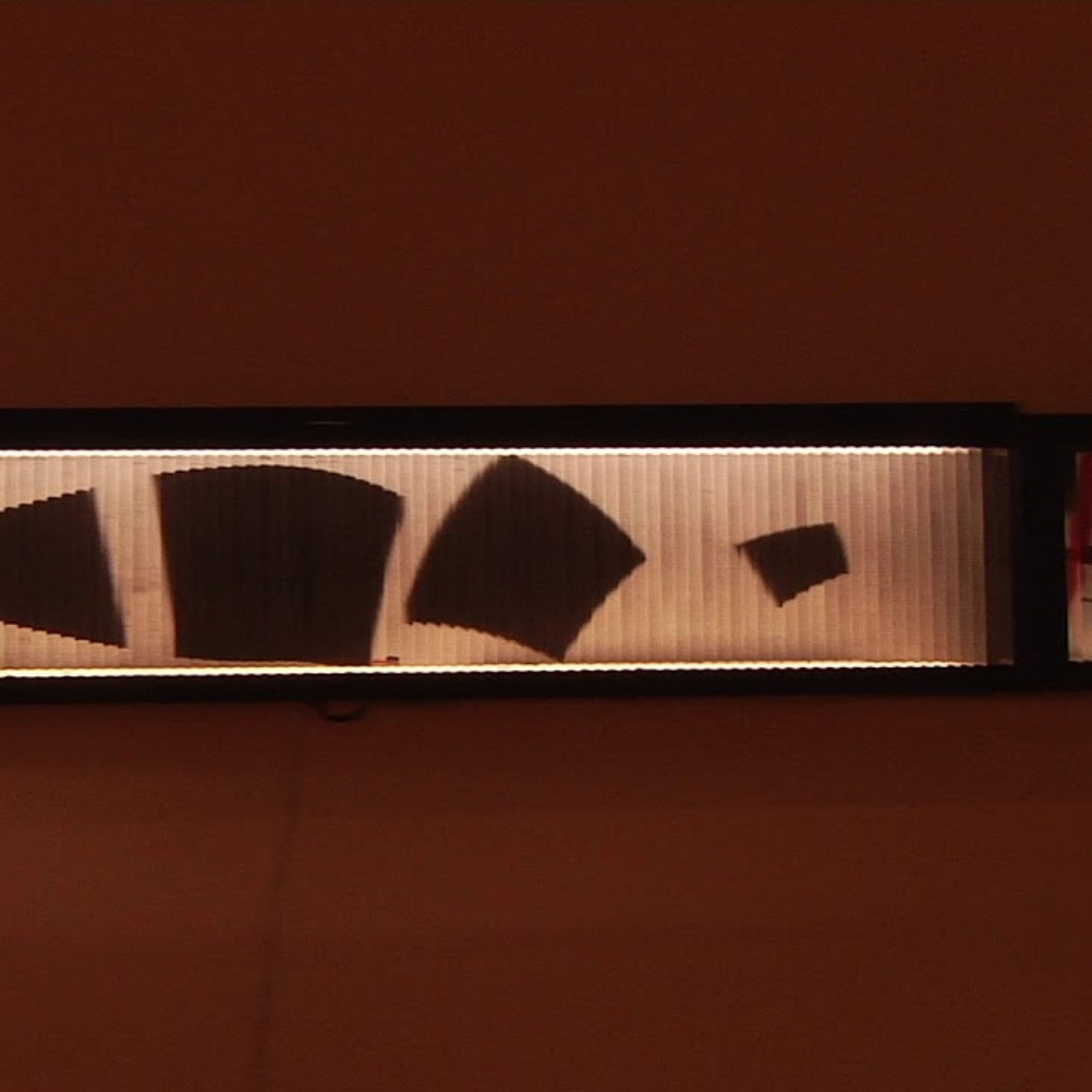
Class at Parsons today was awesome and inspiring. The project due today -- a linear zoetrope for each group, internally lit -- was a big challenge. At the beginning of class a couple groups appeared to be having trouble -- missed communications, etc. They grouped together, rallied, figured out what they could do during class, and, by the end, nearly every group was nearly finished. I expect each will be done by the end of the week. (I'm hoping to get emails from each group as they mount each completed display). They keep surprising me. Whenever I mention an idea I've never done, one of them implements it better or quicker than I would have. Inspiring. Check out some of their work on the class…

0 Comments

How to get called a creative genius: when function follows form

[This post is part of a series on creativity. If you don't see a Table of Contents to the left, click here to view the series, where you'll get more value than reading just this post.] When you have a problem to solve, the problem defines the solution. When the solution solves the problem we say the form followed the function. Such solutions can appear elegant, creative, obvious, or other things depending on the person viewing it. Architecture and design often value form following function, as well they should, because clients tend to come to them with problems they need solved. The problem existed before the solution. You can go the other way, and when you do, people start calling you a creative genius. I…

0 Comments

Productive alternatives to the genius myth

[This post is part of a series on creativity. If you don't see a Table of Contents to the left, click here to view the series, where you'll get more value than reading just this post.] Yesterday I wrote some points of how the concept of genius is counterproductive and inaccurate. So what are the alternatives? My alternative to calling them geniuses is calling them accomplished, dedicated, in-the-right-place-at-the-right-time (which, if it happens once I call luck, but after enough times I call the result of skills), and other things you can accomplish. That alternative means recognizing you've made choices that moved you away from recognizing your potential. If you chose for reasons you like, that recognition validates you living by your standards. If you chose…

0 Comments

How the genius myth is counterproductive

[This post is part of a series on creativity. If you don't see a Table of Contents to the left, click here to view the series, where you'll get more value than reading just this post.] The term genius sounds like a compliment. Virtually everyone values intelligence and genius implies extreme intelligence. Say the word genius and names like Einstein, Da Vinci, Mozart, and Shakespeare come to mind. Who wouldn't want to be like them? (The term also describes extremes other than intelligence, like athletic ability, for example, to which this post applies equally.) Today I'll talk about problems with the concept of genius; tomorrow some more productive alternatives. The term also separates and divides. It implies they are different from us. People use the…

0 Comments

How to be more creative

[This post is part of a series on creativity. If you don't see a Table of Contents to the left, click here to view the series, where you'll get more value than reading just this post.] So you want to be more creative? What do you do? Just about the worst thing you can do is to believe people have a certain amount of creativity and that's their lot in life -- that Mozart was off the charts, you're somewhere less, and that's that. That belief is counterproductive for two reasons: evidence implies otherwise and it demotivates you from improving your life. Creating something is like solving a problem. The problem may be a necessity solved by an invention, an empty canvas solved by painting…

0 Comments

What makes people see something as creative

[This post is part of a series on creativity. If you don't see a Table of Contents to the left, click here to view the series, where you'll get more value than reading just this post.] The more you try to define creativity the more you learn, among other things, the term doesn't mean what most people think it means and it says more about the person calling the thing creative. I think it doesn't help describe things much. People usually think an idea being creative means it is new and original. But the more you look at what people call creative, the less that makes sense. Here are two illustrations. First, if anyone qualifies as creative, Manet must and if any of his works…

0 Comments

Why suggesting to think outside the box hurts you

[This post is part of a series on creativity. If you don't see a Table of Contents to the left, click here to view the series, where you'll get more value than reading just this post.] Thinking outside the box is to think differently, unconventionally or from a new perspective. This phrase often refers to novel or creative thinking. Who wouldn't want that, at least when the situation calls for it? The question is how we achieve it, either in ourselves or in others, like in teams we're leading. The problem is that suggesting to someone to try to think outside the box doesn't help them achieve outside-the-box results. Jacob described an experiment on just this matter, documented in Weisberg's book. The term "outside the…

0 Comments

Creativity

[I replaced this post with a series on creativity. Click here to view that series, where you'll get more value than reading just this post.] The next few posts will be on creativity, mainly exploring counterproductive mainstream myths about it. I used to view the topic as vague, but a few sources dramatically and convincingly changed my perspective. One was a class at Columbia Business School called Systematic Creativity in Business, by Jacob Goldenberg. Creativity being systematic was designed to appear in the course name as a contradiction, but isn't when you understand the material. His book is great and covers the material well, though the tone is academic. The other is Creativity: Beyond the Myth of Genius, the other revolutionary book on creativity I've…

0 Comments

Your understanding of creativity holds you back from creating

If you accept mainstream ideas of creativity, then your understanding of creativity is holding you back from creating things and being creative. Mainstream views on creativity sell books, movies, magazines, and so forth. They sell over-romanticized myths that, while entertaining, undermine your ability to create things and solve problems.Let's start with two contradictions to lay bare the counterproductivity in mainstream views.First, mainstream views value creative, original, so-called outside-the-box thinking, but when push comes to shove, we don't value it in practice. To illustrate, say you have a problem you don't know how to solve. You need someone else to create a solution. It could be anything -- a leaky sink, a managerial issue at work, what to make for dinner, a musical score you want…

0 Comments

Parsons Class

The Parsons Class I'm co-teaching this semester has a blog.So far it just has a few pictures from the zoetropes a few students did. The results from that first assignment were incredible -- tremendous variety of solutions to the various challenges of physical animation devices and animations: materials, sizes, quality versus quick and dirty, colors, contrast, motion, repetition, etc.I can't wait to see the results of the later projects, which will be substantial efforts.Correction: There are already many images and animations, I was just blocking javascript. Enjoy the class site!

0 Comments

Joshua Spodek’s Art Resume

Joshua Spodek EDUCATION 2006 MBA, Columbia Business School New York 1999 PhD, Astrophysics, Columbia Graduate School of Arts and Sciences New York 1993-94 MA, Physics (Completed at Columbia), University of Pennsylvania School of Arts and Sciences Philadelphia 1993 BA, Physics, Columbia College New York 1991 L'Institut Brittanique, University of London Paris EXHIBITIONS 2017 The Museum of Math, Dance New York 2011-12 District 36, Elements New York 2011 Union Square Subway Station, Union Square in Motion New York 2011 Crossing Art Gallery, Motion in Stillness New York 2011 Parsons the New School of Design, Expressions (group project with students) New York 2010-11 Bryant Park, Bryant Park in Motion (with MTA Arts for Transit and NYU/Tisch) New York 2011 Leaders In Software and Art New York 2010…

0 Comments

New Bryant Park in Motion Videos

First, here is MTA Arts for Transit Page on Bryant Park in Motion (EDIT: Arts for Transit changed the page to one on Union Square in Motion) -- created by me and four students and NYU's Interactive Telecommunications Program:  Molly Schwartz, Igal Nassima, Brett Murphy, and Eyal Ohana. Below is an overview of the piece, starting from Bryant Park at the corner of 42nd and 6th, then entering the station and viewing the piece. By coincidence, a family of five happened by the piece while I was taping. All five, especially the three kids, are fascinated by it, peer in it, and enjoy it. http://www.youtube.com/watch?v=wIfi71_ffG0 Below is just the kids and family from the previous video. http://www.youtube.com/watch?v=anwg1BhkAFU Below is a common viewing pattern involving an…

0 Comments

End of content

No more pages to load