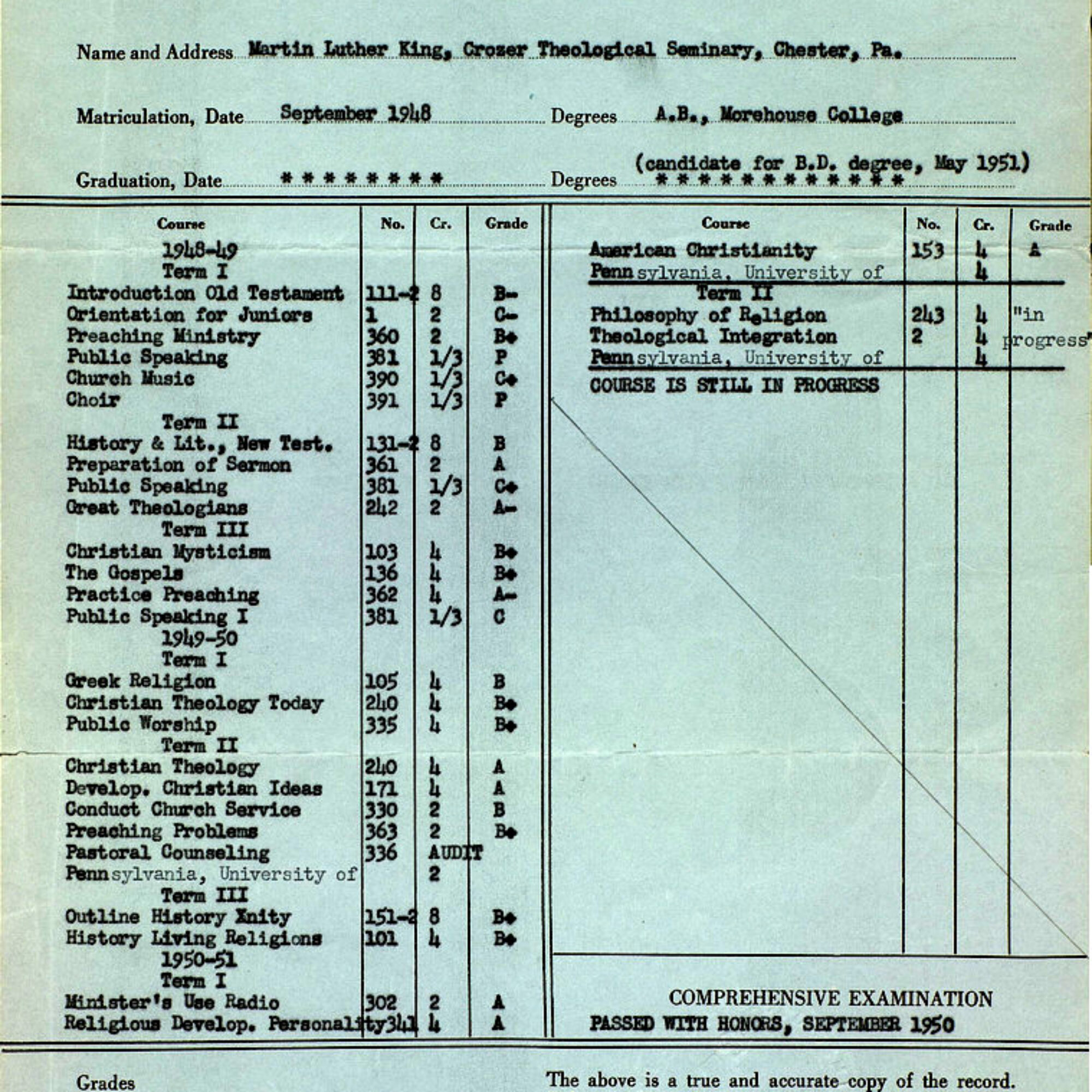
More inspiration from Martin Luther King, especially if you haven’t achieved much yet

Perhaps the best honor one person can give another is to understand them and continue their legacy. I'm writing today's post to suggest you can do that with Martin Luther King more than you think. Many people believe Einstein got bad grades, but I understand he didn't. Martin Luther King, Jr got bad grades. He started graduate school at a school near Philadelphia called Crozer. Note among his grades -- the grades of one of the premier public speakers I've heard of -- he got a C in Public Speaking one term and a C+ in another term. He also got a C+ in Church Music and a C- in another class. Now look at his college grades. They are hard to read, but you'll…

0 Comments
How to lower executive pay
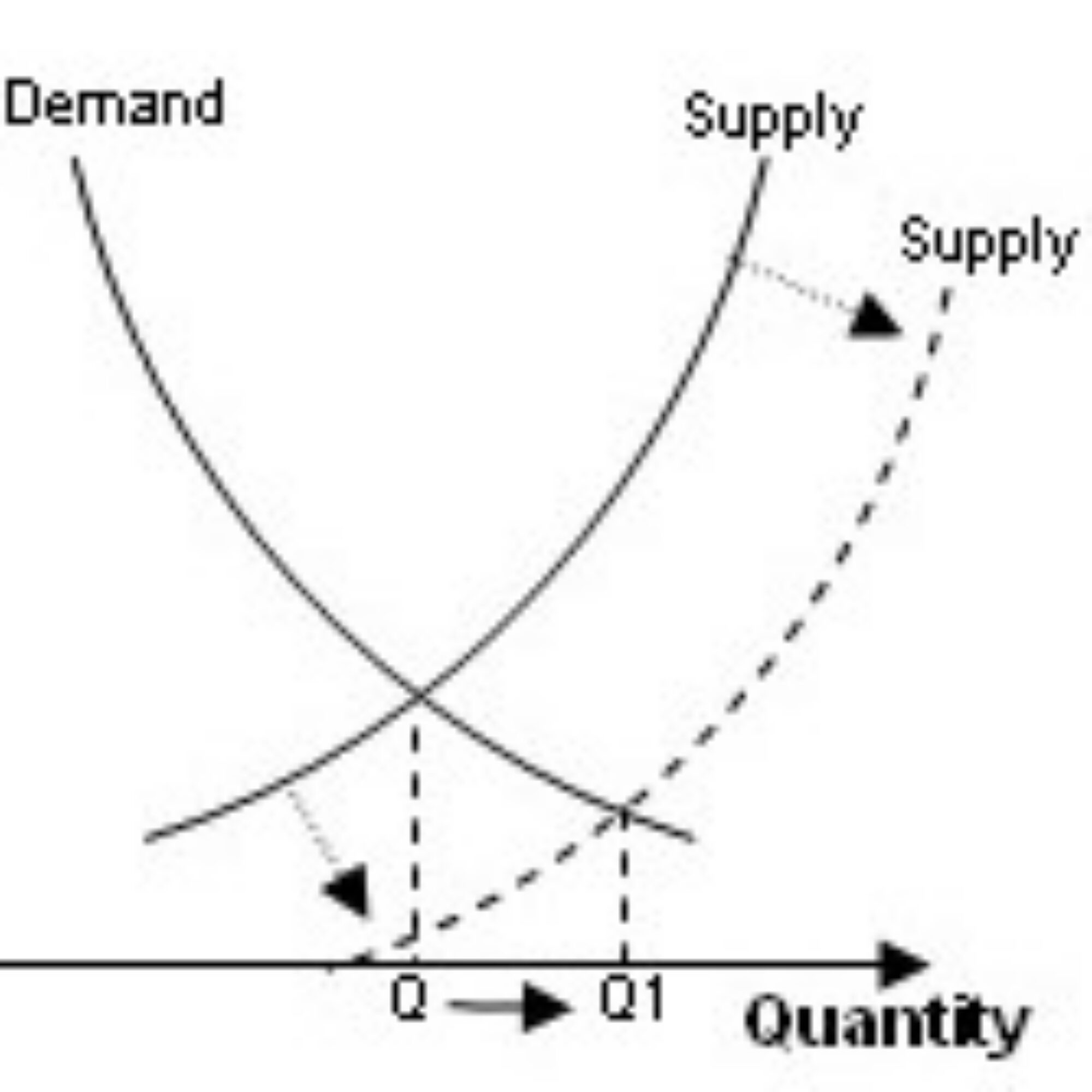
Increasing supply lowers price

How to lower executive pay

The New Yorker this week has yet another article on executive pay, how high it is, how it continues to grow, and how attempts to slow it aren't working. Everybody knows the situation. We've read tons of such articles. We know executive pay is high enough that it isn't getting what shareholders are paying for, but no one can stop its growth. Want to lower executive pay? Basic economics and negotiation tell us all we need to know. Basic economics: supply and demand A CEO's wages have a price in a market. What sets prices in a market? Unless you believe the CEOs are fixing prices or the market isn't competitive, supply and demand set the price. If you want to lower prices either decrease…

0 Comments

You tell me what you do best. I’ll tell you what you do worst.

Today I'll cover an exercise I do in my seminar and when I address a group of professionals. You can do it while reading this post. It teaches you about Yourself Self-awareness Teamwork, especially team building I can cover it in a few minutes or can use it to discuss teamwork, self-awareness, and my experience for thirty-minutes or more. Introduction I start by telling the group "I'm going to ask you to tell me what you do best. Then I will tell you what you do worst." I say it provocatively to get a response and set expectations high. A few people respond incredulously. I point out that someone did the exercise with me. I was equally surprised -- how could someone tell a room…

0 Comments

Choosing idealism in the face of contrary evidence of what works is a recipe for disaster

I posted the following in response to a bunch of articles I've read about a report co-authored by over a dozen science-related organizations describing how reducing funding for science has led to research and the benefits it brings to society leaving the U.S. --- The writing on the wall became apparent to me with the 1993 cancellation of the Superconducting Super Collider, when I was getting my PhD in physics. I didn't know the numbers for a cost-benefit analysis, but I couldn't then nor can I now see cancellation as helpful to the U.S. The U.S. would have stayed way ahead of the rest of the world in particle physics and all the accompanying jobs, discoveries, and innovation. Instead we look to the rest of…

0 Comments

An example of effective, understated leadership

I wanted to share an example of effective leadership I once saw. When I was in graduate school, Columbia was considering its policy on allowing the military to have programs like ROTC on campus or not and held hearings anyone in the university could attend to speak their mind. I attended one. The President of the university, Lee Bolinger, ran the event. I had strong feelings about risking militarizing the campus and entered expecting to feel critical of the school and to leave outraged. Instead, I left impressed with Bollinger. I could only conceive then of leadership in the form of command and control so I expected he would try to "lead" participants to an intended outcome. Instead, he acted mostly to moderate. More than anything…

0 Comments

Reminder: See my leadership seminar this weekend!

Brought to you by the Distinguished Leaders committee of the Columbia Business School Alumni Club of New York (copying the following announcement from that site): Leadership Through Self-Awareness and Emotional Intelligence In a weekend, learn how to develop your personal leadership skills, self-awareness, and emotional intelligence through the latest advances in cognitive behavioral science, evolutionary psychology, and positive psychology. While business schools and corporations are increasingly focusing on personal leadership, self-awareness, and emotional intelligence as foundations for leading others, many MBAs never had the opportunity to take a formal course in personal leadership. Joshua Spodek, MBA, PhD, has developed a two-day weekend workshop in just this area. His experiential course combines advances in cognitive behavioral science, evolutionary psychology, and positive psychology with successful business leadership…

1 Comment

Taking on the New Yorker on the English Major

Last month the New Yorker wrote a defense of learning and teaching English. It says English Departments are under attack. What kind of fool would take on the magazine many call the best in English about English? I guess I'm that kind of fool. I wrote the following in the comments.  "We need the humanities not because they will produce shrewder entrepreneurs or kinder C.E.O.s but because ... they help us enjoy life more and endure it better. The reason we need the humanities is because we’re human. That’s enough." This article's length with minimal substance made me feel like someone who likes reading and writing wanted to show others who like reading and writing how good he was at reading and writing. I hoped…

0 Comments

One of the most important lessons I learned in business school didn’t come from a teacher and it applies everywhere in life

I wrote before about "Business school’s first major lesson: how to resolve ethical dilemmas." Today I'll talk about another important lesson I learned in business school, also within the first couple weeks, also applying in many places in life I would not have expected from a vocational school. Context First I have to note my mindset before starting business school. I considered the most relevant parts of my life that I'd co-founded a company and I knew more math than probably anyone in the school. I thought business school would be a fun experience filling in a few gaps of how to make spreadsheets and learning some networking skills. What happened One of the major cores of business school is knowing how a business runs…

0 Comments

Leadership problems today and a call to action

[I alluded to this topic before. I still have to write it up formally and edit it more than a daily post allows. I hope it gets the main ideas across. Please contact me if it interests you.] You only have to read the news to see the problems Do I have to convince anyone that we have many people in leadership positions who lead ineffectively? You only have to read the headlines. As I'm writing these words the New York Times' top headline is about a spy scandal in which the top person at the NSA lied to Congress, which is abdicating its Constitutional checks on the President, who is doing the opposite of what he promised the country during his campaign on this…

0 Comments

See me on Leadership through Emotional Intelligence and Self-Awareness

Brought to you by the Distinguished Leaders committee of the Columbia Business School Alumni Club of New York (copying the following announcement from that site): Leadership Through Self-Awareness and Emotional Intelligence In a weekend, learn how to develop your personal leadership skills, self-awareness, and emotional intelligence through the latest advances in cognitive behavioral science, evolutionary psychology, and positive psychology. While business schools and corporations are increasingly focusing on personal leadership, self-awareness, and emotional intelligence as foundations for leading others, many MBAs never had the opportunity to take a formal course in personal leadership. Joshua Spodek, MBA, PhD, has developed a two-day weekend workshop in just this area. His experiential course combines advances in cognitive behavioral science, evolutionary psychology, and positive psychology with successful business leadership…

0 Comments

How failure creates success

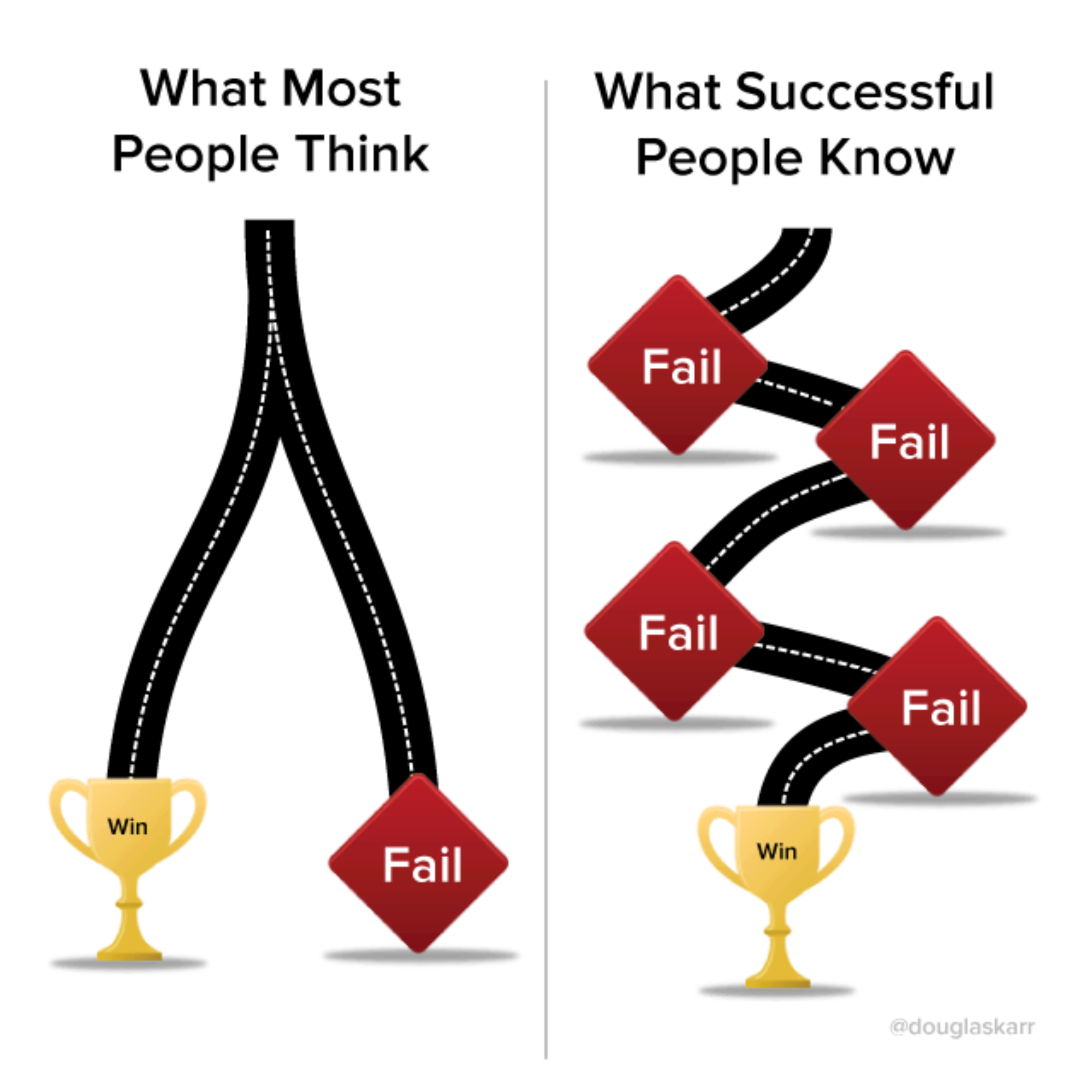
Normally I don't like just posting someone else's work, but I saw this image the other day and found the model it suggests so simple and useful I couldn't help posting it. I've found and often say the people who succeed use the word "failure" like other people do, but it doesn't mean the same thing to them. It means something positive. Not even a necessary evil, but part of a learning process... a desirable outcome.

0 Comments

Columbia’s 2013 Commencement

Last month Columbia invited me to walk in its big commencement for the twentieth anniversary of graduating college there. I don't often get to dress in my medieval-looking PhD cap and gown, so I accepted. If you've never seen a Columbia commencement, it's a great, stately affair with tens of thousands of graduating students and their families, all the more so when you realize how few spaces like its campus New York City has. Naturally they had me sit beside the President of the University, all of us on stage looking like a bunch of popes in our prestigious caps and gowns, discussing important matters of science and philosophy. And why have a web page if not to share the grand experience )and my cool…

0 Comments

Video on creativity

I've written a lot on creativity and when I do I often mention the professor whose class on creativity I took, Jacob Goldenberg. He recently gave an online talk with Columbia Business School about his research. If you like creativity, learning some unexpected properties of it, and improving your creativity, I recommend it. It's not as polished as a TED talk, but as informative. Here it is: video platformvideo managementvideo solutionsvideo player Here is the link to the original page. Enjoy!

0 Comments

A model to identify the parts of your life most ripe for improvement

[This post is part of a series on “Mental models and beliefs: an exercise to identify yours.” If you don’t see a Table of Contents to the left, click here to view the series, where you’ll get more value than reading just this post.] Today's model has special meaning to me because realizing it set me to learning about anxiety, the first emotion I started to learn analyzing to understanding emotional intelligence and self-awareness. I hope it inspires you as much as it did me. Context It started with performing on stage for the class play in business school. Months before the performance I wrote a sketch for Follies, the business school class play. It's mostly inside jokes for business school students, not high art,…

0 Comments

My Seminar on Leadership Through Emotional Intelligence and Self-awareness in four evening sessions starting June 17, 6:30pm-9:30pm in New York

I'll be leading the next session of my leadership seminar in New York in June. I'm experimenting as four three-hour evening sessions Session 1: Monday, June 17 Session 2: Wednesday, June 19 Session 3: Monday, June 24 Session 4: Wednesday, June 26 I'll give the same full attention I do for a weekend session. Sign up here. Here's the course description: What You’ll Learn If you don't know how to lead, you can only do what you can do yourself. If you can lead, you can achieve anything anyone else did with a team. Even if you want only to live a quiet, happy, rewarding life you still have to lead yourself. The more you know how to lead, the more you are in control…

0 Comments

A model for direction in leadership and personal development

[This post is part of a series on “Mental models and beliefs: an exercise to identify yours.” If you don’t see a Table of Contents to the left, click here to view the series, where you’ll get more value than reading just this post.] We are a social species. Most of what we care about in our environments are other people. Maybe I'm different than most people because I spent so much of my life not working on or valuing social skills -- a PhD in physics doesn't force you to learn social skills. Learning them later in life, I think I value them a lot more than I would have if I had them earlier in life. The social and leadership skills I've mastered…

0 Comments

Protected: Creativity Class Handouts

Here are the slides from my creativity class at Flavorpill with Skillshare on April 24. Making a pdf took away the slide transitions and animations, but all the words are still there. Thank you all for attending and participating. I'll let you know when sign-up begins for my Leadership class. Mark June 17, 19, 24, and 26 6pm-9pm on your calendars.

Enter your password to view comments.

More about becoming more creative

Flavorpill -- the social discovery engine and curated event marketplace that keeps you tapped into the cultural happenings around you and lets you find and follow things you like, see what your friends are into, and, if so inspired, get off the computer and go out -- posted my creativity seminar next Wednesday, April 24, 6pm-9pm. Very prestigious. Check it out. Then sign up! I look forward to seeing you there.

0 Comments

A model for stress that calms you down

[This post is part of a series on “Mental models and beliefs: an exercise to identify yours.” If you don’t see a Table of Contents to the left, click here to view the series, where you’ll get more value than reading just this post.] Does the world stress you out? Do people and things cause you stress? Do you get even more stressed at your helplessness to reduce how stressful the world is? Do you get even more frustrated and depressed at your bad luck that you had to be born at a time when the world was so stressful? Would you be glad to know you can decrease all that stress? No medicine required. You don't have to change anything except your beliefs. But…

0 Comments

Top models and strategies for negotiating

[This post is part of a series on “Mental models and beliefs: an exercise to identify yours.” If you don’t see a Table of Contents to the left, click here to view the series, where you’ll get more value than reading just this post.] You negotiate every day. If you think you only negotiate when you're buying a car or creating a deal, you don't realize you negotiate every time you decide with a friend where to get lunch, with your spouse what movie to see, with your boss if you can work from home another day per week. Any interaction with some give and take involves negotiation. And if you think of negotiation as each of you trying to beat the other, you'll miss…

0 Comments

More on John Wooden

I found a couple more videos on John Wooden, whom I wrote about yesterday. First, some thoughts on him by Kareem Abdul-Jabbar, one of the top players of all time. He is the NBA’s all-time leading scorer, with 38,387 points. During his career with the NBA’s Milwaukee Bucks and Los Angeles Lakers from 1969 to 1989, Abdul-Jabbar won six NBA championships and a record six regular season MVP Awards. In college at UCLA, he played on three consecutive national championship teams, and his high school team won 71 consecutive games. At the time of his retirement, Abdul-Jabbar was the NBA’s all-time leader in points scored, games played, minutes played, field goals made, field goal attempts, blocked shots, defensive rebounds, and personal fouls. Look at the…

0 Comments
Zoetropes in a fourth grade science fair

Zoetropes in a fourth grade science fair

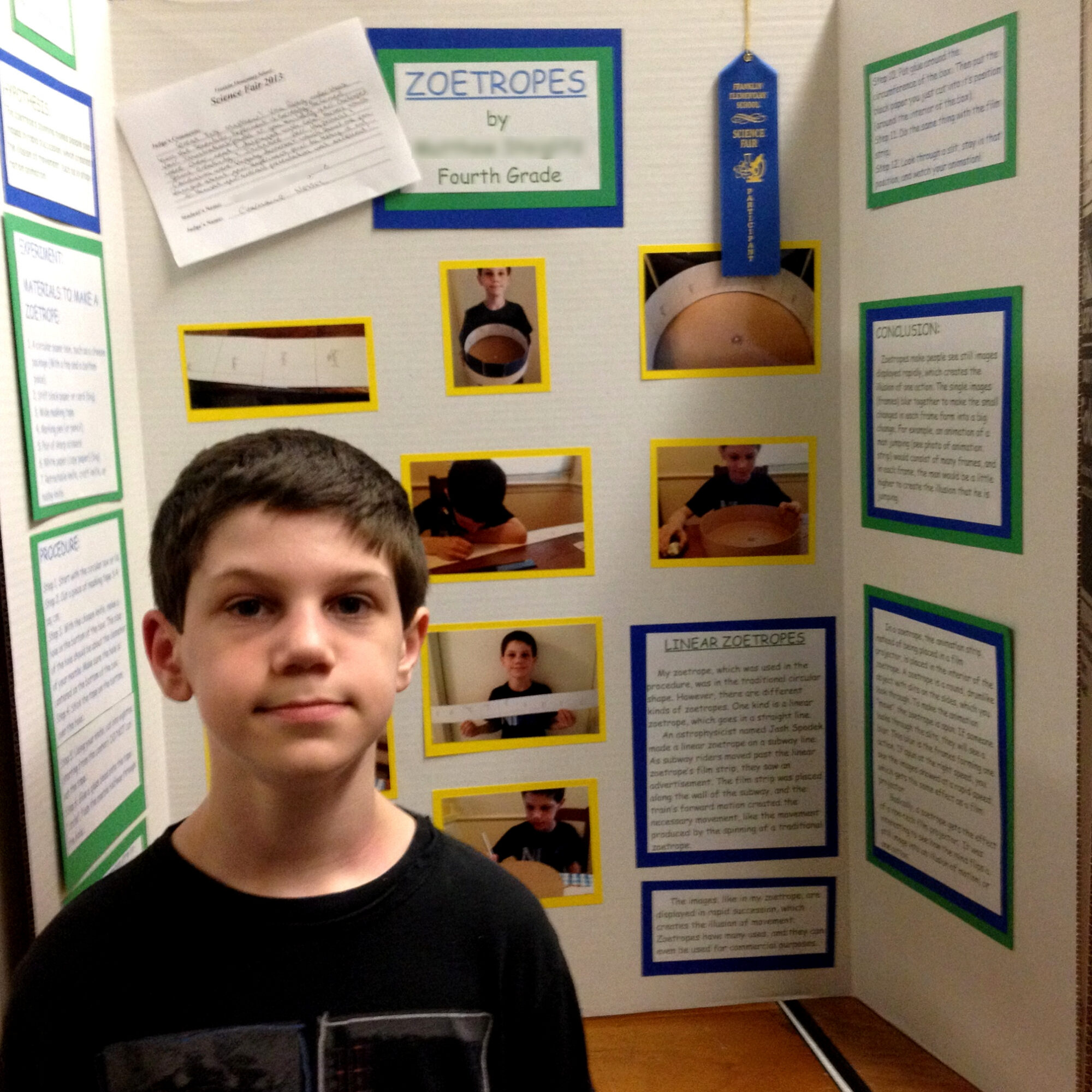
Longtime readers know my connections to zoetropes -- inventing new types of them, starting business based on them, making art with them, etc. I've been upstaged. A longtime friend from school contacted me for the first time in years with news that her son is doing a project on zoetropes for his fourth grade science fair. Check it out! The pictures show he did the most important thing in science. Or for that matter, life, if you ask me. He did the thing he was interested in. Actually, I suspect he did it a couple times because the quality of his zoetropes looks better than the ones I make by hand, as best I can tell from his pictures. About 180 years ago someone else…

2 Comments

Observations on leadership and success from Inside the Actors Studio

I've watched a lot of episodes of Inside the Actors Studio. I've referred to it before and I'll keep referring to it as a resource for leadership because actors and leaders share this common element to their craft: part of our jobs is to recognize and manage emotions in ourselves to communicate them and create and inspire emotions in others. Actors tend to inspire laughter, tears, and catharsis whereas leaders tend to inspire motivation, dedication, and action, but those are just different ranges of emotions. Both crafts inspire emotions in others through identifying and creating emotions in ourselves. That common part of our crafts means the training of both crafts requires developing emotional intelligence and self-awareness. The field of acting makes that requirement obvious to…

0 Comments

What is your model for leadership?, part 2

Following yesterday's post asking you about your model for leadership, you might wonder mine. I looked at my paper from the business school leadership class, but my model has evolved so much from then -- the beginning of my even asking the questions -- I don't see value in posting it. Elements of my leadership model Since then I've developed my Model of the human emotional system, which I've found tremendously useful in motivation, understanding, and leading others and myself, so I consider it an essential and prominent part of my model for leadership. Even that Model I've built on, for example how it interacts with the rest of you and how to use it (the Method). I also like Columbia's modeling leadership as six…

0 Comments

What is your model for leadership?, part 1

To ask what your model for leadership is is not just an idle question. It was the sole question for the final essay in one of my leadership classes at Columbia Business School -- one of the best classes I'd ever taken, including all undergrad and graduate school classes. Models influence your behavior strongly. Since people tend to do what they think is best (though not always what you think is best), at least I believe they do, their models for things determine how they act. If you have a model that leads to effective behavior, you might lead easily and well without having to try or think hard. If you have a model that leads to ineffective behavior, no matter how hard you think…

0 Comments

End of content

No more pages to load