Monkey Mind
2 Comments
January 25, 2013

I am helping organize a talk by my former Professor and leadership guru Michael Feiner February 19, 6-8pm in Manhattan. I'm helping organize it with the Distinguished Leaders Committee of the Columbia Business School Alumni Club of New York (you don't have to be a member to attend). Plans may change, but I think I'm going to introduce him. I'll copy the announcement below (here is a link to the original). His course was one of my best at Columbia Business School. Actually, I think it was one of the best of almost everyone who took it, since it was always one of the top one or two hardest to get into. The Pillars of Leadership: A Three-Part Series on Leadership Development Part 1: The…

Richard Feynman, one of my heroes, Nobel prize in physics winner, and entertaining guy, had concise advice in his commencement address to Caltech relevant to yesterday's post on not fooling yourself. The first principle is that you must not fool yourself - and you are the easiest person to fool. Here's the text of the full speech, which is famous in scientific circles for his concept of "cargo cult science", and which I recommend reading. Here's a YouTube link I found searching for the text of the full speech. As usual, since China blocks YouTube I can't see the link, so I hope it's relevant. https://www.youtube.com/watch?v=yvfAtIJbatg
I can't help reposting a comment I put on another site. Readers here know that while I don't eat meat I don't consider avoiding it virtuous or better. I don't consider not eating meat any more healthy, virtuous, humane, delicious, or whatever than eating meat. I don't understand why so many people who eat meat call themselves vegetarian. What do they gain? As best I can tell they consider not eating meat better or virtuous. Or maybe they feel special. But then don't they feel bad when they eat meat, having told people they don't? Or when they start eating meat honestly again? Doesn't that make them seem flighty and lower their credibility, which, in turn, hurts people's impressions of them? To me, social skills…
I wrote yesterday's post on Cognitive Behavioral Therapy after reading one of its main creators -- Aaron Beck's -- brief history from the Journal of Psychotherapy Practice and Research, "The Past and Future of Cognitive Therapy." The article begins with simple anecdotes observing patterns in people's beliefs, thoughts, and behaviors that anybody could notice that led him to create what we now call Cognitive Behavioral Therapy. But when he describes the theory and practice, as opposed to writing about it, he gets vague and jargon-y, and talking about problems instead of solutions. In particular, after general talk about patients he worked with, mainly things a layperson could have written, he starts a section "Defining the Cognitive Model." He starts with a colorful anecdote with a…
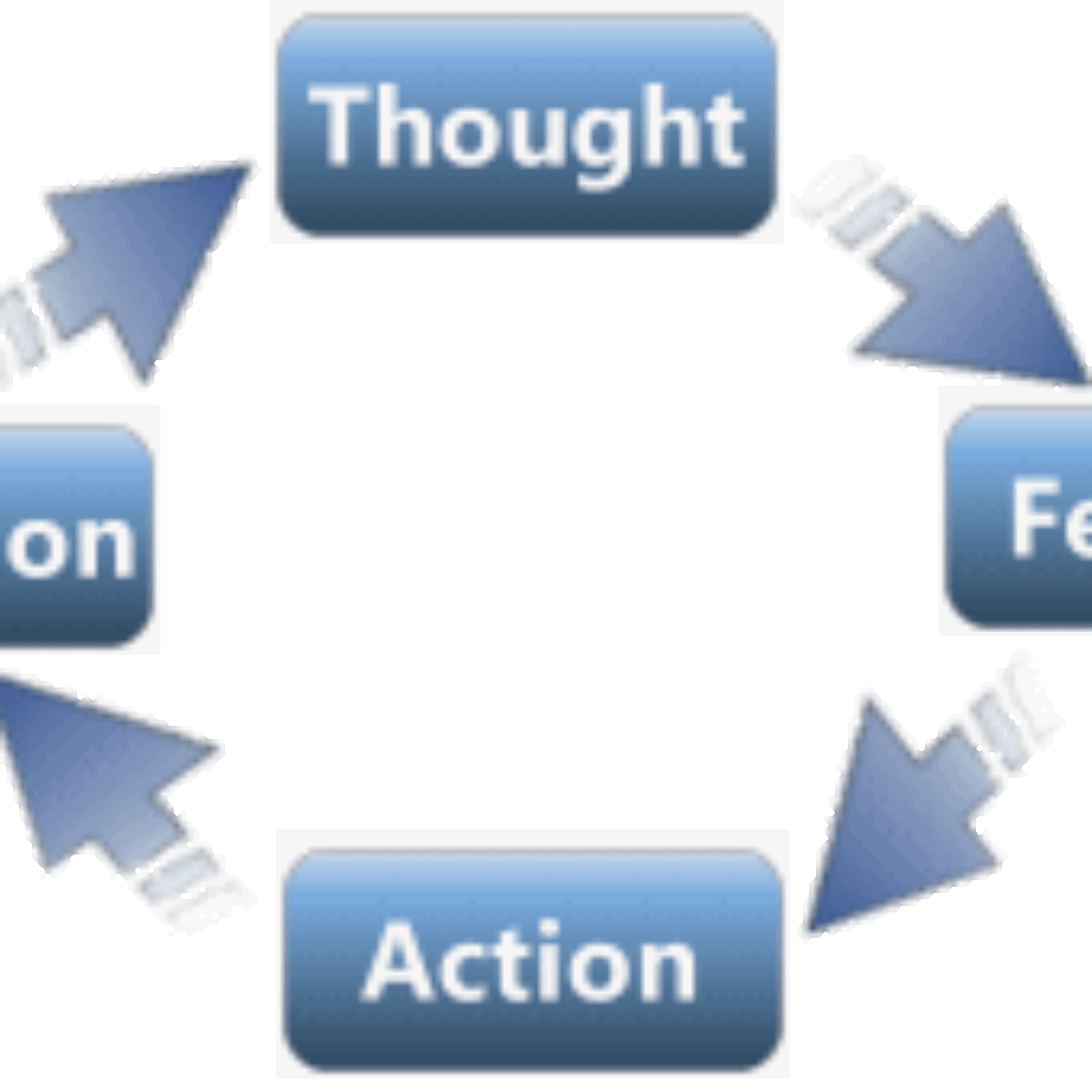
I've written before about Cognitive Behavioral Therapy and how I work. I consider CBT important and effective, as far as I know. I wrote about how similar the model at its foundation is to my Model. Specifically, compare this representation of the CBT model with this representation of mine Pretty similar: Situation -> thought -> feeling -> action Environment -> belief -> emotion -> behavior I've also written about shortcomings of CBT -- mainly that it doesn't say where its model comes from, at least not that I've found, and that it doesn't apply it to healthy people. A problem with not saying where the model comes from is that it makes it inaccessible to average people. When I thought about writing this post, I…
[This post is part of a series on empathy gaps. If you don't see a Table of Contents to the left, click here to view the series, where you'll get more value than reading just this post.] Did you know you undermine some of your best efforts to do challenging things, especially involving personal change? You do. We all do, through an effect that makes sense when you get it, but most people don't realize undermines them. The effect is this When you feel one emotion you generally can't conceive of your motivations when feeling a different emotion. Or more to the point When you plan to do something you feel one set of emotions, often enthusiasm. When you act on them you feel different…

If you know me in person you probably know I've lived in the same apartment for thirteen years, longer than anyone I can think of has lived in one place except my father. I haven't moved partly because I love the West Village, partly because I couldn't stand the process of moving. Moving disrupts your life, takes a ton of work, and fills your place with dust. Meanwhile, over the past few years, a big goal of mine has been to get rid of things I don't like or need and to learn to love things in my life I can't get rid of. As a result, my life is filled with things I like or love and devoid of things I don't. I considered…
Here is an overview of my recent section on Objections and Blocks with links to all the articles. If you haven't already, I hope they help you learn to look forward to objections and blocks as signs of progress, that your project is significant, and as guidance for how to proceed. As I began the series Whether you want to lead or motivate others or yourself, deciding to lead means you will face objections and blocks. Whether from members of your team or from your anxieties and fears, objections and blocks are similar, as are their solutions. For the next week or so, I'll cover a range of objections, blocks, and various other ways we discourage ourselves or face others being discouraged when we try…
[This post is part of a series on internal objections and blocks and how to overcome them. If you don't see a Table of Contents to the left, click here to view the series, where you'll get more value than reading just this post.] I love covering objections and blocks in my seminar. More than any other, that section results in people applying the seminar's contents to their lives and solving their problems. They change their mode from digesting and evaluating the information to using and applying it. I love to see how quickly what seemed like abstract information suddenly becomes useful tools to solve problems, lead people, improve careers, and improve lives. More than that, people come together. The break after this exercise is…
[This post is part of a series on internal objections and blocks and how to overcome them. If you don't see a Table of Contents to the left, click here to view the series, where you'll get more value than reading just this post.] Objection Other people tell me not to. We all defer judgment to someone. Sometimes others know better. Not always. Sometimes we feel pressure from peers, family, society, bosses, etc. Example Parents are the big ones who advise their children to what the parents' think best, which may or may not coincide with what their children think best. Bosses advise too. As do friends and, for that matter, random acquaintances. Institutions like governments, schools, churches, and so on also promote their agendas.…
[This post is part of a series on internal objections and blocks and how to overcome them. If you don't see a Table of Contents to the left, click here to view the series, where you'll get more value than reading just this post.] Objection This objection sounds so weird when you say it abstractly you can't imagine people succumbing to it. When they say it less abstractly you can understand why it holds people back, but also that they should be able to get past it. In the abstract: I excel in another area so I can't in this one. Does that sound crazy to you? Why should strength in one area hold you back from another? I hear versions of it all the…
[This post is part of a series on internal objections and blocks and how to overcome them. If you don't see a Table of Contents to the left, click here to view the series, where you'll get more value than reading just this post.] Objection Some people want to take on new projects or change something in their lives but they have too many other things. I'm too busy. I have too many other priorities. For this obstacle, I'll mention that your other priorities may be more important. Only you know. Example Examples are too numerous to mention. We all have things in our lives -- work, friends, family, hobbies, etc -- that take time, energy, attention, connections, and other resources. If you aren't completely…
[This post is part of a series on internal objections and blocks and how to overcome them. If you don't see a Table of Contents to the left, click here to view the series, where you'll get more value than reading just this post.] Objection Yesterday I posted how fear of feeling fake after changing holds people back. Today I'll note how some people don't start because they feel embarrassed or anxious now. But I'm embarrassed! I'm too nervous to even think about it! Many people prefer not to think about problem areas of their lives. Example The big one here is out-of-shape people not going to the gym because they're embarrassed about being the fat person at the gym. I speak from experience. I…
[This post is part of a series on internal objections and blocks and how to overcome them. If you don't see a Table of Contents to the left, click here to view the series, where you'll get more value than reading just this post.] Objection People worry that changing themselves will make themselves fake. It won't be the "real" them. My new beliefs will be fake. It won't be the real me. I'll be acting. Example As a coach I hear this all the time when someone changes even small things about themselves. People may feel fake from wearing different styles of clothes than they used to, speaking more slowly, calling someone outside their network, taking on leadership positions or even just any new position…
[This post is part of a series on internal objections and blocks and how to overcome them. If you don't see a Table of Contents to the left, click here to view the series, where you'll get more value than reading just this post.] Objection People think some things can't change. They say It's a fact. That's just the way it is. You have to accept that some things are just that way. Examples Bureaucrats consistently tell me how their process works, saying I can't do it any other way. They probably tell you the same thing. (I hope you, like me, consistently achieve things they call impossible.) My leadership seminar includes a couple slides with quotes from experts then stating how things had to…
[This post is part of a series on internal objections and blocks and how to overcome them. If you don't see a Table of Contents to the left, click here to view the series, where you'll get more value than reading just this post.] Objection People often say things like I have to take care of "real-world" issues like earning money first. or their bosses, parents, or teachers say things like You have to take care of "real-world" issues first, like getting a job or paying your bills. or they believe things other than "real-world" issues are indulgent. Or they have to be "practical" or "pragmatic." Alternatively: My job doesn't allow it or give me time to do it. That's fine and well for others…
[This post is part of a series on internal objections and blocks and how to overcome them. If you don't see a Table of Contents to the left, click here to view the series, where you'll get more value than reading just this post.] Objection People often complain that the project they want to do requires skills or abilities they don't have: I don't know how to do it. I'm too introverted. I'm not smart enough. Example I hear people claim they can't perform plenty of business and social interactions because they just don't get along with people; they want to do things alone. Or people claim they've never been that smart. Underlying belief Their usual underlying belief is that only extraordinary people can achieve…
[This post is part of a series on internal objections and blocks and how to overcome them. If you don't see a Table of Contents to the left, click here to view the series, where you'll get more value than reading just this post.] Objection People usually state this objection as I would do it but I don't have enough money. You need connections to do that and I don't have them. I would if only I had time. or some appeal to needing more of something external to them. Tomorrow I'll write about internal obstacles or blocks. Example Would-be entrepreneurs often say they can't start businesses because they don't have the money. People don't go on vacations, decrease their working hours, or do plenty…
[This post is part of a series on internal objections and blocks and how to overcome them. If you don't see a Table of Contents to the left, click here to view the series, where you'll get more value than reading just this post.] Objection People usually state this objection as a statement like these. I'm just not a leader. Leaders are born, not made and I wasn't born a leader. I've tried losing weight a million times. I'm just not a gym person. I'm no good at math. Example Too many to list. The above statements suggest a few. Underlying belief The underlying belief to these statements is that Existing or past patterns can't change. or Describing how things are says how they have…
[This post is part of a series on internal objections and blocks and how to overcome them. If you don't see a Table of Contents to the left, click here to view the series, where you'll get more value than reading just this post.] Objection People usually state this objection with something like I want to understand the problem before acting. I want to get at the root first. If I don't, it will just happen again. You can also call this objection Analysis Paralysis since it leads people to analyze over acting. Again, some problems require analysis, but I bet you'll find that the more you learn alternatives, like the ones below, the more you'll learn to solve problems faster. Example My classic example…
[This post is part of a series on internal objections and blocks and how to overcome them. If you don't see a Table of Contents to the left, click here to view the series, where you'll get more value than reading just this post.] Yesterday introduced obstacles and blocks as inevitable parts of leadership and personal development. It also suggested you can see them as advantages, or at least solving them as advantages. How do you train yourself to see problems as advantages? That's like the solution to all your problems, right? Once problems become fun, or at least rewarding growth opportunities, nothing holds you back from taking on whatever challenges come your way. Most people wouldn't believe some of my current projects. But Submedia's…
[This post is part of a series on internal objections and blocks and how to overcome them. If you don't see a Table of Contents to the left, click here to view the series, where you'll get more value than reading just this post.] Whether you want to lead or motivate others or yourself, deciding to lead means you will face objections and blocks. Whether from members of your team or from your anxieties and fears, objections and blocks are similar, as are their solutions. For the next week or so, I'll cover a range of objections, blocks, and various other ways we discourage ourselves or face others being discouraged when we try to motivate them. Someone who can consistently overcome challenges in themselves or…
Is there anything you do that wouldn't benefit from having more confidence? Even if showing confidence doesn't make a difference, at least having the option to show it helps. Have you noticed that people with more confidence can't do that much more than people without it? They can't lift heavier weights or solve more difficult problems. The guy at the gym who lifts the heaviest weights probably isn't the most confident person there. Alternatively, you can lift weights all you want -- that alone won't make you more confident. So what does? A friend just wrote me that she didn't feel comfortable opening up with most people because she usually felt vulnerable and insecure, but with me she did. It got me thinking. Opening up…
The past few posts talked about using self-talk to lead yourself. Today I'll mention a few things about leading others by influencing their self-talk. To me, influencing someone's self-talk feels easier than changing their beliefs, but the effect is roughly the same. Trying to change other people's beliefs sounds hard, especially if you can't change your own beliefs. It's easier when you realize some simple things about how others have influenced your beliefs. I'll keep it brief because I haven't studied it much, though I remember hearing from friends about it in a class I didn't take in business school called Power and Influence in Organizations. Here are some tools that help influence others' self-talk, in no particular order. Empathy - I find the more…