A systems perspective on population growth

I keep reading about how some technology has or will save billions of lives from starvation or disease. A perfect example comes from the opening paragraph of Wikipedia's page on the "Green Revolution." Green Revolution refers to a series of research, development, and technology transfer initiatives, occurring between the 1940s and the late 1970s, that increased agriculture production worldwide, particularly in the developing world, beginning most markedly in the late 1960s. The initiatives, led by Norman Borlaug, the "Father of the Green Revolution" credited with saving over a billion people from starvation, involved the development of high-yielding varieties of cereal grains, expansion of irrigation infrastructure, modernization of management techniques, distribution of hybridized seeds, synthetic fertilizers, and pesticides to farmers. I disagree with this perspective. I…
0 Comments

Why basketball players are tall and how tyranny emerges

Today's post approaches the recent NSA surveillance revelations from a systems-theory perspective. The reasons basketball players are tall imply consequences to our government. A high-level systems perspective leaves out details, some of which may be more important than this post gives credit for. I'm not saying it's the only perspective, but I consider it important and relevant. Please feel free to comment if you feel I missed something important. Why are most basketball players tall? Why are most basketball players tall? Basketball players are tall because the rulebook puts the basket ten feet high and they want to put the ball in the basket. Taller players achieve the goal better. Basketball players have a goal, they follow rules, and the ones who achieve the goal…

1 Comment

A visual model to understand passion and attraction: The Passion-Attraction Model

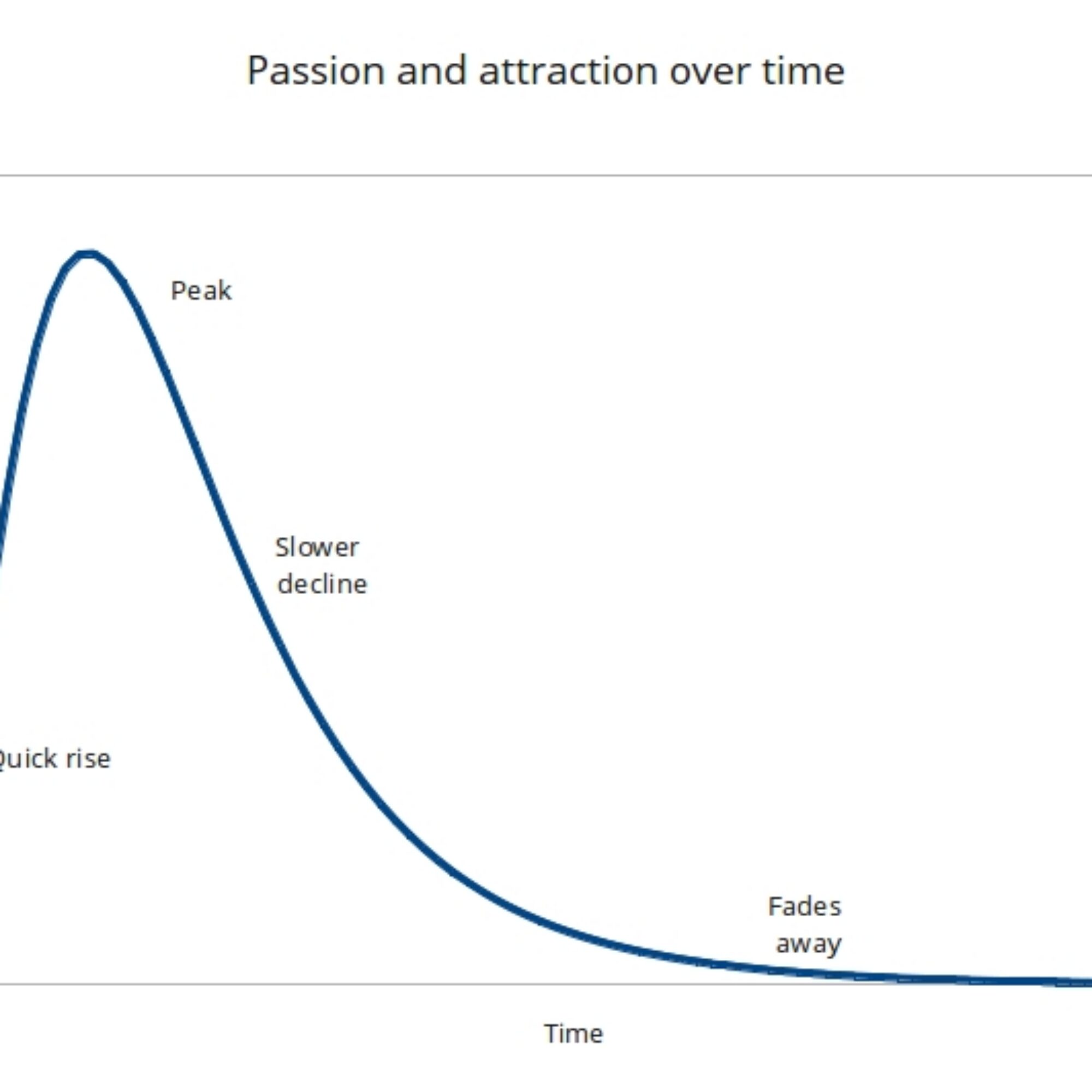
[Last week I posted a five-part series on a mental model I have for how our passion and attraction grows and wanes over time and the consequences of that pattern, according to the model. Today I'm posting them all in one post.] Day 1: Introducing a new model: Passion and Attraction I'm starting a new series today on a new model, this time on passion and attraction. Everyone I showed it to told me it gave them useful insights, so I expect you'll find value in it too. I'll apply the model mainly to intimate relationships, but you can also apply it to anything that evokes passion, attraction, or both, like hobbies, jobs, sports, and so on. So what does a science-trained, leadership-minded, self-awareness and…

0 Comments

How and why I made the Passion-Attraction Model graphs

Time I put a lot more time into making the graphs and writing the posts of the past week than usual -- at least a couple full days just graphing before writing a word. Why Why did I put so much time in? Not because I didn't have lots to do. Because people who saw early versions of the graphs told me it helped them better understand Their intimate relationships Their partners, and Themselves. They also enjoyed reading the graphs -- like their eyes opened wide and they looked like kids with new toys, like who would have expected something so science-and-math-like could help them understand their intimate relationships ... and work!?! My main reason for writing here is to increase self-awareness in ways that…

0 Comments

Review and conclusions from the Passion-Attraction Model

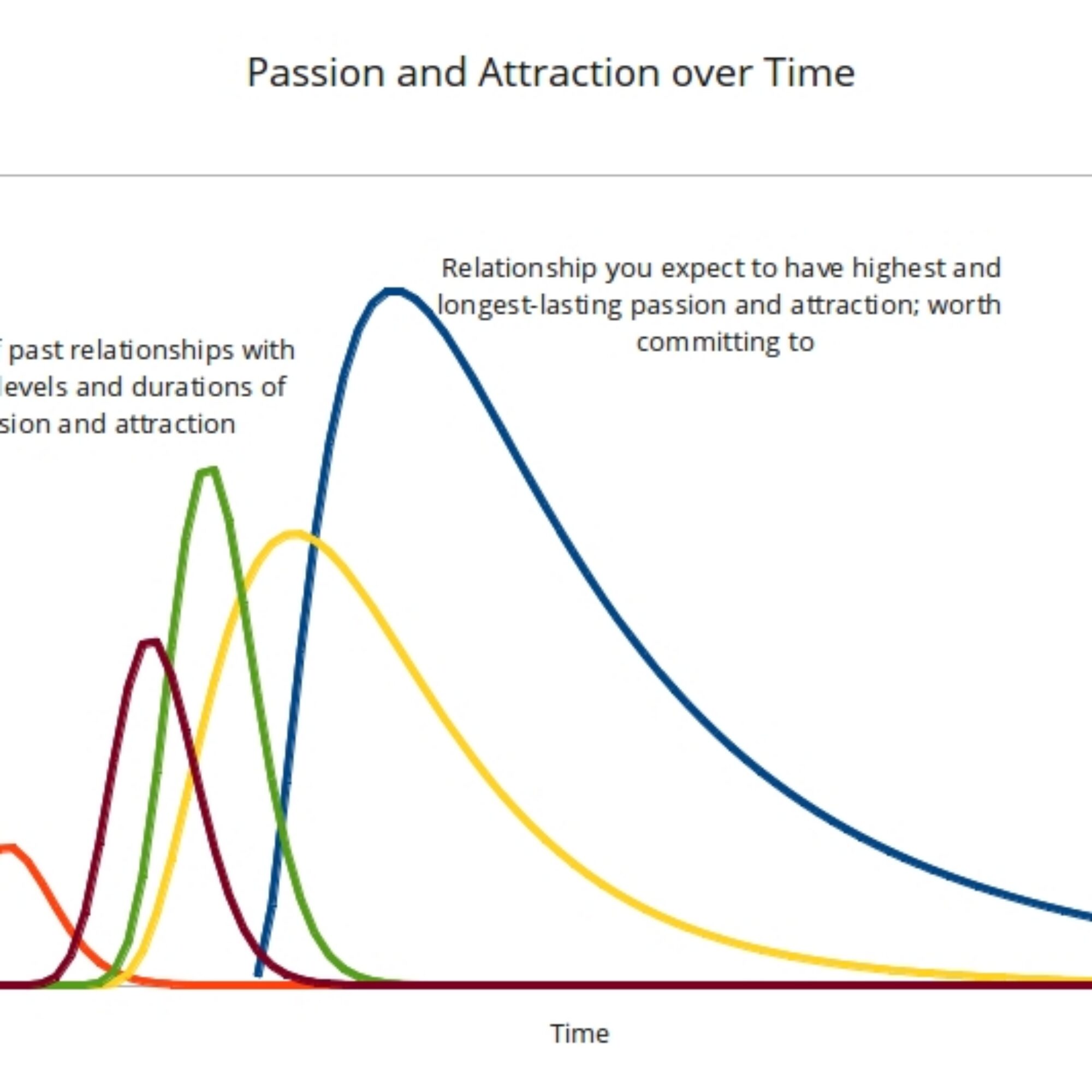
What can we learn from the Passion-Attraction Model? While the model can apply to everyone, we each have different values and circumstances, so we each have to choose for ourselves how to live our lives and act in relationships. Understanding the Passion-Attraction Model and its consequences can help you understand yourself and your partners, on your own and in relationships if you feel it describes you well. (If you don't, it may not help you, though it may help you understand your partners if they feel it describes them.) It can help you navigate your emotions and relationships and choose your behavior and partners. You don't have to adopt it verbatim. Like all models, it has flaws and oversimplifications, but so does any other model…

0 Comments

Relationship risks in the Passion-Attraction Model, part 2

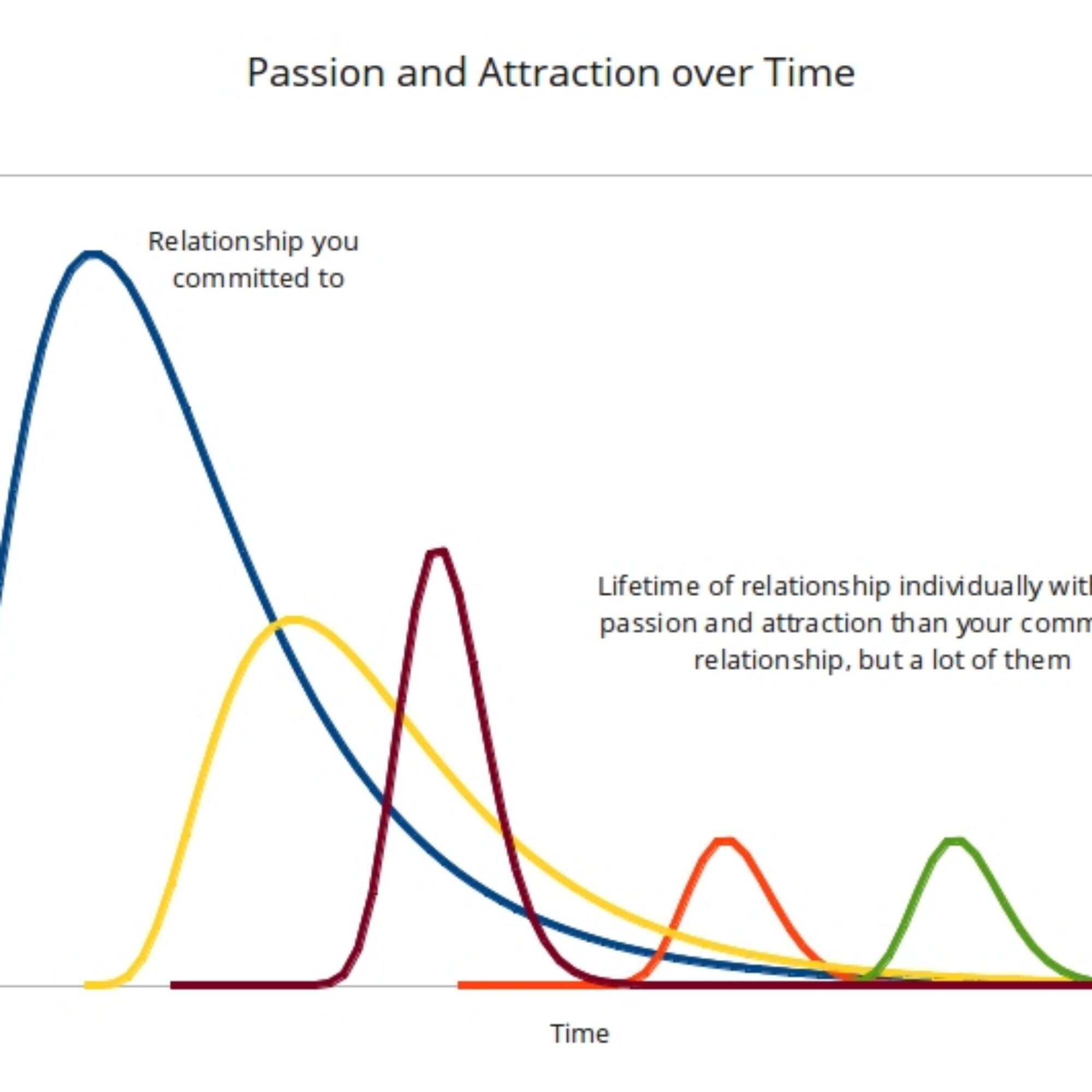
Yesterday's post considered a single alternative to a committed partner. If you plan to commit to someone for ten, twenty, thirty, or more years, you can expect you and your partner will meet people who, in the moment, attract you and excite passion more than each other. Review and discussion about One Alternative Recall, the Passion-Attraction Model doesn't tell you how to behave, though if you feel it represents your experience it may help you respond. Nor am I evaluating possible responses. I'm only using the model to understand how people will feel in relationships. The last section, "One Alternative," for example, predicted that people late in long-term relationships are susceptible to a third person exciting more passion and attraction than the long-term committed partner.…

0 Comments

Relationship risks in the Passion-Attraction Model, part 1

Yesterday's post ended by describing a typical goal -- what you hope to get if you want to commit to a relationship, at least concerning passion and attraction: an enduring relationship with lots of passion and attraction, smooth edges, and never fading away. When you and a partner both reach that goal, many people choose to commit to each other. In my experience, choosing to commit doesn't mean living happily ever after with no more relationship work. It means the beginning of a new type of work -- potentially deeply rewarding work, but work nonetheless. After all, you don't find passion, you create it with your behavior and beliefs. Committing to someone like the blue curve above means you get the high levels of emotional rewards…

0 Comments

The Passion-Attraction Model as you gain experience

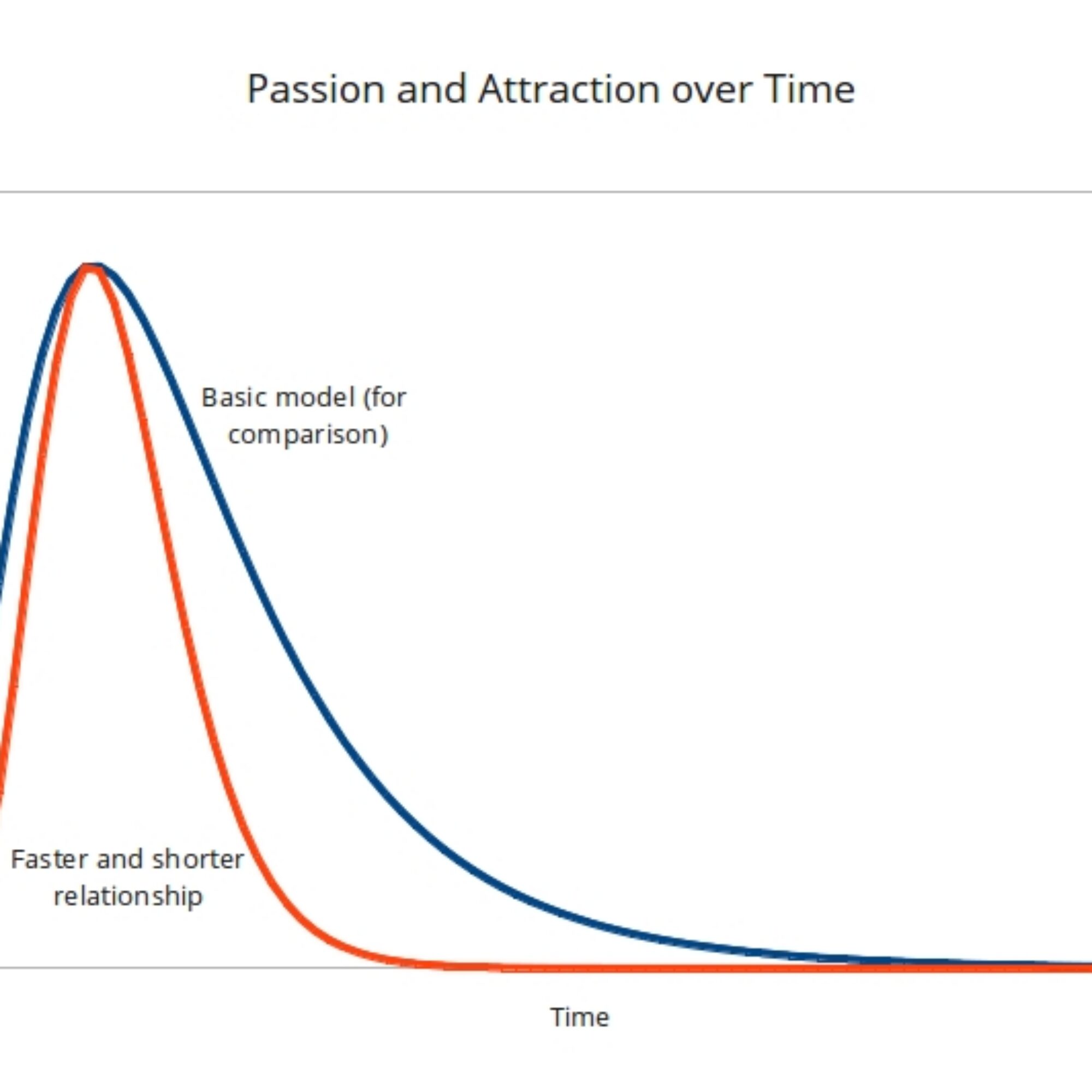
Yesterday covered how the Passion-Attraction Model described passion and attraction in a relationship. Today we'll look at how you might grow as a person and parter. We'll end today with a typical goal you might work toward (before moving on to challenges and risks tomorrow). Despite the nice clean curves in the graphs, you don't know what curve you're on. If you feel like you're at the peak of a relationship, you don't know how long your feelings will last -- that is, you don't know if you're on the red or blue curve below, or a different curve entirely. Is your relationship about to end or will it endure? Or maybe what feels like a long-term peak is just noise that will soon fade.…

0 Comments

The basic Passion-Attraction Model in one relationship

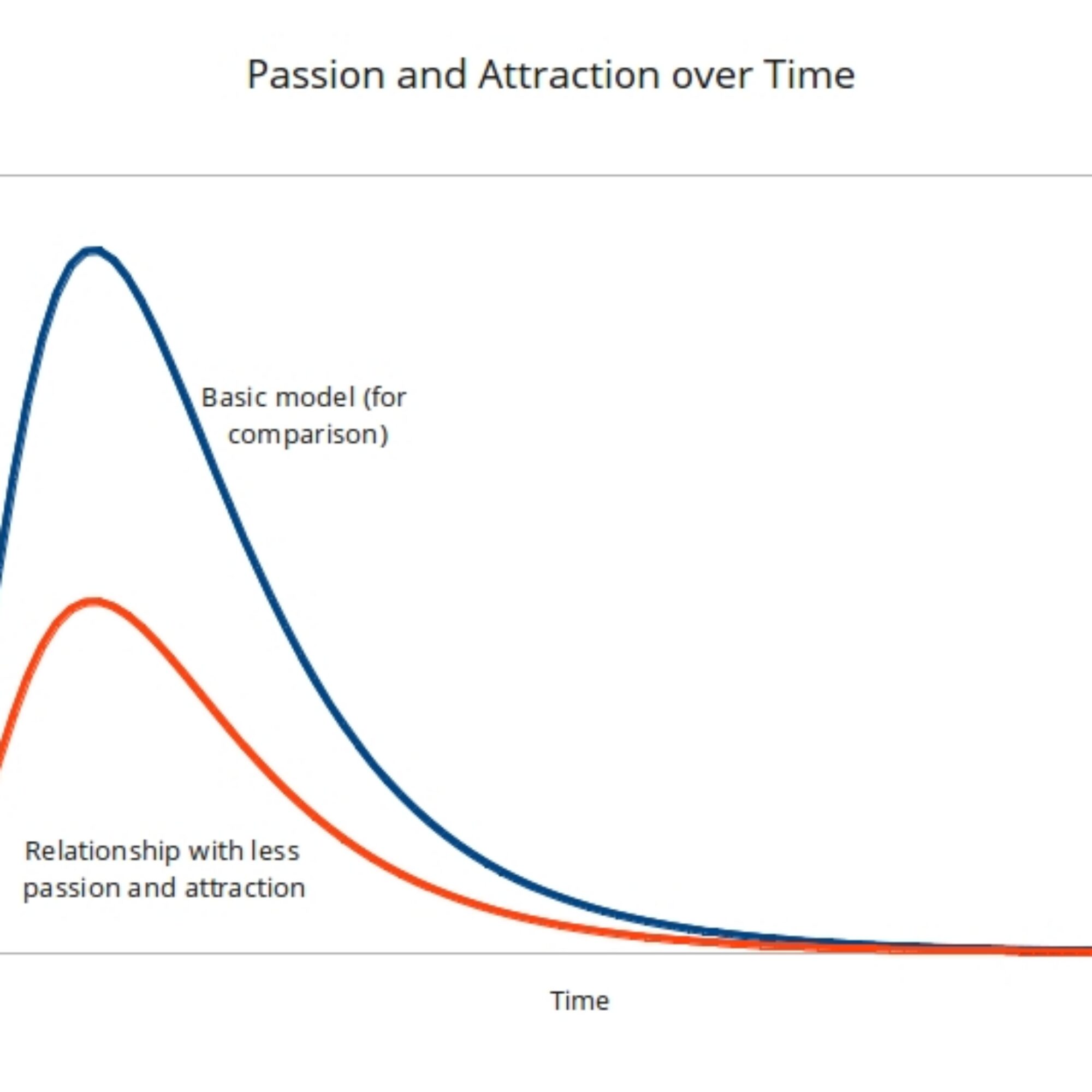
Yesterday covered the basic Passion-Attraction Model and some caveats. Today let's look at how the P-AM models passion and attraction in a single relationship. (Tomorrow we'll look at it multiple relationships). I find that the better I can visualize many ideas, the more clearly I can think about them, so this model's illustrations help me understand my feelings in a relationship. Then I can plan and act to improve myself and understand others in relationships. The Passion-Attraction Model in one relationship As we'll see, the P-AM can explain a lot of about one's feelings of passion and attraction in relationships. Less passion and attraction Some people evoke less passion and attraction in us. The P-AM represents less emotion with a lower peak, as illustrated by…

0 Comments

Introducing a new model: Passion and Attraction

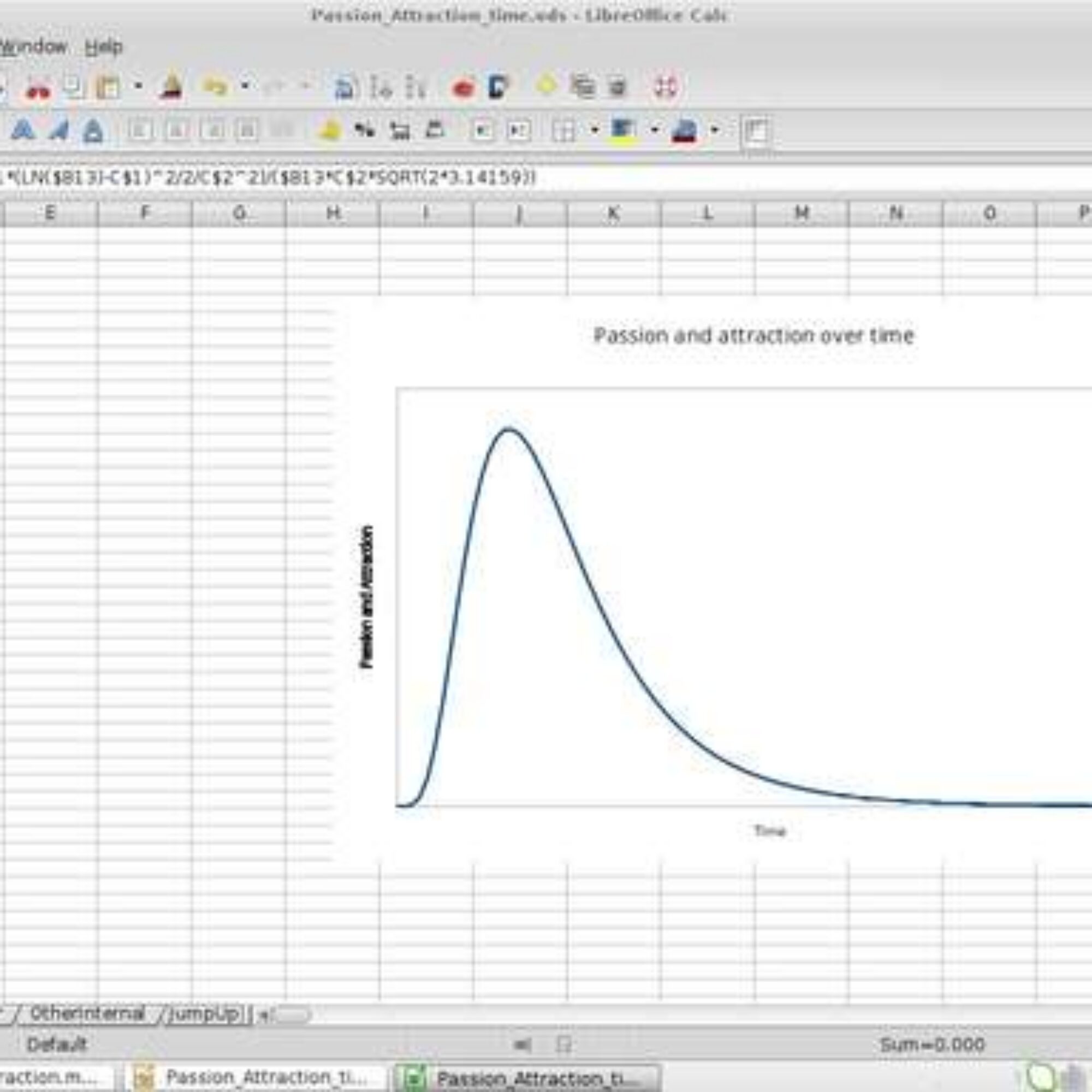
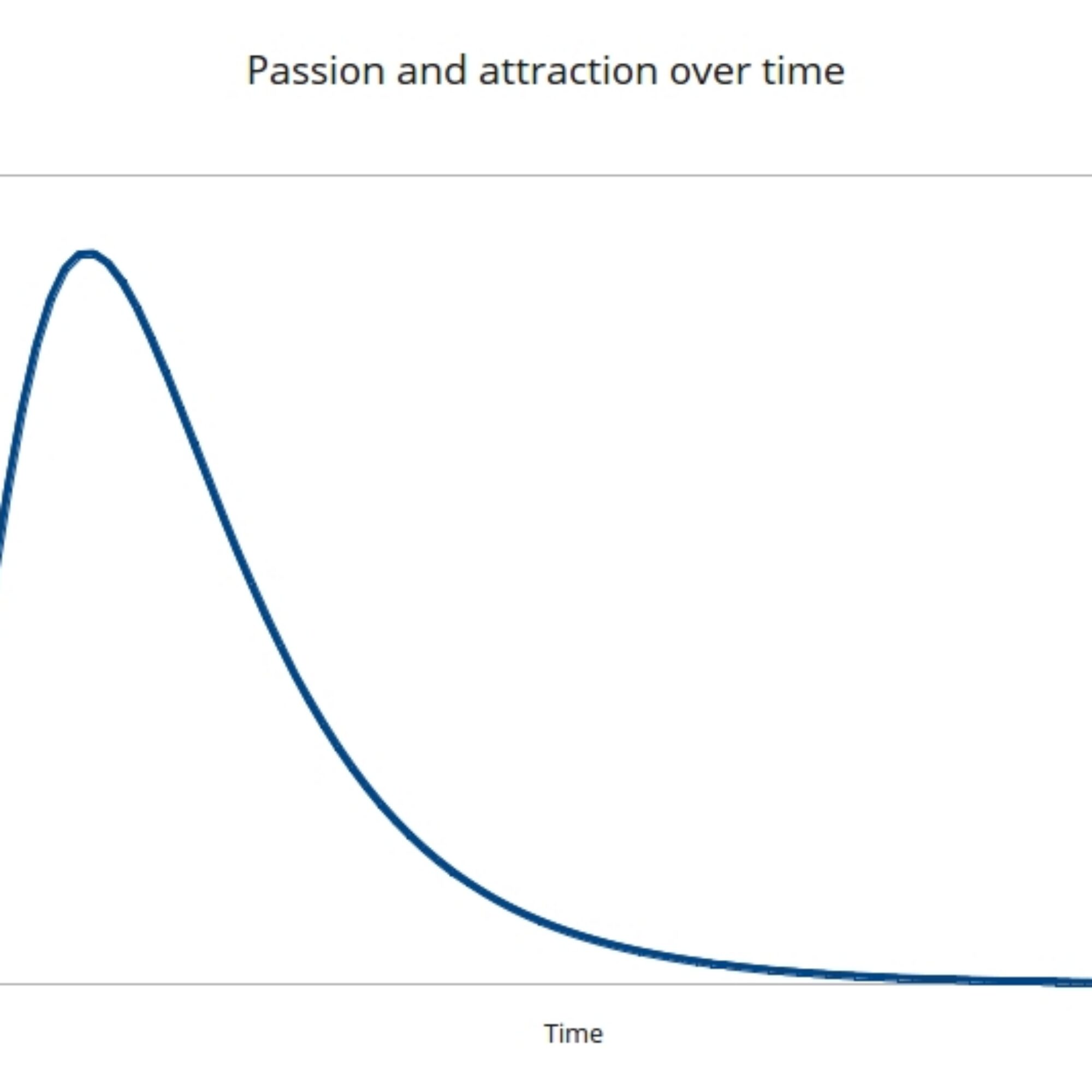
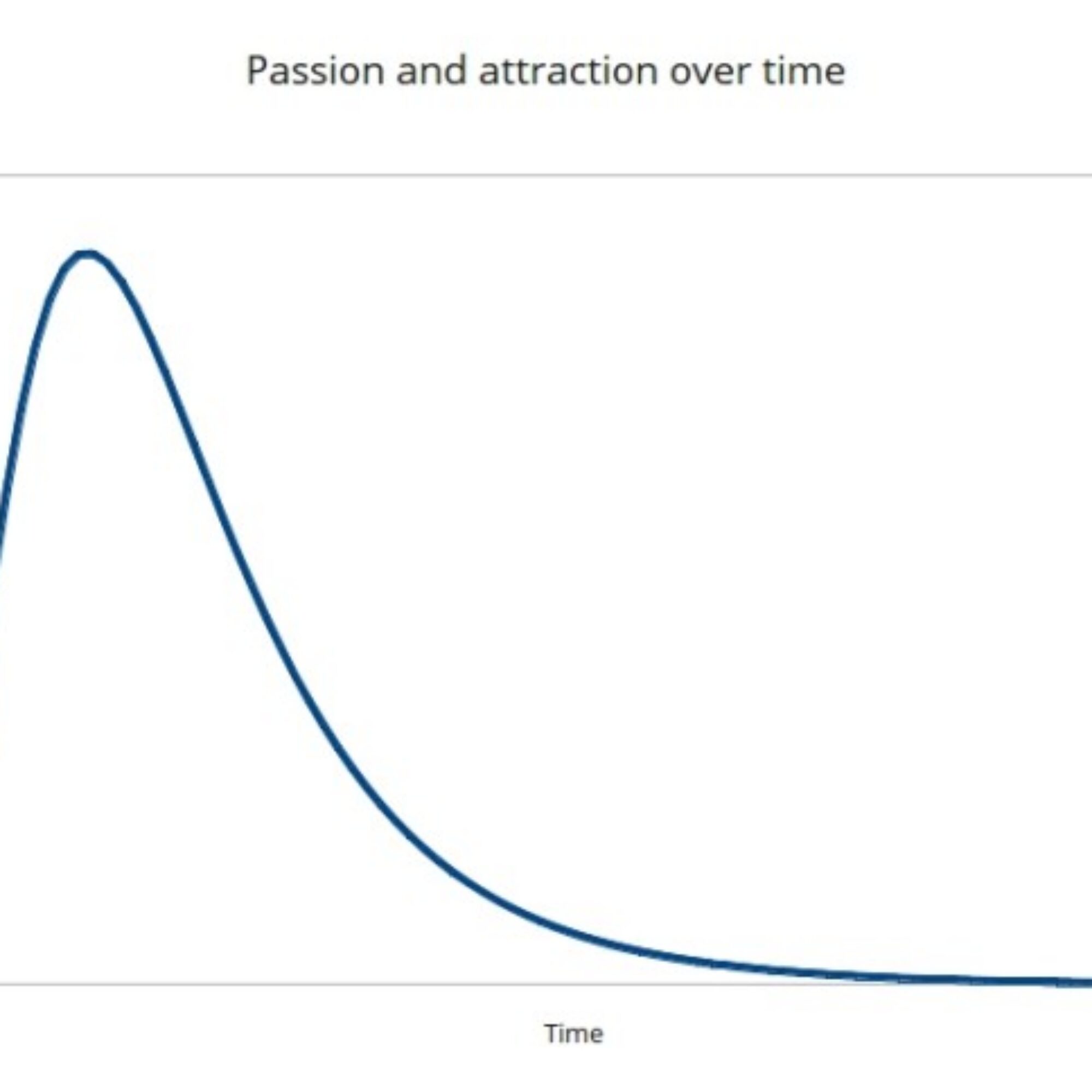
I'm starting a new series today on a new model, this time on passion and attraction. Everyone I showed it to told me it gave them useful insights, so I expect you'll find value in it too. I'll apply the model mainly to intimate relationships, but you can also apply it to anything that evokes passion, attraction, or both, like hobbies, jobs, sports, and so on. So what does a science-trained, leadership-minded, self-awareness and emotional-intelligence focused guy have to say about passion and attraction? I'll start by showing this picture of my Passion-Attraction Model as a taste of things to come, for now without explanation, except that I expect you'll find life-improving insight from a fresh and simple perspective. I find visualizing things makes understanding…

0 Comments

Hidden assumptions in “Jobs Americans won’t do” and systems thinking

I keep reading the phrase "jobs Americans wont' do," as in "illegal immigrants do work in jobs Americans won't do." Search on the phrases in quotes and you'll find plenty of articles on the topic. Economists, politicians, and pundits use the tools they use to analyze jobs -- labor supply and demand, wages, competition, and so on -- to understand the situation. These articles never seem to question the existence of some jobs. They seem to take for granted that some work just has to be done and that it has to be done in just that way. Of course we need people to gut pigs and work in the sun all day in huge agricultural fields, they suggest...  of course we need people to…

0 Comments

A model to make sense of complexity

[This post is part of a series on "Mental models and beliefs: an exercise to identify yours." If you don't see a Table of Contents to the left, click here to view the series, where you'll get more value than reading just this post.] If you believe everything that happens has a cause, when something happens you want to change you look for the cause and change it. You might have to dig deep for the "root" cause, but once you find the cause of something you can influence the thing by influencing the cause. For example, if your project is late because your boss isn't giving you the resources you need, you can try to get your boss to give you more of the…

0 Comments

A model to help create the life and relationships you want

[This post is part of a series on "Mental models and beliefs: an exercise to identify yours." If you don't see a Table of Contents to the left, click here to view the series, where you'll get more value than reading just this post.] Do you want an awesome life filled with things you love or do you want a crappy life filled with things you dislike and hate? I'd consider today's belief too simple and obvious to post except that so few people seem to get it. At least they don't live consistently with the strategy it suggests. A model to help create the life and relationships you want: You get good at feeling and expressing the emotions you practice and express. Today's belief, that…

0 Comments

“I am a freedom junky” — David Allen’s inspiring words that simplified my life

Do you feel stress from too much stuff to do or lose track of things? Many entrepreneurial and management types I know read Getting Things Done and put it into practice. I recommend it. I read the book and like the philosophy -- in particular, his observation that if your mind has to remember something, it will allocate resources that distract you from everything else. The more you have to remember, the more it will preoccupy your mind. I didn't connect with it on my first reading, when I thought it was just about efficiency. What made me appreciate it was meeting David Allen at a cocktail party. He described himself as a "freedom junky" and the book his way of creating freedom. I value…

0 Comments

Video: North Korea’s incredibly talented and rehearsed children performers — and comparison with some Americans

Our guides took us to see the children's performance palace (I forget its official title), where they put on display groups of children whose performances were incredible. I wrote and posted images of them before. Who knows what training they've had or what motivates them to get to this level. I think the usual first guess of people who are critical of North Korea is that the government coerces them -- that if they don't perform well someone will harm their parents or something like that. Someone also told me that these children hold very high status, so maybe they have internal motivation. I'll never know if they are pushed, pulled, motivated on their own, something else, some combination, or what. All I can say…

0 Comments

Martin Luther King, copyright, and the content of his children’s character

Last August, many reported on the fiftieth anniversary of Martin Luther King's I Have A Dream speech. One of my favorite sites which concerns itself with copyright, started a conversation, "The copyright nightmare of 'I Have A Dream", on how the speech, which was broadcast in a way that would seemingly make it part of the public domain, ended up copyrighted. Please read that conversation for many views on how this case illustrates how copyright law has been distorted from its original intent to starve the public domain it was supposed to help fill. You'll see a couple points there on related issues, for example, how MLK's heirs are squabbling among themselves over the rights as well as charging others for using his words in…

0 Comments

Schopenhauer on the consistency and reliability of our emotional systems

I haven't read anything by Arthur Schopenhauer and hardly know anything about him, but I agree with this quote from him: Mensch kann tun was er will; er kann aber nicht wollen was er will. One can choose what to do, but not what to want. People contrast emotions with reason, see they differ, and conclude emotions are irrational, unpredictable, and follow no system. I agree they are hard to predict in others whose environments, belief, and behaviors we don't know, but that doesn't mean our emotions aren't systematic. I, like Shopenhauer, it seems, see the human emotional system as systematic. It depends on its inputs -- the person's environment, beliefs, and behaviors -- but given them, it creates consistent outputs. Effective leaders understand the…

0 Comments

Science is a long way from helping diet

I wrote the following in response to this New York Times article, "Eating for Health, Not Weight" in a discussion on Hacker News. With an Ivy League PhD in physics, I'm a big fan of science. I have not observed a scientific approach to diet effective in promoting health. In my albeit limited observation, I observe no correlation between knowing a lot about food, digestion, etc and fitness or healthiness. In particular, American culture appears to approach diet most scientifically, yet has probably the least healthy population. Meanwhile, many illiterate cultures appear to have healthy diets (implying thousands of years of trial and error, admittedly a form of science, works). My observations are anecdotal, not data, so feel free to dismiss them as such. I…

0 Comments

Being overweight looks depressing

Some people choose to be overweight -- Mario Batali, for example, seems to love fattening food, knows how eating it will affect him, and eats it, accepting, even celebrating, the consequences with pleasure. I take my hat off to him. This post isn't about him. I should also point out I don't consider being overweight bad. Regular readers know I don't consider such things good, bad, right, or wrong. I'm mostly interested in consequences. If someone achieves whatever weight they want, I support them, independent of what a doctor says. I should also note that I think tracing causes of obesity leads to our huge agri-business subsidies that make unhealthy food cheaper than healthy and to what I consider counterproductive laws that allow poor labeling,…

0 Comments

How I could be wrong about North Korea’s stability

My book on North Korean strategy concludes that North Korea's government is stable because everyone who could influence it is motivated to maintain its stability and that those who would benefit from changing it have no influence. I tried to look for holes in my theory. I thought of a few. South Korea continues to become increasingly prosperous. Combined with a more porous border, more information reaches North Korean people, undermining the party line. Cell phones allow greater communication among North Koreans, allowing some assembly. Signals from China and South Korea reach within North Korea. The internet is growing within the country from the inside. Tourism seems to be increasing, increasing communication and dependency on the outside world. I don't claim these are insightful or…

0 Comments

North Korea and inequity

Inequity and its consequences If some people succeed without having to work and others have no chance to succeed, you create feelings of unfairness. Those feelings of unfairness will motivate people to return the unfairness at those who create, maintain, or benefit from the system. Everyone recognizes this situation in North Korea. Even outsiders, who have no interaction with the system, feel outraged and wish harm on the people in charge. People feel the type of wish to harm them normally reserved for ticks, leeches, and genuine parasites. We see the North Korean people not revolting and conclude the regime must be repressing them more. The reason I mention inequity, as usual with me and observations of North Korea, is what it reveals about my…

0 Comments

In North Korea, many people just sit by the roadside with nothing to do

Many times daily in North Korea you see someone crouching doing nothing but passing time. Usually they're alone, but sometimes in a group. I kept meaning to take pictures, but it feels funny to take a picture of someone doing nothing. I found the two below on the web. As best you can tell they've been squatting all day and will be for a while longer. They'll be in a park or on a street corner. Not far away someone else may crouch alone doing nothing too. I don't see them complaining. I didn't see any police telling them to move along or other people asking them to join an activity. It got me thinking about government, systems, and motivation. I don't know the cause…

2 Comments

The U.S. has a “dysfunctional patent system”

The U.S. has "a dysfunctional patent system." Those aren't my words. They aren't the words of an ignorant person either. They are the words of U.S. Circuit Judge Richard Posner, one of the nation's most esteemed judges and faculty at University of Chicago. A patent dispute between Apple and Motorola prompted that description. Here's an article from a couple weeks ago -- Famous judge spikes Apple-Google case, calls patent system "dysfunctional" -- describing the case. Here's a recent article -- In bid for patent sanity, judge throws out entire Apple/Motorola case -- reporting that he threw out the case with prejudice. My thoughts I could write volumes on the problems with patents and copyright. The ideas have some merit and they probably once served widespread useful…

0 Comments

A leadership perspective on differences between economic systems

Watching people on the streets of North Korea, you see a different culture than in New York City. In three cumulative weeks in North Korea I saw almost no one hurrying or seeming like they wanted to get somewhere important. I was curious if I could find a root cause. From a leadership perspective -- that is, for someone who wants to motivate and lead others -- how do capitalism and communism differ? When you create your teams and organizations, you create systems that affect everyone in the team, whether you realize it or not. How do you motivate people? Will you have people hurrying to do something or free riding? Your choices may differ less than communism and capitalism, but a greater difference makes this…

0 Comments

Ecology, economy, population growth and Do The Math

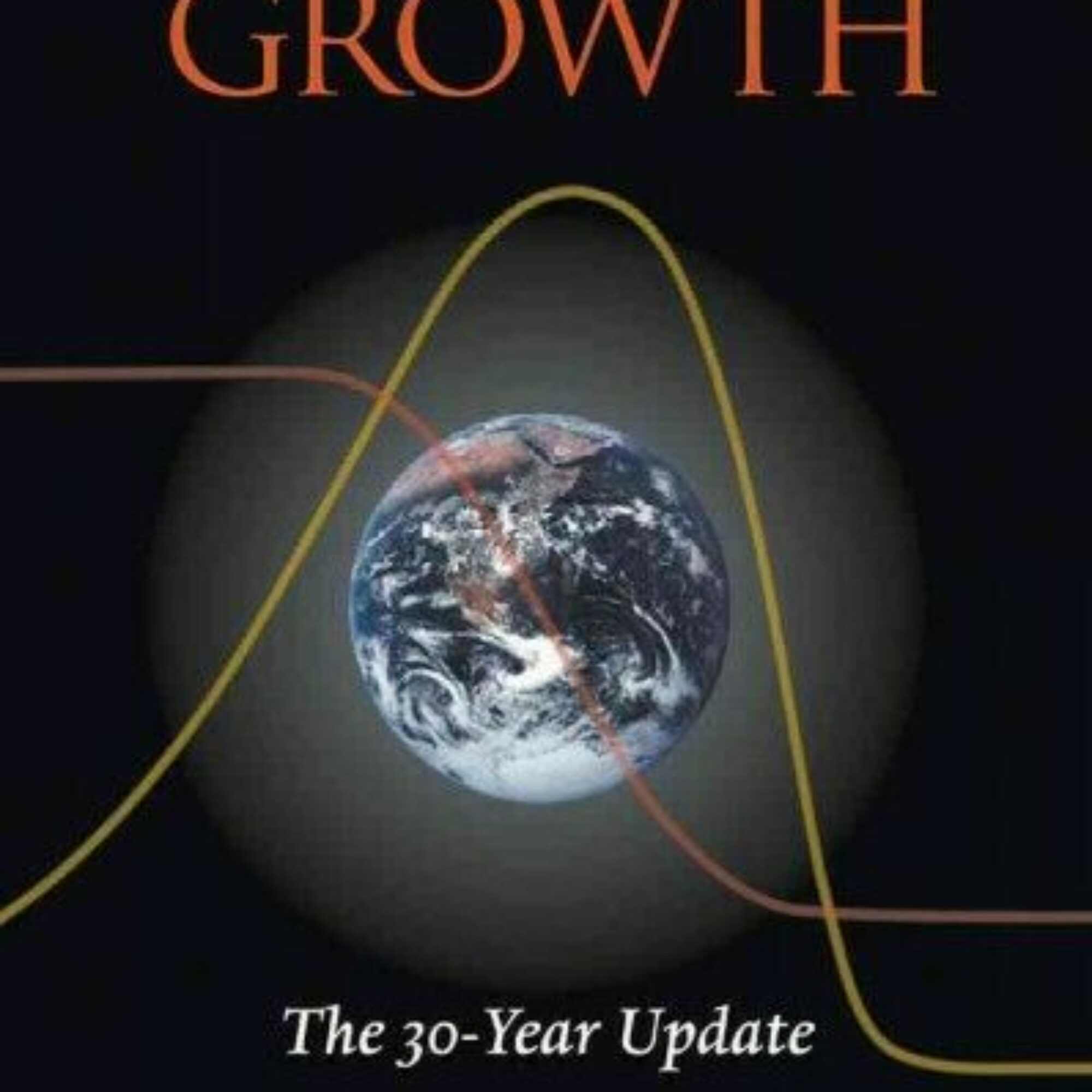
I've written about Do The Math, the blog that takes a quantitative, scientific, and usually non-judgmental approach to understanding our impact on the environment. I posted on it today for the first time about some questions I'd been thinking about for a while but haven't approached in that blog's way. He has written about increasing his efficiency in using energy. I generally applaud that approach and do it myself, but I wonder about its value in the long-term, given population growth. I wrote the following on a thread on conserving energy in the home and persuading others to. Regarding efficiency, while I also try to improve mine, I can't help but put these gains in the context of population growth, mainly driven by having read…

8 Comments

End of content

No more pages to load