
What would you say or do if you found yourself in a culture where basic living required people to violate basic human values?
Imagine you were born before the Revolutionary War under a culture of tyranny or before the Civil War under a culture of slavery; and that you had been raised like everyone else, but one day you woke up with a 2026 world view. You’d suddenly see nearly all of politics and society around you as blatantly and horribly violating your values. Like everyone else in that time and place, you didn’t ask to be born into a culture with those values or for your parents and society to indoctrinate you with them, but you can’t change the past either.
Not that you had to have owned slaves, lived near plantations, or enforced the Stamp Tax, but imagine that you grew up depending on slave-produced goods or an imperialist king’s army.
Examples
You wouldn’t be the first to experience such an epiphany. Here are two relevant quotes by people who had such experiences. Thomas Clarkson in 1788 learned about the scale and cruelty of slavery and wrote:
On returning however to London, the subject of it almost wholly engrossed my thoughts. I stopped my horse occasionally, and dismounted and walked. I frequently tried to persuade myself in these intervals that the contents of my Essay could not be true. The more however I reflected upon them … the more I gave them credit … I sat down disconsolate on the turf by the roadside and held my horse. Here a thought came into my mind, that if the contents of the Essay were true, it was time some person should see these calamities to their end.
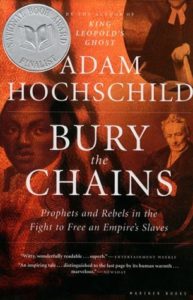
I learned about Clarkson from the book Bury the Chains by podcast guest Adam Hochschild. I recommend the book and podcast.
Clarkson influenced William Wilberforce, who wrote:
The number of deaths speaks for itself, and makes all such inquiry superfluous. As soon as ever I had arrived thus far in my investigation of the slave trade, I confess to you, sir, so enormous, so dreadful, so irremediable did its wickedness appear, that my own mind was completely made up for the abolition. A trade founded in iniquity, and carried on as this was, must be abolished, let the policy be what it might, let the consequences be what they would, I from this time determined that I would never rest till I had effected its abolition.
It happened to Gandhi after he was thrown off a train in 1893 in South Africa:
What would you actually say or do to people around you?
Would you act? … or might you see the challenge as too great, keep your head down, and keep doing what you were doing?
If you could, would you prefer to remain mostly unaware of your contribution to harming others so that you could live a comfortable life? Would you claim ignorance even if you knew deep down? Would you maintain ignorance by not looking up readily available information? After all, many people who bought sugar and cotton never held a whip. They could claim they didn’t know that their purchases funded cruelty. Many people participated in industries that appeared independent of slavery but still profited from it.
My goal is to help people choose to see how our culture relies on coercing people without their consent and it leads to people suffering and dying on a much greater scale than under slavery or under tyrants like Hitler or Stalin. See my post The Scale and Pollution and Depletion’s Effects on People: Here, now, not future projections for details. I want to help people become aware and to act, because we today live in such a culture. You may consider yourself oppressed or victimized, or may fear others grabbing power or destroying society, but in our culture, we can’t avoid harming others for the basics of life.
What would you do?
To introduce freedom in a culture of slavery or democracy in a culture of tyranny may seem obvious to us today, but not necessarily to people then, even those enslaved, tyrannized, or oppressed. Slavery and tyranny existed since before writing. They appeared in the bible. To people born and raised in those systems, they seemed eternal and inevitable, even if cruel, especially to those whose access and control over resources enabled them to coerce and enforce their decisions.
To them, the systems felt natural, even good and right. The resources they controlled, like arable land, weapons, and education, felt life-giving. The prospect of changing the system would feel like jeopardizing those resources, risking death to themselves and the end of civilization, returning to what they would call a state of nature and we would call the Stone Age. It would invite invasion. It would seem contrary to human nature.
They might respond to suggestions that their behaviors harmed others with outrage or incredulity: “How dare you suggest such a thing?!?” or “Me? Really? My actions lead to the harm of others? I had no idea? How can it be?”
We are outside the time and place. We didn’t grow up in their situation. It’s easy for us to day they were just wrong but that clarity would be harder for them. They didn’t choose to be born into their culture. They don’t necessarily see themselves as wrong. Abundant psychological research, especially since the just-following-orders defense claims following World War II, shows that nearly everyone, including you and I, would conform to such cultures in such situations, as much as we’d like to think otherwise.
Future generations will see us as we see them. Some of us already do.