
Doing things consistently and daily for a long time enables you to notice nuances, which increases self-awareness.
Since I have a six-day exercise cycle that I begin on the first of each month, in months with 31 days, I like to vary what I do with the extra day. In December I did two things.
Sorry for the long post, but what I describe below felt like a meaningful experience of aging, contemplation, risk, and humility.
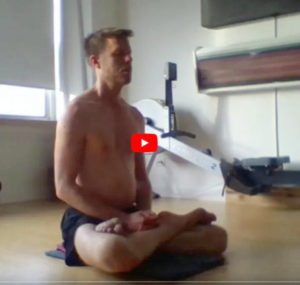
Longer meditation
Some background on one: I’ve meditated daily for about five years and counting. Normally I set my timer for 31 minutes and sit for that long. Why 31 and not a rounder number? No special reason. I worked up from shorter times and ended up there. A couple months ago I set the timer wrong without realizing it. My legs started hurting. It’s hard to tell how long has passed while sitting with my eyes closed. I couldn’t tell if my legs were just acting up, I set the timer wrong, the ringer was turned off, or what. So I kept sitting. I didn’t want to give up.
Eventually, my legs annoyed me enough that I checked the timer. I had been sitting for just under an hour.
I had made close to an hour, but not the full hour, so I decided to set meditate for a full hour, actually 61 minutes to make it consistent in some way with my usual 31 minutes, my first time that long in years, maybe since my last silent retreat. I don’t remember how long ago it was, but well before the pandemic.
I wrote about my legs hurting, but it wasn’t exactly pain. I don’t know when the sensation in my legs kicked in, but it was close to pain and strong. It became very difficult not to move, but I could tell I wasn’t injuring myself. Coincidently, later that day a friend talked about her difficulty meditating up to ten minutes, by which point she couldn’t stand her mind’s activity. I wasn’t feeling that equanimous myself after a while. My mind mostly focused on the sensation from my legs, trying to gauge how much longer until the end, wondering if I set the timer wrong, and trying to focus on my breath.
Still, it found some quiet along the way too. Even after the timer goes off, I do some light stretching of my neck and shoulders that keeps me in the half lotus another 6 or 8 minutes.
One thing that prompted me to write here is how fast the sensation dissipated once out of that position. After the neck and shoulder stretches, I lie down for some back stretches. Within a few counts, the sensation that almost totally occupied my mind was gone.
I hope the story conveys the life lesson, modest as it is. Some pain warns you of injury, but some sensations that are near pain don’t imply injury. Enduring them isn’t tough-guy stuff. It’s just a skill we can learn with practice.
There are a lot of things in life that don’t cause injury or harm but that we give up on to our detriment. They include boredom, impatience, annoyance, and so on. The more we can identify and tolerate them, the less reactive we can be, which leads to more ability to practice empathy, compassion, patience, love, and skills like them.
The next morning, for the fun of it, I set the timer for 46 minutes. It was a breeze, possibly for the comparison with the day before. It got me wondering if I should increase my daily time past 31 minutes. The extra time leads to extra insight, but it takes time from the rest of life.
70-pound Turkish Getup
Naturally I also wanted to try for a fourth 70-pound Turkish Getup. I set up to do it and started. I should mention how full of nerves and confidence I feel at once. I know I can do it, or at least not injure myself if I fail, but still feel concern I could injure myself or damage my floor or furniture.
I started doing it. I got up to just before bringing my forward leg back to get on that knee when I noticed the difference in the bottoms of my feet. I think my feet have poor circulation in the cold (my hands too) because the skin gets very dry, turns red or purple, and the bottoms of my feet get tough, not with calluses, but the skin gets harder and drier.
Since I feel like I’m on the edge doing them when my apartment is warm and my feet are normal, I had to reconsider. I couldn’t stay in that position long, with the weight above me held my one arm fully extended.
I remembered an experience, in my 40s when I played summer league ultimate for the first time in a while. I injured my leg somehow. I don’t remember the detail of the injury, maybe slightly pulling my hamstring, except that it was light, the sort of thing that would heal in about a week as long as I kept things light.
Instead it took all summer to heal, maybe three or four months. I had already learned how much longer my body in my forties took to get back to be able to, say, run a lap of Central Park for the first time in spring after not running for the winter. In my thirties, I could just do it. In my forties, I had to start with shorter distances and build.
Then this injury in my forties that took months to heal taught me a new lesson about aging. Injuries take a lot longer to heal, and small ones affect me more than before.
So midway through the Turkish Getup yesterday morning, I thought that I was very confident I could do it and that a younger me would just try because it wouldn’t kill me and why not challenge myself. I mean, the bottoms of my feet being drier than usual wouldn’t affect my strength. But it would affect my balance and consistency. As close as I was to the edge when my body was regular, this little bit might be enough to betray me and even if I only wobbled a little but still finished the TGU, a small wobble might be enough to pull something that would take months to heal.
So I reversed the exercise from there back to the ground. I didn’t finish the getup. I repeated that much on the other side for balance.
Today I did my usual Turkish Getups with the 63-pound kettle bell, two on each side, no injury.
Again, sorry for the long post, but it felt like a meaningful experience of aging, contemplation, risk, and humility.
EDIT January 4: Today I matched my personal best on my lifting day. Three sets of floor presses with 70 pounds, 9 reps, then 8 then 8. On Arnold press: three sets with 24 kg, 3 reps each. The usual number of everything else.