Leadership


How not to lose your composure: Rational Emotion

Context: Losing your composure hurts you When you lose your composure you don't get promoted. People don't follow you if you lose your composure. You lose your ability to motivate or influence them. If you debate or argue with someone and you lose your composure and they don't---that is, if your emotions become more intense than theirs---you generally lose the argument. People feel emotional reward when someone else's emotions get intense. When you get the other person to lose their composure, you feel a certain reward. If you show intense emotions, you motivate the other person to do again what led your emotions to get intense. Any parent knows this because kids are great at it. It helps to understand why emotions get intense, which…

0 Comments

High status and living by your own rules: Jack Nicholson at the U.S. Open

A friend who grew up in Queens and became the senior ball boy at the U.S. Open told me a story about his friend who worked there too. One day he was working at the door to the U.S. Open's VIP room enforcing the jacket-and-tie dress code. Jack Nicholson came by and started walking into the room wearing shorts and a t-shirt. My friend's friend, following the rules, in a nervous high school student voice, said "I'm sorry Mr. Nicholson. There is a dress code and I'm afraid I have to ask you to follow it." With a polite laugh, Jack Nicholson said "I don't think so," and continued in. Lessons learned Today's post is about more than a dress code. It's about society's rules,…

0 Comments

Do you rely on authority to lead?

Do you rely on authority to lead? The more you rely on authority to lead the more authoritarian you are. Think of authoritarian leaders in the past. Do you want to follow in their footsteps? Relying on authority means using tools of authority, like what comes with your position in the organization, group, or family. Things like hiring, firing, promotions, bonuses, performance-based pay, giving or removing responsibility, perks, and so on. I see many of these things as essential tools to manage people already committed to the cause, but not to lead, inspire, or motivate. If people are already committed or agree with you, these tools aren't that necessary. They can even undermine internal support. Like if someone cares about what they do but have…

0 Comments

How to engage people you lead

The insight below prompted spontaneous applause during a keynote talk I saw at a recent conference. The speaker, whose work brings him sometimes to the White House, was talking about principles of teaching, but you'll see it applies to managing and leading too. He said he was talking to a teacher about creating assignments and test questions. Teachers perennially face challenges of creating problems that the students haven't seen before and can't game. They often resort to abstract problems. Abstract problems address those challenges, but at the cost of relevancy to the students' lives, which leads students to disengage, to ask questions like "How will I use this in my life," devalue institutionalized education, and devalue that teacher. The speaker asked the audience: We have…

0 Comments

Why is “know thyself” hard?

Why is "know thyself" hard? You'd think you'd know yourself better than anything. Here's a major reason why: because almost everyone in the world benefits from you not knowing yourself. Because organizations mediate your interactions with everyone in the world except the dozen or so people closest to you and nearly all organizations benefit from you not knowing yourself. They benefit from manipulating you. Don't believe me? Think of the most influential organizations in the world---governments, religions, corporations, schools, etc. Each says it's right or the best or something like that and all others should be more like it. These claims are patently bogus. As much as each government says its history and people are the best, the others do too. They can't all be best.…

0 Comments

Leadership without trying to control and change people

If you think leadership is about getting people to do what you want, you'll develop a strategy to control and change them. I haven't found much success in trying to change people. If you think leadership is about understanding people and bringing out and supporting them on motivations they already have, you'll develop a strategy of meeting many people and attracting those with similar or complementary goals. Instead of trying to control them, you'll feel more like you unleash them. Instead of trying to change them, you'll tend to coordinate with them. To improve as a leader, you'll develop skills about understanding, empathizing, and showing compassion. Where does the difference come from? People create strategies based on their beliefs, in this case your model of…

0 Comments

The evolution of a coaching client

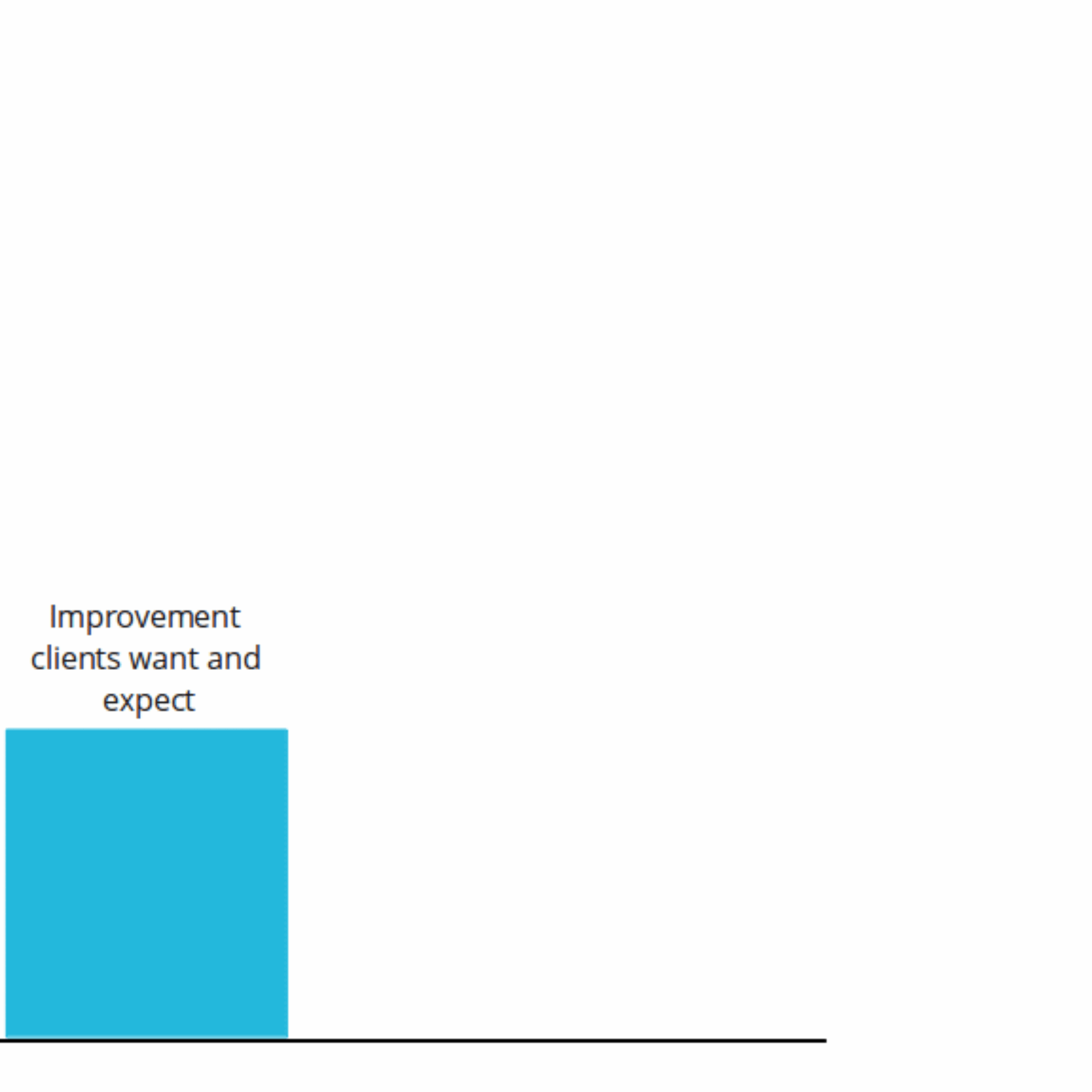
What happens when you work with a coach? Here is a trend I see with my clients. It's just my impression, not results from an independent third-party, but I'll hold myself accountable by asking my clients to review the post to see if I accurately represented them. What clients get coaching for My clients come with a variety of issues they want to improve, nearly all of them professional---wanting to develop leadership or entrepreneurial skills, problems with their manager, lacking meaning from their work, wanting to switch fields, etc. Comparing with peers sets expectations for what they'll get from coaching. I think of their expectations graphically, which I loosely illustrate here. What my clients get from coaching at first Coaching involves them more actively than…

0 Comments

Op/Ed Fridays: military leadership and conscientious objection

I read this commencement speech on leadership given by a military man at the University of Texas at Austin. As much as I found the speech inspiring, I couldn't help but think the following and post it at Hacker News. Here is the full discussion there on the speech, which, as you'll see, contained some controversy. It sounds like an impressive speech. I understand people share his values. The bravest and most meaningful action I saw from a military person was a college roommate who had returned from active duty as a Marine in the Gulf War. I don't know if his training was as intense as a SEAL's but he saw active duty and looked long and hard at his actions and those of…

0 Comments

Four ways coaching helps

Four reasons, among others, coaching helps, whether you're Michael Jordan, fresh out of school and first making life decisions for yourself, or some place in between: A mirror: The one person you can't see from another person's perspective is yourself, yet you are the one you wish you could see the most. If you lead others, they react to your behavior they see, not what you think or want them to react to, which is most of what you observe of yourself. An effective coach tells you what everyone else sees but you don't. Accountability: When something you want to do ends up harder or takes longer than you expect, you can more easily relax your standards and finish less than to work harder or…

0 Comments

Hard work is never easy. You can love hard work.

Why do people not get this? If something takes hard work, only hard work will attain it. And hard work is hard. Sure, some work is easy, but some things take hard work. I talk about how much I enjoy doing burpees. More precisely, I like doing them in principle, I like the effects they have on my physical condition and motivation skills, and I like just having finished a set. Before I start every set, I don't want to do them. They're hard. Really hard. While I'm doing them, my body motivates me to stop. I have to work hard physically to do them and mentally to keep going. That's hard work. Sure it's for only a few minutes a day so I'm not…

0 Comments

What to say when an organization is considering hiring you

The context: an organization is considering hiring you, maybe as an employee, maybe as a consultant or freelancer, maybe just to collaborate. The challenge: if you read my blog, you don't just want a job where you punch a clock. You want to contribute meaningfully, meaning your vision extends beyond the immediate task they're thinking about. The conflict: if you don't talk about your vision, you don't know how well you fit at the organization. You don't want to join based on a misunderstanding and then find you want to leave soon. But if you do share your vision, they might consider you overqualified, not focused enough for the job they want done, or a risk to conflict with existing plans and people. The solution:…

0 Comments

Why I avoid lecturing when I lead and teach

Science Magazine's daily web page, reported research that "Lectures Aren't Just Boring, They're Ineffective, Too, Study Finds." I agree, especially after decades of learning from teachers lecturing on me compared with inquiry-driven project-based learning, which I wrote about recently, "Inquiry-driven project-based learning rocks!," and have been learning about for years. I shared the following on an online discussion about that article. I used inquiry-driven project-based learning -- https://joshuaspodek.com/inquiry-driven-project-based-learnin... -- to teach my class at NYU-Poly, "Entrepreneurial Marketing and Sales" this semester. Experiential learning rocks! I never want to go back to lecturing. I had only recently learned of the teaching style, mainly from a K-12 education conference where I was the only university professor, which KQED reported on -- http://blogs.kqed.org/mindshift/2014/03/can-university-profe.... After the conference I redid…

1 Comment

I helped a little old lady cross the street

The scene: Greenwich Village, crossing the street to my building. A windy rainy spring afternoon. I'm hurrying home. As I cross the street I see a woman, maybe in her 70s, about five feet tall, struggling with an umbrella in the wind. She also has a cane and a handbag. Three things, two hands, and wind. I stop, turn around and ask her if she could use a hand. Yes, she says. She just wants to get across the street. So I take her umbrella in my left hand and offer my right arm for her to hold. She shuffled around her bag and cane to her right hand and took my arm with her left. We waited for the light and crossed. When we…

7 Comments

See Joshua Spodek lead a leadership workshop at General Assembly, May 22

If you don't know about General Assembly, you should. They started as an incubator for startups in New York, then found offering courses met a larger demand and transformed into an educational institution and community, now all over the country, Europe, and Asia. Very exciting, dynamic, entrepreneurial, and building community. They've invited me to speak on leadership next Thursday in Manhattan, 6:30-8pm. Below is the announcement of the event. I look forward to seeing you there. Entrepreneur Meetup Joshua Spodek Adjunct Professor at NYU About This Event You're invited! Join us for a special entrepreneur meetup & workshop. The topic will be "How to lead people so they want you to lead them again". During this workshop consisting of discussion, exercises, and Q&A, Joshua Spodek…

0 Comments

How to follow up a referral

Referrals help get things done. After all, your network is often your greatest asset in any project and referrals increase your network. More valuable than a single referral is someone who will refer you again---a goose that lays golden eggs. You want people like that in your world and you want them motivated to refer you more. Sometimes people get so enamored with a new connection they forget what created the connection: the person who referred them. If they gave you one great referral, they probably have more. My policy for following up a referral: Make the person who referred me glad to have referred me. When someone refers you, they risk that you might hurt their relationship. Until they know their contact appreciates meeting…

0 Comments

See my webinar at Ivy Exec at 12:30pm today!

[EDIT: Download the presentation slides here] Ivy Exec is an online set of resources for building community among those serious about getting ahead. Among other resources, they host webinars on workplace skills. Today at 12:30 I'll host a webinar on the core of my seminar "How to Lead People So They Want You to Lead Them Again," principally the central exercise. As with all my seminars, I will give a core skill you can use immediately and a simple explanation of why it works so you can make it your own. This exercise helps you motivate people deeply to contribute as much as they can and to thank you for enabling them to work so hard. They'll describe your leadership as liberating. Click here to…

0 Comments

My semester at NYU

With the semester finishing, I wanted to record what I did at NYU. My main goal was to help my students and give to the NYU community. Taught Entrepreneurial Marketing and Sales. One of main roles NYU hired me for was to teach this elective for graduate students. Several students said it was the best course they took at NYU and I was their best instructor. More than half said they are continuing the projects they started in the course after it ends. At least one got a job offer from a class exercise. At least one got an internship in the process. Coached and mentored graduate students, as part of Management of Technology program. This was my other main role NYU hired me for.…

0 Comments

Want to influence someone? Understand them and make them feel understood

Want to influence someone? Yes, you do. Your spouse, girlfriend, boyfriend, manager, people you manage, kids, ... anyone you communicate with. I don't care if you think they're perfect. You want to influence them. Why else do you communicate with someone except to influence them? (A question worth thinking about!) If you want to know your potential to influence them, ask yourself how well you understand them. If you don't understand someone, you can't influence them well. You can guide them and create incentives for them with various carrots and sticks to get them to do what you want, but you don't get at their motivations they haven't shared with you. Not knowing people's motivations is mostly what not understanding them means. If you want…

0 Comments

“Want to eat more” and “tastes good” aren’t the same feeling

Do you notice the difference between something tasting good and something making you want to eat more of it? If you want to eat healthy, you'll care about the difference because companies that make junk food know the difference and use it to manipulate you. You end up spending money on unhealthy things that are profitable to them and you lose control of your eating habits. Most of the time these feelings overlap: a mango tastes good and when you have some you usually want more. But they don't always overlap. Eat too much mango and while the taste will stay the same so it will taste just as good, you won't want to eat more of it. See the difference? I find most fruit…

0 Comments

Personal development: take your training wheels off after you learn to ride

I coach and work with a lot of people with MBAs. A lot of people without too. They keep doing what school taught them for social and business interactions. It kills me. School teaches you the bare fundamentals. It gives you training wheels to practice new behaviors, if it even does that, since it mostly just teaches abstract skills. Training wheels are great for getting you on a bicycle but if you want to ride, you have to take them off. When you ride a bike without training wheels you have to tilt it to be stable even though that position wouldn't be stable if the bike were still. You can't do that if you keep the training wheels off. Likewise, when you work with…

0 Comments

People who succeeded despite adversity, part 4

[This post is part of a series on people who succeed despite adversity. If you don't see a Table of Contents to the left, click here to view the series, where you'll get more value than reading just this post.] More inspiration, continuing my series on people who succeeded adversity... Person Achievement Adversity Auguste Rodin Generally considered the progenitor of modern sculpture, he is recognized as the most important sculptor of the modern era. He freed sculpture from the repetition of traditional patterns, providing the foundation for greater experimentation in the 20th century. His popularity is ascribed to his emotion-laden representations of ordinary men and women — to his ability to find the beauty and pathos in the human animal. His most popular works, such as…

0 Comments

Treat people like machines and they’ll work like crappy machines. Treat them like people and they’ll do their best

Years ago computers were people. That is, before we built digital computers to compute for us, businesses and projects needing long computations would hire people to compute for them. They called those people computers. During World War II, the Manhattan Project to build the first atomic bomb had lots of hard calculations. The scientists would simplify them to simple but numerous and arduous basic calculations of addition, subtraction, and so on, which they'd give to teams of computers---often women since men were fighting. As you might expect, they made mistakes, being human, after all. Scientists had to estimate errors based on the calculations' complexity. The project's war-based secrecy kept the computers from knowing what they were working on. Imagine such a job: adding and multiplying…

0 Comments

When and how polarizing helps

When you hear about polarization in leadership, what do you think? You think polarization is a problem, right? Do you think about how polarized politics silence moderate voices? ... about how leaders treating everything as black and white miss the nuances of your thoughts? ... about how you've learned to see things with nuance, which you consider more mature? ... about polarizing leaders whose divisiveness you don't like? Maybe not everyone thinks that way, but I just searched on polarization and leadership and every post (that wasn't about sunglasses) described polarization in leadership as a problem to overcome. I tend to think that way. My life improved as I learned to understand nuances in issues and not treat issues or people as right or wrong,…

0 Comments

People who succeeded despite adversity: the series

I can't stand people who give up too easily. I never want to be like them. People who overcome adversity to achieve greatness inspire me. They remind me I don't need external advantages to succeed. If they could do it, so can I. So when I hear of someone's greatness coming despite adversity, I take note of them and when I can I record them here---their names, achievements, and the adversity they overcame. They include some of the greatest achievers you can think of and their adversities far outweigh those of nearly everyone reading this page, meaning anything you might complain about, someone handled something bigger and succeeded beyond what you probably have. Click the Table of Contents to see the entries, feel inspired, and…

0 Comments

End of content

No more pages to load