Leadership


How to get job offers without looking for a job

I got my last job without looking for it. Two of my NYU students followed my advice and got job offers without looking for them. It takes a while to explain how to do it, but once someone gets it, they get it. The technique doesn't get you job offers non-stop or on a predictable schedule, but it will lead you to get offers for jobs you like. Having the expectation helps when you have a job you don't like. Instead of wasting resources on looking for a new job, knowing one will come from this technique will make your current job more palatable. You can still search for other jobs while doing this technique. It will probably augment that search. The core of the…

0 Comments

See the April 21 NYU panel on Women in Entrepreneurship video

Here is the video from April 21st's panel on women in entrepreneurship I posted about before. From the April 21, 2014 event announcement: Bridge at Wagner, NYU Special Interest Housing and NYU Entrepreneur's Network Present Women in Entrepreneurship Many entrepreneurs face similar challenges: getting the first round of funding, launching while in school, or avoiding burnout in the lean years before your business becomes profitable. While we often look for ways to solve these challenges, we rarely talk about how this experience is different for women. Join NYU Entrepreneurship Special Interest Housing, the NYU Entrepreneur's Network and Bridge at Wagner for a lively discussion with leading women entrepreneurs. From just out of school to established startups and investors, these speakers will draw on their diverse…

0 Comments

How to make relationships last

What makes relationships last? What makes one person loyal to another? These questions apply to personal relationships as well as business. They happened to come up with a client on business and as we talked about it, the conversation covered more personal relationships, the way you like business conversations to become. In my experience, relationships may start with things like common interests, shared histories, common friends, and other things that attract someone to another, but what makes a relationship start doesn't necessarily make it endure. The same holds in business, where relationships may start based with the ability to make money together, as much as personally, where physical attraction may start things off. But most of us know that eventually you can't stand some people…

0 Comments

Leadership, adulthood, responsibility, empathy, and consequences to one’s actions

A client asked about what he considered a moral decision. As you know, leading others means people will follow you. You have to decide what you take responsibility for when people around you don't have your experience or skills. I gave the following advice, which my client said led him to reflect deeply on how he and everyone involved would feel---what I call with empathy and compassion. I treat all adults as adults who make choices for themselves. I don't find it healthy to take responsibility for any other adult's choices, nor to regard any other adult's choices as anything but theirs. I don't know what agreement any other two people made between themselves or expectations they have. I only presume everyone makes what they…

0 Comments

How to win over a stadium of 20,000 angry African soccer fans

"You! You cannot do that here!" A voice in a stadium of 20,000 people told my friend he was breaking a rule. The man yelling pointed at my friend and sounded angry. A man next to the first saw what he was pointing at---my friend---and pointed and yelled he couldn't do that here too. Then another, another, and another. Soon a whole section was pointing at him, angrily yelling at him he couldn't do what he was doing. But what was he doing? My friend didn't understand what was going on. He and two of his friends had decided to go to their first soccer game in Dar es Salaam, where they'd lived for the better part of a year. They had barely walked in…

0 Comments

Binary thinking that ruins your life

Another coach emailed me about my posts about the bankrupt concepts of introversion and extroversion, which he described as That binary thinking you highlight is the bane of my working life! People who escape from that kind of thinking discover great freedom in their thoughts, which they usually use to create better lifestyles, relationships, thoughts, beliefs, and emotions. They also find great tools to lead others. People who don't escape from it tell you how wrong you are in thinking you don't have to be so miserable. Bizarre thinking, but that's what happens when you're stuck thinking that way. Anyway, I realized some of what I wrote could help people who read me regularly here. I know what you mean about binary thinking. At some…

0 Comments

The problem with business books, and a solution

Why do you read business books? I've asked people that question lately and a common theme runs through their answers. They read business books to improve their performance. They read them to get this feeling, like when the read something like that mastery takes ten thousand hours of dedicated effort: "That's a useful piece of information [or technique]. Now that I know it I can use it to get ahead." That is, they read business books to change their behavior. Some people clarify that they read them to improve skills so they can lead others better, meaning to change others' behavior, but they do that by changing their behavior first, so they have the same goal. It's not the only reason, but I found it common.…

0 Comments

How to make your next performance review shine

Do you have performance reviews at work? Do you want your next one to look great? A great way to make that happen is to get your manager or whoever rates you on your side, motivating them to evaluate you more positively. How do you do that? First, recognize they benefit from you doing well. The better their reports do, the better they do. Even if you think your manager is out to get you, they still feel this motivation. It already exists. I've seen reports on people who tell me their bosses hated them, yet the reports still showed the boss showing some interest in their development. You don't have to create it. So how do you get them to act on it? Next time…

0 Comments

Explore and expand your boundaries and those of people you lead

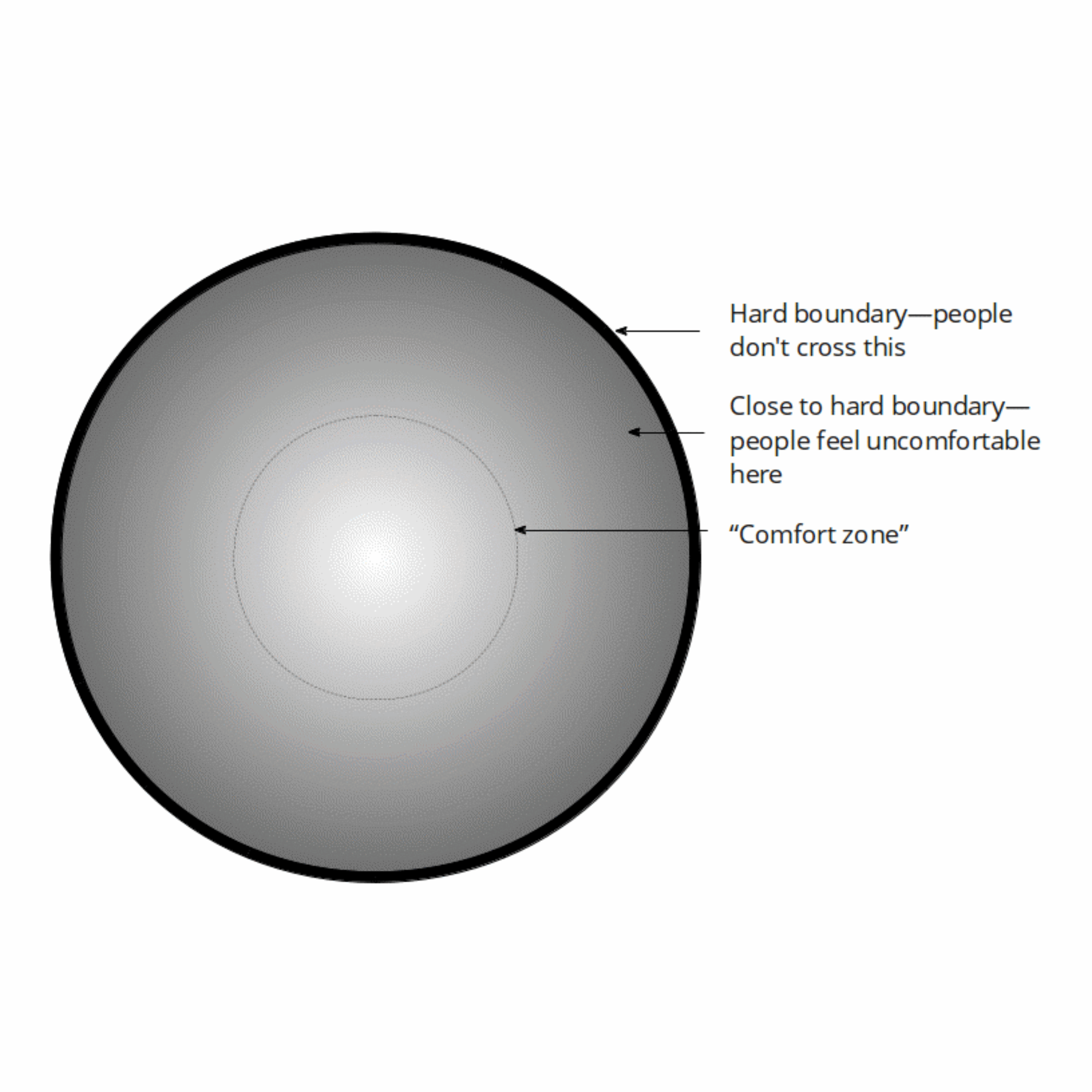
Exploring and expanding your boundaries and horizons creates freedom and comfort in your life. Doing so can be challenging---"getting out of your comfort zone," as many put it---but creates results and emotional reward. The more experience you have in it, the more you can lead others to do the same, creating freedom and comfort in their lives. I'll illustrate the process with some simple diagrams. I find visualizing would-be complex things simplifies them and makes them easier to do. First, consider a diagram of the things you do, as illustrated below. As I've illustrated it, the light-colored center is where things are easier---that is, the center of your comfort zone, bounded by the dashed line. I colored it darker farther from the center, indicating that…

2 Comments

See my Harvard talk on not dwelling on decisions

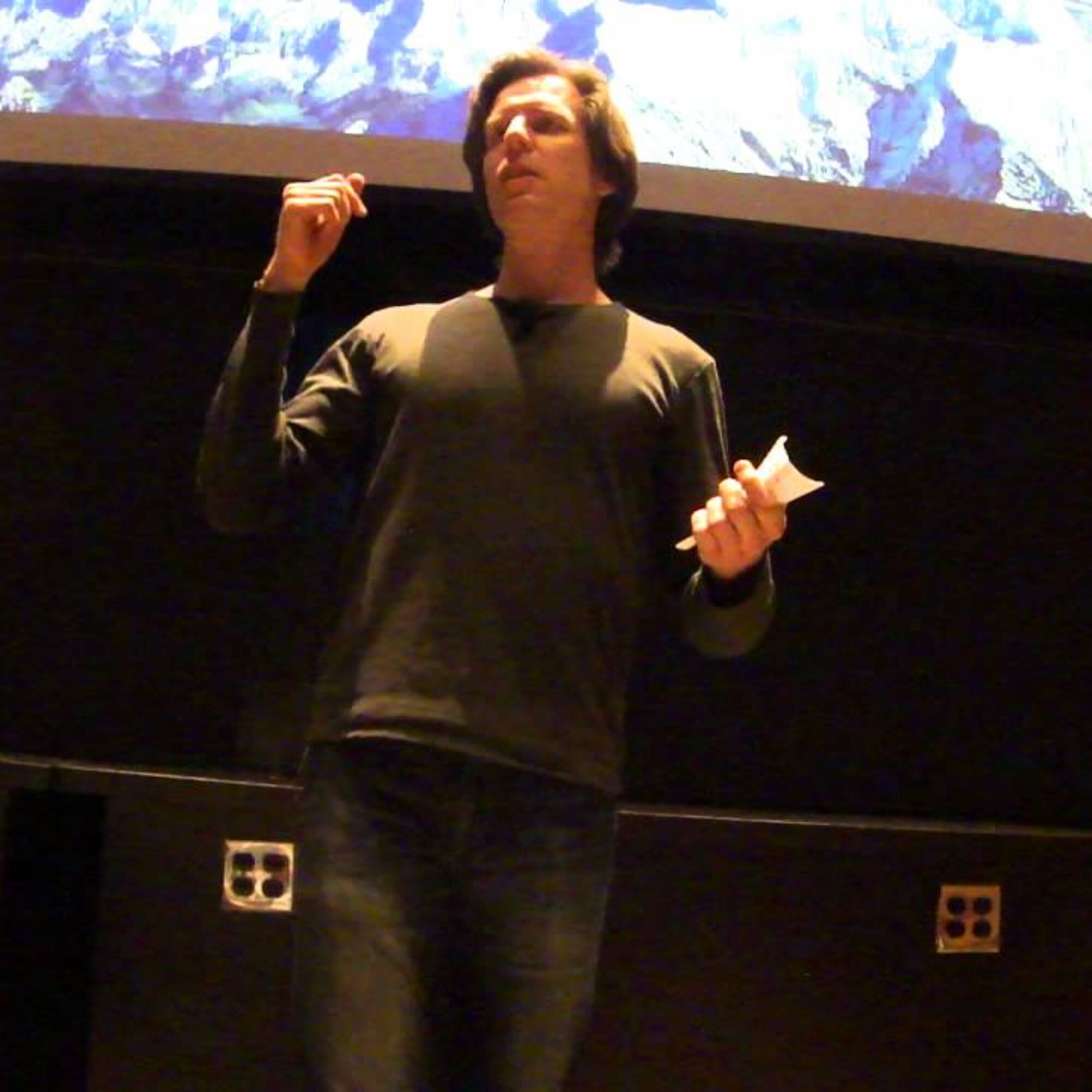
Here's my talk at Harvard. I talked about not dwelling on deciding, when appropriate, and instead moving toward execution, a major part of leadership. Someone in the front row recorded it with a small camera, so I hope the casualness of the recording doesn't distract. https://www.youtube.com/watch?v=6-FviiKulBk

2 Comments

The value of low-level instruction

Between coaching, teaching, and seminars, I give a lot of exercises. People want to make big transitions and grow. Time and again, the biggest advances come from very low-level instruction---things like say these words in this order to this person, avoid using these words, or take only cold showers for a month. The lower the level of instruction, the higher the level of insight my clients and students get. That used to seem ironic to me until I got how experiential learning works (and lecturing doesn't). If you lead or manage people, I'm sure you'll see the relevance of keeping instruction low-level to your interactions with your reports. If you start with low-level instruction, people know what to do, like learning to play scales on…

0 Comments

Seminar testimonial: tears of gratitude from leading an employee so they want you to lead them again

An attendee from March's seminar "How to Lead People So They Want You to Lead Them Again", wrote about her experience using the techniques of the seminar at her job---that is, leading employees so they want you to lead them again. She also has an MBA from Columbia and works at a prestigious firm. Josh, you may be interested to know I took out an Associate who will be working on my team and used your technique. She teared up, saying, no one ever asked her these questions and she is so grateful that I am taking an approach to her work based on what she likes and wants to do. It also revealed some of her deep fears and it was quite profound. Invaluable,…

1 Comment

See an NYU panel on Women in Entrepreneurship April 21!

As the faculty advisor to NYU's special interest housing floor for entrepreneurship, I asked my residents what types of events they wanted. Among the responses was that they wanted exposure to women in entrepreneurship. I asked a friend if she would speak. She responded with several women who could speak. The entrepreneur in me seeing high demand and high supply knew there was opportunity in bringing them together. I followed up by speaking to some NYU student groups that all showed interest in building the event, community formed, and meeting the initial student request evolved into a major panel of women in entrepreneurship April 21 at NYU-Wagner at the Puck Building. The speakers and moderators are all successful women in entrepreneurship. It will be an…

0 Comments

If they’re talking, you’re winning

An old saying in sales says that If they're talking, you're winning. The phrase says a lot and suggests effective strategies. (You have to forget how it implies the interaction has a winner and loser). How do you get someone talking a lot? The best way I know is to get them talking about what matters to them. What matters to them is what motivates them. If you're talking, you'll have a hard time getting them to share or understanding their needs.

0 Comments

Bored at work? Looking for a new job means you’re probably looking in the wrong place

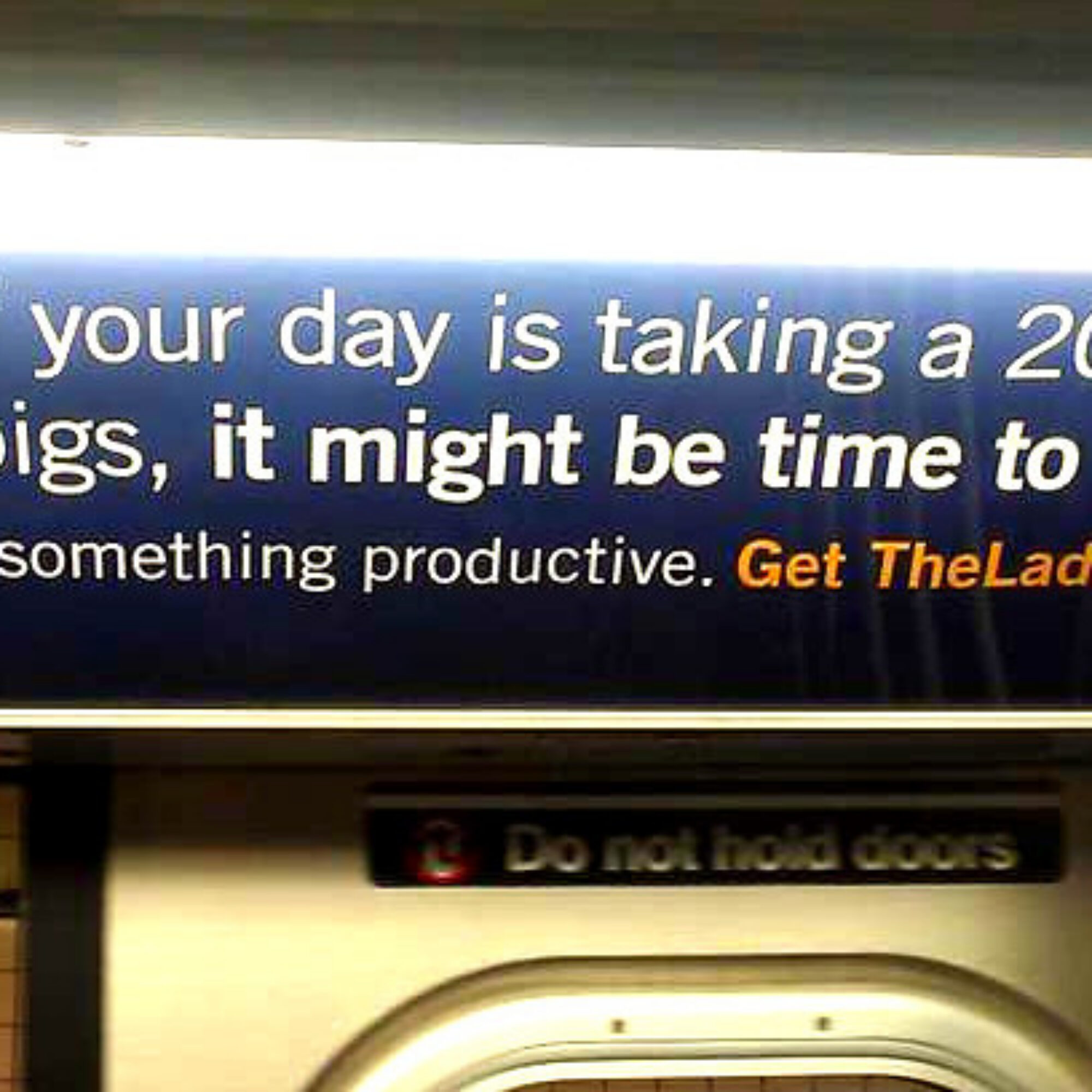
I saw this ad in the subway and confess it made me smile, but if you want to like your job more, I suggest it gives counterproductive advice and focuses your attention in the wrong place. The door was opening and I didn't have time to get all the text, but it reads If the best part of your day is taking a 20-minute break to throw birds at pigs, it might be time to find a new job. Clever and timely, but it focuses on your job as the source for your job satisfaction. A web site that benefits from you searching for jobs wants you to look at the job as the source of your satisfaction, but you can do better. Boredom and…

0 Comments

Op/Ed Fridays: Bloomberg’s most infamous legacy?

This week I came across the news that The city of New York has agreed to pay $18m to settle a civil rights claim from hundreds of protesters who were rounded up and detained in overcrowded and dirty conditions after they rallied outside the 2004 Republican National Convention. For those who don't remember, the 2004 Republican National Convention in New York City, shortly after the Iraq Invasion, faced protests by hundreds of thousands of people---a sizable portion of American voters, certainly of voters near New York. According to the article, "Hundreds of thousands marched against Bush and the war in one of the largest expressions of public dissent against a president." But New York City was led by a Republican Mayor, Governor, President, and police…

0 Comments

A testimonial from “How to Lead People So They Want You to Lead Them Again”

Following up yesterday's testimonial, an attendee, Amy, from my seminar a week and a half ago, wrote about applying what she learned days after the seminar and seeing results. I really enjoyed the seminar - it gave me a great deal to think about (and apply). In fact, I am hiring an Associate for my team and approaching it entirely differently based on your framework. The interview I had recently in which I spent more of the time understanding his deep motivations was more enjoyable that interviews I've had in the past. Probing in the way you suggest - and getting closer to understanding the person - was a terrific starting point to seeing whether we would be well suited to working together and whether…

0 Comments

A testimonial from Harvard talk on Friday

An attendee, David, at Friday's talk at Harvard with GiveGetWin, spoke to me for a while before the event began and then after. He wrote the following Joshua's talk at Harvard was wonderful. He masterfully dissected the process of decision-making and the influence it has on people's lives. In less than 15 minutes he left me with enough to think about for a week. After the event we ended up speaking more and Joshua's knowledge of etymology and his precise and knowledgeable demeanor blew me away. I couldn't help sharing it. The audience asked lots of questions and shared personal issues. I can't wait for next year's tour to speak with the group again.

1 Comment

How meditation helps

Interruptions distract you from your thoughts. How often you get interrupted determines how complex and developed your thoughts can be. If someone interrupts you every five seconds it's hard to think thoughts that take more than five minutes to develop. Someone interrupting you every ten minutes would let you develop more complex, longer-term thoughts. If you can only think short-term, you can only see short-term trends in your life, you can only address simple problems, and you can only see things superficially. You react more than you lead. Short-term thinking limits your ability to make sense of life, to plan long-term, to think deeply, and to create patterns. You live and react. You don't create your life. Meditating for twenty minutes lets longer thoughts develop.…

2 Comments

See Joshua Spodek at Harvard today!

Monday I spoke at NYU-Stern with a group called GiveGetWin on Leadership and Entrepreneurship. Judging by the number of attendees who asked questions and went out for drinks with us after, the event went great and they invited me to speak at Harvard today. Sorry for the last-minute notice, but I wasn't sure I could make it work in my schedule. The details are that I'll talk about leadership and entrepreneurship along with a few other speakers involved in GiveGetWin's tour. We'll speak at the Harvard Science Center starting at 6:30pm in Auditorium D. If you're around Boston or Cambridge, please come. Entrance is free and Monday's event went great. If you contact me to tell me to look for you, all the better. A…

0 Comments

How to Choose

Most of your identity is the culmination of the choices you've made. You choose all day every day. Many people have trouble making big choices, for some choosing is even debilitating. If you do, you're holding yourself back from living your life more fully. I used to dwell on decisions too. In my second year of business school I saw many of my classmates dwelling on choices between different job offers, unable to choose between Goldman and McKinsey. While most of the world would imagine it simple to choose among six-figure offers from prestigious firms, people choose for their reasons, not anyone else's. Still, I saw their self-fabricated conundrums as pathetic and pitiful. They seemed like an emotional version of physical compulsive hoarders---people who save…

2 Comments

Motivating Rejections — The Series

I've learned to view what many people call failure as experience and lack of failure as not experimenting enough. If you avoid failure absolutely, I would guess I would sound annoying to me. Not that I'm special in this way. The entrepreneurial community celebrates failure, at least among those who learn from it despite the pain. So do sports and plenty of other places. A major part of my failures come in the form of rejections. Like many of my failures that turned into great learning experiences that led to great successes, many rejections renewed passions in me to succeed at whatever some gatekeeper blocked me from. You can learn to make rejections motivate you. Click here to read the series.

0 Comments

Emotional skills versus emotional intelligence

Who hasn't heard about the value of emotional intelligence? Everybody talks about how mere regular intelligence only gets you so far before you hit limits. It makes sense. Emotions affect your relationships and for projects bigger than you can finish alone, which means nearly everything, you need to use relationships. Deeper than how well you lead others, emotions help you understand yourself, so understanding emotions helps you improve your life too. As much value as emotional intelligence has, I feel the concept misses something important. The more I learn about and coach people on emotions, the more value I see not in just knowing about emotions, but in the skills to use them, which means action, behavior, communication, and practice, all of which come through…

0 Comments

Instead of connecting to a higher purpose, try a more personal purpose

You've heard the advice that to inspire and motivate people, it helps to connect their task to a higher purpose, right? It seems to make sense. Martin Luther King motivated people to painful and degrading but effective tasks with calls to justice based on concepts of freedom and religion. Patton motivated people to risk their lives with appeals to saving the country. What if you have a team without such lofty goals? You probably aren't leading people to free people from oppression or save your country from Nazis. How do higher purposes help when you want the five people who report to you to finish a presentation by Friday? If you want your team to finish a report by Friday, appealing to motherhood and apple…

0 Comments

The Origins of “How to Lead People So They Want You to Lead Them Again”

When you think about influencing or motivating someone in business, what tools do you think of using? How do you think of motivating people? Did you think of incentive-based tools based in authority, like bonuses, promotions, raises, increasing or decreasing someone's responsibilities, threat of firing, threat of demotion, and the like? In my experience, most people do. Why not? We're used to seeing them used. They work fairly predictably---almost nobody prefers no raise to a raise. We're used to experiencing others use on them on us. We can easily see them used and measure their effects. These tools fail you when you want to motivate someone you don't have authority over. Who might you want to lead that you don't have authority over? If the…

0 Comments

End of content

No more pages to load