Perception


How a dramatically different model can change everything: addiction

I wrote before about "One of the best books I've read on the environment, our impact on it, and what we can do about it" as well as two videos based on it. The book is called Sustainable Energy — Without the Hot Air. There several books in the "Without Hot Air" series. If the others are half as informative and useful as the environment one, I'll love them. An article recommended by their publisher I read yesterday, The Likely Cause of Addiction Has Been Discovered, and It Is Not What You Think, suggested I will like their book, Drugs Without The Hot Air, as much. I can't comment on the book since I haven't read it, but the article illustrates one of the major…

0 Comments

Your degree isn’t a restriction

"I'm stuck because I can't find a job in pharmacology." "I don't like law but what else can I do?" "I wish I could get out of engineering." I can't tell you how many times I've heard people talk this way. People about to graduate looking for jobs and people in the workforce alike. Even people from elite universities. They believe you have to make a living in what they got their degree. I felt that way once. When I was finishing my PhD in physics I thought I had to go into academia, industry, or finance, which is where most people with physics PhDs went. If I hadn't felt that way, this myopia---thinking more training gives you fewer choices---would baffle me. People's mental constraints…

0 Comments

How to enjoy every day, with no bullshit

As far as enjoying life goes, I see it like running a marathon, though you can substitute any challenging activity with a specific goal. You might think the glory is in the step across the finish line, but every step is as important as every other, be it the first step, number 1,234, number 2,341, or whatever. Realizing every step is as important as any other lets you enjoy every step as much as the one across the goal line, even the painful ones around miles twenty to twenty-five when you're most tired but still far from end. In fact, marathon training expands your boundaries of challenge, dedication, and pain. Learning to enjoy those experiences makes enjoying less painful ones easier. The next step is…

0 Comments

Philosophy off the rails and how to get back on

The following is half-baked, but I'd rather share half-baked thoughts, take criticism, possibly embarrass myself, and learn than keep quiet and not learn. Since before Plato a major goal of philosophy has been to figure out how to make yourself happy, to understand what makes for a good life, and how to make one's life a good life. I haven't met many philosophers, but they don't seem the happiest people. The field seems to have become academic and intellectual---in other words, on the mind and thinking over the body and behaving. It seems to me that anyone pursuing philosophy that hasn't figured out how to make yourself happy has lost sight of the main goal. I find a lot of philosophy intriguing, fascinating, enlightening, and…

5 Comments

Non-judgmental Ethics Sunday: Should I Lend Money to My Irresponsible Parents?

Continuing my series of alternative responses to the New York Times column, The Ethicists, looking at the consequences of one's actions instead of imposing values on others, here is my take on today's post, "Should I Lend Money to My Irresponsible Parents?" My parents mismanaged their finances to the point of bankruptcy several years ago and are now in pretty significant mortgage arrears. Foreclosure looms. They seem to believe that $4,000 or $5,000 will "catch them up." Their monthly fixed-retirement income of over $6,000 should be fine to sustain them, but not with their uncontrolled spending and inability to face reality. The timing of this is about to coincide with a moderately expensive kitchen remodel at our own house. Should we write them a check…

0 Comments

How my indulgences have become more indulgent

I gave a talk yesterday I'd prepared months for. I think it went well. I'll hear from the organizers soon and get their impressions. On my way home I felt like I wanted to indulge in something to reward the effort in preparation. Years ago indulging meant ice cream, pretzels, chips, beer, wine, or something like that. Over the years, I've come to see those foods as less rewarding. They create pleasurable sensations but I don't find mere pleasure as rewarding as I used Instead I sliced an apple and ate it with peanut butter. Simple and unsweetened as it is, I enjoyed it more than I would have enjoyed any of the old indulgences. I've come to see chips, pretzels, and foods with fiber…

2 Comments

What is fundamental?

What can you not define in terms of other things? I can define most things in terms of more fundamental things. Music is a bunch of sounds. Trees are kinds of plants. Books are assemblies of paper with writing on them. Some things feel harder to define in terms of more fundamental things. How do you define the color blue in terms of something more fundamental? You can describe photons and wavelengths, but I don't think they capture the sensory perception. Same with sour, hot, or other perceptions. What about emotions? How can you define happiness? Maybe the issue is that some things are non-verbal concepts, implying they aren't more fundamental, just that we can't describe them. Colors and feelings seem to happen in another…

0 Comments

Look forward as you learn to lead yourself

Over and over as I work with clients and students, as they learn to understand and manage their emotions, when they look back at their lives they see choices and actions they now know they would do differently. They notice relationships they mishandled, choices they would make differently, behavior that led them astray, and so on. I do the same thing. I think of relationships I lost, school and job choices I missed, maturity I lacked, and so on. I know how to do things better now. Sometimes I lament with my clients and students, empathizing with them at what we lost and missed. But then I stop. You can't change the past. I point out how looking back after you improve some behavior or…

0 Comments

How would you behave during the Cuban Missile Crisis?

The movie Thirteen Days illustrated how John Kennedy and the executive branch handled the Cuban Missile Crisis. I recommend the movie (and Robert Kennedy's book of the same name). I edited some parts to highlight one aspect of the situation---the personal perspectives and behavior of people closest to the President. While you won't likely face decisions with stakes as high as nuclear war, you'll face similar structures of conflict. Many people have written about conflict management, decision-making, avoiding groupthink, and other angles. https://joshuaspodek.com/wp-content/uploads/2015/03/thirteen_days_clips.ogv I recommend watching these clips actively by trying to put yourself in the places of each character, imagine the exact thoughts that might be going through their heads, the motivations they'd feel to react, how they'd have to manage themselves to behave…

0 Comments

You don’t have to overcome adversity to achieve a lot

I keep hearing people say that if only they lived in a time of greater crisis, they could have achieved more. They look at George Washington, Abraham Lincoln, Martin Luther King, Gandhi, and other famous leaders and notice they emerged through crises. I read a Harvard Business Review article implying people have to go through crucibles to develop as leaders. You don't have to overcome adversity to achieve a lot. You don't need an outside challenge. I think people don't look for counterexamples because it's easier to blame external factors than to take responsibility for realizing your dreams. It's like a version of my touchstone strategy: Don't look for blame but improve things to the extent you can. There are plenty of role models if…

0 Comments

A reader comments on why people associate empathy with feeling down

A couple weeks ago I wrote a post, "Why do people always associate empathy with feeling down?" on a topic I've explored before---that people associate empathy with feelings people don't like. I find that association counterproductive and missing many feelings people can share. A reader wrote about how the post reminded her of her childhood. What she wrote echoed something I hear at my seminars when I talk about others trying to help them when the person trying to help doesn't understand them and ends up not helping, which is people's parents. She grew up wary of empathizing with people, in part because of similar associations. She learned to associate empathy with other people roping you into their problems, something I don't think anyone would…

0 Comments

Emotions and sharp knives

Yesterday I compared emotions to fire and pain---things we don't enjoy feeling but we can use to improve our lives if we know how to use them. Calling them negative leads us to suppress and deny them---the opposite of self-awareness---which takes away our ability to improve our lives. I call that counterproductive. I think sharp knives might make a more helpful analogy. I might call sharp knives negative if I handled them clumsily and threw them around carelessly. You don't let children handle sharp knives because they don't have the dexterity to use them without hurting themselves. Chefs train to use them effectively. The more you train, the sharper you want your knives. No skilled cook wants a dull knife. Calling a dull knife bad…

0 Comments

Calling emotions negative is like calling fire or pain negative

People describe anger, depression, and many other emotions as negative or bad, as if they don't want them in their lives. They're useful! They motivate you to change what causes them, generally things in your environments and beliefs. What causes them is conflict between yourself and others, internal conflict, and wanting the world to change, mainly. As long as conflict exists, which is forever since no one shares your interests exactly, you're going to feel those emotions. If you think of them as negative or bad, you're making an inevitable part of life worse for yourself. It's like you're kicking yourself when you're down. People seem to get that pain, although they don't enjoy feeling it, helps their lives. They find the source of the…

0 Comments

People don’t behave consistently with the world, your version of it, or what they say about it

People don't always behave consistently with the world. Why not? Because they don't see the world perfectly, they see it filtered through their beliefs and the limitations of their perception. They certainly don't always behave consistently with your perception of the world. Why not? Because their beliefs and yours differ. They don't even behave consistently with what they say their beliefs are. Why not? Because when people communicate, they mix their beliefs with how they want to influence you. They do, however, always behave consistently with their belief. If you want to know the difference between your beliefs and someone else's compare your behaviors. I guess you have to take into account your different abilities, but even that gets filtered through beliefs. If you want…

0 Comments

Insightful BBC video on mental models, beliefs, and how your mind perceives

If you like my perspective on being human and our place in the world, I recommend watching the videos of James Burke from BBC. They're mostly available on YouTube. I first saw his series Connections and The Day The Universe Changed in the 80s on PBS. I watch them again periodically. His work is some of the few I find I like watching repeats as much as the original. I just found his show from 1980, The Real Thing, which I'd never heard of before. I loved it. It gave an entertaining, scientific, illustrative background to my Model. The video quality is terrible, which I view as a testament to the quality of his work since you still get the full meaning. It's six half-hour…

0 Comments

Instead of “How does winter affect your mood,” how about “How do you create the emotion you want?”

It's snowing heavily and people are complaining the winter has been long. It's as if people know the saying Grant me the serenity to accept the things I cannot change, the courage to change the things I can, and the wisdom to know the difference. and then forget it when things they can't change happen. What's the point of knowing the words of phrases but not learning how to do them? The point of reading Man's Search For Meaning or other stories of people overcoming tremendous obstacles is not to keep feeling horrible when things don't go my way. The point is to know that when the outside world doesn't go my way, I know that since other people overcame greater challenges, I can too!…

0 Comments

Why do people always associate empathy with feeling down?

Yet again, another paper on empathy only associates it with emotions we don't like---sadness, loss, etc. Almost never laughter, joy, fun, and feelings we like. I wrote about this before and how catastrophically it impedes people from developing what is otherwise an important tool for relationships, leadership, your own health, and more. I'm not even going to mention the paper because it's so counterproductive. Wikipedia describes empathy like: discerning what another person is thinking or feeling; and making less distinct the differences between the self and the other. It also is the ability to feel and share another person's emotions. Some believe that empathy involves the ability to match another's emotions... Nothing in there suggests you can only empathize about gloom and doom. Yet look…

0 Comments

What do you think when someone acts not how you want

How do you think when someone acts unexpectedly, especially a way you don't like. That result is usually the opposite of leadership, where you want people behaving the way you lead them. I used to think something like They did something wrong. Why would they do that?!? What's their problem? I know how to do this right. I have to change them. What should I do to get them to behave how I want? I still think that way sometimes, I guess out of habit more than effectiveness because I don't find it effective at influencing people to follow my lead. It annoys the other person and it frustrates me. Now I think something more like I didn't expect that result. I don't like that…

0 Comments

How different beliefs lead people with identical motivational systems to behave differently

We all have similar emotional systems, so why do we behave so differently? I illustrated below how people who have identical drives and emotional systems with only different beliefs can end up behaving differently yet feeling internally the same. I plan to represent it more graphically and pretty, but this is where I am so far. It shows that internally, we all think and react similarly. Only a slight difference in beliefs can lead to, say fighting in the case of patriotism, even though internally, people feel the same and are following the same emotional system. If you have questions or comments about the table, please let me know. They will help me improve the model, which is only half-baked now.   Example (internal) Same/different…

0 Comments

Some “The most helpful self-awareness exercise” comments

I responded to some questions from someone practicing "The most effective self-awareness exercise I know" and thought the answers would help others doing the exercise. Or might help motivate people to try it if they haven't. I think it makes sense without the question. I'll check with the person practicing about including the question. Here's what I wrote: The feeling that you don't have anything to write or that your mind is empty is common. I suggest that your mind is never blank. I've never experienced anyone's mind but mine, so I can't say for sure, but everyone I've worked with who has said things like that has later found that they were thinking things that were so like fish-in-water, they couldn't recognize the thoughts.…

0 Comments

I take responsibility for my emotions and no other adults’

I believe that whatever someone does, ultimately I am responsible for my emotions. Someone can try to make me feel unhappy, but they can't unless I let them. I didn't always feel that way. I used to blame others for how I felt. Maybe someone more skilled at making me feel bad could outdo my skills at resilience, but it hasn't happened yet, at least not since I started developing emotional skills. And if it did happen, I would use the occasion to motivate myself to improve my skills. Many people blame others for their emotions. I don't find that perspective helps. Like other cases of blaming, the belief underlying blaming, however palliative, undermines your ability to learn emotional skills to improve your life. I…

2 Comments

Why party

It's the new year. Many of us partied last night. A few nights ago I came back from a friend's place. A few longtime friends got together to visit. The me of years ago would have found the event boring since we mostly just talked, ate, and drank wine. But, like most of the people in my life, everybody cared about their project, hobbies, etc and we talked about what we cared about, talking to understand each other and to try to help each other. When I was younger, I went to social events to try to find excitement. I went with people I didn't know that well. I thought the more people, flashing lights, popular DJs, and so on the more fun we'd have.…

0 Comments

The Model: the series

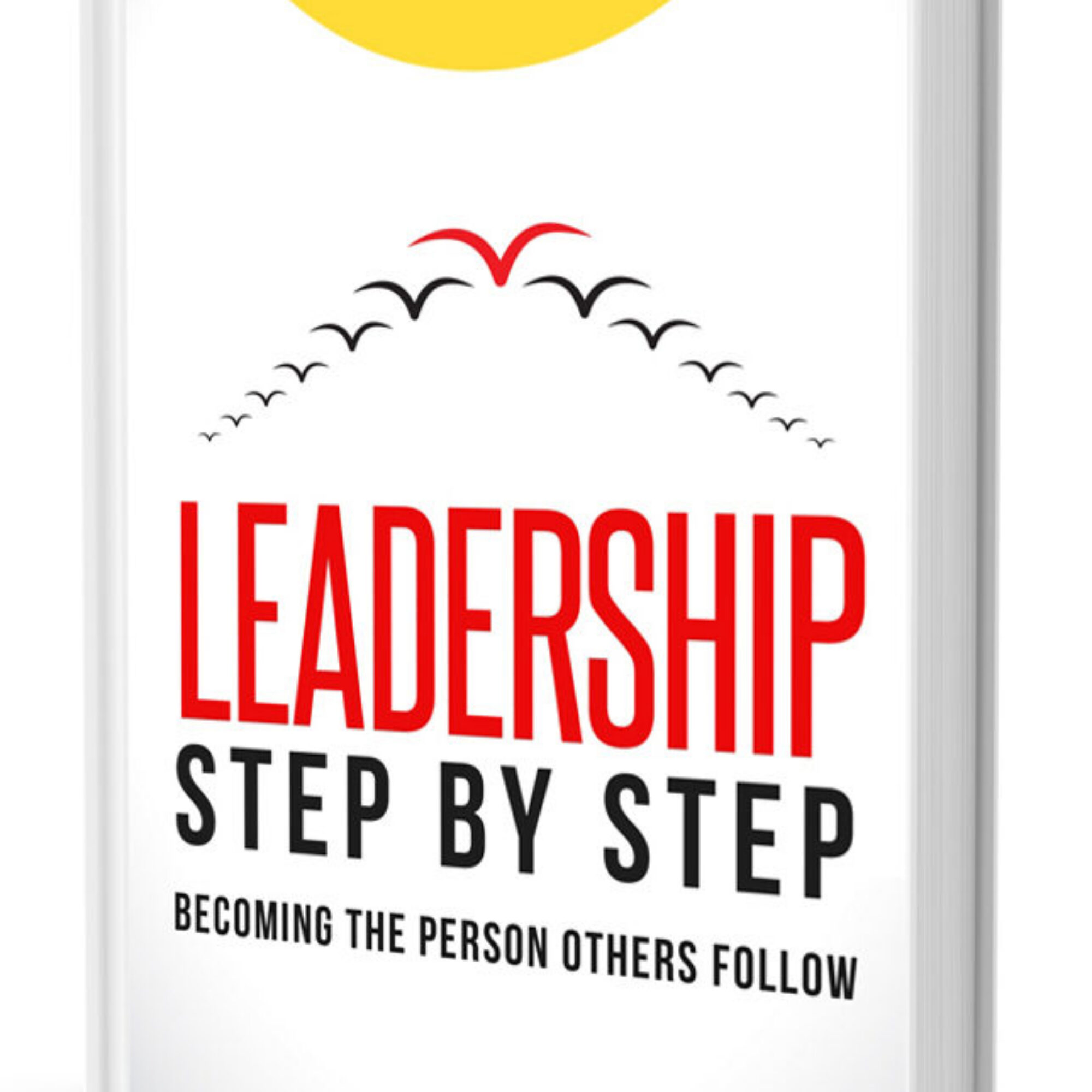
[EDIT: I covered this series in more depth in Leadership Step by Step, so I recommend the book, but the core is here. I use The Model as a part of my life, basically daily.] Here is The Model---my model for the human emotional system designed for use in leadership, self-awareness, and general purpose professional and personal development---in series form. Click in the table of contents to the left for each page. I find this Model the most effective and valuable foundation for understanding yourself and others and improving your life. Why? A model's value comes not from its accuracy but how well it serves its purpose, which improves from effective filtering of information. Street maps, for example, are more useful for driving for having less detail…

0 Comments

Less dessert, more appreciation

I think dessert is standard after dinner in the U.S., especially at restaurants. Even if you don't eat one, they give you the dessert menu to think about it. I read that only a generation ago dessert tended to be just a piece of fruit, and not every day. Less dessert seems like less sweets, but more overall appreciation of sweetness. That is, I think eating less or fewer sweets will improve my life---less physical pleasure but more emotional reward. That's my style. So I decided to make dessert the occasional piece of fruit, avoiding things with sugar added. Maybe a glass of wine or scotch sometimes. Once you stop having sugar, you don't sweat the decision. You just don't eat it. Much easier. I…

0 Comments

Almost everyone I spend time with loves what they do

I feel like many people consider malaise or frustration the dominant mood of today's world. Maybe that's just the media because outrage gets page views and sells ads, not fulfillment or contentment. Of the people I spend time with, nearly everyone loves what they do. As far as I can tell, they feel generally good. Not always, of course, but overall. A lot of people complain a lot. Maybe they outnumber the people who don't. The point of this post is that I choose whom I spend time with. I have limited time and resources and find the best way to live is to choose to spend time with people who find ways to enjoy life. Some might say that's a sign of some privileged…

0 Comments

End of content

No more pages to load