Choose easier by visualizing choices, part 2

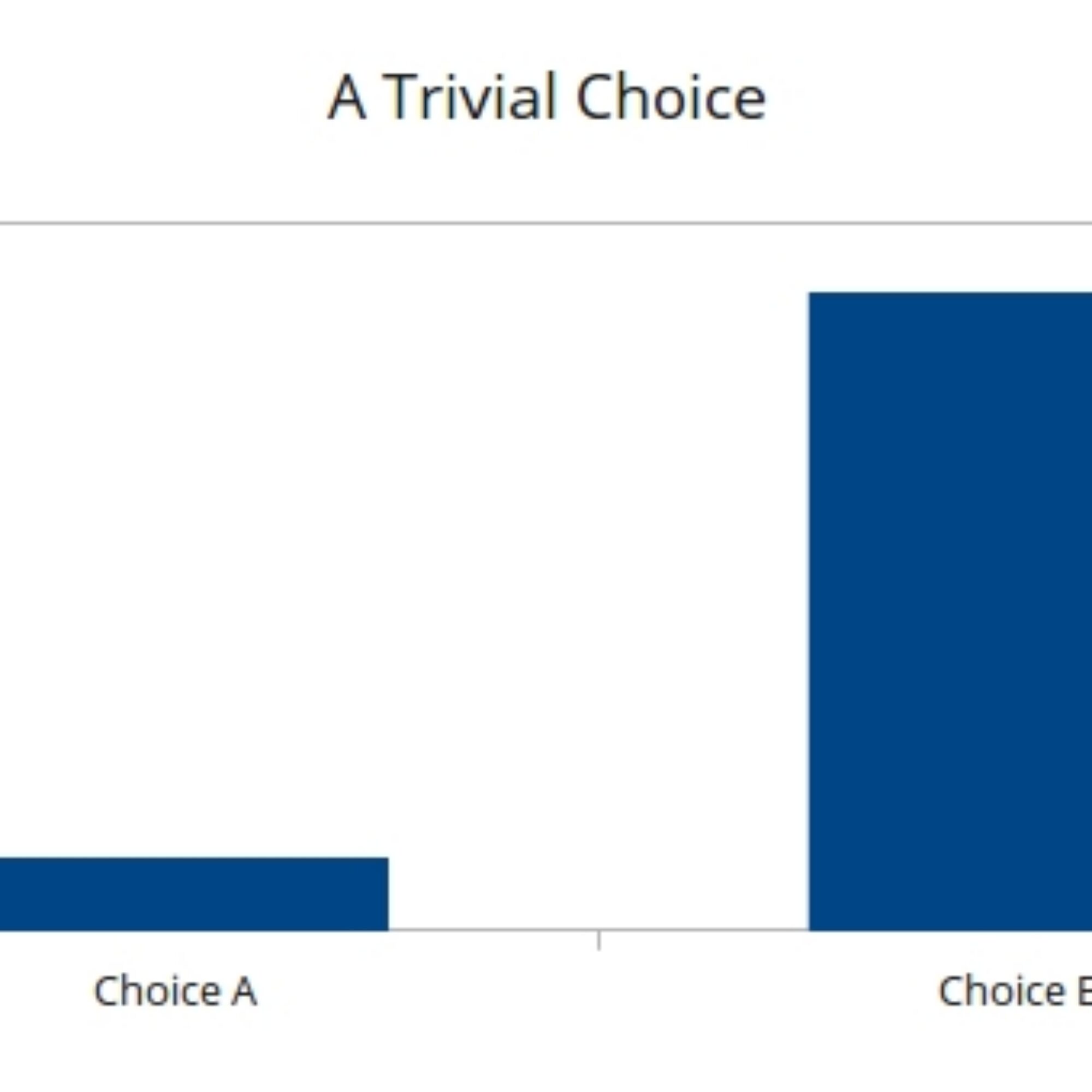
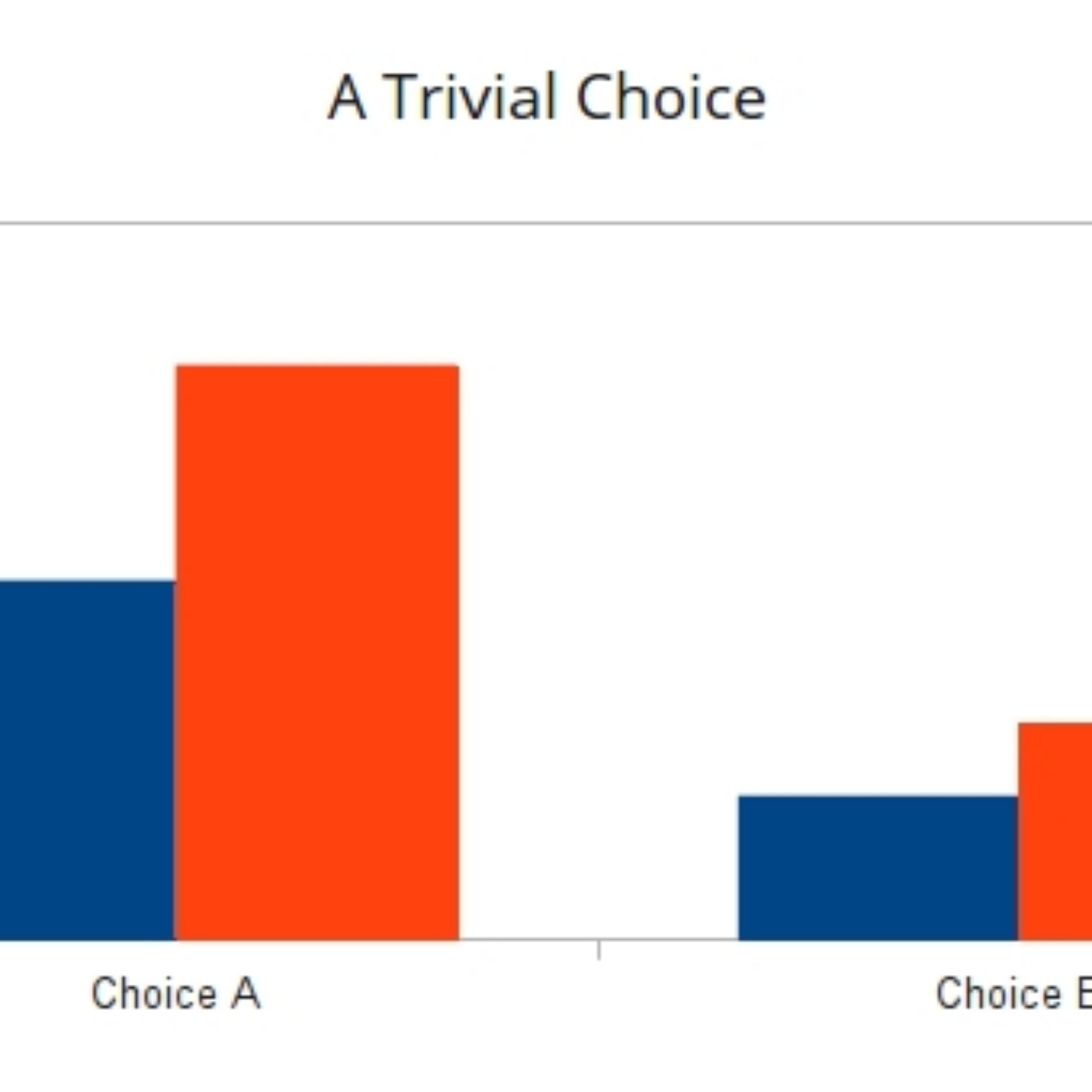
Multiple factors Not all options have only one decision factor. Many have two or more. For example, do you prefer a job with higher pay but lower chance of promotion or higher chance of promotion but lower pay? You have to look case-by-case, but let's see how our visual representation shows them. A trivial choice The easiest two-part case is when you prefer both parts of an option to both parts of the other. Consider if you had to choose between A high-paying job with great benefits and A low-paying job with no benefits. This graph illustrates such a choice. All else being equal, you'd choose the first option. Again, this illustration is simple, but we're just seeing how the visual model works with two…

0 Comments

Choose easier by visualizing choices, part I

You know choosing can be hard. I've written about it before from a few angles: Why are decisions hard? Difficult life decision? Here’s how to look at it. How to decide among close options A belief to choose without getting mired in indecision Today I'll give you a tool to simplify decision-making more with a way of visualizing the challenge that shows the hard part. Partly I'm following up on how I visualized emotions in the Passion-Attraction Model, which I recommend looking at if you like this post. I find modeling difficult things with visual representations makes them easier. I'll start simple and build complexity, leading to the more helpful insight as I develop the ideas. A trivial choice Not all choices are hard. If…

0 Comments

You have to say no to a lot of good things to have a great life

I say these words to myself daily or nearly so. I've posted them before and I expect I will again. They bear repeating and deserve a post to themselves. You have to say no to a lot of good things to have a great life. I don't see declining an opportunity as giving it up so much as giving myself more time and resources for something I value more. I didn't start this way. I used to say yes to too many things, not realizing that time doing one thing meant time not doing another. I still do, but less than before. The same with relationships -- just other parts of your life that you use your resources for. What does "too many things" mean?…

0 Comments

How do you decide when your decision affects other people? Involve them in the process.

People struggle over decisions they know will affect others. Their concern for other people sounds important for building and maintaining relationships. Their anxiety, on the other hand, suggests they're missing its source. If they don't know what causes their anxiety, they'll miss the otherwise obvious solution. For some reason, people in challenging situations often withdraw from others. Typical such situations include Figuring out how to tell a client news they don't want to hear You're going to finish late and someone depends on you You broke or lost something someone else values and needs You don't know how to solve a problem Figuring out what restaurant or movie to go to with someone You can come up with plenty of situations They're anxious because they'll…

0 Comments

Do you decide rationally or emotionally?

One of this blog's central focuses is self-awareness because I think to improve your life and relationships the best starting point is to know where you are. Know thyself, in other words. Today I want to give you a way to learn deeply about how your mind works. I didn't come up with the idea, but it intrigues me and I'd love to learn other people's thoughts. I think people generally believe they have a voluntary, rational part of their brain that, among its roles, makes decisions. If you're choosing what to order off a restaurant menu, for example, you probably do something like this: You read your options, eliminate those you don't want, consider the ones you do, work through some core decision-making process,…

0 Comments

When to get rid of things

I've written before about getting rid of stuff and the challenges of getting rid of things you once wanted to keep. You feel like if you once valued something and now don't you'll lose something important. Maybe you should examine your values and how they changed. Slow-going apartment renovations have led me to live with a lot of my stuff in storage following living in Shanghai without much stuff for most of a year. I've enjoyed the freedom of living with less. While I got rid of a lot of junk when I put things into storage, I kept a lot I wasn't sure about. Choosing is hard. Now I look forward to getting things out of storage so I can get rid of a…

0 Comments

A question to ask all the time: “Is this making my life better”

I watch my share of television. I eat my share of unhealthy food. I find plenty of ways to waste my time. But I'm decreasing those things all the time. I think a lot of people decide what to do or not based on the thing or activity in question. Will that chocolate cake taste good? Will I enjoy watching that show? Do I want to go to that party? The problem with that approach is that it leads you to do things based on the qualities of that thing. Most things come your way because someone thought you'd enjoy them. They probably also benefit from your participation, so they show you it most attractively. Then you get caught following your nose, doing whatever comes…

0 Comments

A model for intuition, especially in complicated times

[This post is part of a series on “Mental models and beliefs: an exercise to identify yours.” If you don’t see a Table of Contents to the left, click here to view the series, where you’ll get more value than reading just this post.] Leading in complicated times can be challenging. Many people prefer not to lead because of the risk of visible failure. Others thrive under pressure. They don't have better odds of success than others. If you can become like that, people will want you around. Even if all you can do is stay calm beyond where others lose their cool, people will want you on their team or leading it. How do you learn to stay calm and perform effectively under pressure…

0 Comments

A model to improve your environment

[This post is part of a series on “Mental models and beliefs: an exercise to identify yours.” If you don’t see a Table of Contents to the left, click here to view the series, where you’ll get more value than reading just this post.] How would you like for everything in your life to look better and for everyone to treat you better? For everything in your life to improve? Today's belief is one of the most powerful you can have, as is the strategy it leads to. People also happen to oppose it the most. When I state it simply and abstractly, they agree with it. When I apply it to them, they push back against it. You will too. If I can take…

0 Comments

A model to prioritize things

[This post is part of a series on “Mental models and beliefs: an exercise to identify yours.” If you don’t see a Table of Contents to the left, click here to view the series, where you’ll get more value than reading just this post.] Do you have too much to do? Are you so busy you never seem to have time for the important things? Today's belief is quick to describe, but among the most important in this series. A model for prioritizing things: You have to say no to a lot of good things to have a great life This model explains itself. I confess I don't follow it as well as I'd like to, but at least I know it. It bears repeating:…

0 Comments

A belief to choose without getting mired in indecision

[This post is part of a series on “Mental models and beliefs: an exercise to identify yours.” If you don’t see a Table of Contents to the left, click here to view the series, where you’ll get more value than reading just this post.] Do you ever get stuck unable to choose among options? Do you wish you could just go with something and be done with the choice? I found a couple useful models to help me choose. Model for choosing 1: my skiing model for choosing I wrote a few times about this model. Here's the most comprehensive post on it. Briefly, the model is this: when you ski a slope, the path forks, and you can't tell which path you'd enjoy more,…

0 Comments

How to decide among close options

I've written before about why deciding is hard. One of my most helpful (to me) insights was that the difficulty in deciding is not figuring out which option I like, but working up the nerve to get rid of the options I don't choose. Our language illustrates this challenge -- the -cide in decide is the same -cide as in pesticide, insecticide, etc. It means to kill, reiterating that the challenge of choosing is "killing" the options you don't choose. I see people caught in patterns of not choosing, sometimes looking for more evidence, sometimes analyzing away, sometimes just scared to "kill off" options. Their reasons are endless. The result is the same. How to decide among close options The situation If you strongly preferred…

0 Comments

Common objection 9: I’m too busy. I have other priorities.

[This post is part of a series on internal objections and blocks and how to overcome them. If you don't see a Table of Contents to the left, click here to view the series, where you'll get more value than reading just this post.] Objection Some people want to take on new projects or change something in their lives but they have too many other things. I'm too busy. I have too many other priorities. For this obstacle, I'll mention that your other priorities may be more important. Only you know. Example Examples are too numerous to mention. We all have things in our lives -- work, friends, family, hobbies, etc -- that take time, energy, attention, connections, and other resources. If you aren't completely…

0 Comments

Variety, choice, the manufactured illusion of it, and creating more yourself

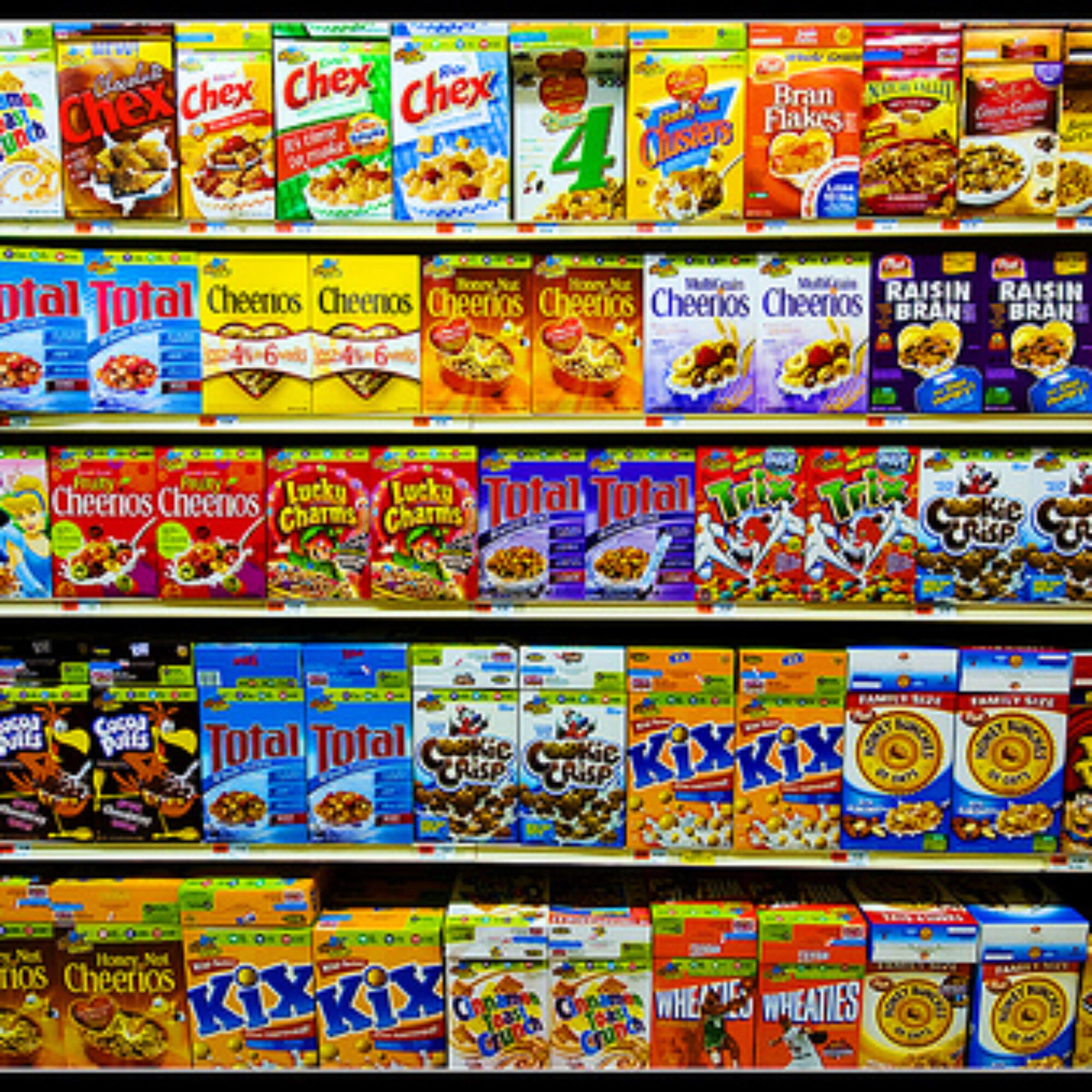
Can we all agree processed food is unhealthy garbage? Yet people eat tons of it. I want to talk about one reason. And that reason is not just about cereal. It applies to many places in life. When I was a kid I loved boxed cereal. Didn't everyone grow up eating it? And as a kid you loved sugar cereals. Why not? Before some age you hardly knew or cared about nutrition. Over the years I learned about nutrition, especially how removing everything from a grain but the sugar ruins it. Then adding more sugar ruins it more. Adding some vitamins negligibly changes it nutritionally; it just helps market it to people who don't know better. This knowledge changed my experience walking down the supermarket…

2 Comments

Non-attachment, caring, and motivation, part 2

A couple months ago I posted a question on awareness, non-attachment, caring, and motivation I'd been thinking about for a decade or so, unable to answer it in all that time. I came up with an answer I like, that satisfies my curiosity, and helps me understand more. First let me remind you of the question. It came when I was learning in college about Buddhism. I learned the story that Siddharta Gautama, the guy who we know as the Buddha, became enlightened while meditating under a tree. I don't like fuzzy terms like "enlightened," but I understand it means, among other things, he no longer had attachment to anything. Contemplating the concept of non-attachment satisfied me in some ways but confused me in others.…

0 Comments

If we return to the same happiness level eventually, why do we prefer winning lotteries to becoming quadriplegic?

(Working on a presentation, I had to rewrite a post from a couple months ago. It's very similar to the original, but I thought there'd be value in posting a slightly different way of putting it. I hope that value is more important than the repetition). If you read this blog you know about the researchers who asked people who won huge lotteries and people who just had accidents leading to becoming quadriplegic how happy they were. The lottery winners were happier. But when they asked them a year later, the difference in happiness disappeared. Everyone seemed about as happy as they had been before either event. I'm going to draw two different, more valuable conclusions than most. If we end up at the same…

2 Comments

Would you eat the cherry tomato?

Here is a deep question about values, spontaneity, risk, adventure, the best things in life, and your appetite for them. The context It begins with my mom's garden years ago when she lived in Nebraska. Now I'm not that big on tomatoes, like some people are, and less so then than now. But when I tasted the cherry tomatoes from that garden they tasted like sunshine. I couldn't believe how much flavor they had -- sweet, tangy, juicy... everything you could hope for in a piece of fruit. And with all the vines there, you could pop cherry tomatoes in your mouth all day. There were more on the vie and overnight yet more would appear. Plus she had  -- I should mention it was…

5 Comments

Spending less improves your life

Preface: I started writing this blog about how cutting personal costs (of any resource, including time, money, energy, attention, etc) improves your personal life. Rereading it I realized it overlapped so much with what leaders can do in business, I'll tag it leadership too. Translating the post into business-speak I'll leave as an exercise to the reader. You can probably do it on the fly. People who know me in person know I work very little at a job -- like a day a week, sometimes more in crunch times, which happen once a year or so. When they hear I work so little, they first ask, usually indirectly, where I make enough money to live on. I view going this direction first as a…

2 Comments

Problems at the foundation of economics

My physics training tells me economics views some things in a weird way. In physics, if your theory predicts something to happen a certain way and it happens differently, you say your theory is wrong, at least partly, and you work to improve it. Nature is always correct. You try to get your theory to predict what nature does. When economics predicts people to behave some way and they don't, economists often say the people are biased. Or acting in error or irrationally. A physicist would never say an electron was biased. It's weird when I read some economist saying someone whose behavior violates a theory made an error, was biased, or acted irrationally. From my perspective, the theory needs work. Perhaps the model's concept…

0 Comments

Difficult life decision? Here’s how to look at it.

Life is full of difficult decisions. People struggle over them, sometimes for years, even people living great lives. You probably have one or two or more. I've had my share. A couple questions people asked me recently got me to figure it out. If your questions are reasonably similar, read on. Typical life questions "Which job should I take?" "Should we become boyfriend and girlfriend?" A couple friends asked me these questions lately. You probably have similar questions. "What major should I pick," "should I get a new apartment," "what should I do for vacation," and so on. The questions affect many parts of your life for a long time, but they don't have clear answers. You've probably succeeded at enough things at life that…

0 Comments

Hopeless or worth it? When should you give up on a project going nowhere?

Discretion is the better part of valor yet quitters always lose. When do you give up on a project you love that's going nowhere and when do you give more to make it work? Both ideas make sense in different situations. I learned an answer that has worked well for me every time. Entrepreneurs face such questions all the time. Small companies often walk the line between abject failure and outstanding success. How long do you walk the line before giving up? The question arises everywhere. Do I stay in this relationship in the hopes it improves or give up? Do I keep working for this terrible boss who might get better or leave? The list goes on. You leave when you realize you can…

0 Comments

Why I stopped eating meat, part 3

Three days ago I mentioned I stopped eating meat for two categories of reasons: taste and intellectual reasons. Two days ago I covered taste. Today, intellectual reasons. First I'll mention that none of the following reasons motivate me anymore. Though I once did, I no longer find them compelling. I find their counter-arguments equally valid, or just as well, I find them equally invalid. I find talking about these reasons tends to promote arguments. As part of this series on food I'll write why I find the arguments uncompelling reasons not to eat meat (though I do find them compelling reasons to avoid factory-farmed and some other kinds of meat). From 1989 and until the past few years, my motivations for not eating meat included…

0 Comments

Why I stopped eating meat, part 2

Yesterday I mentioned I stopped eating meat for two categories of reasons: taste and intellectual reasons. Today I'll cover taste. By taste I mean not just flavor, but what one likes or not, as in musical taste. I never liked eating meat. At least I don't remember liking it, but it was a long time ago. I remember disliking eating meat. My mom would say "It's all meat!" about the fat around a steak that, no matter how much you chew, doesn't break down in your mouth. So I had to chew that stuff while it made me gag. I think my siblings all remember the phrase. So if I ever liked steak I didn't like it after that. The tendons on a drumstick eventually…

1 Comment

Why I stopped eating meat, part 1

People often ask me why I stopped eating meat. I wrote a few days ago about how often people ask in order to argue and how I find the question boring after having been asked roughly daily or so for decades. Still, I've learned to appreciate and even celebrate things I can't change so it doesn't get me down. I used to argue with people about food too so I empathize with them, though I learned to stop arguing, so I feel justified in expecting more of them. Anyway, before writing why I stopped eating meat, I'll point out most of my reasons for not eating meat now, which I'll write about later, are different than my reasons for stopping eating meat in 1989. I've…

2 Comments

Audio interview: why did I go to North Korea?

In today’s interview, my business partner, Christina Black, asked me why I chose to go to North Korea. Why I chose to go was different than what made such a positive impression on me, a pattern that happens often in my life and I bet yours. Small interface: [audio:https://joshuaspodek.com/wp-content/uploads/2011/11/why_choose_north_korea.mp3] Large interface:[videofile]https://joshuaspodek.com/wp-content/uploads/2011/11/why_choose_north_korea.mp3[/videofile]

0 Comments

End of content

No more pages to load