The heart of freedom, part 2

Yesterday I wrote about what I called the heart of freedom, stating that being able to choose your beliefs was more important than being able to change your environment. I quoted Viktor Frankl stating that being able to choose your beliefs was a freedom that could never be taken away. What does that freedom get you? "Just" feelings? Or does it get you more than that? He followed up yesterday's quote with When we are no longer able to change a situation — just think of an incurable disease such as inoperable cancer — we are challenged to change ourselves. By no means would I suggest his environment had anything desirable, but observe where this ability took him. In the midst of one of the…

0 Comments

The heart of freedom

Viktor Frankl, whom the Nazis captured and imprisoned as a slave laborer in concentration camps including Auschwitz and Dachau, perhaps best clarifies and shows that you can feel free independently of physical constraints and that feeling free gives you all the value of being free. We who lived in concentration camps can remember the men who walked through the huts comforting others, giving away their last piece of bread. They may have been few in number, but they offer sufficient proof that everything can be taken from a man but one thing: the last of the human freedoms—to choose one's attitude in any given set of circumstances, to choose one's own way. "Everything can be taken from a man but one thing: the last of…

0 Comments

There will never be a periodic table of emotions, part 2

Continuing yesterdays' post... In the examples above, the categorization schemes worked because they categorized something with an underlying structure -- the photon and its wavelength, the atom and its nucleus and electrons, natural selection and DNA, the (so far) fundamental particles and the laws governing their interactions. But not everything with patterns has an underlying structure. Let's look at anatomy, for example. As we'll see, it will reveal a lot about emotions and motivations. Notice that despite common characteristics across life, no one has created a periodic table of anatomy. Why not? Because anatomy has no underlying structure like those other categorization schemes. We know several unpredictable factors affect how a species' anatomy evolves -- for example, that species' current anatomy, its environment, and natural…

6 Comments

There will never be a periodic table of emotions, part 1

Discovering the periodic table of the elements told us wonders about chemistry and pointed the way toward understanding atoms. Figuring it out pointed the way toward tremendous understanding and improving our lives. We found similar structures that revealed underlying structure in the spectrum of light, life's family tree, the standard model of particle physics, and others. Wouldn't it be great to find such a structure for our emotions and motivations? Wouldn't we expect discovering such a structure reveal our emotional system and create tremendous progress in psychology, personal development, achievement, motivation, and well-being? Why can't we find such a structure? I think we never will. But that doesn't mean we won't make tremendous progress in those areas to improve our lives. Let's take a step…

0 Comments

Central Park: Sunday’s stunning explosion of autumn colors

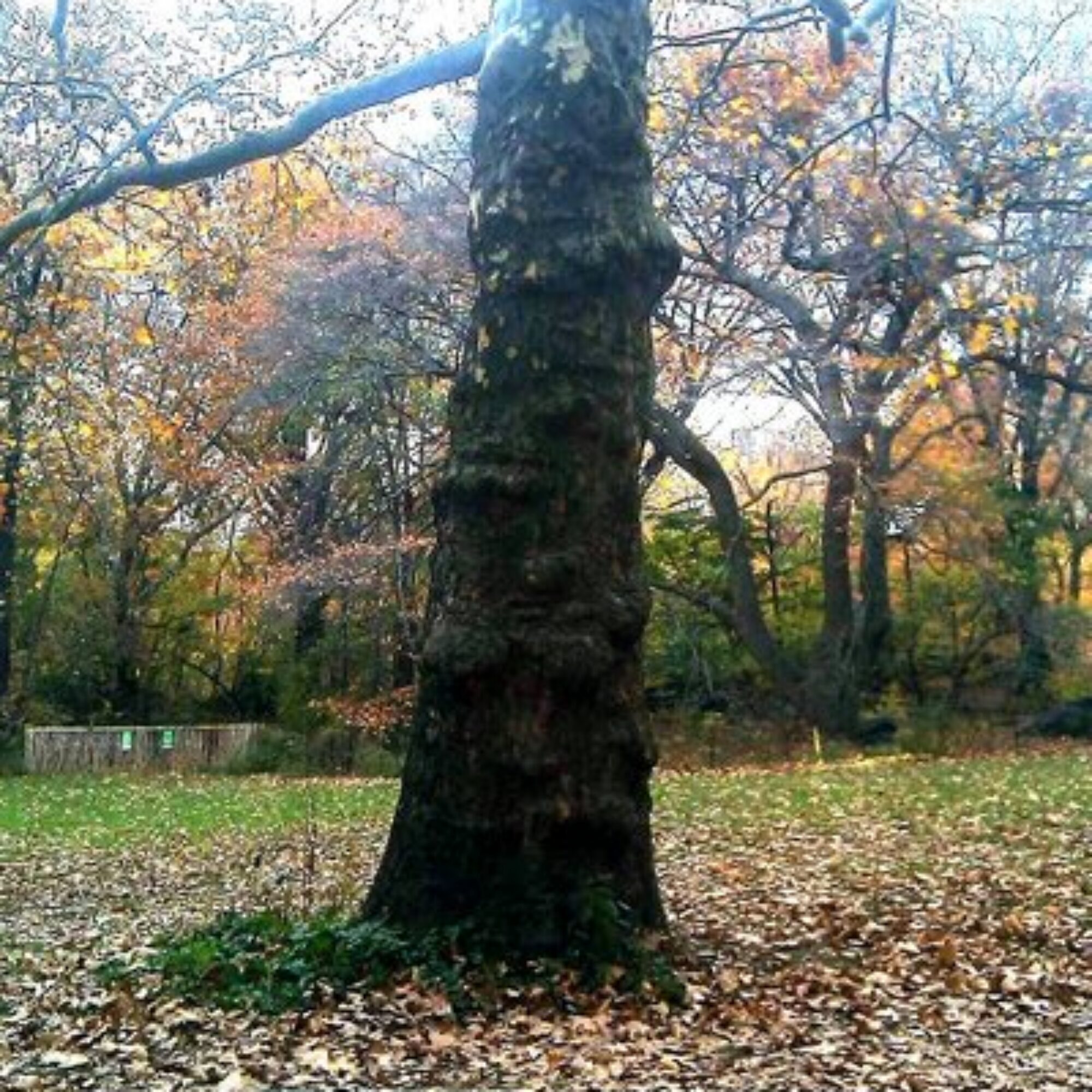
A friend asked what site to see in New York City if she could only see one. Without hesitation I said Central Park. Thinking about it later, I thought if an alien asked what site to see on Earth if he, she, or it could only see one. I might still say Central Park. I've seen beautiful days, but none more so than Sunday, when Central Park exploded with autumn colors. Unfortunately I had only my crappy cell phone camera, but I like the pictures anyway. A nice bookend to when the explosion of spring in the park across the street from me prompted me to post pictures of it. Here's a tree quote, not that relevant to Central Park, but useful in life anyway.…

0 Comments

Amartya Sen and North Korea

A friend and reader, es, commented Your posts about North Korea remind me of some parts from Amartya Sen's "Identity and Violence" and "the Idea of Justice". Over-generalization, exclusion, multiple identities, basic norms existing in each society and universal norms that should transcend them. Narrow views on North Korea can be attributed to people only focusing on one aspect of North Koreans' identities through the lens of basic norms in the first world. There may not be norms based on social contracts in North Korea but that does not necessarily deprive them of their other identities and humanity. People tend to blur this line, though. I haven't read those books of Sen, but I appreciate the ideas of his I've come across. To have one's…

1 Comment
The Method: summary of preparation (with diagram)
The Method Process, part 1

The Method: summary of preparation (with diagram)

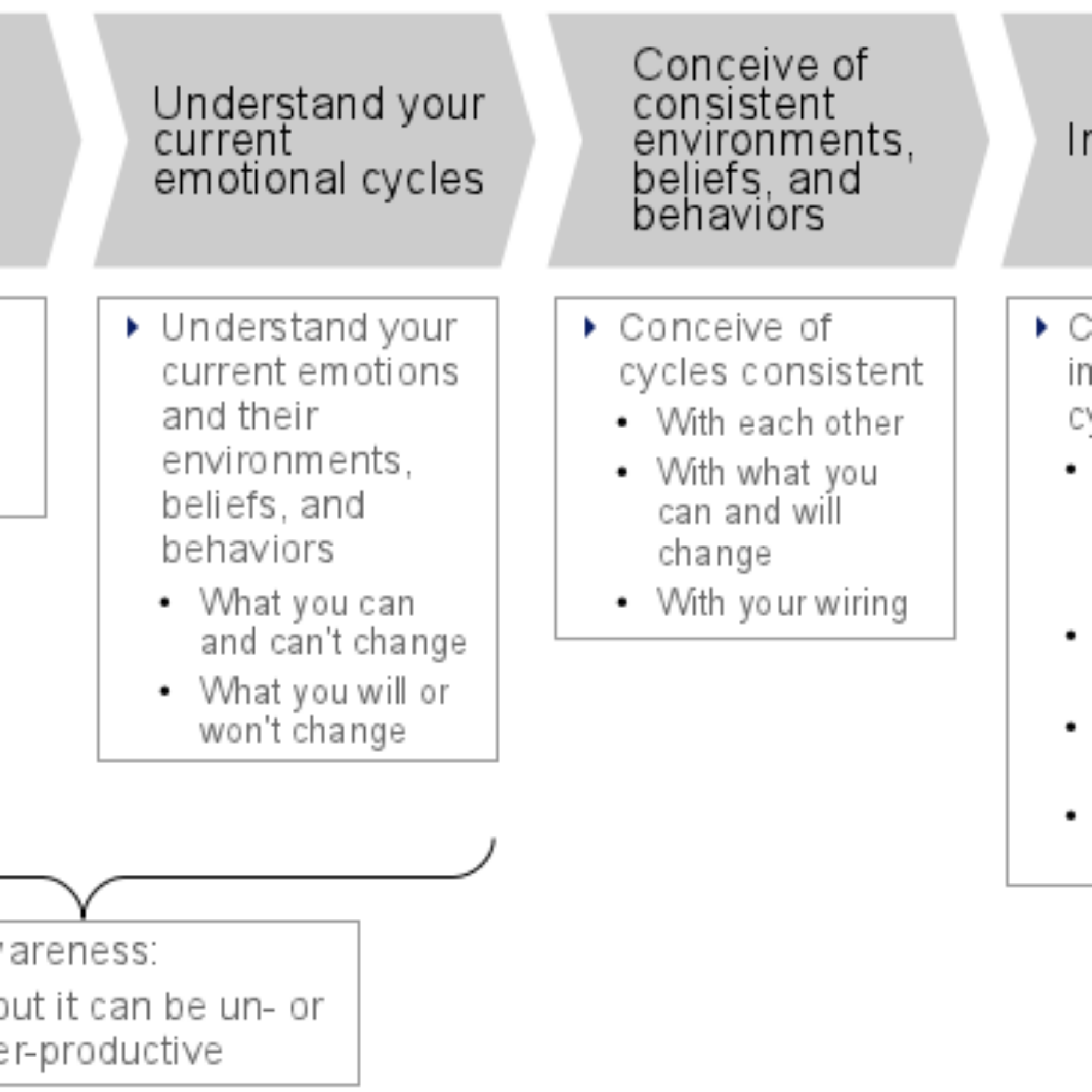
EDIT: I modified how I present the Method slightly. Please see the new version of this page and the updated series on implementing the Method. We've now covered the examples and preparation stages of how to implement the Method. Here is a diagram summarizing these steps (click it for full size) Preparation Know your emotional system Understand your current emotional cycles Awareness Conceive of consistent environments, beliefs, and behaviors Implement them Next: the stages of a transformation

0 Comments

North Korean propaganda and our advertising, part 4

Some more comments on the lack of advertising in North Korea... The country has almost no advertising. You can drive for hours without seeing any billboards. What do you see instead? Green hills, mountains, streams, lakes, people working and walking from place to place. I found the countryside beautiful, if I didn't pay attention the dilapidated buildings and roads. The country, of course, has problems, as the sources in my brief bibliography describe. My point is not to compare. Anyone can show how much better their own country is by their standards, but how much has pride led you to improve your life? Humility is harder to come by but improves your life more. That's been my experience, anyway. In the U.S. billboards block the…

0 Comments

Non-Method method 4: positive thinking

This post covers the fourth of several non-Method methods, generally expanding on non-Method method 3, "The Secret" or "Law of Attraction." People often, somewhere in the middle of presenting the Method for the first time, for example, ask if the Method is not just positive thinking. Likewise, I hear non-Americans say things like "What is it with you Americans and always wanting to feel happy all the time? Everything in life is not about happiness." I agree with the sentiment. I don't promote trying to feel happy all the time, "positive thinking," affirmations, or the like. They feel like putting lipstick on a pig. I promote you being you, being more aware of yourself and your emotions, and developing skills to act on that knowledge…

0 Comments

Non-Method method 3: “The Secret” or “Law of Attraction”

This post covers the third of several non-Method methods. People often try to improve their lives by changing only their beliefs. Typical examples of changing beliefs include believing money, friends, or health will come your way. Since the book and movie "The Secret" so popularly propagated this strategy a few years ago, I call this strategy "The Secret" or "Law of Attraction." Before delving into it, I'll point out that of all the non-Method methods I discuss, I believe changing your beliefs has the best chances of long-term success. Looking at the Model, changing your beliefs can influence how you perceive your environment, which can change your motivations, which can change your behavior, which can change your environment. Acting on no other place in the…

0 Comments

Non-Method method 1: “I need a new house/car/job/girlfriend/boyfriend/etc”

This post covers the first of several non-Method methods. People often try to improve their lives by changing or getting rid of something in their environment. By environment I don't mean trees and lakes and streams, but anything that affects your emotional system, as described in my posts on the environment as part of the Model. Typically that thing is their house, car, job, or significant other, but could be anything -- a new diet book, a new labor-saving device, a new degree, stopping seeing a friend, etc. This strategy comes from believing that something external is holding them back from a better life. Or at least that changing something external will improve it. I call the strategy "I need a new house/car/job/boyfriend/girlfriend/etc" Sometimes changing…

0 Comments

The Method: the foundation, part I

The Method is based on the Model. Keeping in mind that like any model, the Model simplifies what it represents for its purpose. The Model's purpose is to improve our lives by helping us understand our motivations, emotions, and emotional systems. As with any model, it can't be absolutely right or true. Neither can any alternative. I mention the above for context because the discussion on the Method will all adopt the perspective of the Model. Let's start our discussion on the Method with its foundations. Recall two points from our discussion on the Model. First, you can control some parts of your emotional system while others you can't. You can control you environment, beliefs, and behavior. You can't, except to a limited degree, control…

0 Comments

From the Model to the Method

I've written about the Model, my foundation for understanding value, meaning, purpose, importance, etc in life, based on understanding yourself, particularly your motivations, emotions, and emotional system. I'll now start on the Method, which covers how to implement the Model. I developed the Model on my own, without intending to create something meaningful or helpful, though I think I ended up doing so. The Method, however, came from applying the Model in life. If you learned the Model and implemented it in your life, I expect you'd come up with the Method too or something similar. By reading my Method you can save time and resources by avoiding my mistakes. I can't think of anything more valuable in life than to replace more of your…

0 Comments

The Model: summary

[I replaced this post with a series on The Model. Click here to view the series, where you'll get more value than reading just this post.] For the past six weeks I've posted on the Model, my model for human motivations and emotions. The Model forms the foundation of what I consider the best way to view and live life. For those who have been reading along, I recognize it may have been a bit dry or academic. I expect later posts will make life and living the lifestyle you want seem easy and obvious, but require referring back to the Model, in which case this summary will simplify learning it. Today's post summarizes all those posts, which will probably end up a chapter in…

2 Comments

The Model: what is freedom?

[This post is part of a series on The Model -- my model for the human emotional system designed for use in leadership, self-awareness, and general purpose professional and personal development -- which I find the most effective and valuable foundation for understanding yourself and others and improving your life. If you don't see a Table of Contents to the left, click here to view the series, where you'll get more value than reading just this post.] Ask people -- yourself! -- what they value and freedom will rank near the top. What do they mean by freedom? I bet you don't know and that this post will show you can have more. The better you know what freedom means, the more you can bring…

0 Comments

The Model: strategize, then enjoy

[This post is part of a series on The Model -- my model for the human emotional system designed for use in leadership, self-awareness, and general purpose professional and personal development -- which I find the most effective and valuable foundation for understanding yourself and others and improving your life. If you don't see a Table of Contents to the left, click here to view the series, where you'll get more value than reading just this post.] A quick followup to yesterday's post on first learning to manage your emotions, then enjoying the freedom mastery brings you. Here is some general advice for anything that requires planning. You probably already know it, but it bears repeating. First strategize, then act (and enjoy). In other words,…

0 Comments

The Model: bring about emotions you want and enjoy them, don’t dwell on them

[This post is part of a series on The Model -- my model for the human emotional system designed for use in leadership, self-awareness, and general purpose professional and personal development -- which I find the most effective and valuable foundation for understanding yourself and others and improving your life. If you don't see a Table of Contents to the left, click here to view the series, where you'll get more value than reading just this post.] Creating a lifestyle you want by bringing about the emotions you want is an art. I've written a lot about the craft -- the functional view of emotions, which is useful for bringing about emotions you want. Let's talk about the art today. The functional view may sound…

0 Comments

The Model: “What is the meaning of life” is a needlessly and counterproductively complicated question

[This post is part of a series on The Model -- my model for the human emotional system designed for use in leadership, self-awareness, and general purpose professional and personal development -- which I find the most effective and valuable foundation for understanding yourself and others and improving your life. If you don't see a Table of Contents to the left, click here to view the series, where you'll get more value than reading just this post.] The past two day's posts on meaning and complexity in emotions helps us understand the age-old, often asked but never answered question, "What is the meaning of life?". More importantly, it helps us make sense of a question that doesn't make much sense. Unfortunately, the question's complexity makes…

2 Comments

The Model: the source of all meaning, value, purpose, and importance

[This post is part of a series on The Model -- my model for the human emotional system designed for use in leadership, self-awareness, and general purpose professional and personal development -- which I find the most effective and valuable foundation for understanding yourself and others and improving your life. If you don't see a Table of Contents to the left, click here to view the series, where you'll get more value than reading just this post.] Most of our greatest life questions and quests involve meaning and values. What things are meaningful and why? What are our values? What is important and why? Looking up words like meaning, values, and importance in the dictionary or Wikipedia doesn't help. At least one dictionary online gave…

0 Comments
The Model: a single cycle is simple. Many cycles get complex.
Three interacting thoughts

The Model: a single cycle is simple. Many cycles get complex.

[This post is part of a series on The Model -- my model for the human emotional system designed for use in leadership, self-awareness, and general purpose professional and personal development -- which I find the most effective and valuable foundation for understanding yourself and others and improving your life. If you don't see a Table of Contents to the left, click here to view the series, where you'll get more value than reading just this post.] Do you consider emotions complex and bewildering? I wouldn't surprise me if you did. Many people present them that way, what I call romanticizing them. Making them seem complex and bewildering sells movie tickets, magazines, and books, unfortunately at the cost of making people misunderstand themselves. I hope…

0 Comments

The Model: what you can and can’t control

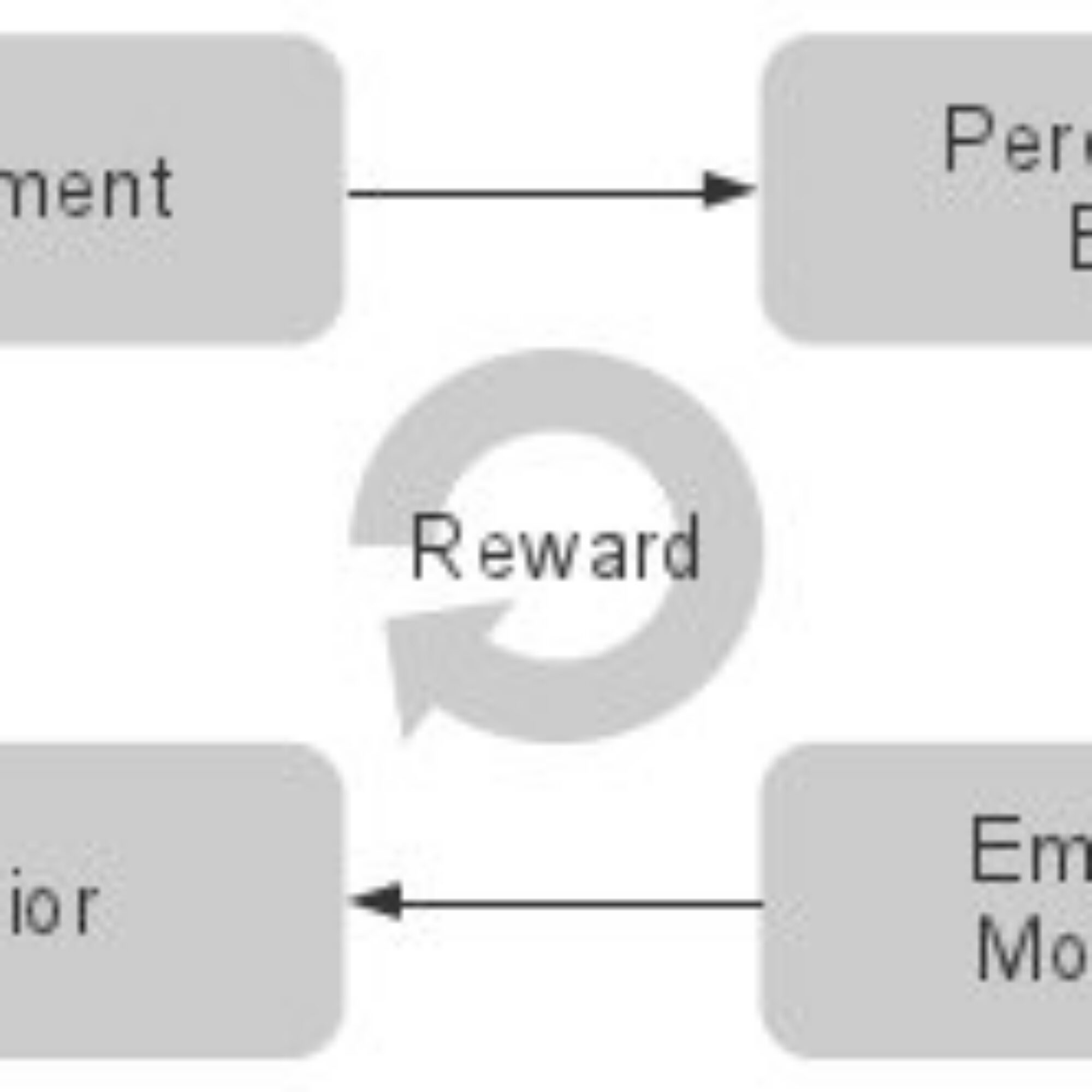
Of the five elements in the Model -- environment, beliefs, emotions, behavior, and reward -- you can voluntarily choose and act on your environment, belief, and behavior. Except to a limited degree, you can't voluntarily choose your emotions. They react to the other elements. Reward, being a special emotion, also reacts to the other elements. It may seem a cruel twist that the most important parts of the cycle are the parts we can't control. After all, the Declaration of Independence doesn't say "life, liberty and the pursuit of environment" or "... of perception" or "... of belief." It recognizes happiness -- your emotions -- as the highest value. From an evolutionary perspective, for your emotions to be involuntary makes sense. If you felt hungry,…

0 Comments

The Model: how your emotional system chooses your emotions

[This post is part of a series on The Model -- my model for the human emotional system designed for use in leadership, self-awareness, and general purpose professional and personal development -- which I find the most effective and valuable foundation for understanding yourself and others and improving your life. If you don't see a Table of Contents to the left, click here to view the series, where you'll get more value than reading just this post.] Why do you feel the emotions you do? People who think their emotions are irrational and follow no pattern can't understand why they feel the emotions they do. Worse, they make themselves unable to manage their emotions. They become easy to manipulate. Perhaps they make good consumers for…

0 Comments

The Model: more on the difference between “positive” and rewarding emotions

[This post is part of a series on The Model -- my model for the human emotional system designed for use in leadership, self-awareness, and general purpose professional and personal development -- which I find the most effective and valuable foundation for understanding yourself and others and improving your life. If you don't see a Table of Contents to the left, click here to view the series, where you'll get more value than reading just this post.] People usually say they want to feel positive emotions. I've already discussed how calling emotions positive doesn't help. They may feel good, but even ones that feel bad are useful. We have them for a reason. Treating them functionally helps you manage them better. The following examples illustrate…

0 Comments

The Model: what are awareness, self-awareness, and emotional intelligence?

[This post is part of a series on The Model -- my model for the human emotional system designed for use in leadership, self-awareness, and general purpose professional and personal development -- which I find the most effective and valuable foundation for understanding yourself and others and improving your life. If you don't see a Table of Contents to the left, click here to view the series, where you'll get more value than reading just this post.] Do you also find people talk about awareness, self-awareness, emotional intelligence and related topics loosely, without knowing precisely what they mean? The Model lets us circle back, discuss, and clarify these concepts. Perhaps ironically, people with low awareness would tend to benefit most from increasing theirs. Without a…

0 Comments

The Model: reward in more depth

[This post is part of a series on The Model -- my model for the human emotional system designed for use in leadership, self-awareness, and general purpose professional and personal development -- which I find the most effective and valuable foundation for understanding yourself and others and improving your life. If you don't see a Table of Contents to the left, click here to view the series, where you'll get more value than reading just this post.] Continuing looking at elements of the Model in more depth, after behavior yesterday comes reward. Past posts clarified that reward differs from the emotions that bring it about -- so you know you can get reward from any emotion, not just so-called "positive" ones -- and the differences…

0 Comments

End of content

No more pages to load