What is your model for leadership?, part 1

To ask what your model for leadership is is not just an idle question. It was the sole question for the final essay in one of my leadership classes at Columbia Business School -- one of the best classes I'd ever taken, including all undergrad and graduate school classes. Models influence your behavior strongly. Since people tend to do what they think is best (though not always what you think is best), at least I believe they do, their models for things determine how they act. If you have a model that leads to effective behavior, you might lead easily and well without having to try or think hard. If you have a model that leads to ineffective behavior, no matter how hard you think…

0 Comments

How you look at things solves problems, NASA-style

A scene from the inspirational docudrama Apollo 13 based on the true rescue of a disaster in space illustrates a great example of how different models and beliefs can motivate different motivations and behavior. The scene is the control room after a lunar mission suffered an explosion and three astronauts' lives were in peril as their ship hurdled through space with little chance at recovery. The characters are a fictional character representing NASA's public relations named Henry Hurt, an unnamed NASA Director Hurt interviews, and Gene Krantz, the Flight Director. This clip, though perhaps overly dramatized, shows different aspects of adopting different perspectives. Taking responsibility and looking forward versus accepting fate and looking to make excuses. Not basing your model on being right or just…

0 Comments

This weekend’s leadership development seminar in Shanghai sold out

I just heard that this weekend's leadership development seminar in Shanghai sold out the last seat. If you wanted to attend but can't now, there is a good chance I'll do another in March. Please email me if you would like to be contacted about it. Thanks to everyone with the Columbia community here for making this happen and all the work behind the scenes. I look forward to seeing people there.

0 Comments

Motivating with compassion but without empathy: telling someone to let go doesn’t help them let go

Do you ever find yourself trying to get someone to let go of something, to relax, or something similar, but they don't? You know if they just didn't worry so much or stopped caring about something so much, they'd have an easier time with the project, relationship, life, or whatever, but they just don't let go? You may be motivated by compassion, but I suspect a lack of empathy may be hampering you. I'll illustrate the perspective of the person you're trying to motivate with a story from my life. Fear of being judged performing in public This example is about performing in public. I use the context of singing karaoke, but you'll see it could related to any number of other situations, professional or…

0 Comments

Common objection 12: I’ve worked so long and hard but feel like I’m getting nowhere or going backward

[This post is part of a series on internal objections and blocks and how to overcome them. If you don't see a Table of Contents to the left, click here to view the series, where you'll get more value than reading just this post.] Objection I don't think you can significantly change your life, at least not at the beginning, without thinking something like I've been working on this for six months and I'm farther back than I was when I started. or I try so hard and I never get anywhere. For small or simple changes we may progress monotonically, but major changes don't seem to work that way. Example I'm sure you've had this feeling yourself. Underlying belief You get frustrated that progress…

0 Comments

More on Martin Luther King and leadership

Hearing Dr. King talk about injustice anywhere being a threat to justice anywhere, I couldn't help but notice how he polarized people too. The content is different, but the structure sounds like the "You're either with us or against us" I heard from a U.S. President ten years ago. It tells people they aren't safe, no matter where they are. If you read this page regularly, you know I don't like labeling things right, wrong, good, bad, or evil. I don't like polarizing people either. King did both regularly. He considered himself right, just, and good. He described people he disagreed with as wrong, unjust, and evil. I wonder how much he considered that they probably didn't consider themselves wrong, unjust, and evil. Could he…

0 Comments

Previously Unreleased Interviews with The Reverend Dr. Martin Luther King Jr. from WNYC

I don't celebrate all major holidays, but I celebrate Martin Luther King Jr.'s birthday. Every year I take time to do something special for the day. Usually I do something to honor his memory and achievements or learn more history. This year I have two things. First, a friend told me that WNYC just released four in-depth interviews of him. Each is about thirty minutes, so I got to listen to him speak -- not a speech or prepared anything. He was thirty-two years old in the first three (in 1961). The fourth was in 1967, with clips from 1966 (he was assassinated about a year later). I put the clips for you to stream below, but please visit the WNYC site yourself, which has…

0 Comments

Responsibility and accountability: expect stagnation without them

The other day I saw a post for a headline that caught my eye "On Scale of 0 to 500, Beijing's Air Quality Tops 'Crazy Bad' at 755" because I was just in Beijing. I remember early one evening looking up in the sky and seeing a low flying airplane. Actually, I only saw its lights in the smog. I got confused looking at it because it looked close, so I expected it to appear to move fast. But it was moving so slowly I figured it had to be very far away. Then I realized why it didn't look like it was moving. It wasn't. It was the light at the top of a building a couple blocks away. The smog was so dense…

0 Comments

See Michael Feiner in New York, February 19

I am helping organize a talk by my former Professor and leadership guru Michael Feiner February 19, 6-8pm in Manhattan. I'm helping organize it with the Distinguished Leaders Committee of the Columbia Business School Alumni Club of New York (you don't have to be a member to attend). Plans may change, but I think I'm going to introduce him. I'll copy the announcement below (here is a link to the original). His course was one of my best at Columbia Business School. Actually, I think it was one of the best of almost everyone who took it, since it was always one of the top one or two hardest to get into. The Pillars of Leadership: A Three-Part Series on Leadership Development Part 1: The…

0 Comments

Joshua Spodek on Leadership Development in Shanghai

EDIT: this event is sold out. There is a good chance I'll offer it again in March. Please email me if you would like to be contacted about it. Are you reading this from Shanghai or nearby? Then you probably like leadership, want to improve, and can attend my next seminar, brought to you by Columbia University's Alumni Association in Shanghai. Columbia Alumni Association in Shanghai proudly invites you to our Leadership Development Event In a two-day seminar, learn how to develop your personal leadership skills, self-awareness and emotional intelligence using the latest advances in cognitive behavioral science, evolutionary psychology, and positive psychology. The course is open to all area business school students, alumni, and colleagues. Class is limited to 80, so be sure to sign up early.…

0 Comments

Comparing biology and physics from a business leadership perspective

I studied physics to nearly the farthest levels you can at one of the great institutions. Now I study evolutionary psychology more. I've thought about these things a lot. As a practicing businessman and inventor, I look to nature -- physics -- for ideas to create and engineer to bring to market. As a leader I look to people -- biology -- to interact with, team up with, buy from, sell to, etc; in short, to influence. Sometimes I think about the fields and how I interact with them daily, not abstractly asking about the fields or as a researcher but in how I use their domains in my professional life. If you work on sales, you're using biology and psychology. If you invent something…

0 Comments

Rules are other people telling you what to do; Breaking rules lets you excel

Learning Chinese as I am, I'm learning a lot of rules of that language. If you've spoken to me in person over the past few years, you've probably heard my fun-with-language game to purposefully conjugate the verbs to be and to have wrong. I often say "How is you?" or "I has to go to the store." I'll be the first to admit the mis-conjugation is affected, but it's also fun. Some friends have adopted it too and we make a game of it. I mention the game now in the context of learning language to return to a concept I've written about before -- what rules are, how to play by your own, and how fun making your own can be (illustrated with Calvin…

2 Comments

Overview of Understanding leadership, values, meaning, purpose, importance, passion — six key concepts of this web page

Today I'll give an overview of the series I just finished on understanding the six key concepts of this web page:  leadership, values, meaning, purpose, importance, passion. What is value? What are values? What is value? What are values? (short version) Understanding others' value and their values What is meaning? How do I create more meaning in my life? What is purpose? How do I create more purpose in my life? Understanding leadership, values, meaning, purpose, importance, passion — Interlude on writing on emotions and emotional awareness so much What is importance? What makes something important? How do I have more important things in my life and less junk? What is passion? How do you find your passions? What is leadership? There, now that you've…

0 Comments

What is leadership?

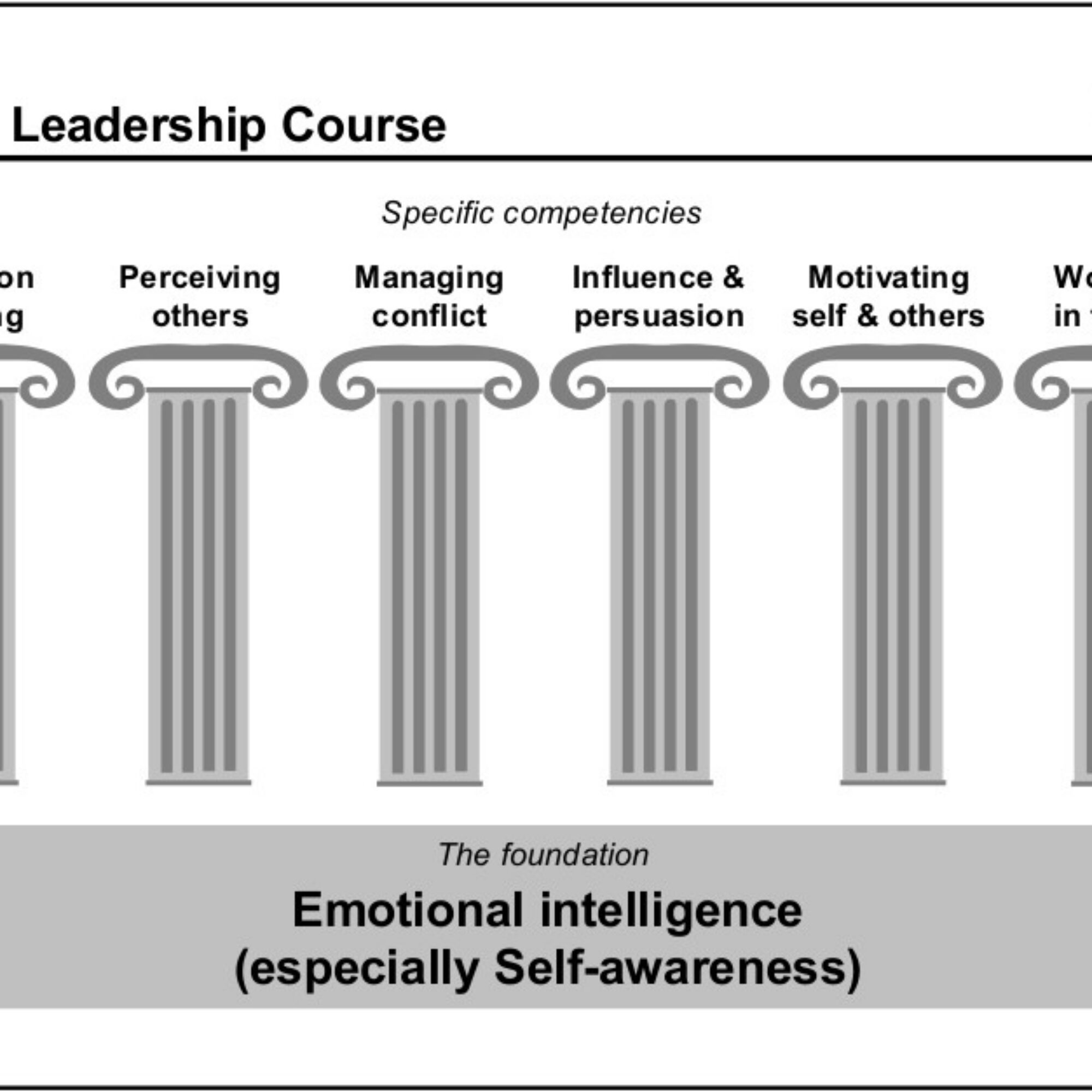
Next on the list of concepts under my name at the top of this page is leadership. See earlier posts for values, meaning, purpose, importance, and passion. Unlike the other concepts, leadership intrinsically involves other people. At first that complexity makes it seem harder to understand, but I think it gets simpler in the end. I start my "Leadership through emotional intelligence and self-awareness" seminars by asking what leadership is, following how my core Leadership course began at Columbia Business School. Since understanding an apparently broad concept like leadership on its own can be hard Columbia's course talks about "six pillars" of leadership, each of which you can understand and learn more easily than leadership in general. You can break down leadership in different ways.…

0 Comments

Vince Lombardi: What It Takes to be Number One

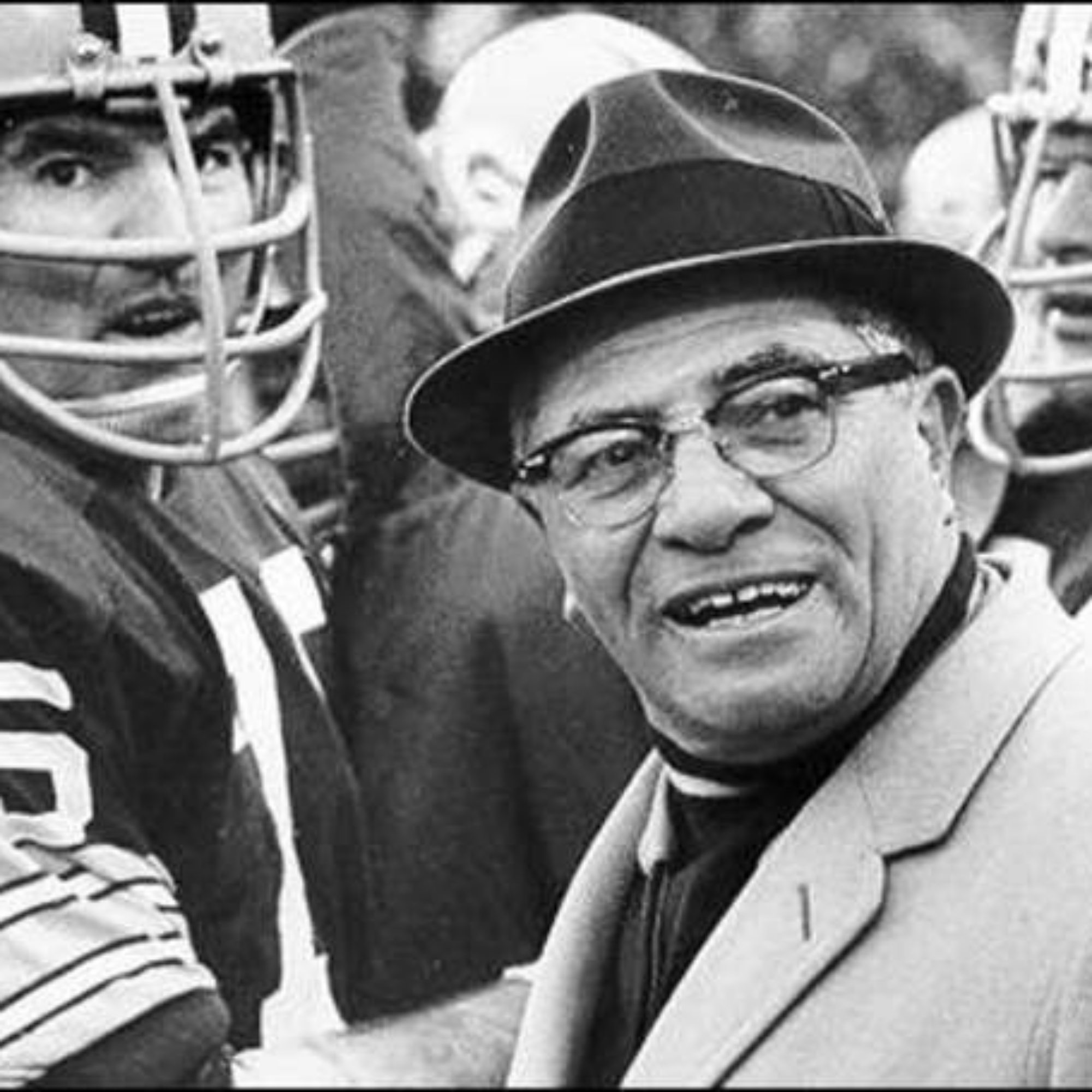
After a couple posts on sports, I'm putting up one of the great sports coaching quotes, by Vince Lombardi. According to Wikipedia Vincent Thomas "Vince" Lombardi (June 11, 1913 — September 3, 1970) was an American football coach. He is best known as the head coach of the Green Bay Packers during the 1960s, where he led the team to three straight league championships and five in seven years, including winning the first two Super Bowls following the 1966 and 1967 NFL seasons. The National Football League's Super Bowl trophy is named in his honor. He was enshrined in the NFL's Pro Football Hall of Fame in 1971. He never had a losing season as a head coach in the NFL, compiling an impressive regular season…

0 Comments

Petty pathetic censorship

For Want of a Nail For want of a nail the shoe was lost. For want of a shoe the horse was lost. For want of a horse the rider was lost. For want of a rider the message was lost. For want of a message the battle was lost. For want of a battle the kingdom was lost. And all for the want of a horseshoe nail. A nail While the Chinese government blocks many U.S.-based video sites, like YouTube, they not only have plenty of copy-cat sites but with a few clicks you can find many full feature-length movies to watch streaming. You can't get any movie you want so sometimes you end up watching whatever. The other day I happened to watch…

0 Comments

Responsibility and consuming resources

I remember as a kid in the 70s being taught a policy to turn off lights when I was the last to leave a room. People put stickers on light switches with that message. I don't see that message that much any more. People seem to generally project that saving energy is better than not saving energy, but I see the idea more used to market selling products than changing personal behavior. I'll leave for another time the counterproductivity of selling more things to reduce consuming resources. Responsibility I'd rather talk about personal responsibility and consuming resources. I have found responsibility one of the most fundamental concepts in leadership, principally in my words to live by Don't look for blame but take responsibility for making…

0 Comments

Schopenhauer on the consistency and reliability of our emotional systems

I haven't read anything by Arthur Schopenhauer and hardly know anything about him, but I agree with this quote from him: Mensch kann tun was er will; er kann aber nicht wollen was er will. One can choose what to do, but not what to want. People contrast emotions with reason, see they differ, and conclude emotions are irrational, unpredictable, and follow no system. I agree they are hard to predict in others whose environments, belief, and behaviors we don't know, but that doesn't mean our emotions aren't systematic. I, like Shopenhauer, it seems, see the human emotional system as systematic. It depends on its inputs -- the person's environment, beliefs, and behaviors -- but given them, it creates consistent outputs. Effective leaders understand the…

0 Comments

Overcoming Objections and Blocks overview and table of contents

Here is an overview of my recent section on Objections and Blocks with links to all the articles. If you haven't already, I hope they help you learn to look forward to objections and blocks as signs of progress, that your project is significant, and as guidance for how to proceed. As I began the series Whether you want to lead or motivate others or yourself, deciding to lead means you will face objections and blocks. Whether from members of your team or from your anxieties and fears, objections and blocks are similar, as are their solutions. For the next week or so, I'll cover a range of objections, blocks, and various other ways we discourage ourselves or face others being discouraged when we try…

0 Comments

Overcoming objections exercise

[This post is part of a series on internal objections and blocks and how to overcome them. If you don't see a Table of Contents to the left, click here to view the series, where you'll get more value than reading just this post.] I love covering objections and blocks in my seminar. More than any other, that section results in people applying the seminar's contents to their lives and solving their problems. They change their mode from digesting and evaluating the information to using and applying it. I love to see how quickly what seemed like abstract information suddenly becomes useful tools to solve problems, lead people, improve careers, and improve lives. More than that, people come together. The break after this exercise is…

0 Comments

Common objection 11: Other people tell me not to

[This post is part of a series on internal objections and blocks and how to overcome them. If you don't see a Table of Contents to the left, click here to view the series, where you'll get more value than reading just this post.] Objection Other people tell me not to. We all defer judgment to someone. Sometimes others know better. Not always. Sometimes we feel pressure from peers, family, society, bosses, etc. Example Parents are the big ones who advise their children to what the parents' think best, which may or may not coincide with what their children think best. Bosses advise too. As do friends and, for that matter, random acquaintances. Institutions like governments, schools, churches, and so on also promote their agendas.…

0 Comments

Common objection 10: I’m good at something else

[This post is part of a series on internal objections and blocks and how to overcome them. If you don't see a Table of Contents to the left, click here to view the series, where you'll get more value than reading just this post.] Objection This objection sounds so weird when you say it abstractly you can't imagine people succumbing to it. When they say it less abstractly you can understand why it holds people back, but also that they should be able to get past it. In the abstract: I excel in another area so I can't in this one. Does that sound crazy to you? Why should strength in one area hold you back from another? I hear versions of it all the…

0 Comments

Common objection 9: I’m too busy. I have other priorities.

[This post is part of a series on internal objections and blocks and how to overcome them. If you don't see a Table of Contents to the left, click here to view the series, where you'll get more value than reading just this post.] Objection Some people want to take on new projects or change something in their lives but they have too many other things. I'm too busy. I have too many other priorities. For this obstacle, I'll mention that your other priorities may be more important. Only you know. Example Examples are too numerous to mention. We all have things in our lives -- work, friends, family, hobbies, etc -- that take time, energy, attention, connections, and other resources. If you aren't completely…

0 Comments

Common objection 8: But it’s embarrassing or it makes me anxious

[This post is part of a series on internal objections and blocks and how to overcome them. If you don't see a Table of Contents to the left, click here to view the series, where you'll get more value than reading just this post.] Objection Yesterday I posted how fear of feeling fake after changing holds people back. Today I'll note how some people don't start because they feel embarrassed or anxious now. But I'm embarrassed! I'm too nervous to even think about it! Many people prefer not to think about problem areas of their lives. Example The big one here is out-of-shape people not going to the gym because they're embarrassed about being the fat person at the gym. I speak from experience. I…

0 Comments

Common objection 7: I’ll feel fake

[This post is part of a series on internal objections and blocks and how to overcome them. If you don't see a Table of Contents to the left, click here to view the series, where you'll get more value than reading just this post.] Objection People worry that changing themselves will make themselves fake. It won't be the "real" them. My new beliefs will be fake. It won't be the real me. I'll be acting. Example As a coach I hear this all the time when someone changes even small things about themselves. People may feel fake from wearing different styles of clothes than they used to, speaking more slowly, calling someone outside their network, taking on leadership positions or even just any new position…

0 Comments

End of content

No more pages to load