Common objection 6: That’s just the way it is

[This post is part of a series on internal objections and blocks and how to overcome them. If you don't see a Table of Contents to the left, click here to view the series, where you'll get more value than reading just this post.] Objection People think some things can't change. They say It's a fact. That's just the way it is. You have to accept that some things are just that way. Examples Bureaucrats consistently tell me how their process works, saying I can't do it any other way. They probably tell you the same thing. (I hope you, like me, consistently achieve things they call impossible.) My leadership seminar includes a couple slides with quotes from experts then stating how things had to…

0 Comments

Common objection 5: I have to take care of “real world” issues first

[This post is part of a series on internal objections and blocks and how to overcome them. If you don't see a Table of Contents to the left, click here to view the series, where you'll get more value than reading just this post.] Objection People often say things like I have to take care of "real-world" issues like earning money first. or their bosses, parents, or teachers say things like You have to take care of "real-world" issues first, like getting a job or paying your bills. or they believe things other than "real-world" issues are indulgent. Or they have to be "practical" or "pragmatic." Alternatively: My job doesn't allow it or give me time to do it. That's fine and well for others…

0 Comments

Common objection 4: I don’t know how to do it, I’m too introverted, I’m not smart enough, etc

[This post is part of a series on internal objections and blocks and how to overcome them. If you don't see a Table of Contents to the left, click here to view the series, where you'll get more value than reading just this post.] Objection People often complain that the project they want to do requires skills or abilities they don't have: I don't know how to do it. I'm too introverted. I'm not smart enough. Example I hear people claim they can't perform plenty of business and social interactions because they just don't get along with people; they want to do things alone. Or people claim they've never been that smart. Underlying belief Their usual underlying belief is that only extraordinary people can achieve…

0 Comments

Common objection 3: I don’t have enough money/time/connections/etc

[This post is part of a series on internal objections and blocks and how to overcome them. If you don't see a Table of Contents to the left, click here to view the series, where you'll get more value than reading just this post.] Objection People usually state this objection as I would do it but I don't have enough money. You need connections to do that and I don't have them. I would if only I had time. or some appeal to needing more of something external to them. Tomorrow I'll write about internal obstacles or blocks. Example Would-be entrepreneurs often say they can't start businesses because they don't have the money. People don't go on vacations, decrease their working hours, or do plenty…

0 Comments

Common objection 2: I’m not good at X. I can’t do Y. I’m not a Z person

[This post is part of a series on internal objections and blocks and how to overcome them. If you don't see a Table of Contents to the left, click here to view the series, where you'll get more value than reading just this post.] Objection People usually state this objection as a statement like these. I'm just not a leader. Leaders are born, not made and I wasn't born a leader. I've tried losing weight a million times. I'm just not a gym person. I'm no good at math. Example Too many to list. The above statements suggest a few. Underlying belief The underlying belief to these statements is that Existing or past patterns can't change. or Describing how things are says how they have…

0 Comments

Common objection 1: I want to understand the root of the problem before solving it

[This post is part of a series on internal objections and blocks and how to overcome them. If you don't see a Table of Contents to the left, click here to view the series, where you'll get more value than reading just this post.] Objection People usually state this objection with something like I want to understand the problem before acting. I want to get at the root first. If I don't, it will just happen again. You can also call this objection Analysis Paralysis since it leads people to analyze over acting. Again, some problems require analysis, but I bet you'll find that the more you learn alternatives, like the ones below, the more you'll learn to solve problems faster. Example My classic example…

0 Comments

How to view objections and blocks as advantages

[This post is part of a series on internal objections and blocks and how to overcome them. If you don't see a Table of Contents to the left, click here to view the series, where you'll get more value than reading just this post.] Yesterday introduced obstacles and blocks as inevitable parts of leadership and personal development. It also suggested you can see them as advantages, or at least solving them as advantages. How do you train yourself to see problems as advantages? That's like the solution to all your problems, right? Once problems become fun, or at least rewarding growth opportunities, nothing holds you back from taking on whatever challenges come your way. Most people wouldn't believe some of my current projects. But Submedia's…

0 Comments

Overcoming objections and blocks in leadership and personal development: The overarching principles

[This post is part of a series on internal objections and blocks and how to overcome them. If you don't see a Table of Contents to the left, click here to view the series, where you'll get more value than reading just this post.] Whether you want to lead or motivate others or yourself, deciding to lead means you will face objections and blocks. Whether from members of your team or from your anxieties and fears, objections and blocks are similar, as are their solutions. For the next week or so, I'll cover a range of objections, blocks, and various other ways we discourage ourselves or face others being discouraged when we try to motivate them. Someone who can consistently overcome challenges in themselves or…

0 Comments

How to make yourself more confident

Is there anything you do that wouldn't benefit from having more confidence? Even if showing confidence doesn't make a difference, at least having the option to show it helps. Have you noticed that people with more confidence can't do that much more than people without it? They can't lift heavier weights or solve more difficult problems. The guy at the gym who lifts the heaviest weights probably isn't the most confident person there. Alternatively, you can lift weights all you want -- that alone won't make you more confident. So what does? A friend just wrote me that she didn't feel comfortable opening up with most people because she usually felt vulnerable and insecure, but with me she did. It got me thinking. Opening up…

0 Comments

You’re always emotional, not only when you’re angry or excited

People often look at someone acting with intense emotions -- like when they're excited, angry, enraged, passionate, etc -- and say that they are "emotional" at times like that. They misunderstand emotions. Understanding emotions is one of the most important parts of self-awareness and therefore leadership of yourself and others. Emotions motivate you. As long as you're awake you feel motivation. Everyone is always emotional all the time. Calmness is an emotion. Just because you aren't running around yelling or losing control doesn't mean you aren't feeling emotions. You could just as well call someone serenely under control and relaxing emotional. They're feeling contentedness or calmness or something like that. Why is this distinction important? Some people think of emotions as bad or something that…

0 Comments

Social challenges can be harder than technical

When I was younger and studied physics when I thought of the Egyptian pyramids I would wonder at how they overcame the engineering challenges -- how did they get the big rocks to the top, how did they measure the angles accurately enough, and so on. As I got older, worked in larger teams with more intricate teamwork, and led teams my sense of marvel shifted from overcoming engineering challenges to overcoming social challenges. Learning leadership and management while getting the MBA illuminated the challenges on the social side too. The engineering challenges, while big, I imagine I could solve through trial and error. The social challenges, with a bit of thought, seem harder. Have you ever thought of the management and leadership challenges of…

0 Comments

You can connect with anyone

I had a leadership class at Columbia with a famous professor. He wrote a bestselling book after working as a high-level executive at one of the world's most valuable companies. His class at Columbia was among the school's most popular ones. People knew he taught well and cared about his students but he could be intimidating. You knew to do the work and never slack. Once I spoke to him after class. Since I had kept up with all the readings -- mostly his book -- and participated in class I figured I was in good shape. I just wanted to ask a question. I mentioned to him in passing that I was reading his book from the library. "What? From the library?" "I went…

0 Comments

Protected: Starting a leadership school

The project I am starting a school for leadership. I have a business plan and early seed funding. My first goal is to create an online presence. I have started other successful businesses before. The project is driven by the large demand for leaders and lack of supply. The main institutions teaching leadership are business schools, military schools, and corporations (only to their employees). While successful and effective, they focus on areas useful only to large corporations and the military. This leadership school will teach aspects of leadership common to all applications, without focusing on banking, finance, consulting, war, etc. I see parallels to how acting is taught since, like leadership, actors must know their emotions and how to create them in themselves in order…

Enter your password to view comments.

You show me the best leader in a room and I’ll show you the one who works the hardest

Today's post is simple. You show me the best leader in a room and I'll show you the one who works the hardest. Leadership comes from hard work and preparation. You don't just get up and give the "I have a dream" speech. You develop skills and experience over a decade or so. Then you probably don't look forward to giving the speech so much as feel you have to because no one else can. You don't just write the Declaration of Independence. You develop skills and experience over decades, then find yourself in a position where a job needs to be done and no one else can do it. I heard the phrase recently for the first time from a friend studying acting as…

0 Comments

Coaching highlights from coaching Columbia Business School students: Review

I'm sure I'll continue it with other thoughts soon, but for now I'm wrapping up the series on highlights from coaching Columbia Business School students with a review of the major point from it, particularly on 360-degree feedback reports. First, I commend Columbia for offering coaching to all MBA candidates. When I went there we got the reports and reviewed them overall in class but didn't get personalized coaching. Giving them coaching adds tremendously to understanding the feedback process, how to read the reports, and how to use them to improve their leadership skills. Especially for students who don't choose the big corporate route, many students have few other opportunities to get such reports or coaching. Overall understanding The structure alone of the 360-degree feedback…

0 Comments

Coaching highlights from coaching Columbia Business School students: Shortcomings of 360-degree feedback reports

[This post is part of a series on Coaching Highlights from coaching Columbia Business School students. If you don't see a Table of Contents to the left, click here to view the series, where you'll get more value than reading just this post.] In the context of the lessons from coaching Columbia Business School students in leadership, I've mostly written about the value of 360-degree feedback processes and reports and how to use them. Their shortcomings, costs, and problems are mostly obvious, but I'll cover them anyway since I've covered so much about them. I'll include ones that don't apply to MBA candidates, despite the context here. I'll try to mention how to avoid or work around problems too. Costs First, 360-feedback reports cost a…

0 Comments

Coaching highlights from coaching Columbia Business School students: Weaknesses are often strengths misapplied

[This post is part of a series on Coaching Highlights from coaching Columbia Business School students. If you don't see a Table of Contents to the left, click here to view the series, where you'll get more value than reading just this post.] Today I'll cover one of the most encouraging perspectives for many students and clients whose reports show they underperform in a few areas. For example, this student's ability to influence appears low (see my earlier post on these charts can help you understand them) ... in both perspectives ... Anybody would say this chart says this person has a weakness influencing others, right? Maybe not, and it could be a strength. You may imagine you have an outlying weakness too that may…

0 Comments

Coaching highlights from coaching Columbia Business School students: foreseeing challenges

[This post is part of a series on Coaching Highlights from coaching Columbia Business School students. If you don't see a Table of Contents to the left, click here to view the series, where you'll get more value than reading just this post.] Learning leadership and developing leadership skills isn't like learning history or any other academic subject. Learning leadership and developing leadership skills means learning about yourself and other people, understanding your and their motivations, changing how you view the world, for starters. Well, you can learn to lead without those things, but you'll limit yourself without them. While learning math or a new language may teach you new knowledge and skills, it's hard to say they change you as a person. I learned…

0 Comments

Coaching highlights from coaching Columbia Business School students: Focus on the client

[This post is part of a series on Coaching Highlights from coaching Columbia Business School students. If you don't see a Table of Contents to the left, click here to view the series, where you'll get more value than reading just this post.] Effective coaching means focusing on the client's interests and progress, not the coach's. I like working with clients, especially students where I used to go to school, so it's easy to think about my interests. But I know that in the long term, a client telling me they got out of our interaction everything they wanted and more is my greatest reward. To do that my focus has to be on them. Use the meeting structure to focus on the client This…

0 Comments

Coaching highlights from coaching Columbia Business School students: Use Feedforward

[This post is part of a series on Coaching Highlights from coaching Columbia Business School students. If you don't see a Table of Contents to the left, click here to view the series, where you'll get more value than reading just this post.] If I talk about coaching, especially in limited times with very talented people, I have to talk about Feedforward. I refer to my previous post on it for a thorough description of it. It's one of the best tools for finding out what about yourself to improve and how. If you don't have access to a 360-degree feedback (almost no one does and even people who do only get them less than once per year), you can use Feedforward anyway. I'll mention…

0 Comments

Coaching highlights from coaching Columbia Business School students: Create accountability for yourself

[This post is part of a series on Coaching Highlights from coaching Columbia Business School students. If you don't see a Table of Contents to the left, click here to view the series, where you'll get more value than reading just this post.] Adding accountability to your transformation increases its chances of working and the quality of your work. I hope I've written this idea in many other posts. I say it to nearly every Columbia Business School student I coach. It's a fundamental part of my role with coaching clients. We all know we get done what we're accountable for. What we aren't accountable for we don't focus on nearly as much. So when you create a plan to improve your leadership style, your…

0 Comments

Coaching highlights from coaching Columbia Business School students: find a relevant exercise

[This post is part of a series on Coaching Highlights from coaching Columbia Business School students. If you don't see a Table of Contents to the left, click here to view the series, where you'll get more value than reading just this post.] No matter what you want to improve about yourself, no matter how important the insight of feedback, and no matter how much you can learn from books, ultimately you have to practice to improve meaningfully. Find an exercise I think one of the greatest values a coach can add, especially in a short session, is to give someone who has identified an area to improve and indicated wanting to improve an exercise to have them experience improving in their desired area. A…

0 Comments

Coaching highlights from coaching Columbia Business School students: figuring out what to start with

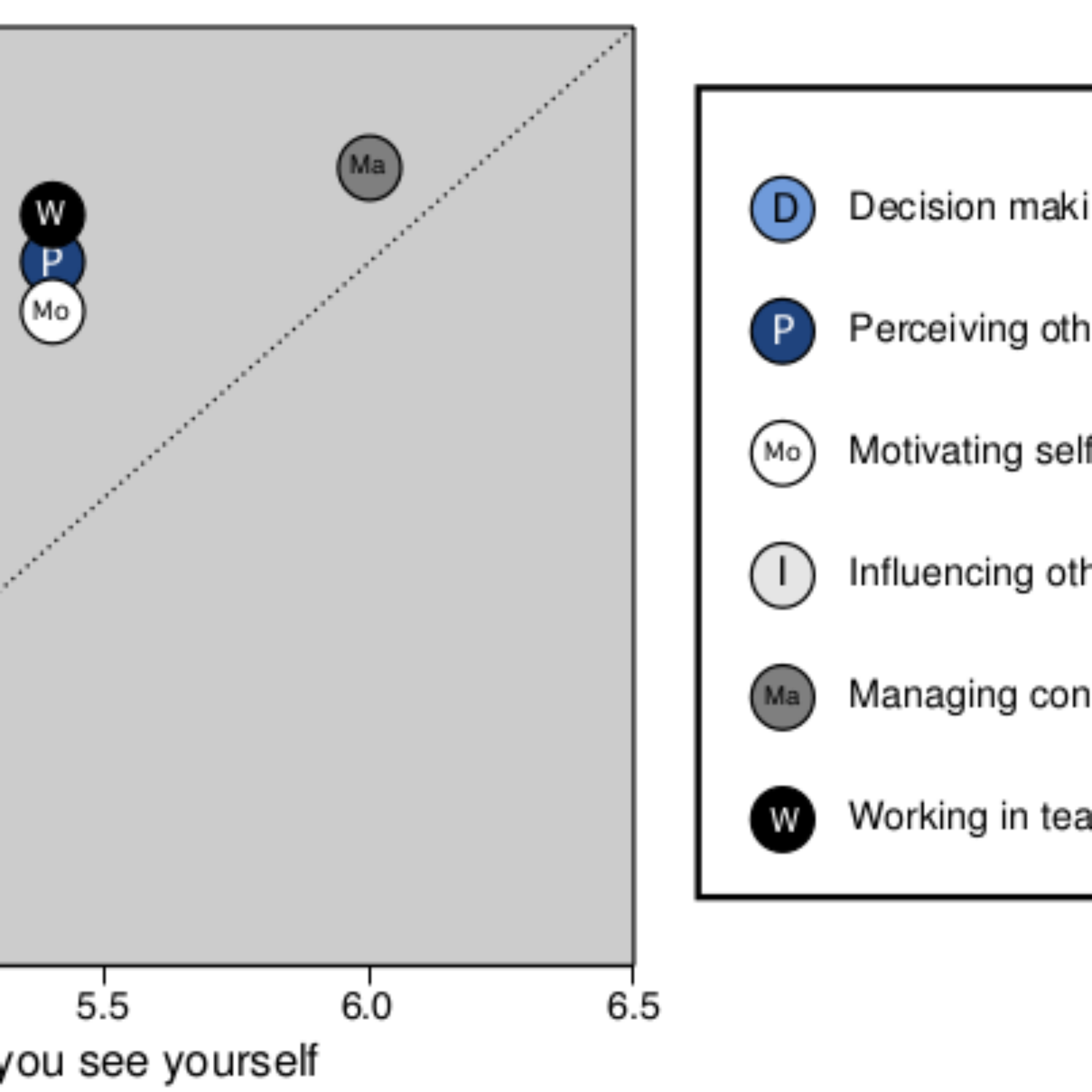
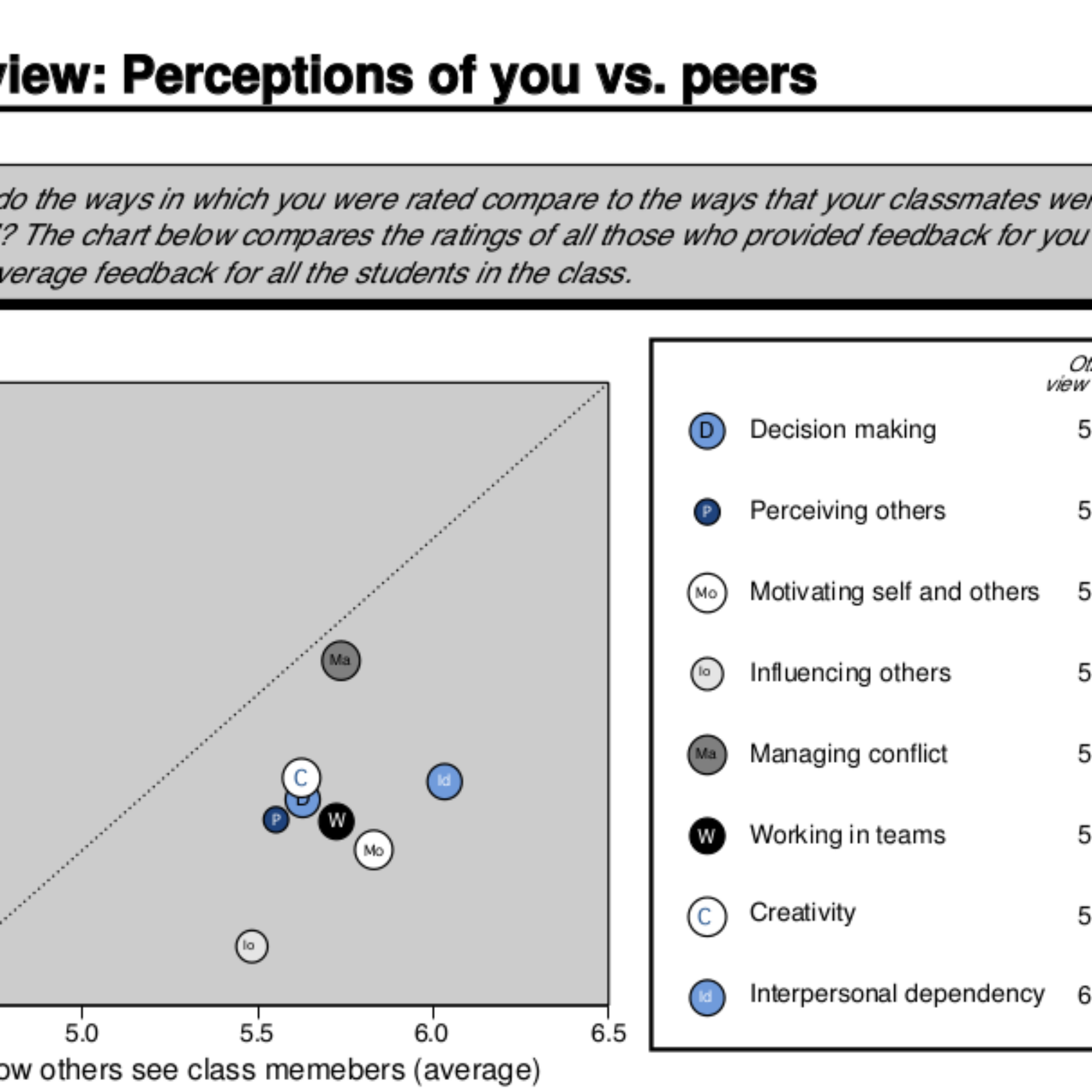
[This post is part of a series on Coaching Highlights from coaching Columbia Business School students. If you don't see a Table of Contents to the left, click here to view the series, where you'll get more value than reading just this post.] When your 360-degree feedback report features this chart and you want to start improving something, what do you start with? Keep in mind, you don't need a 360-degree feedback report to have to decide what to work on. Today's post applies to any time you want to pick something to improve yourself. You know from two days ago to focus on one meaningful thing at a time, but which? Nearly all the students I work with pick the farthest down dot, in…

0 Comments

Coaching highlights from coaching Columbia Business School students: Personal development skills

[This post is part of a series on Coaching Highlights from coaching Columbia Business School students. If you don't see a Table of Contents to the left, click here to view the series, where you'll get more value than reading just this post.] Leaders learn and push themselves to develop personally constantly and consistently. They don't see it as a burden, just something they do. Nor do they feel compelled from outside to do it. They enjoy learning. Nor do they feel like they need to accomplish some goal. They just enjoy doing things better. At least that's what I've seen and experienced. One of the reasons stems from an effect of yesterday's post that working on one complex, long-term thing at a time --…

0 Comments

Coaching highlights from coaching Columbia Business School students: Improve one thing at a time

[This post is part of a series on Coaching Highlights from coaching Columbia Business School students. If you don't see a Table of Contents to the left, click here to view the series, where you'll get more value than reading just this post.] A lot of students see the dots on the charts in their reports and decide they want to improve a few. In this chart, for example, they'll look at all the dots below the line, think "Uh oh, I'm behind my peers in everything," and decide to work on everything at once, or at least a few things. Most coaches I've talked to about it agree working on one area at a time makes the best progress not just in the area…

0 Comments

End of content

No more pages to load