INSEAD leadership seminar

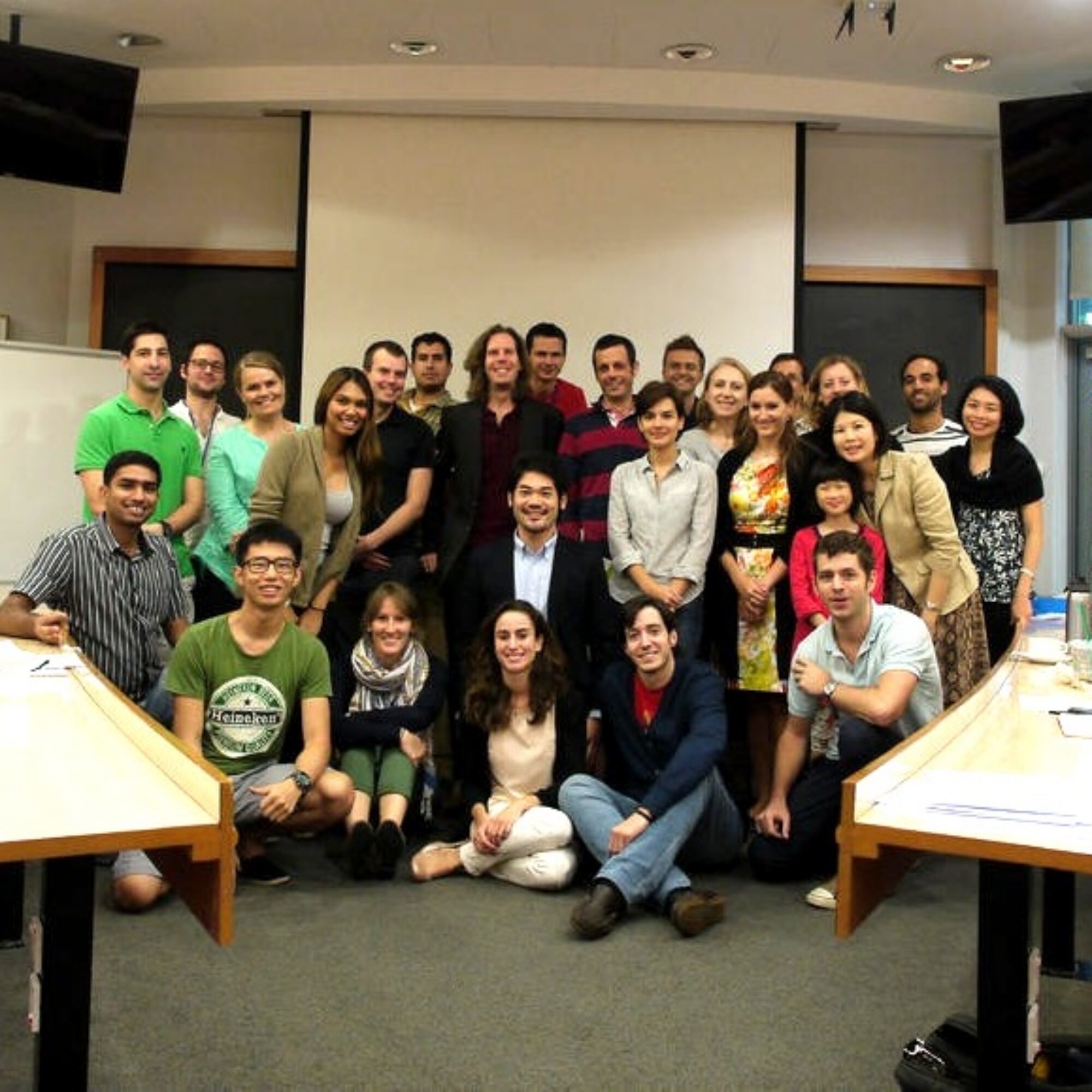
When I met Jose Gaztelu, my business school classmate and friend who did the bulk of the organizing for this weekend's INSEAD leadership seminar in Singapore, at the hotel Friday, he asked how many people I thought were signed up. When my flight had taken off that morning from Shanghai it was ten or twelve so I guessed about a dozen. "Thirty-two" So the attendees filled the room -- a great group. They were attentive, asked great questions, and started applying the material before the seminar ended. When I mentioned burpees, they wanted to get me to do a few and all started clapping to force me to do it. I said I would if they would. So about half the room did five burpees…

0 Comments

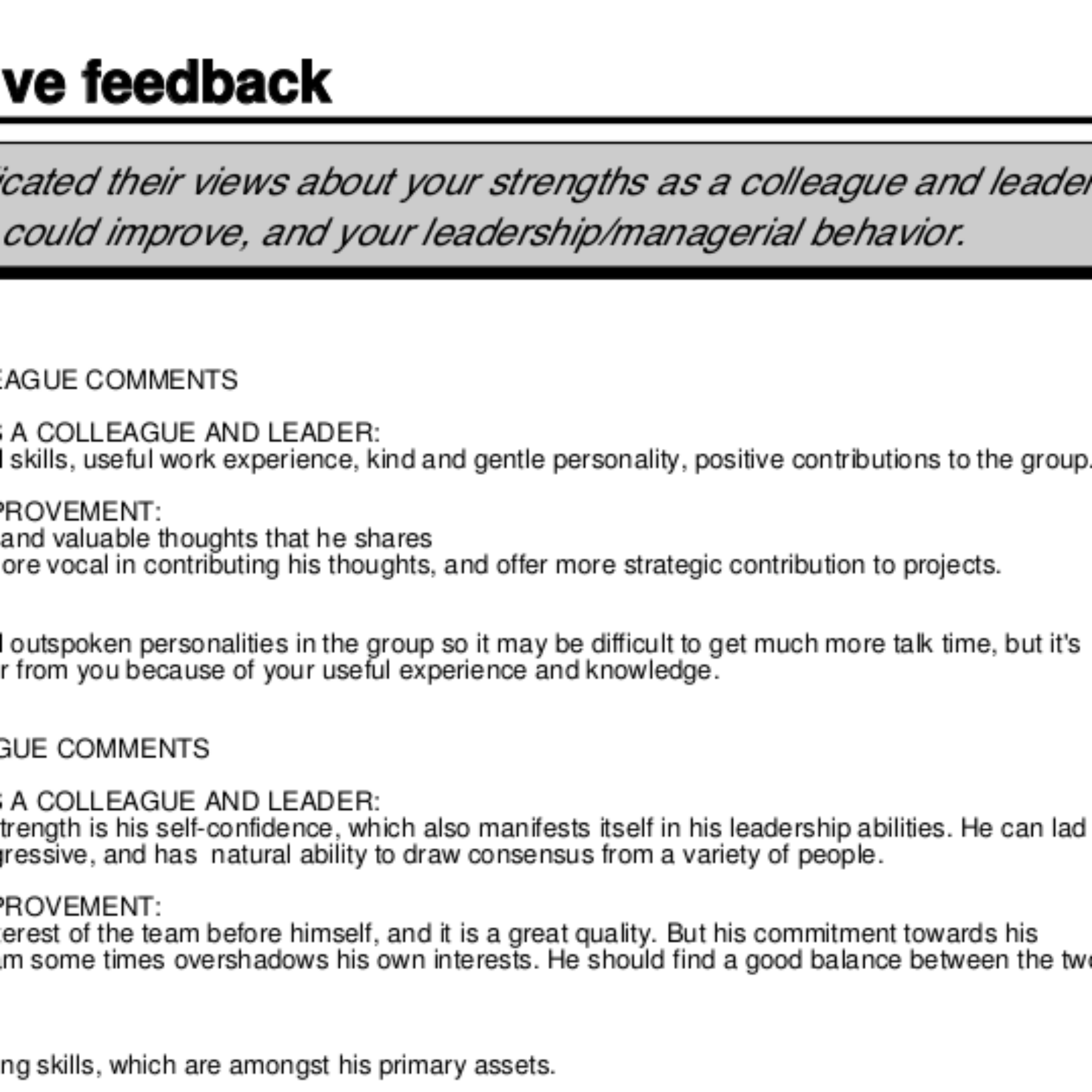
A sample 360-degree feedback report: qualitative feedback

[This post is part of a series on Coaching Highlights from coaching Columbia Business School students. If you don't see a Table of Contents to the left, click here to view the series, where you'll get more value than reading just this post.] Any feedback report has to include qualitative feedback -- that is, free form feedback that describes how the subject performs and how to improve. In my experience the feedback I've seen hasn't been as useful as feedforward. It's been more feedback, which generally means evaluation of an unchangeable u, but feedback can still be useful. In any case, here are examples of qualitative feedback. It can't b e combined with other quantified results, but can give you some of your most useful…

0 Comments

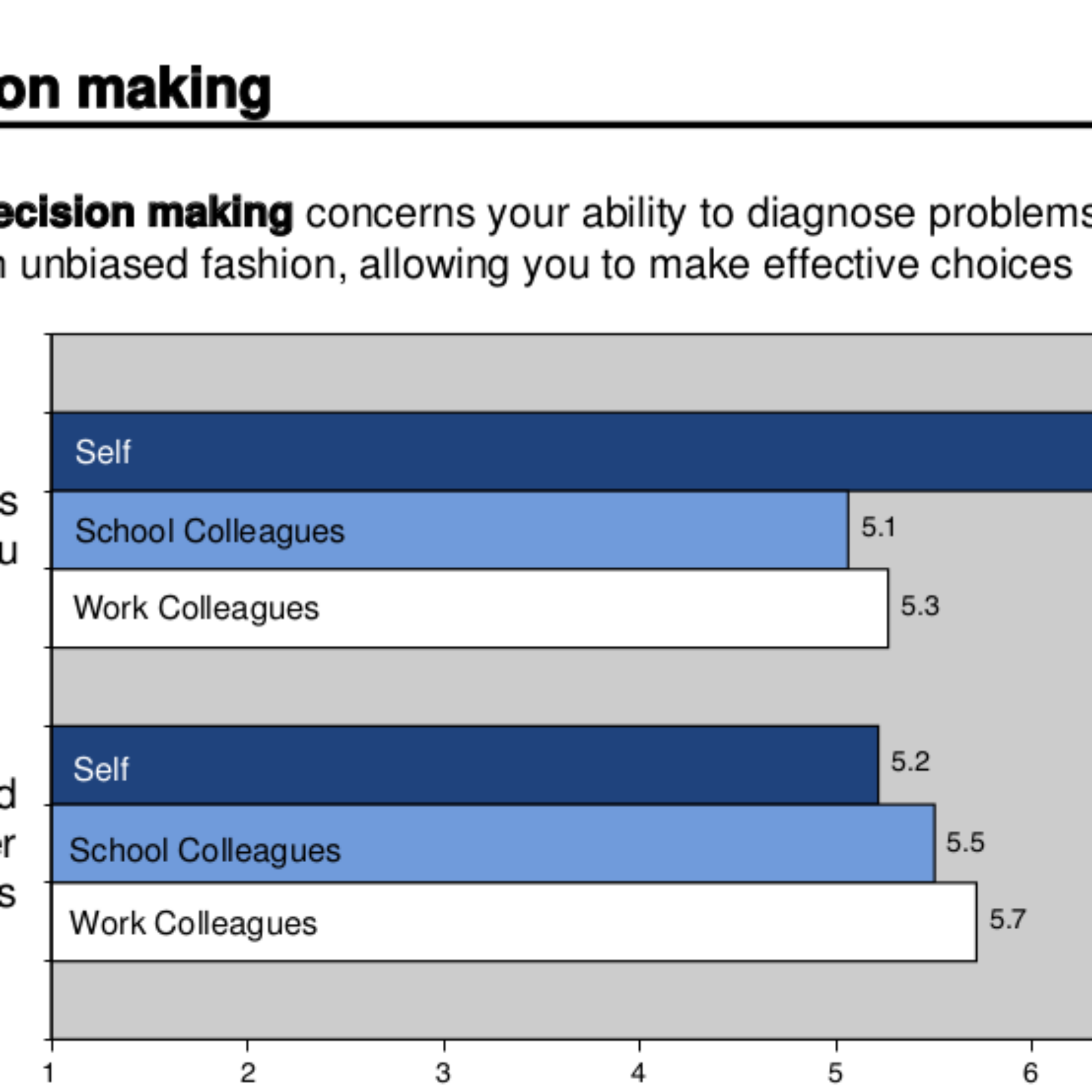
A sample 360-degree feedback report: more detail

[This post is part of a series on Coaching Highlights from coaching Columbia Business School students. If you don't see a Table of Contents to the left, click here to view the series, where you'll get more value than reading just this post.] Yesterday's post covered what for most people are the highlights of a 360-degree review -- charts comparing how your leadership skills compare to others'. Those charts summarize most of the information in a 360-degree feedback report. One should always remember they summarize. They don't present all the information. Sometimes details tell a different story but get lost in the summary. Also, details may show how to improve better than a mere summary. Most 360-degree feedback reports include more detailed numbers. Here is…

0 Comments

Leadership lessons from 360-degree feedback charts

[This post is part of a series on Coaching Highlights from coaching Columbia Business School students. If you don't see a Table of Contents to the left, click here to view the series, where you'll get more value than reading just this post.] Just the structure of yesterday's charts teaches a lot about leadership. They emerged as main tools for communicating leadership ability and guiding improvement so even if you're never the subject of one, you can still benefit from knowing about them. Let's see a few reasons why. Let's look at one again. The chart breaks leadership into sub-skills My Core Leadership class at Columbia began with asking the professor asking us to define leadership. It's notoriously difficult to define. So instead of trying…

0 Comments

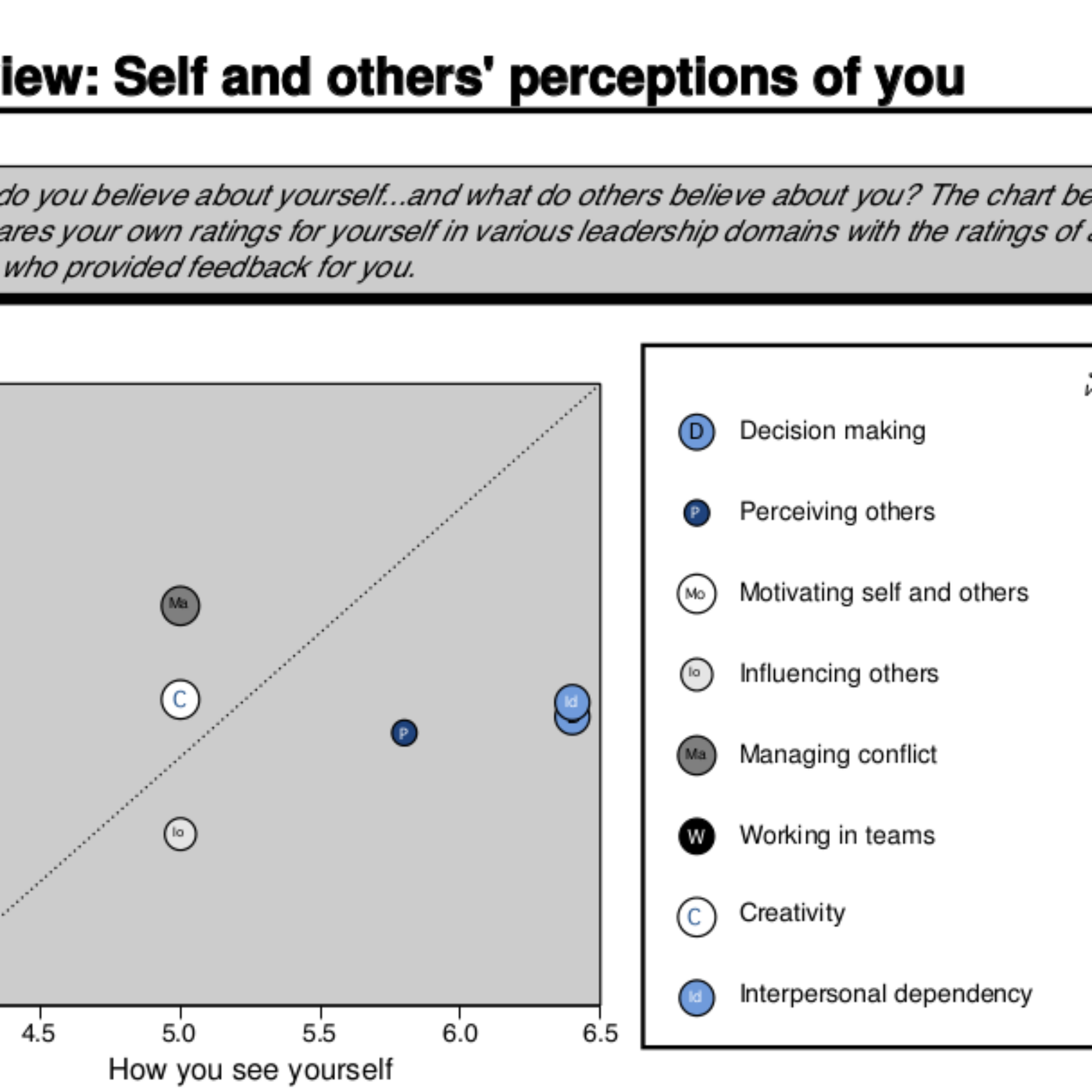
A sample 360-degree feedback: Overview charts

[This post is part of a series on Coaching Highlights from coaching Columbia Business School students. If you don't see a Table of Contents to the left, click here to view the series, where you'll get more value than reading just this post.] Let's look at part of a sample 360-degree feedback report. Today I'll show the highlights -- the summary of all the questions. Even if you've never had a 360-feedback for yourself, just knowing how they work can help you. Understanding their structure alone can help you figure out how to improve your leadership skills. First I'll explain what you're about to see. Each person responding to the survey about the person receiving the feedback gets asked to rate the person in several…

0 Comments

Coaching highlights from coaching Columbia Business School students: 360-degree feedbacks

[This post is part of a series on Coaching Highlights from coaching Columbia Business School students. If you don't see a Table of Contents to the left, click here to view the series, where you'll get more value than reading just this post.] Before going into the details of looking at a 360-degree feedback report, I want to talk about the structure of the 360-degree feedback process and what it tells you about leadership. What is a 360-degree feedback? 360-degree feedbacks are usually done in corporate and bureaucratic environments as review processes, both to help evaluate performance and to help people improve their performance. The process is that you or someone (typically in the Human Resources department) gets feedback from all sides -- people above,…

0 Comments

Coaching highlights from coaching Columbia Business School students

[This post is part of a series on Coaching Highlights from coaching Columbia Business School students. If you don't see a Table of Contents to the left, click here to view the series, where you'll get more value than reading just this post.] I've been posting a lot on personal development, so I'm going to focus on specific leadership and leadership development issues for several posts. I've had the privilege and responsibility of coaching leadership to many Columbia Business School students, both in the regular and Executive MBA programs. For the next several posts I'll cover a few of my observations in coaching leadership in that environment -- usually tips on improving business leadership, but also leadership, leadership development, and personal development in general. The…

0 Comments

See Joshua Spodek at INSEAD Singapore next week

I'll be delivering my seminar on  next weekend in Singapore, October 6 and 7, at INSEAD. Here's the announcement. I hope to see you there. Leadership Through Self-Awareness and Emotional Intelligence Workshop led by Joshua Spodek, MBA, PhD; supported by the INSEAD Toastmasters Club INSEAD Toastmasters Club is pleased to announce a two-day (half-day) experiential workshop focused on how to develop personal leadership skills, self-awareness, and emotional intelligence by using the latest advances in cognitive behavioral science, evolutionary psychology, and positive psychology. We are lucky to have Joshua Spodek in Asia (he lives in New York City), who has delivered the workshop in New York and London with much success, to many different audiences, e.g., the New York Academy of Sciences, Columbia Business School Alumni…

0 Comments

Sports and passion

I ask people about their passions a lot. Many tell me they have no passions, which makes me sad for them. I don't think passions are something you find lying around but something you create and build from small interests through self-awareness, effort, and dedication. It means they haven't created something they could have. They either never invested enough to find out what it took to create a passion or, if they did, capitulated on the effort. Or they're young enough not to have had the chance yet. I've written before about the sink-or-swim moment experience in college that taught me the meaning of competition -- that I had to work hard to make something of myself and the decades of reward it brought me.…

0 Comments

Why food matters

I don't know if I have to explain how shopping for, preparing, and eating food qualifies as fundamental to self-awareness and therefore leadership. A few years ago I would have considered food shopping irrelevant to self-awareness. I've changed. I'll start with an aside on how big an effect just gardening can have with Victory Gardens. During the World Wars, when mainstream food production dropped, governments promoted their citizens planting so-called victory gardens -- using whatever spare land anyone had, even window-sills, to plant fruits, vegetables, herbs or whatever you could grow. They started them in parks, some continuing as gardens to today. Here are a couple posters for the project. and Apparently, at their peak, victory gardens produced nearly half the vegetables Americans consumed and…

0 Comments

Motivating populations

I figure most people have seen this quote before. It's scary -- particularly for how matter-of-fact it is. You get the idea he has no doubt of the effectiveness of his strategy, probably from years of trial and error. It's scary not just for its historical roots, but for how well it seems to work in more mundane but still important contexts -- particularly with national leaders. People as individuals consider themselves (ourselves) independent and intelligent. Large groups of people seem to lose those properties. Anyway, sorry about posting something so serious out of the blue. I just keep meaning to refer to this quote many times and expect to again. I wanted it here for reference. If you haven't read it before, I expect…

0 Comments

If you want to change something you do, its opposite usually is no better. Look for its complement.

People seem to want to change a lot about them. I see them trying to do the opposite of what they are trying to change. Sometimes it works. More often trying to do the opposite of what they want to stop reinforces doing it more. Food For example, overweight people often think if they eat too much they should try the opposite and try to eat less. But dieting seems to predict obesity more than prevent it -- that is, people who diet tend to be more obese than those who don't (sorry I don't have a source, so feel free to read this part skeptically). I find the complement to eating too much is not to eat less but to savor and enjoy your…

0 Comments

Examples of ignoring impediments on the way to greatness

When you think of great orators, Winston Churchill has to be near the top of the list. His speeches include I would say to the House as I said to those who have joined this government: I have nothing to offer but blood, toil, tears and sweat. We have before us an ordeal of the most grievous kind. We have before us many, many long months of struggle and of suffering. and Even though large tracts of Europe and many old and famous States have fallen or may fall into the grip of the Gestapo and all the odious apparatus of Nazi rule, we shall not flag or fail. We shall go on to the end. We shall fight in France, we shall fight on…

0 Comments

Lessons in freedom from Charles Barkley

When I talk about freedom here I usually mean your mental freedom to think and believe what you want. I consider this freedom more fundamental than, say, political freedom, not that I see much point in comparing them. Everyone benefits from both and few, if anyone, has to choose between either. Victor Frankl's Man's Search For Meaning described how fundamental he considered the freedom to believe what you want, the freedom that allowed him to find meaning in life as a prisoner in Auschwitz. Everything can be taken from a man or a woman but one thing: the last of human freedoms to choose one's attitude in any given set of circumstances, to choose one's own way. Charles Barkley Charles Barkley was one of the…

0 Comments

You can plan good times. The best times just happen.

I think the title of this one says it all. A lesson in leadership -- not necessarily business leadership, but leading in social occasions: You can plan good times. The best times just happen. I think these words a lot, but especially during the Manila trip that ended up going to Boracay. Looking back I see I specifically didn't plan any details of what to do in Manila before arriving. I just contacted the people involved and made sure we had flexibility in the schedule. Then when the Boracay opportunity arose, I knew we could do it. The result? The vacation of  a lifetime providing memories that will endure forever. At a low cost for that matter. Actually, I should specify: the best times just…

0 Comments

More on power, leadership, lawlessness, justice, and amnesty

The New Yorker published a piece, "The Fairness Trap," echoing the issues I wrote on yesterday in the context of the U.S. foreclosure and Greek economic crises. In both cases, people's desire to punish people conflicted with clearly better economic solutions, according to the author. He talks about fairness, basically the same concept as justice -- reacting to emotions like outrage, indignation, and self-righteousness over agreeing on criteria to evaluate future outcomes on and trying to achieve the best one based on those criteria. A major problem with fairness, justice, outrage, indignation, self-righteousness, and the like is their subjectivity. We may personify justice as holding scales, but no scale can evaluate when an outcome or behavior is right or wrong, just or unjust, fair or…

0 Comments

Power, leadership, lawlessness, justice, and amnesty

I'm going to present an over-simplified case related to issues many of us face in much smaller contexts. The goal is to learn from simple hypothetical cases to build experience for more complex, real-life cases. Normally I separate my North Korea posts from leadership ones, but they overlap here, along with my being in China now. One of the greater challenges the world faces is how to bring some kind of justice, or at least rule of law, to the North Korean regime. I think any community in the world not directly benefiting from the North Korean government's behavior would condemn it and consider punishment appropriate. This raises a challenge: because the regime holds all the power locally, nobody can bring them to justice. Because…

0 Comments

The Leaders in Software and Art Conference, October 16

Savvy readers will notice the conference mentioned in the title covers two big topics of this blog -- leadership and art. I've twice spoken at Leaders in Software and Art events, helped host another, and attended many others (a video of my work is currently on the LISA site's front page). The organizer, Isabel Draves, has been building the events, consistently assembling artists and technologists to speak, network, and share about art and technology. (Her husband, Scott, creates just about the most amazing computer-based art I've ever seen.) After many successful monthly salons, she's finally making the first big LISA conference, assembling a great set of speakers. I expect this event will be as Isabel plans -- a TED conference for the overlap of technology…

0 Comments

My essays for getting into an Ivy League business school in 23 days

Here are my Columbia Business School application essays, to complete the series on getting into business school in 23 days. I edited them slightly, mainly to take out personal details. In the optional essay 5, I can see I was blatantly name-dropping Columbia Business School Professors and my experience at the school. I think I could have used more subtlety. My graduate school stipend -- what I lived on in Manhattan for about four years -- surprises me to this day. I think the number was accurate, but wonder if the first number might have been a 2 instead of a 1. Anyway, here are the essays. Essay 1 1. What are your short-term and long-term post-MBA goals? How will Columbia Business School help you…

0 Comments

My background for getting into an Ivy League business school in 23 days

Yesterday I posted about the process I stumbled into for getting into an Ivy League business school in 23 days. How to read this post Today I'll talk about the credentials that made it possible. But please recognize, the point of these posts is not merely to show you how to get into business school, but to show you that you can combine whatever you have in your past into something bigger than you expect. You have to be aware of the possibilities and ready to act on them. If you are insecure and want to justify why can't succeed, you'll read this post to see how other people can achieve big things because they have advantages you don't. I used to look at things…

2 Comments

I started at an Ivy League business school 23 days after deciding to apply. Here’s how.

On December 10, 2004 I decided to apply to business school. I had written no essays, taken no GMAT, reviewed no school's web site or application process, and asked no one for a recommendation. On January 2, 2005, 23 days later, I began orientation at Columbia Business School (ranked #5 by Forbes, Economist, and Financial Times). I got my MBA the following May, less than eighteen months from deciding to apply. Prep schools (such as Manhattan GMAT and Kaplan) recommend starting the application process eighteen months before starting classes. I completed my entire application and degree in less time than they recommend for just applying. Business school ended up one of the best experiences of my life, a turning point improving it in many ways…

0 Comments

More on becoming a superstar

I wanted to comment on a quote in yesterday's post about becoming a superstar that illustrates an aspect important for the aspiring star -- you. And, again, superstardom can mean breakout success in any area -- starting a company, making CEO, being a superstar boyfriend, girlfriend, or spouse, etc. A musician I quoted yesterday commented that American Idol's shooting-the-moon style isn't really about music. It's about all the bad aspects of the music business — the arrogance of commerce, this sense of 'I know what will make this person a star; artists themselves don't know.' I've only seen a few minutes of the show, but it looks like the judges speak authoritatively (not that they have authority, just that they speak that way) on what…

0 Comments

How to become a superstar

This post is about breakout success in any area -- starting a company, making CEO, being a superstar boyfriend, girlfriend, or spouse, etc -- but I'll put it in the language of entertainment superstardom. I'll leave translating it to the language of the field you want to succeed in as an exercise. But I guarantee it applies. Superstars make it look so easy. They dress how they want, say what they want, and do what they want and the world loves them for it. Everyone else has to think about what they say and do all the time -- and then gets judged for it. How do they do it? Building a solid foundation I'm conservative about hitting it big. This quote on a Bruce…

0 Comments

How far should I develop myself? It’s hard!

A client asked me about doing exercises to develop leadership and social skills. He pointed out most people don't do them. Some people do them differently. He's been doing them a while and has seen some progress, but knows he has a long way to go. He asked my thoughts on how much he should do. I wrote the following. I look at leadership and social skills, leadership, and self-awareness exercises like learning any major life skill, like playing a sport, learning to dance, to play music, etc. In sports you have to run drills. You have to run sprints, sometimes in the rain, sometimes when you don't think you have it in you. You can skip those things, but in sports you compete, so…

0 Comments

Facebook’s woes and what it could have done instead

If you know me, you'd expect Facebook's woes to mean the problems Facebook inflicts on its users who haven't left it yet. After all, leaving Facebook is easy and fun. Yes, they're reaching a billion users, but I'm no longer one of them and once you leave the site seems weird, like why would you do business with such a creepy company. From the New York Times, Facebook Shares Plummet in an Earnings Letdown: "Unhappy with Facebook's first financial report as a public company Thursday, investors fled the stock in droves..." Most of you probably expect the drop resulted from my calling the company creepy and you may be right, but I think the greater problems come from inside Facebook, and decisions they made based…

2 Comments

End of content

No more pages to load