
Say you want to run a marathon. Someone says they developed an amazing exoskeleton. They tell you that when you wear it, it can help you run. You’ll be able to finish a marathon in one hour. In fact, it helps you so much, you won’t even break a sweat.
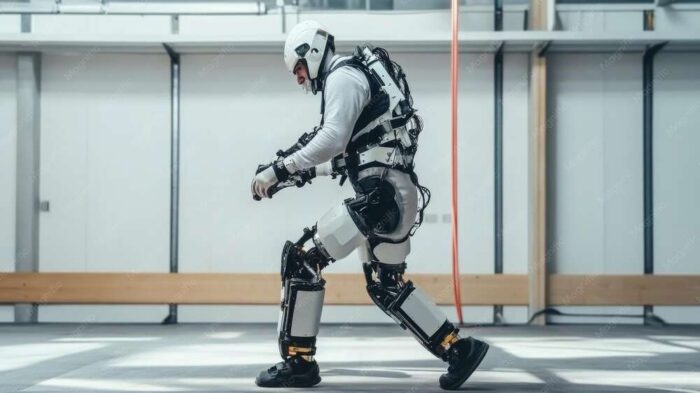
Running a marathon with an exoskeleton doing the work for you achieves the opposite of the point of running a marathon. Crossing the finish line faster isn’t the point.
Likewise if you used an exoskeleton to lift weights and could bench a thousand pounds or to play tennis so could beat Federer, etc.
Using the exoskeleton transforms an activity designed to build coordination, fitness, and strength achieves the opposite. While “lifting” heavier weights, your muscles actually atrophy.

What AI does to our minds
What that exoskeleton does to our bodies, artificial intelligence does to our minds. We “achieve” more but do less. Our minds atrophy.
Our minds atrophying means we become less intelligent, less creative, less resilient, less self-aware, less emotionally aware or skilled, less able to navigate relationships, and less social. More fragile and helpless. Kids even more so.
Meanwhile, we keep doing more equivalents of finishing more marathons faster with less effort, so if we use measures like GDP as proxies for health, safety, security, and happiness, we think we’re succeeding. Meanwhile our minds become the mental equivalent of the body on the right in the picture above.
The bigger issue
What’s the point of running a marathon?
If it was just to cross the finish line, you could take a taxi and finish even faster.
The effort is the point.
What’s the point of life?
But what about using it to help others?
What if we use AI to help others, not ourselves? Doesn’t it help us help others more? I covered the effects of AI on society in Should I fear posting concerns about artificial intelligence?. You might help individuals here or there, but the overall effect is to reinforce dominance hierarchy.
Why do we pursue AI then?
If AI hurts us as I say, why do we pursue it so much? Beyond just pursuing it, we are pursuing it more than nearly any technology ever.
We are responding to our situation, which motivates an arms race. Each person’s incentives in the immediate short-term pay off to pursue and use AI, even if the long-term pay off is negative.
If there are no winning moves, change the game. That’s what my upcoming book is about. Stay tuned.