734: Alon Tal, part 1: Israel, Hamas, and overpopulation from a former Knesset member

Last month I read Hamas-Israel story from an angle few will touch, but is critical: overpopulation, which I wrote about in my post Overpopulation in Israel and Gaza. The population in Israel and Palestine have both more than quintupled since 1950. There are plenty of sources of problems there, but not many places can handle that kind of growth, especially when mostly desert. The article led me to read Alon's book The Land Is Full: Addressing Overpopulation in Israel. You can't understand the situation there without including population---including human violence and environmental degradation. Alon isn't only a professor. He also served in the Knesset, Israel's parliament. He's one of the few politicians to talk about overpopulation. In Israel it's impossible to miss, though many people…

0 Comments

I will stake my floor as clean as anyone’s, but the sponge I clean it with is nearing the end of its life

I contend that my floor is as clean as any you'll find. One of my sidchas (maybe standard operating procedure) is that I clean it every six days as part of my six-day exercise cycle. I used to clean it before lifting, but realized I get on the floor more for my Turkish Get-ups so clean before it. I've gotten complements on my floor's cleanliness, which comes despite how much lint and dirt is in the air. Two years ago I posted pictures of how old my sponge looked in a post Why you shouldn’t live sustainably (not really): Coming clean about my shameful sponge. I wrote "It’s in tatters. But . . . it still cleans the floor. Why get rid of something that…

2 Comments

This week’s selected media: November 27, 2023: The Fiery Trial, by Eric Foner, My Life on the Road, by Gloria Steinem, and more

This week I finished: The Fiery Trial: Abraham Lincoln and American Slavery, by Eric Foner: Another great book by another great writer about Lincoln. This one focuses on his views and actions on slavery, which evolved over his life, especially during the Civil War. Wikipedia wrote "The Fiery Trial won the 2011 Pulitzer Prize for History, the Bancroft Prize, and the Lincoln Prize. The New York Times Book Review listed The Fiery Trial as one of its 100 Notable Books of 2010, writing, 'Foner tackles what would seem an obvious topic, Lincoln and slavery, and sheds new light on it.'" My Life on the Road, by Gloria Steinem: I saw her speak twice this year, once at Cooper Union the other at an event for…

0 Comments

733: Jacqueline Bicanic, part 1: Listener as Guest: Australian University Student, Very Active in Sustainability

Jacquie emailed me that this podcast is inspiring her. She wrote that she'd "always had a spark of interest in sustainability, but I mostly followed the herd mentality and went about my life not really making a conscious effort & just thinking about ways I could reduce my impacts. In the last couple of years, it’s like jet fuel has been added to that spark and it’s changed the trajectory of my career aspirations, and had a significant impact on my life as a whole. . . It’s comforting to know that there are people all around the world who feel similarly to me, and it’s been inspiring to hear other peoples’ stories. I find this especially helpful on the days where I feel helpless/hopeless…

0 Comments

The Opposite of Travel and Destruction of Culture: Under 800 Steps from NY to LA.

While talking to a friend about how what people call travel isn't travel any more, he told me his friend counted how many steps he took on a trip from New York to Los Angeles: 800. That's not traveling. That's being transported. If I take 801 steps, I've put more effort into traveling. And going from New York to L.A., he isn't visiting a different culture or learning about humanity or the world. On the contrary, he's likely viewing the continent in between as flyover country---once home to millions of people with many cultures. The diversity of those cultures has been wiped out by our culture of taking and using unsustainable resources and assimilating and homogenizing them, if not destroying them by killing their members.…

2 Comments

Thanksgiving, Wine, Moderation, and More Appreciation

The BMJ (formerly British Medical Journal) found that wine glasses hold seven times more volume today than 300 years ago. Do we enjoy wine more or just more wine? I see people plow through volumes of food and doof without appreciating it. I contend we can attain as much enjoyment with the smaller amount. Not just wine, the whole Thanksgiving dinner. How? Expect to drink less but to appreciate the flavor more. Imagine we didn't have as much as we wanted whenever we wanted. I recently got some almonds in their shells so I had to crack open each shell for each almond. It took more work, but I found I appreciated the experience of eating almonds more despite eating fewer almonds. Is your goal…

0 Comments

Wants versus Needs: How we pay for our own misery

The twentieth-century introduced marketing based on wants instead of needs. The other was the shift in marketing from needs to wants. Podcast guest Amy Westervelt’s podcasts, particularly Drilled, documented this shift, especially through the work of Edward Bernays. Needs can be met. Once you have enough food, water, shelter, and a few other necessities, you can move to other things in life, like hobbies, family, arts, sports, and civic participation. Wants can persist forever. Marketers associating Virginia Slim cigarettes with female empowerment, Ford F-150s with masculinity, diamonds with love, and so on created unlimited demand. Instead of singing, we were sold music recordings to listen to passively. Instead of telling stories around a fire, we were sold televisions to watch passively. Instead of playing sports,…

0 Comments

732: Siddharth Kara, part 1: Cobalt Red: How the Blood of the Congo Powers Our Lives

Living unsustainably means you need resources beyond your immediate environment. It requires you take from others. When done on a cultural level, it's known as imperialism. When we take their land too, it's colonialism. When we take their labor, it's slavery. All of these things are happening in the Congo. If you think solar and wind are sustainable or avoid human suffering, read Siddharth's book Cobalt Red. If you listened to my last conversation with Adam Hochschild on his book King Leopold's Ghost, you know about the west's cruelty in the Congo. It hasn't ended. Adam put me in touch with Siddharth. The book will change your views on what we call clean, green, and renewable. Siddharth doesn't outright say it, but it seems every…

0 Comments

You Don’t Need a “Christmas” Tree—a pagan tradition. A reminder of the waste you can avoid.

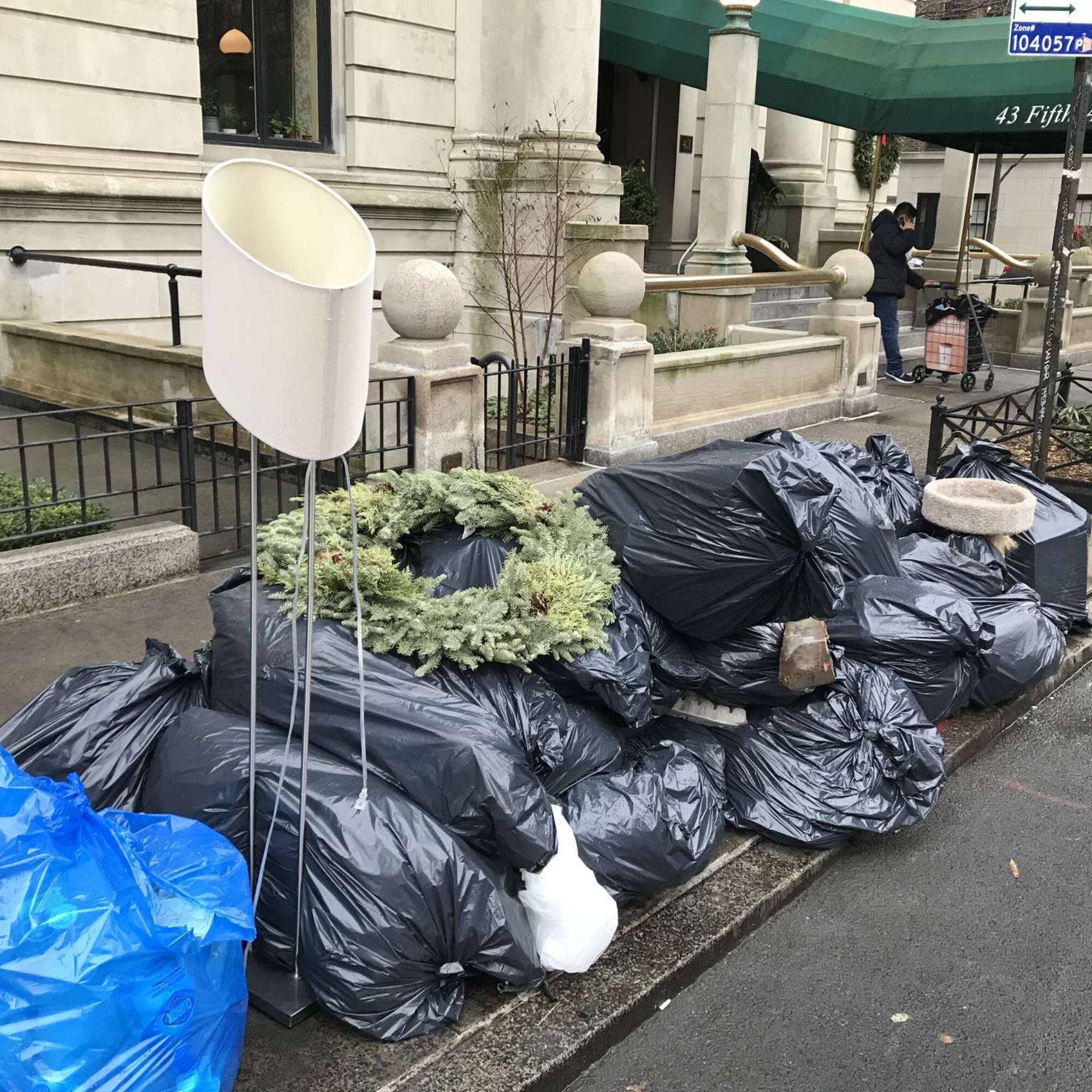
We're entering Christmas season, when Christians in the U.S. celebrate with a clearly pagan ritual of celebrating a birth in Bethlehem with chopping down fir trees. Presumably this tradition began in northern Europe, unrelated to the middle east. I propose instead of celebrating birth with death and mixing paganism in with Christianity, recognizing that cutting down trees was not likely ever appropriate, but not now. Are Christmas Trees Pagan? Inside The Origins Of The Evergreen Tradition Ancient History Of The Christmas Tree And Its Pagan Roots – How The ‘Forbidden’ Tree Survived Against All Odds History of the Christmas Tree: Pagan Origins Look at this mess from last year. We don't have to keep trashing the environment just because we used to. Can you show…

0 Comments

This week’s selected media: November 19, 2023: Poverty, By America, by Matthew Desmond; My Octopus Teacher; First Reform

I finished this week: Poverty, By America, by Matthew Desmond: I'd been recommended to read this book. It's recent and the library had a long waiting list so I ended up reading his earlier book Evicted. His view of poverty overlaps a lot with my views of the environment. If you want to help the Amazon, don't fly there. People there aren't causing the problem. The problem is in boardrooms in rich countries, where decisions are made to plunder and allow polluting. Still, people keep flying to the Amazon to protect it. My Octopus Teacher, starring Craig Foster: The reviews missed what I considered the most important part of this movie. They talked about the beautiful cinematography and his relationship with the octopus. They were…

0 Comments

731: Debate and Understanding on Population Projections with Wolfgang Lutz and Chris Bystroff

I hosted two professionals who model population growth with different views, some complementary, some conflicting: Wolfgang Lutz and Chris Bystroff. I learned from both and recommend listening to their episodes first. I've also recorded episodes with many guests and solo episodes on population: 475: We Can Dance Around Environmental Problems All We Want. We Eventually Reach Overpopulation and Overconsumption 294: Population: How Much Is Too Much? 251: Let's make overpopulation only a finance issue 250: Why talk about birthrate and population so much? 248: Countdown, a book I recommend by Alan Weisman I invited Wolfgang and Chris to talk about their different views and see if they could learn from each other and we could learn from them. That's this episode. I clarified I wasn't…

0 Comments

More precedent for expecting we can each live sustainably soon

People hear me suggest everyone living sustainably and think it's impossible. They don't want to give up their comforts and conveniences any more than slave owners wanted to give up theirs. Max Weber wrote in his essay, The Profession and Vocation of Politics (1919) “What is possible would not have been achieved, if, in this world, people had not repeatedly reached for the impossible.” Quoting Eric Foner in his book on Lincoln and slavery The Fiery Trial: "As late as 1858, the Chicago Tribune, a strong voice of antislavery radicalism, stated flatly that 'no man living' would witness the death of American slavery." It seems the impossible can become possible, then happen a few years after predicted to be more than a lifetime away. Watch…

0 Comments

Check out this review of my workshop on sustainability leadership

One of the participants in one of the summer workshops emailed me the following, noting "Josh, you can use this with my name if you wish for announcements or upcoming workshops." The next workshop begins in January, so if you're interested in actively leading our culture away from collapse instead of sleepwalking into it, claiming you can't make a difference, email me and join us in January. I should mention, the growing alumni community is growing more active, supportive, and coming up with new activities. You'll love it. It beats claiming nothing you do matters. From Josh Myrvaagnes: I wish to clarify what I got from taking the sustainability leadership workshop.  Before the workshop, I had managed to get my carbon footprint down to 12,000…

0 Comments

Diving into Eric Foner Talks

Regular readers know my development of seeing abolitionism as a role model movement for sustainability. My next book, almost finishing the final draft, will show the connection deeper than mere analogy or role model. Readers here and podcast listeners know my conversations with Manisha Sinha, James Oakes, and David Blight and reading their books, and reading Sean Wilentz's book. Connected with them all is Eric Foner. I've met him in person. Since he teaches at Columbia, I had friends who took his courses when I was an undergraduate (technically including Manisha, since I took a class from her too). I'm about to start reading his books. First I dove into his talks and conversations online. If you are American, love freedom, love learning, or any…

0 Comments

I hear young people seethe with rage at old people, especially boomers

I hear young people furious at Boomers in particular, but old people in general, for causing a problem, then abdicating responsibility on acting, instead saying "I am encouraged by young people acting." What jerks! Act yourself! Stop capitulating and continuing your insouciant damaging. You have more assets, connections, resources, and what it takes to accomplish things. Not acting personally but teaching young people just teaches them not to act and abdicate their responsibility too. You know they don't just listen to your words, especially when cowardly and empty. They watch what you do, which they learn more from. Boomers and old people can teach young people best by acting themselves. I like boomers' music, but not their cowardice.

0 Comments

Images that changed how we see the world and ourselves. Images that will change us more.

Before I was born, the image of Earth from space changed not just a generation, but forever how humans saw the Earth and ourselves. It's hard for me to imagine how seeing that image affected people seeing it for the first time. Here's one: Here's another: Projected images after sea-level rise Can you imagine how we'll feel about the Earth and ourselves after more sea-level rise? I'm sure you've seen images like the ones below. If you're like me, you think about them in the abstract, wondering if that outcome is really possible. It's not just possible. It's likely. Try to imagine actually seeing maps change like this. Imagine future generations knowing there was once more Florida but we wouldn't stop ourselves indulging despite knowing…

0 Comments

This week’s selected media: November 12, 2023: Pimpernel Smith, (1941)

I watched this week: Pimpernel Smith, directed by, produced by, and starring Leslie Howard: Since learning more about Raoul Wallenberg, I wanted to see this movie that inspired him. I watched it twice. The first time it just seemed dated and I didn't think much of it. The second time I caught more nuance. The closing speech resonated with my view of dominance hierarchies like our polluting, depleting culture and where they lead. I recommend it after learning about Wallenberg. According to Wikipedia: The film helped to inspire the Swedish diplomat Raoul Wallenberg to lead a real-life rescue operation in Budapest that saved tens of thousands of Hungarian Jews from Nazi concentration camps during the last months of the Second World War. When "Pimpernel" Smith…

0 Comments

Proslavery Thought in the Old South (1935) quotes, by William Sumner Jenkins

Earlier this year I posted The Ruling Race: Quotes on those who improve their lives on the suffering of others, corrupting them, with quotes from podcast guest James Oakes’s book The Ruling Race, which describes the demographics, beliefs, and views of slaveholders in the U.S. south. They are no more or less human than you. That book reveals how being on the dominant side of a dominance hierarchy corrupts one’s values. Today I'm posting quotes from another book on how Southern slaveholders thought of their culture. It's fascinating to see how people rationalize and justify what we consider horrible and evil, but they considered good, right, and normal. Not so fast, actually. You can see how they considered what they did wrong and knew others…

2 Comments

“But if it doesn’t change the world it’s not worth doing” Hogwash.

If you think anything anyone does has to scale to solve problems globally, you're lying to yourself. I propose a couple more effective ways to approach what you do. One way: Imagine that no matter what, nothing you do will influence anyone else. Now what should you do? A second way: How does this view make any less sense? "I had a dream I was in 1850 Alabama owning slaves. I thought to free them, but realized it wouldn't change the system, so I didn't, and didn't free them. I whipped them instead." Logically, it's the same. It's stopping harming people. In both cases, living with integrity helps you learn and lead others.

2 Comments

When people mean when they say “you have to make sustainability easy for people.”

Talk about acting more sustainably and people act like it's hard. When they say "you have to make it easy for people," they mean you have to make it easy for them. They're saying that they won't change, but hiding their intent, acting like they're just doing what everyone else does. And if all you do is make it easier, it will never be easy enough for them. If you're looking for extrinsic motivation, you'll never overcome inertia in the form of comfort and convenience. You'll never feel inspired or fulfilled either. Just empty. If you're polluting, depleting, and neglecting stewardship, it's worth challenging yourself. You'll be glad you did afterward.

2 Comments

What do you think of this person’s flying habits? (part 3)

I've been copying the travel comments from the newsletters from a friend into a file. I edited out people's names and put in bold the names of places, but otherwise it's as he wrote it. What do you think about this lifestyle? I think I once would have aspired to live this way. Even if I didn't want to fly this much when I flew, I think I would have felt some envy. Now I read it as empty. I see craving. Trying to fulfill wants but never satisfied. I don't know if I've found deeper values that others might identify too or if people will see me as out of touch not to take advantage of and benefit from the fruits of progress and…

0 Comments

What do you think of this person’s flying habits? (part 2)

I've been copying the travel comments from the newsletters from a friend into a file. I edited out people's names and put in bold the names of places, but otherwise it's as she wrote it What do you think about this lifestyle? I think I once would have aspired to live this way. Even if I didn't want to fly this much when I flew, I think I would have felt some envy. Now I read it as empty. I see craving. Trying to do business helping people but chasing something. Aren't there people nearby she can help? Abraham Lincoln didn't fly anywhere and seemed to have helped a few people. I don't know if I've found deeper values that others might identify too or…

0 Comments

730: Tony Hansen, part 1 : McKinsey’s Director of Natural Capital and Nature

Most of the partners I know at the top tier consulting firms have worked there since business school. Tony has a different background, as he describes at the beginning. Because the Firm influences people at high levels of business and government, therefore potentially able to help change culture, I'm very interested in working with them. They are as prone to inertia as any other group, so I'm curious how much they can change others. After all, it's hard to help someone stop a habit while you keep doing it. I consider the Spodek Method the most effective way to help people who want to lead others lead others---a mindset shift followed by a continual improvement. It opens the door to systemic change, which begins with…

0 Comments

Today’s Environmentalists in a Nutshell and Why They Fail

Here's what most environmentalists amount to (I'd love meaningful counterexamples): One heroin user telling another to stop using heroin while not stopping him or herself. One cigarette smoker telling another to stop smoking while not stopping him or herself. One gambler telling another to stop gambling while not stopping him or herself. You get the idea: one addict telling another to stop while not stopping him or herself. It doesn't matter how great your ideas and plans, without credibility and integrity, no one will follow.

0 Comments

End of content

No more pages to load