There Are No Adults in the Room. You Can Be the Adult. Your Skills Are Needed.

The main places we learn about our environmental problems: scientists, educators, journalists, politicians, and activists. As a result, we look to them for solutions, along with engineers and entrepreneurs. I may be missing a field or two, but hope I got all. All play important roles, but none of those fields develop skills and experience to change behavior and culture. Culture is key because if we could magically transform all our environmental problems to pre-industrial levels---greenhouse gases, plastic, population, etc---but didn't change our culture, we'd return to this state and keep going. I used to get annoyed that people in those fields for not trying to address and act on the actual problem: to lead cultural change. It seemed the scientists felt if they just…
0 Comments

Do you think like a nineteenth century anthropologist?

Sorry, today is a half-finished post. I'm not sure if anyone will read it all, but my main pursuit in it is the persistent myth people knee-jerk fall back on that if we don't pursue technological progress and market growth then we risk reverting to the Stone Age. After reading Atlas Shrugged and trying to learn what her fans like about her philosophy so much, I found an essay she wrote on ecologists. She bought this myth and let out all the stops attacking it. I'm no anthropologist, but her views and this myth seem founded on old imperial and colonial stories more designed to sustain a power structure and make people feel better about hurting other people than based on observation. I start the…

0 Comments

More syringes in our shared world and addicted culture: Philadelphia, August 2023

Please tell me there's another way to see it: The way we as a culture consume doof and chase comfort and convenience over meaning and purpose, people using heroin, fentanyl, and other serious drugs aren't an aberration from our culture, they're it's future. They aren't behaving qualitatively different than, say, someone who buys from McDonald's, Trader Joe's, or other doof place. They differ only quantitatively. I don't blame any of them. Few people choose to become addicted, but even if someone got trapped in addiction, it's unfair, but only the addicted person can unaddict themselves, whether they're addicted to fast fashion, flying, doof, social media, gambling, or meth. To clarify, I don't post about syringes and addiction to bring people down, but to avoid denying…

0 Comments

My Sledding Hill, August 2023

Since my TEDx talk in which I begin by talking about growing up near the best sledding hill in the world, each time I visit Philadelphia, I make a point of visiting it and taking pictures of it during different seasons. Maybe it just looks like any other park to everyone else, but it's incredibly beautiful to me. Near my mom's house in the "ghetto," as a neighbor described it, there was a hill we could sled on, but it ended in a brick wall and we got robbed there, so I valued this hill all the more. Here it is last month, at the height of the summer, lush and green.

0 Comments

This Week’s Selected Media: Evicted: Poverty and Profit in the American City, More Raoul Wallenberg videos, plus my book

This week I read to and watched: Evicted: Poverty and Profit in the American City, by Matthew Desmond: An incredible book that won the Pulitzer Prize for general nonfiction among other awards. Desmond lived among poor people getting evicted left and right in Milwaukee as well as landlords evicting them. He lived with them enough for them to open up. Eviction has grown as a practice in the past few decades. It disrupts more than you think in the lives and communities of everyone remotely connected. It destroys families, health, safety, community, and more. The lives of the characters overlap with poverty, theft, drugs, murder, joblessness, rape, lack of schooling, lack of healthcare, racism, sexism, and more. The book reads beautifully, though I found it…

0 Comments

Population, Energy Consumption, and how to Limit Pollution

People act like humans managing our population is some new idea. People have been able to manage our population as long as we've been human. When there's more energy and resources, people have bigger families. America's westward expansion followed by its extracting and burning fossil fuels created the material conditions for fast growth. In westward expansion, arable land was a proxy for energy since plants converted sunlight into energy people could use. People talk about educating women and girls as a way to lower population growth. It works, but as long as people believe there is more energy in the future, I predict people with access to that energy will want more kids. By contrast, make it clear there will be less energy in the…

0 Comments

The Food Coop I Grew Up With: Weaver’s Way in Mount Airy, Philadelphia

I posted pictures of food (and doof) I delivered as part of my volunteering yesterday. I visited Philadelphia recently, including the food coop that I grew up with my family shopping at, Weaver's Way, in Mount Airy. I see the place as an institution. It certainly helped form my views on food, community, and community-owned-and-operated businesses, though I only came to realize its value as I moved to fresh, local produce in the past decade or so. Now I belong to a coop in Manhattan. Here's my recent podcast conversation with my mom about it: Here are more pictures of it.

0 Comments

721: Jim Burke, part 1: The Most Beautiful Street in New York City?

After reading about 34th Avenue in Queens and watching the video linked below, I had to ride to see it. Over a mile of a once congested street was transformed into safer, quieter places people enjoyed, especially kids. There are three schools along the route. The kids can come out and play. I met Jim there, felt inspired to do something similar near me, and invited him to the podcast. He talks about what made it possible, what's happened since it started, resistance, celebration, and more. After we recorded, we walked around my neighborhood and he showed what streets would work best to start the program with. I'm already starting to act. Before we overbuilt streets for cars, people did fine without cars. Once built,…

0 Comments

Pictures of recent volunteer deliveries

A practice in the volunteering I do is to take a picture of what we deliver and post it to a message board. People thank each other and it makes everyone feel better. It builds community. I haven't posted many pictures lately. I like just delivering the food and the thanks of the people who receive it. Still, the pictures end up on my phone. I usually delete them since the reward has already happened, but for some reason this time I sent the pictures here. Here are some pictures from recent deliveries to the community fridge. They're in no particular order. One or two might be from a different volunteer, but I think they're mostly mine. I recommend volunteering. more

0 Comments

720: Maya Van Rossum, part 2: You Don’t Have a Right to a Clean Environment. You Have to Work for It.

Do you think government should protect people's life, liberty, and property? What if it turned out it didn't, if it said other people could destroy your life, liberty, and property, and would help them do it? That's what pollution does. A lack of a clean environment means that someone polluted it and hurt you, your children, your loved ones. You don't have a right to a clean environment if you are an American, or likely anyone. Instead, others have the right to destroy your life, liberty, and property. Three states have amendments where you can sue for it, but it's hard and the nation doesn't overall. What would you do if you lost your right to free speech? Would you not work like hell to…

0 Comments

“Josh, You Can Grieve Your Loss Too”

I've posted about my September 11, 2001: We called the company I co-founded Submedia. We filed the patent in 1998. Our first investment came in 1999, enabling us to pay ourselves salaries and hire people to develop prototypes and create partnerships with subway systems. Atlanta’s system signed first, followed by the PATH system connecting New York City and New Jersey. Coca-Cola signed in 2001 as our debut advertiser, beating Nike by an hour in the bidding. These were blue-chip advertisers and demand was high. I had started taking tentative steps toward living the lifestyle of a successful businessman. I bought new, higher quality clothes and furniture, flew to California to visit national parks with friends and Miami for parties. I ate at more at fancier…

0 Comments

This Week’s Selected Media: Scenes in the Life of Harriet Tubman and Wallenberg: A Hero´s Story

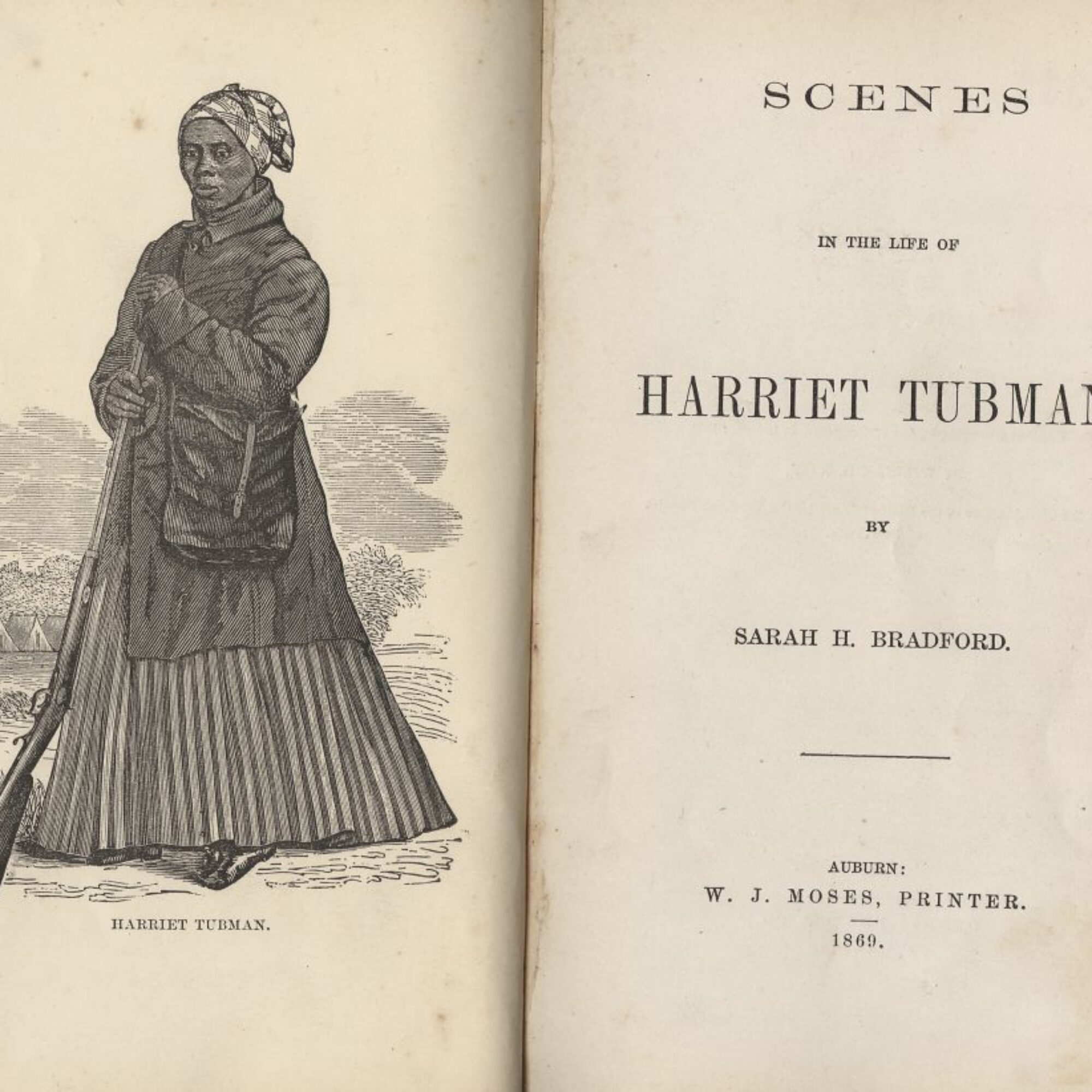
This week I listened to and watched: Scenes in the Life of Harriet Tubman, by Sarah H. Bradford: This 1869 book is in the public domain, so I listened to the Librivox recording. The more I learn of Harriet Tubman, the more I find her inspirational and relevant to sustainability. We need role models of people who had incentive to lay low but acted. As a former slave, she would have been safer laying low. Instead she went back into slave territory over a dozen times, saving seventy people. She worked with the Underground Railroad, which collectively saved about a hundred thousand. During the Civil War, she used the skills and experience from saving slaves as a spy and scout for the Union Army. She…

0 Comments

719: David Blight, part 1: From Abolitionism to Sustainability

Regular listeners and blog readers know my developing abolitionism as a role model for a sustainability movement. I've hosted several top scholars on the history of abolitionism in England and America, as well as the relevant constitutional law. Today's guest is a top historian and I found our conversation fascinating. He knows the history like an encyclopedia and can analyze it to answer my questions immediately. We talk about anti-slavery politics, abolitionism, Frederick Douglass's interpretation of the Constitution over time and in comparison to William Lloyd Garrison's and slave owners', and more. The big question we pursue is can we use the Constitution to make our nation sustainable? If so, how? You'll hear I'm narrowing in on answers. David and I will speak again. This…

0 Comments

Why so many cars with no mufflers?

Another evening in Manhattan, meaning more cars going by without mufflers, or with mufflers modified to make a lot of noise. I remember the trend beginning during the pandemic: I guess people modified their mufflers to make random BANG! BANG! noises. I think the trend started or expanded during the pandemic because police stopped enforcing so many laws then. Why unmuffle cars? I doubt they change the car's performance. I think they people doing it would say they do it to make their cars and motorcycles sound like race cars. Just a guess, but I think they do it to show status---that is, to exert dominance by showing they can act with impunity. But why something that bothers people? Why not do something that contributes…

0 Comments

718: Albert Garcia-Romeu, part 2: Psychedelics and Appreciating Nature Where You Are

I couldn't help asking question about the field of psychedelics research beyond our last conversation. He's a professional at the top of the field and well-connected. I started by asking him about comedy and psychedelics, after reading a funny piece in The Onion about it. He responded seriously, after all, there's a lot of humor in psychedelics. Then he shared about the growing communities of professionals and non-professionals. We both talked about trends in tourism, psychedelics, and sustainability. A lot of people are flying around and doing other things that lower Earth's ability to sustain life in the name of helping. They're achieving the opposite of what the marketers sold them on. Others are homogenizing and assimilating cultures in the name of promoting and protecting…

0 Comments

Solutions to Food Waste

I wish I could express the dismay I feel at seeing how much good food people throw away. Or, for that matter, how much people claim eating like I do costs more, often from the same people. I don't see how not throwing away food costs more than throwing away food. Maybe exasperation as much as dismay. Anyway, my (partial) solutions to food waste: If you buy food, eat it. If you aren't going to eat it, don't buy it. If a restaurant gives too big portions, don't eat there. Avoid doof and don't confuse it with food. Never call doof food. You might say, "Of course, Josh, no duh." But people don't do these things and they can. They save money and are more…

0 Comments

If you associate managing population with racism, sexism, Nazis, eugenics, forced abortion, or government coercion, you’re part of the problem

When people who understand our environmental problems talk about population, they have to pussyfoot around the issue since other people will almost inevitably respond with some Twitter-like attempt to checkmate them by accusing them of racism, sexism, Nazism, or promoting eugenics, forced abortion, or government coercion. That knee-jerk association shows that person's ignorance more than anything useful. Nazis promoted economic growth and built autobahns (highways). Should we associate economic growth and highways with fascism? It's time we stop backpedaling and not feel compelled to take their ignorance seriously. More humans are alive today than Earth can sustain. Humans have managed our populations since before recorded history. We can do so today with compassion and without pain or unfairness. That's all there is to it. No…

1 Comment

Yoga pants and athliesure are popular. Are they 100 percent plastic?

A few years ago I led an Earth Day workshop at Lululemon's flagship store on Fifth Avenue. I think it's a flagship store, anyway. The main guy leading thing from Lululemon's side told me how much he loved the company's culture. He said at the store, despite him working and others shopping, everyone felt like they were part of a community of mutual support. Since I focus on sustainability, he added that he grew up as a surfer in Australia and was sensitive to ocean plastic. It dawned on him that nearly every product Lululemon sold was plastic and would end up in the ocean for centuries. It would become this: Since then, yoga pants and athliesure have increased like crazy. A lot of it…

0 Comments

Selected New Experiences, September 3, 2023

I've been posting Sundays about the books and movies I finished that week. This week I didn't finish any new books or movies, but I did a few new things. A New Vegetable for Me: Jicama I discovered a new vegetable this week, jicama: I'd never heard of the vegetable, but I saw a bunch of them in the food scrap bin when I dropped mine off. They looked like radishes, turnips, rutabagas, or odd potatoes so I took them from the scraps and brought them home. They were mildly sweet, but I couldn't identify them. I showed them to Evelyn from the spring workshop and she immediately identified them. I looked them up and now I'm enjoying them without abandon. By the way, the…

0 Comments

Colonialism disguised as travel

I was looking up indigenous cultures from New Guinea and stumbled on this video. It looks like it's showing a lovely, diverse place to expand your horizons if you're a wealthy American or European. Every bit of of it destroys the cultures and environment it purports to celebrate. It's the insouciance I described in colonial cultures in Insouciance, colonialism, and sustainability. The travel the woman in the video presents is just going to the zoo. It isn't even travel. The part where she says she'd pick a short flight over a bumpy car ride . . . that's not travel, that's effortless. It's the opposite of "it's the journey, not the destination." It's Refusing the journey in favor of the destination, while wrecking both. The…

0 Comments

717: Pamela Paul: Writing on Controversial Subjects With Confidence

I met Pamela Paul after she mentioned previous guest John Sargent in a piece, There's More Than One Way to Ban a Book. I found her column covered issues others shy away from. I was curious what motivated her. We talked about what motivates her to write, how she chooses her columns, and how she writes. I was looking for encouragement to take on difficult topics with confidence, since I'm doing it in my book. I'm concerned my book could be maybe not banned but attacked for taking on topics people tell me to shy away from. She gives an inside view of an industry and vaunted institution. She also encouraged me a lot. If you're interested in exploring your boundaries, I expect her words…

0 Comments

Carbon offsets increase CO2 levels in the atmosphere. They do not decrease or offset them. They increase them.

People keep misunderstanding carbon offsets. It's simple when you see that there are two carbon cycles. Fuel we burn for jets comes from outside the biosphere. On any human timescale, it's new carbon. It adds to CO2, methane, and other greenhouse gases as well as ocean acidification and other environmental problems. Planting trees or anything short of putting carbon out of the biosphere for all human time scales just shuffles it around the biosphere. It will eventually make it into the atmosphere and oceans. We have no viable technology that can put carbon on any level relevant to solving the environmental problems it causes out of the biosphere for all human time scales. Maybe one day we will but today we don't. Therefore, an offset…

0 Comments

See me on the Compassiviste videocast

Ali Horriyat founded a group called Compassiviste. In its words: Compassiviste is a non-profit organization dedicated to fostering a more compassionate society. We actively promote empathy, social impact, and environmental conservation through various initiatives. Our mission is carried out by encouraging mindful consumer activism, leading influential charitable drives, and leveraging impactful innovative technology to make a tangible difference. Join us in our endeavor to create a more caring, sustainable world for all. Ali recorded a conversation with me for their second video. First, a few words about Ali from an article about him: "former financier Ali Horriyat was one of the richest people in Canada with a reported fortune of $100 million. However, he decided to walk away from his jet-set lifestyle to rediscover his…

0 Comments

Graffiti with my name: Who is King Joshua?

I don't know who is making this graffiti with my name on it, but I'm not complaining about it. I wonder who King Joshua is: Apparently someone else wonders too: I also didn't color it red, nor remember seeing concrete etchings filled in like that before. Others are keeping it simple, I guess someone born thirty-one years ago. I was in college in 1992. EDIT: Another sighting, this time on Sixth Avenue:

0 Comments

716: Arnold Leitner, part 2: How much energy and power do you need to be happy?

How do we affect others and how does it relate to what brings meaning to life? I'm surprised it took this long for one of my conversations to cover the meaning of life, but I'm not surprised it came with a fellow physicist. Being able to talk quantitatively about nature comfortably, from lots of practice, lets us understand patterns of what's happening. Arnold can also talk with integrity for living by the values he talks about. We see the challenges similarly, though I focus on changing culture and he focuses more on technology. Talking about culture and meaning comes later in this conversation. First we talk in numbers about the patterns he sees in power use, then we expand to reducing battery needs overall, though…

0 Comments

End of content

No more pages to load