Entrepreneurship


Two types of students?

I teach, but not how nearly all my teachers taught me. I teach experientially. I try to avoid lecturing. I try to include in the classroom the challenges life will challenge students with, not abstractions. Nearly all my students come from years of lecturing and abstract learning. I find two broad types of students. I don't think they're different types of people. I think they come from different types of backgrounds. The first type wants to learn about leadership or entrepreneurship. The second type wants to learn to do them. I spent most of my life and education in the first type. Obviously, I've moved into the second type and prefer it. Which type are you of the following, if either? The first type often…

1 Comment

Take my entrepreneurship and sales classes at NYU this spring!

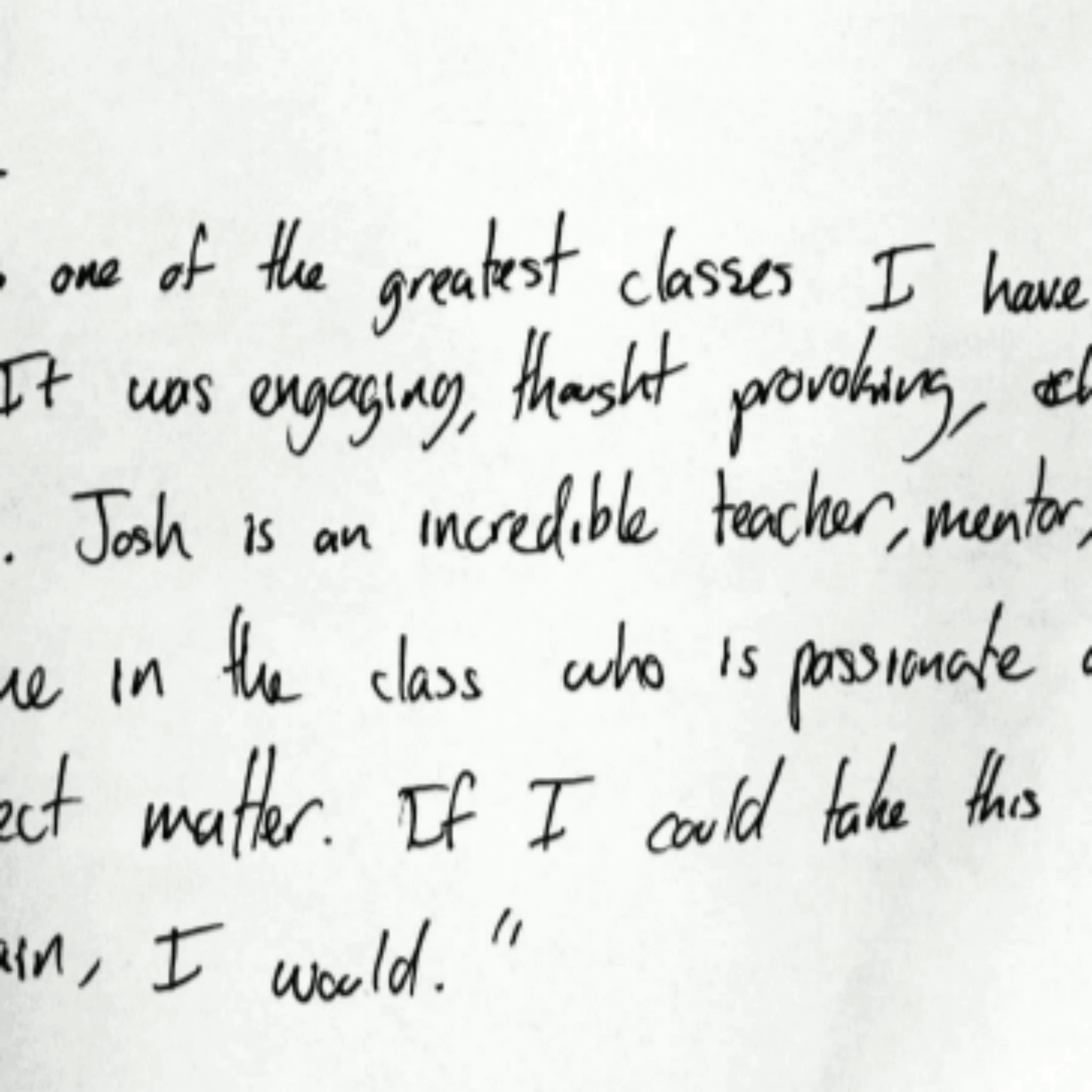
You can get results like the aspiring entrepreneurs in my course last semester that I posted about yesterday, the ones who wrote "This is one of the greatest classes I have ever taken. It was engaging, thought provoking, challenging, and fun. Josh is an incredible teacher, mentor, and friend to everyone in the class who is passionate about the subject matter. If I could take this class all over again, I would." and "Message for future students: Take the course seriously. Take advantage of every aspect of the course... it's easily been one of the most valuable courses I've taken." I'm teaching an accelerated version of the course for working professionals at NYU's School of Professional Studies, starting February 3. It's a six-week evening course…

0 Comments

“One of the greatest classes I have ever taken. It was engaging, thought provoking, challenging, and fun.”

I compiled feedback from students in the entrepreneurship class I taught at NYU last semester. Though the students were undergraduates, I taught basically the same exercises as I do with executives and seasoned executives, who get similar results. As much as my vanity would like to take credit for some of these reviews, more credit goes to the style of teaching I use---inquiry-driven project-based learning---and the people who developed it over the past century or so. I'm using what works. As you can tell, though the course was nominally about entrepreneurship, this active, experiential style also made it about responsibility, initiative, hustle, empathy, and other deeper and broader areas than just academic or abstract information. Also, of course, most of the credit goes to the…

0 Comments

Technology comes from teams of people

Many people look to technology to solve problems. Technology has solved many problems. It helps us travel around the world, communicate with people anywhere instantly, makes amazing special effects in movies, and all that stuff that dazzles us. I think a lot of people see technology as something that sprouts out of laboratories or the minds of people so unlike them they call them geniuses and consider them superhuman. I see it differently. Technology comes from people. And almost never one person, so teams of people. The more you can manage and lead people, the more you can create technologies to solve problems. If your goal is to get rich with technology, knowing how to work with and lead people can get you rich with…

0 Comments

When someone says “America is losing ground to China or India,” watch your wallet

Politicians tell you America is "losing ground" to other countries all the time. A search on "America is losing ground to China India" returns tons of results, many fear-mongering. This language comes from a misguided belief that business and trade are zero-sum competitions, that if someone elsewhere gets a deal then you lost it. If you want votes and don't mind sowing fear, anxiety, and xenophobia, great. But people succeeding elsewhere doesn't have to mean you are losing. On the contrary, you could see people succeeding elsewhere as increased opportunity for more business and trade. In other words, people always have problems and I can always help them with them enough for them to pay me for it. Other countries prospering means I can help…

0 Comments

Everyone gets distracted. Here’s how to overcome it.

A student in the online entrepreneurship course I'm creating asked about distractions. When he wants to work, he often gets distracted. I think me answer will help others so I'm sharing it here. Most life-long valuable things have long-term, non-urgent reward. Things that have immediate reward or urgency will distract. For example, if you want to do well at school, the reward for working on a project may come days or weeks later when you finish. Meanwhile, if you clean your room, play a video game, or eat, the reward will come in seconds. I've found the most effective way to stay on course is to start with awareness. To realize that there's nothing special about me that makes me lazy---rather that humans have a…

0 Comments

Taking responsibility for my airplane flight’s pollution

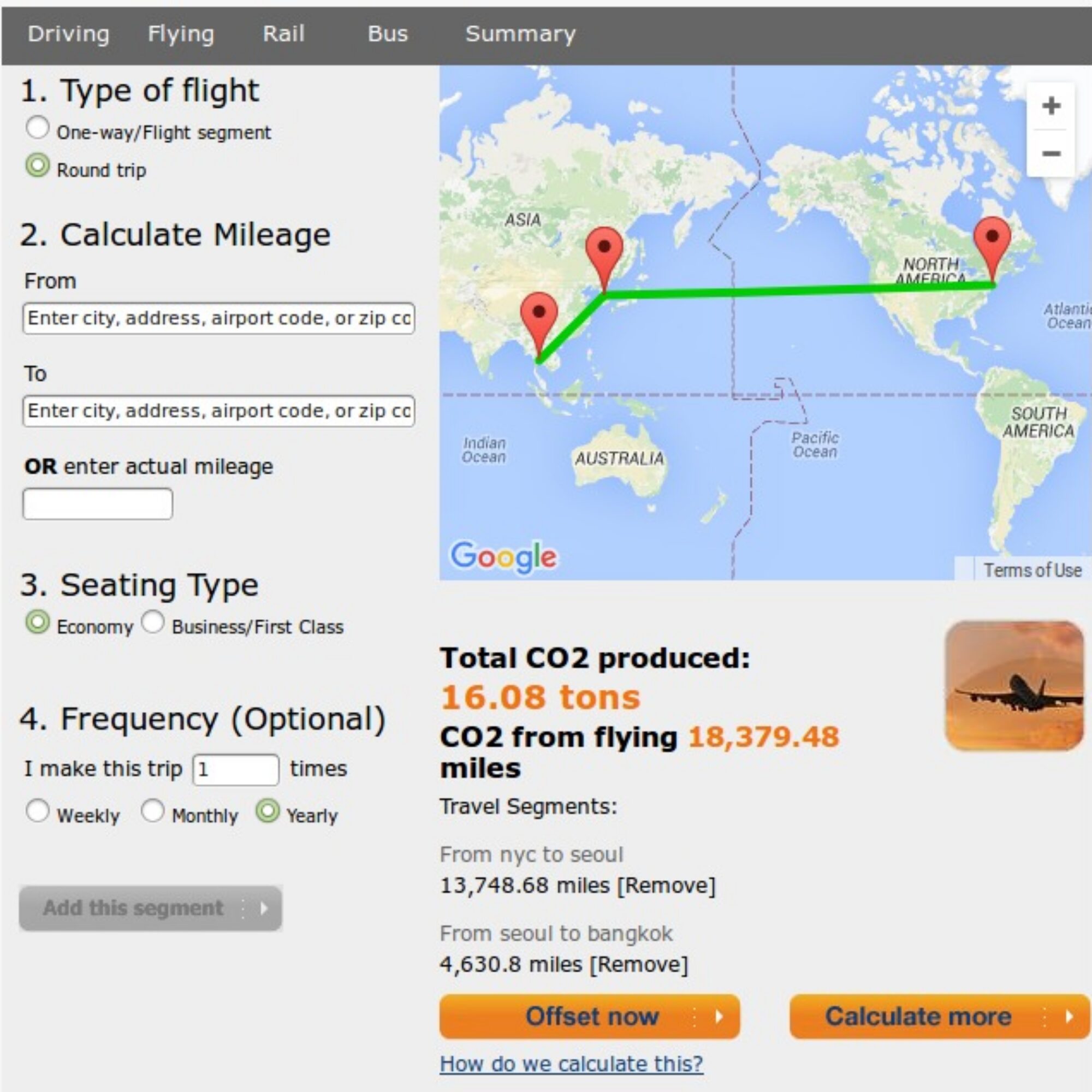
I have my first flight coming up since my experiment with not buying food that requires throwing packaging away, as told in Avoiding food packaging Buying no food with packaging, eighteen days and counting Bought first food with packaging after 2.5 weeks Restaurants make "entertainment for your mouth," designed for profit, not health. Same with packaged food. Eating at restaurants seems weirder the more healthily I eat. Same with pre-prepared food. Justified! Research confirms that restaurants aren't that healthy. Anyone who spends time with me knows I've avoided polluting more than most for decades. Still, that experiment amplified the trend. (I should also mention that the experiment also led to discoveries about food that led to my most delicious, healthy, convenient, enjoyable, etc diet change…

2 Comments

A coaching client started her firm and rang the opening bell of the New York Stock Exchange

Who doesn't like good news on a holiday? A few months ago a long-term coaching client (and friend), Tina Powell, left her job to act on her dream to start her own company, based on my favorite reason to start a company: an underserved market niche. She is a financial advisor and is starting SheCapital, an automated investment platform for women. Yet more to her credit, she's starting it without just leaving her old firm. She's working with them to everyone's mutual benefit. Not long after she started her firm, to coverage in the Wall Street Journal and more, she rang the opening bell of the New York Stock Exchange. What surer sign of respect from the finance community can a young company get? She…

0 Comments

Sugar’s profit

It must be one of the most profitable innovations ever: to remove the nutritional part of foods and selling the mostly sugar that remains. Fruit juice, table sugar, white flour, corn syrup, agave nectar, and so on. What's left tastes sweeter. It lasts longer on the shelf because it lacks nutrition for the life forms that would decompose it. It motivates people to consume more of it. Without fiber, it stops them from stopping themselves from eating. It lowers costs, increases demand, and leads the consumer to addiction. People destroy their health to partake in the physical pleasure you give them. They enlarge their bodies to take in more and more. They literally sacrifice their limbs and eyesight to continue consuming your product, something that…

0 Comments

Business successes that looked sure to fail at first

I detest the myth that you need a great idea to start a venture. Believing it inhibits people from pursuing their passions. Successful people don't believe it, at least not that I know of. Among my ways to undermine the myth is to show how most great ideas didn't start as great ideas. Let's look at some successes that looked like sure failures at first. Google started as a search technology in a market dominated by several portals---Yahoo!, Excite, Alta Vista, and a couple others. The dominant strategy at the time was to get big fast and beat the competition. How could two inexperienced graduate students compete with five or more well-funded behemoths? They tried to sell their technology for one million dollars to the…

0 Comments

Business plan competitions undermine entrepreneurship

Years ago no schools taught entrepreneurship. Some enterprising people had the idea to create business plan competitions to motivate entrepreneurially-minded people to create business plans. I applaud their idea and its implementation at the time. Business plan competitions filled a gap in academia by promoting action and learning by doing. That was generations ago. The academic gap no longer exists. Today business plan competitions are an academic distraction from business and entrepreneurship that undermine them. They distract the people they are supposed to help the most---those who know least about entrepreneurship. No customer bought a product because the company founder won a competition Entrepreneurship is about customers, profit, and other business fundamentals. Competitions skew students' perspective in many ways. They Focus students on judges instead…

0 Comments

Interviewed by Columbia Business School on Endurance Sports and Business Success

Do you like business success? Then read "Going the Distance," in Columbia Business School's alumni magazine, on how sports contribute to business success in an interview of me. Here is part of the interview, to whet your appetite: Skills mastered through endurance sports fuel success in business, says marathoner and serial entrepreneur Joshua Spodek '06. [...] First things first: why run?  One of the attractions of running is that there's a freedom to it. Pair of shoes, socks, shorts — and you're free. What is the biggest challenge you face when running long distances?  You're not doing this for physical pleasure; you're doing it for this emotional reward. To me, that mental challenge — thinking about it as an emotional reward — is just as hard…

0 Comments

Two thousand posts!

You are reading my two-thousandth blog post. Here's the list of all of them. I've posted daily since January 2011, plus twice daily around my North Korea trips since that content seemed different. Why? I write for two main reasons, one related to content, the other to process. The content reason is that writing helps me develop thoughts and ideas. When I started I thought I'd run out of ideas. Soon after, I found myself coming up with new ideas faster than I could write them. Many readers tell me they find things here they don't find anywhere else. I try to avoid writing what's already widespread while delivering valuable, especially actionable, material that helps people grow and learn about themselves and others. That helps…

2 Comments

Are U.S. universities today like U.S. automakers in the 70s and 80s?

The more I work in American universities, the more I see their decision-making and leadership behind the scenes. The more I learn about student-focused project-based learning connecting students' lives to what the schools are trying to teach and move away from more abstract academic approaches, the more I see alternatives to the education I got that I think serve students' and society's interests more. I care about students in schools like I care about customers in businesses: I view their needs and interests as paramount for guiding the organizations' direction. Faculty matter, as do employees, the community, and others, but I expect the organizations that focus on the people they serve will succeed most. Universities' leadership lies with its tenured faculty, often untrained in managing…

2 Comments

Do you trap yourself in mental jails?

"Nice guys finish last." Alone, this thought has probably condemned many men and women to abandon being nice. Accurate or not, combined with another belief, that the alternative to being nice is to be a jerk, further condemns people to being jerks. Jerks---people with one type of poor relationship skills---even when materially successful, seem likely to face emptiness in intimacy, what many consider the most important parts of their lives. We don't like jerks around us, so we don't want others to consider us jerks and shun us. But if the alternative of finishing last seems worse, we feel rational in choosing it. Whether nice people finish last or not, you can't much control. After you try your best, competitive outcomes depend on many factors,…

0 Comments

The laggard manifesto

I adopt new technologies slowly, often not at all before the trend passes. If you've ever thrown away something you felt you needed when you bought it and now can't give away, I believe you'll find doing so helps you enjoy life more. If you know that the middle of the Pacific, thousands of miles from land, has garbage polluting it, I suggest you consider slowing your adoption too. I'm not afraid of new technology. I helped build an x-ray observational satellite that's orbiting the Earth. I helped build neutrino detectors. I teach entrepreneurship to engineers. As a kid I bought an Apple 2e as soon as I could save up the money. I have six patents and built million-dollar displays with teams of engineers I…

0 Comments

Seeing my inspiration, Inside The Actors Studio, live

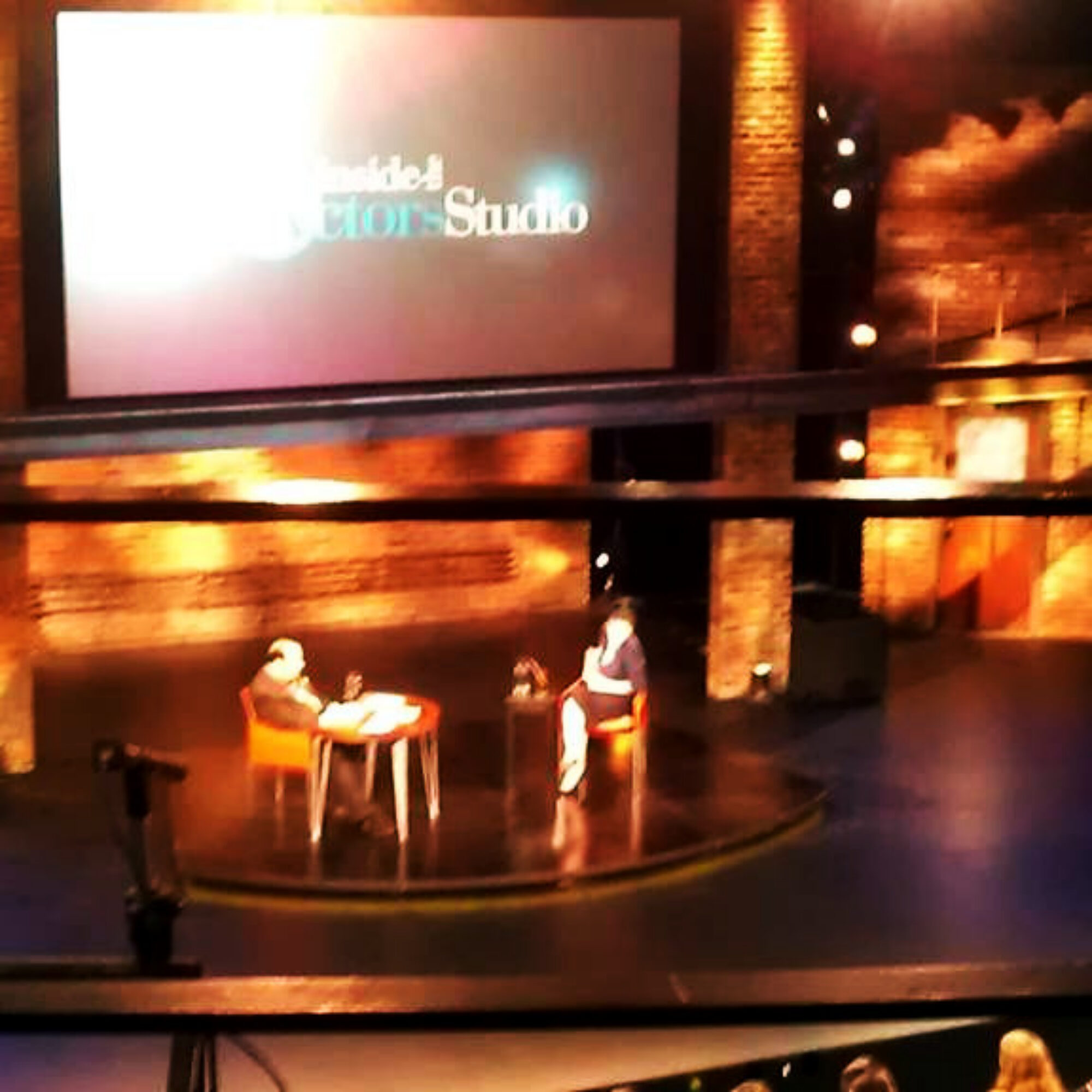
If you've talked to me in the past few years, you've heard how watching Inside The Actors Studio inspired me to learn how actors came to excel so much at skills leaders in other areas of life work hard to achieve but rarely do. On top of that, many great actors on the show dropped out, were kicked out, or otherwise didn't finish much school. Meanwhile, graduates of Ivy League business schools who studied leadership at the pinnacle of our educational system didn't measure up. The schools didn't even teach whatever the actors learned. My curiosity led me to discover about acting training, including its roots as far back as Constantin Stanislavsky, through the American Laboratory Theater, the Group Theater, the Actors Studio, and more.…

0 Comments

Cockroaches and equality

A couple weeks ago I was in NYU's "eLab," a space that promotes entrepreneurship. Besides a few administrators who work there, it's mostly students there, mainly connected with tech startups. That morning there weren't many people there. I sat on a couch near the entrance and the staircase downstairs. Twenty or thirty feet away, across the open meeting area to my left, a few students worked on their laptops in the booths. The place was pretty quiet. Morning light poured in the big windows. Out of the corner of my eye I saw movement on the floor. A large cockroach creeped slowly across the meeting area---large like a few inches long, between the size of a thumb and the size of a palm. I don't…

1 Comment

Read about my entrepreneurship course at the Princeton Tech Meetup

"If lean startup methodology doesn't work for you, then maybe you're a candidate for the alternative method of company creation espoused by Joshua Spodek, entrepreneur, professor and coach at Columbia and NYU. Spodek explained his process to an enthusiastic and receptive audience at the Princeton Tech Meetup at the Princeton Public Library on July 16, in a talk titled "8 Steps from No Idea to Funding."" So begins an article, "Professor/Entrepreneur Talks about New Method of Company Creation at Princeton Tech Meetup," in the New Jersey Tech Weekly that summarizes my July talk in Princeton. It covers my process at a high level, which will be in the course I'll soon release here that differs from the popular Lean Startup methodology the article mentioned. I…

0 Comments

The farm where most of my food this summer came from

Almost anyone who talked to me over the summer heard about how much I love the vegetables I've been getting through what they call Community Supported Agriculture. You pay a farm at the beginning of the season, then when the plants start growing, each week they deliver what's ready that week. I go to a drop-off location a few blocks from my home and pick up my share. Once a season I volunteer at the drop-off point, helping organize. They organized a trip to the farm, about 120 miles north of New York City, and I jumped at the chance to go. Here are pictures. I learned that the farm lies on a lake bed from eons ago, which they said made the land fertile.…

0 Comments

What can you recover from?

Anyone can plan something. It's harder to do it. If things went by plan they'd be easier. If you expected things to go by plan, you'd try more things. The problem is the unforeseen things and recovering from them. The more you can recover from unforeseen things, the more you'll try. The more you try the more you'll do. What can you recover from? How much can you recover from?

0 Comments

Join me for a workshop on entrepreneurial thinking and behavior over a delicious meal at a FED talk

I'm honored and flattered to have been invited to speak at a friend's gathering next Sunday, September 20th at her casual soirée in Chelsea, Manhattan, called a FED talk, like a TED talk but with home-made food. I'll speak and lead exercises in entrepreneurial thinking and behavior, which I consider broader than just entrepreneurship. You can think and act entrepreneurially in a big company, or without funding or the intent of starting a company. I went to the last FED talk, which was on negotiation and both learned and ate a lot. I hope to see you there! Here's the text from the announcement: Who's ready for more FED?? Following on the success of the first event, FED's next dinner party will take place on Sunday,…

0 Comments

More education doesn’t make you less capable, but universities make you think so

Academia has some serious problems. I give a lot of talks to graduate students on what they can do after graduate school, though the following applies to undergraduates too. Many of them are worried about finding jobs. I grab their attention every time with this question: When I was getting my PhD in physics, I thought the only fields I could go into were academia to become a professor, industry to work probably on something military-industrial, or wall street. I didn't want to do any of those. I felt trapped. You've all heard about people who drop out of school, maybe to start a company, and succeed? With more education, shouldn't you be better prepared than they are? So why do you feel worse prepared…

2 Comments

Op/ed Fridays: Academics studying leadership versus leadership

A reader sent me an article in the New York Times called "Rethinking Work." It began, "HOW satisfied are we with our jobs?" and continued about polls about job satisfaction and various people's views on work, implying we should think about work differently---we like work less for money and more for intrinsic reward. The author is a psychology professor. Articles like this come out all the time. I'm glad academics think about these points, but he doesn't suggest anything to do. He just writes. I suppose the writing isn't boring, but what's the point of suggesting things could be better without at least trying to act? I used to hold academics in high regard, I guess because in my field of physics, academics did most…

0 Comments

Leadership lessons from Frances Hesselbein, part 3

Over lunch Frances described to me her background. I had wondered how she got started, why when the CEO of Ford, Alan Mulaly, gave her a car, she picked it up near Pittsburgh. She told me about growing up near there and going to the University of Pittsburgh. If I remember right, she didn't finish. It struck me because she is yet another prominent leader who didn't graduate college. She's surrounded by the best and brightest---leading them, responding to their requests for advice---and didn't get there through traditional education. One of my main inspirations for teaching and coaching leadership end entrepreneurship experientially and actively was seeing the high emotional awareness and skills of the guests on the TV show Inside the Actors Studio, then hearing…

0 Comments

End of content

No more pages to load