Leadership


George Clooney on accountability

Following up yesterday's post on George Clooney on living well, I sampled another clip from the same interview in which he talked about accountability. The context is his winning an award for his work on Darfur. I think the clip illustrates how to keep focused on results, not accolades. And even to remember that the results you can achieve don't necessarily mean results that you want to achieve in the long run. Reporting on hidden problems helps -- how else can you try to solve them -- but it doesn't solve them. http://www.youtube.com/watch?v=xyl5vQCiOrk Accountability: without it things don't get done. Leaders almost necessarily have it because their team depends on them. Even if they don't have accountability, effective people ask for it.

0 Comments

Video: Bringing peace sooner: High-fiving North Koreans in Kim Il Sung Square

Usually I post North Korea posts separate from my main page, but I consider today's videos too-good examples of leadership not to include in the main page (despite being in the middle of a series of George Clooney posts). The scene: Kim Il Sung Square, Pyongyang, April 14, 2012 -- the day before the celebration of the hundred-year anniversary of Kim Il Sung's birth. Whether you like him or not, his country reveres and honors him. The equivalent in America would be the Mall in D.C. on July 3, 1976. When you see military parades of North Korea, you're seeing this site. Many North Koreans were there, mostly sitting in groups, as you'll see. I guess they wanted to celebrate the day before the main…

0 Comments

Observations on leadership and success from Inside the Actors Studio

I've watched a lot of episodes of Inside the Actors Studio. I've referred to it before and I'll keep referring to it as a resource for leadership because actors and leaders share this common element to their craft: part of our jobs is to recognize and manage emotions in ourselves to communicate them and create and inspire emotions in others. Actors tend to inspire laughter, tears, and catharsis whereas leaders tend to inspire motivation, dedication, and action, but those are just different ranges of emotions. Both crafts inspire emotions in others through identifying and creating emotions in ourselves. That common part of our crafts means the training of both crafts requires developing emotional intelligence and self-awareness. The field of acting makes that requirement obvious to…

0 Comments

An exercise in doing what you have to even when you don’t want to

Everybody faces tasks they don't want to start, know they have to do, but also know won't take that long -- things you might characterize like pulling teeth, holding your nose and taking your medicine, or grinning and bearing it. We all want to learn to motivate ourselves better. Examples include talking to your boss about a raise, talking to a significant other about a problem that's been bothering you for a while, or finally sitting down and doing your taxes. You know the task won't take that long. It probably won't even hurt. But you have to do it. When you read a lot of leadership and personal development literature, you come across some odd practices. Sometimes it helps more than you expect. I've…

4 Comments

How to take risks

I've written about my models for how to motivate doing things you aren't good at. Such skills are important in many fields, but especially so in leadership. More than having to motivate yourself to do things for the first time, you often have to motivate many others to do things they haven't done. One is my practice of having low standards the first time I do something, which motivates doing things the first time at all. I can always improve later. But I have to try once to get to later tries. Another is Martha Graham's statement: Nobody cares if you can't dance well. Just get up and dance. Great dancers are not great because of their technique, they are great because of their passion.…

0 Comments

Leadership in garbage we can learn from

I just read that Sweden is separating their trash so effectively, they're buying garbage from other countries. That is, their reducing-reusing-and-recycling programs work so well, their waste-incineration program is running low. Needless to say, reducing waste reduces pollution more than incinerating garbage, so one program starving the other helps the environment. According to Phys.org, Europe's average amount of trash ending up as waste if 38 percent. Sweden's is 1 percent. I shudder at what the United States' is. My home country doesn't lead in this area. It follows. Probably embarrassingly, at least for people who don't like to pollute the air and water their children breathe and drink. Since I started composting, my garbage amount decreased a lot. Cutting back on processed food reduces my…

0 Comments

An entrepreneurial example of leading by example

In September, 2001, the company I co-founded, Submedia, was installing its first display in Atlanta for our first big launch. We anticipated a lot of press. Giving away part of how the story ends, we did get a lot of media attention. The night before launch was crazy -- we had a few hours to finish installing the display, we had to prepare for the Fire Marshall's inspection the morning before the launch, and we had national, Atlanta-based, and possibly some New York-based press scheduled to attend the launch. At the pace we had worked before, we'd need more than a few hours to finish. Needless to say, we, nor anyone else, had ever installed or launched a commercial display like ours. We had no…

0 Comments

Why football is better than soccer. Actually, why any sport is better than soccer.

This post is about integrity. I like watching football. Watching a game or two on a Sunday is one of the main reasons I haven't gotten rid of my tv. Watching the Super Bowl in another country inevitably leads to people raised outside the U.S. talking about the superiority of soccer. They talk about how football has so many breaks in the action and something about grace or strategy. I see preferences between sports as a matter of personal taste so I don't find their arguments compelling. I don't argue back that football is better for the reasons I watch -- like how great players do such incredible things at the limits of what humans can do. Different sports have different rules resulting in different…

3 Comments

What is your model for leadership?, part 2

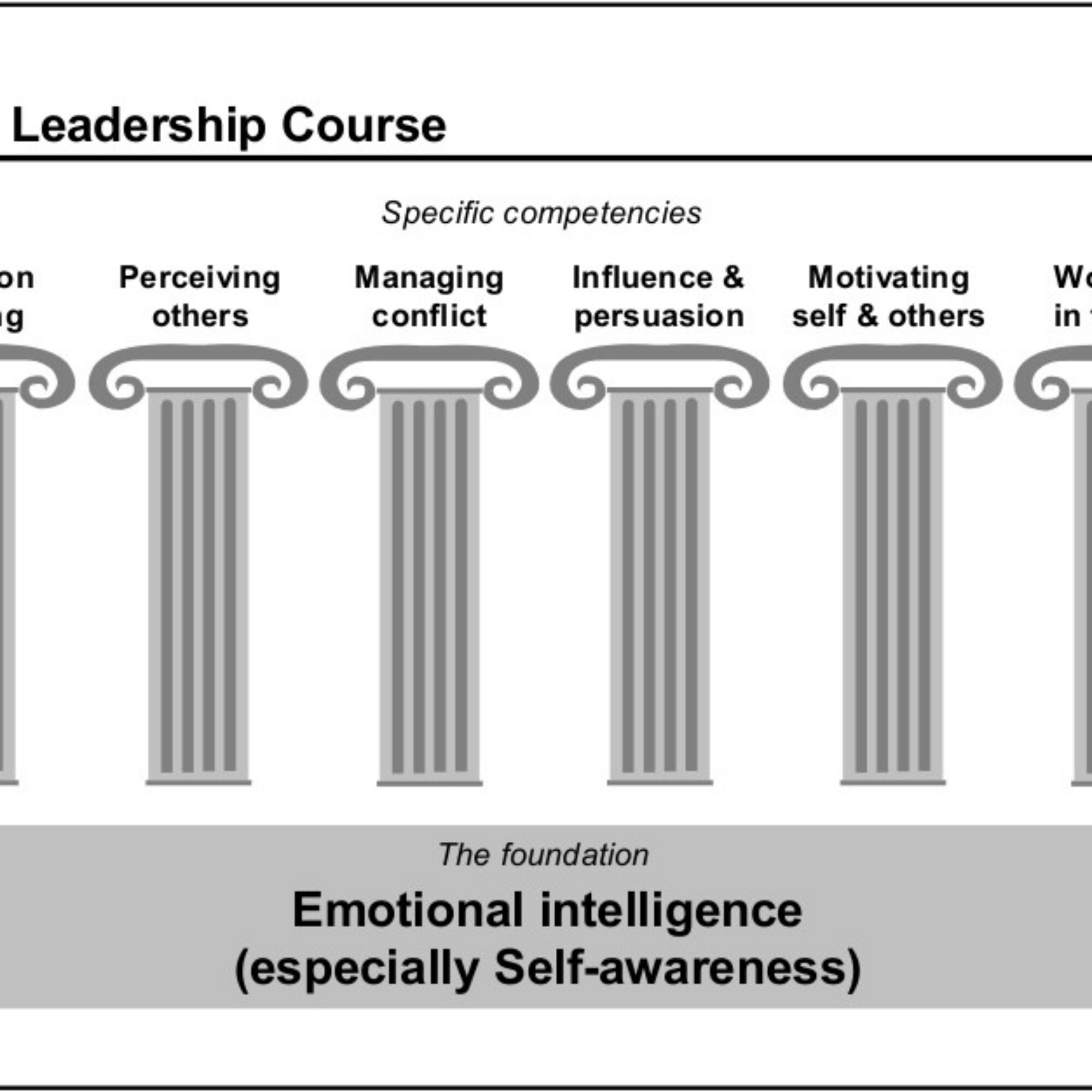
Following yesterday's post asking you about your model for leadership, you might wonder mine. I looked at my paper from the business school leadership class, but my model has evolved so much from then -- the beginning of my even asking the questions -- I don't see value in posting it. Elements of my leadership model Since then I've developed my Model of the human emotional system, which I've found tremendously useful in motivation, understanding, and leading others and myself, so I consider it an essential and prominent part of my model for leadership. Even that Model I've built on, for example how it interacts with the rest of you and how to use it (the Method). I also like Columbia's modeling leadership as six…

0 Comments

What is your model for leadership?, part 1

To ask what your model for leadership is is not just an idle question. It was the sole question for the final essay in one of my leadership classes at Columbia Business School -- one of the best classes I'd ever taken, including all undergrad and graduate school classes. Models influence your behavior strongly. Since people tend to do what they think is best (though not always what you think is best), at least I believe they do, their models for things determine how they act. If you have a model that leads to effective behavior, you might lead easily and well without having to try or think hard. If you have a model that leads to ineffective behavior, no matter how hard you think…

0 Comments

How you look at things solves problems, NASA-style

A scene from the inspirational docudrama Apollo 13 based on the true rescue of a disaster in space illustrates a great example of how different models and beliefs can motivate different motivations and behavior. The scene is the control room after a lunar mission suffered an explosion and three astronauts' lives were in peril as their ship hurdled through space with little chance at recovery. The characters are a fictional character representing NASA's public relations named Henry Hurt, an unnamed NASA Director Hurt interviews, and Gene Krantz, the Flight Director. This clip, though perhaps overly dramatized, shows different aspects of adopting different perspectives. Taking responsibility and looking forward versus accepting fate and looking to make excuses. Not basing your model on being right or just…

0 Comments

This weekend’s leadership development seminar in Shanghai sold out

I just heard that this weekend's leadership development seminar in Shanghai sold out the last seat. If you wanted to attend but can't now, there is a good chance I'll do another in March. Please email me if you would like to be contacted about it. Thanks to everyone with the Columbia community here for making this happen and all the work behind the scenes. I look forward to seeing people there.

0 Comments

Motivating with compassion but without empathy: telling someone to let go doesn’t help them let go

Do you ever find yourself trying to get someone to let go of something, to relax, or something similar, but they don't? You know if they just didn't worry so much or stopped caring about something so much, they'd have an easier time with the project, relationship, life, or whatever, but they just don't let go? You may be motivated by compassion, but I suspect a lack of empathy may be hampering you. I'll illustrate the perspective of the person you're trying to motivate with a story from my life. Fear of being judged performing in public This example is about performing in public. I use the context of singing karaoke, but you'll see it could related to any number of other situations, professional or…

0 Comments

Common objection 12: I’ve worked so long and hard but feel like I’m getting nowhere or going backward

[This post is part of a series on internal objections and blocks and how to overcome them. If you don't see a Table of Contents to the left, click here to view the series, where you'll get more value than reading just this post.] Objection I don't think you can significantly change your life, at least not at the beginning, without thinking something like I've been working on this for six months and I'm farther back than I was when I started. or I try so hard and I never get anywhere. For small or simple changes we may progress monotonically, but major changes don't seem to work that way. Example I'm sure you've had this feeling yourself. Underlying belief You get frustrated that progress…

0 Comments

Previously Unreleased Interviews with The Reverend Dr. Martin Luther King Jr. from WNYC

I don't celebrate all major holidays, but I celebrate Martin Luther King Jr.'s birthday. Every year I take time to do something special for the day. Usually I do something to honor his memory and achievements or learn more history. This year I have two things. First, a friend told me that WNYC just released four in-depth interviews of him. Each is about thirty minutes, so I got to listen to him speak -- not a speech or prepared anything. He was thirty-two years old in the first three (in 1961). The fourth was in 1967, with clips from 1966 (he was assassinated about a year later). I put the clips for you to stream below, but please visit the WNYC site yourself, which has…

0 Comments

Responsibility and accountability: expect stagnation without them

The other day I saw a post for a headline that caught my eye "On Scale of 0 to 500, Beijing's Air Quality Tops 'Crazy Bad' at 755" because I was just in Beijing. I remember early one evening looking up in the sky and seeing a low flying airplane. Actually, I only saw its lights in the smog. I got confused looking at it because it looked close, so I expected it to appear to move fast. But it was moving so slowly I figured it had to be very far away. Then I realized why it didn't look like it was moving. It wasn't. It was the light at the top of a building a couple blocks away. The smog was so dense…

0 Comments

See Michael Feiner in New York, February 19

I am helping organize a talk by my former Professor and leadership guru Michael Feiner February 19, 6-8pm in Manhattan. I'm helping organize it with the Distinguished Leaders Committee of the Columbia Business School Alumni Club of New York (you don't have to be a member to attend). Plans may change, but I think I'm going to introduce him. I'll copy the announcement below (here is a link to the original). His course was one of my best at Columbia Business School. Actually, I think it was one of the best of almost everyone who took it, since it was always one of the top one or two hardest to get into. The Pillars of Leadership: A Three-Part Series on Leadership Development Part 1: The…

0 Comments

Joshua Spodek on Leadership Development in Shanghai

EDIT: this event is sold out. There is a good chance I'll offer it again in March. Please email me if you would like to be contacted about it. Are you reading this from Shanghai or nearby? Then you probably like leadership, want to improve, and can attend my next seminar, brought to you by Columbia University's Alumni Association in Shanghai. Columbia Alumni Association in Shanghai proudly invites you to our Leadership Development Event In a two-day seminar, learn how to develop your personal leadership skills, self-awareness and emotional intelligence using the latest advances in cognitive behavioral science, evolutionary psychology, and positive psychology. The course is open to all area business school students, alumni, and colleagues. Class is limited to 80, so be sure to sign up early.…

0 Comments

Comparing biology and physics from a business leadership perspective

I studied physics to nearly the farthest levels you can at one of the great institutions. Now I study evolutionary psychology more. I've thought about these things a lot. As a practicing businessman and inventor, I look to nature -- physics -- for ideas to create and engineer to bring to market. As a leader I look to people -- biology -- to interact with, team up with, buy from, sell to, etc; in short, to influence. Sometimes I think about the fields and how I interact with them daily, not abstractly asking about the fields or as a researcher but in how I use their domains in my professional life. If you work on sales, you're using biology and psychology. If you invent something…

0 Comments

Rules are other people telling you what to do; Breaking rules lets you excel

Learning Chinese as I am, I'm learning a lot of rules of that language. If you've spoken to me in person over the past few years, you've probably heard my fun-with-language game to purposefully conjugate the verbs to be and to have wrong. I often say "How is you?" or "I has to go to the store." I'll be the first to admit the mis-conjugation is affected, but it's also fun. Some friends have adopted it too and we make a game of it. I mention the game now in the context of learning language to return to a concept I've written about before -- what rules are, how to play by your own, and how fun making your own can be (illustrated with Calvin…

2 Comments

Overview of Understanding leadership, values, meaning, purpose, importance, passion — six key concepts of this web page

Today I'll give an overview of the series I just finished on understanding the six key concepts of this web page:  leadership, values, meaning, purpose, importance, passion. What is value? What are values? What is value? What are values? (short version) Understanding others' value and their values What is meaning? How do I create more meaning in my life? What is purpose? How do I create more purpose in my life? Understanding leadership, values, meaning, purpose, importance, passion — Interlude on writing on emotions and emotional awareness so much What is importance? What makes something important? How do I have more important things in my life and less junk? What is passion? How do you find your passions? What is leadership? There, now that you've…

0 Comments

What is leadership?

Next on the list of concepts under my name at the top of this page is leadership. See earlier posts for values, meaning, purpose, importance, and passion. Unlike the other concepts, leadership intrinsically involves other people. At first that complexity makes it seem harder to understand, but I think it gets simpler in the end. I start my "Leadership through emotional intelligence and self-awareness" seminars by asking what leadership is, following how my core Leadership course began at Columbia Business School. Since understanding an apparently broad concept like leadership on its own can be hard Columbia's course talks about "six pillars" of leadership, each of which you can understand and learn more easily than leadership in general. You can break down leadership in different ways.…

0 Comments

What is importance? What makes something important? How do I have more important things in my life and less junk?

Next on the list of concepts under my name at the top of this page is importance. See earlier posts for values, meaning, and purpose. For something to be important, it has to change your life. If something doesn't affect your life, it's hard to call it important. And something changing your life means you do something different than you would have done otherwise. In other words, something important changes your motivations -- it motivates you. In other words, it affects your emotions. As with values, meaning, and purpose, if you want to understand something's importance to you, understand how it affects your emotions. How important it is stems from the characteristics of the emotions it evokes. Something evoking long-term emotions has long-term importance. Something…

4 Comments

Understanding leadership, values, meaning, purpose, importance, passion — Interlude on writing on emotions and emotional awareness so much

You've probably noticed I'm writing a series of posts on the main themes of this blog -- the words under my name at the top: leadership, values, meaning, purpose, importance, and passion. If you've gotten the idea now that I'm relating these concepts back to knowing your emotions and emotional system, I'm glad. I thought I'd take a post to explain why. The vagueness people throw terms around with makes it hard to work with them. When the terms in question are values, meaning, purpose, importance, leadership, and passion -- well, those aren't things you just vaguely want to hope for in life. If vague is all you can do, vague is all you'll get. If you understand these things precisely you can act on…

0 Comments

Vince Lombardi: What It Takes to be Number One

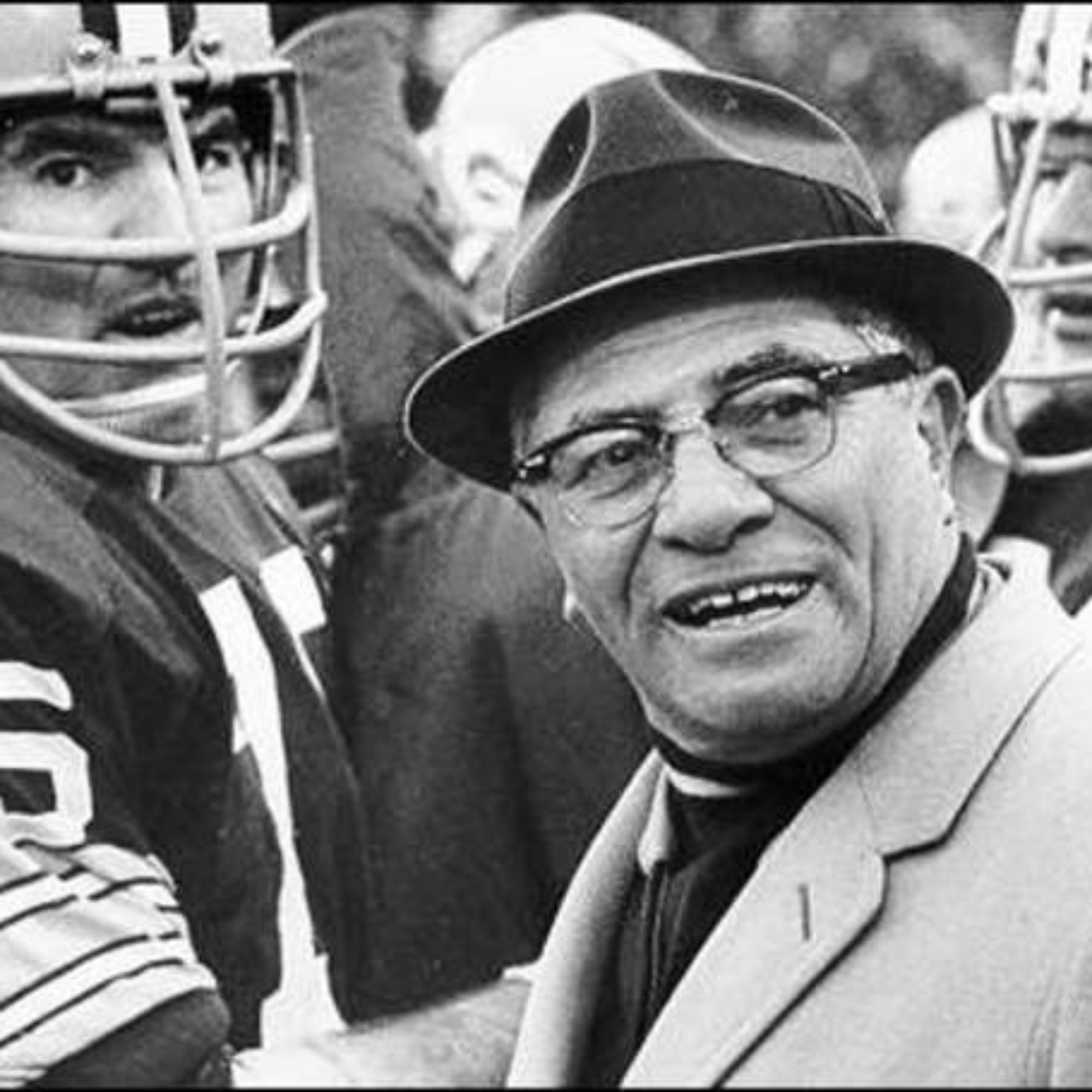
After a couple posts on sports, I'm putting up one of the great sports coaching quotes, by Vince Lombardi. According to Wikipedia Vincent Thomas "Vince" Lombardi (June 11, 1913 — September 3, 1970) was an American football coach. He is best known as the head coach of the Green Bay Packers during the 1960s, where he led the team to three straight league championships and five in seven years, including winning the first two Super Bowls following the 1966 and 1967 NFL seasons. The National Football League's Super Bowl trophy is named in his honor. He was enshrined in the NFL's Pro Football Hall of Fame in 1971. He never had a losing season as a head coach in the NFL, compiling an impressive regular season…

0 Comments

End of content

No more pages to load