Method acting, leadership, and improving your life, from James Lipton

I've written before about the television show Inside the Actors Studio and how much the young field of leadership training could stand to learn from the longstanding field of acting training. Below is an interview of the host of Inside the Actors Studio, James Lipton, describing the transformation acting training went through with Constantine Stanislavsky. Leadership training stands to benefit from similar changes, and that field inspires me to help those changes. As he described it, about a century ago acting replaced impressing others with expressing yourself, the goal of perfection with authenticity, self-reference and self-reverence with a system of exercises, focus on the external with focus on the internal, making yourself up with seeking truth, well-rehearsed lines with believing what you're saying. Everybody on…
0 Comments

We all feel emotions all the time

When someone gets animated others often describe them as emotional: "John is acting so emotional" "Jane got so emotional when Ryan said ..." and things like that. I'd like to suggest an alternative perspective I think you'll find more precise and useful: Everybody feels emotions all the time. What's the difference? When someone sits quietly reading, they aren't acting or feeling unemotional. I suggest the are feeling and acting on emotions as much as anyone. They may feel calmness, relaxation, satisfaction, or something like that, but those are emotions. They aren't feeling no emotion. Emotions motivate you. If you got out of bed this morning, something motivated you and you felt some emotion. No emotion means lying in your bed until you die. An animated…

2 Comments

I never take responsibility for someone else’s emotions.

I try to understand people. I think doing so improves my relationships with them and my understanding of myself. I find feeling compassion for others helps me improve my relationships with them too. Same with empathy. I find taking responsibility for my emotions helps me improve my life and keeps me from blaming others. I see taking that responsibility as improving my life as much as anything. Taking responsibility for someone else's emotions, on the other hand, I see helping no one. Did I just contradict myself? Why do I value compassion, empathy, and responsibility for my emotions but not responsibility for someone else's? "Josh," you ask, "aren't you undermining your compassion and empathy? Are you saying that if you saw a child lost and…

0 Comments

A doubly improved representation of Flow-related emotional states

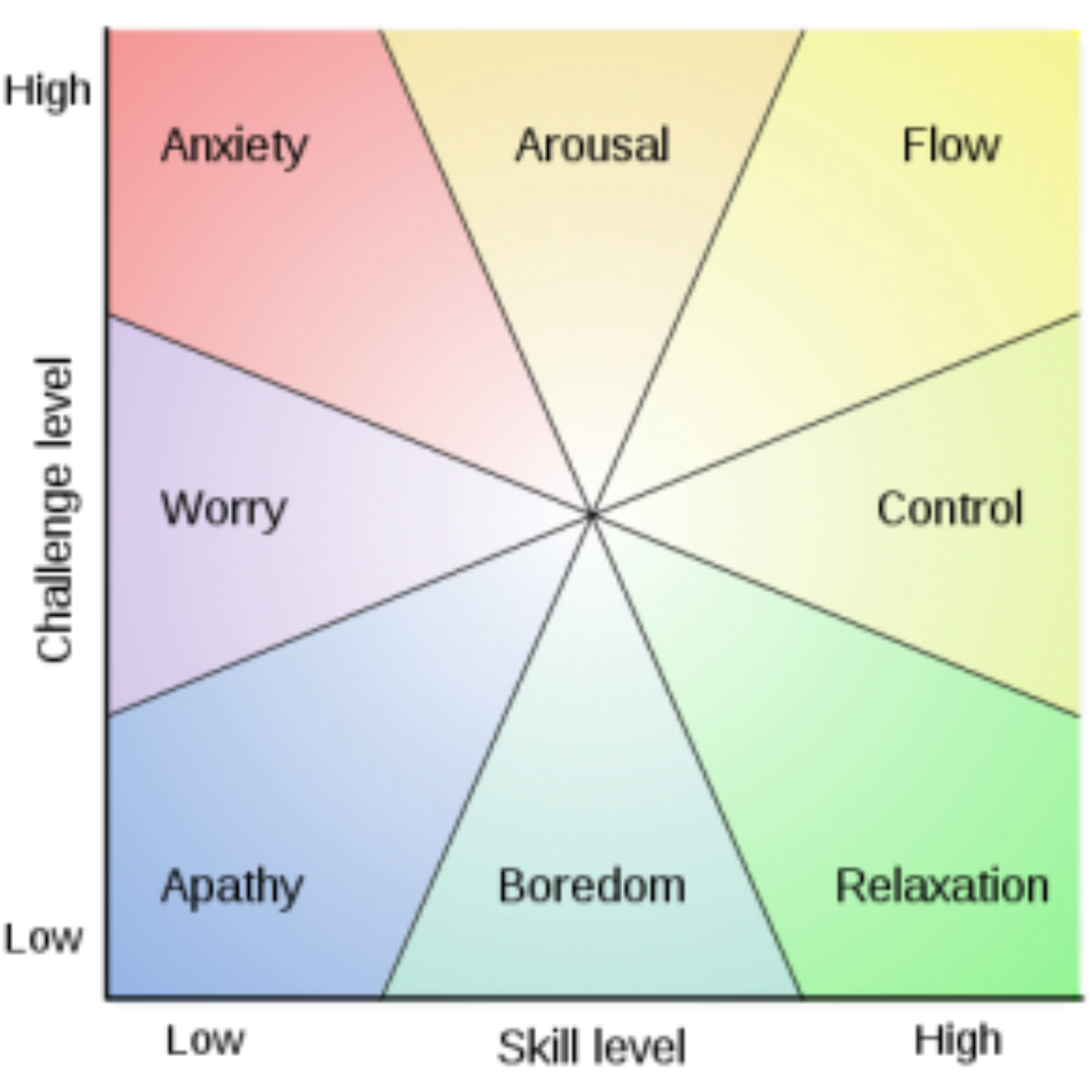
A couple years ago I wrote two posts on the emotional state where you get so lost in an activity you lose track of time, focused with all your attention. Hours pass without your noticing while minutes may seem like hours as you focus intently. We like this state. A researcher named Mihaly Csikszentmihalyi studied it and named the state "flow." He wrote a book on it that improved my life so I recommend it. We all want more flow in our lives and his book helps create it. The first post a couple years ago very briefly summarized it and includes links to relevant Wikipedia pages and TED talks. The second describes a couple improvements on how to present flow. I improved my improvement…

0 Comments

Start with emotions if you want to motivate yourself … or anyone else

I find Americans try to get precise and scientific about food and exercise, in contrast to how incredibly unfit the country is. I write "try to" because I don't think they succeed in being precise or scientific. The term carbohydrate, for example, used to have a specific scientific meaning. I think it still does, but I think in standard American usage it means "bad" or "evil," like the term fat used to. But I don't think people know what carbohydrate means, but it sounds technical. Same with Omega whatever fatty acids, free radicals, and so on. Same with exercise. People throw around terms like anaerobic, cardiovascular, and VO2 max like candy, rarely knowing what they mean. Jargon devoid of meaning. More than devoid of meaning,…

0 Comments

My start with emotional intelligence and self-awareness

You don't have emotional intelligence, you were born with it, or you developed it. If you developed it you started sometime, like I did. If you don't have it, you can start too. Here's my start. I don't pretend I'm the world master of emotional intelligence, but I've come a long way and I know anyone else can. I hope sharing the story motivates others. Context Before business school I had barely heard of the concept of emotional intelligence. Since I contrasted emotions with rationality, I considered them irrational and weird, not something to learn about or focus on. Since I connected emotions to feelings, music, art, and romantic comedies, I didn't connect them to behavior. Nor for that matter did I connect behavior to…

0 Comments

How would you improve the world if you had supernatural powers?

Here's an exercise to see your values from a new perspective. I used to do it all the time until I learned my lesson from it, which I'll write at the bottom. Answer the question "how would you improve the world if you could have a magical wish come true?" and follow through to see if the change would, in fact, improve your life. To clarify, I mean a supernatural change outside of what you normally do to improve your life and world. I submit that it's not as easy as you think. Say you had whatever magical powers to change the world however you wanted. Could you improve the world beyond what you could do without the magical powers? Quick answers people jump to…

1 Comment

Handling life’s biggest challenges

In this blog I try to cover what I consider one of the main skills of leading others and yourself -- the ability to manage your emotions no matter what comes your way. It shows up in many ways. One of the simplest is the phrase I use a lot: Pain is inevitable. Suffering is optional. ... as I wrote about in my posts "A model to handle pain" and the risky "How do you respond to others' suffering?". Another way I often write about it is the three books of people who lived rich, fulfilling lives following material devastation -- imprisonment at Auschwitz or paralysis -- such as Frankl's Man's Search For Meaning, Bauby's The Diving Bell and the Butterfly, and Zupan's Gimp. There…

0 Comments

One of the most important lessons I learned in business school didn’t come from a teacher and it applies everywhere in life

I wrote before about "Business school's first major lesson: how to resolve ethical dilemmas." Today I'll talk about another important lesson I learned in business school, also within the first couple weeks, also applying in many places in life I would not have expected from a vocational school. Context First I have to note my mindset before starting business school. I considered the most relevant parts of my life that I'd co-founded a company and I knew more math than probably anyone in the school. I thought business school would be a fun experience filling in a few gaps of how to make spreadsheets and learning some networking skills. What happened One of the major cores of business school is knowing how a business runs…

0 Comments

Experience guides us more than philosophy.

Have you noticed that people who behave wildly differently can still base their behavior on the same underlying philosophies? Or that people who behave similarly can also base their behavior on different philosophies? Pick a way people behave and you'll find people saying that behavior comes from any source. For example, among the most peaceful people some base their behavior on being religious, some on being atheist, some on not caring about religion or atheism at all. Some of the most belligerent people base their behavior on religion. Some not. People on the left call Hitler right-wing. People on the right call him left-wing. People who exercise say they do it to relax and feel good about their bodies. People who don't exercise say they…

4 Comments

You call exercise torture? I call it glory.

[This post is part of a series on my daily exercise and starting and keeping challenging habits. If you don't see a Table of Contents to the left, click here to view the series, where you'll get more value than reading just this post.] Emotionally, I don't want to do burpees nearly every single time I do them. As you probably know, I do twenty twice-daily. Starting is never easy. Never. If you think you have a harder time starting to exercise than others, I think you're wrong. I don't think anybody has it easy. Just some people developed skills to overcome the emotional challenges we all feel. Rationally, I want to do them, but my emotions oppose my rational thoughts. I use willpower to…

2 Comments

A visual model to understand passion and attraction: The Passion-Attraction Model

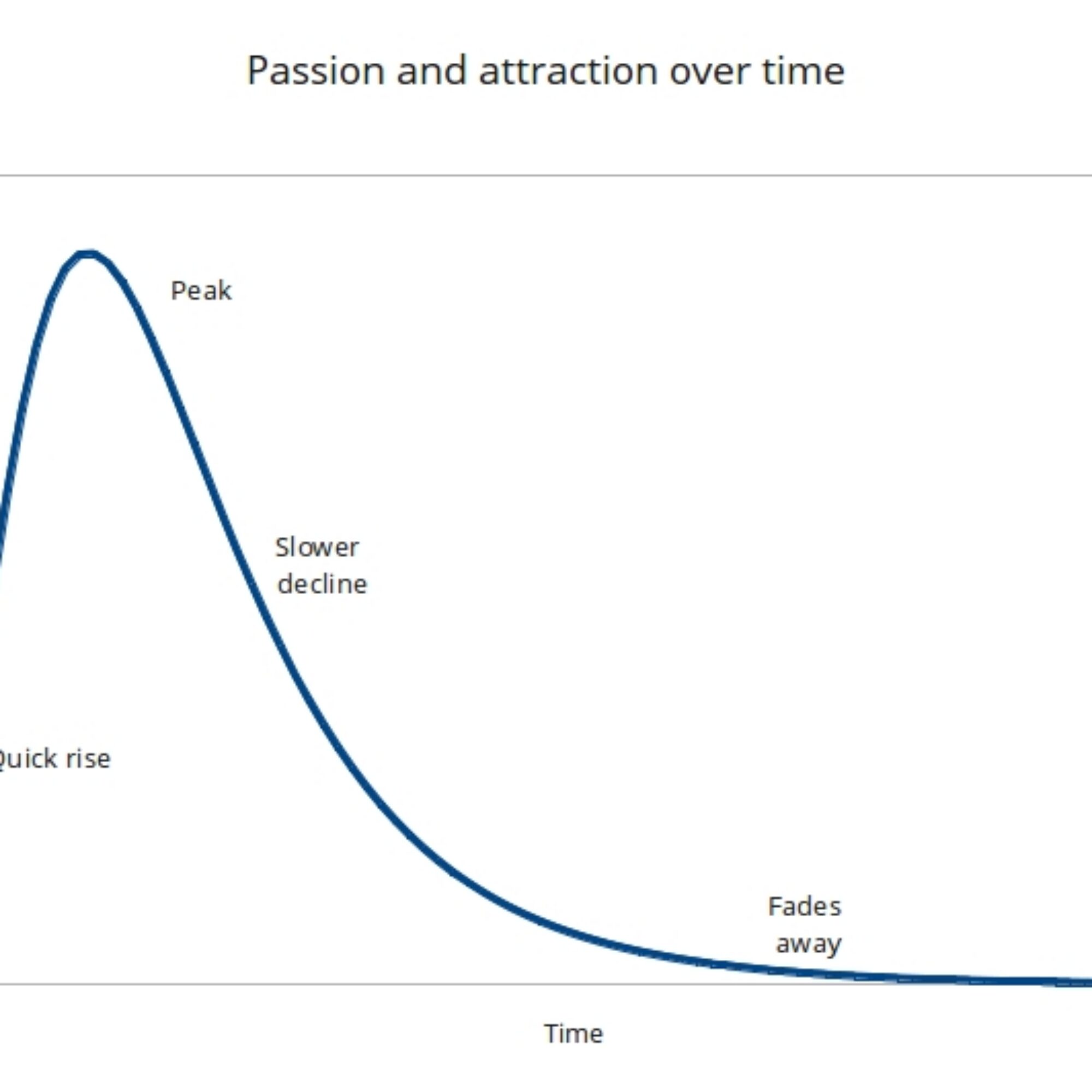
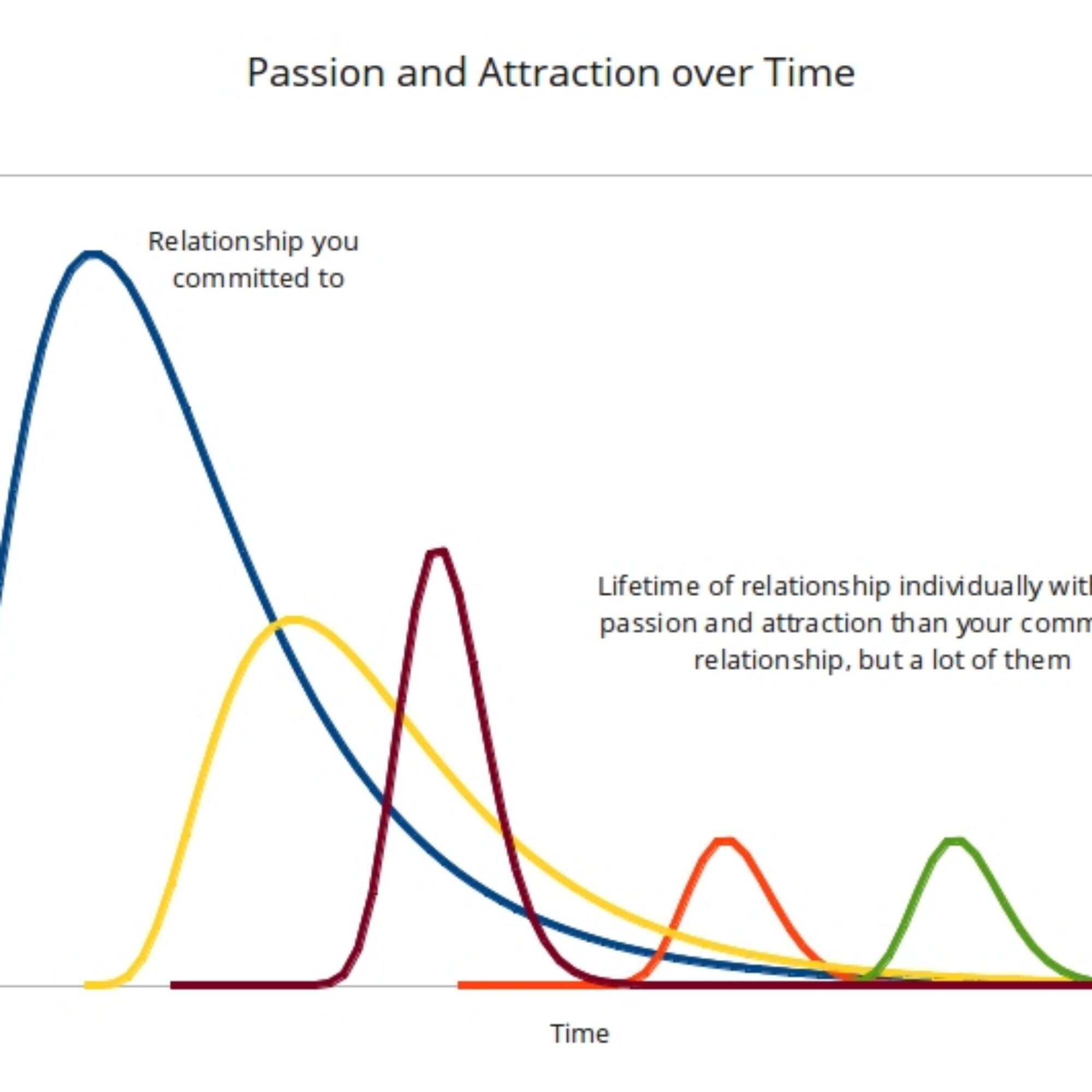
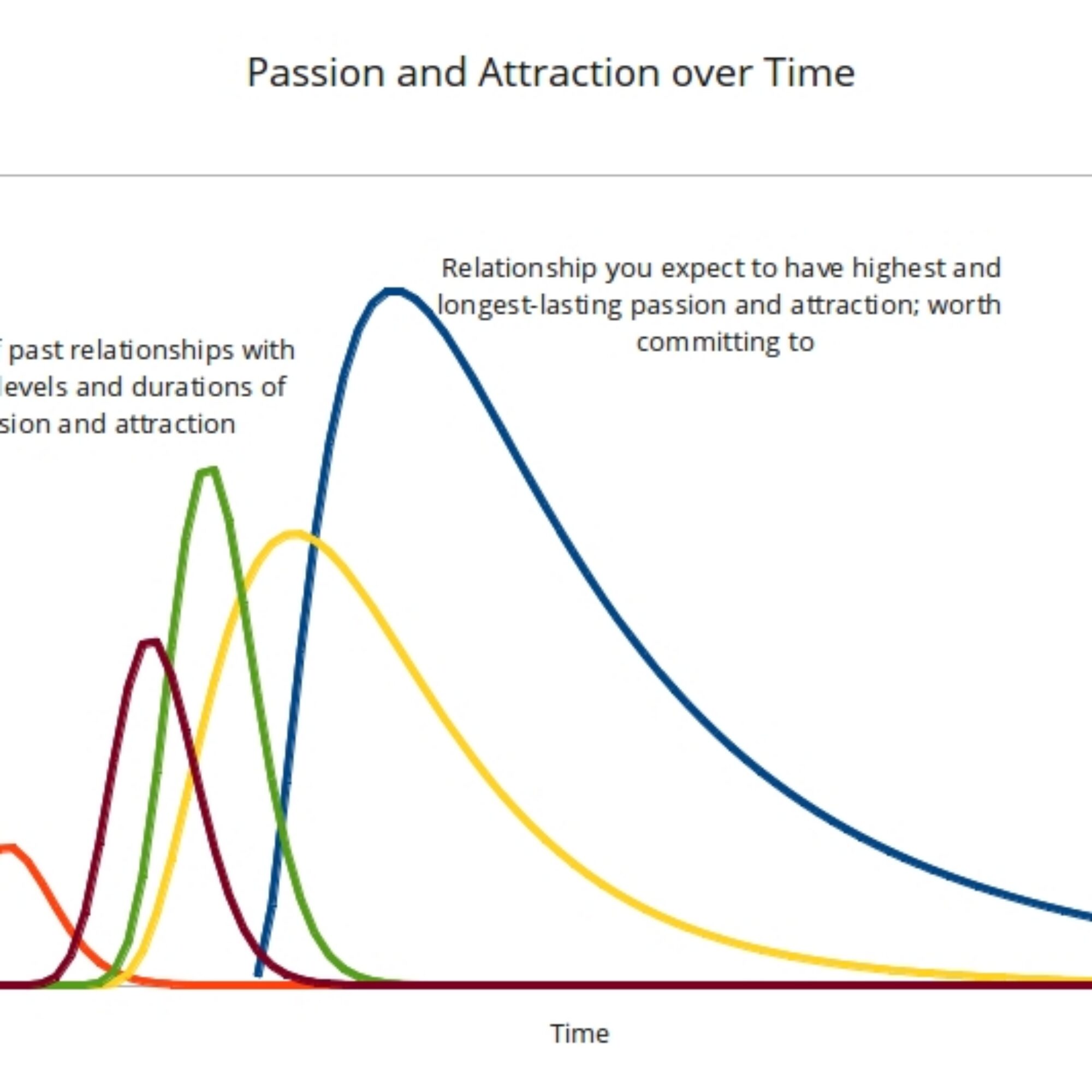
[Last week I posted a five-part series on a mental model I have for how our passion and attraction grows and wanes over time and the consequences of that pattern, according to the model. Today I'm posting them all in one post.] Day 1: Introducing a new model: Passion and Attraction I'm starting a new series today on a new model, this time on passion and attraction. Everyone I showed it to told me it gave them useful insights, so I expect you'll find value in it too. I'll apply the model mainly to intimate relationships, but you can also apply it to anything that evokes passion, attraction, or both, like hobbies, jobs, sports, and so on. So what does a science-trained, leadership-minded, self-awareness and…

0 Comments

How and why I made the Passion-Attraction Model graphs

Time I put a lot more time into making the graphs and writing the posts of the past week than usual -- at least a couple full days just graphing before writing a word. Why Why did I put so much time in? Not because I didn't have lots to do. Because people who saw early versions of the graphs told me it helped them better understand Their intimate relationships Their partners, and Themselves. They also enjoyed reading the graphs -- like their eyes opened wide and they looked like kids with new toys, like who would have expected something so science-and-math-like could help them understand their intimate relationships ... and work!?! My main reason for writing here is to increase self-awareness in ways that…

0 Comments

Review and conclusions from the Passion-Attraction Model

What can we learn from the Passion-Attraction Model? While the model can apply to everyone, we each have different values and circumstances, so we each have to choose for ourselves how to live our lives and act in relationships. Understanding the Passion-Attraction Model and its consequences can help you understand yourself and your partners, on your own and in relationships if you feel it describes you well. (If you don't, it may not help you, though it may help you understand your partners if they feel it describes them.) It can help you navigate your emotions and relationships and choose your behavior and partners. You don't have to adopt it verbatim. Like all models, it has flaws and oversimplifications, but so does any other model…

0 Comments

Relationship risks in the Passion-Attraction Model, part 2

Yesterday's post considered a single alternative to a committed partner. If you plan to commit to someone for ten, twenty, thirty, or more years, you can expect you and your partner will meet people who, in the moment, attract you and excite passion more than each other. Review and discussion about One Alternative Recall, the Passion-Attraction Model doesn't tell you how to behave, though if you feel it represents your experience it may help you respond. Nor am I evaluating possible responses. I'm only using the model to understand how people will feel in relationships. The last section, "One Alternative," for example, predicted that people late in long-term relationships are susceptible to a third person exciting more passion and attraction than the long-term committed partner.…

0 Comments

Relationship risks in the Passion-Attraction Model, part 1

Yesterday's post ended by describing a typical goal -- what you hope to get if you want to commit to a relationship, at least concerning passion and attraction: an enduring relationship with lots of passion and attraction, smooth edges, and never fading away. When you and a partner both reach that goal, many people choose to commit to each other. In my experience, choosing to commit doesn't mean living happily ever after with no more relationship work. It means the beginning of a new type of work -- potentially deeply rewarding work, but work nonetheless. After all, you don't find passion, you create it with your behavior and beliefs. Committing to someone like the blue curve above means you get the high levels of emotional rewards…

0 Comments

The Passion-Attraction Model as you gain experience

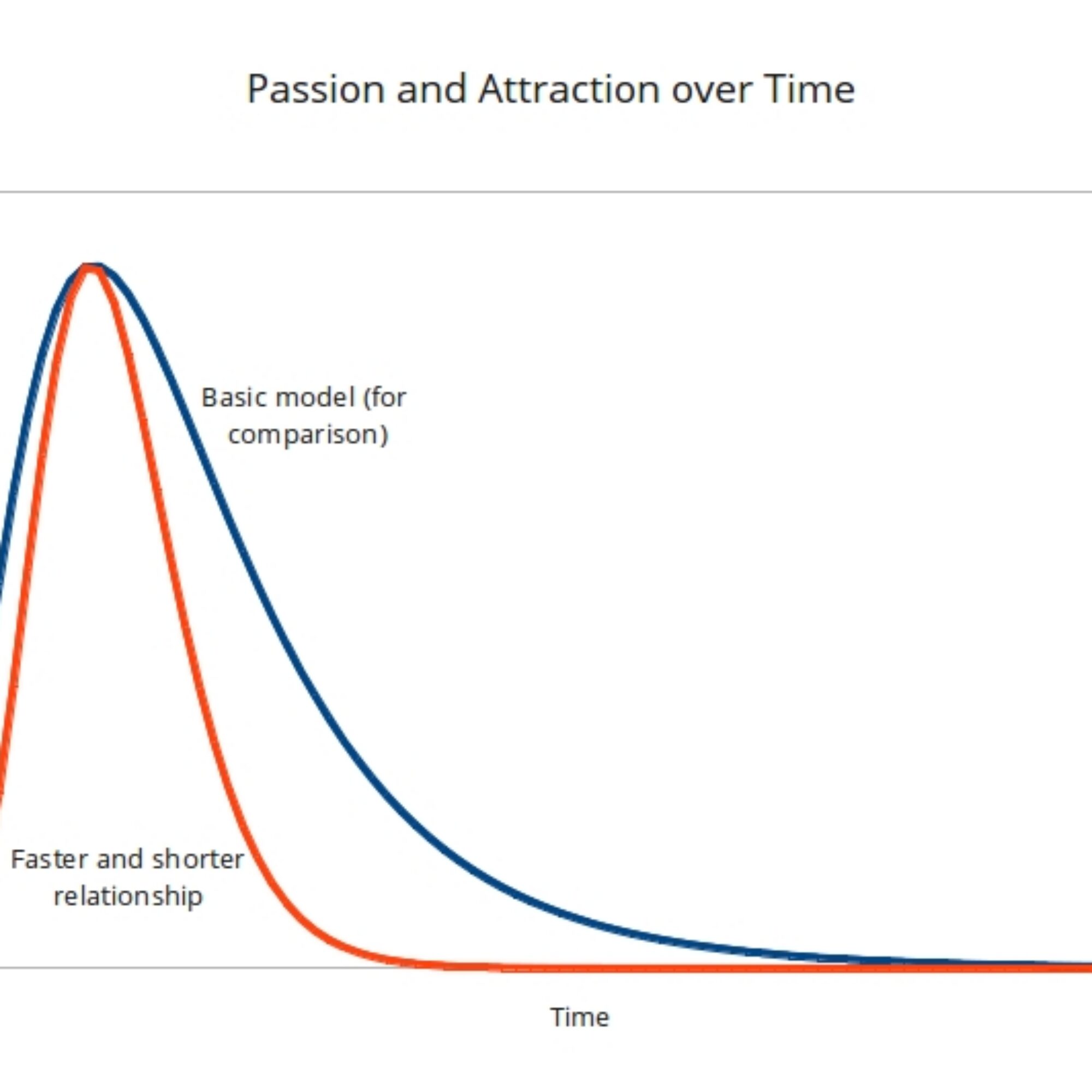
Yesterday covered how the Passion-Attraction Model described passion and attraction in a relationship. Today we'll look at how you might grow as a person and parter. We'll end today with a typical goal you might work toward (before moving on to challenges and risks tomorrow). Despite the nice clean curves in the graphs, you don't know what curve you're on. If you feel like you're at the peak of a relationship, you don't know how long your feelings will last -- that is, you don't know if you're on the red or blue curve below, or a different curve entirely. Is your relationship about to end or will it endure? Or maybe what feels like a long-term peak is just noise that will soon fade.…

0 Comments

The basic Passion-Attraction Model in one relationship

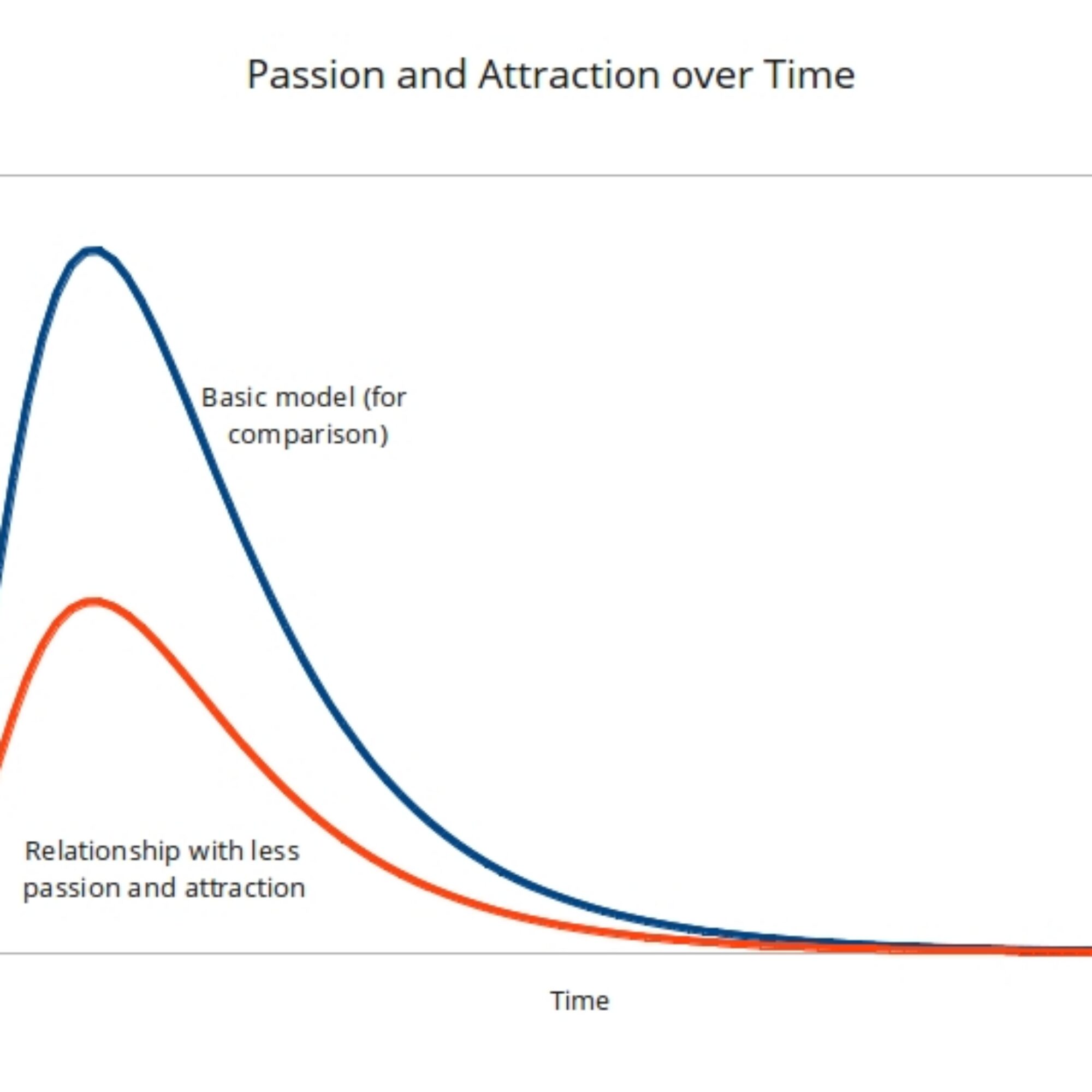
Yesterday covered the basic Passion-Attraction Model and some caveats. Today let's look at how the P-AM models passion and attraction in a single relationship. (Tomorrow we'll look at it multiple relationships). I find that the better I can visualize many ideas, the more clearly I can think about them, so this model's illustrations help me understand my feelings in a relationship. Then I can plan and act to improve myself and understand others in relationships. The Passion-Attraction Model in one relationship As we'll see, the P-AM can explain a lot of about one's feelings of passion and attraction in relationships. Less passion and attraction Some people evoke less passion and attraction in us. The P-AM represents less emotion with a lower peak, as illustrated by…

0 Comments

Introducing a new model: Passion and Attraction

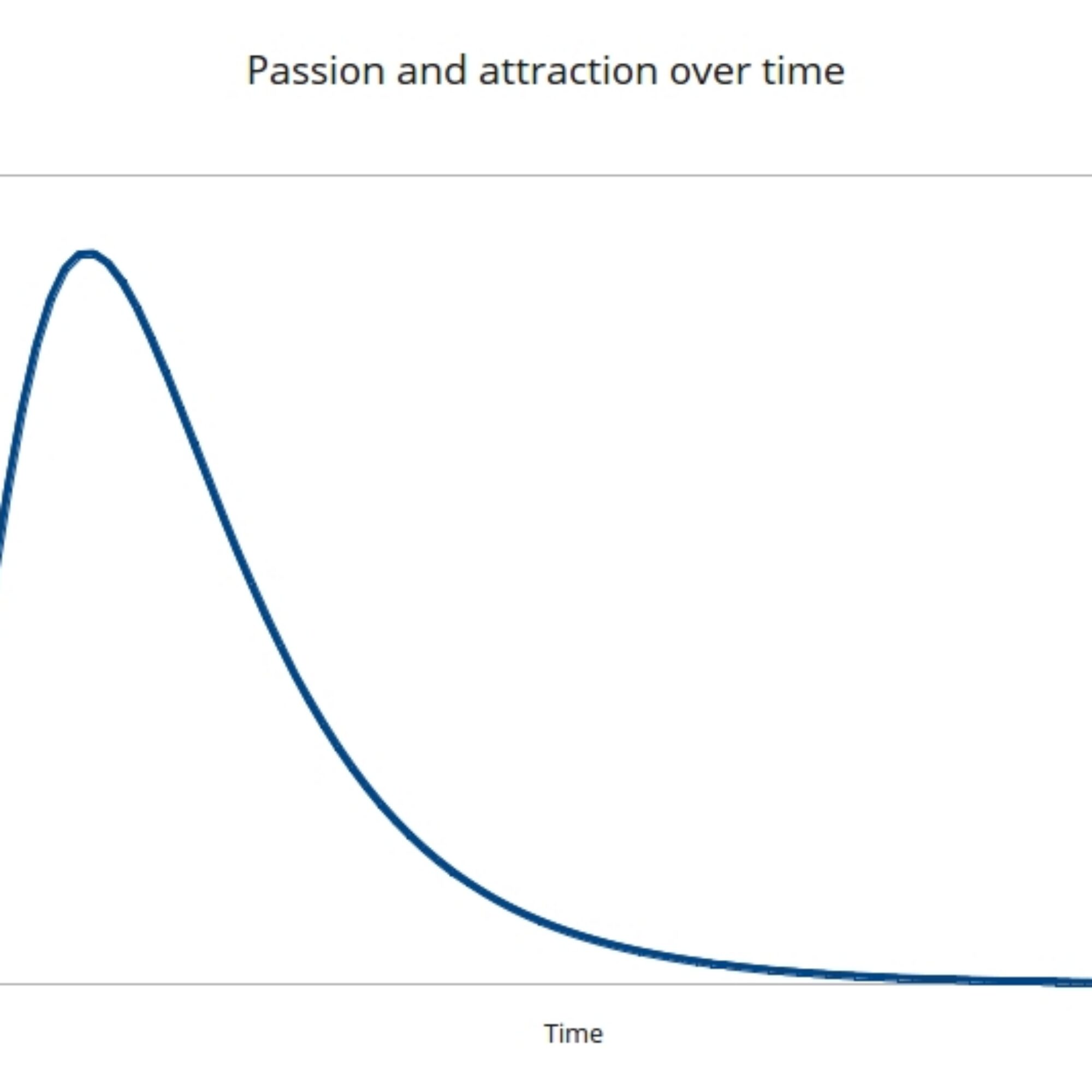
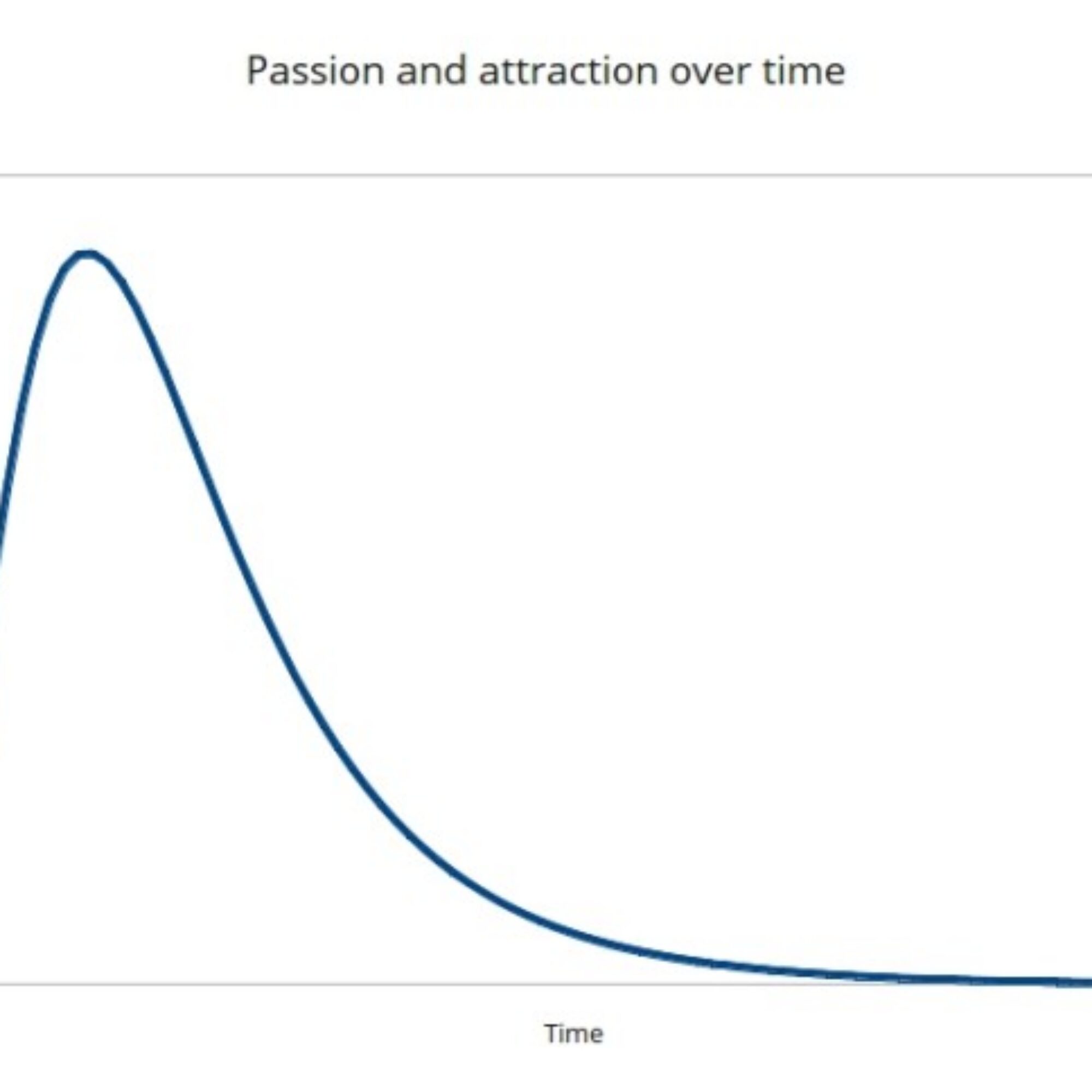
I'm starting a new series today on a new model, this time on passion and attraction. Everyone I showed it to told me it gave them useful insights, so I expect you'll find value in it too. I'll apply the model mainly to intimate relationships, but you can also apply it to anything that evokes passion, attraction, or both, like hobbies, jobs, sports, and so on. So what does a science-trained, leadership-minded, self-awareness and emotional-intelligence focused guy have to say about passion and attraction? I'll start by showing this picture of my Passion-Attraction Model as a taste of things to come, for now without explanation, except that I expect you'll find life-improving insight from a fresh and simple perspective. I find visualizing things makes understanding…

0 Comments

Do you decide rationally or emotionally?

One of this blog's central focuses is self-awareness because I think to improve your life and relationships the best starting point is to know where you are. Know thyself, in other words. Today I want to give you a way to learn deeply about how your mind works. I didn't come up with the idea, but it intrigues me and I'd love to learn other people's thoughts. I think people generally believe they have a voluntary, rational part of their brain that, among its roles, makes decisions. If you're choosing what to order off a restaurant menu, for example, you probably do something like this: You read your options, eliminate those you don't want, consider the ones you do, work through some core decision-making process,…

0 Comments

A model to help stop acquiring stuff

Do you have more stuff than you want? Do you have trouble keeping yourself from acquiring it? Do you wish you could get less stuff? I've been working on getting less stuff for a long time. I find the most important part to not having too much stuff is not acquiring stuff in the first place. Often when I'm with people and they can see I want something but hesitate to buy it, they think I'm trying to decide if I can afford it. Usually I'm figuring out how hard it will be to get rid of it when I'm done with it. I don't like filling landfills. I don't mind taking things to thrift shops, but I also prefer not creating demand for things…

0 Comments

A model for balancing pushing myself with enjoying life

[This post is part of a series on "Mental models and beliefs: an exercise to identify yours." If you don't see a Table of Contents to the left, click here to view the series, where you'll get more value than reading just this post.] Do you work hard to improve your life -- studying hard, working long hours, being patient with a significant other, etc? If you're always pushing, when do you get to enjoy life? But if you're always enjoying, do you ever improve? Do you wonder if you're slacking too much or working too hard? Do you wonder how to balance both aspects of your life? Today's model shows how I think about how I balance pushing, trying, and improving with enjoying, relaxing…

0 Comments

A model for what improves life the most

[This post is part of a series on "Mental models and beliefs: an exercise to identify yours." If you don't see a Table of Contents to the left, click here to view the series, where you'll get more value than reading just this post.] What can you do to improve your life the most? Exercise more? Eat more healthily? Save or earn more money? Improve your social skills? Buy a house? I've found success in many areas of life. I think I could safely say I've performed in the top few percent of performers (to the extent you can quantify these things) in fitness, earning, academic success, business success, relationship success, and various other important things. Today's belief is about what, of all things I've…

0 Comments

A model for a great lifestyle

[This post is part of a series on "Mental models and beliefs: an exercise to identify yours." If you don't see a Table of Contents to the left, click here to view the series, where you'll get more value than reading just this post.] You want to do well in life. What areas are most important for you? Do you want fame? Fortune? Power? Family? My explorations into meaning, value, importance, and purpose (MVIP) led me to consider what I wanted. Since I've found MVIP are grounded in emotions, I found I could refine my understanding of what brought me MVIP by refining my understanding of my emotional system and my emotions. I found that emotions stood at the foundation of all of MVIP. Not…

0 Comments

A model to identify the parts of your life most ripe for improvement

[This post is part of a series on "Mental models and beliefs: an exercise to identify yours." If you don't see a Table of Contents to the left, click here to view the series, where you'll get more value than reading just this post.] Today's model has special meaning to me because realizing it set me to learning about anxiety, the first emotion I started to learn analyzing to understanding emotional intelligence and self-awareness. I hope it inspires you as much as it did me. Context It started with performing on stage for the class play in business school. Months before the performance I wrote a sketch for Follies, the business school class play. It's mostly inside jokes for business school students, not high art,…

0 Comments

End of content

No more pages to load