Examples of models: Mexico city, lack of awareness, and leadership

[This post is part of a series on The Model -- my model for the human emotional system designed for use in leadership, self-awareness, and general purpose professional and personal development -- which I find the most effective and valuable foundation for understanding yourself and others and improving your life. If you don't see a Table of Contents to the left, click here to view the series, where you'll get more value than reading just this post.] Leadership depends on understanding that other people have different models. A leader who doesn't recognize people can have different models will create discord and confusion, as today's example will illustrate. I draw this example from my life. After business school a friend told me her consulting job was…
0 Comments

Examples of models: “Everybody does their best according to their abilities and perception of their environment”

[This post is part of a series on The Model -- my model for the human emotional system designed for use in leadership, self-awareness, and general purpose professional and personal development -- which I find the most effective and valuable foundation for understanding yourself and others and improving your life. If you don't see a Table of Contents to the left, click here to view the series, where you'll get more value than reading just this post.] I tend to believe that everybody does their best according to their abilities and perception of their environment. Sure, I know counterexamples, but in general I believe that at every moment, everyone observes their surroundings and, based on their perception and abilities (more precisely, their beliefs about their…

0 Comments

Examples of models: “beliefs and expectations filter your perception”

[This post is part of a series on The Model -- my model for the human emotional system designed for use in leadership, self-awareness, and general purpose professional and personal development -- which I find the most effective and valuable foundation for understanding yourself and others and improving your life. If you don't see a Table of Contents to the left, click here to view the series, where you'll get more value than reading just this post.] Let's look at another example of how we use models in more depth. As with yesterday, after treating the example I'll describe the lessons it teaches. Imagine you grew up with a pet pit bull. You might see it as an adorable pet. Someone else who never grew…

0 Comments

Examples of models: why he or she didn’t call

[This post is part of a series on The Model -- my model for the human emotional system designed for use in leadership, self-awareness, and general purpose professional and personal development -- which I find the most effective and valuable foundation for understanding yourself and others and improving your life. If you don't see a Table of Contents to the left, click here to view the series, where you'll get more value than reading just this post.] For the next three or four posts, let's look at examples of how we use models in more depth. After each example I'll describe the lessons it teaches. We'll start with an example we're all familiar with: someone told you they'd call Monday. By Friday, no call. It's…

0 Comments

Examples of models: how a slight change in your model can create big changes in behavior

[This post is part of a series on The Model -- my model for the human emotional system designed for use in leadership, self-awareness, and general purpose professional and personal development -- which I find the most effective and valuable foundation for understanding yourself and others and improving your life. If you don't see a Table of Contents to the left, click here to view the series, where you'll get more value than reading just this post.] A famous parable in business literature describes how two competing shoe companies considering expanding into a new market each sent a salesperson to research the market to figure out if they should enter it and how. The first, upon arriving, found that in this market, nobody wore shoes.…

0 Comments

Examples of models: beliefs and mental models

[This post is part of a series on The Model -- my model for the human emotional system designed for use in leadership, self-awareness, and general purpose professional and personal development -- which I find the most effective and valuable foundation for understanding yourself and others and improving your life. If you don't see a Table of Contents to the left, click here to view the series, where you'll get more value than reading just this post.] My past two posts on examples of models showed visual models -- maps and representations of the Earth. Such examples illustrate how models work because they are easy to see, but don't capture the subtlety of distinguishing models from what they represent. Mental models tend to be more…

0 Comments

Examples of models: the Earth from several perspectives

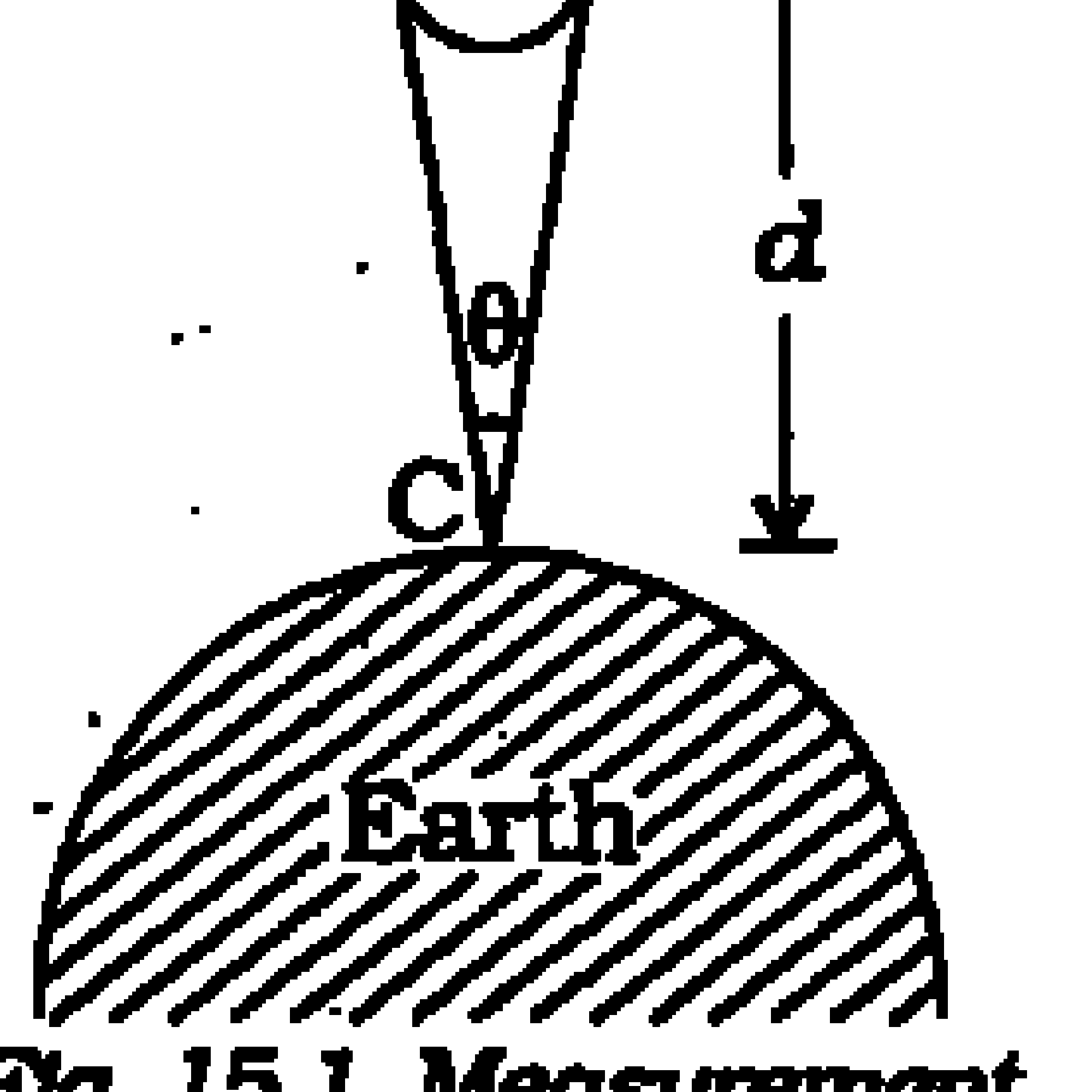
[This post is part of a series on The Model -- my model for the human emotional system designed for use in leadership, self-awareness, and general purpose professional and personal development -- which I find the most effective and valuable foundation for understanding yourself and others and improving your life. If you don't see a Table of Contents to the left, click here to view the series, where you'll get more value than reading just this post.] Yesterday I started with one of the simplest examples of models -- maps. Today we'll look at other models. The image below includes a model of the Earth. You might remember seeing models like this from school. It throws out a lot of information -- it's two-dimensional, showing…

0 Comments

Examples of models: maps

[This post is part of a series on The Model -- my model for the human emotional system designed for use in leadership, self-awareness, and general purpose professional and personal development -- which I find the most effective and valuable foundation for understanding yourself and others and improving your life. If you don't see a Table of Contents to the left, click here to view the series, where you'll get more value than reading just this post.] My series on the Model covered models in general but didn't give examples. My seminars cover examples, so the next few posts will cover some examples to illustrate some common models we all use. I have two goals: first to help expose how fundamental they are to our…

0 Comments

More mass crying at Kim Jong Il’s funeral

Watching the funeral of Kim Jong Il in Pyongyang streaming over the internet, I see the main propaganda techniques they seem to prefer: Many images of Kim Jong Il and Kim Il Sung Rousing music Large crowds, or the appearance of them Rousing oratory The music and oratory appear designed to rouse, I should say. To my ears they sound like the Andrews Sisters music sounds to our ears today -- so over the top and one-sided that they sound inauthentic. They, presumably the government-run media, layer sounds of people crying uncontrollably over the music and video, as if the people are crying loudly non-stop. The video of the parade I just watched showed crowds in the snow, but standing or milling about, not crying.…

0 Comments

The Method: three exercises to transform your life, part 3

The third exercise comes in two parts also. First you think of emotions you'd prefer to the ones listed in the previous exercise. Second you think of environments, beliefs, and behaviors to create those emotions. You think of the emotions first because they are the roots of your values and what creates meaning and purpose. By listing what you can't or won't do in the previous exercise, you assure yourself you won't do anything you consider wrong or don't want to. By starting with your emotions, you know you'll be doing things consistent with your values, meaning, and purpose. The exercise part 1 -- conceive of new emotions Write new emotions that you would prefer to get from this part of life you want to…

0 Comments

The Method: three exercises to transform your life, part 2

Yesterday's exercise was to list a couple areas in your life you want to improve. Today's exercise is to view the areas from the perspective of the Model. Exercise 2 Part 1 Write on a piece of paper in four different lines, the words "Old environment:," "Old beliefs:," "Old emotions:," and "Old behaviors:," like so: Old environments: Old beliefs: Old emotions: Old behaviors: Then for each area on your life you want to improve, fill out each of the four elements of the relevant emotional cycles. The idea is to break up something complex into simpler parts that are easier to understand and show the structure of how those parts interrelate. Running a marathon Old environment: Playing other sports, bars, in front of tv Old…

0 Comments

The Method: three exercises to transform your life, part 1

You want to improve your life. I'm about to present three great exercises that help -- you could say one exercise in three parts. My seminars cover them over the course of the first day, with a fourth follow-up if time permits (which I link to at the end of the third exercise here). People report finding them deceptively simple for how much they help. They create a structure that makes it easy to understand otherwise complex and emotionally laden parts of your life. They also build cumulatively. They also start great conversations and form bonds between the people who do the third part together. They take little effort, though sometimes people will spend a long time on them because they can get you thinking…

0 Comments

The heart of freedom, part 2

Yesterday I wrote about what I called the heart of freedom, stating that being able to choose your beliefs was more important than being able to change your environment. I quoted Viktor Frankl stating that being able to choose your beliefs was a freedom that could never be taken away. What does that freedom get you? "Just" feelings? Or does it get you more than that? He followed up yesterday's quote with When we are no longer able to change a situation — just think of an incurable disease such as inoperable cancer — we are challenged to change ourselves. By no means would I suggest his environment had anything desirable, but observe where this ability took him. In the midst of one of the…

0 Comments

The heart of freedom

Viktor Frankl, whom the Nazis captured and imprisoned as a slave laborer in concentration camps including Auschwitz and Dachau, perhaps best clarifies and shows that you can feel free independently of physical constraints and that feeling free gives you all the value of being free. We who lived in concentration camps can remember the men who walked through the huts comforting others, giving away their last piece of bread. They may have been few in number, but they offer sufficient proof that everything can be taken from a man but one thing: the last of the human freedoms—to choose one's attitude in any given set of circumstances, to choose one's own way. "Everything can be taken from a man but one thing: the last of…

0 Comments

You can get reward from every part of your life

You can get reward from every part of your life. You may not realize you can if you call emotions positive or negative because if you think some emotions are bad, you'll try to avoid them instead of learning from them and using them to improve your life. By considering emotions' characteristics instead of calling them good or bad, the Model gives you a greater wealth of types of reward than just pleasure. Instead of calling them good, bad, positive, or negative you can use them without judging them, which lets you use any emotional cycle to improve your life. Emotions may have many characteristics, but I usually treat four: Pleasure versus pain Subtlety versus intensity Richness/complexity versus simplicity Long-term versus short-term You can get…

0 Comments

Make painful emotions useful

I'm not a fan of putting positive spins on things. You can't call something positive without calling something else negative. Calling some emotions negative makes some people want to shun them and act like they don't have them. How many times have you seen someone obviously angry or enraged, saying through gritted teeth and clenched jaws, "I'm not angry," in blatant denial of their emotions? They confuse how an emotion feels with how it motivates them or tells them about themselves and their world. They think some emotions are bad and repress them. This belief leads to lower self-awareness and motivates them to act without reflection. Lowering self-awareness and acting reactively are just about the worst things you can do to improve your life. I…

0 Comments

There will never be a periodic table of emotions, part 2

Continuing yesterdays' post... In the examples above, the categorization schemes worked because they categorized something with an underlying structure -- the photon and its wavelength, the atom and its nucleus and electrons, natural selection and DNA, the (so far) fundamental particles and the laws governing their interactions. But not everything with patterns has an underlying structure. Let's look at anatomy, for example. As we'll see, it will reveal a lot about emotions and motivations. Notice that despite common characteristics across life, no one has created a periodic table of anatomy. Why not? Because anatomy has no underlying structure like those other categorization schemes. We know several unpredictable factors affect how a species' anatomy evolves -- for example, that species' current anatomy, its environment, and natural…

6 Comments

There will never be a periodic table of emotions, part 1

Discovering the periodic table of the elements told us wonders about chemistry and pointed the way toward understanding atoms. Figuring it out pointed the way toward tremendous understanding and improving our lives. We found similar structures that revealed underlying structure in the spectrum of light, life's family tree, the standard model of particle physics, and others. Wouldn't it be great to find such a structure for our emotions and motivations? Wouldn't we expect discovering such a structure reveal our emotional system and create tremendous progress in psychology, personal development, achievement, motivation, and well-being? Why can't we find such a structure? I think we never will. But that doesn't mean we won't make tremendous progress in those areas to improve our lives. Let's take a step…

0 Comments

How to bring happiness and emotional reward to your life by analogy with pleasure, part 3

[This post is part of a series on creating happiness and reward by understanding pleasure. If you don't see a Table of Contents to the left, click here to view the series, where you'll get more value than reading just this post.] Two days ago and yesterday I described how seeing how easily you can create physical pleasure in your life shows how easily you can create emotional pleasure -- as much as you want. Today I'll go a step further -- how to create as much reward as you want. Remember, emotional reward is the feeling that everything in the relevant cycle syncs with everything else. It encompasses emotional and physical pleasure and more. Though in most cases emotional reward feels better and more…

0 Comments

How to bring happiness and emotional reward to your life by analogy with pleasure, part 2

[This post is part of a series on creating happiness and reward by understanding pleasure. If you don't see a Table of Contents to the left, click here to view the series, where you'll get more value than reading just this post.] Yesterday I wrote about how to bring about emotional pleasure in your life. Today I'll clarify and explore the analogy physical pleasure : emotional pleasure :: physical environment  : social environment In particular, you can bring about emotional pleasure the same way you bring about physical pleasure, just with healthy social situations instead of healthy physical situations. By emotional pleasure I mean all emotions you like to experience, like happiness, joy, satisfaction, and so on. If you've thought about it, you've probably realized…

0 Comments

How to bring happiness and emotional reward to your life by analogy with pleasure, part 1

[This post is part of a series on creating happiness and reward by understanding pleasure. If you don't see a Table of Contents to the left, click here to view the series, where you'll get more value than reading just this post.] You may have heard the phrase that we aren't designed to be happy. I agree with the concept. More than that, since in the Model we consider not only happiness but emotional reward, other pleasurable emotions, and physical pleasure too, I would further say we aren't designed to feel physical or emotional pleasure either. By emotional pleasure I mean emotions you like to feel -- like happiness, joy, satisfaction, etc. When some people understand these points they give up on improving their lives.…

0 Comments

The Method: transformations, stage 3: regular life

[This post is part of a series on The Method to use The Model -- my model for the human emotional system designed for use in leadership, self-awareness, and general purpose professional and personal development -- which I find the most effective and valuable foundation for understanding yourself and others and improving your life. If you don't see a Table of Contents to the left, click here to view the series, where you'll get more value than reading just this post.] Eventually a transformation's new environments, beliefs, and behaviors synchronize completely with each other. The cycle you changed brings the emotions you want and reward. At this stage this cycle becomes a part of your regular life, a life now more rewarding for the change.…

0 Comments

The Method: transformations, stage 2: support

Once the elements of a transformation start supporting each other the transformation starts to feel like it will take root. You may still feel some inertia, fakeness, and conflict between the old and new you, but decreasingly. Examples of elements supporting each other include After starting a new hobby (behavior) you start meeting others who do the same hobby People compliment you on losing weight People you meet in new circles of friends or colleagues have mutual friends Confirmation biases start reinforcing new beliefs and so on. You also start feeling reward from new cycles as the elements in them resonate with each other. That reward means you decreasingly need to use willpower. Once you start feeling some reward, you generally don't doubt if the…

0 Comments

The Method: transformations, stage 1: a caveat

I should note a caveat for the transition stage. Since this stage involves conflict, feeling fake, and overcoming inertia, you may use a lot of willpower. How do you know you're moving in a direction that improves your life? How do you know you aren't pushing hard on something that you thought would help but isn't? The best answer is through experience. After a few transformations you pick up the subtle cues that show inertia decreasing or that what seemed feeling fake at the beginning also carried feelings of exploration and discovery. For example, if you tried a new style of clothing or haircut, it could happen that everyone you know and trust tells you they don't like it, but one person you don't know…

0 Comments

The Method: transformations, stage 1: transition

You can usually do the preparation stages of transforming a part of your life easily since you can do them yourself, without someone else. Working with other people usually makes things more complex. Still, you generally do benefit from involving others. Because they have different perspectives and can see your life from further away, their input usually helps. At the end of the preparation stages you have two sets of environments, beliefs, and behaviors in mind -- your current one and your desired one. You know your current situation so, however little reward it brings, you know how to get the reward it does bring and whatever emotions you want from it. You know what other parts of your life it conflicts or harmonizes with.…

0 Comments

End of content

No more pages to load