How to bring happiness and emotional reward to your life by analogy with pleasure, part 2

[This post is part of a series on creating happiness and reward by understanding pleasure. If you don't see a Table of Contents to the left, click here to view the series, where you'll get more value than reading just this post.] Yesterday I wrote about how to bring about emotional pleasure in your life. Today I'll clarify and explore the analogy physical pleasure : emotional pleasure :: physical environment  : social environment In particular, you can bring about emotional pleasure the same way you bring about physical pleasure, just with healthy social situations instead of healthy physical situations. By emotional pleasure I mean all emotions you like to experience, like happiness, joy, satisfaction, and so on. If you've thought about it, you've probably realized…

0 Comments

Pictures of North Korea, part 8: the road back to Pyongyang

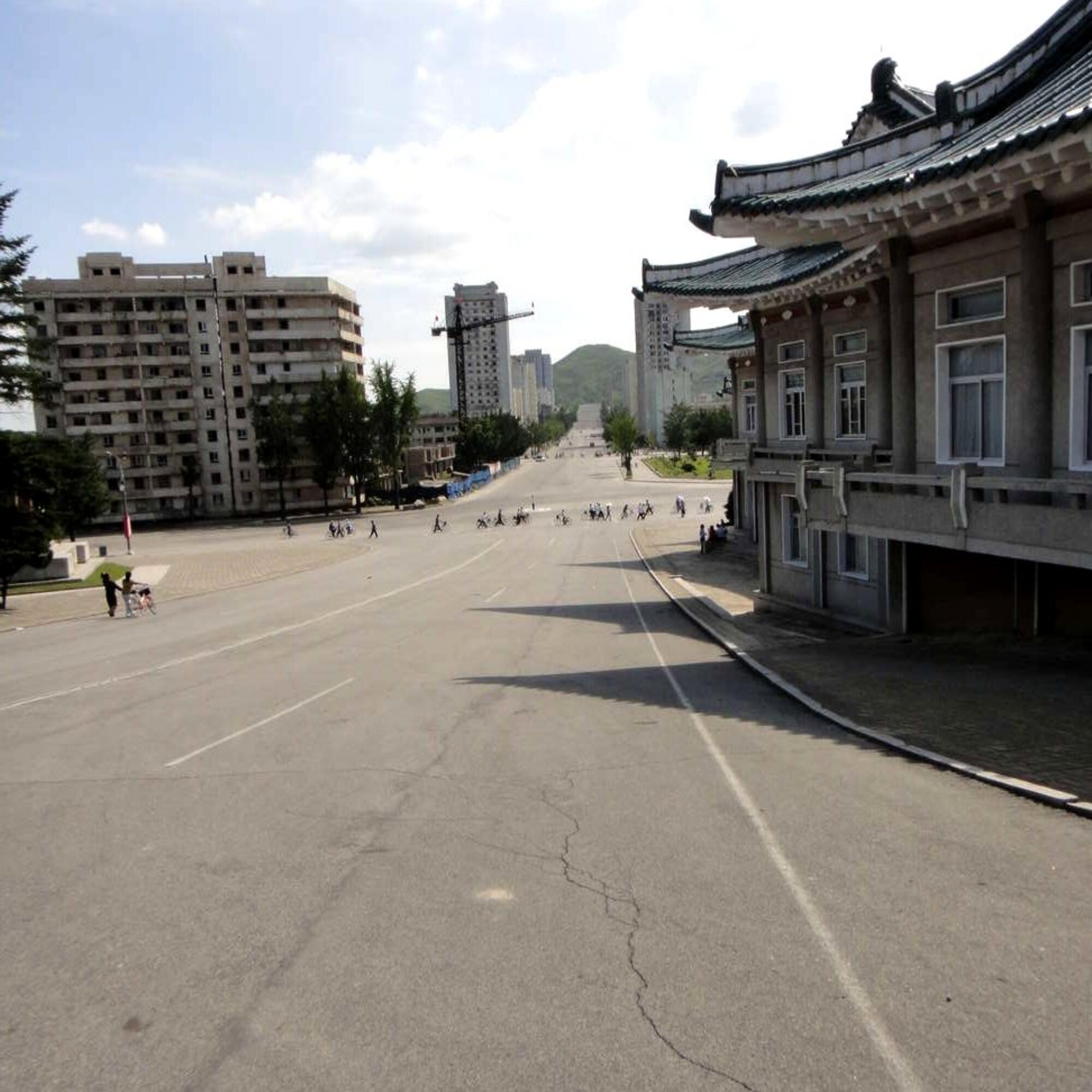
Today's pictures were from the bus ride back from the Demilitarized Zone and Kaesong to Pyongyang. The early bus rides featured a lot of very friendly, open, and educational interchange between the guides and us. For some reason Mr. Kim, whom we affectionately nicknamed Crazy Kim for his ebullience and outspoken expression, quieted down after the first few days. Our loss.     I wrote the following about the above picture when I had posted it on a social networking site before putting it here: The first of three shots showing how leaders could increase peace and understanding between nations if they followed suit. On the way to the DMZ, Mr. Kim, our dynamic and fun guide, is teaching Jordan a kids game where you…

0 Comments

How to bring happiness and emotional reward to your life by analogy with pleasure, part 1

[This post is part of a series on creating happiness and reward by understanding pleasure. If you don't see a Table of Contents to the left, click here to view the series, where you'll get more value than reading just this post.] You may have heard the phrase that we aren't designed to be happy. I agree with the concept. More than that, since in the Model we consider not only happiness but emotional reward, other pleasurable emotions, and physical pleasure too, I would further say we aren't designed to feel physical or emotional pleasure either. By emotional pleasure I mean emotions you like to feel -- like happiness, joy, satisfaction, etc. When some people understand these points they give up on improving their lives.…

0 Comments

Pictures of North Korea, part 7: Kaesong

After visiting the Demilitarized Zone we visited the city of Kaesong, the southernmost city in North Korea. Wordpress doesn't always get links in captions, so here's a sentence in there with some links, "Here's a video of many to start with and here's a Wikipedia page." After the day in Kaesong, we went to a traditional-style hotel, I think this one. I went to sleep early, but others drank and had funny stories about the bartender, a woman who behaved robotically. I woke up the next morning before 6am and heard the town loudspeaker turn on and play first morning music, then rousing music, and later what sounded like propaganda. That morning, jet-lagged, I started taking notes that evolved into this journal. Not only jet…

0 Comments

An offer to the Freedombox community

My post on how Freedombox's pursuit of perfection is undermining its goals prompted some discussion. Hearing how people the Freedombox community wants to help end up supporting products we see as non-Free jolted my system. I believe constructive criticism helps, but my desire to contribute more led to the offer below. One person's response got me thinking about how I, as someone who doesn't write much software, can help. Diaspora is a decent example. They released something buggy, with minimal functionality, reasonably early on… yes, they were criticized for it's quality at the time, but it got people using it (those who could get an invite / understand they go go elsewhere, anyway) and today they're by far the largest free socnet alternative. Diaspora has…

8 Comments

Weird things in the United States from a North Korean perspective

I don't know what the world would look from the eyes of a North Korean, so I'm just speculating. I just wanted to go point for point on a bunch of yesterday's points on what I considered weird about them. Just because we think they do some things weird doesn't mean we don't. On the contrary, you thinking someone else weird virtually guarantees they will think you weird, but not in the way you'd first expect. I recommend reading this post next to yesterday's post. Each comment about the United States here corresponds to one from yesterday about North Korea. We don't have Kim statues everywhere but we have our own monuments. We have ads, billboards, and our own patriotic symbols, like flags and aircraft…

0 Comments

Weird things I saw in North Korea

Weirdness is subjective, of course. I'm only describing what I consider weird. And I want to stress that I don't consider nor mean to imply that weirdness is bad. I consider it interesting. As a friend said, "Nobody is normal." I celebrate individual differences. I put "weird" in the title to get people thinking and asking themselves questions. In particular, I hope people will consider questions like these, which I think help you learn about and improve yourself: Do they consider these things weird or unusual? Do you consider these things weird or unusual? What do we do that they would consider weird or unusual? What do we do instead and why do we consider that normal if we do? Are any of these things…

0 Comments

The Method: transformations, stage 3: regular life

[This post is part of a series on The Method to use The Model -- my model for the human emotional system designed for use in leadership, self-awareness, and general purpose professional and personal development -- which I find the most effective and valuable foundation for understanding yourself and others and improving your life. If you don't see a Table of Contents to the left, click here to view the series, where you'll get more value than reading just this post.] Eventually a transformation's new environments, beliefs, and behaviors synchronize completely with each other. The cycle you changed brings the emotions you want and reward. At this stage this cycle becomes a part of your regular life, a life now more rewarding for the change.…

0 Comments

Ultimate Frisbee in North Korea, part 7

For my last post on Ultimate Frisbee in North Korea for a while, I'll post some far-reaching ideas, link to articles about it, and give thanks and credit. Einstein said "you cannot simultaneously prevent and prepare for war." And George Santayana said "Those who cannot remember the past are condemned to repeat it." Well, if you want peace, I suggest you begin with fun and games, or at least make them a major part of your plans. And if you think fun and games is nothing more than fun and games, learn your ping pong history, because it makes a difference. And play Ultimate! Credit I owe my gratitude for perhaps the greatest tournament of my ultimate career to Andray Abrahamian, who did the bulk…

0 Comments

The Method: transformations, stage 2: support

Once the elements of a transformation start supporting each other the transformation starts to feel like it will take root. You may still feel some inertia, fakeness, and conflict between the old and new you, but decreasingly. Examples of elements supporting each other include After starting a new hobby (behavior) you start meeting others who do the same hobby People compliment you on losing weight People you meet in new circles of friends or colleagues have mutual friends Confirmation biases start reinforcing new beliefs and so on. You also start feeling reward from new cycles as the elements in them resonate with each other. That reward means you decreasingly need to use willpower. Once you start feeling some reward, you generally don't doubt if the…

0 Comments

Ultimate Frisbee in North Korea, part 6

Okay, you're asking, I get the value of sport in opening communications anywhere and thawing relations with people across adversarial borders. What about the games themselves? Did you have fun? Did they? You'll have to wait for when my posts on pictures from North Korea reach the Ultimate games, but don't worry, I'll post interesting stuff in between. For now I'll say this. You can read books, search online, watch documentaries, even visit North Korea on a regular tour, but none of these will give you the experience of interacting one on one with a North Korean. Not that a couple hours in a large group in Pyongyang gave us a deep understanding of the richness and complexities of North Koreans, but playing games with…

0 Comments

The Method: transformations, stage 1: a caveat

I should note a caveat for the transition stage. Since this stage involves conflict, feeling fake, and overcoming inertia, you may use a lot of willpower. How do you know you're moving in a direction that improves your life? How do you know you aren't pushing hard on something that you thought would help but isn't? The best answer is through experience. After a few transformations you pick up the subtle cues that show inertia decreasing or that what seemed feeling fake at the beginning also carried feelings of exploration and discovery. For example, if you tried a new style of clothing or haircut, it could happen that everyone you know and trust tells you they don't like it, but one person you don't know…

0 Comments

Ultimate Frisbee in North Korea, part 5

Yesterday I hinted at why playing sports yourself differs from watching sports, especially the big ones. Why not promote interactions through the big sports, like basketball, soccer, Olympics, and so on? First, I don't discourage them, but I would point out their size, scale, and corporate and government backing make everyday human interaction more difficult. All the profit available makes them easy pickings for rent-seeking government bureaucrats and corporations. As it stood for our little Ultimate tournament, the government charged us an amount for using the fields that would have been hefty in the U.S. Watching sports doesn't promote interaction like playing them. Ultimate, while played around the world, remains a relatively small sport with a very tight community. Since the media don't cover it…

2 Comments

Ultimate Frisbee in North Korea, part 4

The one-on-one interactions between regular players I described yesterday not representing their countries led to a series of ping pong players from each nation touring the others'. With the Vietnam War raging, the press around the world covered the interactions. According to Smithsonian Magazine Soon after the U.S. team's trip, Nixon, not wanting to lose momentum, secretly sent Secretary of State Henry Kissinger to Peking to arrange a Presidential visit to China. Nixon's journey seven months later, in February 1972, would become one of the most important events in U.S. postwar history. "Never before in history has a sport been used so effectively as a tool of international diplomacy," said Chinese Premier Chou En-lai. For Nixon, it was "the week that changed the world." For…

1 Comment

The Method: transformations, stage 1: transition

You can usually do the preparation stages of transforming a part of your life easily since you can do them yourself, without someone else. Working with other people usually makes things more complex. Still, you generally do benefit from involving others. Because they have different perspectives and can see your life from further away, their input usually helps. At the end of the preparation stages you have two sets of environments, beliefs, and behaviors in mind -- your current one and your desired one. You know your current situation so, however little reward it brings, you know how to get the reward it does bring and whatever emotions you want from it. You know what other parts of your life it conflicts or harmonizes with.…

0 Comments

Ultimate Frisbee in North Korea, part 3

Yesterday I suggested Nixon couldn't have opened China since ping pong opened it a year before. If you're like me, you've never heard of "ping pong diplomacy." Or maybe you've heard the words together, but don't know what they mean. I understand people who were adults at the time will all know the phrase, if perhaps from hazy memories. From Wikipedia's page on ping pong diplomacy: Ping pong diplomacy refers to the exchange of ping pong players between the United States and People's Republic of China (PRC) in the 1970s. The event marked a thaw in U.S.—China relations that paved the way to a visit to Beijing by President Richard Nixon. Ping pong, even as huge as I hear it is in China, would hardly…

0 Comments

The Method: transformations overview

We've covered the preparation stages of transforming a part of your life to bring more reward by choosing environments, beliefs, and behaviors based on your interests. Of course your life changes all the time whether you intentionally cause those changes or not. Using the Method, based on the Model, lets you do it systematically, intentionally, and makes you more likely to succeed than alternatives. Now let's look at how the transformation evolves in your life over the next few posts. Unplanned life changes can start and unfold unpredictably. Planned structured ones like intentional transformations following the Method can unfold unpredictably too, but tend to follow a more structured route. I tend to think of the route when I transform a part of my life following…

0 Comments

Ultimate Frisbee in North Korea, part 2

I left off yesterday's introduction to Ultimate Frisbee in North Korea, which recounted China's change from a failing planned economy to an increasingly market-based economy, with the question "Did Nixon open China?". It looks that way. Yesterday's post described the huge changes to China's government and economy occurring immediately after his visit. Searching "Nixon opened China" gets you innumerable hits on the internet. According to the Wikipedia page on Nixon's 1972 visit to China U.S. President Richard Nixon's 1972 visit to the People's Republic of China was an important step in formally normalizing relations between the United States and the People's Republic of China. It marked the first time a U.S. president had visited the PRC, who at that time considered the U.S. one of…

0 Comments

The Method: step 4, create and implement them

EDIT: I modified how I present the Method slightly. Please see the new version of this page and the updated series on implementing the Method. Having conceived of new environments, beliefs, and behaviors consistent with each other, the emotions you want, and what you will, won't, can, and can't do, the next step is to create and implement them. Creating and implementing them means more than just doing some simple task. It means creating a lifestyle for yourself based on your emotional cycles, which you learned about in the first two steps. That is, choosing your environment means choosing whom you spend time with, where you work, where you live, and so on. Choosing your behavior could mean changing your wardrobe, your hobbies, you physical…

0 Comments

Ultimate Frisbee in North Korea, part 1

My first interview yesterday on playing Ultimate Frisbee in Pyongyang reveals how dramatically and positively the experience affected me. As much as it inspired and influenced me as an individual, I have come to see the event in a larger context. This series of posts covers Ultimate Frisbee in North Korea. Ultimate in most places might purely be about sport. North Korea is not a usual place, so it's about human interactions. And my story begins in China. Maybe presenting the personal side and showing pictures of the event first would make more sense than the global politics I'm about to go into, but I have to write how I think of it now. I'll link to my pictures when I post them for people…

0 Comments

North Korean propaganda and our advertising, part 4

Some more comments on the lack of advertising in North Korea... The country has almost no advertising. You can drive for hours without seeing any billboards. What do you see instead? Green hills, mountains, streams, lakes, people working and walking from place to place. I found the countryside beautiful, if I didn't pay attention the dilapidated buildings and roads. The country, of course, has problems, as the sources in my brief bibliography describe. My point is not to compare. Anyone can show how much better their own country is by their standards, but how much has pride led you to improve your life? Humility is harder to come by but improves your life more. That's been my experience, anyway. In the U.S. billboards block the…

0 Comments

North Korean propaganda and our advertising, part 3

Continuing from yesterday... If you're American or in a developed country, you're probably overweight, though your grandparents and all earlier ancestors probably didn't even know anyone overweight. You probably watch television nearly as much as you work, though your grandparents and all earlier ancestors didn't have televisions. You may have little to no physical activity in your life, though your grandparents and all earlier ancestors were physically active every day. You probably ask people what they do for a living before you ask them what is meaningful to them. My point is not to rattle off statistics, but to point out the life the system you live in created for most of us. For me, being active, fit, and interacting with people actively instead of…

0 Comments

On Responsibility and Occupy Wall Street

Pausing from my series on the Method, I haven't written much about Occupy Wall Street, despite it being the topic of much conversation in New York. On an online community, I couldn't help respond to someone else's post on responsibility. [another community member] wrote: ...taking responsibility for ones self is the clear problem here..They are not taking responsibility for themselves and blaming.. I think they would be better off camping out in front of obamas perch, and going after the lobbyists who essentially run this country. Also this loud gathering has cost the city 3.4 million dollars thus far, and crime rate has gone up due to the fact that 3,000 police officers are babying these entitled people. If they had half a brain why…

0 Comments

North Korean propaganda and our advertising, part 2

Continuing from yesterday... When I communicate the ideas from yesterday's post to others, they tend to respond by pointing out the differences between their systems and ours, for example that we can choose what products we buy but they can't choose their government, along with many other differences. Of course I know those differences. That's why I began that post pointing out my theme that anyone can see differences, but what do you learn from them? The challenge is to see the similarities, which teach you more about yourself and your culture and give you ways to change and improve. Both they and we have billboards showing us messages others craft to motivate us for their benefit. You probably receive more ads than they receive…

0 Comments

The Method: step 3, conceive of new consistent environments, beliefs, and behaviors

EDIT: I modified how I present the Method slightly. Please see the new version of this page and the updated series on implementing the Method. The next step after awareness is to plan -- in particular, to conceive of new environments, beliefs, and behaviors that are consistent with each other and what you can't or won't change to replace the old ones and designed to bring about emotions you want. Choosing environments, beliefs, and behaviors to bring about the emotions you want leads you to live according to your values, nobody else's. It makes you resilient to feeling bad and to some extent to other people's influence Choosing them consistent with each other means you will feel reward once the emotions become consistent with them.…

0 Comments

End of content

No more pages to load