Communication skills exercises, part 11: Quick and dirty escapes from conversation lulls

[This post is part of a series on Communication Skills Exercises for Business and Life. If you don't see a Table of Contents to the left, click here to view the series, where you'll get more value than reading just this post.] Don't you hate getting stuck in a conversation lull? Neither person knows what to say. The conversation loses momentum. If you just met the person, you start to wonder if the relationship will never get off the ground -- a serious problem if you're working on a sale, trying to get hired, trying to attract someone. Compounding the problem, not knowing what to say tends to happen more when you consider the other person more important than you. People often feel that way…

1 Comment

How failure creates success

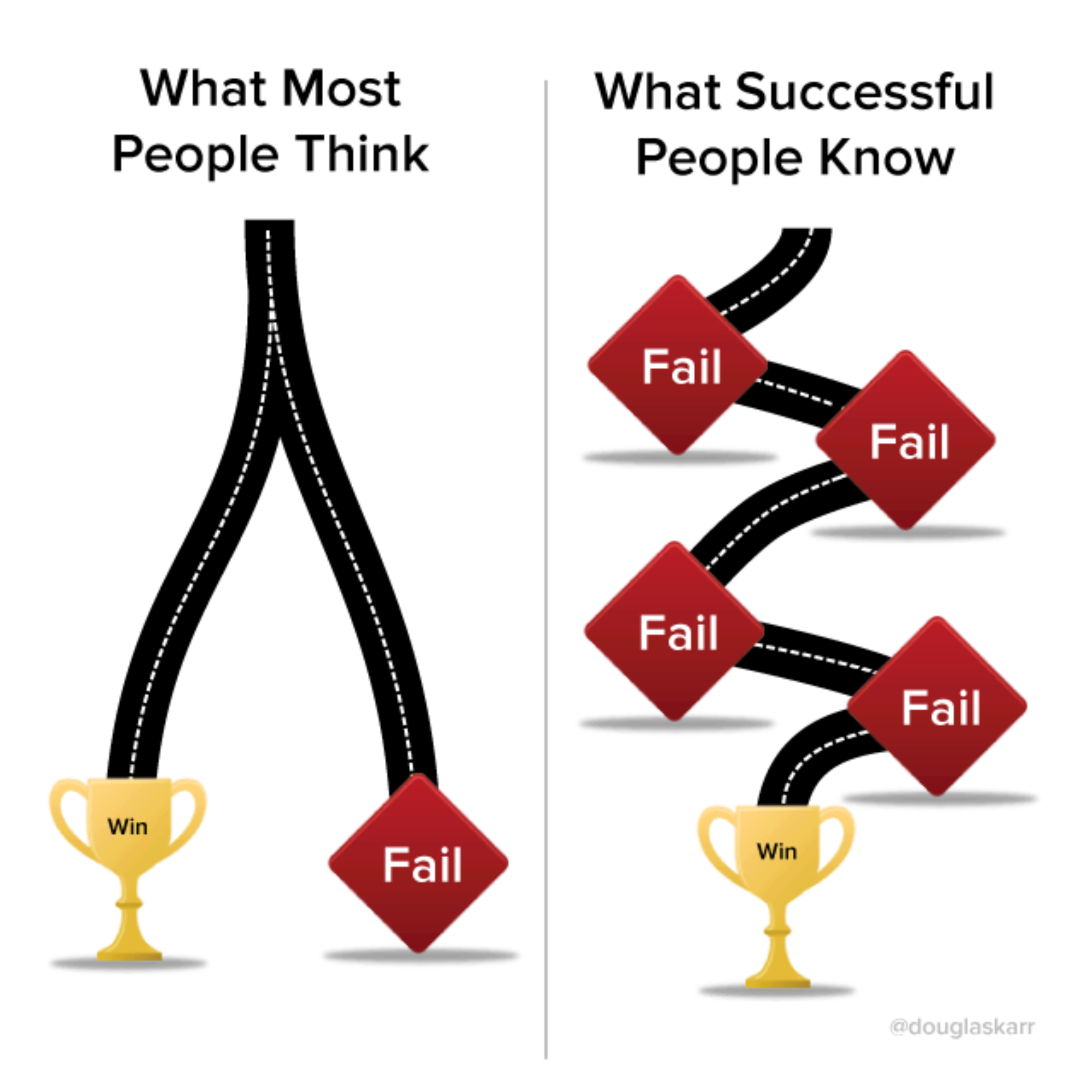
Normally I don't like just posting someone else's work, but I saw this image the other day and found the model it suggests so simple and useful I couldn't help posting it. I've found and often say the people who succeed use the word "failure" like other people do, but it doesn't mean the same thing to them. It means something positive. Not even a necessary evil, but part of a learning process... a desirable outcome.

0 Comments

A question to ask all the time: “Is this making my life better”

I watch my share of television. I eat my share of unhealthy food. I find plenty of ways to waste my time. But I'm decreasing those things all the time. I think a lot of people decide what to do or not based on the thing or activity in question. Will that chocolate cake taste good? Will I enjoy watching that show? Do I want to go to that party? The problem with that approach is that it leads you to do things based on the qualities of that thing. Most things come your way because someone thought you'd enjoy them. They probably also benefit from your participation, so they show you it most attractively. Then you get caught following your nose, doing whatever comes…

0 Comments

Columbia’s 2013 Commencement

Last month Columbia invited me to walk in its big commencement for the twentieth anniversary of graduating college there. I don't often get to dress in my medieval-looking PhD cap and gown, so I accepted. If you've never seen a Columbia commencement, it's a great, stately affair with tens of thousands of graduating students and their families, all the more so when you realize how few spaces like its campus New York City has. Naturally they had me sit beside the President of the University, all of us on stage looking like a bunch of popes in our prestigious caps and gowns, discussing important matters of science and philosophy. And why have a web page if not to share the grand experience )and my cool…

0 Comments

Leadership and United States’ spying

I'd like to look at some headlines from a leadership perspective. I don't intend for today's post to be political. Governments have needed secrecy and spying since before Sun Tzu's The Art of War over two thousand years ago. People will also oppose governments that overreach their influence into their lives. Different people oppose different levels of intrusion so that the more a government intrudes the more people will oppose the government. One of the main roles of a government's highest leaders is to balance the government's secrecy and spying with its citizens' private interests. Government officials and decision-makers have conflicting interests because their jobs get easier with more of the former and harder with more of the latter. If a leader doesn't take responsibility…

0 Comments

“Needs as understood”: How to start sales presentations — and conversations where you want to influence someone

I've written before about a student group from Columbia Business School I still contribute to long after graduation called InSITE that promotes entrepreneurship and connects students at several schools including Columbia, NYU, Harvard, and Stanford to entrepreneurs. A recent post on InSITE's blog by Lukasz Strozek, Stanford Business School 2014, described a challenge common in product development and entrepreneurship. It reminded me of a great solution I'll write below applicable to many situations where you want to influence people. The challenge Read that post for the details, but broadly it points out We care about products we create We want to get feedback from customers and potential customers Pitching the product gets closed answers, not broad understanding of a customer's needs or interests So the…

0 Comments

Google, strategy, and what your strategy says about you

I've read a few articles recently how people are using search engines that track you less than Google in light of the spying. I've been using DuckDuckGo for a while since I find Google so spooky. Nobody is challenging in Google's dominance, but competition is increasing. Its search results aren't as good as Google's, but I prefer it, as I'll explain. Nearly every successful company has a strategy or it will lose focus and fail. Same with people, for that matter. Whatever a company or person says, if you know their strategy you can predict their behavior. Usually if you know their behavior you can figure out their strategy. In the case of Google and your privacy, I believe their strategy says a lot about…

2 Comments

A beautiful spring day

New York City is enjoying some beautiful weather today. My building has a nice rooftop and had some friends over to enjoy the weather and view yesterday. I think people come here for the leadership thoughts... sometimes you just have to stop and enjoy the day. A few related thoughts I've posted before I clicked on to look at myself. A Beautiful Spring Day in My Neighborhood (with slide show!) A Model that Will Bring You Happiness Three Little Birds Is it not important to enjoy and explore the world around you? Now I'm off for a run along the river.

0 Comments

What is morality?

The concept of morality is for many people a complex topic. I like to simplify complex things, as long as the simplification works. If the simplification doesn't work I drop it, but sometimes the simplification works well. Longtime readers of this blog know I avoid using terms like right, wrong, good, bad, and evil and have an exercise to avoid them that taught me a lot, decreased how many arguments I got into, and benefited me in other ways. So the less I communicated judgment, the more I questioned the value of anyone communicating judgment and the more I started paying attention to how people used the word and concept of morality. I came to substitute the model that morality just meant someone telling someone…

0 Comments

Why dislike patents?

Here's something I wrote in response to someone who wrote about patents, confused why so many people, especially people who work in technology, are coming to dislike patents. I find people who don't work with patents have models about them that don't fit with how businesses use them today, their effects, and how and why we created them in the first place. The first quote is a question I read that I decided to answer. The rest is my response. In case anyone forgets, I've written several patents and co-founded and work at a company that fundamentally depends on those patents. I don't claim patents are bad. I'm only answering the person's question. What is with all the hate for patents? Should a company not…

0 Comments

A model for one of the most valuable skills related to beliefs

[This post is part of a series on “Mental models and beliefs: an exercise to identify yours.” If you don’t see a Table of Contents to the left, click here to view the series, where you’ll get more value than reading just this post.] This series covered a lot about flexibility with your beliefs -- the ability to try out believing something new and letting the new belief crowd out the old one. Doing so is hard because believing means believing something is right. If you don't get it, changing beliefs is hard because you'll think it means believing what you thought was wrong is right and vice versa. I made a point of undermining beliefs being absolutely right or wrong -- it's impossible for…

0 Comments

A model for learning potentially painful, embarrassing, challenging skills

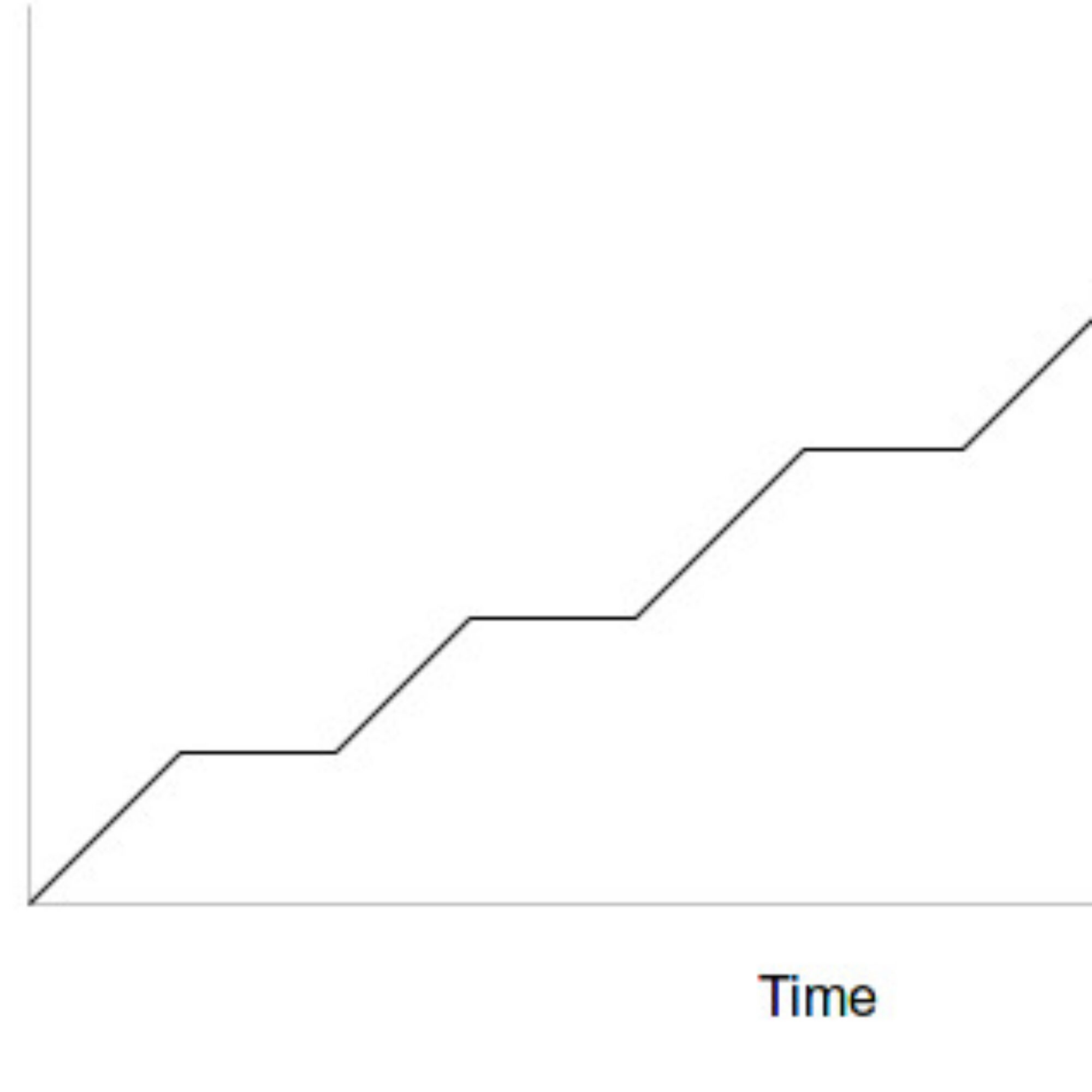
[This post is part of a series on “Mental models and beliefs: an exercise to identify yours.” If you don’t see a Table of Contents to the left, click here to view the series, where you’ll get more value than reading just this post.] Do you ever hold back from trying to learn something because you know you'll have to try several times to get it right? Are you afraid of falling, failing, getting hurt, and getting laughed at? Today's model addresses that, giving you a model for trying new things. It gives a great visualization for people who master a difficult task, as difficult, painful, publicly viewable, and challenging as any project you'll take on. You've likely done this harder challenge yourself. A model…

0 Comments

More thoughts on centralized power without accountability

Comparisons to Nazis and Hitler happen all the time, usually backfiring on the people making the comparison. Since almost no one has tried to take over the world or kill everyone they could based on religion, whomever you're comparing looks better. This comparison makes things so black-and-white you lose the ability to learn from the past. Today we know how Nazism ended, but while it developed and grew, nobody knew. When most people talk about the topic, they talk about after their power passed a point of no return. The problem with looking only there is that there was little anyone could do then to change anything. I write this blog about what you can do. I want to share things we can act on.…

0 Comments

How do you know the Earth is round?

One of the most important skills to have about beliefs and models is being flexible. Flexibility is one of the hardest skills for my clients to develop... until they get it. Then they realize the value of the skill and get good at it quickly. Today I want to share a way I've found useful to undermine people's rigidity in their beliefs -- to point out how an incredibly strong belief can be based more on just agreeing with everyone else without questioning them than direct observation. One of the most basic facts we all know about our world is that the Earth is round. To say otherwise puts you in a category of kook or loon. Someone who believes the Earth is flat will…

4 Comments

Communications skills exercises, part 10b: another example of voicing your self-talk

Following up on this post on voicing your self-talk, a follow-up to what I consider the most effective exercise in improving your self-awareness, here is another example of someone speaking extemporaneously for a long time. He's not exactly voicing his self-talk, but he is, at least somewhat. I presume he knew his topic well before this recording, but knowing a topic well doesn't make speaking for over five minutes on it easy. He has to be able to let the words come out of his mouth with minimal filtering. I find being able to speak extemporaneously displays high status. http://www.youtube.com/watch?v=5BBhNkywMJY It's also funny and shows talent. I expect he worked hard to be able to speak like that. Could you do it, in front of…

0 Comments

Video on creativity

I've written a lot on creativity and when I do I often mention the professor whose class on creativity I took, Jacob Goldenberg. He recently gave an online talk with Columbia Business School about his research. If you like creativity, learning some unexpected properties of it, and improving your creativity, I recommend it. It's not as polished as a TED talk, but as informative. Here it is: video platformvideo managementvideo solutionsvideo player Here is the link to the original page. Enjoy!

0 Comments

Leaving LinkedIn is easy and fun

A year or so ago I left Facebook, starting a nationwide and even global trend for others to leave it too, stating that leaving Facebook was easy and fun. Yes, I was the one who started that trend. Leaving wasn't popular yet then. Rereading that post, I see that I never logged back in to say goodbye to my connections there. I haven't missed a moment there. On the contrary, it feels weird when people talk about it because it feels like a relic from another age. When I see someone else using it, I see how much it draws you in, especially with those small but impossible-to-miss message waiting signs. Lately I've read a bunch of posts about LinkedIn's creepiness. I hardly used LinkedIn…

7 Comments

My main problem with centralized power without accountability

I once read that in the build-up to WWII, people in America were concerned that democracy would hold them back in a conflict with the nations creating strong centralized authorities. They speculated that in a war, while they deliberated, nations with centralized power would win for not having to take time making decisions. Apparently they were right, but only at the beginning. When the strong central leaders made effective decisions, their nations won. Things changed when the strong central leaders started making bad decisions when things got out of their depth. The powerful leaders continued making decisions and nobody could stop them until their nations were ruined. I don't know how accurately I remember what I read or how accurately what I read portrayed what…

0 Comments

Ad hominem attacks are easy but counterproductive and best ignored

I'm following the story of the government spying more closely than most issues and writing about it here because I see it as a failure of leadership in many ways, most importantly that the system seems to be out of control with the person in charge -- the President of the United States -- exercising little accountability if not outright lying. Yesterday an opinion piece in the New York Times ignored the issues and attacked the character of the whistle-blower, using malevolent tones to insinuate problems. Today the New Yorker challenged that piece, still respecting the Times writer, as if the piece deserved respect. I don't think the piece deserved respect of serious consideration. Instead of addressing it point by point, as the New Yorker…

0 Comments

A reader’s testimonial

A reader wrote this testimonial. As I wrote him personally, I am honored and flattered that this material was useful for someone to improve his life with -- including asking for and getting a position he wanted at work with more creativity and responsibility, taking on leadership roles, and improving his regular habits. I'm sharing it here in addition to my testimonial page because by describing his background and specifying (and linking to) what was most useful for him, he made his experience useful to others. I hope it's helpful to you. Thank you, David! Although I've worked for some big companies and have achieved success so far, I've been struggling with feelings of inadequacy and, more importantly, a growing desire for leading my own…

0 Comments

Edward Snowden — Whistleblower

[My previous post is my second-to-the-last on my series on daily and weekly beliefs that improve my life and may improve yours, in no particular order. See the introduction to the series and the value of flexibility in beliefs for background. The last one will be an introduction to the whole series, to come soon.] I haven't written about freedom and the Freedombox project in a while. If you've followed the leak about the information about how much the U.S. Government is spying on seemingly everyone it can, you can imagine I feel strongly about it. Readers here know the value I hold for accountability in leadership. Secrecy seems antithetical to accountability so the news seems to reveal something counter to what I consider effective…

4 Comments

A model that all models are flawed but inevitable

[This post is part of a series on “Mental models and beliefs: an exercise to identify yours.” If you don’t see a Table of Contents to the left, click here to view the series, where you’ll get more value than reading just this post.] Though this series covers models and their importance, one of their most important properties is that they inherently have flaws and inconsistencies. Flawed as they are, we can't avoid using models -- we can't avoid believing things beyond what our experience allows. The universe is larger and more complex than we can observe or comprehend so we have to make do with flawed and inconsistent simplifications. You might say you can never be completely right about anything -- not you nor…

0 Comments

A model for intuition, especially in complicated times

[This post is part of a series on “Mental models and beliefs: an exercise to identify yours.” If you don’t see a Table of Contents to the left, click here to view the series, where you’ll get more value than reading just this post.] Leading in complicated times can be challenging. Many people prefer not to lead because of the risk of visible failure. Others thrive under pressure. They don't have better odds of success than others. If you can become like that, people will want you around. Even if all you can do is stay calm beyond where others lose their cool, people will want you on their team or leading it. How do you learn to stay calm and perform effectively under pressure…

0 Comments

A model for balancing pushing myself with enjoying life

[This post is part of a series on “Mental models and beliefs: an exercise to identify yours.” If you don’t see a Table of Contents to the left, click here to view the series, where you’ll get more value than reading just this post.] Do you work hard to improve your life -- studying hard, working long hours, being patient with a significant other, etc? If you're always pushing, when do you get to enjoy life? But if you're always enjoying, do you ever improve? Do you wonder if you're slacking too much or working too hard? Do you wonder how to balance both aspects of your life? Today's model shows how I think about how I balance pushing, trying, and improving with enjoying, relaxing…

0 Comments

A model for what improves life the most

[This post is part of a series on “Mental models and beliefs: an exercise to identify yours.” If you don’t see a Table of Contents to the left, click here to view the series, where you’ll get more value than reading just this post.] What can you do to improve your life the most? Exercise more? Eat more healthily? Save or earn more money? Improve your social skills? Buy a house? I've found success in many areas of life. I think I could safely say I've performed in the top few percent of performers (to the extent you can quantify these things) in fitness, earning, academic success, business success, relationship success, and various other important things. Today's belief is about what, of all things I've…

0 Comments

End of content

No more pages to load