Reflections on my business school 20 year reunion

A couple weeks ago I attended the 20 year reunion for my earning an MBA at Columbia Business School. It's been decades since I applied. I can't help sharing posts from when I applied, since the period between when I considered applying and when I started was 23 days. Here are posts on that process: I started at an Ivy League business school 23 days after deciding to apply. Here's how. My background for getting into an Ivy League business school in 23 days My essays for getting into an Ivy League business school in 23 days Three things struck me at the reunion. Actually, more than three but I'll write about three. Business school was not what I feared Long before considering applying, I…

0 Comments

This week’s selected media, June 14, 2026: The Machinery of Freedom, Twilo

This week I finished: The Machinery of Freedom, by David Friedman: My friend and podcast guest at Cato, Travis Fisher, recommended this book. I've come across many of the ideas before, even the radical replacement of every vestige of government, from readings like The Individualists and Coase's paper The Problem of Social Cost, but not together, comprehensively. I'm glad to see it all put together. It's easy to dismiss views on privatizing everything as just seeking profit. A less thoughtful past me would have said it's not possible and misguided. Why bother even thinking about it. It would just turn into 1984 or some version of one corporation running everything, or a small number of them, all for profit, removing anything not commodifiable, like art, nature, and love. Such…

0 Comments

First we pave more land nearby and it’s no big deal…

First we pave more land nearby and it's no big deal. In fact, the road or housing development boosts the economy. More people can reach places faster. Then we expand that paved area, again no big deal. The we have to travel to get away from it all. There is no local nature, no chance for solitude in nature. Then we pave over yet more to access more remote places, maybe build an airport, to facilitate getting away from it all. Then we acknowledge that we've wrecked or done away with nature nearby so we feel we have to get away and feel entitled to what we need to get away and to the remote nature we get away to. Then we build adorable little…

0 Comments

When did you last prepare a meal from scratch?

Nearly everyone I tell that I don't use a fridge responds, "You must shop every day," or asks how often I shop, implying that they think it must be frequently. I've been answering by pointing out that apples and eggplants don't need refrigeration, nor do most whole fruits and vegetables. Most of the produce in this picture will stay edible for weeks without refrigeration. Several will keep months or longer if fermented. Meanwhile, look at the second picture below. Nearly all the produce in the picture below will start decomposing as soon as they aren't refrigerated. They're worse in nearly every way: less fresh, more polluting, more fragile, more depleting, etc. Notice that you can't directly see or touch produce or anything living. In the…

4 Comments

What do we do about past choices that ended up violating our values? Do we just give up? Wouldn’t you rather win?

The number one resistance I hear to flying is that people have family flying-distance away. For most people who fly a lot, the following is checkmate: "What do you expect, never to see their mother again?" Implication: the environment is important but family is more important, so for whatever its problems, flying is net worth it. Similar with plastic, big cars, etc. Context Before getting to the heart of this view, first let's note that it is specious, deceptive, and self-serving. Flying made them flying-distance away in the first place. They don't hesitate to fly away from their family. People who fly spend less time with family, not more. Then they start talking about how they need to live where they do for work, or…

0 Comments

Letter to the World, version 1

How I live, my work, my mission, and my vision are more conservative than today's conservatives, liberal than today's liberals, libertarian than today's libertarians, progressive than today's progressives. How? By doing what no world leader believes possible. They haven't even tried, hence their lack of credibility, integrity, vision, or remotely practical plan to address today's greatest problems. The stakes are higher but solutions more practical and achievable than they know. Most of us can't make it through breakfast without violating: Do unto others as you would have them do unto you. Love your neighbor as yourself. Live and let live. Leave it better than you found it. We are restoring these values, enabling us to look people in the eye and say “we're doing our…

0 Comments

How to Win: OG Anunoby, Game 4 Knicks

Everyone in New York City knows that in game 4, the Knicks overcame the greatest deficit in NBA finals history to win. No one can get enough of seeing OG Anunoby tip the ball in with 2 seconds on the clock. Basketball is a team sport and every second of the game counted, but if you want to win in life, and I don't mean defeat others, I mean to reach your full potential, to help everyone around you, it's worth noting a few points about Anunoby on this play. Here's the video, if you haven't seen it enough. Then I'll show a few points we can learn from. https://www.youtube.com/watch?v=sOQKRjP3ZJk Moment 1: With 5.7 seconds on the clock Anunoby has the ball on the sideline,…

0 Comments

This week’s selected media, June 14, 2026: Progress, History of the World (semester 1)

This week I finished: Progress : Ten Reasons to Look Forward to the Future, by Johan Norberg: I met Johan at a Cato event in midtown last month. I'd watched videos of his before. He spoke last month about his latest book, Peak Human, which I expect to read, but started with this book. I thought it would read like Steven Pinker's books Enlightenment Now and Better Angels of Our Nature. I didn't expect as much Julian Simon, but Norberg recalled all of them. As with Pinker's books, I was pleasantly surprised myself to find many of his points compelling. Despite how much inequality, poverty, injustice, and war exists, much of it is less than before and decreasing and, while there are innumerable factors, some reasons are…

0 Comments

The 5 greatest flaws I see in environmentalism

I see environmentalism increasingly causing environmental degradation because the core of its practice is misguided. I started this post to write about the two greatest flaws I see in environmentalism, but three more came to me while writing. My goal is not to be comprehensive or authoritative but to provoke thought and behavior change. [EDIT: I came up with more since posting, so now more than 5. I may keep updating.] To believe that suing more solar, wind, or any energy source, including nuclear or, should it ever work, fusion, will lower use of fossil fuels or uranium, or their resulting pollution and depletion. Corollary: To believe that calling solar, wind, or any energy source as implemented today "clean," "green," or "renewable" means that it…

0 Comments

A silly post I couldn’t help posting

Though I post daily, I think of more post ideas all the time, more than I can post. I write some ideas on paper, some in files, some in browser tabs, some on the big blackboard in my apartment. Usually I get around to posting each idea. Sometimes after a while I decide the idea isn't worth posting. One post idea has sat on my board maybe for a year, far longer than others. I can't bring myself to erase it but it doesn't seem worth posting either. It's not even that original. I guess I'm sharing this build up to the idea to share some of the creative process, if these notes of context qualify. I like mixed metaphors. I like when people look…

0 Comments

853: Kate Williams: CEO, 1% for the Planet

I'd seen the "1% for the Planet" logo many times and figured it was an organization that helped, but I didn't think of how. The businessman in me wondered, shouldn't companies just lower prices 1% and let people donate what they want? Does one percent make much difference? Kate was passing through New York so we got to meet in person. In this recording, she answers these questions and more. She describes the organization more comprehensively, but briefly, 1% for the Planet organizes other organizations, some to donate, others to receive, and vets them. What interested me most was their long-term goal, which is cultural change, which fits with mine. Kate didn't found the organization, but as CEO has scaled the network to 110 countries…

0 Comments

“Are we running out of land for landfills?”: A Richard Feynman view from the 1986 Space Shuttle disaster

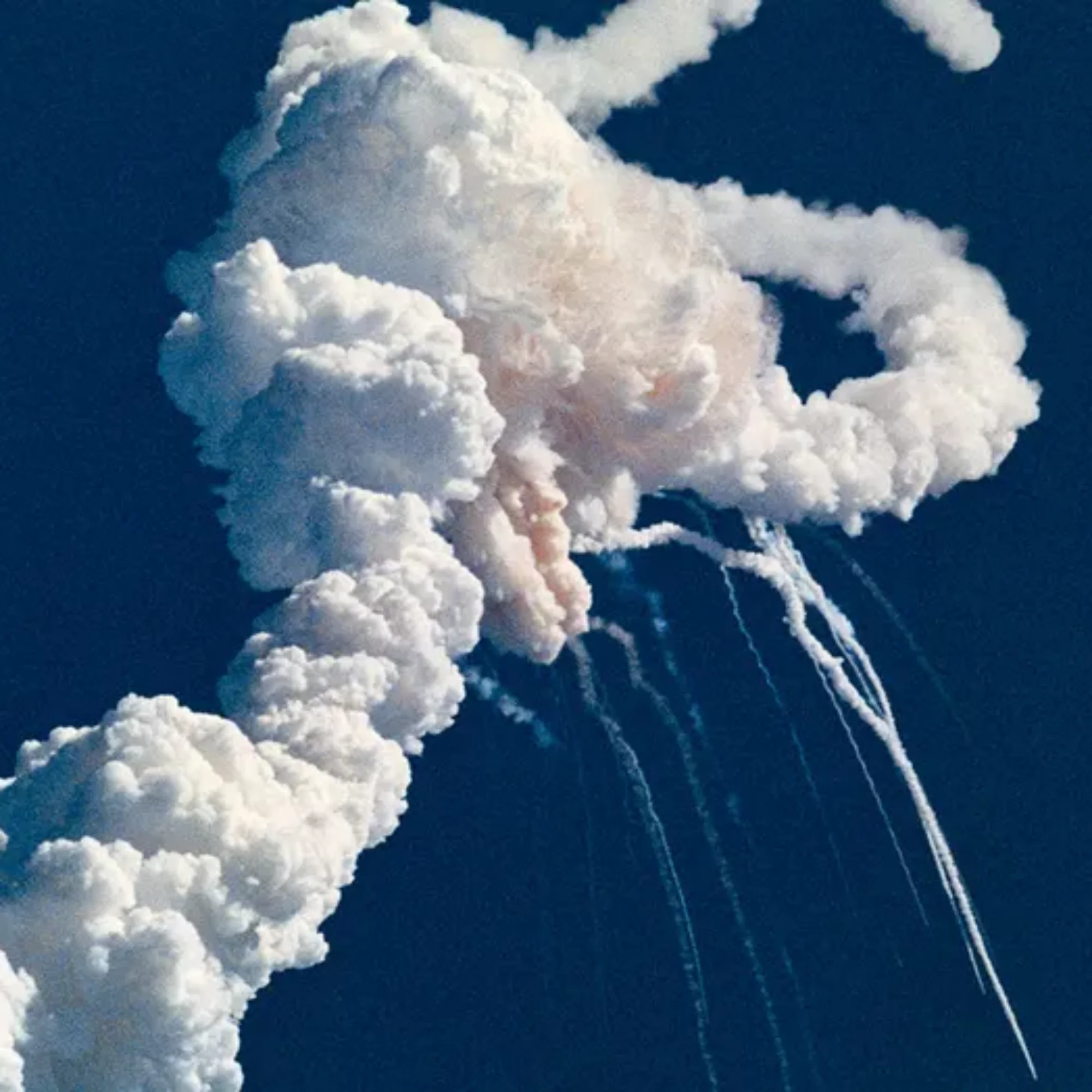
Richard Feynman is the Nobel laureate physicist who studied what caused the Space Shuttle Explosion of 1986. He learned that the o-rings likely leaked because past measurements showed cracks in them at low temperatures, like those just before the launch. Anyone my age or older remembers the image. He saw that people who saw the earlier cracks saw that because the cracks only went about a third of the way through, "there was 'a safety factor of three.'" I put the full quote below, which I recommend reading, but the gist is that since the o-rings were designed not to crack at all, there was no safety factor. Any cracking at all meant they failed. The Relevance to Landfills I ran into an old friend. Our…

0 Comments

Some of my favorite solo podcast episodes

When I redesigned my site, my page of favorite posts couldn't link to individual podcast episodes, so I'm making a separate page for my favorite solo podcast episodes. Most episodes are with guests, but in solo episodes I share personal thoughts on my own. For context, since I started working on my upcoming book, around January 2025, I saw that new ideas needed the book for foundation, so held back on solo episodes. I'll restart when the book is closer to its final draft and being prepared for printing. The new ideas move past some of the ideas in the episodes below, but even if obsolete, they reveal one person's journey from polluting and polluting more than most people ever to the first person I…

0 Comments

“Could Switzerland Become the First Country to Cap Its Population?” asks the New Yorker, and I comment.

The New Yorker reported this week: Could Switzerland Become the First Country to Cap Its Population?: The Swiss will soon go to the polls for a novel initiative that could upend the nation’s economy and rupture ties with the European Union. An early paragraph describes the article's main issue. I'll share it plus a couple other paragraphs, then my comments after. On June 14th, Switzerland will vote on whether to become the only country in the world to officially cap its population, with a limit of ten million people until 2050. (The current population is 9.1 million.) The initiative, which was put forward by the Swiss People’s Party (S.V.P.) and in recent polls has been supported by as many as fifty-two per cent of respondents,…

0 Comments

This week’s selected media, June 7, 2026: The Greatest Sentence Ever Written, Slavery–Summary on a Map,

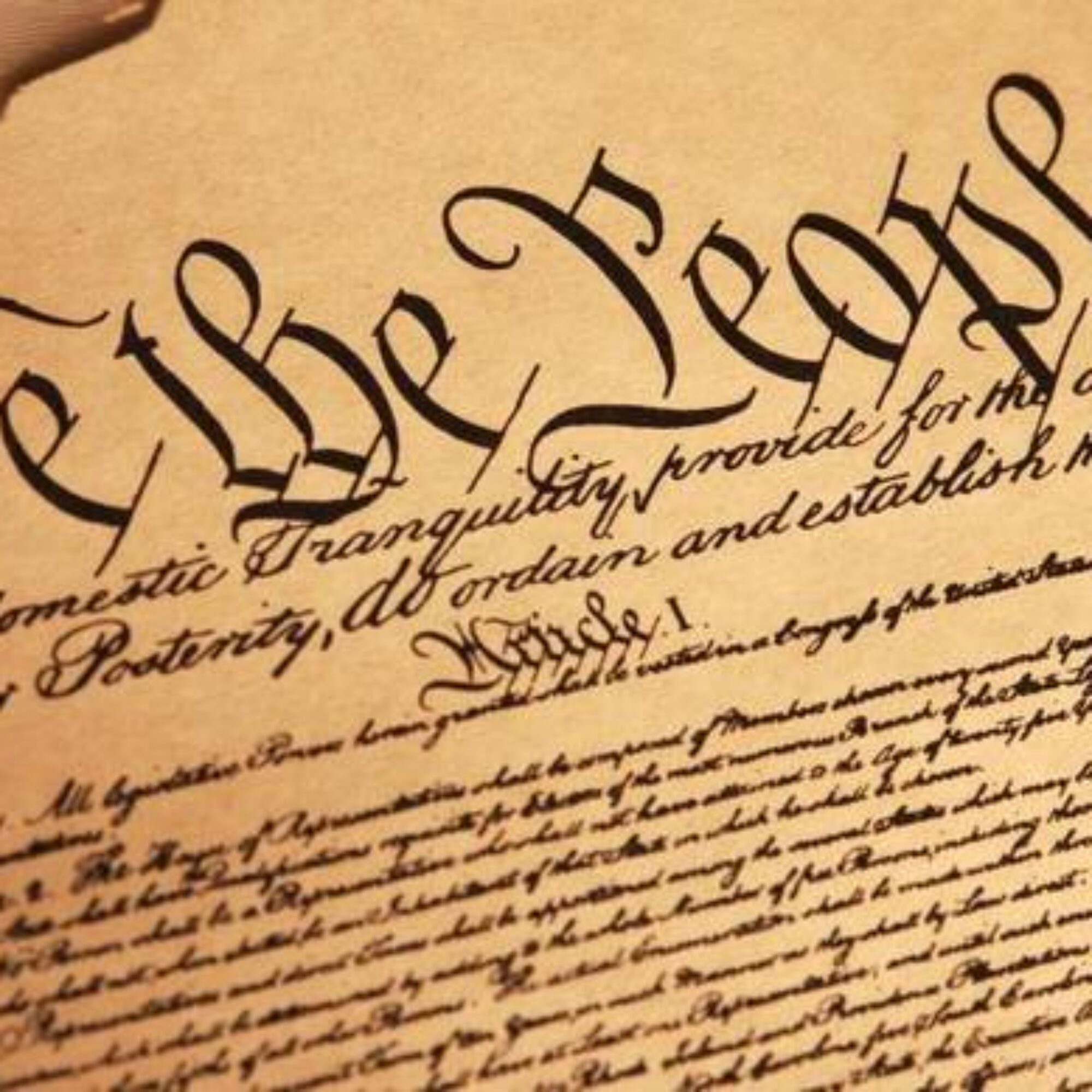
This week I finished: The Greatest Sentence Ever Written, by Walter Isaacson: Wow, the original content of this book is only 41 small pages, not counting empty pages at ends of chapter, with not many words per page, but packs a lot of meaning. It also includes important selections from Locke and Rousseau, as well as Jefferson's first draft of the Declaration and the full signed Declaration. Isaacson looks at the second sentence of the Declaration: We hold these truths to be self-evident, that all men are created equal, that they are endowed by their Creator with certain unalienable Rights, that among these are Life, Liberty and the pursuit of Happiness. and elaborates on it word or phrase by word or phrase. He considers the…

0 Comments

NYU’s president breaks NYU’s rules, to pollute and deplete of course

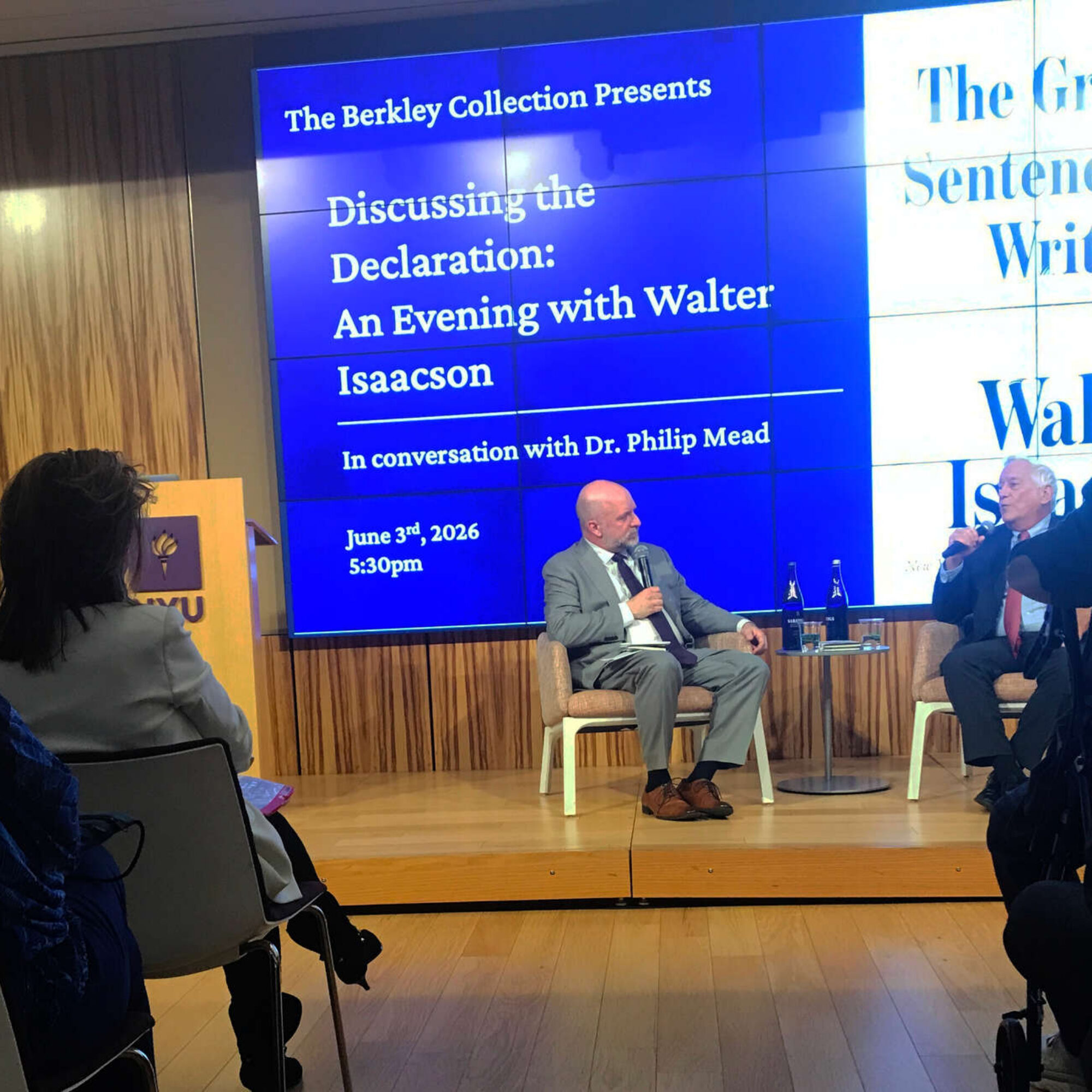
I wrote in 2023 about NYU consistently violating its own rules in NYU in 2019: We will stop buying bottled water. NYU in 2023: Here’s some bottled water from us. It's tempting to read something I'm not writing. I'm talking about leadership, which requires credibility and integrity, which require hands-on practical experience, not mere talk. I'm not writing in judgment. During a bus boycott, Martin Luther King would undermine everything if he occasionally took the bus, or even once, even if it took him places faster than any other way and he could do more with that extra time than anyone else. I attended a wonderful event hosted by NYU this week. The prominent author Walter Isaacson spoke about his book on the Declaration of Independence…

0 Comments

More roots: an ancestor who worked with George Washington and on the Continental Congress

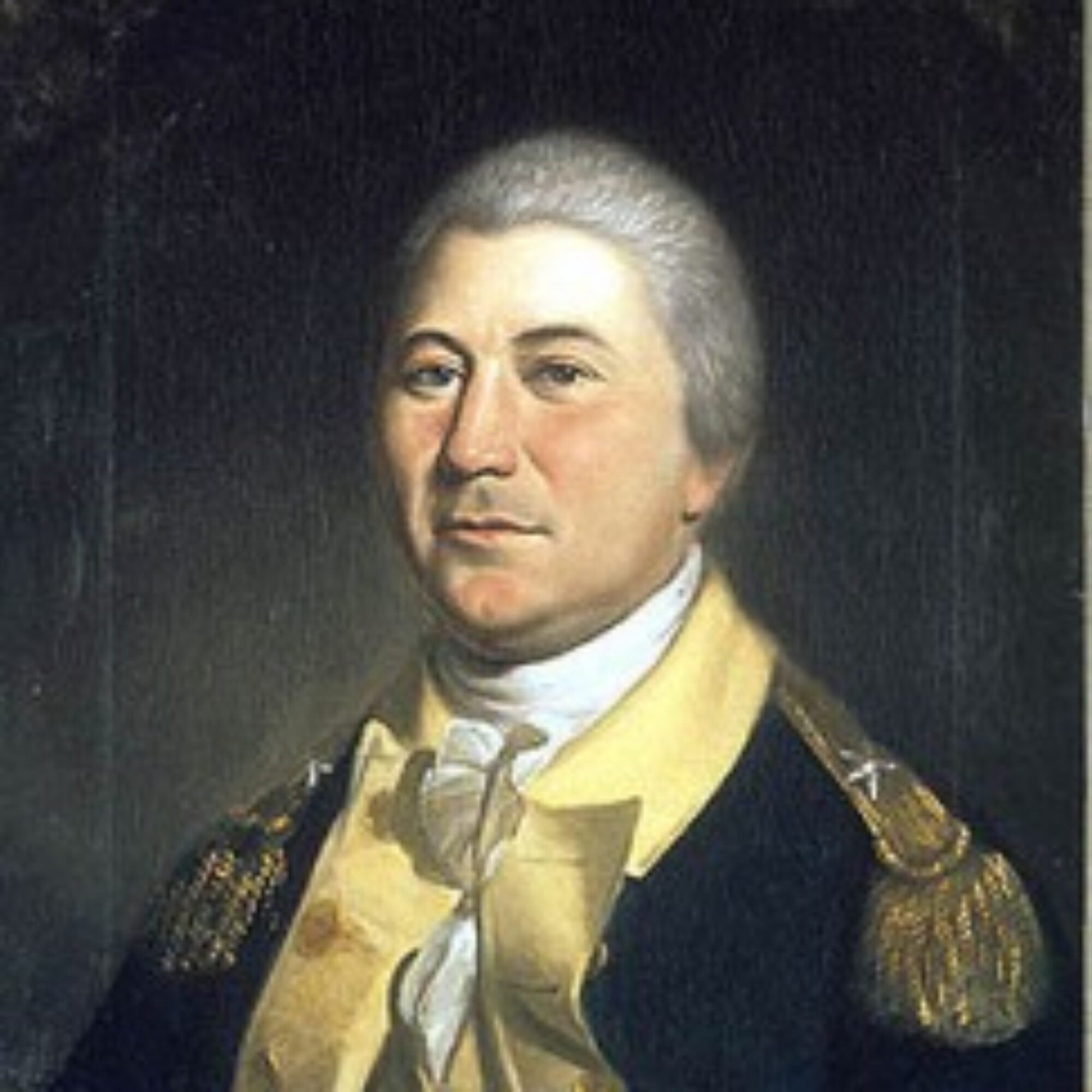
In 2011, I posted Roots—I descended from seventeenth-century Salem puritans!, about some of my family tree, in particular a part on my mom's side in which one direct ancestor sailed to the colonies from England in 1635. It's neat to have family that arrived here before the nation formed. On my dad's side, my grandparents came over about a century ago from Europe, where they were born. The relatives they left behind likely went up in smoke in Auschwitz or a similar camp, but no one I know of has found any records. Back to my mom's side, a relative found a site about a Varnum house in Rhode Island, which seems to be a many-times-great uncle of mine. He sounds remarkable, having worked with…

0 Comments

What I love about expensive gyms

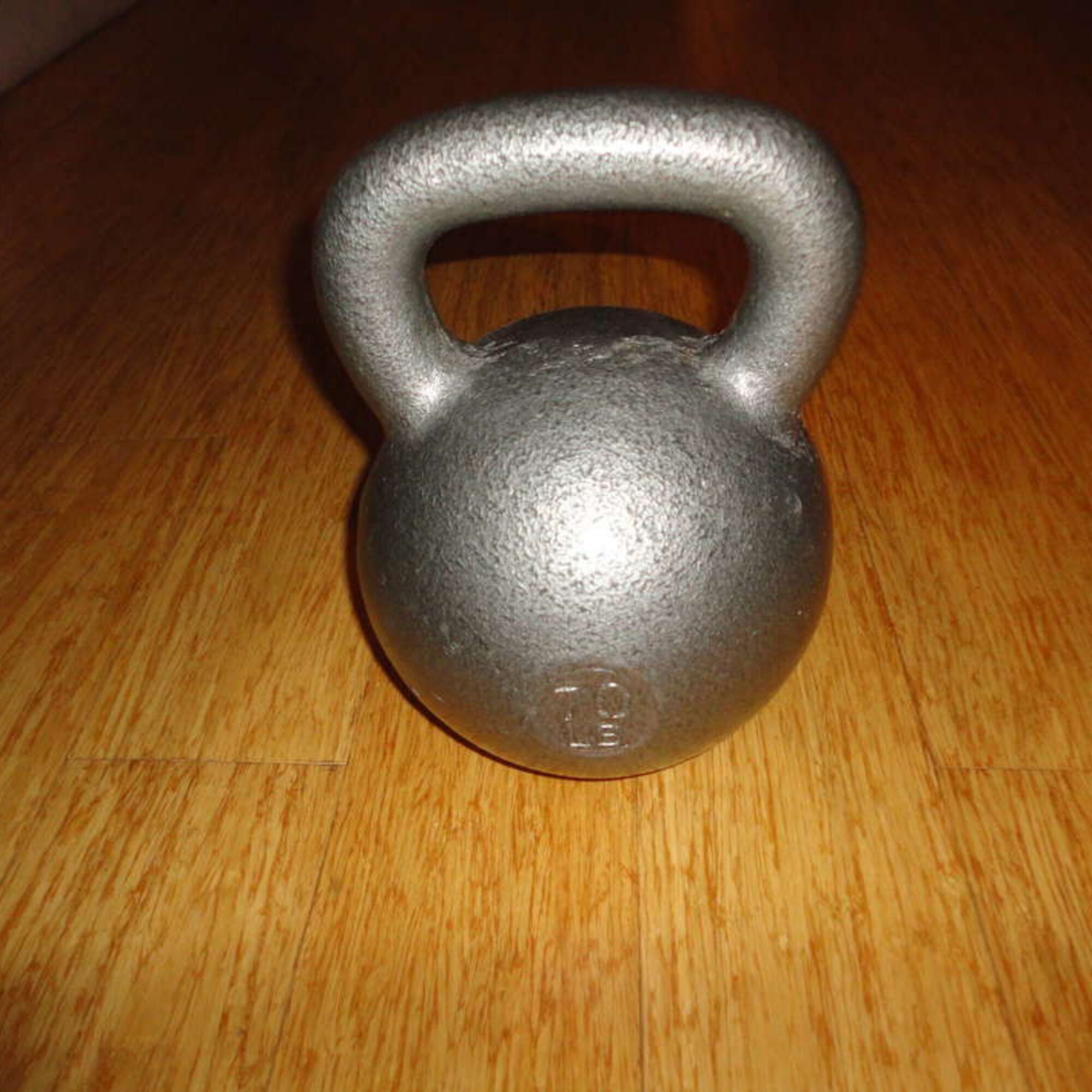
I love walking past Equinox gyms, or any other luxury gym. Or any gym for that matter, though especially the expensive ones. New Yorkers commonly pay $300 to $400 per month for Equinox memberships. Why do I love walking past them? Because almost guaranteed, someone will be walking in or out who is less fit yet spends more per month than I spent in probably the last decade on fitness. and I know that I got my full workout in less time than they took commuting or possibly even just changing clothes. The friend I mentioned yesterday in More Personal Bests: floor press, single-arm row, Turkish get-up also once told me he could show me how to get a full-body workout with two kettle bells.…

2 Comments

More Personal Bests: floor press, single-arm row, Turkish get-up

Personal best 1: floor press Regular readers know that when I bought my 70-pound kettle bell, I almost couldn't use it (though carrying it from the person I bought it from, used from Craigslist, to the subway, down the stairs to the subway, up and down stairs to transfer, and up more stairs home was a farmers walk). A few months ago I reported reaching personal bests for reps for floor presses. Well, last Thursday I reached eleven reps for my first set. When I got it, I may not have been able to do one rep. I'd been doing 10, 9, 8 for my three sets on my lifting days. Last Thursday I hit 11 for the first set. I didn't plan to. I…

0 Comments

The Timeline for Pollution and Depletion’s Effects on People

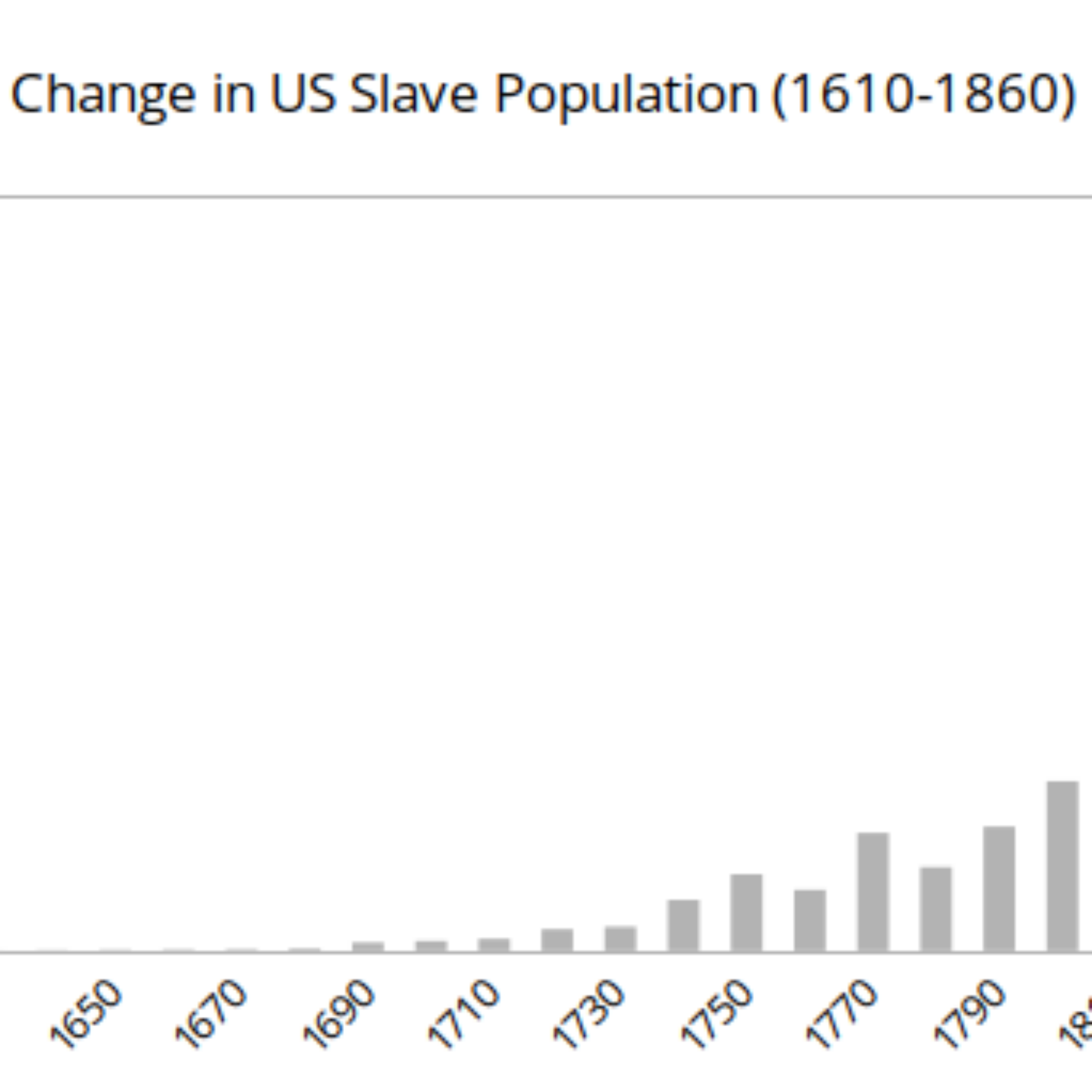
This post follows The Scale and Pollution and Depletion's Effects on People: Here, now, not future projections. I suggest reading it first. The timeline is important. Before the atrocities above, things could seem like they might work out, then explode. I could treat any of them, but will pick US slavery since its timeline is long, so easiest to discern. Here is the increase in number of slaves in the US from 1610 (zero) to 1860 (4 million): US slavery in the years approaching 1860 involved a national culture of trade, torture, and killing. While any instance of slavery is cruel, that national culture didn't exist in 1619. Oxford-educated Trinidadian historian Eric Williams wrote, “A racial twist has thereby been given to what is basically…

0 Comments

The Scale and Pollution and Depletion’s Effects on People: Here, now, not future projections

I talk about the USSR gulag system, abolitionism, slavery, the Holocaust, and similar atrocities in the context of pollution and depletion. Most Americans know the horrors of slavery and the Holocaust. We know viscerally the images of slaves' welts and concentration camp survivors looking like skeletons. By comparison, images of pollution and depletion look like piles of garbage and graphs of CO2 concentration. Similarly, few images of the gulag exist because few were taken and few Americans register how many more suffered and died, nor how gruesome the conditions. Am I stupid, ignorant, or crazy to talk about these atrocities in the context of pollution and depletion? Context and Frame of Mind Before reading this post, it helps to clarify how you feel about some…

0 Comments

850: AJ Harper, part 1: Write to change lives, including yours

Two core elements of leadership are effective communication and creating community. AJ has done both. I can attest from taking her writing workshop and participating in her author community since. I wrote the first draft of Sustainability Simplified in her workshop. I also valued the book she co-wrote with her writing partner and podcast guest Mike Michalowicz. As you'll hear in our conversation, their podcast is one of the only ones I've listened to every episode of. I've wanted to bring her on the podcast for a long time since I learned so much from her and value participating in her community so much. If you're here to build community to change culture, I believe you can learn from AJ's journey and building her community. I…

0 Comments

A new insight on beliefs

In Leadership Step by Step, I give several exercises on how to influence how you perceive the world. I recently found a simpler way of describing them. We all know that our beliefs influence our perception. If you believe a person approaching you is friendly, you perceive them differently than if you believe they intend to hurt you. Many people don't know that they can choose their beliefs, even people who work on mindfulness. I participate in a meditation group that includes people who have meditated regularly for decades. They generally know that if they feel an emotion or thought that they don't like then if they observe it, it will pass. This skill helps calm one's life. It makes you less reactive. I work…

0 Comments

849: Josh Bandoch, part 3: How to Get What You Want: Mastering the Art and Science of Persuasion

Josh Bandoch published a book on persuasion, influence, and leadership: How to Get What You Want: Mastering the Art and Science of Persuasion. I wish I'd had this book decades ago. It handles myths many people hold about persuasion that hold people back, then builds up the skills and theory to influence and persuade people effectively. It compiles many essential building blocks of persuasion and influence into one place. We talked about it at length in this episode. I recommend it, and would if I didn't know Josh B. In fact, our shared passion for learning, teaching, and coaching how to lead is a major piece of what connects us. From his book page: Life is about getting what you want. When you’re negotiating a…

0 Comments

Environmentalists rarely try to solve the problem

Fixing the results of a problem is not the same as stopping it from recurring and you rarely can undo all the problems, especially if you do it persistently. For example, exercising doesn't make up for an addiction to doof. Even if you burn off the calories, it doesn't fix the health problems or make back the wasted money. More importantly, since you keep consuming doof, you'll likely miss exercising sometimes. Relevant to polluting and depleting: plant all the trees you want. If our culture values affordable houses and food, when they want to chop your trees back down, they'll find a way to. I distinguish mopping up the mess from not causing it because I'm getting flooded with requests for people promoting stuff for…

0 Comments

End of content

No more pages to load