Education


Can you tell me about John Taylor Gatto?

Most Sundays I comment on The New York Times' Sunday Magazine column The Ethicist. This week looks like they have a special issue without it. Normally I comment on one from their archives, but today I'm so caught up in a couple videos I watched, and I believe I have a fair number of educators who question the system, that I'd love to learn if people can give me background on John Taylor Gatto. So far I watched this video https://www.youtube.com/watch?v=OkT0k57tAHo and this one https://www.youtube.com/watch?v=4KlSD0nanco and I plan to watch more. His subject---education as a system and its results as opposed to our desired results, also what is most valuable to educate---is close to my main goals today. He also sounds like my uncle from…

0 Comments

An experiment in delegating authority: Having students grade themselves

Last semester I experimented with giving students the responsibility of grading themselves. I think it went well enough that I plan to do it again next time, though I plan to refine the process based on what I learned. Motivation The idea resulted from a talk by Barry Salzberg, the global CEO at Deloitte, to Columbia Business School's alumni club. He talked about a challenge that since became part of his legacy at the firm. The challenge was to create standards for all Deloitte's member firms. Member firms operated independently before joining the Deloitte firm, after which they had to meet standards to continue using the brand. His challenge was that the firms' independent histories and cultures made them all agreeing to a uniform set…

0 Comments

Why do actors and entertainers become leaders more than the other way around and what can we learn from the pattern?

The other day I saw an ad for a TV show where 50 Cent was the executive producer. I don't know what role he had---maybe they're just using a star's name to get viewers---but at least the title suggests he has some leadership role. It made me think. A lot of actors, entertainers, and other performers move into leadership roles, but I rarely see it go the other way. Please correct me if I'm wrong. Same with athletes, come to think of it. People on the right wing get mad at celebrities who take up a cause, but I mean full-on leadership, not just some support. Most don't change roles, but when they do it seems to go in one direction more than the other.…

0 Comments

Your degree isn’t a restriction

"I'm stuck because I can't find a job in pharmacology." "I don't like law but what else can I do?" "I wish I could get out of engineering." I can't tell you how many times I've heard people talk this way. People about to graduate looking for jobs and people in the workforce alike. Even people from elite universities. They believe you have to make a living in what they got their degree. I felt that way once. When I was finishing my PhD in physics I thought I had to go into academia, industry, or finance, which is where most people with physics PhDs went. If I hadn't felt that way, this myopia---thinking more training gives you fewer choices---would baffle me. People's mental constraints…

0 Comments

How to get a mentor in two easy steps that work

I trust you know the value of a mentor. I'll take for granted you also know how to create a connection with someone. If not, read my Meaningful Connection exercise and my social skills exercise series. So I'll start at a point where you have at least a rudimentary dialog with someone whose mentorship will help you. Step 1: Ask them for advice Ask them for advice on something that matters to both of you. After enough time passes for you to act on the advice, go to step 2. It helps if you act on the advice, but not necessary Step 2: Tell them how acting on the advice went and ask more advice If you acted on the advice and it worked out,…

2 Comments

Closing remarks to my leadership class

Here is how I closed my last leadership class session a few days ago. It followed talking about Martin Luther King's "I have a dream" speech. We happen to have lived through a semester where the headlines show we haven't realized his dream. You only had to read the headlines for more problems. I'm volunteering for a non-profit that works on incarceration. We have children on Riker's Island in solitary confinement. Children. In our lifetimes sea levels will displace tens or hundreds of millions of people from their homes. I taught you skills. I think practicing those skills leads to values, which I consider the culmination of the course. Understanding your values and those of people around you. Awareness of values emerges from practicing leadership…

2 Comments

Universities, academics, and fitness

NYU emailed me to make sure the athletes in my class are doing well. I understand that some athletes pay more attention to sports than academics than the school wants. I have no problem with their checking in. It makes me think, though, about the relative value our society puts on the mind and body. I understand why a school would want to make sure its students succeeded academically. Maybe my life isn't representative of everyone's, but I don't remember much institutional support for taking care of my body, only for my mind, like it was valued more. As a student, I had to take initiative to stay in shape or do sports, while the school strongly enforced my schoolwork. I feel like society would…

0 Comments

Philosophy off the rails and how to get back on

The following is half-baked, but I'd rather share half-baked thoughts, take criticism, possibly embarrass myself, and learn than keep quiet and not learn. Since before Plato a major goal of philosophy has been to figure out how to make yourself happy, to understand what makes for a good life, and how to make one's life a good life. I haven't met many philosophers, but they don't seem the happiest people. The field seems to have become academic and intellectual---in other words, on the mind and thinking over the body and behaving. It seems to me that anyone pursuing philosophy that hasn't figured out how to make yourself happy has lost sight of the main goal. I find a lot of philosophy intriguing, fascinating, enlightening, and…

5 Comments

Make your habits stick! My new seminar.

Do you have trouble making habits stick? Come to my seminar one month from today! Hosted by the Columbia Business School Alumni Club and NYU-Stern, I gave this seminar at NYU last month and people loved it. They learned things about themselves and about each other that made habits click for the first time. Date: Sunday, June 14, noon to 4pm Location: NYU-Stern, 40 West Fourth Street Whom better to learn about habits from than a guy who started daily exercising one day and then hasn't missed a day in years and makes a business of coaching and teaching others? I've been working on this seminar for a long time and I'm very happy with how it's come out. It combines forefront science with daily…

0 Comments

Leading people in a field is different than working in that field

Business schools teach a lot of leadership. Other vocational schools do too. I don't know them as well, but I bet the following pattern applies to them. Say someone gets their MBA and gets a job in finance. They don't start at the top of a hierarchy. If they do well they get promoted to manage people like they were. Then they get promoted to manage yet more people. They keep getting promoted, always managing people in their functional area of finance. Eventually they start general management, where they manage people who do things different than anything they have experience in---maybe people from sales, technology, and some other departments. By this point they aren't doing the functional work they did before. And they don't have…

0 Comments

How much time did you waste on that project you loved?

People often ask me if I use my physics education today. You face similar questions from others, I'm sure. You probably ask them of yourself. Nobody's life follows a straight path from birth to where they are. I loved the field, but I don't publish or do physics experiments. I still love the field and can't believe everyone doesn't study it more in school. But I teach and coach leadership and entrepreneurship now. Was the six years of graduate school worth it? I don't look at the question that way anymore. I don't find evaluating the past useful. What I find useful is using the past to learn from and guide myself in the present for a better future. "Given my experience in physics, how…

0 Comments

More basics with Michael Jordan, Ray Allen, and Kobe Bryant: more simple and valuable than you think

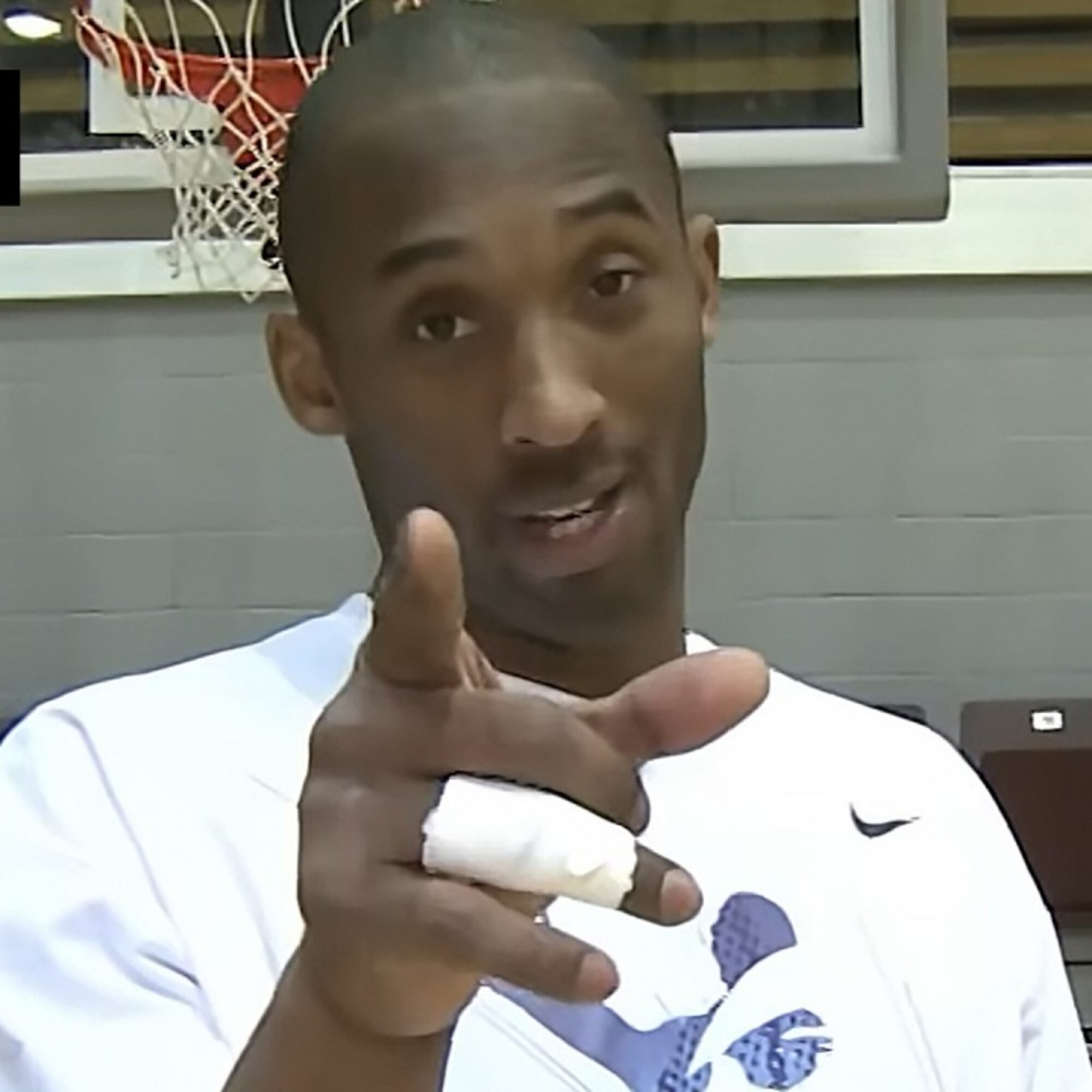
Following up yesterday's post, "The basics: more simple and valuable than you think" about how the masters tend to focus on basics, I found a series of videos made by a great basketball player, Michael Jordan. He's made few instructional videos. He could do things no one else could and made them look easy. He can teach anything he wants. So what does he teach? Simple basics. Things like getting rest, eating well, exercising, footwork, how to hold the basketball, listening to music before the game to focus on the game, where you look, and things like that. https://www.youtube.com/watch?v=1_Mri8XE078 https://www.youtube.com/watch?v=H5V70KaRHek https://www.youtube.com/watch?v=WtwP1wK0Vjk https://www.youtube.com/watch?v=cA93VUiVSpQ That's a few videos of a series. Click here for a list of with more of these videos. Here's another video by another…

2 Comments

The basics: more simple and valuable than you think

When I teach and coach basics, someone in the audience always wants to know about some advanced application of the material. I understand why they ask. When you're learning the footwork to dance salsa, you really want to do the fancy spin moves, so you ask about that. The great dancers concentrate on their footwork, though. The masters seem always to suggest sticking with the basics. I find that the more advanced someone's skills, the more they stick with the basics. A movie came out recently about a piano teacher, Seymour Bernstein, who I heard was a great master but stopped performing to teach piano. I think he teaches at NYU so maybe I'll meet him. I've heard people say he's an incredible teacher. What…

0 Comments

How to teach or influence

Following up yesterday's post, "How lecturing is the opposite of how we learn," on the counterproductivity of lecturing... What does it mean to teach someone? It seems to me something like you want someone to see things the way you do---to believe what you believe. The dictionary says it means to impart knowledge, not just facts. It's similar to influencing someone. If you want someone to see things the way you do, they have to have experiences like yours. Giving them facts doesn't change their minds. Using logic to get them to conclude what you do doesn't work if they don't agree with your premises. If you want to teach or influence someone to conclude what you learned through experience, you have to give them…

0 Comments

How lecturing is the opposite of how we learn

Think of a big lesson you learned. Think of all the big life lessons you learned. Rarely do big life lessons come from someone telling you the answer. You learn them from experience. I suspect you're like me, in that you go through life, constantly learning, constantly refining your understanding of the world. If so, you understand the world based on your experience. You develop a philosophy and how to do things. If you then try to lecture someone your philosophy or how to do things based on your experience, it won't fit with their experience. You didn't learn your experience from someone telling you the answers. Telling someone else the answers doesn't make them know the answers. It only gives them another experience. If…

0 Comments

Thoughts from recent talks I gave at MIT and Princeton

In April I spoke by invitation at NYU-Stern, MIT, Columbia Business School, and Princeton, I'm proud to say. As best I can remember it was my first time visiting MIT, though I may have visited my senior year in college. I remember competing against their ultimate team in college as well as competing with some of their players, including at Mardi Gras one year. In MIT fashion, the board behind me happened to have a physics equation. I don't know why it was there, but naturally I kept it. On another note, Princeton once saved my ass. In my first year of college I tried riding my bike to my dad's house in Philadelphia from Columbia. It's about a hundred miles driving, but bikes can't…

0 Comments

If you have “too much to do” or “not enough time,” you’re not getting more done. You’re annoying.

I first noticed it in the last semester of business school when most students were complaining about having to choose between job offers. All the offers more than met their standards. Dwelling in their decisions instead of choosing and living their lives made them miserable instead of enjoying themselves. What made them miserable wasn't that they had multiple offers---that is, the problem didn't come from outside. The problem was their inability to choose, which came from a lack of skill, discipline, self-awareness, or something like that. Schools offer tons of so-called opportunities to lead---student-run clubs, student governance, etc. Many people think "Community is better than not community, so I should sign up." Later they move to "Showing leadership is better than not showing leadership, so…

0 Comments

Your authentic voice

For a leader to speak with an authentic voice adds to their credibility and ability to influence. So how do you learn to speak more authentically? I've been leading clients through a method that has worked with each of them for years. It works, and a lot more effectively than someone telling you principles to follow. Nothing works like experience. Most people's fear of saying something they'll regret inhibits them from speaking authentically. Holding back makes you sound inauthentic, but not holding back risks saying something you think you shouldn't, like that you hate someone. Yet we admire people who speak without holding back. How do they do it without losing their jobs? I designed this exercise to have you practice on the smallest scale…

0 Comments

More important than personality is skills you can learn

[This post is part of a series on principles to create ideas people want to help you with and creating a helpful, supportive community around you. If you don't see a Table of Contents to the left, click here to view that series, where you'll get more value than reading just this post.] People with great soft skills seem to dominate many areas in business . I think of leadership and sales first, though also entrepreneurship. People erroneously see people who succeed in those areas as born, not made. Or they at least ask if great leaders or salespeople are born or made. The media propagate this myth because it leads to drama, which sells copy and movie tickets. Unsuccessful people like it because it…

0 Comments

Four principles of creating ideas people want to help you with

[This post is part of a series on principles to create ideas people want to help you with and creating a helpful, supportive community around you. If you don't see a Table of Contents to the left, click here to view that series, where you'll get more value than reading just this post.] I'm developing a course on how to get a job doing what you enjoy. Like the leadership class I'm piloting, it's exercise-based. It walks you through how to find something you like, create a project based on it, which generally turns into a passion, and then share the project with a community in a way they support you and often want you as part of their team. So far four people have…

0 Comments

Meet the Global CEO of Deloitte, Barry Salzberg, March 19!

If you think you could learn from a leader with over 200,000 people reporting to him, operating in over 150 countries, and producing over $30 billion in revenue, I recommend meeting Barry Salzberg, Global CEO of Deloitte. Most of us wish for leaders like him. He rose through one firm over 38 years, retiring to teach leadership at Columbia Business School. His legacy includes championing Deloitte University, a $300 million world-class learning and development center, and helping weather Enron and Anderson undermining the industry. Yet he remains down-to-earth, approachable, and dedicated to helping others. On March 19 he'll speak with the Columbia Business School Alumni Club (everyone is welcome). I recommend joining! Register here From the club's announcement page: Meet Global CEO of Deloitte Barry…

0 Comments

My next Leadership Workshop, Sunday March 1

My next seminar is March 1, two weeks from yesterday! It's with the Columbia Business School Alumni Club, but it's open to everyone. That means two things. First, you save money because they capped the price below recent seminars. Second, you get phenomenal classmates. Columbia alumni are knowledgeable but inquisitive, experienced yet curious, accomplished yet humble. In other words, they help everyone learn and perform at their best. Here's the announcement. Click here to register! Workshop: How to lead people so they want you to lead them again Effective leaders motivate people from the inside — so people they lead contribute fully and thank the leader for giving them the opportunity to work with them. Isn't someone thanking you for motivating them to work hard…

0 Comments

Influence and persuasion class starts Saturday

This Saturday begins my class at General Assembly on influence and persuasion. Register here We call the class "Entrepreneurial Sales" because it teaches entrepreneurial skills and uses a model of selling for its structure, but it's about broader concepts of influence, persuasion, value, and building relationships based on understanding others' needs. I used to think sales was part of the business other people did---something low-level that used pressure and made people feel bad, like selling used cars or souvenirs in tourist traps. Boy was I wrong! Sales is also Getting hired (selling your labor) Hiring people (selling your company's culture) Pitching proposals (selling your ideas) Getting funded (selling shares in your company) Influencing and persuading others (selling your perspective) Getting promoted (selling your skills) Knowing…

0 Comments

Listen to the results of my online leadership course: the full interview!

Over the past six months I created an online leadership course, The Fundamentals of Leadership. I interviewed a student who took it. Listen to the interview highlights and full course. If you want to learn to lead yourself or others better, or to improve your life, listen to the interview and see if it fits your interests. EDIT: Here is a video version of the interview highlights that's only in audio below: https://www.youtube.com/watch?v=g0ODcbJarCM Click here for the interview highlights (about ten minutes) Click here for the full interview (about an hour) Here it is in nine 5--8-minute segments: Part 1, Part 2, Part 3, Part 4, Part 5, Part 6, Part 7, Part 8, Part 9 About the course The Fundamentals of Leadership will prepare…

0 Comments

Listen to the results of my online leadership course: the full interview, part 9/9

[Another post superseded this one by posting the full interview and the highlights. I'll copy that post here: Over the past six months I created an online leadership course, The Fundamentals of Leadership. I interviewed a student who took it. Listen to the interview highlights and full course. If you want to learn to lead yourself or others better, or to improve your life, listen to the interview and see if it fits your interests. Click here for the interview highlights (about ten minutes) Click here for the full interview (about an hour) Here it is in nine 5—8-minute segments: Part 1, Part 2, Part 3, Part 4, Part 5, Part 6, Part 7, Part 8, Part 9 About the course The Fundamentals of Leadership…

0 Comments

End of content

No more pages to load