Leadership


Learning social skills helps your life more than almost anything

Two nights ago I walked with a friend past an exclusive resort she told me had a stunning rooftop infinity pool overlooking the city (pictures here). Entrance required getting a minimum $400 room. Instead I talked to a few people, got invited up, and we enjoyed the pool and view as invited guests. (I still had to swim in my boxer shorts because how was I supposed to know I was going to end up there, but that only added to the fun.) Recently I got invited last-minute to a friend-of-a-friend's birthday party at a private club. There was no time to put my name on the list. Besides I'm a single guy, something clubs generally don't like. Then I talked to the door guy,…

1 Comment

Living by your values

A client asked about something in his personal life. He does things one way that most parts of society do differently. To be clear, his way harmed no one and was in no way illegal, but he was concerned that people who learned about it might freak out. Sorry I have to keep the details to a minimum, but we all recognize his situation is universal. We all have things we do a certain way that society/family/school/church/government/etc does differently. A great thing about the internet is that we can easily learn that millions of others also do it that way, even if we can't meet them in person. You can't anticipate or change other people's expectations before you meet them. Like everyone, you also have…

0 Comments

Leadership lessons from method acting

Leadership and acting have a lot in common. Both crafts require practitioners to be aware of and to manage their emotions and those of people around them. They evoke different emotions -- leaders generally don't try to get people to cry and actors generally don't get people to work weekends -- but their crafts overlap nonetheless. I've linked to Inside the Actors Studio before and I'll keep linking to them. I'm in the middle of watching the host, James Lipton, interviewed by the great comedian (and apparently friend), David Chappelle for the 200th episode of the show. I'm only half through the episode and I'm already seeing the parallels and learning from them. They show some deeply personal clips of the emotions and techniques to…

2 Comments

Difficult lessons in leadership

You learn leadership through experience. I've had occasion to recall some of the most challenging and educational experiences of my development. I'm not proud of them. I wish they had never happened. But they formed me as much as anything. The painful experiences I co-founded Submedia in the late 90s. By the early 2000s we had nearly run out of money and were having trouble paying our debts. My PhD in physics, however useful for some things, hadn't prepared me for running a business. Neither did a childhood with little business training. Loneliness I don't know how my best attempts at leadership looked to others, but looking back, I think the best way I imagined to solve the problems was to work harder. I didn't…

0 Comments

America’s infrastructure, leadership, idealism, and getting the job done

I've been talking to my American friends overseas about differences between the U.S. and the countries they're living in. Top on the list are infrastructure and what the government does for the people it represents. I think government services rank so highly because when you get to know them, people tend to be the same everywhere. They usually know differences in food before they go. After the people you notice what you have to pay for or not. And once people get used to services like trains, health care, internet, and such included with their taxes, they notice their absence when considering returning to a country where such things cost a lot. I just spent a few days with two American friends in Seoul. You…

0 Comments

Great videos on understanding the economy, environment, and energy

If we could use leadership in any place most, I can think of few places more important than in understanding what is happening with our environment, energy, and how it will affect us, meaning the economy. Some conclude that since before Revelations through Malthus and beyond people have been predicting the end of the world, yet the world hasn't ended, we have solved all problems before and we'll solve whatever problems come. For many reasons I disagree. I'd go into my main reasons, and in a future post I may, but Limits to Growth explains the reasons better than I could. I just finished watching a series of videos by another guy with a science PhD and MBA, Chris Martenson, on the subject of what…

0 Comments

Facebook versus Walden

Walden is one of the great American books on nature and American society. Friends and longtime readers know I like it and much of its message. It criticizes the pick-a-little-talk-a-little-cheep-cheep-cheep-talk-a-lot-pick-a-little-more gossip-about-your-neighbor culture in favor of simplicity and appreciating nature. Facebook is in the news a lot. The opening sentences to Walden made me think about Facebook and the values spending time on it promotes. When I wrote the following pages, or rather the bulk of them, I lived alone, in the woods, a mile from any neighbor, in a house which I had built myself, on the shore of Walden Pond, in Concord, Massachusetts, and earned my living by the labor of my hands only. I lived there two years and two months. At present…

2 Comments

Creating your emotions — my friend’s incredibly successful story

A recent conversation with a friend who also coaches highlighted some important observations of mastering your emotions and improving your life. We were talking about my Model and Method and how you can predictably and consistently create the emotions and motivations you want. He described how he started putting this stuff into practice. He had learned techniques to change emotions -- basically to choose new environments, beliefs, and behaviors. He hadn't put them to use much when he noticed he had felt depressed for a while. As many of us know, when you feel depressed, you often don't want to change how you feel. You just want to wallow in your misery. Feeling other ways feels fake, like happiness means you're ignoring how things really…

0 Comments

Why people flip out (including yourself) and what to do about it

The pattern: overly intense emotions We've all experienced someone losing their cool around us. People flip out. They scream or raise their voices. Or, alternatively, sometimes they withdraw and act depressed or powerless. They make rash decisions. They get difficult to be around, etc. Sometimes you're the one whose emotions get out of control. Some people describe the pattern as "being emotional." Since I say people are always feeling emotions -- calmness, satisfaction, and laziness being emotions, for example -- I specify that losing your cool means your emotions became intense. The problem with the pattern Intense emotions override other emotions and rational thought. People feeling intense emotions react without thinking -- the opposite of leadership. You don't like working with people like that. One…

0 Comments

A leadership perspective on differences between economic systems

Watching people on the streets of North Korea, you see a different culture than in New York City. In three cumulative weeks in North Korea I saw almost no one hurrying or seeming like they wanted to get somewhere important. I was curious if I could find a root cause. From a leadership perspective -- that is, for someone who wants to motivate and lead others -- how do capitalism and communism differ? When you create your teams and organizations, you create systems that affect everyone in the team, whether you realize it or not. How do you motivate people? Will you have people hurrying to do something or free riding? Your choices may differ less than communism and capitalism, but a greater difference makes this…

0 Comments

Robert McNamara on Vietnam and leadership (or lack thereof) that led to the war

Following up on Vietnam, leadership, and the War Remembrance Museum in Ho Chi Minh City, I wanted to include some quotes by Robert McNamara, the Secretary of Defense during the Vietnam war. As the BBC's obituary noted, To anti-war protesters at the time, McNamara became something of a hate figure, an arrogant ultra-hawk responsible for escalating the war. He fully supported, Johnson's decision to put ground troops into Vietnam in a bid to prop up the unstable South Vietnamese government and prevent political disintegration which would have aided the Communist cause... By 1966, McNamara had begun to question the wisdom of US involvement in Vietnam and, a year later, was privately advising Johnson to end the war by negotiation. He initiated a full investigation of…

0 Comments

Leadership and the environment

The number one defining property of leaders Defining property number one about leaders from leadership guru Michael Feiner (and my professor) is leaders ship. They get the job done. Nobody I know of whose paycheck doesn't originate with fossil fuels or fundamentalist religion believes we are heading in a healthy direction for our environment. But we all respond to incentives and the incentives of our system -- huge roads, low density suburbs, huge subsidies for fossil fuels, no costs to pollute, etc -- promote pollution, producing CO2, and so on. Governments write and enforce the laws forming most of these systems. As long as governments aren't changing the systems to reflect what people want, they aren't leading. As long as the media is reporting controversy…

0 Comments

I don’t know when the United States and North Korean governments will be at peace, but we made it sooner

We visited North Korea for ten days in April, in part for the hundredth anniversary of Kim Il Sung's birth. North Korea is amazing. This trip surpassed our first in many ways, as before in ways we could never have predicted and, having experienced it, can't explain, much as we'd like to. Everyone on the trip agreed, as happened with the first trip. You had to be there to feel it, but we'll do our best to convey what we experienced, because at the root we communicated, shared experiences, increased understanding, and all the things that create peaceful interaction in all directions. (My travel-mates already started writing and posting pictures, mainly Joseph and Jordan.) Most people in my group explained that seeing and experiencing the…

0 Comments

A leader and physicist’s view on morality, ethics, and judgment

Wrapping up my series on the counterproductivity of leading with morality, ethics, and judgment, I'll present a model based I got from Einstein. Without all the emotion judgment can grip you with, you can understand the physics model easily. Then you can apply it to the emotional situation. Then I bet you'll improve your life. Before Einstein: the problem of the aether Before Einstein, people created a concept called the aether. They saw light traveling through a vacuum and figured something must be there, so they created a concept. For years they looked for properties of it. No one succeeded. You might remember the Michelson-Morley experiment from high school physics that famously couldn't detect the aether. That was a problem. People were looking for something…

0 Comments

How do you lead when you can’t stand working with someone?

Yesterday I wrote on how to lead people (yourself or others) you disagree with without judging them. I skipped cases where you felt you could not work with the person under any circumstances. Let's look at such cases today. I'm going to treat these cases strategically. Most cases will be unique at the tactical level so you'll have to figure out how to apply the strategy. If you can't work with someone, YOU have a problem First things first. No matter how bad you think they are, no matter how much evidence you have pointing out their faults and shortcomings, no matter how many other people agree the other person has problems, you have a problem too. I'm not saying they don't have problems too.…

0 Comments

Deciding right and wrong for others and causing them guilt and blame doesn’t help anyone

Prelude: this is about leadership (of others and yourself) Yesterday I outlined an essay on the counterproductivity of deciding right and wrong for people who disagree with you. Today I'm fleshing out the essay. The point of this blog is to help people lead -- to influence others, to work with them in teams, to negotiate with them, and so on -- even when you disagree. So I'll leave deciding right and wrong for others, figuring that, since some issues haven't been resolved for thousands of years, you might not resolve them before you have to deliver on your project (or while you improve your life if we're talking about leading yourself). Successful leaders ship while attract people to work with them. Today's post covers…

0 Comments

The New York Times had a contest about my post

What a coincidence. The day after my long post on the counterproductivity of moralizing for leading people, using the example of deciding for others whether they should eat meat or not, the New York Times published the results of a contest to do exactly what I described as counterproductive. No contradiction here -- the New York Times's goal is not to lead people, but to sell newspapers and what works against leaders' interests (depending on how you want to lead) -- polarization and argumentation -- works for news media. Here is the statement of the contest Here are the submissions with the most votes Here is the winning submission This difference in interests illustrates a glaring bias inherent to news reports. Promoting division and argument…

0 Comments

On the counterproductivity of motivating people with guilt and blame — aka moralizing

I liked Michael Pollan's Omnivore's Dilemma, which people have suggested I read for years. I like his perspective on food and "food." I don't intend for the following to detract from his overall message, but his chapter 17, "The Ethics of Eating Animals," makes a great example for leadership. Leadership means motivating others, which means changing their emotions. Few of us like when others motivate us with guilt or blame, so I find using leading through those emotions counterproductive. Claiming to appeal to absolute measures of right, wrong, good, bad, or evil tend to polarize. Motivating through guilt or blame with appeal to absolutes has a name: moralizing. Morality, ethics, meddling, being holier-than-thou, self-righteousness, and so on work to some degree, but risking alienating, polarizing,…

0 Comments

See my North Korea strategy talk

Sebastian posted the video of my North Korea strategy talk to his strategy group of entrepreneurs in Beijing. Check it out. The video didn't capture the questions and answers afterward. One of the first questions people asked was if I worried I was overly sympathetic to North Korean decision-makers. My goal is to understand them and their perspective, which people sometimes interpret as support. It bears repeating that understanding doesn't mean support. If you want to influence someone -- what else do we strategize about? -- I consider ignorance of their perspective the least productive starting point. Once you understand that understanding doesn't mean support, you begin to learn about them. Then you can influence them. Come to think of it, a less productive starting…

0 Comments

Words of wisdom for crunch time

Crunch time means you don't have a lot of time, you have a lot to do, mistakes can cost a lot, people depend on you, and likely you depend on other people. People make mistakes. Also, sometimes you have to make decisions based on less information than you'd like. If people dwell on the mistakes or find out later that someone else could have made a better decision, they point fingers. Pointing fingers distracts from the task, takes time from productivity, and hurts morale. My general advice Don't look for blame, but take responsibility for making things better to the extent you can applies particularly well in crunch time. I'll add more specific words that seem to come up in many crunch times. I say…

0 Comments

Leadership-based thoughts on economic and energy growth and limits

My closing paragraphs on yesterday's post, anticipating people's reaction, got me thinking about Marshall Goldsmith, one of today's top business thinkers (and a friend). I wrote the following: By now, many of you are probably thinking "we've solved all the problems so far, we'll solve the ones to come" "since before Malthus scientists project doomsday and they never happen, we can ignore this" or "this won't affect me" If so, do the math. Read his blog. At least understand the situation. If he's wrong, show him how. Show me too. I'd love to find out he's wrong. As a scientist, he (and I) would love someone to show him (and me) wrong. That's how we learn. I hope you're open to the same. Now before…

0 Comments

Back from North Korea!

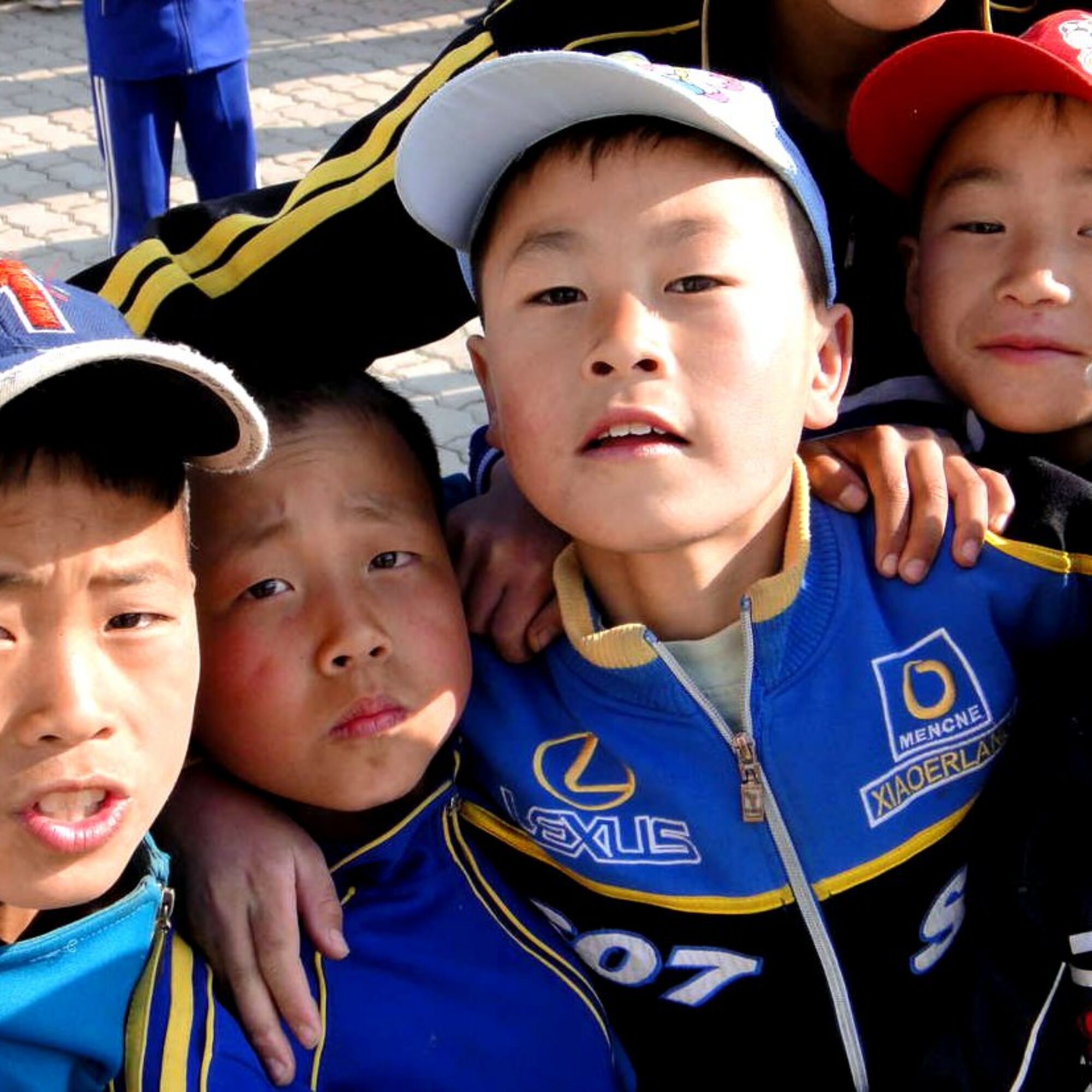
Greetings from Beijing and another amazing North Korea trip! This time we visited places few (no?) Americans or non-North Koreans have visited in decades. We also saw the incredible beauty of the country outside Pyongyang and the DMZ. Pictures and stories to come! By the way, I tag this post with leadership because, as you'll see, we did a lot more than just tour around. We interacted directly with many North Koreans, especially kids. You'll be amazed at what we did. We heard other groups complaining to their guides that they couldn't do things we did. I don't know when the U.S. and North Korea will have peaceful relations, but I can tell you we brought it closer.

0 Comments

See Joshua Spodek on understanding North Korea from a business strategy perspective in Beijing

My friend Sebastian organizes Lectures on Strategy, strategy talks to entrepreneurs and other strategists in Beijing, and invited me to speak to his group. If you're in Beijing, see me speak April 22 at 4pm, near the Shuangjing subway stop. RSVP to me or Sebastian (sebastian at sebastianmarshall.com) for details. I'm basing it on my talk at Columbia Business School last month, using mostly the same slides. He plans to record it, so I expect to post video eventually. Edit: Sebastian posted the video of the talk on his site and I wrote a bit about the discussion that followed.

0 Comments

Why don’t they teach emotional intelligence and self awareness in school? (part 1, K-12)

I write a lot about leadership skills and how to improve your life through understanding how emotions work in general, how yours work in particular, and becoming aware of your emotions as well as everyone else's. As a result of focusing on leadership, my community has become full of people with similar interests (you, perhaps?). They all tell me learning and practicing it improves their lives. We prefer having each other in our lives to people who complain all the time or complacently never improve things they could. People complain they don't like their jobs, relationships, identities, hobbies, and so on, but don't know they can change them so they dwell in misery. I haven't found this stuff too hard to learn, though you have…

2 Comments

Obama’s missed North Korea opportunity

When I first saw this picture, reading in the New York Times how "In South Korea Visit, Obama Visits Border and Warns North," I thought little of it, until I thought back to my earlier post on leadership opportunities for U.S. Presidents. I consider visiting a militarized border admirable and addressing North Korea important. But standing behind bulletproof glass is nothing like the speeches of Kennedy and Reagan. Maybe North Korea doesn't earn the same priority of the Soviet Union during the cold war, but it's a nuclear power that no one wants to keep as is. [youtube]http://www.youtube.com/watch?v=hH6nQhss4Yc[/youtube] [youtube]http://www.youtube.com/watch?v=YtYdjbpBk6A[/youtube] Times are different, of course, but the leadership opportunity remains. I'm no fan of Reagan, but even a "Mr. Kim, tear down this border" would go…

0 Comments

End of content

No more pages to load