Leadership


Working hard versus getting things done

Working hard does not mean you get things done. Getting things done doesn't necessarily require working hard. I waste time and I find myself often inefficient, but people say I've achieved a lot. Whether I've achieved a lot or not is opinion, but if they're right, it's because I know my priorities. I allow myself inefficiency on relatively unimportant things. The important things I don't slack on. The important things tend to be important, non-urgent things, so they don't require working hard or last-minute. I am confident I will never look back at any period of my life and ask what was it all for or feel the dread of wasting any part of my life. In strategy terms, if you know your strategy and…

0 Comments

The slides from my North Korea talk at Columbia Business School

Saturday's talk on North Korea at Columbia Business School went great -- a full room, an attentive audience, and great questions at the end. I didn't leave as much time for questions as I wish I had, but the organizer told me people told her they liked the talk a lot. Several people asked for copies of the slides so I'm posting them here instead of sending multiple emails.

0 Comments

Eloquence

By any measure of speeches or leadership, Martin Luther King's "Why I Am Opposed to the War in Vietnam" must rank highly, no matter what your thoughts on the politics of the situation. The text (text here) is eloquent, erudite, colorful, and informative. His delivery was rousing, engaging, inspiring, and on par with any other of his speeches. https://www.youtube.com/watch?v=FfGsVvnvA9w (The link in case the video isn't showing -- https://www.youtube.com/watch?v=FfGsVvnvA9w) As effective as this speech was, and not that they were competing, but Muhammad Ali has to get the nod on eloquence and effectiveness. No Vietcong ever called me nigger. Whereas King's speech covers nearly every issue, at 4,468 words, few would listen to his speech twice or pass much of its message to others. It…

0 Comments

Make your faults and weaknesses strengths

Everybody agrees nobody is perfect. We all have our faults. Yet some emerge as leaders and outstanding successes. I've come to believe leaders lead and successes succeed not in spite of their faults or weaknesses, but because of them. The things themselves don't matter as much as the emotions we attach to them. Attach shame to something inherent about you and people will see a part of you as shameful. Attach honor to the same thing and people will see something honorable, all the more so if you overcame shame to reach the honor. Great leaders incorporate their faults and weaknesses so much into their identities we don't see them as faults and weaknesses anymore. Pick any great leader or success. You probably first think…

0 Comments

A Catch-22 of minority and underprivileged leadership

I see inequality based on sex, skin color, and other lines in my society, yet I've met almost no one who overtly supports sexism, racism, or other lines. And among sexist, racist, or otherwise divisive people, most seem motivated out of ignorance, which seems easily remedied. Usually I say that systems perpetuate inequality so people who participate in those systems inadvertently support them. I recently noticed an odd effect that may contribute more than anything else and perpetuate minority groups remaining disadvantaged longer than other effects. The problem When groups are disadvantaged based on something easily recognizable like sex or skin color, people within that group tend to organize. Groups form, leaders emerge. Now consider this: can those leaders emerge from outside that group? Can…

0 Comments

Another review of Understanding North Korea: Demystifying the World’s Most Misunderstood Country

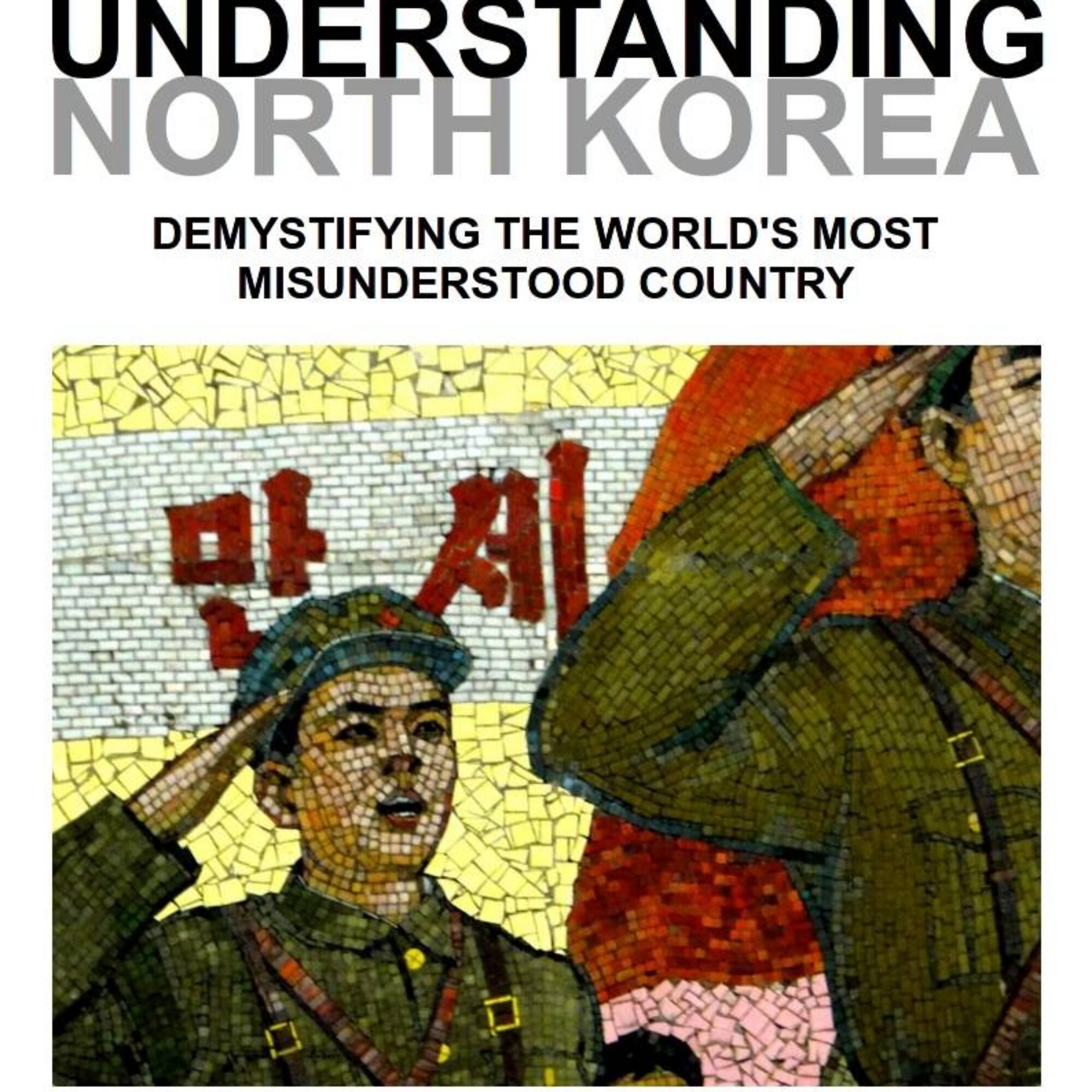
Joseph Ferris, who took the most breathtaking and evocative pictures of North Korea I've seen -- see them on Flickr (I recommend watching the whole slide show) -- reviewed my book, Understanding North Korea: Demystifying the World's Most Misunderstood Country, in his blog, An American in North Korea. He wrote I admit that I was quite skeptical to learn that on his return he wrote a book on North Korea, it's a country that requires a career of study and dedication to research to understand — at least from a historian's viewpoint. Instead, Joshua took his considerable business and entrepreneur experiences, along with his ability as a physicist to break down complex systems into easily understandable parts, and applied these talents to write a book…

0 Comments
The first step in strategy
Competition Demystified Strategy Decision Tree

The first step in strategy

I've written before about strategy. I've been thinking about presenting it because of my talk at Columbia Business School on the 24th. This decision tree -- Figure 1.3 from Competition Demystified -- summarizes how to start creating your strategy. It's written in business lingo, but it applies to strategy in many other arenas, like politics, war, law, and some sports, for example. It applies to large businesses, for which the book was written, but it applies to entrepreneurial ventures too. I wouldn't get involved with a company that didn't understand the concepts. It requires you understand the concept of a sustainable competitive advantage -- the first decision point. It also requires you know understand the realm of strategy, as opposed to tactics. Overall, I find…

0 Comments

When the greatness of great leadership emerges

Any captain can pilot a ship in calm seas with a light breeze. You can't tell someone's skill in easy, calm times. For that matter, while you can learn the basics in easy, calm times, you can't learn greatness in them. So while no one looks forward to difficult, stressful, white-water times, unless you expect easy breezes your whole career, you need them to become great. The greatness of great leadership emerges in stressful times. These times reveal the skills you have and forge new ones. Few can keep calm when you can't see past the wave bearing down on you and winds are changing faster than anyone could adapt, but you can't manage and lead a ship and its crew if you can't manage…

0 Comments

What is power?

Nearly everybody considers power important in social contexts. Nearly everybody wants more. Even if they don't want to become the most powerful politicians, business leaders, or whatever, they still generally prefer having more power to less. People denigrate others for seeking too much, but I think that's sour grapes. Nobody wants to feel powerless. So what is power? I'm not sure people understand what they mean by "power" in social contexts. I find the more precisely you understand a concept, the better you can use it. I came across the following definition for power some time ago and found it worked perfectly ever since. Power: the ability to influence others I like this definition because it ties power to ability to manage the motivations of…

0 Comments

Attempting to succeed means you will fail sometimes

The only way never to fail is never to try. If you try enough times, eventually you will fail. People who try hard enough to improve their lives learn to regard failing first as inevitable, then as desirable, if not in a particular instance, then in general. If they don't fail sometimes they aren't trying hard enough. This inevitability occurred to me recently when watching some sports championship. The best players, no matter how good, don't win every championship. Not only do they lose, but they lose big. They get the biggest spotlight as leading a team to lose. They lose games and seasons, but they don't give up. Muhammad Ali lost by unanimous decision. Michael Jordan lost big games. Everybody lost big games. How…

1 Comment

How to attract anyone, part 3

"What if the other person is boring?" People ask me this question all the time when I tell them they can attract people better, especially through genuineness and authenticity. The question reveals a belief about people I disagree with. My belief creates more friendships that are deeper and more meaningful. I'll talk about it here. Two beliefs that create friendships I believe everyone has facets of their personality that are interesting, intriguing, and fascinating. I also believe that you could know someone for decades and still find out new things about them. Think of the person you are closest to. You never run out of things to say, right? Imagine talking to them for fifty years. You'd still have things to talk about with them,…

0 Comments

A way to attract anyone, part 2: how to do it

How do we become more genuine and authentic, following yesterday's post on the value of genuineness and authenticity? I don't have a magic bullet but I can tell you some of the major steps that helped me. I don't claim to be the most genuine and authentic person, but I'm more so now than I was. First, I came to recognize that all these shells weren't helping me. They seemed helpful locally, but hurt me globally. I realized this by noticing why I liked some of my oldest friends. I felt less inhibited with them because I knew them before I put some shells on. Newer friends got humor, intelligence, and things like that, but more inhibition and less passion, compassion, and empathy. Naturally I…

0 Comments

How to attract anyone, part 1

I know a trick to attract any woman. If you want to attract a man it works too. I use it regularly when I flirt and it always works. I know it works because when I tell the woman I'm flirting with what I'm doing she always says it's working. Just to be sure I predispose her to be skeptical by telling her what I just wrote -- that I know and am using a trick that attracts any woman. She'll look at me incredulously and say, "oh yeah, what?" "You want to know my trick?" "Yes! What is it?!?" Usually I take longer to answer because I know she's curious, but since I'm not writing to flirt with you I'll answer here faster. I…

0 Comments

Hard projects will be harder than you expect. How to prepare.

[This post is part of a series on empathy gaps. If you don't see a Table of Contents to the left, click here to view the series, where you'll get more value than reading just this post.] A second post from the book Willpower... Leading yourself and others requires foreseeing that doing something hard feels harder, longer, more frustrating, and so on than you expect. At the beginning you say, "I'm strong, diligent, and capable. I'll power through no matter what comes my way." Intellectually anticipating it will be hard doesn't and can't prepare you for the emotional motivation to stop you'll feel in the moment. One of my main reasons for running marathons (as if being cheered on by millions of fans isn't enough)…

0 Comments

A solution to all ethics problems

During orientation I learned one of business school's most valuable lessons. I learned the first step in resolving all ethics problems. Orientation included a case study on ethics. The case involved a guy who witnessed someone else breaking a rule at a company. If he told on the employee he would escalate the problem, possibly identifying himself as not a team player, no matter how justified his actions. Remaining silent would make him complicit, and who knew how many other rules the person he observed might be breaking? The details were relevant to the case, but keeping things at a high level reveals what I call the classic ethics problem: The Classic Ethics Problem: You have to choose between something you agree with that will hurt…

0 Comments

Does greatness require letting go of your safety net?

I've struggled with some questions for a while. What enables greatness? Do you need to let go of your safety net to become great? We all know stories of people who sacrificed everything sensible to reach greatness. They sold all their possessions and went to Hollywood. They practiced day and night for years, sacrificing fun times. They gave up on promising careers to reach their dreams. If you jump a motorcycle over the Grand Canyon, you don't want to wind up short of the landing ramp. But if you love jumping far and you don't try to jump as far as you can, what have you achieved? For some people these questions don't matter. They don't know what they love or they don't mind abandoning…

0 Comments

Josh’s growing list of differences with mainstream American culture

I've noticed many of my values differ from what I see in mainstream American culture. See how yours differ too. What I call mainstream may differ from what you call mainstream and at times I deliberately overstate the mainstream American view to parody it. Category "Mainstream" American view (oversimplified) Josh's view (oversimplified) Jobs Horrible way to waste your time. A necessary evil we have to endure. A source of challenges to overcome and people to collaborate with. Exercise Torture. You inflict it on yourself for a few weeks after New Years, then forget about it. Fun way to pass times with friends. Rewarding source of discipline that gives to everything else in life. Maintains appetite, focus, sleep, mood. Science No idea what it is, but…

0 Comments

Getting through the challenges of personal development

I gave this advice to someone I coach going through a difficult period and got feedback it was "golden." So if you're someone endeavoring to develop personally or professionally and making progress but feeling despair, impatience, frustration, or something similar, I hope this advice helps you. I've come to believe all meaningful personal development has periods of self-doubt, wondering if it's worth it, and such. Anyone can sit on a couch and watch tv all day without feeling that way. They don't have to think for themselves. The media occupies their minds so they are pacified. These periods are what differentiate an easy meaningless life from a challenging one of purpose. They are part of what keep most people from realizing their potential. They are…

0 Comments

The Method: exercise to transform yourself

This exercise transforms your life. It has you do the first three steps of the Method, prepares you for the fourth, and sets up accountability with others for step 4. Accountability is how things get done, so it can help a lot. I do this exercise halfway through my seminar. People get deeply into it, even after sitting in a room for five or six hours. When we review the exercise people sometimes tell me it gave them their first experience ever sharing some problems, then finding themselves surprised to find simple solutions to them. Requirements (or good-to-haves) You can do the exercise alone, but I prefer to group people into three to five. Everyone should know the Model and the Method. Preferably you've prepared…

0 Comments

The Method: exercise in new beliefs

The Method's steps 2 and 3 have you conceive of new emotions, environments, beliefs, and behaviors for emotional cycles you want to change. The challenge How do you pick the new beliefs to crowd out the old ones? Choosing the opposite to existing beliefs rarely helps. You end up debating yourself in your head. Discussion I find complements to beliefs crowd out existing ones more effectively. For example, I found an effective alternative to rising anger is not to try to be calm, but to be curious about the situation causing the anger. The curiosity crowds out the anger and I get calm anyway. I've found effective complements to many emotions, though curiosity works well for many situations for me. When I feel frustrated, impatient,…

0 Comments

The Method: exercise in knowing yourself

Many people feel they can't change themselves or that doing so is fake. Here is a quick exercise to show you how easily you can change yourself because you do it already. Step 1 First answer the question "Who are you?" by describing yourself with three or four adjectives. I know you're just reading a web page, but if you have pen and paper or can open a window on your computer to write in, write a few adjectives that describe you before going to the next step. No one will hold you to them, so you don't have to pick the best ones. Just a few. Step 2 Now imagine yourself in a job interview and answer the same question. Write a few adjectives…

0 Comments

The Method: long term

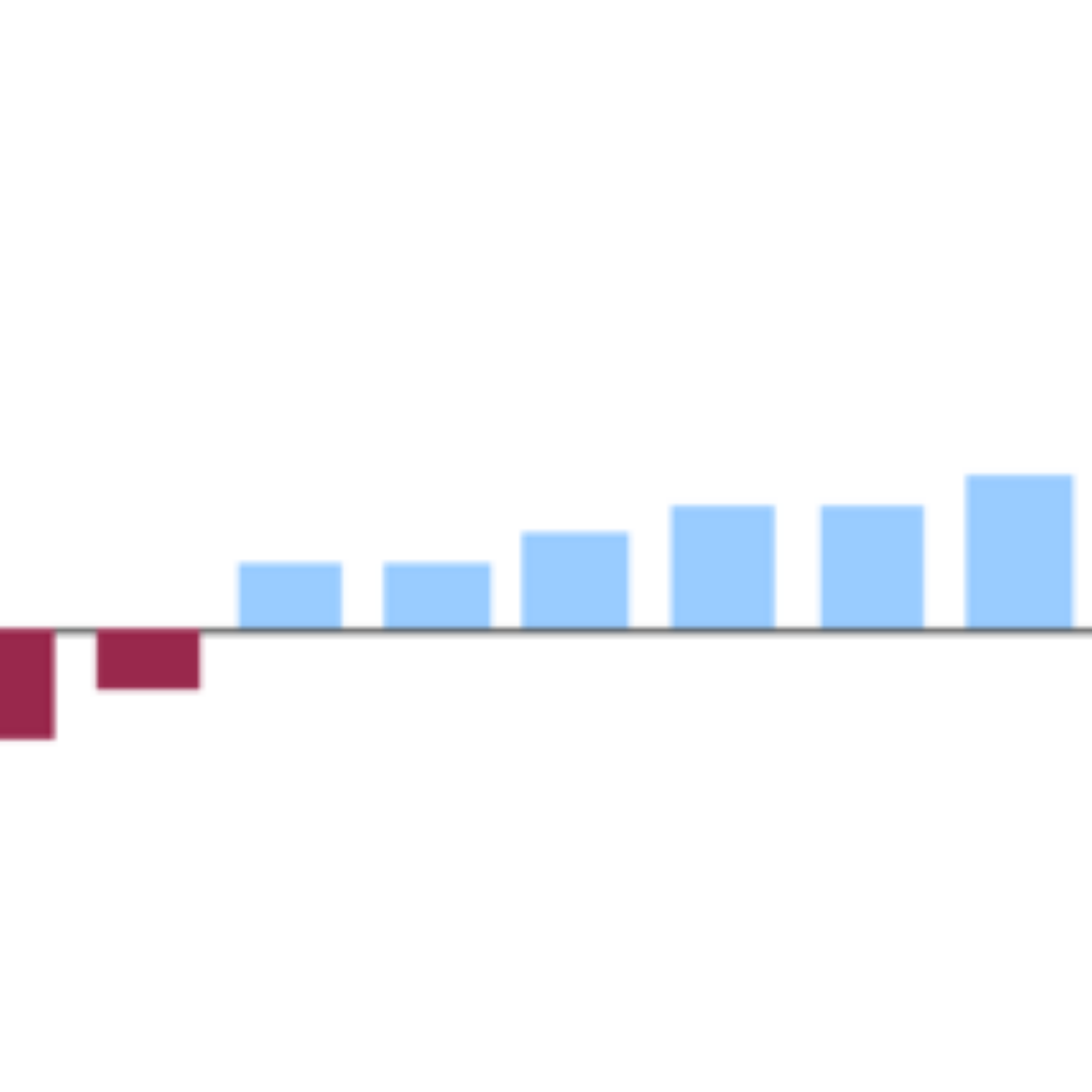
If you lined up all the cycles in your life by the amount of reward they brought you, you might represent them like this. The low bar on the left might represent something you can never get right -- like feeling helpless about your weight if you're overweight or about a big debt you have to repay. The high bar on the right might represent the joy you feel for your favorite hobby or spending time with your best friend. I'm only casually representing things. I don't know how objectively you can measure the amount of reward, but in general we know some parts of our lives bring us great joy, others misery, and others in between. I think the graph above illustrates that. According…

0 Comments

The Method: improving your life as much as you want is all based on one cycle

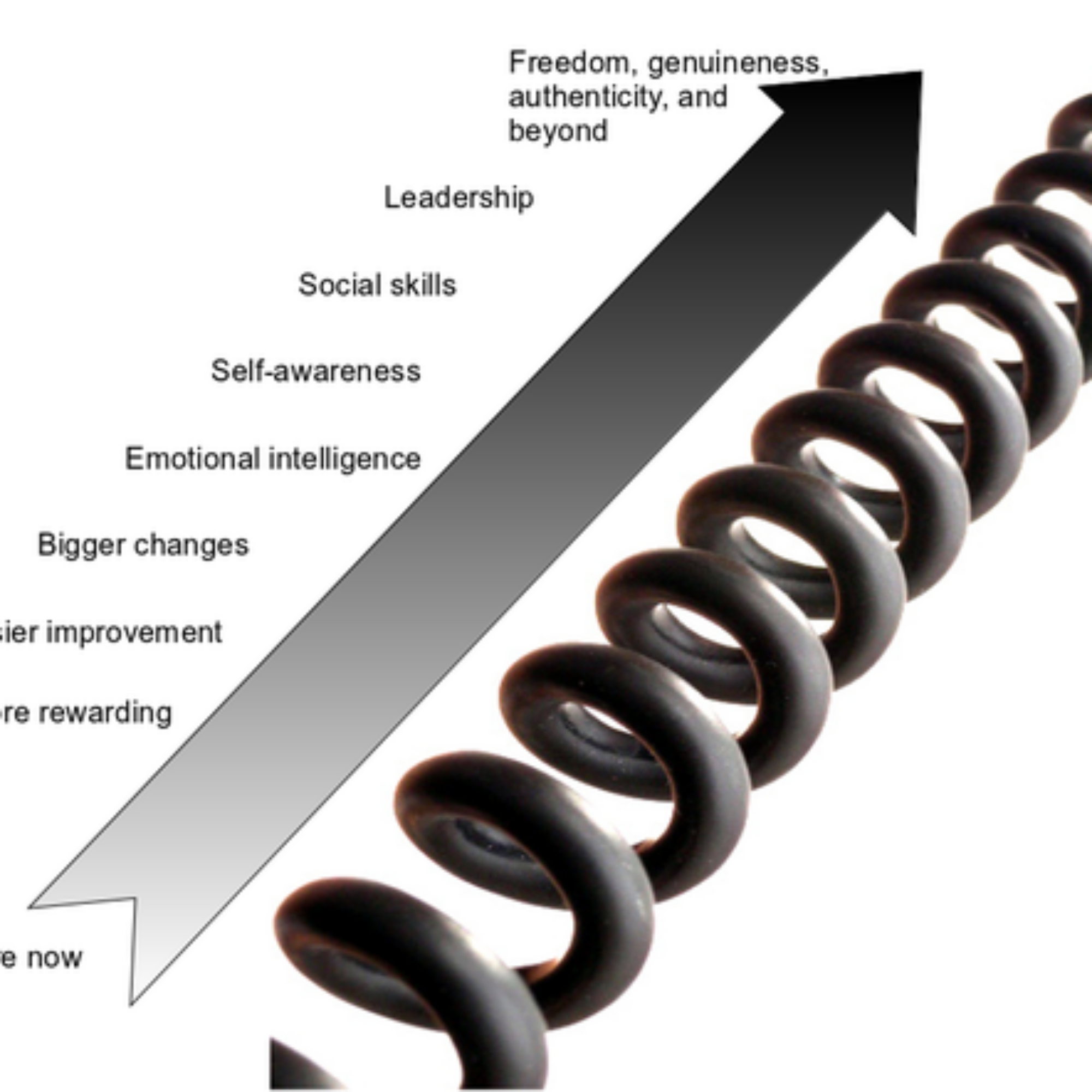
[This post is part of a series on The Method to use The Model -- my model for the human emotional system designed for use in leadership, self-awareness, and general purpose professional and personal development -- which I find the most effective and valuable foundation for understanding yourself and others and improving your life. If you don't see a Table of Contents to the left, click here to view the series, where you'll get more value than reading just this post.] As the Tao Te Ching says, A journey of a thousand miles begins with one step. Yesterday's post described and illustrated the long-term potential of improving your life through self-awareness -- freedom, genuineness, authenticity, and more. Remember, all this life improvement rests on one…

0 Comments

The Method: long-term growth from many transformations

[This post is part of a series on The Method to use The Model -- my model for the human emotional system designed for use in leadership, self-awareness, and general purpose professional and personal development -- which I find the most effective and valuable foundation for understanding yourself and others and improving your life. If you don't see a Table of Contents to the left, click here to view the series, where you'll get more value than reading just this post.] Yesterday's post showed how one transformation -- that is, one application of the Method -- not only cycles you back to start a new transformation, it also changes you, which you can see from another perspective. You can think of one transformation as one…

0 Comments

The Method: illustration of implementation stages

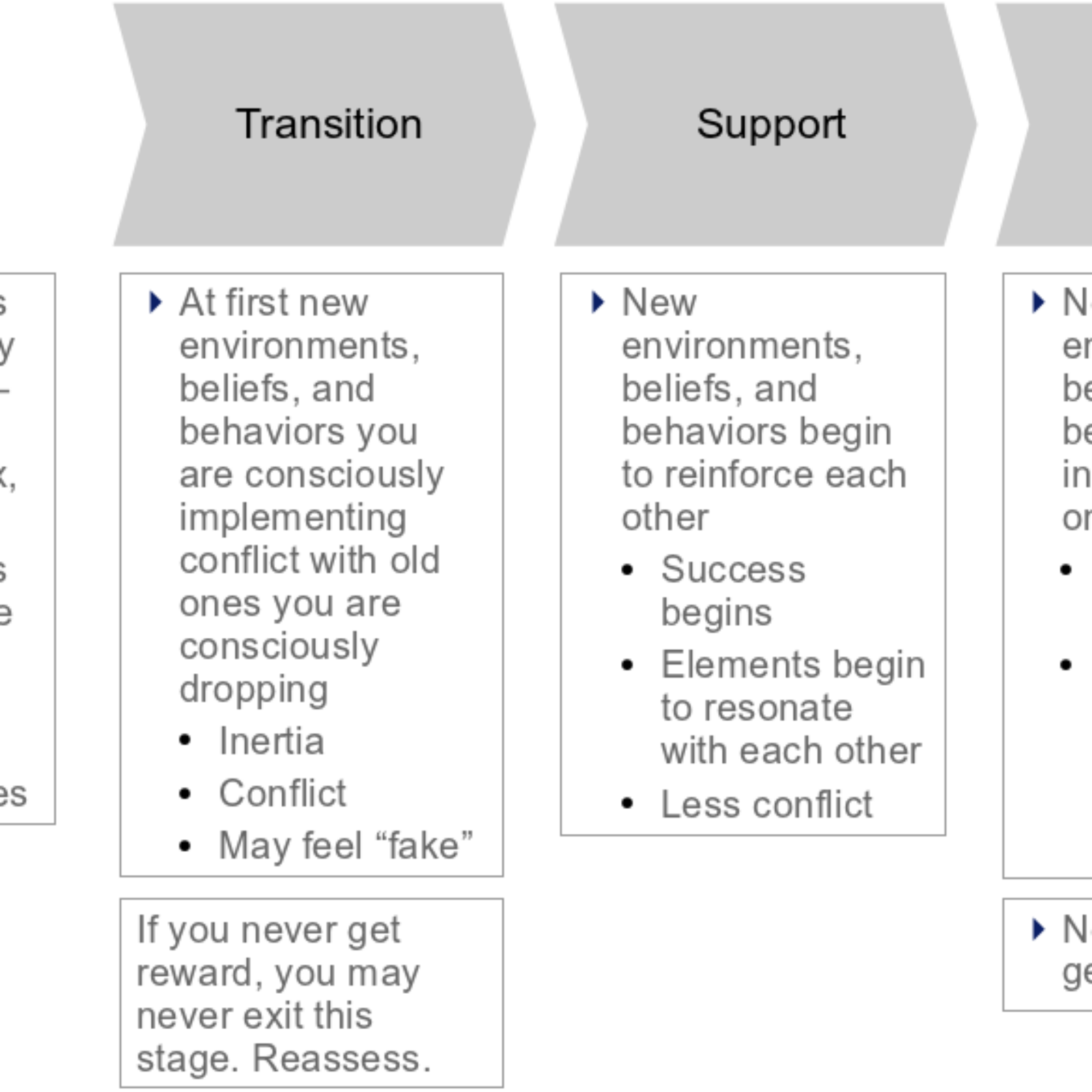
[This post is part of a series on The Method to use The Model -- my model for the human emotional system designed for use in leadership, self-awareness, and general purpose professional and personal development -- which I find the most effective and valuable foundation for understanding yourself and others and improving your life. If you don't see a Table of Contents to the left, click here to view the series, where you'll get more value than reading just this post.] Here is an illustration of the implementation stages of step 4 of the Method. Overview Transition (also a caveat) Support Regular life

0 Comments

End of content

No more pages to load