Union Square display just up and beautiful!

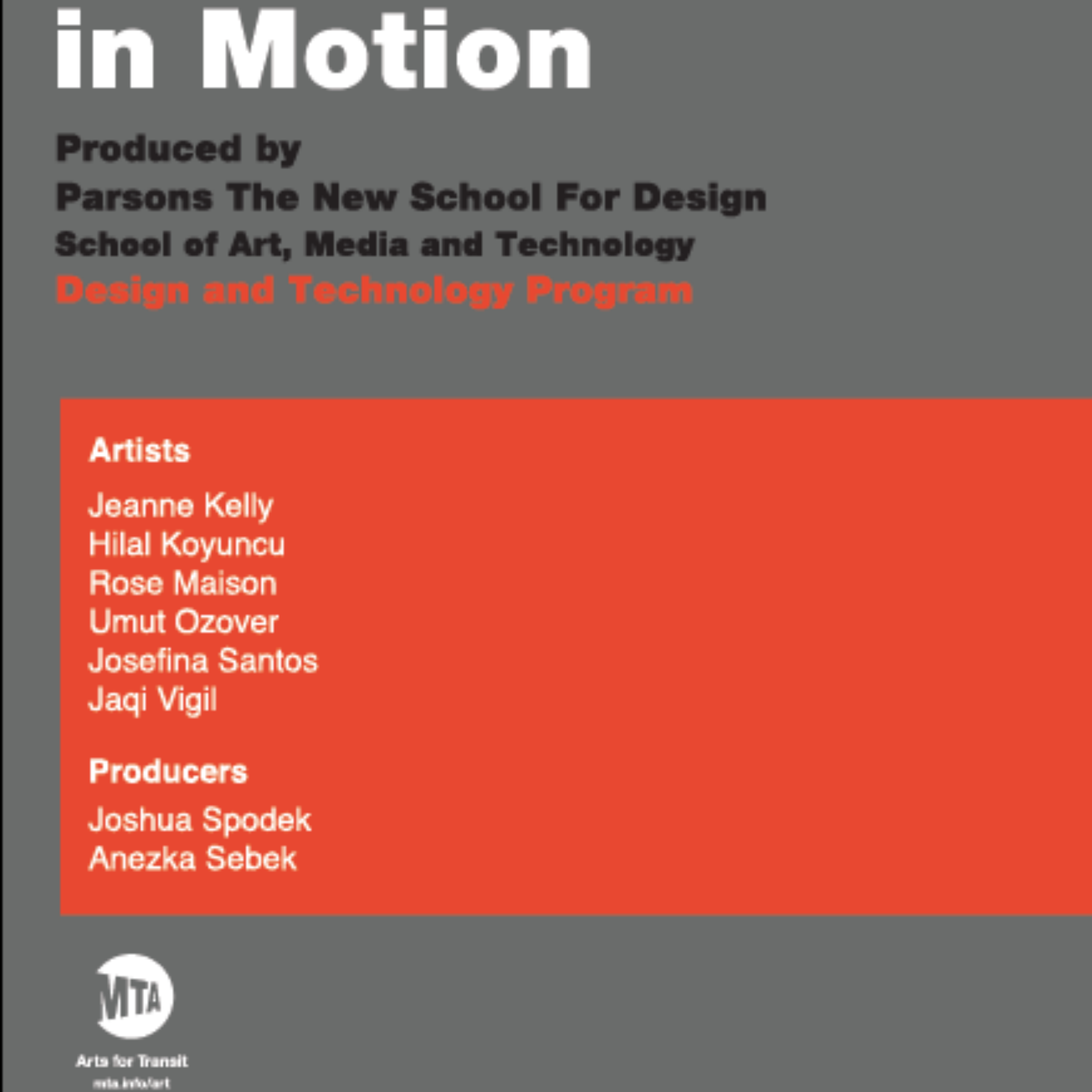
The display looks amazing. It only took most of a year and fifteen hours today to put it up -- part of the joy of making art. That and it's much bigger, brighter, and in a higher traffic area than the Bryant Park display. People seem to love it already. (Directions to see Union Square in Motion, video of the display during installation) I have too many people to thank, but tops include my stepfather Bill, who built a major part of it, and the students whose names are on it for making beautiful images. Many people at MTA Arts for Transit (they're team players and ask not to be named individually but they should be), Parsons the New School, Submedia, and, of course our…

1 Comment

Communication skills exercises, part VII: building blocks and tips

[This post is part of a series on Communication Skills Exercises for Business and Life. If you don't see a Table of Contents to the left, click here to view the series, where you'll get more value than reading just this post.] The previous exercises work fine on their own. You can further use them as building blocks to create whole conversations that are intriguing, interactive, mutually satisfying. Here are some tips to use them together. Keep topics open by not closing all before starting new one Going from topic to topic by ending each one before starting the next results in lulls from which is can be difficult to restart the conversation. If you're having a great conversation with someone at a company you'd…

1 Comment

Communication skills exercises, part VI: feedforward

[This post is part of a series on Communication Skills Exercises for Business and Life. If you don't see a Table of Contents to the left, click here to view the series, where you'll get more value than reading just this post.] Do you wish you could get the best advice for you, tailored perfectly to you, at the time you wanted it? This exercise gives you that, in a conversational way that helps build relationships too. The technique, called feedforward, comes from Marshall Goldsmith -- master author, executive coach, and happy, friendly guy. My advice is when his advice applies, use it. His two most recent books, Mojo and What Got You Here Won't Get You There, were best sellers. He was ranked the…

0 Comments

Communication skills exercises, part V: Meaningful connection

[This post is part of a series on Communication Skills Exercises for Business and Life. If you don't see a Table of Contents to the left, click here to view the series, where you'll get more value than reading just this post.] UPDATE: See my February 2016 webinar video on the Meaningful Connection exercise. It goes into more depth. Have you noticed how some people, when they meet someone, draw the other person in, creating a great, meaningful conversation right off the bat? Do you wish you could? How much more valuable is a connection when the other person wants to follow up with you and appreciates you talking to them? How much more likely will you be to get a job offer, date, or…

1 Comment

Communication skills exercises, part IV: Storytelling

[This post is part of a series on Communication Skills Exercises for Business and Life. If you don't see a Table of Contents to the left, click here to view the series, where you'll get more value than reading just this post.] Storytelling is a fundamental element of human communication. Tell someone what you did the other day and they may end up bored. Tell them a story well and they'll hang on your every word. What makes the difference? This exercise teaches the structure of a story -- how to generate interest to hook the listener, then how to generate tension to hold them. Storytelling is an art. I'm not a master storyteller, but I've improved by learning structure. This exercise compiles exercises from…

2 Comments

Communication skills exercises, part III: Conversation hopping

[This post is part of a series on Communication Skills Exercises for Business and Life. If you don't see a Table of Contents to the left, click here to view the series, where you'll get more value than reading just this post.] Do you ever start a conversation you want to talk to, then run out of things to say? This exercise will help. I adapted it from my friend Sebastian. When you do the exercise with someone who doesn't know you are doing it, they rarely sense you're doing anything other than conversing as usual. The exercise doesn't mimic a whole genuine conversation, just part of one, but you can use it in any conversation to continue a meandering conversation or jump start one…

0 Comments

Communication skills exercises, part II: Body language

[This post is part of a series on Communication Skills Exercises for Business and Life. If you don't see a Table of Contents to the left, click here to view the series, where you'll get more value than reading just this post.] I love starting seminars with this exercise. It's simple and interactive. It gets people's blood flowing and meeting their neighbors. It works best in a group, but you can apply it on your own. The principles The principle is that your body language -- your position, motion, posture, etc -- influences your emotions and those of people around you. Likewise theirs influence yours. Since your emotions motivate you, changing your body language change what you and people in your environment do. Awareness of…

1 Comment

Communication skills exercises, part I

[This post is part of a series on Communication Skills Exercises for Business and Life. If you don't see a Table of Contents to the left, click here to view the series, where you'll get more value than reading just this post.] I wasn't born with great communication skills. I don't think I had great problems with communication, but I was behind the curve in many areas. As I learned to appreciate and value emotions and relationships, I worked on improving my social skills. People now sometimes compliment me on what I have today, so I believe anyone can develop great social skills. One seminar I give, sometimes in a series, is on communication and social skills for business, social, and any other interactions. It's…

0 Comments

Leaders take responsibility

One last behavioral trend to round out a few recent posts on behaviors that correlate with importance. The others were on leaders having the least stuff, being the least hurried, and the most common route to becoming CEO. People know this one, though they don't always act consistently with it. Look throughout an organization. The higher you move in the organization chart, the more responsibility people have. Having responsibility because of your position isn't the same as choosing to take responsibility. But people who choose to take responsibility become more important in their communities. Likewise, people who shirk responsibility lose importance. There are wide exceptions, of course. By the way, accountability and responsibility go hand in hand, so people who choose to make themselves accountable…

0 Comments

The most common route to CEO

"What is the best route to become CEO of a corporation?" For people driven to reach the top it's a common question. A classmate asked it of Ralph Biggadike, professor of Top Management Processes, which, when I was at Columbia Business School, was the class in highest demand. Ralph is an excellent teacher, as knowledgeable about top management as you'd expect one of the top professors at one of the top business schools to be. I expect most of the students in the class were driven to reach the tops of their planned professions. As I recall, most of the class listened intently to the answer. It may be worth thinking about yourself, even if you aren't driven to reach the top. What functional role…

1 Comment

The CEO carries the least

Important people do things differently than unimportant people -- that is, behavior correlates with importance. If you want people to consider you more important -- to trust and defer to you -- you should pick up on how behavior correlates with importance. And with unimportance if you want to avoid being lumped in with unimportant people. The more important you are, the less you carry. The following corporate examples are simplified to communicate easily, but see how they resonate with your experience. An engineer who is easily replaced often carries tons of stuff -- a big bag, sometimes so full he or she rolls it on wheels, pockets full, multiple cell phones sticking of the belt, etc. Everything is functional. A manager may have a…

0 Comments

A vegetarian entrepreneur’s take on test tube meat

This week's New Yorker has an article on test tube meat -- that is, meat produced outside a body. I've been talking about it for a while, as someone who doesn't eat meat and as an entrepreneur. I'm looking forward to reading the article. I first read about the idea on a nerdy site called Slashdot a couple years ago. Technology recently made it possible. I think most people's reaction is that it makes them queasy. It can't be that palatable, right? Then people think of the ethical issues -- is it cruel or not? Are we doing something we shouldn't? To me these issues are clear. Whether it's palatable or not now is merely an engineering question and a matter of time. If it…

0 Comments

Venture Capital myths

For those who appreciated my series on entrepreneurial myths and productive behaviors, my friend and business school classmate, Ian Sigalow, posted on myths in venture capital, in particular "The Myth of the Board Seat." Ian is an all-too-rare person who is successful at both entrepreneurship and venture capital. In school he got one of the most desired positions, working with Alan Patricof (also Columbia MBA) to found Greycroft Partners, where he is now a Partner, to work on smaller and earlier deals than Alan's Apax Partners had come to work on. His observation and advice, as you'd expect, is thoughtful and useful, in a field known for too much of the opposite. Oh yeah, we also did Follies together, which says he's a great guy…

0 Comments

Thinking about business school?

An entrepreneurial friend asked about business school. I shared the following with him and thought it might be useful for others. As long as it is, I could have written more. I got an MBA at Columbia. It was one of the best decisions of my life -- different than I expected, because I expected an academic experience. I did it after starting a business in the early 2000's. Some people do fine without formal business training. I did well up to a point -- getting the project started, getting people onto the team as employees, investors, suppliers, etc. But I had little to no experience in some important basics: accounting, how to read financial statements, managing teams, and a few other things. Business school…

0 Comments

My next leadership seminar: June 4 and 5 at the New School (jointly with Columbia Business School)

(Some details TBD, but mark your calendars. The room is beautiful and centrally located. Please contact me with any questions. I'll update details as they are determined.)   LEADERSHIP THROUGH SELF-AWARENESS AND EMOTIONAL INTELLIGENCE At a time when businesses and business schools seek to learn from designers and design schools seek to prepare "students to be leaders in their professions and society", cross-pollination between communities over common interests is as valuable as ever. Personal leadership skills, self-awareness, and emotional intelligence have emerged as common and fundamental to both communities. In a weekend, learn how to develop these skills using recent advances in cognitive behavioral science, evolutionary psychology, and positive psychology in group including the communities of the world's premier business and design schools. Schedule: Day…

0 Comments

What do I do?

Do you want to live a life of the emotions you want -- happiness, joy, whatever -- freedom, and achievement? Then do what you love. If you believe you have to sacrifice what you love "to be practical" or "pragmatic," you are your own biggest obstacle. My life is a testament to the contrary. If you don't know what you love, find out. If you don't know how to find out, invite me to coach or lead a seminar for you. At least you should read my blog. I no longer value achievement like I once did, so I achieve more than ever, as side effects of doing what I love. If that seems paradoxical, read my blog for a more productive perspective. It's simple.…

0 Comments

Update #3 on the Union Square display

We made the minimum on the Parsons Union Square kickstarter project! The project raised $5,017, just over the minimum of $5,000 we set (which is still below the what we'll need, but we'll figure out how to make it). Here's the latest updated we sent out. Update #3: We made it! Thank you! We made it! Just barely! Making it this close ($5,017 out of $5,000) means every contribution counted. Thank you to every one of you from all of us. We appreciate each of your contributions all the more for each one counting so much. We are that much more dedicated to making a beautiful display. Whether you contributed to help make New York more beautiful, to help students, to contribute to art, for…

0 Comments

My next big beautiful public art piece! (please contribute!)

My next big beautiful public art piece will be with my Parsons class in Union Square. You can help make New York more beautiful, give people something to enjoy in their busy days, help students learn and build experience. Visit the project's Kickstarter page and donate! https://www.kickstarter.com/projects/492851406/big-beautiful-public-art-by-parsons-class-in-union About this project: We are 18 young talented art students and 2 professors in a class together at Parsons The New School of Design's Art, Media, and Technology (AMT) program. We are raising money to build a big beautiful interactive public art installation in New York City's Union Square. Our goal is to create a dramatic new interactive digital motion-picture display unlike any the world has seen, entertaining and engaging to all New Yorkers for free, in the…

0 Comments

One way not to be manipulated

If you know what you love and you do things you love, you may not be able to succeed by other people's measures of success, but you'll know you'll never look back at what you did with regret. It's difficult to imagine looking back and saying, "Darn, while everyone else was [doing whatever they do], I wasted all that time doing things I loved." If you don't know what you love or even like or don't like, the best you can hope for is to be lucky in what you choose to do bringing you reward. Or don't choose, if you end up blowing in the breeze through life. Even if you enjoy what you're doing while you're doing it, you won't know if you're…

0 Comments

My New York Academy of Sciences Seminar

April 5 and 7, 6-10pm at the New York Academy of Sciences I will be giving my seminar on Leadership and Personal Success -- the best seminar you'll ever attend. It's similar to the leadership seminar at Columbia Business School in December, but more science-y and less business-y. Here's the background from the NYAS web page (where you can register): Leadership and personal success through self-awareness and emotional intelligence are popular pursuits outside the scientific community—for example, in business, sports, politics, etc. But why not in science? In part because their literature has shaky and often non- or even anti-scientific foundations. If the practices work, though, they are repeatable and amenable to study. Shouldn't we scientists should be able to understand and apply the material…

0 Comments

Systematic creativity resources

[This post is part of a series on creativity. If you don't see a Table of Contents to the left, click here to view the series, where you'll get more value than reading just this post.] I haven't gone into any detail about Altshuller's 40 principles. The main reason is I found that others already have and did a great job, so I'll just link to them. The other reason is that his principles are hard to get through. Some aren't that useful outside of engineering. A few will get you far and, more importantly, with practice will get you into the mindset of looking to apply known solutions to new problems instead of trying to solve them from scratch. As I've said, you'll solve…

0 Comments

Innovative technique

[This post is part of a series on creativity. If you don't see a Table of Contents to the left, click here to view the series, where you'll get more value than reading just this post.] Here are some basics to TRIZ. After the basics, I'll interpret them. After examining all those patents, Altshuller and his team found that about 1,500 generalized solutions described all the specific solutions. Even simpler, they created 40 techniques, or "inventive principles," that would lead to those solutions. Using these techniques would allow you to use an existing solution to your problem. In your regular life you encounter specific problems, not general problems. Often the specifics of your problem are irrelevant to the solution and get in the way of…

0 Comments

More history of innovative technique

[This post is part of a series on creativity. If you don't see a Table of Contents to the left, click here to view the series, where you'll get more value than reading just this post.] Altshuller called his ideas the Theory of Inventive Problem Solving, or that's what the Russian gets translated to, which is generally called TRIZ. People pronounce it to rhyme with ease or is. As best I can tell, the ideas have been taken up in technical and scientific circles more than any place else. He came from technical realms and his analytical style lent itself to their style of thinking and problem solving. I learned the techniques in business school, and they worked great applied to product development and devising…

0 Comments

Summary of counterproductive entrepreneurship myths and productive beliefs

I just finished a series on counterproductive myths I hear all the time that hold would-be entrepreneurs back from starting ventures, which could be business ventures, non-profits, or just projects they enjoy. Below are links to navigate the series conveniently. Entrepreneurship isn't for everyone, but if it's for you or your business, counterproductive myths don't help you. Successful entrepreneurs succeed despite them, so they must have countervailing productive beliefs. I described the myths and countered them with productive beliefs that motivate people to start ventures. Starting companies and entrepreneurial ventures is one of my greatest joys. If you sense it could be yours too, I hope this helps. The four counterproductive myths: You need a great idea to start a business (plus illustration). Working for…

0 Comments

Four productive beliefs about entrepreneurship, part IV

[This post is part of a series on four main myths that discourage entrepreneurship and how to overcome them. If you don't see a Table of Contents to the left, click here to view the series, where you'll get more value than reading just this post.] Let's replace the fourth myth with something productive. Productive belief 4: the risk to the entrepreneur of starting a venture can be as small as he or she wants In competitive markets, risk and reward go together. Entrepreneurship may engender risks established companies don't, but established companies engender risks young ventures don't. A venture being new doesn't change the relationship between risk and reward. That relationship is about the magnitudes of risk and reward, not types. The consequence is…

0 Comments

End of content

No more pages to load