Convenience at what cost?
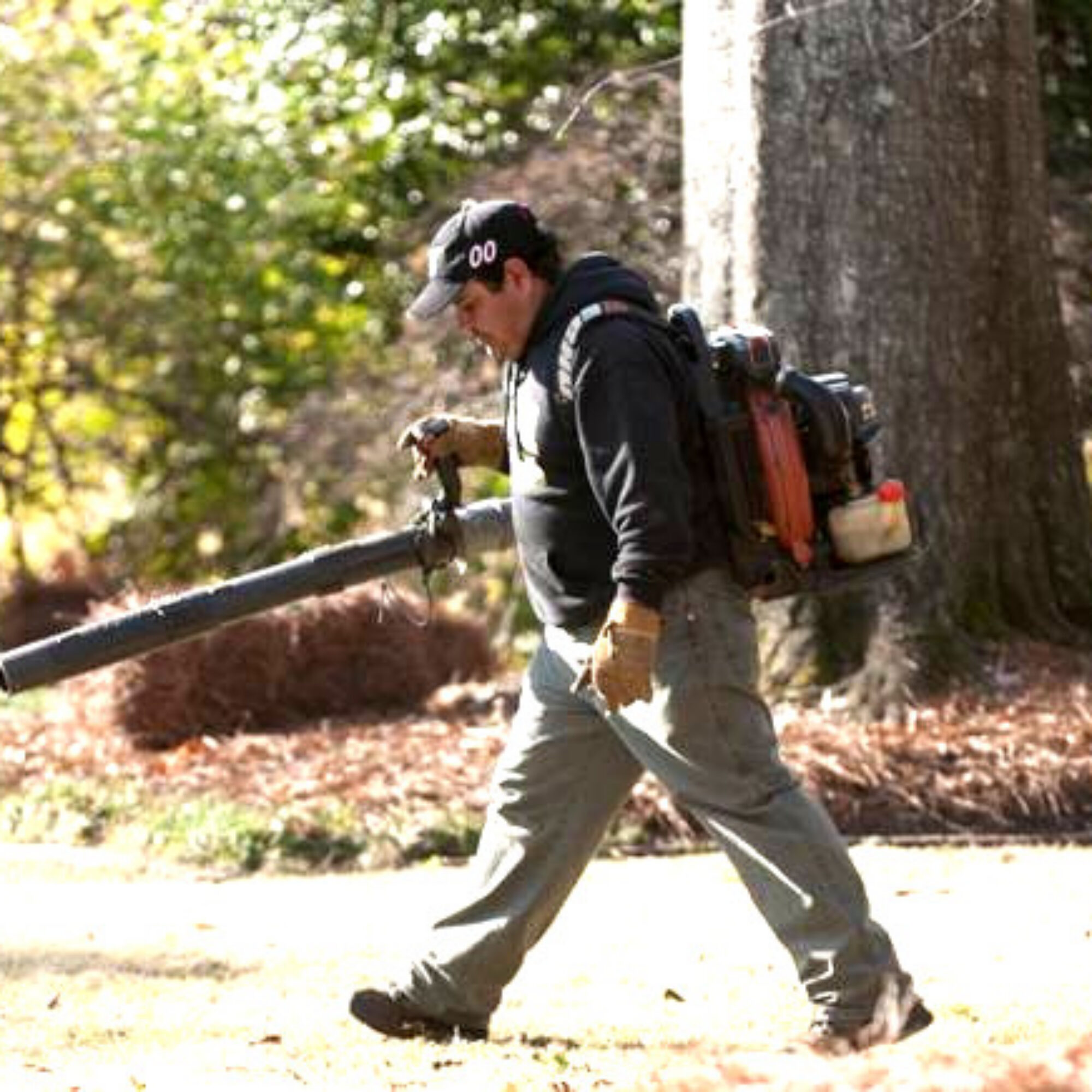
Not the guy I saw or in the park I saw, but similar.

Convenience at what cost?

The other day I passed a guy blowing leaves with a gasoline-powered leaf blower on a paved area in a park by City Hall. This post isn't about him. It's about us, including you. What is wrong with us? We buy oil from countries we have adversarial relations with, pollute the environment, create loud, unpleasant noise, so a fat person can work less, and cart away what would create topsoil, to fill a land-fill. What we could do instead What if we did this instead? Rake the leaves making little extra noise buying no oil from adversarial countries causing no pollution composting the leaves or using them for mulch filling no land-fills giving the guy exercise? Raking leaves on pavement isn't hard. Values What happened…

0 Comments

Choose easier by visualizing choices, part 2

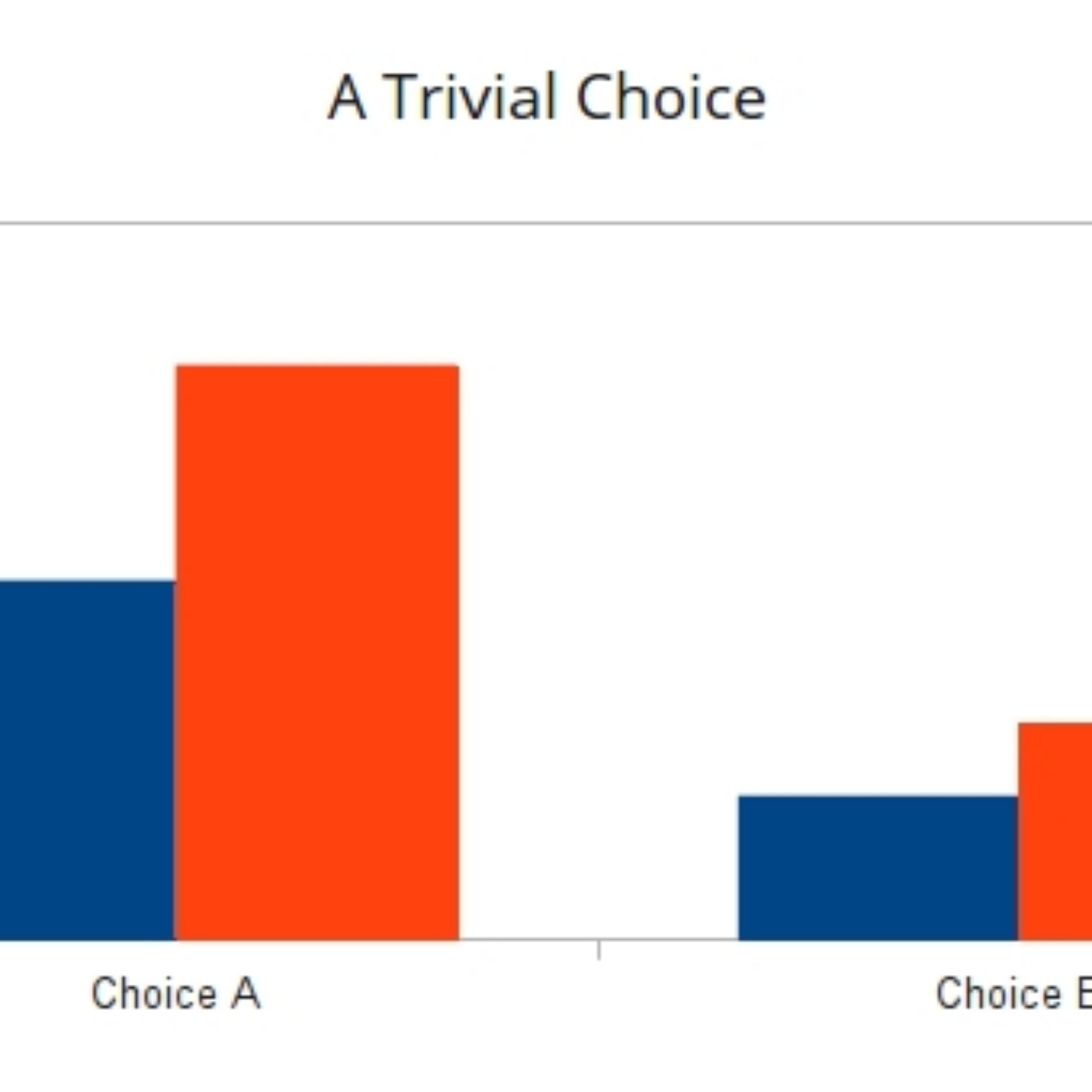
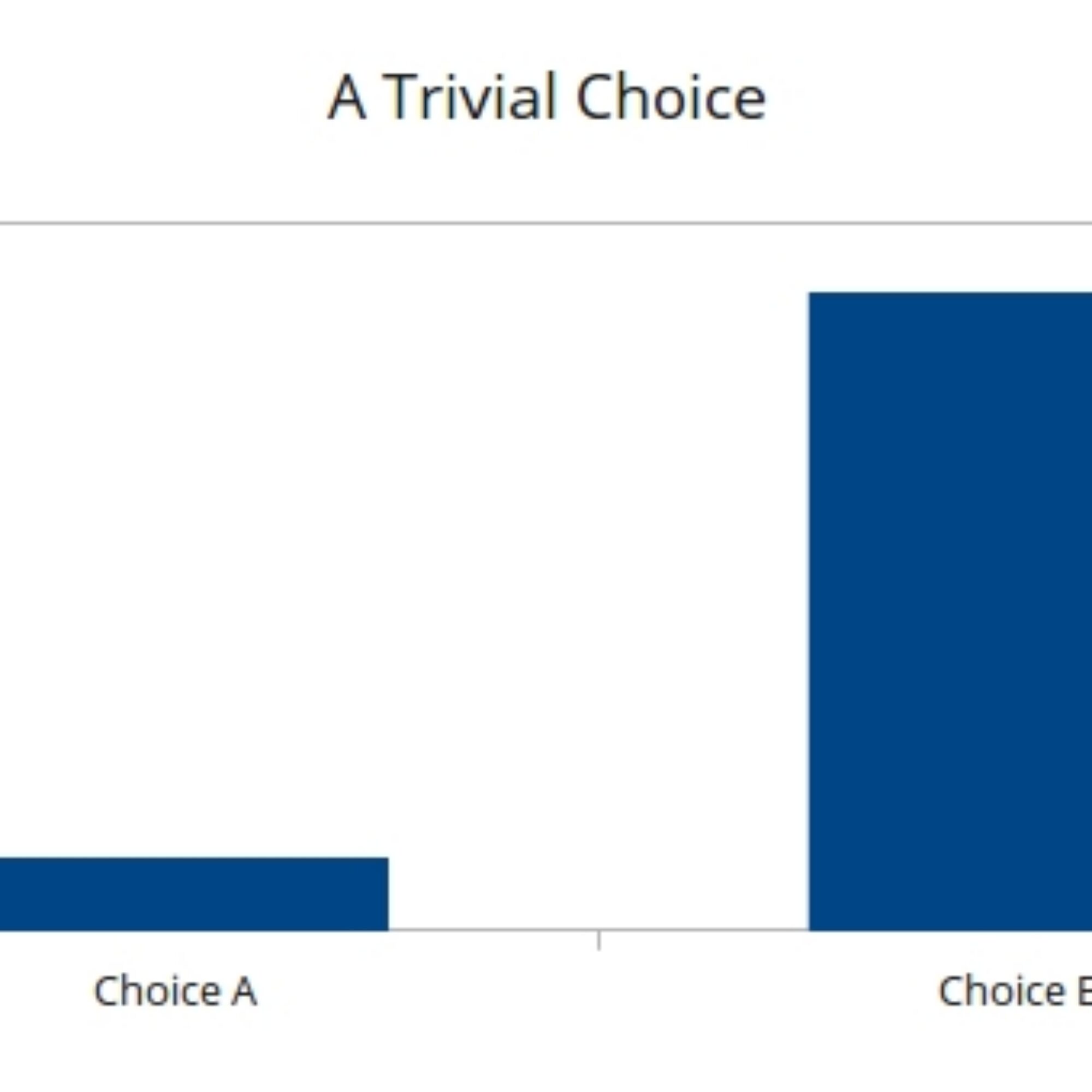
Multiple factors Not all options have only one decision factor. Many have two or more. For example, do you prefer a job with higher pay but lower chance of promotion or higher chance of promotion but lower pay? You have to look case-by-case, but let's see how our visual representation shows them. A trivial choice The easiest two-part case is when you prefer both parts of an option to both parts of the other. Consider if you had to choose between A high-paying job with great benefits and A low-paying job with no benefits. This graph illustrates such a choice. All else being equal, you'd choose the first option. Again, this illustration is simple, but we're just seeing how the visual model works with two…

0 Comments

Choose easier by visualizing choices, part I

You know choosing can be hard. I've written about it before from a few angles: Why are decisions hard? Difficult life decision? Here’s how to look at it. How to decide among close options A belief to choose without getting mired in indecision Today I'll give you a tool to simplify decision-making more with a way of visualizing the challenge that shows the hard part. Partly I'm following up on how I visualized emotions in the Passion-Attraction Model, which I recommend looking at if you like this post. I find modeling difficult things with visual representations makes them easier. I'll start simple and build complexity, leading to the more helpful insight as I develop the ideas. A trivial choice Not all choices are hard. If…

0 Comments

You have to say no to a lot of good things to have a great life

I say these words to myself daily or nearly so. I've posted them before and I expect I will again. They bear repeating and deserve a post to themselves. You have to say no to a lot of good things to have a great life. I don't see declining an opportunity as giving it up so much as giving myself more time and resources for something I value more. I didn't start this way. I used to say yes to too many things, not realizing that time doing one thing meant time not doing another. I still do, but less than before. The same with relationships -- just other parts of your life that you use your resources for. What does "too many things" mean?…

0 Comments

Silent Spring

I finished a book the other day I'd been meaning to read for at least a decade -- Silent Spring, by Rachel Carson, released in 1962. I posted a summary below. I also understood it influenced thought a lot. I had to speak to a few people who were adults when it came out to understand its impact at the time, which they assured me was colossal -- a common-sense bolt out of the blue from a humble woman who simply researched and compiled information anyone else could have. It seems, like Vietnam, one of the major turning points about which the American people began to question their government and find it didn't consistently act in their interests. In fact, it seemed often to work…

0 Comments

I never take responsibility for someone else’s emotions.

I try to understand people. I think doing so improves my relationships with them and my understanding of myself. I find feeling compassion for others helps me improve my relationships with them too. Same with empathy. I find taking responsibility for my emotions helps me improve my life and keeps me from blaming others. I see taking that responsibility as improving my life as much as anything. Taking responsibility for someone else's emotions, on the other hand, I see helping no one. Did I just contradict myself? Why do I value compassion, empathy, and responsibility for my emotions but not responsibility for someone else's? "Josh," you ask, "aren't you undermining your compassion and empathy? Are you saying that if you saw a child lost and…

0 Comments

How would you improve the world if you had supernatural powers?

Here's an exercise to see your values from a new perspective. I used to do it all the time until I learned my lesson from it, which I'll write at the bottom. Answer the question "how would you improve the world if you could have a magical wish come true?" and follow through to see if the change would, in fact, improve your life. To clarify, I mean a supernatural change outside of what you normally do to improve your life and world. I submit that it's not as easy as you think. Say you had whatever magical powers to change the world however you wanted. Could you improve the world beyond what you could do without the magical powers? Quick answers people jump to…

1 Comment

Reminder: See my leadership seminar this weekend!

Brought to you by the Distinguished Leaders committee of the Columbia Business School Alumni Club of New York (copying the following announcement from that site): Leadership Through Self-Awareness and Emotional Intelligence In a weekend, learn how to develop your personal leadership skills, self-awareness, and emotional intelligence through the latest advances in cognitive behavioral science, evolutionary psychology, and positive psychology. While business schools and corporations are increasingly focusing on personal leadership, self-awareness, and emotional intelligence as foundations for leading others, many MBAs never had the opportunity to take a formal course in personal leadership. Joshua Spodek, MBA, PhD, has developed a two-day weekend workshop in just this area. His experiential course combines advances in cognitive behavioral science, evolutionary psychology, and positive psychology with successful business leadership…

1 Comment

An essay on money, part 2

Today being Labor Day makes it an interesting day to think about money. I've noticed my post "An essay on money" gets almost the most number of hits of all my posts so I re-read it periodically. (Speaking of money, today is the also the last day to get the early discount on my awesome seminar on September 21 and 22 -- "Leadership Through Self-Awareness and Emotional Intelligence" so sign up now and save money!) My mom pointed out we never went on welfare when she read that essay, just that they gave the food out on our block without checking because the neighborhood was so poor. We loved the food I now wouldn't touch because the bread was so sweet and white and the…

0 Comments

Insults describe the person giving them more than the person receiving. How you can learn from yourself when you insult.

I overheard some people talking about another group as "douchebags" with "popped collars" who called everyone "bro" or "brah." Okay, I get that some people can find others annoying, but to call them douchebags is just mean. You've insulted others for other reasons. People call others losers, sluts, assholes, and so on. More importantly to you, if you've ever insulted someone or thought about it, which covers everyone on the planet, is that the insult says something about you: When you insult someone you evaluate them by your values, which you impose on them. You judge them. You think "I'm better than them" or "I'm right and they're wrong." If they judged you by their values you'd look terrible too. If you considered your thoughts…

0 Comments

Meaningful connections and valuing friends for their values

If you've read my social skills exercises series you know I avoid asking people what they do for a living. Instead I make meaningful connections about what people care about. An interesting side-effect of creating relationships based on what people care about instead of asking the same what-do-you-do-where-are-you-from-how-many-brothers-and-sisters-do-you-have-read-any-good-books-lately questions that get the same thoughtless answers is that sometimes I develop deep friendships with people never knowing what they do for a living. Usually if someone cares anything about their job they'll tell you, but if they don't it may never come up. Or if you enjoy each other's company so much you never get around to business, you never get around to business. People who love how they earn money you don't have to ask…

0 Comments

See me on Leadership through Emotional Intelligence and Self-Awareness

Brought to you by the Distinguished Leaders committee of the Columbia Business School Alumni Club of New York (copying the following announcement from that site): Leadership Through Self-Awareness and Emotional Intelligence In a weekend, learn how to develop your personal leadership skills, self-awareness, and emotional intelligence through the latest advances in cognitive behavioral science, evolutionary psychology, and positive psychology. While business schools and corporations are increasingly focusing on personal leadership, self-awareness, and emotional intelligence as foundations for leading others, many MBAs never had the opportunity to take a formal course in personal leadership. Joshua Spodek, MBA, PhD, has developed a two-day weekend workshop in just this area. His experiential course combines advances in cognitive behavioral science, evolutionary psychology, and positive psychology with successful business leadership…

0 Comments

Today’s Harvard student versus 176 years ago

Let's look at two former Harvard students from now and nearly two centuries ago. 176 years ago Henry Thoreau finished Harvard in 1837, one of its best-known students of his age. Let's look at him before looking at this generation's most prominent Harvard student. Thoreau wrote Walden, his treatise on living simply, escaping petty human affairs and gossip, appreciating nature, self-reliance, and such. He lived for two years mostly on his own, growing his food, building his shelter, figuring out how to spend his time, and so on. The book opens When I wrote the following pages, or rather the bulk of them, I lived alone, in the woods, a mile from any neighbor, in a house which I had built myself, on the shore…

2 Comments

The risks of someone calling you smart and how to avoid them

When I was a budding entrepreneur, recently having earned my PhD in astrophysics, people would often introduce me as a rocket scientist. At first I enjoyed the praise. In time I found being called intelligent didn't help me in business. By "in business" I mean in business roles with leadership and decision-making. People talk about intelligence as valuable in business and some behave so, but I came to conclude successful businesspeople, especially investors, didn't value intelligence as someone's primary value. On the contrary, I came to find many venture capitalists and other investors viewed people with intelligence as their primary value as people whose inexperience they could exploit to make money off of. I think businesspeople in mainstream music look at talented musicians the same…

20 Comments

When to get rid of things

I've written before about getting rid of stuff and the challenges of getting rid of things you once wanted to keep. You feel like if you once valued something and now don't you'll lose something important. Maybe you should examine your values and how they changed. Slow-going apartment renovations have led me to live with a lot of my stuff in storage following living in Shanghai without much stuff for most of a year. I've enjoyed the freedom of living with less. While I got rid of a lot of junk when I put things into storage, I kept a lot I wasn't sure about. Choosing is hard. Now I look forward to getting things out of storage so I can get rid of a…

0 Comments

More ways to annoy someone you’re talking to

The other day I wrote about how annoying someone saying “Why are you getting hung up on just one word?” sounded. Then I noticed a friend using some other annoying words and phrases in conversation that sounded annoying and decided to share them here. I don't think she realized how annoying she was. So I put a few more annoying things, not as a how-to, but for people who might not realize they are provoking others and so if someone says them to you, you can avoid being annoyed as much. Provocative things to say that belittle the other person's values Why are you offended? Why are you so hung up on such a little thing? I didn't realize you were so sensitive. You're hung…

0 Comments

“Why are you getting hung up on just one word?”

I saw two people debating some point at a cafe. The dynamic between them seemed common enough to examine for future reference. One kept saying to the other "Why are you getting hung up on just one word?" I couldn't hear other details of their conversation, but I could tell enough to tell this: The person saying "Why are you getting hung up on just one word?" was trying to act like they were more laid back and accommodating. That person was also not trying to understand the other person. They were acting like the other one had a problem and should fix it. The other person looked to be trying to communicate constructively It seemed clear to me the person asking was both disrespecting…

0 Comments

A model to help stop acquiring stuff

Do you have more stuff than you want? Do you have trouble keeping yourself from acquiring it? Do you wish you could get less stuff? I've been working on getting less stuff for a long time. I find the most important part to not having too much stuff is not acquiring stuff in the first place. Often when I'm with people and they can see I want something but hesitate to buy it, they think I'm trying to decide if I can afford it. Usually I'm figuring out how hard it will be to get rid of it when I'm done with it. I don't like filling landfills. I don't mind taking things to thrift shops, but I also prefer not creating demand for things…

0 Comments

Who or what is a Cathedral-builder and why should I care?

[This post is part of a series on "Mental models and beliefs: an exercise to identify yours." If you don’t see a Table of Contents to the left, click here to view the series, where you’ll get more value than reading just this post.] The great business guru Peter Drucker illustrated how different people find different value and meaning from their work (and lives) through the parable of the three stonecutters. An old story tells of three stonecutters asked what they were doing. The first looked unhappy. He said, “I'm making a living cutting stones.” The second looked happier and proud. He kept on hammering while he said, “I'm doing the best job of stone-cutting in the entire country.” The third one looked up with…

0 Comments

Morality and the development of language

I write a lot here about how counterproductive judging others or imposing your values on them is for leadership or influencing them. (Here are five posts on it, for example: Instead of calling something right, wrong, good, or bad, consider the consequences of your actions, What is morality?, On the counterproductivity of motivating people with guilt and blame — aka moralizing, Talking about “truth” or “reality” always confuses things, How willing are you not to judge?) Thinking about the development of language gave me a new perspective that, I think, helps undermine people's attachment to calling things right, wrong, good, bad, or evil. This post may sound philosophical or esoteric, but I didn't write it that way. My goal, as with the posts I linked…

0 Comments

A question to ask all the time: “Is this making my life better”

I watch my share of television. I eat my share of unhealthy food. I find plenty of ways to waste my time. But I'm decreasing those things all the time. I think a lot of people decide what to do or not based on the thing or activity in question. Will that chocolate cake taste good? Will I enjoy watching that show? Do I want to go to that party? The problem with that approach is that it leads you to do things based on the qualities of that thing. Most things come your way because someone thought you'd enjoy them. They probably also benefit from your participation, so they show you it most attractively. Then you get caught following your nose, doing whatever comes…

0 Comments

A model for one of the most valuable skills related to beliefs

[This post is part of a series on “Mental models and beliefs: an exercise to identify yours.” If you don’t see a Table of Contents to the left, click here to view the series, where you’ll get more value than reading just this post.] This series covered a lot about flexibility with your beliefs -- the ability to try out believing something new and letting the new belief crowd out the old one. Doing so is hard because believing means believing something is right. If you don't get it, changing beliefs is hard because you'll think it means believing what you thought was wrong is right and vice versa. I made a point of undermining beliefs being absolutely right or wrong -- it's impossible for…

0 Comments

A model for a great lifestyle

[This post is part of a series on “Mental models and beliefs: an exercise to identify yours.” If you don’t see a Table of Contents to the left, click here to view the series, where you’ll get more value than reading just this post.] You want to do well in life. What areas are most important for you? Do you want fame? Fortune? Power? Family? My explorations into meaning, value, importance, and purpose (MVIP) led me to consider what I wanted. Since I've found MVIP are grounded in emotions, I found I could refine my understanding of what brought me MVIP by refining my understanding of my emotional system and my emotions. I found that emotions stood at the foundation of all of MVIP. Not…

0 Comments

A model to help live and let live

[This post is part of a series on “Mental models and beliefs: an exercise to identify yours.” If you don’t see a Table of Contents to the left, click here to view the series, where you’ll get more value than reading just this post.] One of the things I love most about where I live, the West Village, is its diversity. And not just in the things people most talk about, like skin color, where they're from, gender, sexual orientation, age, religion, and a few others. As the neighborhood continues to gentrify that diversity seems to decrease. I feel like here people support or at least tolerate what others do as long as you aren't hurting anyone. That diversity seems intact. I like that mutual…

0 Comments

A model to get in fewer arguments and influence more effectively

[This post is part of a series on “Mental models and beliefs: an exercise to identify yours.” If you don’t see a Table of Contents to the left, click here to view the series, where you’ll get more value than reading just this post.] Do you get in more arguments than you'd like? Do you feel like people don't understand you and you have to explain yourself a lot in these arguments? I can't stop all your arguments, but today's belief and strategy will cut down on them. It will also increase your ability to influence. A model to argue less and influence more: No two people completely agree on what's right, wrong, good, or bad and they resist when you try to get them…

0 Comments

End of content

No more pages to load