651: Noah Gallagher Shannon, part 2: Uruguay is an environmental role model
The second part of my conversation with Noah, going into more detail about Uruguay and sustainability. The first part was episode 646.
I hear people talking about teaching children. I've been researching resources on teaching kids sustainability. I can't find any that look like people who learned to live sustainably created them. I don't hear as much about teaching adults, in this case, their teachers. Want to teach children sustainability? If their teachers don't practice living sustainably themselves, it will be like people who don't know piano trying to teach how to play piano: lots of advice that may sound good, but if it doesn't lead the teacher to act, it likely won't teach the children. Lead teachers to live and act sustainably if you want children to live and act sustainably. If you don't live and act sustainably, how do you expect to lead teachers to?…
The backstory: I emailed a reporter doing a story on me to ask when the story would post, sharing that I'm using the story to motivate me keeping the apartment off the grid. She wrote back, "Please please don’t continue on in this dark and freezing weather because of this story!" She then explained what was setting the pace, then continued, "please please don’t risk your health by going on the roof in these freezing temps for the sake of this one story deadline." I wrote back to allay her concerns. Later that day what I considered a funny silly story happened so I shared that story with her. Both help illuminate what I'm doing so here are both. To allay her concerns: To clarify,…
Read my post When a heavy polluter says “we need to bring energy to the world’s poorest,” watch your wallet, where I describe that everyone with their misguided way to drive our polluting system faster profiting themselves in the process says some version of "we're helping the poor," they're helping themselves, likely exacerbating poverty, dumping pollution onto the poor. As I find examples in the media, I'll put them here: February 16, 2021, Bill Gates, How to Avoid a Climate Disaster: The Solutions We Have and the Breakthroughs We Need: "Eventually it sank in. The world needs to provide more energy so the poorest can thrive, but we need to provide that energy without releasing any more greenhouse gases. Now the problem seemed even harder.…
The more I learn about electronic waste, the more disgusted I feel at how huge the problem is that we are exacerbating, often in the name of increasing efficiency or reducing waste. I've watched many documentaries, but here's a short video showing the problem in just one place in Ghana. Look at the land in the background that was once verdant and lush, now poisonous. Or read The Dark Side of Congo's Cobalt Rush in the New Yorker. If your comfort and convenience come at the price of others' suffering, wouldn't you rather know than hurt people in ignorance? The way out of that internal conflict is through action. Read Brian Merchant's The One Device, which tells the story of what goes into our devices,…
I received this email this morning from the Director of Johnson Institute for Responsible Leadership and Frances Hesselbein Leadership Forum at the University of Pittsburgh Graduate School of Public and International Affairs: Dear Friends, It is with great sadness that I write to inform you of the passing of Frances Hesselbein, our mentor, friend, and the namesake of the Frances Hesselbein Leadership Forum. Frances was an inspiration to all of us, and I am certain that we will all remember her many years of service and her lifelong commitment to values-based leadership. Her eternal optimism—as she frequently said, “even my blood type is B positive!”—serves as a beacon in these difficult times. [. . .] I believe that the best way to honor Frances is to recommit…
In this episode, I answer a question a listener emailed: Can you share more details on what exactly prompted you to make the switch to acting more sustainably and if it was abrupt or gradual. And perhaps more practical ideas on what to do if you have kids, especially picky eaters, or if your schedule is just too busy to prepare meals 100% of the time. If you have questions on leadership, sustainability, sustainability leadership, doof, a guest, or anything I cover on the podcast, email me. Episodes with guests I mentioned, who are inspirational Bea Johnson Joshua Becker
Regular listeners know I'm thinking about applying Abraham's Lincoln solution: a constitutional amendment banning pollution. Here's an earlier episode on it: 613: Our Next Constitutional Amendment. It sounds crazy, but we'd be crazy not to consider it and learn from the idea. Even if the United States takes a long time to do it, other countries would likely do it first. It turns out others are organizing for a similar amendment, for the right to a clean environment. Michael's expertise in constitutional law and environmental law make him perfect to give context in those two areas. One day even the U.S. will show overwhelming support for an amendment making pollution illegal, a modern version of the Thirteenth Amendment. Future generations will lament how we took…
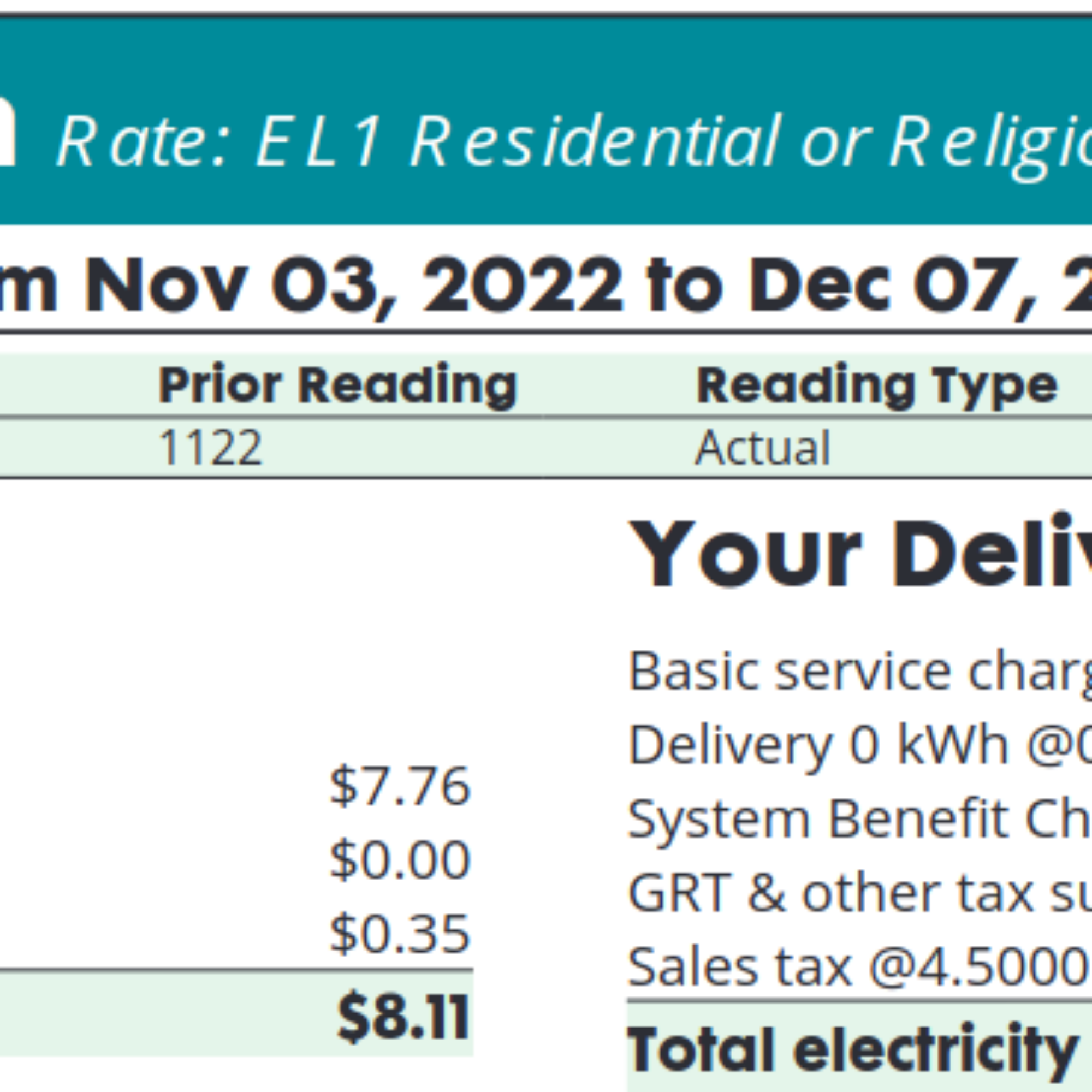
I'd say I was getting bored of posting about zero kilowatt-hour electric bill except that pollution kills and we can all pollute less. I'm not polluting less for fun, though it improves my life, but to help people like you see it's possible so you can try. Are you trying? If so, email me and tell me. I'd love to support you or just hear about it. For others, if you believe you can't do something similar or that polluting less will make your life worse, you're lying to yourself, making your life worse, like an addict. I'm not saying this to make you feel bad. I'm saying it to empower you to overcome false, limiting beliefs. I wouldn't care about what you do with…
Following up on my noticing that the "logic" that concludes Malthus was wrong would also conclude Columbus was wrong about being able to sail west from Europe to reach Asia. That he missed two continents and an ocean doesn't change that you can sail west from Europe to reach Asia. It's just farther than he expected, and you have to go around the tip of South America. Likewise, Malthus missing that fossil fuels could enable creating more food doesn't change that we can overshoot Earth's carrying capacity. To say that because we haven't yet means we won't or can't is like driving only looking in the rear view mirror. I've read Julian Simon, Milton Friedman, and their peers and believe I understand their arguments. To…
Kris created and runs what I consider one of the top sites online. It has influenced my behavior and expectations to enjoy living more sustainably, including unplugging my fridge, which led to unplugging my apartment, and start seeing that solar and wind aren't sustainable any more, though we could make them more so. I've looked forward to connecting with Kris for years. In our conversation, he shares his transition from reporting on new technologies for others for pay to reporting on technology from the view of improving life and how we keep losing the purpose of technology helping us. He also shares how he lives by the values he writes about, or writes about the values he lives, showing integrity and credibility lacking in most…
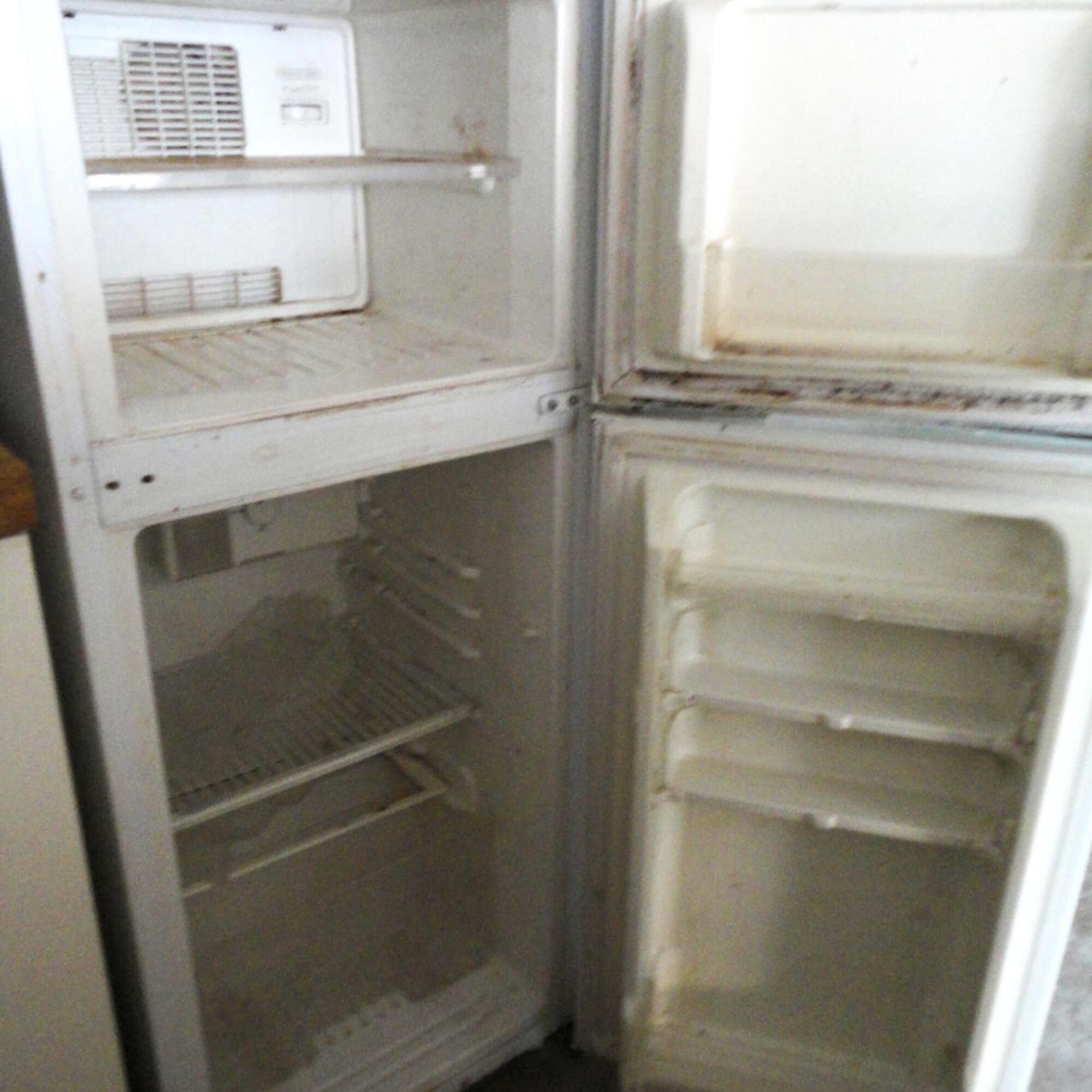
A guest who listens to the podcast and lives in Norway mentioned while we recorded that he was renovating his kitchen, which meant his family had to go without a fridge for ten days. He said knowing about me not using my fridge for over a year gave him perspective to handle the situation easily. He also remarked on how it was cold outside and it didn't make sense to cool a fridge surrounded by a warm home when it was cold outside the home. He was starting to get used to storing food outdoors and not need a fridge. People who live in cold climates don't need refrigerators during the times of year it's cold outside. They can keep things on the windowsill or…
Saying Malthus was wrong about population because global human population hasn't collapsed yet is like saying Columbus was wrong about Earth being round because he never reached China or India. First, everyone knows Columbus did brutal things you could call wrong. I'm talking about his belief you could sail to Asia by going west from Europe. He missed by two continents and the Pacific Ocean---big oversights about half the surface of the planet. He didn't reach Asia. But he was right about being able to reach Asia that way. No matter how big the oversights, you can go around a finite planet, it just may take longer than you expect. Thomas Malthus published An Essay on the Principle of Population in 1798 Malthus believed humans…
The problems of racism, sexism, and environmental degradation existed before we were born. They will persist after we die. I've never heard anyone say about racism that they'd like to help but individual action won't solve it so they might as well keep doing racist things, that only governments and corporations can solve it so they shouldn't try, or that if we don't keep pursuing on racist paths we might revert to the Stone Age so we should keep doing racist things. I've never heard anyone say about sexism that they'd like to help but individual action won't solve it so they might as well keep doing sexist things, that only governments and corporations can solve it so they shouldn't try, or that if we…
I see our environmental problems and lack of effective solutions as a failure of imagination, as regular listeners of this podcast and readers of my blog know. If we can't imagine a world without pollution, we won't try. We'll resist and push back, which we do. Would-be leaders pollute as much as nearly anyone alive, more than nearly anyone who has ever lived, then say government should force them to change. Role models would help. Part of why I unplug my apartment from the electric grid and continue my process of continual improvement is to show people what's possible since nearly no one else is. Then imagine my pleasant surprise on reading an article in the New York Times, What Does Sustainable Living Look Like?…
As a culture, we struggle to talk about population. Some consider more people better as a moral absolute. To them, more people solve more problems, so there can never be too many. Others consider Earth's resources finite. To them, more people means less resources per person, which means beyond an optimum number, more people means lower quality of life, ultimately leading to a collapse of population. The first group values more population growth. The second values less. Both believe their own route leads to more human health and happiness. Both believe the other's leads to death and destruction. I believe I can see where each is coming from and why their view makes sense, but I can't help coming back to Hawaii, in a way…
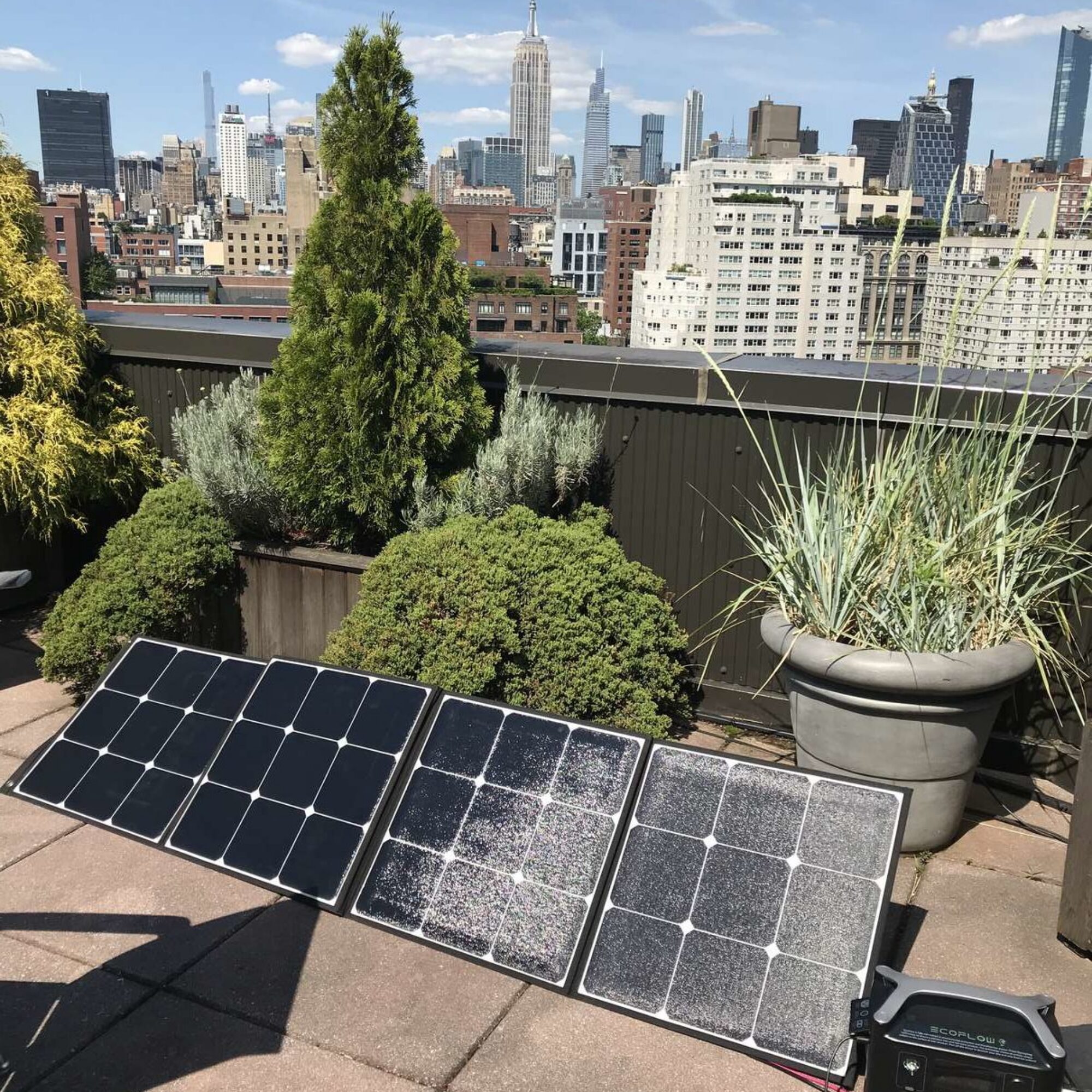
A few weeks from the winter solstice, new challenges arise in using solar compared to summer and fall, some augmented by starting an experiment with what I had, not analyzing and planning to find perfection before starting (starting is the way to find what works best). Days are shorter: I have less time during the day to charge. Days are shorter, part 2: I can't choose when I charge. Near the summer solstice I can charge from around 7am to 7pm. Now I can charge from about 9am to 4pm. The sun is lower on the horizon: In the summer, the sun spends a long time overhead so leaving the panels lying face up exposes them to enough light to max out their charging. Now,…
I posted the first episode of This Sustainable Life November 30, 2017, then called Leadership and the Environment. The old name doesn't sound as appealing, I think, but still feels more accurate. A team has formed and evolved of people helping the mission. We've tried to find a name perfectly mixing appeal, accuracy, and other virtues, but haven't found better. I've posted 645 episodes, which means 2.5 episodes per week, quite a clip to keep up for so long from one view, if you think it takes a lot of work. From my view, I'm barely starting. That view includes my mission of changing culture, in which the podcast is a strategic path to reaching and leading more influential people, in which more episodes means…

I'm no expert on indigenous cultures, but I'm learning more about them all the time. I've had guests on the podcast who lived years and in cases decades with the San in Southern Africa, the Hadza in Tanzania, the Tsimane in Bolivia, the Kogi in Colombia, and the Matses in Peru. I've also had Native American guests. I've attended workshops in New York by Native Americans. Besides learning from others, by unplugging my fridge and apartment and avoiding packaged food and flying, I'm moving in their direction, though far from them. But with each step I learn more. More than learning, I uncover the lies our culture tells us, like that using more energy improves life. I'm speaking loosely for brevity. Before learning what I…
Suggest to people in our culture that we consider not growing the GDP nonstop and most react with fear at what they see as the inevitability of recession leading to depression leading to the tax base declining, infrastructure crumbling, hospitals closing, mothers dying in childbirth, thirty become old age, and reverting to the Stone Age. Yet there remain many cultures that don't buy into our culture at all. Despite our culture invading their lands, what many of us consider the pinnacle of human culture, they choose theirs, and not out of ignorance. They know our culture. If our culture is so great, with electric vehicles, fruit flown overnight around the world, and iPhones, why do they resist it? If we believe we have so much,…
Meditation instructors often talk about thoughts arising and passing away in consciousness, as if they just come out of nowhere and go to nowhere. I've found otherwise. No part of your mind is superfluous. The human brain uses up too much energy for evolution to allow unnecessary parts to persist. Each part does something that helped your ancestors survive and pass their genes on to you. For example, some part of your brain interprets things that could look like faces to be faces, whether you want it to or not. So when face-like things enter your field of vision, that part of the brain puts a face into your consciousness. All parts of your brain, when activated, speak up into your consciousness when prompted that…
People interviewing me consistently ask "what can one person do?" If people are in the mainstream mindset, giving them instruction will more likely reinforce their current state. That is, if they think stopping polluting activities will make no difference or risk reverting to the Stone Age, then suggesting they plant more trees or avoid straws will seem pointless and make you look foolish in their eyes. I suggest starting with the Spodek Method because it shifts their mindset, which primes them for a process of continual improvement. Then they want to change. Before and after the mindset shift is a world of difference. Like the Continental Divide, where on one side a drop of water will reach the Atlantic, on the other the Pacific, acting…
Seth Godin was one of my first podcast guests and I interviewed him at his home north of the city. He also endorsed my book Leadership Step by Step. He has huge followings who love his work. I know because at his home, I saw the huge piles of handwritten thank-you notes he received, all opened, all clearly read. He recently put out the word to his community that the world could use a basic book on global warming. About a thousand of them coalesced to contribute each in his or her way to make that book in a few months, no one person doing that much. It became a best-seller. I joined the community but didn't participate much. They also started a podcast and…
Let’s get one thing out of the way. Everyone claims to want to help poor people, poor countries, the sick, children, old people, and other vulnerable populations. Everyone claims to want to help everyone live longer, healthier lives. Nobody claims to want to hurt the vulnerable. After you hear enough heavy polluters say it, you recognize it as empty rhetoric to make themselves feel better and disarm opponents. The question is their behavior and its effects, not their fantasies. People can say they want to help and believe in their hearts they are while wrecking the lives of people and their communities. I believe Bill Gates believes he wants to help the poor when he says, “The cruel injustice is that even though the world’s…
If you're thinking of buying a Christmas tree: read this post and the letters from the reader who prompted it. One of my new year traditions is taking pictures of the huge number of trees my neighbors throw out after the few weeks they put them in their homes. How much more obvious it can be that they're celebrating a pagan holiday from northern Europe than celebrating snow and fir trees when they're supposed to be celebrating a birth in Bethlehem? But celebrate it they do, with traditions that may once have made the world a better place, but now undermine values like Stewardship or Do Unto Others As You Would Have Them Do Unto You: chopping down trees grown where biodiverse forests could be,…