Awareness


Op Ed Fridays: Challenging beliefs on men and masculinity

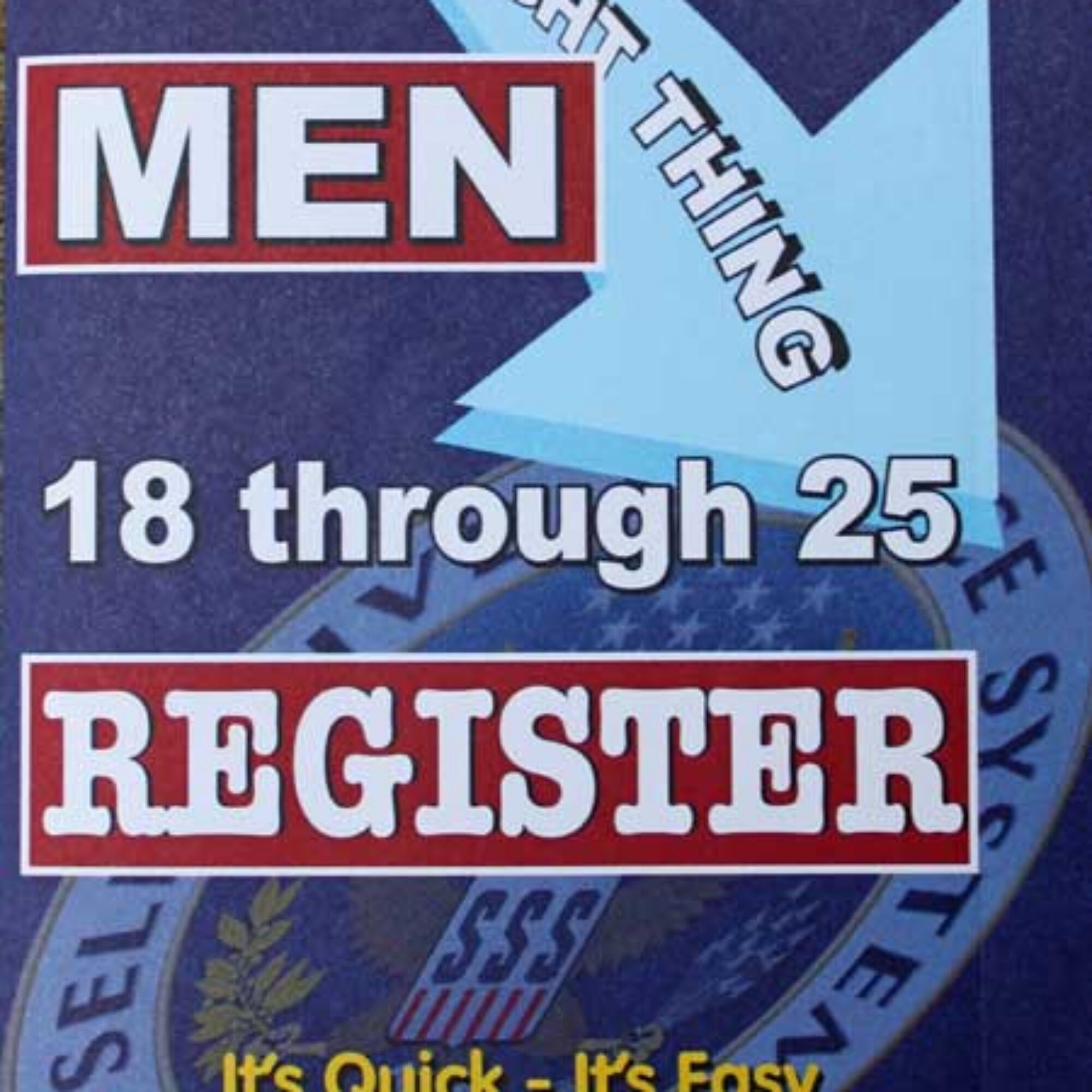
When I turned 17 I received the letter from the federal government that they required me, by my next birthday, to register for what it called Selective Service and and that I call the draft. I don't remember the details, but I remember something about punishment if I didn't. I also remember thinking I didn't feel I had the experience or maturity to comprehend this obligation imposed on me to risk my life and possibly have to kill others. Neither of my sisters received a comparable letter. The experience was one of the first I realized that society treated men differently---expecting us to risk death and killing. It felt sexist. Years later, I remember my mother describing my step-brother's relationship with his ex-wife as her…

0 Comments

Awareness and education are not enough for the environment

Raising awareness and education are pathetic, impotent excuses for acting on the environment people hide behind. I've seen people talking about their awareness of litter problems while obliviously holding coffee in single-use disposable cups. There are a lot of Enron environmentalists. You may be one. A main problem with awareness is that people feel aware while they aren't. They're aware of what they know but ignorant of what the don't. When they start feeling aware, they stop changing their behavior and become complacent. Peer-reviewed results Two peer-reviewed journal articles document that environmental self-identity played an ambiguous role in predicting actual environmental impacts. Instead, environmental impacts were best predicted by people's income level. . . individuals with high pro-environmental self-identity . . . typically emphasize actions…

0 Comments
Why are we so blind to sexism that hurts men and boys?
NY Times: Extensive Data Shows Punishing Reach of Racism for Black Boys

Why are we so blind to sexism that hurts men and boys?

This week's New York Times article, Extensive Data Shows Punishing Reach of Racism for Black Boys, is important, in my opinion, for many reasons. It brings up important factors including race and class. I feel compelled to address a factor that everyone seems happy to ignore: sexism hurting men and boys. This quote highlights my point: "One of the most popular liberal post-racial ideas is the idea that the fundamental problem is class and not race, and clearly this study explodes that idea," said Ibram Kendi, a professor and director of the Antiracist Research and Policy Center at American University. "But for whatever reason, we're unwilling to stare racism in the face." in that, while calling out what's staring us in the face, it ignored…

0 Comments
Affluence Without Abundance, Part 2: Hunting
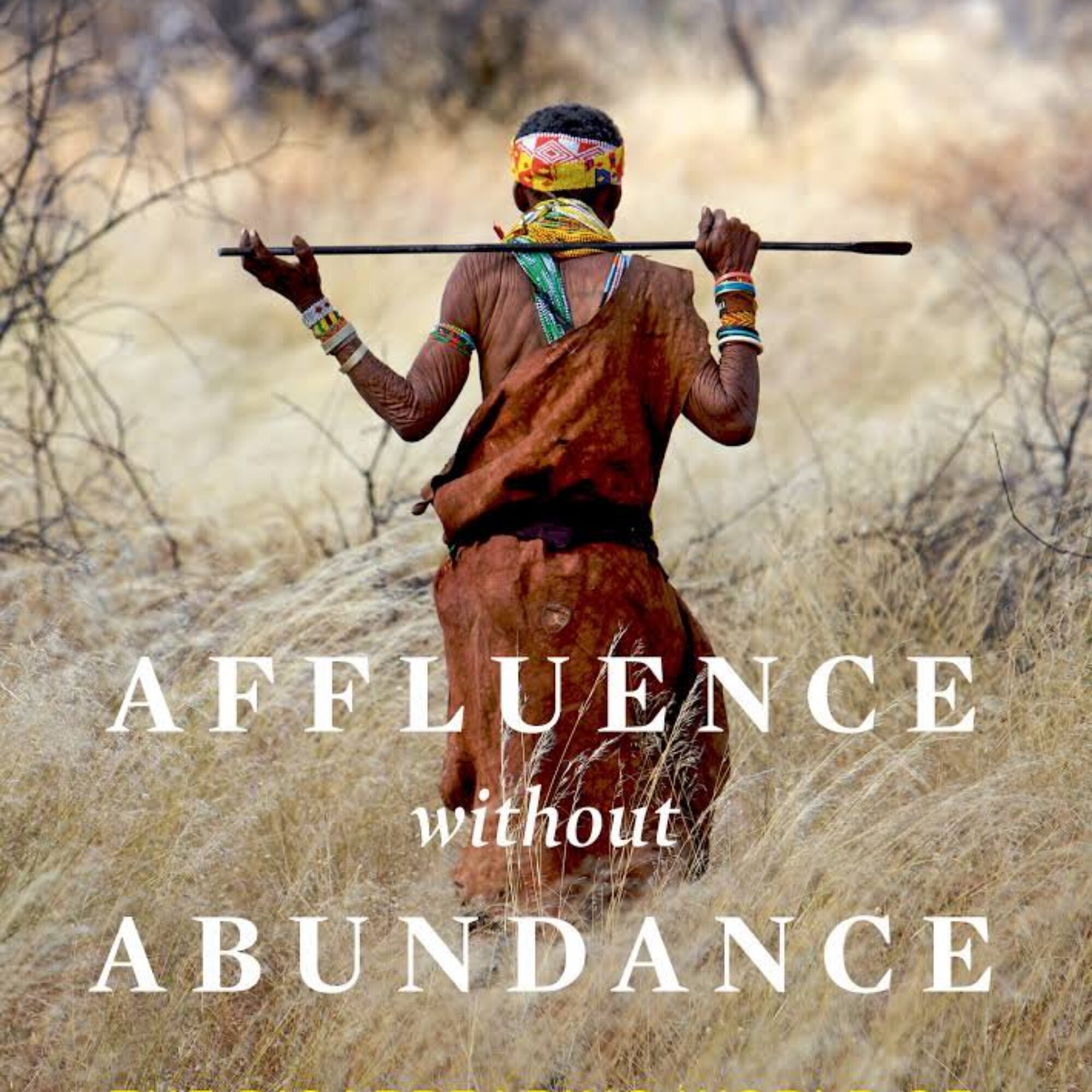
Affluence Without Abundance, by James Suzman

Affluence Without Abundance, Part 2: Hunting

When I last ate meat in 1990, maybe 1989, I tried to persuade others to stop too. I just ended up in arguments. Since then, I've come to appreciate more views on the practice. I don't see it as right, wrong, good, or bad. In fact, I get annoyed by people who try to impose their values on eating meat on others even if I share those values. (I see reason to intervene on factory farming, animal cruelty, and a few related issues that affect others, though I haven't made them my battle.) Eating meat is an environmental issue for the pollution it causes and resources it depletes, though I see the issue rooted in human population. If the planet had 1 billion people, the…

0 Comments

Enron Environmentalism (Inc.)

Enron Environmentalism Enron looked profitable when it compartmentalized and hid its losses. Do you compartmentalize and hide your pollution? I just had lunch with a man who described himself as fanatical about the environment--in particular, about water bottles. He illustrated by describing how fastidiously he handled them. As he started his story, I expected him to describe how he never used water bottles. Americans have such clean and drinkable water that water made unclean makes front page news for weeks. Specifically, he lives near Manhattan, and our water wins blind taste tests with consumers. The EPA finds it meets or exceeds all safety requirements. I figured he knew that 91% of plastic isn't recycled, and that for the garbage you create, 70 times more was produced upstream. So I presumed he would describe how he never used these harmful,…

0 Comments

Remember the “Crying Indian” Anti-Litter Ads From the 70s? You’ll Cry More at Our Pollution Levels Today (Inc.)

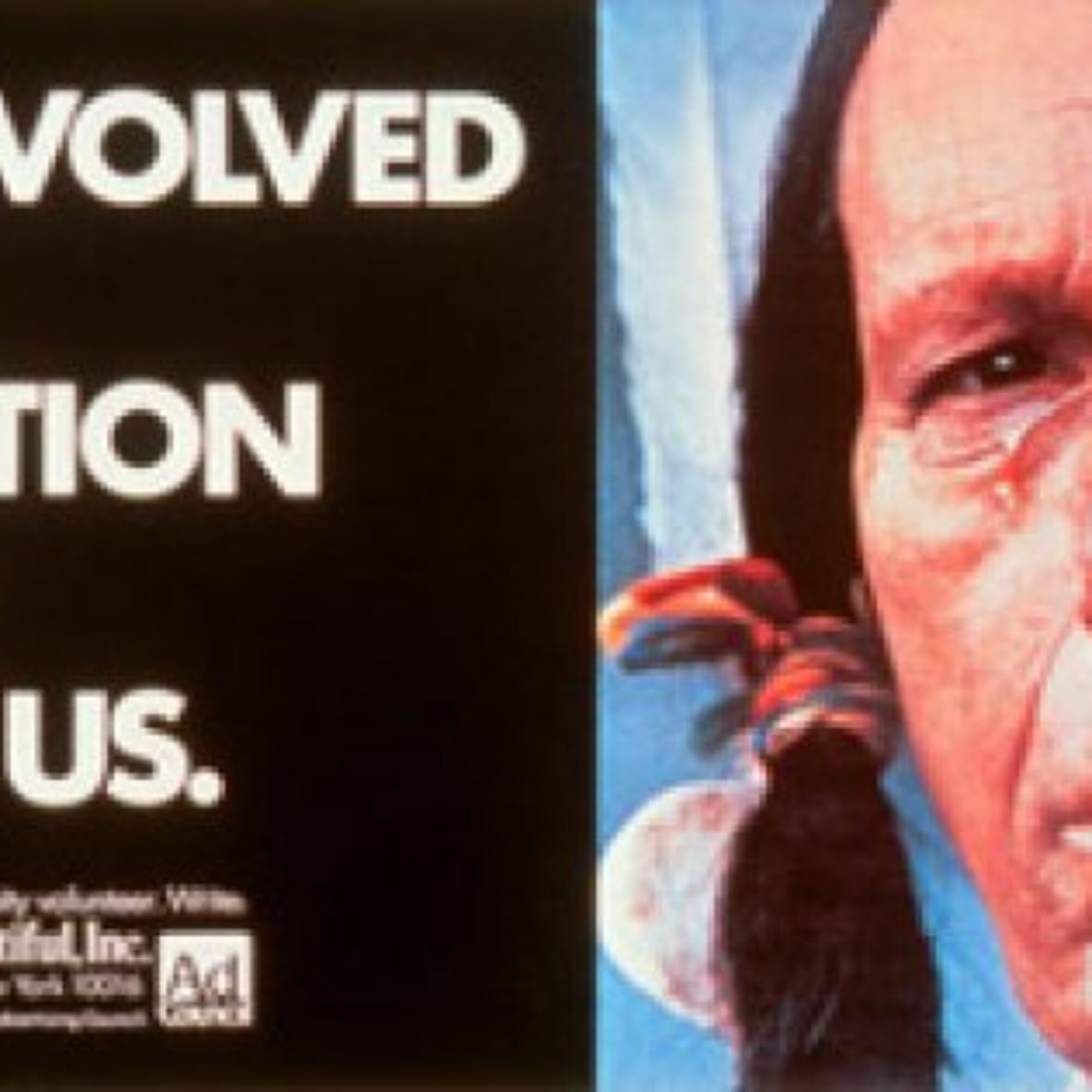
Remember the Single-Tear Anti-Litter Ads From the 70s? You'll Cry Too at Our Pollution Levels Today The chart below puts Keep America Beautiful's "Crying Indian" public service announcement in today's deplorable context A headline in The Guardian two days ago, "$180bn investment in plastic factories feeds global packaging binge" led me to some statistics about plastic production. Plastic Production Then The chart I saw, reproduced below, showed dramatic increase around 1970. Normally I wouldn't think much of that date, but it reminded me of the so-called "crying Indian ads,"--the Keep America Beautiful public service announcements from my childhood. I hadn't thought of them in decades. From Wikipedia, In 1971, a new campaign was launched on Earth Day with the theme, "People Start Pollution. People can stop it." In what became known…

0 Comments

Lies We Tell Ourselves When We Pollute (Inc.)

Lies We Tell Ourselves When We Pollute We all want clean air, water, and land, yet pollute more than necessary. Leaders act with responsibility, accountability, and self-awareness. Our leadership vacuum on the environment I hook my audiences easily in my workshops on my podcast, Leadership and the Environment, by saying, Raise your hand if you like pollution, rising sea levels, and more plastic in the ocean than fish. No hands ever go up. I continue, Now raise your hand if you lowered your pollution to below American levels. Again, no hands ever go up. People look around sheepishly, so I ask, If you don't want pollution, why do you pollute unnecessarily? Nobody knows. Some suggest that they can't stop living, eating, and breathing, but I ask about unnecessary pollution. Americans pollute more per capita than almost anyone in…

0 Comments
The benefits of flying without the costs

The benefits of flying without the costs

My post in LinkedIn today, "The Benefits of Flying Without the Costs," begins Airplanes have existed about a century and affordable for a few generations. Suggest to typical Americans not to fly and most will tell you it's impossible. That's a lie. I told myself the lie as much as anyone. Don't get me wrong. I like traveling, but now I'm honest with what I like about it and get a lot more out of it. They mean they'd have to rethink their lives. Most of their lives conflict with their values already and could use rethinking, so that rethinking would help them. They've lost sight that people have found ways to be happy for hundreds of thousands of years. The experience of not flying…

1 Comment
Geeking out with a spreadsheet: How much I’ve lived through
How much of history I've lived through---my original spreadsheet

Geeking out with a spreadsheet: How much I’ve lived through

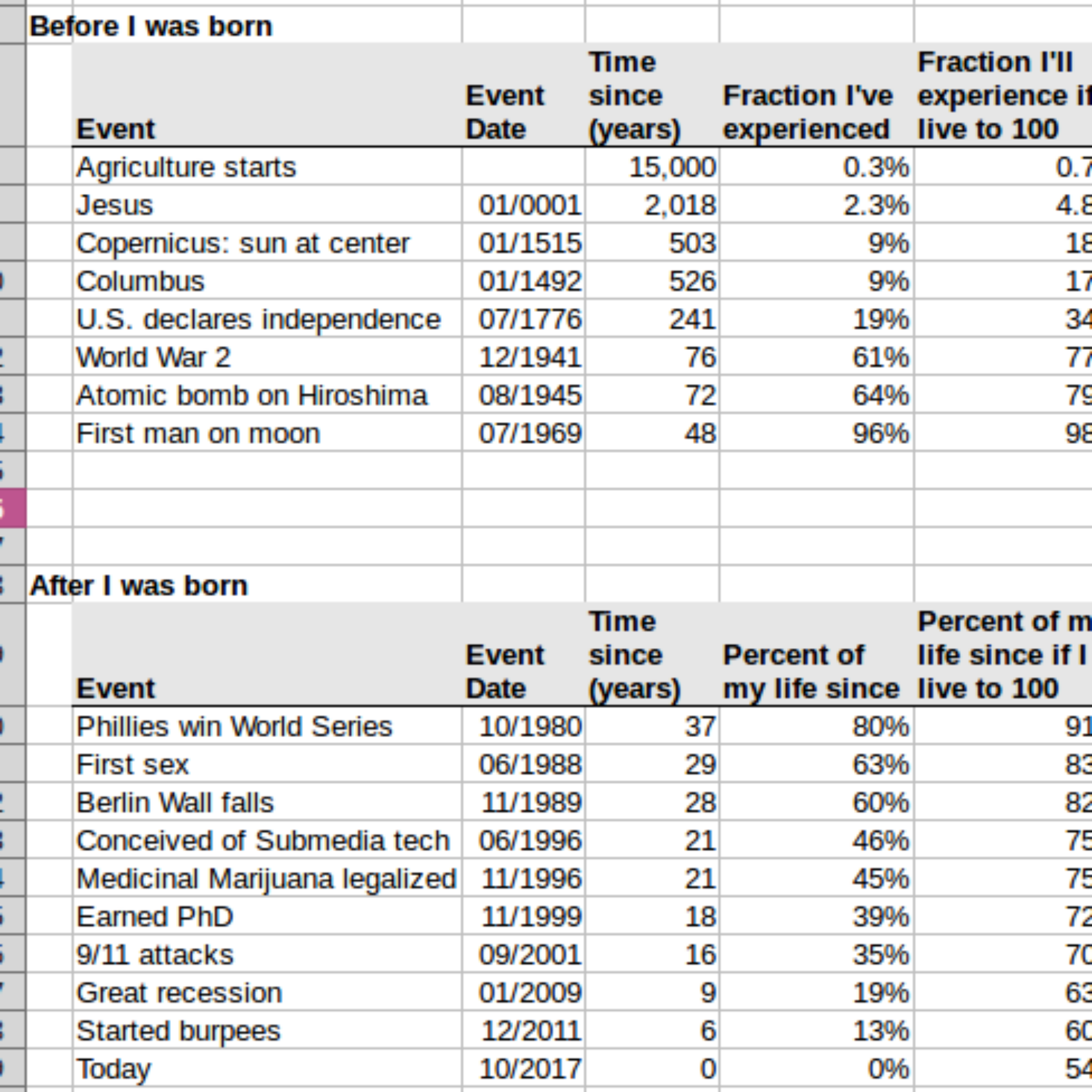
I decided to have fun with a spreadsheet and calculate how much I've lived of historical times. I'm surprised to find I've lived a meaningful fraction of historical periods---all the more so if I live to 100. See the tables below. First, I'll share some highlights. How much of history I've lived For example, I've lived 2.3% of the time since Jesus. 2.3% is small, but I wouldn't have expected even a single digit percentage. To me, it feels odd and oddly satisfying to know that I've lived a meaningful part of all of a major religion's existence. If I live to 100, I will have lived nearly 1% since humans domesticated the first animals. I don't know about you, but a percent seems like…

0 Comments
How I Learned To Start Every Day With Purpose

How I Learned To Start Every Day With Purpose

My LinkedIn post today, "How I Learned To Start Every Day With Purpose," begins How I Learned To Start Every Day With Purpose It's Monday morning and I'm writing this post because I'm full of enthusiasm and invigorated. Why? Not because I'm a morning person. Not because I like waking up on Mondays. I have a full work day ahead of me, but I'm taking time to share how effective this one part of my morning routine is. I have to preface this practice with a couple points. First, I'm in month 11 of doing it and I only found the joy in it around month 6. Before then wasn't bad, but it took experience to kick in. Experience is the only way we change…

0 Comments

A path to happiness

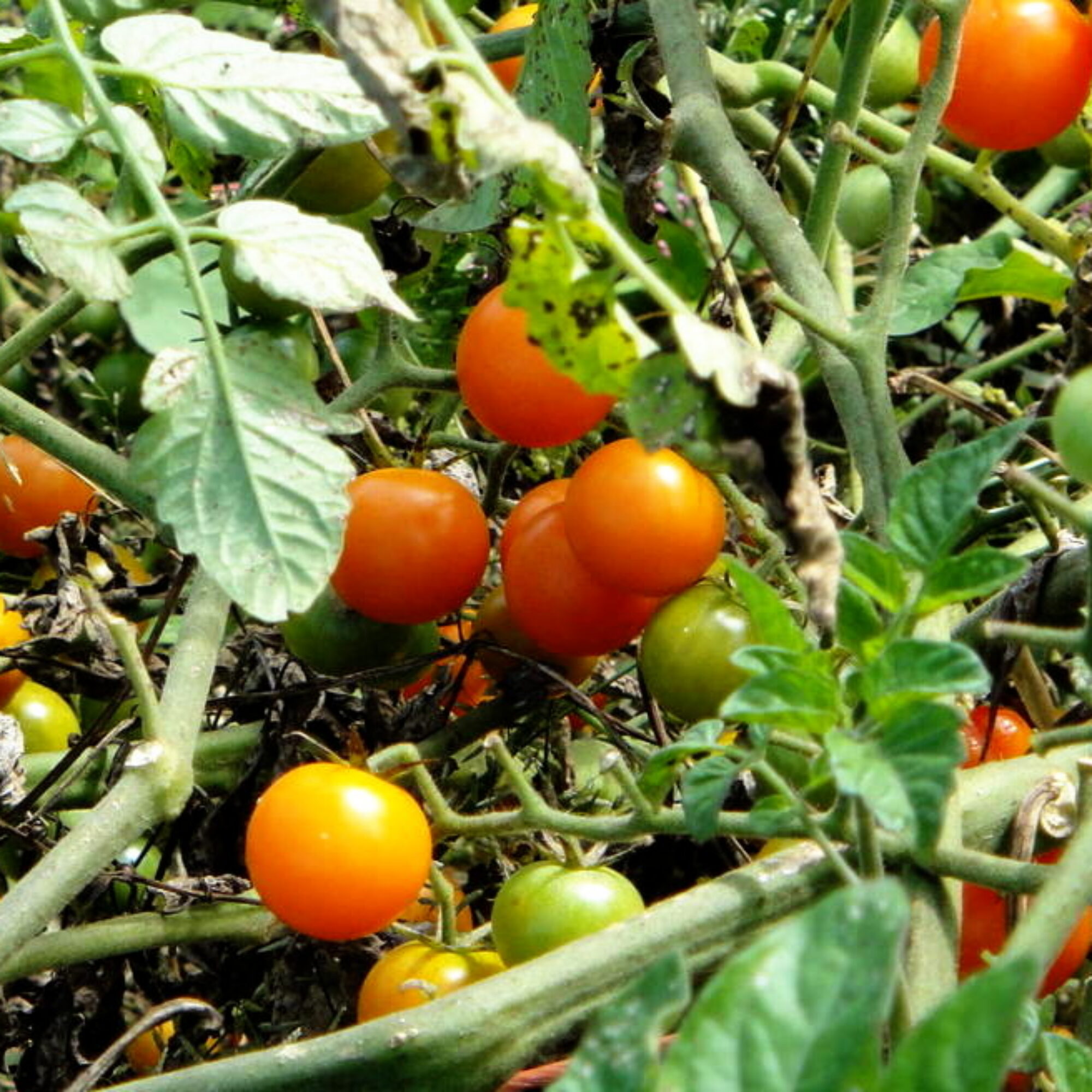
Get some fresh fruits, vegetable, and other ingredients. Make a delicious meal. Invite some friends over to enjoy it with you. Try to be unhappy then. It's hard. If you prepare well, impossible. Creating that environment makes you happy. You might say, it's only for the moment, or not true happiness. I suggest instead of evaluating it, figuring out how to extend it to the rest of your life. That's what I've done. The more I do it, the easier it is. Or rather, the more skilled I get at making my life as happy as I want. In the meantime, here are some cherry tomatoes from my CSA farm.

0 Comments

How NOT to reduce your pollution

Do you want to pollute less but can't stop yourself? If so, I bet you're approaching it in a way that's doomed to fail. You're probably lying to yourself about how hard it is too. People ask me a lot: What do you eat if you don't eat packaged food? What do you do to make up for not flying? Where do you get your protein? Did you ever notice how if you ask someone the time just after they looked at their phone or watch, they often don't know? We often feel an impulse to check. Then, once we have, we forget because we didn't care, we just acted on the impulse. I've learned that almost no one cares about the answers to the…

0 Comments
Refrigerating junk we don’t even have room at home for?!
We're air conditioning junk we don't even have room at home for

Refrigerating junk we don’t even have room at home for?!

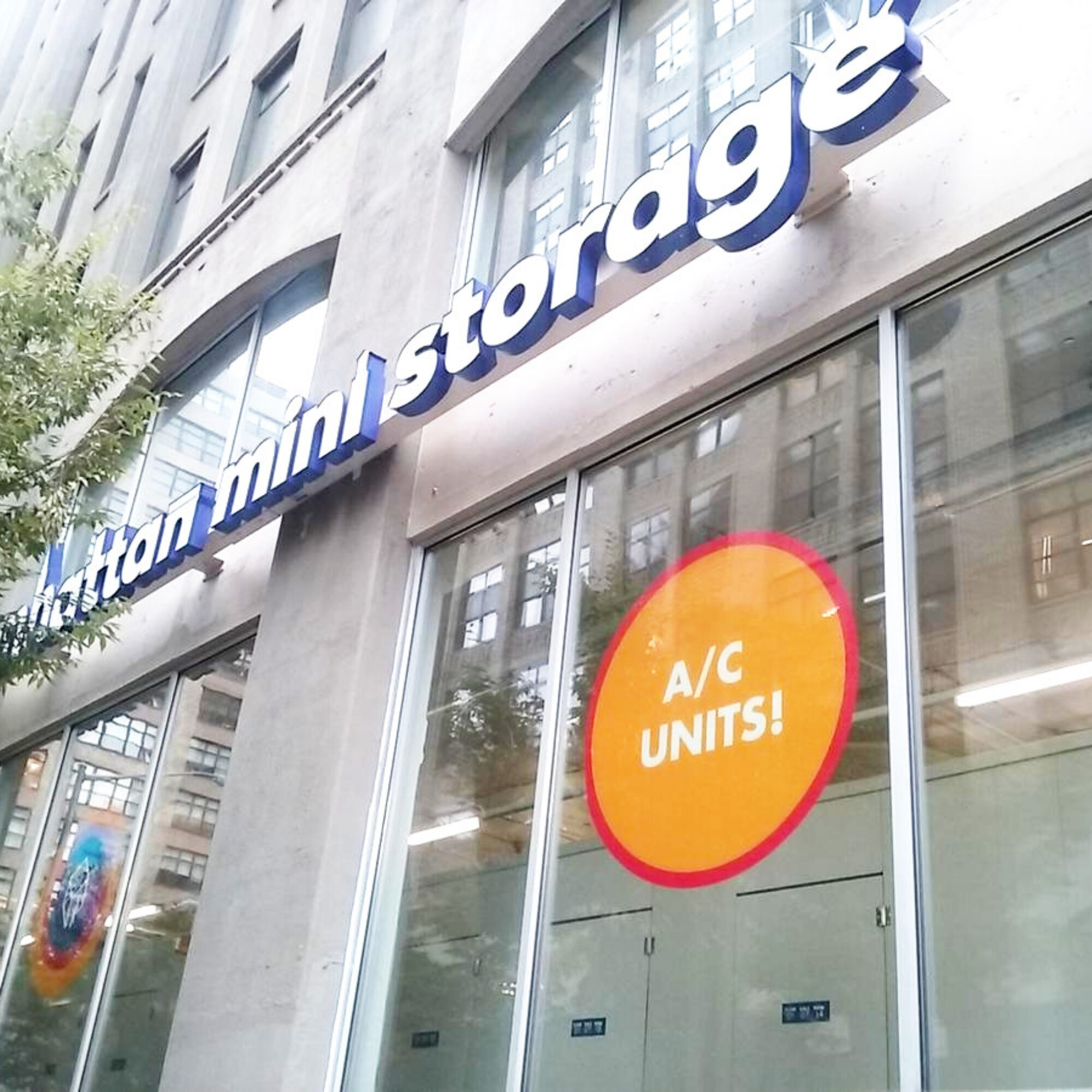
What are we doing?! I can't believe how dissociated we are to what we're doing to our world and not stopping ourselves, or seeing that we're making our lives worse in the process. Case in point: this advertisement I saw walking home from teaching the other day. In case you don't know, Manhattan Mini Storage rents closets you can store your stuff in. They have locations throughout the New York. What are we doing?! Here's a partial list of what seems crazy to me: We have so much junk that we pay rent to store what we can't fit in our homes We pay to air condition our junk We advertise our capacity to air condition that junk You might point out some people value…

0 Comments
The environment: Little things matter but NOT because they add up
Little tips to help the environment

The environment: Little things matter but NOT because they add up

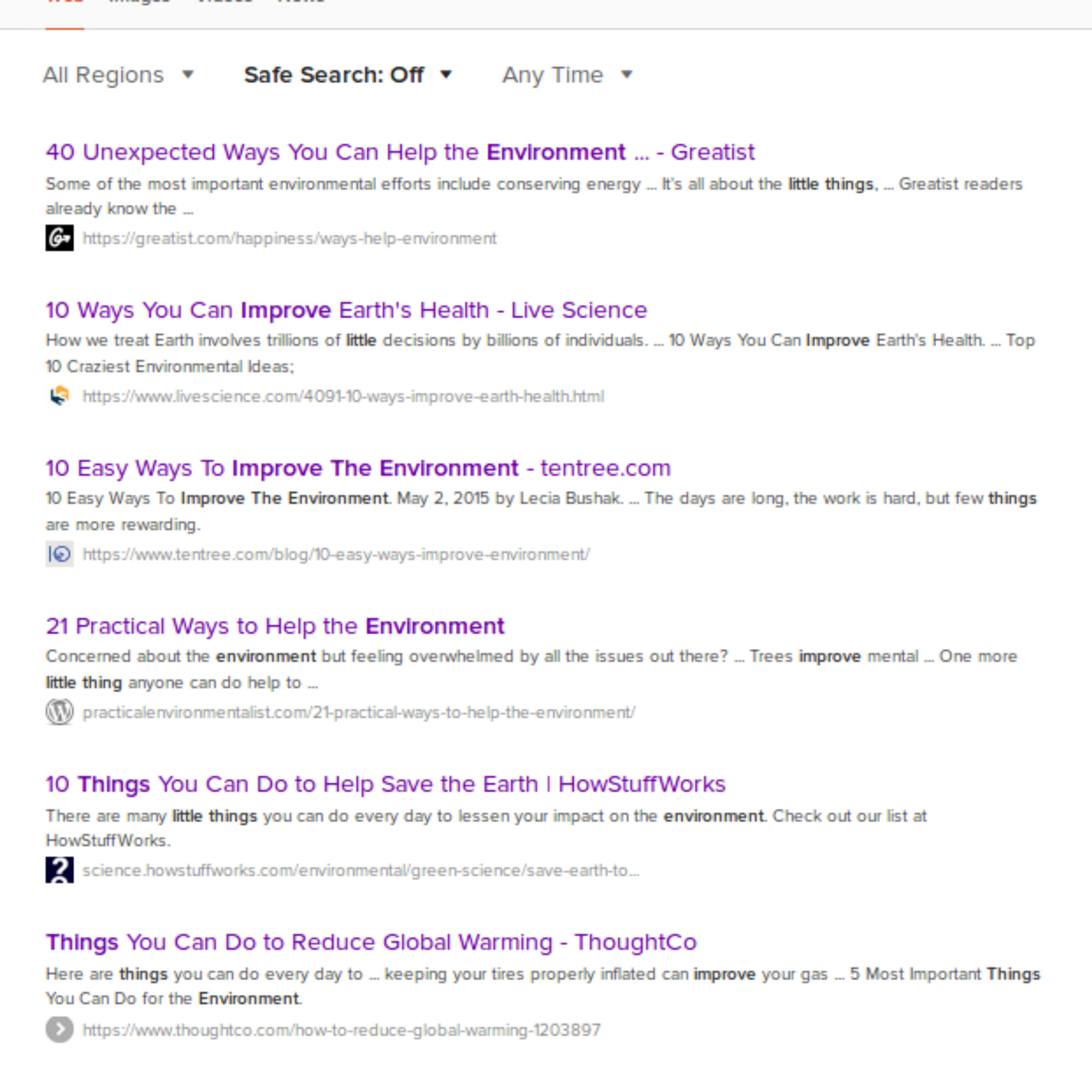
The internet is filled with "10 tips to lower your carbon footprint" and "21 easy ways to help the environment." Here's a screen shot: There are too many pages of them to count. They aren't working. Sure, some people might change a light bulb or two, but greenhouse gas levels aren't decreasing, nor is pollution, nor resource depletion. The number one problem with "little tips" People say enough little things add up to big differences. When the people leading others to consume fossil fuels wantonly are the Koch Brothers and Donald Trump, the measure of change is against their results and no amount of changing to LED bulbs will accumulate to compare with their results. Even so I still recommend acting on small things, but…

0 Comments

How little do you need?

Freedom comes from needing less more than having more, in my experience. How little do you need? Can you decrease your needs? I wrote a friend, in response to something he said about needs: I'm sensitive to the word need, since I consider neediness one of the least attractive qualities people can have, so as much as I value sidchas, instead of saying you need to do the thing daily, I'd say doing so works. Other ways may or may not, but a sidcha works. It doesn't if you half-ass it, though. He posted on his blog, in a post "Who or what do you ACTUALLY need?": The only things you need are the things that keep your mind ticking over. Food, water, shelter, warmth…

0 Comments
If I led in the environment and no one knew my name, what change I created would be my legacy?
Dov Baron and Full Monty Leadership

If I led in the environment and no one knew my name, what change I created would be my legacy?

Following up Dov Baron's questions from yesterday and the day before, the next and last question he recommend me answering was Question: If I led in the environment and no one knew my name, what change I created would be my legacy? Listen to the conversation (on iTunes) My answer: My legacy would be that people will view changing their behavior to reduce their pollution, greenhouse emissions, resource depletion, and the like as joyful fun opportunities for personal growth that they wish they did earlier. This perspective would change for most people from seeing such changes as deprivation, sacrifice, and pointless. This cultural shift would be on the scale of how, in my lifetime, American culture shifted on Smoking Drinking and driving Wearing seat belts We've…

0 Comments

Wall of Fame Honors in Growth Bias Busted

I can't believe it's not obvious to everyone that driving the problems of pollution, global warming, resource depletion, extinctions, conflict over resources, pestilence, and related issues is overpopulation. It's not the only issue, but it's one of the main drivers. Maybe the main one. People have a weird knee-jerk response to think the opposite of overpopulation is eugenics, Nazism, killing, giving up modernity, returning to living in caves, economic collapse under too many old people, or other bizarre misunderstandings. We're all going to die. We don't have to kill anyone. We've increased our productivity by enough that we can support older populations. Lowering a population only means having fewer children for a while. Humans have done so where the environment prevented population growth for as…

2 Comments

“Awareness” of the environment? Oh please.

People keep talking to me about "raising awareness" about the environment. Sometimes they talk about it as a first step, as if it's progress. Many don't realize it, but they actually see awareness as their final step. As in, they consider themselves aware of what's happening, and then continue doing what they always did. A lot of people use awareness not as a stepping stone but as a source of complacency. The big question Does awareness matter? I put it this way: If you interviewed someone and their résumé said they were aware of the experience the job needed, but never actually did what you needed, would hire them? You'd consider them a clown. Imagine this interview: Interviewer: We're looking for someone with ten years…

0 Comments

What’s more exotic, a mango or a turnip? What’s sweeter, ice cream or an apple? More culturally different, someone in a different country or generation?

What's more exotic, a mango or a turnip? In New York City, and most of the U.S., you can buy mangoes at many stores. Turnips are harder to find. People say they travel to experience new, exotic things. But they don't see that there are new things in their back yards. What's sweeter, ice cream or an apple? Ice cream has more sugar than apples and for most Americans, who are about 80% overweight or obese, tastes better. Apples probably don't taste that sweet to them. But after stopping eating ice cream long enough for your saturated taste buds to recover, apples become incredibly sweet. Ice cream becomes inedibly sweet. I almost can't eat a whole apple these days because they taste too sweet. I…

0 Comments

Why can’t you stop polluting?

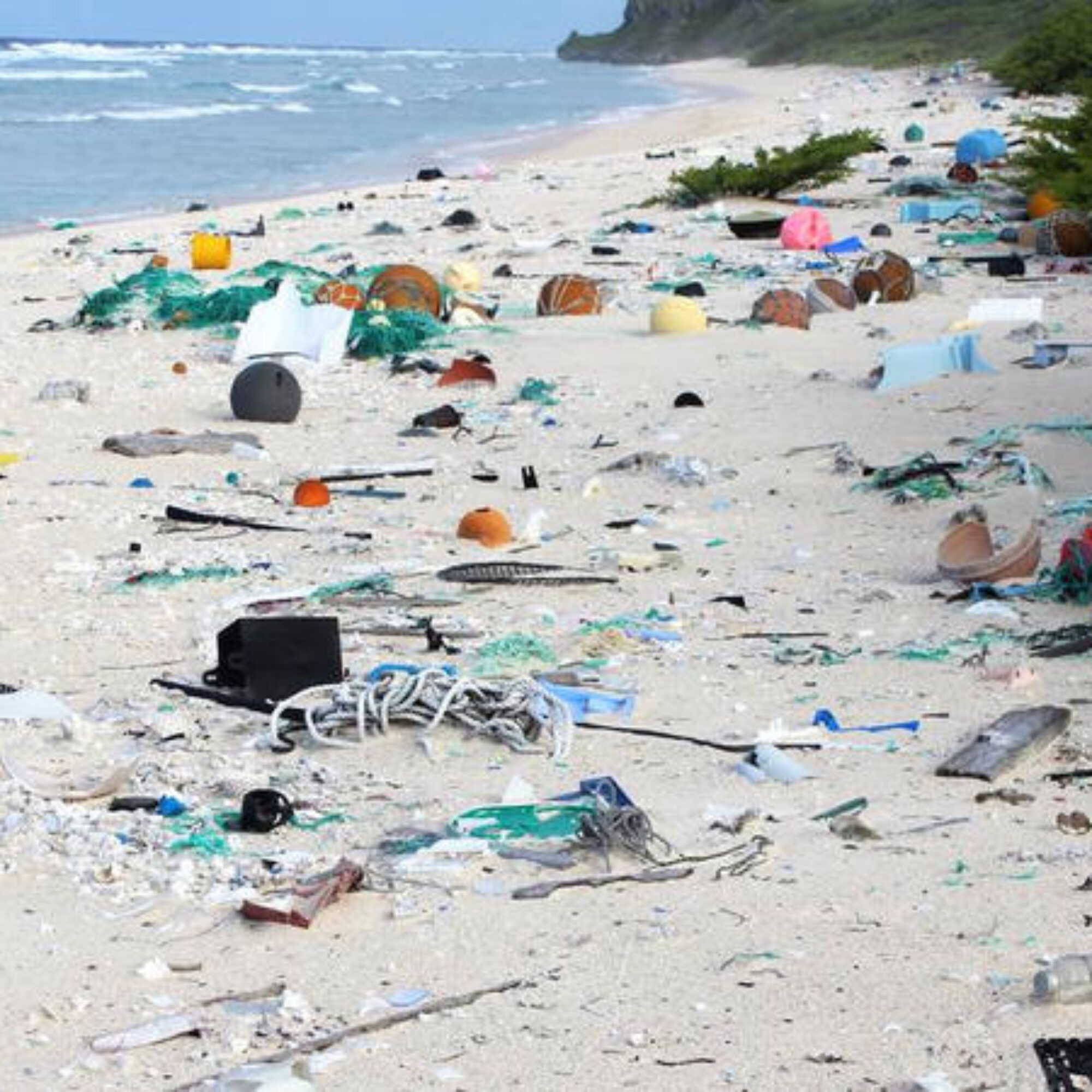
I get that everyone has their eating habits and it's hard to meet them all. Even so, the message I send people about not bringing garbage to my place when I invite them over gives the option of bringing nothing: By the way, no need to bring anything, but if you do, I'm avoiding packaging, so please don't bring anything packaged — no bags, bottles, rubber bands, etc. That usually means fresh fruit or vegetables carried in bags you brought to the store, but as I said, nothing is fine. Here's some background: Avoiding Food Packaging, plus links within. I'm trying to reduce this outcome: Scientists Find Most Trashed Spot on Earth: A Once-Pristine Paradise. So far, not one person has come over without garbage.…

0 Comments

Why I turned down nearly $10,000 to teach for an Ivy League school for a week in Shanghai

Columbia University offered me nearly $10,000 to fly to Shanghai to teach an entrepreneurship class, block-week style, meaning a semester in a week, 9-5 each day. I've taught that way before and got great results. I love teaching entrepreneurship. I'm not bragging to say that my reviews say I'm exceptional at it. I love my alma mater, Columbia, and as an adjunct professor, experience teaching at Ivy League schools helps my career. I had developed the relationships with the department that offered me to teach with them for years. I had worked on making this opportunity happen for years and could expect more offers if I did well. I like making $10,000 doing what I love. I loved living in Shanghai for a year in…

0 Comments
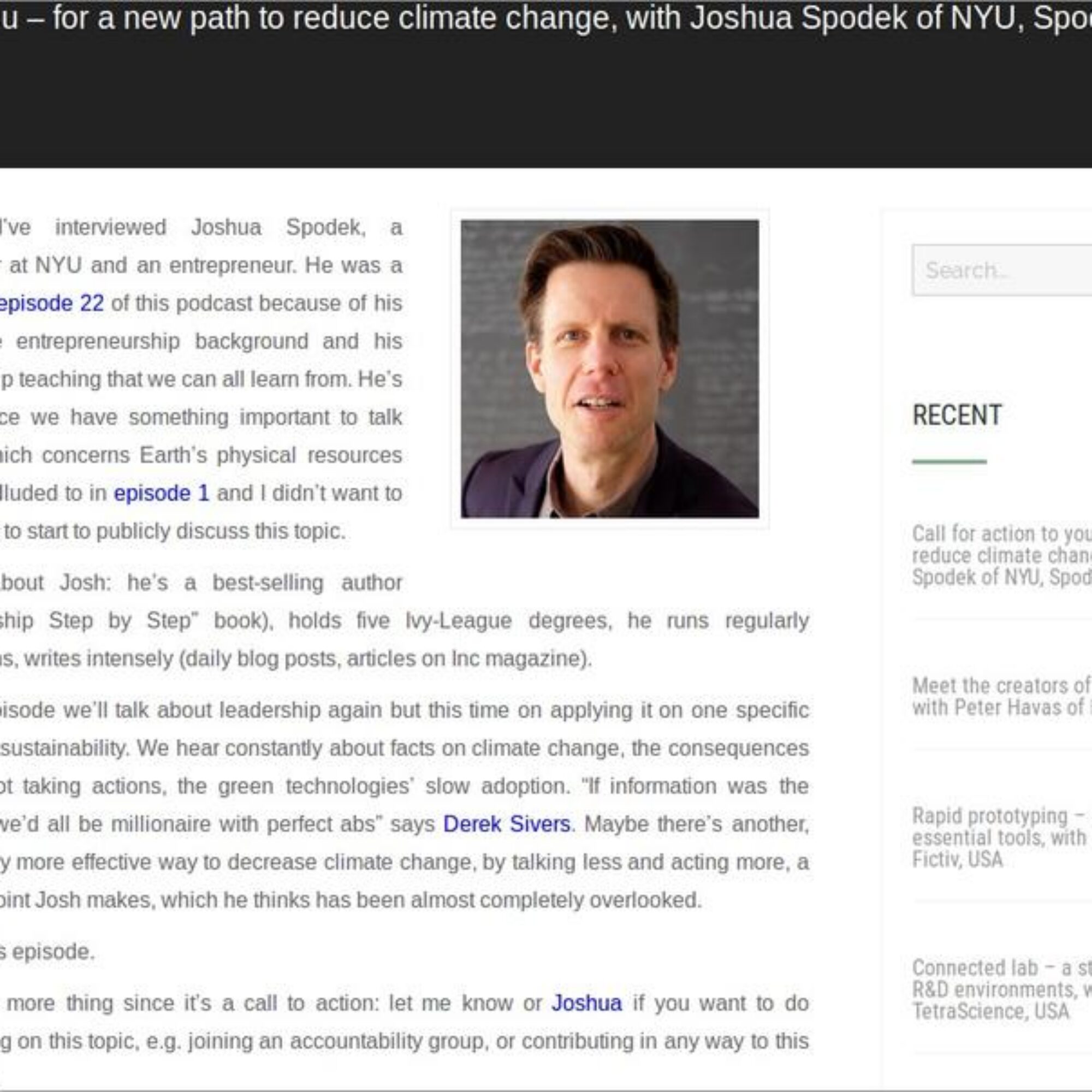
Call for action to you — for a new path to reduce climate change
Balinth Harvath's podcast Call for action to you — for a new path to reduce climate change with Joshua Spodek

Call for action to you — for a new path to reduce climate change

Prepare for one of my most important podcasts from someone who knows the science behind the environment. Want to improve the environment? You may remember Balint, a fellow scientist who got a PhD in physics became an entrepreneur got passionate about improving in business, and teaches experiential project-based learning. from his first podcast interview of me, which covered leadership and education. We continued our conversation and spoke the way only physics PhDs can. I shared what I've posted here about my developing plans to start a movement on leadership and the environment. We decided to record another conversation on it for his podcast on how to act on the environment---yes, you, personally. He posted it, "Call for action to you — for a new path…

0 Comments

Science: This Remote Paradise Is Most Trashed Spot on Earth

My Inc. post today, "Science: This Remote Paradise Is Most Trashed Spot on Earth," begins serious but connects it to entrepreneurship and leadership. It starts: Science: This Remote Paradise Is Most Trashed Spot on Earth Two scientists report that this once-pristine paradise on Earth, now covered with plastic junk. Leaders and entrepreneurs can act. If you haven't heard, you must have been hiding under a rock. Or maybe a piece of useless plastic junk: A pristine paradise is covered with the greatest density of garbage measured, mostly plastic trinkets whose existence improved the life of no one, according to a paper, "Exceptional and rapid accumulation of anthropogenic debris on one of the world's most remote and pristine islands," in the Proceedings of the National Academy…

0 Comments

Leadership and the Environment: It starts here

I'm talking more about the lack of leadership I see regarding the environment and global warming. I've never met anyone who didn't want to make the world a better place or who opposed clean air and water, but we were born into a world that makes it difficult to avoid polluting it. As everyone knows, if billions of us don't change our behavior, we could face big natural problems. Since no one else is stepping up, or don't have the skills, awareness, and credentials to, I am. My friend Lee Kuczewski and I have talked about the topic. He's wanted to organize talks on topics he loves, so he organized my first public talk on leadership and global warming. We held it last Thursday at…

0 Comments

End of content

No more pages to load