Leadership


Climate Week NYC: Slimy and Duplicitous, causing the problems they complain about.

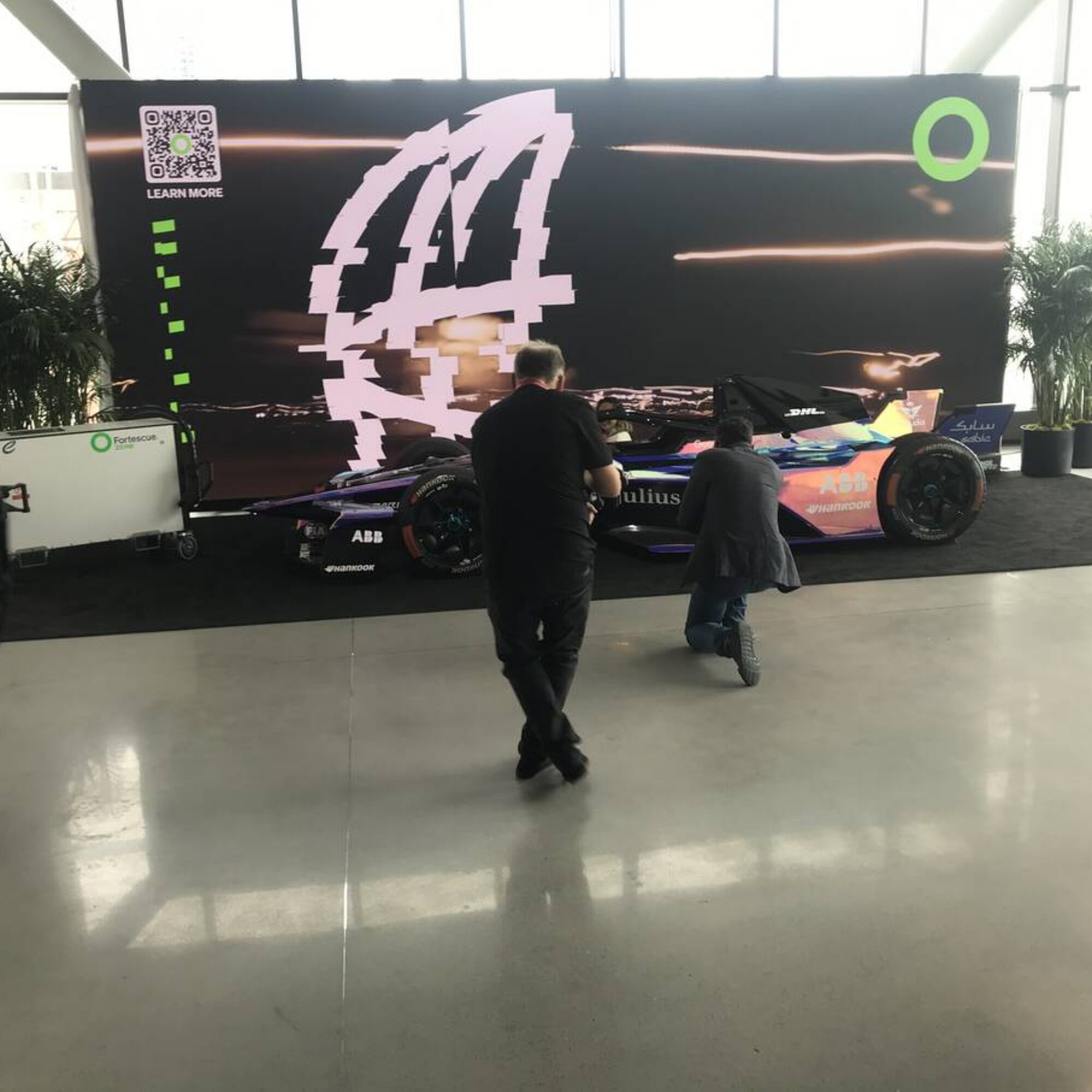
Climate Week NYC was a month or so ago, but its sliminess lingers. I'm writing this post not to complain, but to call attention for the need for leadership, integrity, and credibility. I saw none there, but huge demand for it. I haven't engaged yet with the event planners so attended passively, therefore include myself in showing no leadership there. It's further motivation to finish my next book, which will be my platform for taking responsibility and leading. In the meantime, people act performatively---that is, as if they were helping, but doing nothing effective, or more often counterproductive. Take, for example, the first thing on display at one of the main events, a race car. Is the idea that its being electric means it helps?…

0 Comments

Hear my second time on the Heritage Foundation podcast The Power Hour with Jack Spencer

It's been close to a year since I first appeared on the Heritage Foundation's podcast The Power Hour, hosted by Jack Spencer, who has been a guest on my podcast three times. First, I enjoy Jack's hosting both as a guest and a listener. I really was laughing as hard as I said when I came on. You'll hear me share more about how America's founders, Lincoln, Adam Smith, and other Enlightendigenous thinkers inform my views and actions. To my credit, I think I convey important thinking about sustainability based on what we need for society to work. It won't work if anyone can just do what they want. Roles for government include ensuring the consent of the governed and protecting people's life, liberty, and…

0 Comments

Abolitionists didn’t free slaves by teaching children that slavery was wrong. Yes, they taught children, but they freed slaves by freeing slaves.

I've written that, yes, we should teach children about living sustainably, but teaching children doesn't solve the problems we're teaching them about. On the contrary, if we teach them to do what we aren't doing ourselves, they learn from our behavior, not our words. We will lead them to see polluting and depleting like cursing or drinking, something kids have to wait until they grow up to do but that is okay for adults to do as long as they mostly hide it from kids. I put it in the frame of smoking in my post Don’t “teach children sustainability”. Here’s why and what to do instead. I also wrote How environmentalists are like smokers who tell others not to smoke … while smoking. Today…

0 Comments

Tik Tok and Instagram or hands-on practical experience?

Two things I haven't kept track of but happen over and over: People saying, "Your material is great! You should promote it more on Tik Tok, Instagram, etc to make it available to more people." Me saying, "Leadership requires credibility and integrity, which require hands-on practical experience." Sure, I could go for the quick clicks as the guy off the grid in Manhattan. I could probably get a million followers, but to change global culture, continuing the legacy of Abraham Lincoln, requires a solid, deep foundation. I'm getting closer to launch all the time, but not there yet. The reason my material has value and meaning and that there is so much of it is that I'm not going for the quick clicks, which would…

0 Comments

My top thought about Climate Week

With a podcast and book on sustainability leadership, I've been invited to many events at so-called Climate Week. It's when people fly from all over the world to talk about what other people should do. I wrote the following as constructive criticism. It's what I would expect people who take personal responsibility for how their actions affect others would want to know. My top thought is surprise, even as jaded as I am about so-called environmentalists: Everyone I heard speak, when they talk about polluters, they talk as if it's different people than themselves. This makes no sense. They are among the greatest polluters on the planet, who have ever lived. Why do they act like the big polluters are other people? It bears repeating:…

0 Comments

“Do the reps, you get the results. Don’t do the reps, you don’t get the results.”

I've been saying these words lately. Do the reps, you get the results. Don't do the reps, you don't get the results. I've said them to myself, my teammates, and my coaching clients. As regular readers know from my sidchas and standard procedures, I live them. When I search the web for them as a quote, I don't find them, so maybe I created the quote. They ring true, particularly based on the Martha Graham and Jocko Willink quotes I live by. Graham: The dancer is realistic. His craft teaches him to be. Either the foot is pointed or it is not. No amount of dreaming will point it for you. This requires discipline, not drill, not something imposed from without, but discipline imposed by…

0 Comments

If you claim to consent for someone else, you’re a tyrant

This nation's government says it's just only if based on the consent of the governed. Consider Cancer Alley. Nobody consents to being given cancer. Nobody consents to being born with a birth defect. Yet Cancer Alley and other sacrifice zones are growing. I don't deny that people can benefit from perks that come from activities that pollute and deplete, but as long as they pollute and deplete, they violate what makes government just. You might like the perks, but you can't consent for other people. There is a word for people who "consent" for others. They are tyrants. If you claim to consent for someone else, you're a tyrant. I'm not saying you're good or bad. You have your values. I'm only saying something as…

0 Comments

Solving environmental problems today by teaching kids is like fighting fascism in 1941 by teaching kids

Context: Remember the first time someone said you could undo the environmental harms of your flight by paying a few dollars for an "offset"? It seemed too good to be true, right? Thousands of dollars going to extract and burn jet fuel offset by a few dollars? It was too good to be true and you knew it. Nearly none of the projects achieved the effects they promoted. Nearly all would have happened anyway. The demand for something to work that was impossible led to fraud around the world, people offering bogus offsets. Fraudsters pocketed the money while people who wanted to help actually flying more---that is, destroying more people's life, liberty, and property without their consent---mistakenly believing they weren't. Sure, teaching kids about something…

0 Comments

James Madison on slavery (in contrast with Abraham Lincoln)

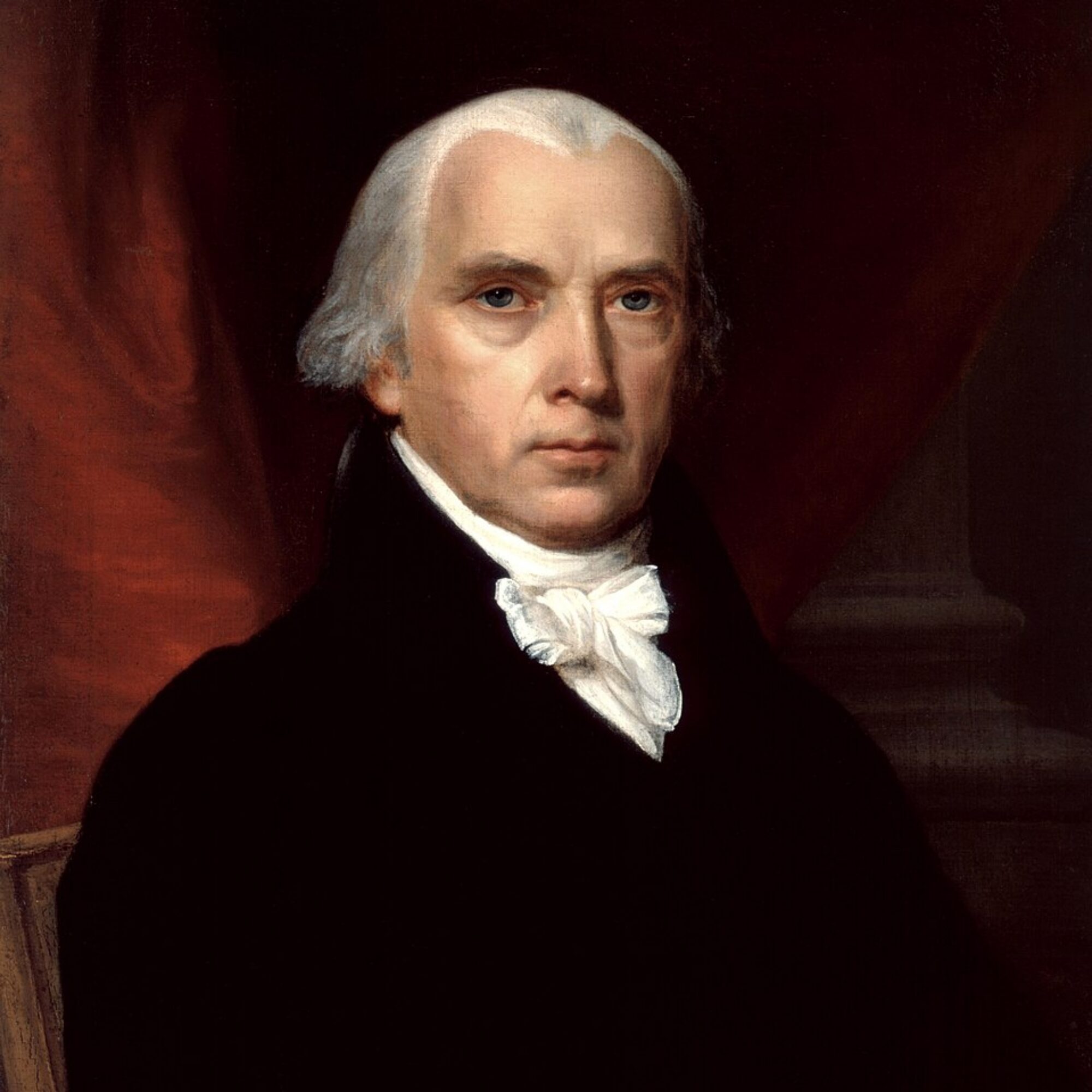
I've been learning more about America's founders who opposed slavery, their personal actions on slavery, and their resulting views. Lately I've been learning more about James Madison so saved some comments on him by a biographer, Drew McCoy. I haven't finished a full biography of him, so I'm just starting learning about him in more depth, but I'm coming to see his views on slavery versus liberty, freedom, equality, and democracy as relevant today, in particular to pollution and depletion, which undermine liberty, freedom, equality, and democracy. Like Jefferson, he considered slavery wrong but didn't act against it---that is, he valued freedom but didn't fight for it in all cases. It looks like he valued it more for himself and his peers than for slaves.…

0 Comments

Professions and people NOT to ask how to solve our environmental situation

I have a PhD in physics, the most advanced degree in the most fundamental science. It was my priority for most of a decade. I loved and still love the field. I believe if you want to understand our situation, you must understand science or at least its findings. I also consider nature among the most beautiful thing to learn about. Scientists found out about our environmental situation. They project possible resolutions. Nonetheless, I don't consider scientists people to ask how to solve our environmental problem. Why not? Here's an example. When I started graduate school at Penn, there was a professor there, Howard Brody, who studied the physics of tennis. In his youth he played varsity tennis. He apparently led the field of the…

0 Comments

I love a good leadership or entrepreneurial challenge, but few others seem to

Why do my students give me reviews like: “This was the best course I ever took at NYU. There is no substitute for doing the exercises. Thinking I understand a concept and actually trying to execute the concept was difficult. Only in working through the exercises was I able to be aware of what I am currently doing. With these exercises, I now have a roadmap for how to be the kind of person I want to be. Thank you for changing my life for the better!”? I do because when I began teaching, I started learning experiential, project-based learning. I don't teach through lecture or assigning reading and writing papers. I don't claim to be the best in the world, but I try to…

0 Comments

I love learning about the Enlightendigenous origins of liberty, freedom, equality, and democracy in America

I've written before about my functional new word Enlightendigenous. In that post I shared what I learned about the evidence for the philosophy and practice of indigenous people in North America influencing and inspiring Europeans into what became called the Enlightenment. Europe at the time had little to no democracy or social mobility. Your status at birth---that is, the status of your parents---determined your place and role for life with rare exception. People lived under a dominance hierarchy based on access to resources like arable land enforced by a system of justice and military. Meanwhile, on the east coast of North America, there were no river valleys like Mesopotamia or the Nile to precipitate dominance hierarchy on that scale so people practiced local politics. They…

0 Comments

I love simple things, like this Gandhi statue

Of the throngs of people who pass this Gandhi statue in Union Square, I'd guess a few percent notice it. That modesty and humility are part of its appeal to me. Also that my parents met in Ahmedabad, India, where his ashram was. I spent a year there as a child. My father probably spent ten or fifteen years of his life there. Also that Gandhi has long been one of my leadership role models. When people want to meet near Union Square, I usually suggest meeting near this statue. The statue isn't usually covered with this canopy of green. Rarely do I take a picture of it, but the green compelled me. He was backlit, so I changed the contrast in this version: He…

0 Comments

A broad outline of my vision and mission for the workshop and alumni community I love

About a month ago, the core organizational team behind the workshop I lead and its alumni community had our quarterly meeting. I shared my vision and mission. I thought everyone knew it, but when I finished, they said, "You have to share this message with the alumni community." I was wrong: everyone didn't know it. It was my responsibility to share it. I didn't want to impose my views on others, but my history having started many of the projects and exploring the frontier of leadership in this area, I could see how my views could help others see beyond their horizons. Future vision 1 year: thriving online community, self-sustaining. A core team will still manage things like the online site and new initiatives, but…

0 Comments

I love finding yet more ways to reduce how much I pollute (that is, hurt people)

There's nothing like Hands-On Practical Experience. People who haven't tried keep telling me various ways of hurting people are impossible, that people wouldn't go for them. Yet, simply trying reveals ever more little advances. Once I learned to find it joyful and rewarding to reduce suffering instead of a burden or chore, as mainstream global teaches, I find ever more ways to create joy and find reward. Two examples I don't claim these examples make that much of a difference, but the Spodek Method leads to a mindset shift followed by continual improvement, not followed by perfection. For years, for some reason, I've had a hard time moving sound and video files from my computer to my cell phone to where I could listen and…

0 Comments

Not hurting innocent people a “purity test”? I think your ignorance or internal conflict is showing.

Thomas Jefferson owning slaves, including his own children, wasn't an abstract immoral act. He hurt people. He took away their freedom and hurt them. It isn't a "purity test" to say that by owning slaves he hurt people. When people act like living more sustainably is a "purity test" I see two possible causes. The generous one, which I find implausible in today's world, is that people don't know polluting hurts people. People often tell me "Josh, they really don't know. " When I respond that they know enough and if they pretend not to know, they're deliberately keeping themselves ignorant, people generally agree, and intentional ignorance doesn't make you innocent. It means they knew enough to know they're hurting people, they just want to…

0 Comments

How we act when at the top of a dominance hierarchy: Learning from Thomas Jefferson

I've written many times about Thomas Jefferson embodying American culture today. He said all the right things about freedom and liberty. He considered slavery wrong. He still practiced it. His rationalizations and justifications are ours. I link to a bunch of those posts at the bottom of this post. I recommend them. If you want to understand how you sound to someone who lives by values you likely say you do, like do unto others as you would have them do unto you, live and let live, leave it better than you found it, and love your neighbor as yourself, read Jefferson's rationalizations and justifications. You know they're bogus. He knew they were bogus. He just about said he knew he would go to hell…

0 Comments

I increasingly feel like I’m in Monticello listening to Thomas Jefferson

I feel increasingly like an abolitionist or anti-slavery politician around 1800 living in Monticello. Mainstream culture looks and sounds like Thomas Jefferson: He said some of the most important words in history on liberty and freedom. He knew how wrong slavery was. He knew owning people corrupted him. He knew he was violating his own values. Likewise, we all say we don't want to drive a system that hurts and kills people (in orders-of-magnitude greater numbers than slavery did in the US). We know we're violating our values. We know paying for gas, plastic, and services based on them cause death and suffering, which corrupts us. We know we're violating our values. Yet, like Jefferson not freeing his slaves, we don't stop driving today's system…

0 Comments

It’s not your job to end pollution and depletion. It was nobody’s job to end slavery or fight the Nazis either until it was too late. (Or maybe it’s everyone’s job)

Everybody acts like sustainability is someone else's job. Sure, they'll avoid straws or get triple pane windows on their third home, the one in Tuscany that they fly to a couple times a year (I sat next to someone at a dinner recently who was doing so), but actually changing culture? That's too much to ask of anyone. Everyone acts like it's not their job. Whatever their job is, they act like doing that work is all they can do. To do more outside what they get paid for would distract from them doing their job. And what job today doesn't rely on extraction, pollution, and devices made by coerced labor if not outright slavery? It was nobody's job to end slavery either Say you…

0 Comments

This Sustainable Life ranked #1 Environmental Leadership podcast

This Sustainable Life appeared on the rankings of many lists, including #1 Environmental Leadership podcast, by Million Podcasts. #6 in Sustainability I couldn't fit the header and listing for This Sustainable Life in one screen shot, but This Sustainable Life ranked #6 for Sustainability overall, a bigger group than Environmental Leadership. #6 in Environmental Stewardship This Sustainable Life ranked #6 in Environmental Stewardship. #5 in Sustainable Leadership This Sustainable Life ranked #5 in Sustainable Leadership. #7 in Stewardship This Sustainable Life ranked #7 in Stewardship podcasts. #22 in Earth podcasts This Sustainable Life ranked #22 in Earth podcasts. #27 in Global Warming podcasts This Sustainable Life ranked #27 in Global Warming podcasts. Others too! This Sustainable Life ranked #54 in Environmental podcasts overall #69 in…

0 Comments

Why do liberals and progressives so strongly oppose actually acting on sustainability?

Working in sustainability leadership, I interact a lot with people working on sustainability. Most of them are politically liberal or progressive. I'm prompted to write this post after finishing This Changes Everything and What If We Get It Right, both books promoting those politics. They keep saying how individuals acting aren't the answer. They imply or say that suggesting so is harmful. They all keep falling back on BP and its industry distracting from themselves by promoting individual carbon footprints. They oppose not just any one individual acting. They tend to oppose any individual action at all. From a leadership perspective, doing what they say is a problem while telling others it's bad when others do it seems to sacrifice their credibility, integrity, and effectiveness.…

0 Comments

Read about me in Gothamist: “Meet the NYC environmentalists going off the grid and eating discarded food”

The story Meet the NYC environmentalists going off the grid and eating discarded food begins: Joshua Spodek’s studio apartment in the West Village is an off-grid oasis. While other apartments in his 15-story co-op rely on electricity produced by fossil fuel-burning power plants, Spodek is disconnected from Con Edison and National Grid. The main circuit breaker in his apartment is turned off. Instead, he powers his few electric devices – phone, laptop, pressure cooker and a single light turned on only to read at night – with solar panels the size of an unfurled yoga mat that he charges weekly in Washington Square Park. He buys nothing in a package. The total garbage he’s accumulated over the last three years fits in a reusable shopping…

0 Comments

Democrats and Republicans are dancing together on sustainability for their mutual benefit, avoiding action, rallying their bases

A brief political history of sustainability [If you've watched my Short Course on Sustainability Leadership, you'll recognize the following from my session on the political opportunities. I'm putting only the main points here. I'll develop it more in a future post. I wanted to start writing. If you haven't watched the course, I think you'll find it one of the most important resources on our culture, the environment, sustainability, and leadership.] Scientists discovered our environmental problems/symptoms. They proposed solutions. Since academia skewed liberal, so did their proposals, even if they didn't intend to advance their politics. They just proposed what made sense to them. Conservatives saw their proposals as advancing liberal causes, all the more since they weren't practicing their proposals, so reacted against the…

0 Comments

A Short Course in Sustainability Leadership

I've been working for months on what to show on SpodekMethod.com. My book Sustainability Simplified refers to the page so it has to help people who want to learn and to more. It's pained me for it not to be ready for so many months after the book has been on sale and the New York Times profiled me with a two-page story starting on the front page of the Metro section. I've had to hold back on promoting the book without a web presence ready. I've struggled for years how to welcome people to a web page. It's easy to think of amounts of information that would fill books to put there. As for images and quick impressions, it's easy to fall into cliches…

0 Comments

You are as much an expert in sustainability leadership as anyone, or can be

People seem to want to defer to "experts" in sustainability and sustainability leadership. Many people know about science, technology, economics, legislation, and places where we might apply sustainability, but nearly no one knows anything about leading people or cultures to enjoy living more sustainably. Telling people facts or what to do or cajoling or coercing them isn't leading them, yet it's what nearly everyone does. It doesn't work. It frustrates nearly everyone, at least as far as I can tell. I'm not complaining or judging. I'm just describing our culture. You are as much an expert in sustainability leadership as anyone, or can be. I'm not saying you're skilled at it, but whatever skills you have are as good as nearly anyone's. I'm also not…

0 Comments

End of content

No more pages to load